

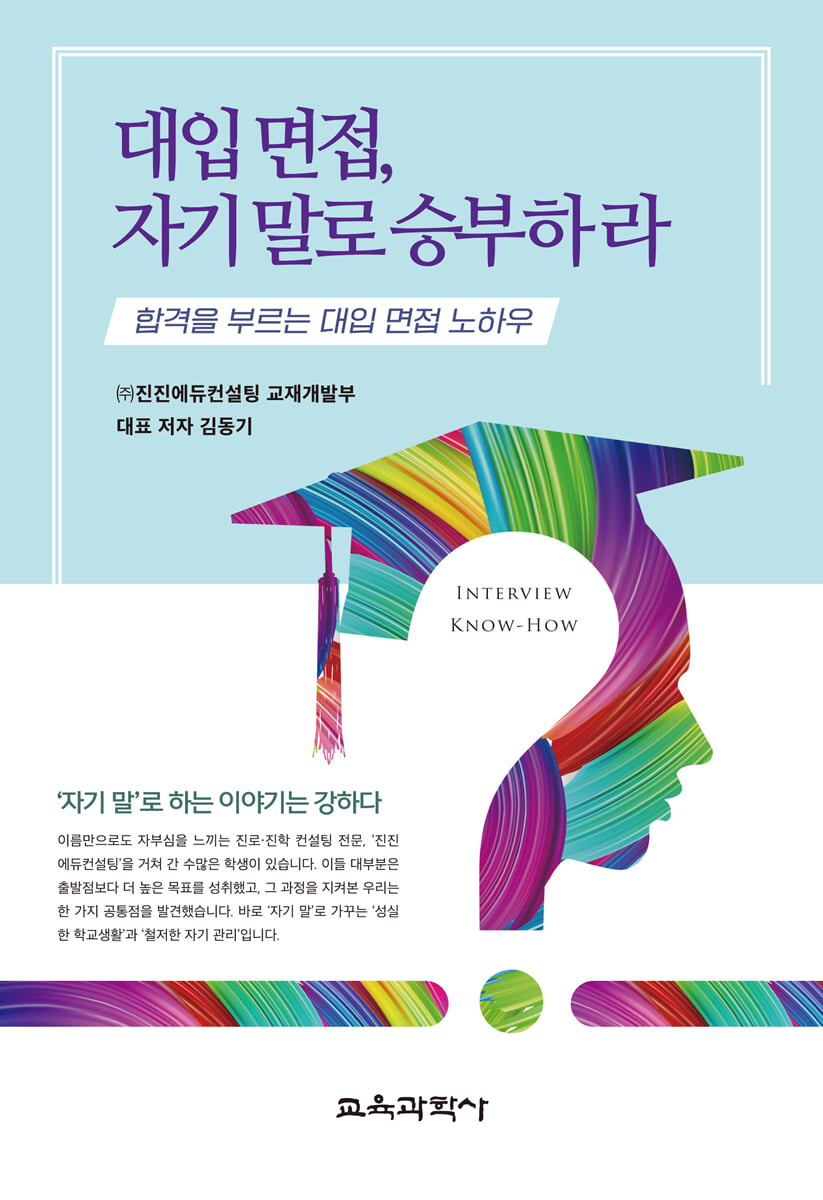
College Interviews: Win with Your Own Words
 |
Description
Book Introduction
The goal of this book is to help you develop the ability to narrate an interview in your own words.
Rather than simply listing memorized answers to questions, it contains a process of developing thinking skills and learning logical expression through listening and speaking practice.
It is structured so that you can logically organize your thoughts and convey them naturally during a conversation with the interviewer.
Rather than simply listing memorized answers to questions, it contains a process of developing thinking skills and learning logical expression through listening and speaking practice.
It is structured so that you can logically organize your thoughts and convey them naturally during a conversation with the interviewer.
index
Publishing a book / A story told in one's own words is powerful 3
Chapter 1: College Entrance Interviews: So This Is It! 13
1.1.
Why do universities prioritize interviews? 13
1.1.1.
The interview assesses speaking and listening skills 14
1.1.2.
Leaders must have communication skills 14
1.1.3.
Speaking and listening skills also need to be practiced 15
1.2.
College Interviews: 15 Tips for Approaching the Interview with Knowledge
1.2.1.
Universities and schedules for interview screening 16
1.2.2.
17 Types of College Interviews
1.2.3.
Interview Type Selection Status and Reflection Rate by University 19
1.2.4.
Understand the situational context and prepare 21
1.3.
Interview Preparation: Step-by-Step Guide 22
1.3.1.
Step 1: Identify the Evaluator 23
1.3.2.
Step 2: Developing Your Interview Skills 38
1.3.3.
Step 3: Provide Feedback on Interview Skills 44
1.4.
How are university interviews conducted? 51
1.4.1.
Seoul National University 51
1.4.2.
Yonsei University 53
1.4.3.
Korea University 54
Chapter 2: Interviews are about speaking and listening 57
2.1.
Interviews are about speaking 57
2.1.1.
Interviewing is the Art of Speaking 57
2.1.2.
Speaking is a key tool for self-expression 58
2.1.3.
Nonverbal elements are also important 58
2.1.4.
Speaking Makes a First Impression 59
2.1.5.
You have to speak for yourself to succeed 59
2.2.
Interviews are all about listening 61
2.2.1.
An interview isn't just a Q&A; it's a conversation. 61
2.2.2.
Listening well is understanding the intent of the question 62
2.2.3.
Active listening and thoughtful responses are important. 63
2.3.
Listening and speaking have a partner 64
2.3.1.
An interview is a conversation that builds trust and favor with the interviewer. 64
2.3.2.
You must be flexible in responding to the interviewer's reactions. 65
2.3.3.
You must answer in a way that will resonate with the interviewer. 66
2.4.
The interviewer keeps hearing similar comments 67
2.4.1.
You need to speak differently from other applicants 67
2.4.2.
Effective communication skills must be strengthened 67
2.5.
Speaking in an interview requires practice 69
2.6.
Speaking with a story is persuasive 70
2.6.1.
Stories are the best way to convey an applicant's authenticity. 70
2.6.2.
Using stories conveys easy, specific, and vivid images 71
2.7.
Choosing the structure of your story is important 73
2.7.1.
You need to know about story structure 73
2.7.2.
Introduction, Development, Turn, and Conclusion 73
2.7.3.
Gi-seo-gyeol (起序結) 75
2.7.4. PREP(Point, Reason, Example, Point), OREO(Opinion, Reason, Example, Opinion) 76
2.7.5.
STAR (Situation, Task, Action, Result) 78
2.7.6.
AIDA (Attention, Interest, Desire, Action) 79
2.7.7.
Problem-Solution Structure 80
2.7.8.
Time sequence structure 82
2.7.9.
Symptoms, Diagnosis, and Solutions 83
2.7.10.
Anecdote-Meaning-Quote 84
2.8.
There is no 100% perfect answer 85
Chapter 3: College Entrance Interviews: Approaching Each Type 87
3.1.
Document-Based Interview Preparation Tips 87
3.1.1.
What is a document-based interview? 87
3.1.2.
Know the evaluation criteria 88
3.1.3.
See the evaluation intent through questions 90
3.1.4.
What are effective response strategies? 92
3.1.5.
Here's a good answer! 95
3.2.
How to Prepare for an Interview with a Presentation 97
3.2.1.
(Overview) What is a presentation interview? 97
3.2.2.
(Evaluation criteria) 98
3.2.3.
(Sample questions and intended assessment) 99
3.2.4.
(Effective Answering Strategies) 100
3.2.5.
(Examples of good and bad answers) 102
3.3.
104 Interview Preparation Tips That Consider Personality and Documents Together
3.3.1.
(Overview) What is an interview that examines both personality and documents? 104
3.3.2.
(Evaluation criteria) 105
3.3.3.
(Sample questions and intended assessment) 106
3.3.4.
(Effective Response Strategies) 108
3.3.5.
(Examples of good and bad answers) 109
3.4.
Situational Interview 111
3.4.1.
(Overview) Situation-Based Interview Preparation 111
3.4.2.
(Evaluation criteria) 112
3.4.3.
(Sample questions and intended assessment) 113
3.4.4.
(Effective Response Strategies) 116
3.4.5.
(Examples of good and bad answers) 118
Chapter 4: College Interviews: I Create My Questions 121
4.1.
Creating Questions 121
4.1.1.
What does it mean to create a question? 121
4.1.2.
What are the effects of question-making? 122
4.1.3.
Let's look at the evaluation factors and answer strategies by question type 123
4.1.4.
Let's learn about the question's intent and answer strategies 123
4.1.5.
Let's look at some example questions and answer strategies by type 124
4.2.
School Record Analysis 127
4.2.1.
How do I analyze my student records? 127
4.2.2.
Analysis Methods for Key Items in Student Records 128
4.2.3.
Creating Student-Based Questions 130
4.2.4.
Example 131 Student-Based Questions
4.3.
Answer the question I created 133
4.3.1.
Utilizing the Introduction-Body-Conclusion Structure 133
4.3.2.
Effective Answering Practice 134
4.3.3.
134 Things to Consider When Composing Your Answer
4.4.
Interview Preparation Checklist 135
Chapter 5: College Interviews: Questions and Answers 137
5.1.
Analysis of past exam questions and answers 137
5.1.1.
Student Affairs-Based Questions and Answers Case Study 137
5.1.2.
Case Study 174: Question and Answer Based on Presentation
5.2.
Answering Expected Questions 200
5.2.1.
Practical training is important 200
5.2.2.
Get a feel for the student section with anticipated questions 201
5.2.3.
Enrich your answers with key keywords from the textbook 209
Appendix 239
1.
239 Interview Questions for Self-Exploration
2.
240 Key Expected Questions by Application Major
3.
244 Interview Questions Based on Subject-Specific Abilities and Special Skills Analysis
Chapter 1: College Entrance Interviews: So This Is It! 13
1.1.
Why do universities prioritize interviews? 13
1.1.1.
The interview assesses speaking and listening skills 14
1.1.2.
Leaders must have communication skills 14
1.1.3.
Speaking and listening skills also need to be practiced 15
1.2.
College Interviews: 15 Tips for Approaching the Interview with Knowledge
1.2.1.
Universities and schedules for interview screening 16
1.2.2.
17 Types of College Interviews
1.2.3.
Interview Type Selection Status and Reflection Rate by University 19
1.2.4.
Understand the situational context and prepare 21
1.3.
Interview Preparation: Step-by-Step Guide 22
1.3.1.
Step 1: Identify the Evaluator 23
1.3.2.
Step 2: Developing Your Interview Skills 38
1.3.3.
Step 3: Provide Feedback on Interview Skills 44
1.4.
How are university interviews conducted? 51
1.4.1.
Seoul National University 51
1.4.2.
Yonsei University 53
1.4.3.
Korea University 54
Chapter 2: Interviews are about speaking and listening 57
2.1.
Interviews are about speaking 57
2.1.1.
Interviewing is the Art of Speaking 57
2.1.2.
Speaking is a key tool for self-expression 58
2.1.3.
Nonverbal elements are also important 58
2.1.4.
Speaking Makes a First Impression 59
2.1.5.
You have to speak for yourself to succeed 59
2.2.
Interviews are all about listening 61
2.2.1.
An interview isn't just a Q&A; it's a conversation. 61
2.2.2.
Listening well is understanding the intent of the question 62
2.2.3.
Active listening and thoughtful responses are important. 63
2.3.
Listening and speaking have a partner 64
2.3.1.
An interview is a conversation that builds trust and favor with the interviewer. 64
2.3.2.
You must be flexible in responding to the interviewer's reactions. 65
2.3.3.
You must answer in a way that will resonate with the interviewer. 66
2.4.
The interviewer keeps hearing similar comments 67
2.4.1.
You need to speak differently from other applicants 67
2.4.2.
Effective communication skills must be strengthened 67
2.5.
Speaking in an interview requires practice 69
2.6.
Speaking with a story is persuasive 70
2.6.1.
Stories are the best way to convey an applicant's authenticity. 70
2.6.2.
Using stories conveys easy, specific, and vivid images 71
2.7.
Choosing the structure of your story is important 73
2.7.1.
You need to know about story structure 73
2.7.2.
Introduction, Development, Turn, and Conclusion 73
2.7.3.
Gi-seo-gyeol (起序結) 75
2.7.4. PREP(Point, Reason, Example, Point), OREO(Opinion, Reason, Example, Opinion) 76
2.7.5.
STAR (Situation, Task, Action, Result) 78
2.7.6.
AIDA (Attention, Interest, Desire, Action) 79
2.7.7.
Problem-Solution Structure 80
2.7.8.
Time sequence structure 82
2.7.9.
Symptoms, Diagnosis, and Solutions 83
2.7.10.
Anecdote-Meaning-Quote 84
2.8.
There is no 100% perfect answer 85
Chapter 3: College Entrance Interviews: Approaching Each Type 87
3.1.
Document-Based Interview Preparation Tips 87
3.1.1.
What is a document-based interview? 87
3.1.2.
Know the evaluation criteria 88
3.1.3.
See the evaluation intent through questions 90
3.1.4.
What are effective response strategies? 92
3.1.5.
Here's a good answer! 95
3.2.
How to Prepare for an Interview with a Presentation 97
3.2.1.
(Overview) What is a presentation interview? 97
3.2.2.
(Evaluation criteria) 98
3.2.3.
(Sample questions and intended assessment) 99
3.2.4.
(Effective Answering Strategies) 100
3.2.5.
(Examples of good and bad answers) 102
3.3.
104 Interview Preparation Tips That Consider Personality and Documents Together
3.3.1.
(Overview) What is an interview that examines both personality and documents? 104
3.3.2.
(Evaluation criteria) 105
3.3.3.
(Sample questions and intended assessment) 106
3.3.4.
(Effective Response Strategies) 108
3.3.5.
(Examples of good and bad answers) 109
3.4.
Situational Interview 111
3.4.1.
(Overview) Situation-Based Interview Preparation 111
3.4.2.
(Evaluation criteria) 112
3.4.3.
(Sample questions and intended assessment) 113
3.4.4.
(Effective Response Strategies) 116
3.4.5.
(Examples of good and bad answers) 118
Chapter 4: College Interviews: I Create My Questions 121
4.1.
Creating Questions 121
4.1.1.
What does it mean to create a question? 121
4.1.2.
What are the effects of question-making? 122
4.1.3.
Let's look at the evaluation factors and answer strategies by question type 123
4.1.4.
Let's learn about the question's intent and answer strategies 123
4.1.5.
Let's look at some example questions and answer strategies by type 124
4.2.
School Record Analysis 127
4.2.1.
How do I analyze my student records? 127
4.2.2.
Analysis Methods for Key Items in Student Records 128
4.2.3.
Creating Student-Based Questions 130
4.2.4.
Example 131 Student-Based Questions
4.3.
Answer the question I created 133
4.3.1.
Utilizing the Introduction-Body-Conclusion Structure 133
4.3.2.
Effective Answering Practice 134
4.3.3.
134 Things to Consider When Composing Your Answer
4.4.
Interview Preparation Checklist 135
Chapter 5: College Interviews: Questions and Answers 137
5.1.
Analysis of past exam questions and answers 137
5.1.1.
Student Affairs-Based Questions and Answers Case Study 137
5.1.2.
Case Study 174: Question and Answer Based on Presentation
5.2.
Answering Expected Questions 200
5.2.1.
Practical training is important 200
5.2.2.
Get a feel for the student section with anticipated questions 201
5.2.3.
Enrich your answers with key keywords from the textbook 209
Appendix 239
1.
239 Interview Questions for Self-Exploration
2.
240 Key Expected Questions by Application Major
3.
244 Interview Questions Based on Subject-Specific Abilities and Special Skills Analysis
Publisher's Review
The book is divided into five chapters:
Chapter 1: College Entrance Interviews: So This Is It
Chapter 2: College Interviews: Speaking and Listening
Chapter 3: College Entrance Interviews: Approaching Each Type
Chapter 4: College Interviews: I Create the Questions
Chapter 5: College Interviews: Questions and Answers
In particular, 'This Question, That Answer' contains 'vivid interview reviews' and 'expected questions' that cannot be found in any existing interview preparation textbook.
We share the real-life experiences of our seniors, recreating the interview atmosphere, the interviewer's reactions, and even the laughter, all in their own words.
Additionally, by analyzing the content of six subjects focusing on the social studies area, we selected 28 key words with high frequency of appearance, created questions based on these, provided example answers, and highlighted key points.
Chapter 1: College Entrance Interviews: So This Is It
Chapter 2: College Interviews: Speaking and Listening
Chapter 3: College Entrance Interviews: Approaching Each Type
Chapter 4: College Interviews: I Create the Questions
Chapter 5: College Interviews: Questions and Answers
In particular, 'This Question, That Answer' contains 'vivid interview reviews' and 'expected questions' that cannot be found in any existing interview preparation textbook.
We share the real-life experiences of our seniors, recreating the interview atmosphere, the interviewer's reactions, and even the laughter, all in their own words.
Additionally, by analyzing the content of six subjects focusing on the social studies area, we selected 28 key words with high frequency of appearance, created questions based on these, provided example answers, and highlighted key points.
GOODS SPECIFICS
- Date of issue: June 30, 2025
- Page count, weight, size: 256 pages | 153*224*20mm
- ISBN13: 9788925419138
- ISBN10: 8925419130
You may also like
카테고리
korean


korean

![ELLE 엘르 스페셜 에디션 A형 : 12월 [2025]](http://librairie.coreenne.fr/cdn/shop/files/b8e27a3de6c9538896439686c6b0e8fb.jpg?v=1766436872&width=3840)


