

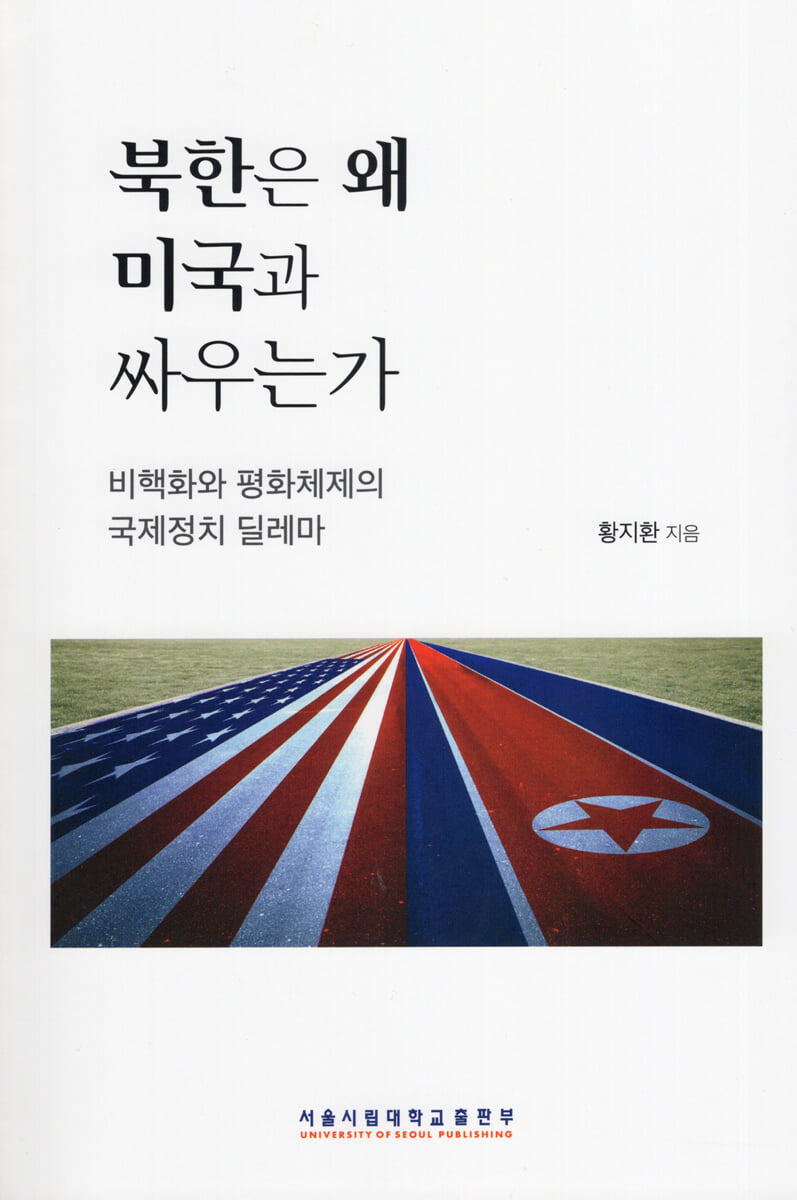
Why North Korea Fights the United States
 |
Description
Book Introduction
This book explains the North Korean issue, the nature of the North Korean nuclear crisis, the structure of the North Korea-US confrontation, the reality of peace on the Korean Peninsula, the effectiveness of North Korea's nuclear strategy, and the extended deterrence response of the ROK-US alliance within a theoretical analytical framework based on an international political science perspective.
At its core is the international political dilemma of denuclearization and a peace regime arising from the confrontation between North Korea and the United States.
Whether it was 30 years ago or now, we live in an era of confrontation between North America and the US.
The hopeful thought that the North Korean nuclear issue was resolved through the 1994 North Korea-US Geneva Agreement turned out to be a fleeting dream.
The September 19 Joint Statement of the Six-Party Talks in 2005 was rocked by conflict between North Korea and the United States starting the very next day.
The first-ever North Korea-US summit, held in Singapore in June 2018, was marred eight months later in Hanoi.
Meanwhile, North Korea conducted six nuclear tests and declared itself a nuclear weapons state, regardless of what anyone said.
North Korea demands regime security, while the United States insists on complete denuclearization, but the gap has not narrowed even an inch in the past 30 years.
The relationship between denuclearization and a peace regime, presented as a dilemma in this book, is difficult to assert as a priority in negotiations.
If we prioritize denuclearization, problems with the peace regime arise, and if we prioritize the peace regime, problems with denuclearization arise.
Since the 1990s, denuclearization and a peace regime have existed in a trade-off relationship, and only a very detailed sequence of agreements and implementations can make that balance possible.
North Korea and the United States have been fighting for 30 years to shift the balance in their favor.
The negotiations have not yet made any progress and have instead taken a step backwards.
At its core is the international political dilemma of denuclearization and a peace regime arising from the confrontation between North Korea and the United States.
Whether it was 30 years ago or now, we live in an era of confrontation between North America and the US.
The hopeful thought that the North Korean nuclear issue was resolved through the 1994 North Korea-US Geneva Agreement turned out to be a fleeting dream.
The September 19 Joint Statement of the Six-Party Talks in 2005 was rocked by conflict between North Korea and the United States starting the very next day.
The first-ever North Korea-US summit, held in Singapore in June 2018, was marred eight months later in Hanoi.
Meanwhile, North Korea conducted six nuclear tests and declared itself a nuclear weapons state, regardless of what anyone said.
North Korea demands regime security, while the United States insists on complete denuclearization, but the gap has not narrowed even an inch in the past 30 years.
The relationship between denuclearization and a peace regime, presented as a dilemma in this book, is difficult to assert as a priority in negotiations.
If we prioritize denuclearization, problems with the peace regime arise, and if we prioritize the peace regime, problems with denuclearization arise.
Since the 1990s, denuclearization and a peace regime have existed in a trade-off relationship, and only a very detailed sequence of agreements and implementations can make that balance possible.
North Korea and the United States have been fighting for 30 years to shift the balance in their favor.
The negotiations have not yet made any progress and have instead taken a step backwards.
index
Author's Note · 5
Part 1: International Politics and Perspectives on the North Korean Issue
Chapter 1: The North Korean Issue: Beyond the Conservative-Progressive Dichotomies · 12
Chapter 2: International Politics and the North Korean Issue · 37
Chapter 3: Structural Realism and the North Korean Nuclear Issue · 66
Part 2: North Korea's Nuclear Crisis and North Korea-US Relations
Chapter 4: A Model for Understanding North Korea's Nuclear Policy: Prospect Theory · 92
Chapter 5: North Korea's Nuclear Policy toward the United States during the Kim Il-sung-Kim Jong-il Era · 106
Chapter 6: North Korea's Nuclear Policy toward the United States during the Kim Jong-un Era · 132
Chapter 7: "Rogue States" and U.S. Policy toward North Korea · 163
Part 3: The Korean Peninsula Peace Regime: Ideals and Realities
Chapter 8: The Six-Party Talks and the Korean Peninsula Peace Regime during the Bush-Kim Jong-il Era · 194
Chapter 9: The Trump-Kim Jong-un Era North Korea-US Summit and the Korean Peninsula Peace Regime · 214
Chapter 10: The Crisis of Peace on the Korean Peninsula in the New Cold War Era · 235
Part 4: North Korea's Nuclear Deterrence Strategy and the Extended Deterrence of the ROK-US Alliance
Chapter 11: Assessing the Effectiveness of North Korea's Nuclear Deterrence Strategy: The Problem of Excessive Deterrence · 250
Chapter 12: The ROK-US Alliance and the Direction of Extended Deterrence Strategy · 272
Epilogue: The Trump Administration's Second Term and Martial Law · 297
Part 1: International Politics and Perspectives on the North Korean Issue
Chapter 1: The North Korean Issue: Beyond the Conservative-Progressive Dichotomies · 12
Chapter 2: International Politics and the North Korean Issue · 37
Chapter 3: Structural Realism and the North Korean Nuclear Issue · 66
Part 2: North Korea's Nuclear Crisis and North Korea-US Relations
Chapter 4: A Model for Understanding North Korea's Nuclear Policy: Prospect Theory · 92
Chapter 5: North Korea's Nuclear Policy toward the United States during the Kim Il-sung-Kim Jong-il Era · 106
Chapter 6: North Korea's Nuclear Policy toward the United States during the Kim Jong-un Era · 132
Chapter 7: "Rogue States" and U.S. Policy toward North Korea · 163
Part 3: The Korean Peninsula Peace Regime: Ideals and Realities
Chapter 8: The Six-Party Talks and the Korean Peninsula Peace Regime during the Bush-Kim Jong-il Era · 194
Chapter 9: The Trump-Kim Jong-un Era North Korea-US Summit and the Korean Peninsula Peace Regime · 214
Chapter 10: The Crisis of Peace on the Korean Peninsula in the New Cold War Era · 235
Part 4: North Korea's Nuclear Deterrence Strategy and the Extended Deterrence of the ROK-US Alliance
Chapter 11: Assessing the Effectiveness of North Korea's Nuclear Deterrence Strategy: The Problem of Excessive Deterrence · 250
Chapter 12: The ROK-US Alliance and the Direction of Extended Deterrence Strategy · 272
Epilogue: The Trump Administration's Second Term and Martial Law · 297
Into the book
The second Trump administration marks the return of America First's North Korea policy.
Because the Biden administration has not pursued a proactive policy toward North Korea, some have high expectations for the new North Korea policy that the Trump administration will pursue.
However, to conclude, such expectations are likely nothing more than wishful thinking.
Biden said that if North Korea does not change its policy, the United States will also take an active role.
Obama maintained his "strategic patience" policy of not adopting a North Korea policy.
The Biden administration's focus on North Korea has been further diminished by the rapidly shifting international situation following Russia's invasion of Ukraine in February 2022 and Hamas' attack on Israel in October 2023.
Even if the Trump administration takes office and brings about changes in the wars in Ukraine and the Middle East, it is questionable whether North Korea-US relations can find a new breakthrough.
The reason Trump's first term's North Korea policy was different was because of his "America First" foreign policy.
Trump defined America's interests in terms of transactional costs and benefits rather than in terms of democracy and normative values.
Trump was a leader who was not bound by the principles or values that the US government had previously emphasized.
This meant that, unlike the existing North Korea-US relationship, it was possible to improve relations with North Korea if it helped the interests of the United States as defined by Trump.
Against this backdrop, Trump actually held summits with Kim Jong-un in Singapore and Hanoi in 2018-19 and negotiated the nuclear issue.
As he stated at a press conference in Singapore, Trump believes the past does not define the future, and that a war fought yesterday does not mean there is no need for a war tomorrow.
This is why he argued that although North American relations were hostile in the past, they could become friends in the future.
However, looking at the results, the outcome of North Korea-US relations was not much different during Trump's first term.
Trump met with Kim Jong-un in Singapore and Hanoi, but nothing came of it.
North Korea did not align with the interests of the United States advocated by Trump.
After January 2025, Trump will focus on solving domestic issues such as the economy and immigration.
In foreign policy, it is natural to place primary emphasis on changing the world order by ending the war in Ukraine and the Gaza Strip.
Once that work is completed to a certain extent, there is a possibility that a summit with Kim Jong-un could be considered.
However, even in that case, it is unclear whether Trump will be able to approach Kim Jong-un in the same way as in the past.
This is because, in order for Trump to satisfy Kim Jong-un, he must accept the proposal that Kim Jong-un rejected in Hanoi in February 2019.
Expectations that North Korea-US relations could improve during Trump's second term are likely to be nothing more than overly optimistic thinking.
Because the Biden administration has not pursued a proactive policy toward North Korea, some have high expectations for the new North Korea policy that the Trump administration will pursue.
However, to conclude, such expectations are likely nothing more than wishful thinking.
Biden said that if North Korea does not change its policy, the United States will also take an active role.
Obama maintained his "strategic patience" policy of not adopting a North Korea policy.
The Biden administration's focus on North Korea has been further diminished by the rapidly shifting international situation following Russia's invasion of Ukraine in February 2022 and Hamas' attack on Israel in October 2023.
Even if the Trump administration takes office and brings about changes in the wars in Ukraine and the Middle East, it is questionable whether North Korea-US relations can find a new breakthrough.
The reason Trump's first term's North Korea policy was different was because of his "America First" foreign policy.
Trump defined America's interests in terms of transactional costs and benefits rather than in terms of democracy and normative values.
Trump was a leader who was not bound by the principles or values that the US government had previously emphasized.
This meant that, unlike the existing North Korea-US relationship, it was possible to improve relations with North Korea if it helped the interests of the United States as defined by Trump.
Against this backdrop, Trump actually held summits with Kim Jong-un in Singapore and Hanoi in 2018-19 and negotiated the nuclear issue.
As he stated at a press conference in Singapore, Trump believes the past does not define the future, and that a war fought yesterday does not mean there is no need for a war tomorrow.
This is why he argued that although North American relations were hostile in the past, they could become friends in the future.
However, looking at the results, the outcome of North Korea-US relations was not much different during Trump's first term.
Trump met with Kim Jong-un in Singapore and Hanoi, but nothing came of it.
North Korea did not align with the interests of the United States advocated by Trump.
After January 2025, Trump will focus on solving domestic issues such as the economy and immigration.
In foreign policy, it is natural to place primary emphasis on changing the world order by ending the war in Ukraine and the Gaza Strip.
Once that work is completed to a certain extent, there is a possibility that a summit with Kim Jong-un could be considered.
However, even in that case, it is unclear whether Trump will be able to approach Kim Jong-un in the same way as in the past.
This is because, in order for Trump to satisfy Kim Jong-un, he must accept the proposal that Kim Jong-un rejected in Hanoi in February 2019.
Expectations that North Korea-US relations could improve during Trump's second term are likely to be nothing more than overly optimistic thinking.
--- From the text
GOODS SPECIFICS
- Date of issue: February 12, 2025
- Page count, weight, size: 358 pages | 152*225*30mm
- ISBN13: 9791198225733
- ISBN10: 1198225734
You may also like
카테고리
korean


korean

![ELLE 엘르 스페셜 에디션 A형 : 12월 [2025]](http://librairie.coreenne.fr/cdn/shop/files/b8e27a3de6c9538896439686c6b0e8fb.jpg?v=1766436872&width=3840)


