

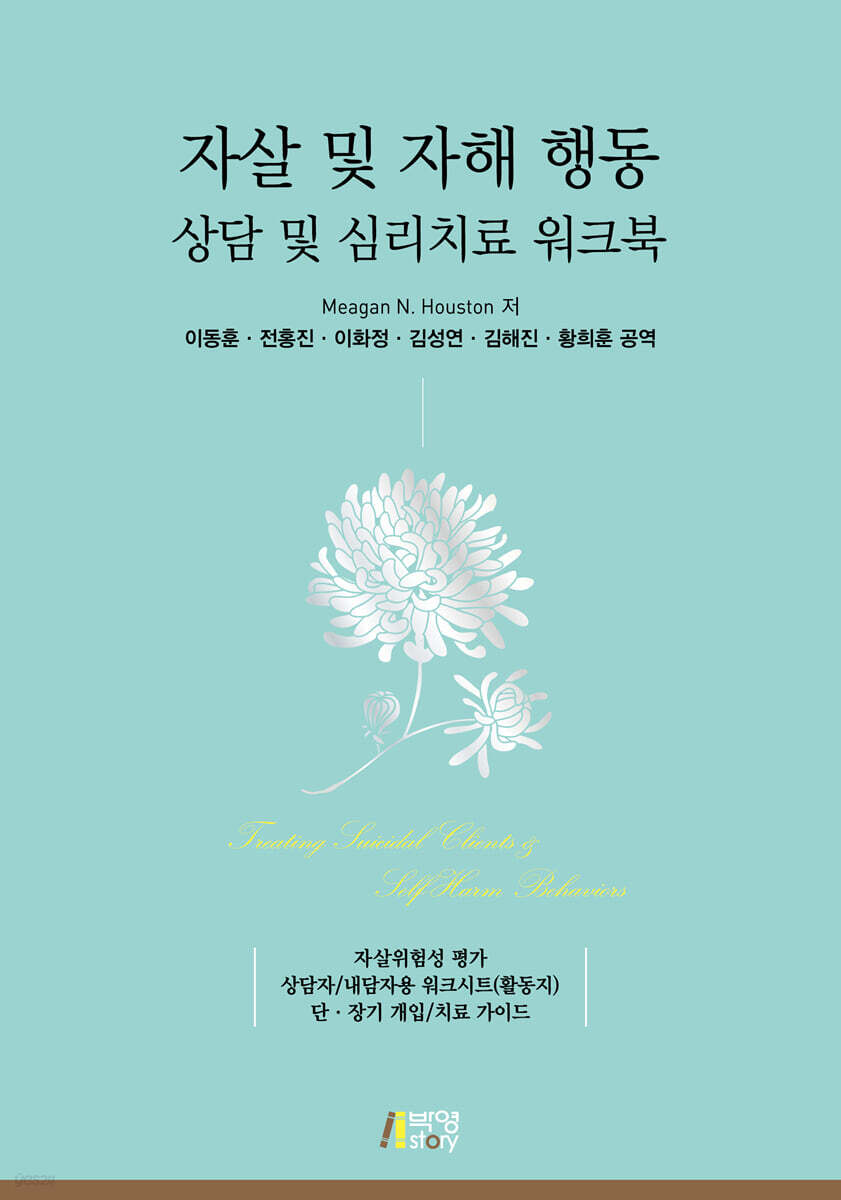
Suicide and Self-Harm Behavior Counseling and Psychotherapy Workbook
 |
Description
Book Introduction
This workbook is designed to help counselors and mental health professionals understand the underlying etiology, various life factors, and mental health issues that influence self-destructive behaviors such as suicide and self-harm.
It was also designed to help counselors and mental health care providers understand how cultural, environmental, social, and genetic factors interplay to contribute to clients' maladaptive ways of thinking, feeling, and behaving.
This workbook will help you identify these subtle factors as key to developing suicide prevention and coping strategies for your clients.
The forms of suicide are complex overall.
Therefore, there are a variety of approaches to assessing, managing, and treating clients with suicidal concerns and those engaging in non-suicidal self-injurious behavior (NSSI).
This workbook is designed to assist counselors and mental health professionals when working with clients who present with a variety of presentations.
It was also designed to help counselors and mental health care providers understand how cultural, environmental, social, and genetic factors interplay to contribute to clients' maladaptive ways of thinking, feeling, and behaving.
This workbook will help you identify these subtle factors as key to developing suicide prevention and coping strategies for your clients.
The forms of suicide are complex overall.
Therefore, there are a variety of approaches to assessing, managing, and treating clients with suicidal concerns and those engaging in non-suicidal self-injurious behavior (NSSI).
This workbook is designed to assist counselors and mental health professionals when working with clients who present with a variety of presentations.
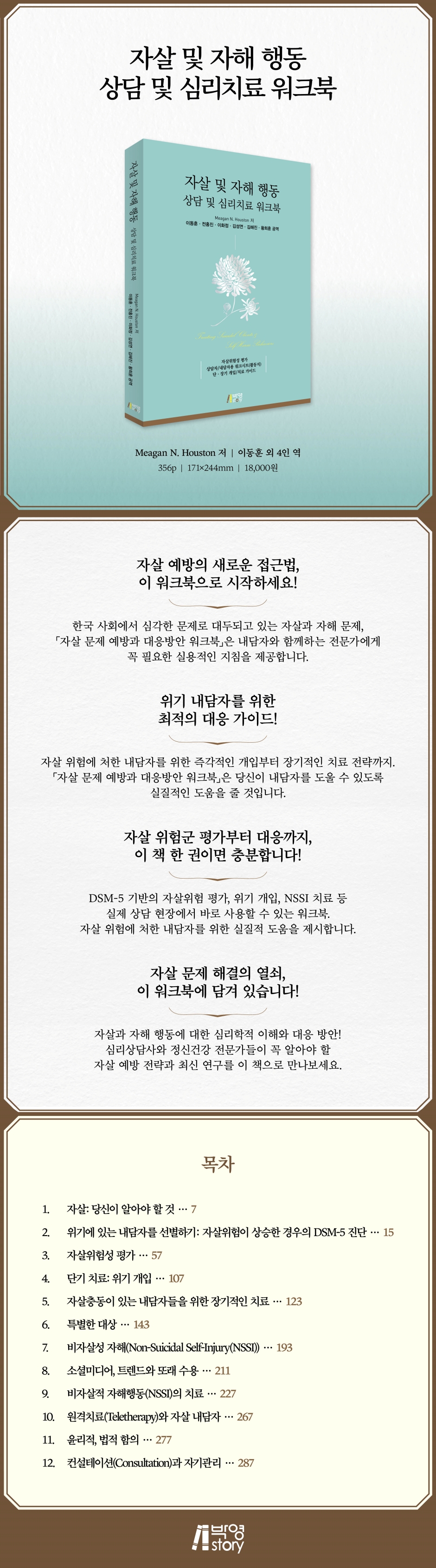
index
About the Author / 2
Who this book is for and how to use it / 3
Translator's Preface / 5
1.
Suicide: What You Need to Know / 7
2.
Screening Clients at Risk: DSM-5 Diagnoses of Increased Suicide Risk / 15
3.
Suicide Risk Assessment / 57
4.
Brief Therapy: Crisis Intervention / 107
5.
Long-Term Treatment for Clients with Suicidal Impulses / 123
6.
Special Target / 143
7.
Non-Suicidal Self-Injury (NSSI) / 193
8.
Social Media, Trends, and Peer Acceptance / 211
9.
Treatment of Non-Suicidal Self-Injurious Behavior (NSSI) / 227
10.
Teletherapy and Suicidal Clients / 267
11.
Ethical and Legal Implications / 277
12.
Consultation and Self-Management / 287
Appendix: Collection of Worksheets for Counselor/Clinician Use / 294
Collection of Worksheets for Clients / 338
References / 350
Who this book is for and how to use it / 3
Translator's Preface / 5
1.
Suicide: What You Need to Know / 7
2.
Screening Clients at Risk: DSM-5 Diagnoses of Increased Suicide Risk / 15
3.
Suicide Risk Assessment / 57
4.
Brief Therapy: Crisis Intervention / 107
5.
Long-Term Treatment for Clients with Suicidal Impulses / 123
6.
Special Target / 143
7.
Non-Suicidal Self-Injury (NSSI) / 193
8.
Social Media, Trends, and Peer Acceptance / 211
9.
Treatment of Non-Suicidal Self-Injurious Behavior (NSSI) / 227
10.
Teletherapy and Suicidal Clients / 267
11.
Ethical and Legal Implications / 277
12.
Consultation and Self-Management / 287
Appendix: Collection of Worksheets for Counselor/Clinician Use / 294
Collection of Worksheets for Clients / 338
References / 350
Detailed image
Publisher's Review
From the perspective of psychological counseling, I became directly interested in preventing and responding to the suicide problem in Korean society when I participated as a sub-project manager in the mental health problem-solving research project of the Ministry of Health and Welfare, “Development of a high-risk suicide screening tool and a suicide risk assessment tool and verification of their effectiveness,” which Professor Jeon Hong-jin of the Department of Psychiatry at Samsung Medical Center led as the principal investigator for three years from 2019.
Afterwards, it was selected for the Ministry of Education and the National Research Foundation of Korea's Social Science Research Support Project, and the research project "Prevention and Intervention of Youth Self-Harm and Suicide: Establishment of a Korean Biopsychosocial Pathway Model for AI-based Ecological Momentary Intervention Evaluation and Intervention Application" began in September 2021.
While carrying out these research projects, I began working on the translation of this original book in collaboration with Professor Jeon Hong-jin.
Since first ranking first in OECD suicide rate in 2003, Korea has maintained the highest suicide rate among OECD member countries for 13 consecutive years until 2016.
In 2018, South Korea (24.7 per 100,000 people) had a figure more than double the OECD average (11.0) and more than 10 more than major advanced countries such as Germany (9.6), France (12.3), the United States (14.5), and Japan (14.7).
According to the WHO, the suicide rate among youth aged 10 to 24 in Korea was 9.4 per 100,000 people in 2010. Countries with higher youth suicide rates than Korea include Finland (14.2), New Zealand (13.7), Chile (10.7), Japan (10.2), and Ireland (10).
As such, Korea's youth suicide rate exceeds the OECD average and has steadily increased every year, reaching a serious level. Therefore, there is an urgent need for vigilance and countermeasures at the national, social, family, and school levels.
This workbook is designed to help counselors and mental health professionals understand the underlying etiology, various life factors, and mental health issues that influence self-destructive behaviors such as suicide and self-harm.
It was also designed to help counselors and mental health care providers understand how cultural, environmental, social, and genetic factors interplay to contribute to clients' maladaptive ways of thinking, feeling, and behaving.
This workbook will help you identify these subtle factors as key to developing suicide prevention and coping strategies for your clients.
The forms of suicide are complex overall.
Therefore, there are a variety of approaches to assessing, managing, and treating clients with suicidal concerns and those engaging in non-suicidal self-injurious behavior (NSSI).
This workbook is designed to assist counselors and mental health professionals when working with clients who present with a variety of presentations.
I would like to express my gratitude to CEO Noh Hyun of Park Young Story, who has believed in me and waited for a long time to publish a great book that is essential for those in the counseling and psychotherapy fields.
I would also like to express my deepest gratitude to Manager Bae Geun-ha and the staff at Park Young Story for their generous support and assistance, both material and spiritual, in the publication of this book.
In the Myeongnyun-dong laboratory with a view of Waryong Park
Lee Dong-hoon
Afterwards, it was selected for the Ministry of Education and the National Research Foundation of Korea's Social Science Research Support Project, and the research project "Prevention and Intervention of Youth Self-Harm and Suicide: Establishment of a Korean Biopsychosocial Pathway Model for AI-based Ecological Momentary Intervention Evaluation and Intervention Application" began in September 2021.
While carrying out these research projects, I began working on the translation of this original book in collaboration with Professor Jeon Hong-jin.
Since first ranking first in OECD suicide rate in 2003, Korea has maintained the highest suicide rate among OECD member countries for 13 consecutive years until 2016.
In 2018, South Korea (24.7 per 100,000 people) had a figure more than double the OECD average (11.0) and more than 10 more than major advanced countries such as Germany (9.6), France (12.3), the United States (14.5), and Japan (14.7).
According to the WHO, the suicide rate among youth aged 10 to 24 in Korea was 9.4 per 100,000 people in 2010. Countries with higher youth suicide rates than Korea include Finland (14.2), New Zealand (13.7), Chile (10.7), Japan (10.2), and Ireland (10).
As such, Korea's youth suicide rate exceeds the OECD average and has steadily increased every year, reaching a serious level. Therefore, there is an urgent need for vigilance and countermeasures at the national, social, family, and school levels.
This workbook is designed to help counselors and mental health professionals understand the underlying etiology, various life factors, and mental health issues that influence self-destructive behaviors such as suicide and self-harm.
It was also designed to help counselors and mental health care providers understand how cultural, environmental, social, and genetic factors interplay to contribute to clients' maladaptive ways of thinking, feeling, and behaving.
This workbook will help you identify these subtle factors as key to developing suicide prevention and coping strategies for your clients.
The forms of suicide are complex overall.
Therefore, there are a variety of approaches to assessing, managing, and treating clients with suicidal concerns and those engaging in non-suicidal self-injurious behavior (NSSI).
This workbook is designed to assist counselors and mental health professionals when working with clients who present with a variety of presentations.
I would like to express my gratitude to CEO Noh Hyun of Park Young Story, who has believed in me and waited for a long time to publish a great book that is essential for those in the counseling and psychotherapy fields.
I would also like to express my deepest gratitude to Manager Bae Geun-ha and the staff at Park Young Story for their generous support and assistance, both material and spiritual, in the publication of this book.
In the Myeongnyun-dong laboratory with a view of Waryong Park
Lee Dong-hoon
GOODS SPECIFICS
- Date of issue: May 1, 2022
- Page count, weight, size: 356 pages | 642g | 173*245*18mm
- ISBN13: 9791190151986
- ISBN10: 1190151987
You may also like
카테고리
korean


korean

![ELLE 엘르 스페셜 에디션 A형 : 12월 [2025]](http://librairie.coreenne.fr/cdn/shop/files/b8e27a3de6c9538896439686c6b0e8fb.jpg?v=1766436872&width=3840)


