

American architect
 |
Description
Book Introduction
From colonization and independence to the rise to superpower status
Contains all the architectural scenes that made America what it is today.
The first comprehensive study of American architecture written from the perspective of a Korean architectural historian!
From humble wooden houses to soaring skyscrapers, American architecture is a grand chronicle of a nation's birth and growth.
Shouts of independence echoed from the Pennsylvania State House, Washington, D.C.
From the spirit of the new republic symbolized by the White House, to the confidence of industrialization displayed by the Brooklyn Bridge in New York, to the modern ambitions embodied in the vertical lines of the Empire State Building, the face of an era has been etched into the architecture of many cities.
Although it lacks the thousand-year-old stone walls of Europe, the speed and creativity with which it has built a superpower in a matter of centuries is a strength unique to the United States.
This book, which compiles all the scenes of architectural history that made the United States what it is today, is the first study of American architecture written from the perspective of a Korean architectural historian, and is the complete edition containing all of American architectural history.
The flow of American architecture over approximately 350 years, from the 17th-century colonial period to the immediate aftermath of World War II, is organized into three distinct phases: a formative period in which European styles took root, a developmental period in which those traditions were reinterpreted and expanded, and a consummation period in which a uniquely American style and identity were established.
The author divides architectural styles of each era into 20 to 30 trends and analyzes them, organically linking them to the political, economic, social, and cultural changes that formed their background.
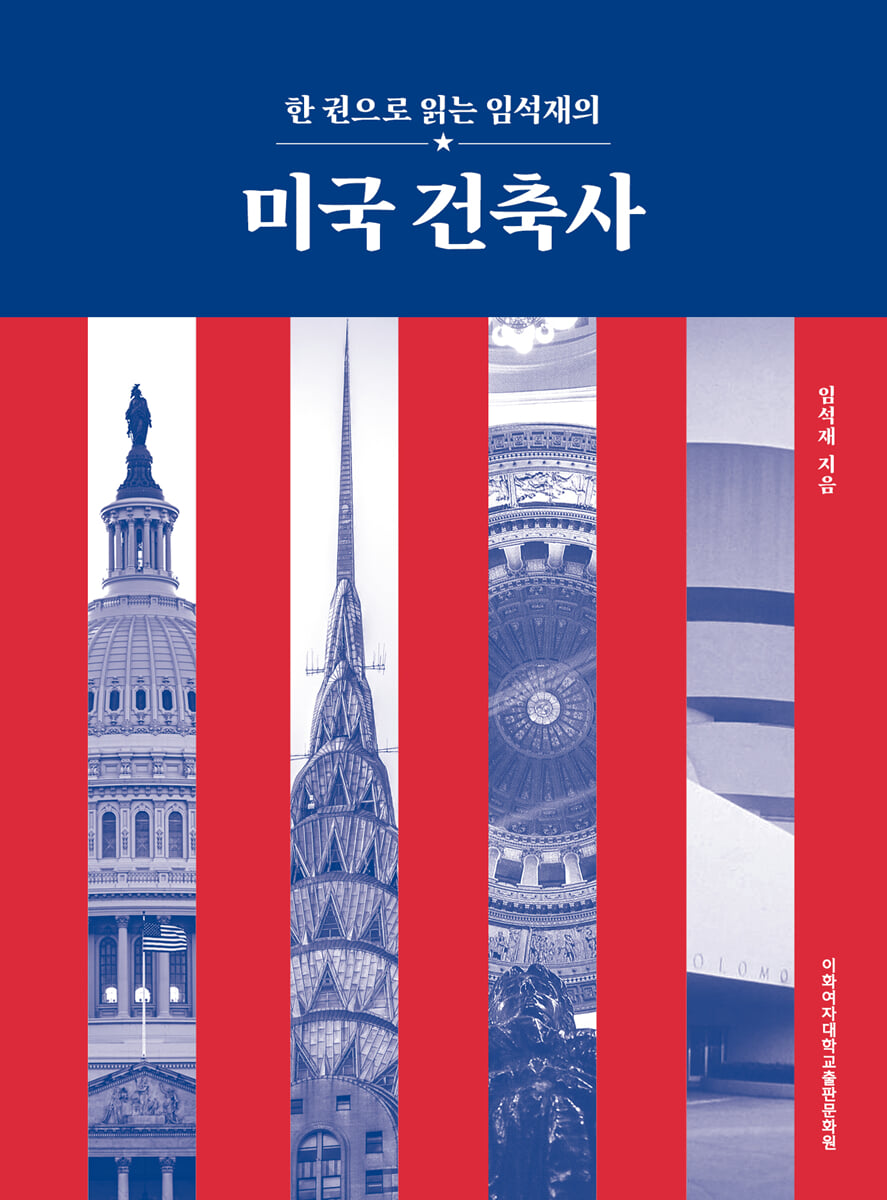
Covering a wide range of topics, from the classical grandeur of the White House and the Lincoln Memorial, to the Art Deco sophistication of the Chrysler Building, to the architectural heritage hidden throughout the region, it faithfully reflects the hybrid and experimental nature of American architecture.
Each chapter is structured to provide a balanced view of the historical background, general style, representative architects and buildings, and the architectural historical significance hidden within them, allowing readers to view both the parts and the whole simultaneously.
As you turn the pages, you realize that the history of American architecture is not a simple list of styles, but rather a narrative of society, culture, and, furthermore, the dreams and ambitions of the people who lived through that era.
Readers follow the city's streets and squares, schools and theaters, skyscrapers and bridges, and see how America has shaped its identity and positioned itself in the world through architecture.
And at the end, you will encounter the pioneering spirit and creative energy of America, seething in the buildings that embrace the winds of the New World and the roar of the industrial city.
Contains all the architectural scenes that made America what it is today.
The first comprehensive study of American architecture written from the perspective of a Korean architectural historian!
From humble wooden houses to soaring skyscrapers, American architecture is a grand chronicle of a nation's birth and growth.
Shouts of independence echoed from the Pennsylvania State House, Washington, D.C.
From the spirit of the new republic symbolized by the White House, to the confidence of industrialization displayed by the Brooklyn Bridge in New York, to the modern ambitions embodied in the vertical lines of the Empire State Building, the face of an era has been etched into the architecture of many cities.
Although it lacks the thousand-year-old stone walls of Europe, the speed and creativity with which it has built a superpower in a matter of centuries is a strength unique to the United States.
This book, which compiles all the scenes of architectural history that made the United States what it is today, is the first study of American architecture written from the perspective of a Korean architectural historian, and is the complete edition containing all of American architectural history.
The flow of American architecture over approximately 350 years, from the 17th-century colonial period to the immediate aftermath of World War II, is organized into three distinct phases: a formative period in which European styles took root, a developmental period in which those traditions were reinterpreted and expanded, and a consummation period in which a uniquely American style and identity were established.
The author divides architectural styles of each era into 20 to 30 trends and analyzes them, organically linking them to the political, economic, social, and cultural changes that formed their background.
Covering a wide range of topics, from the classical grandeur of the White House and the Lincoln Memorial, to the Art Deco sophistication of the Chrysler Building, to the architectural heritage hidden throughout the region, it faithfully reflects the hybrid and experimental nature of American architecture.
Each chapter is structured to provide a balanced view of the historical background, general style, representative architects and buildings, and the architectural historical significance hidden within them, allowing readers to view both the parts and the whole simultaneously.
As you turn the pages, you realize that the history of American architecture is not a simple list of styles, but rather a narrative of society, culture, and, furthermore, the dreams and ambitions of the people who lived through that era.
Readers follow the city's streets and squares, schools and theaters, skyscrapers and bridges, and see how America has shaped its identity and positioned itself in the world through architecture.
And at the end, you will encounter the pioneering spirit and creative energy of America, seething in the buildings that embrace the winds of the New World and the roar of the industrial city.
index
Prologue: 14 Characteristics of American Architecture + Its Relationship to European Architecture
Part 1.
Formative period (17th century–1820): Colonial and Federal styles
Chapter 1.
Spanish colonial style in the southwest of the 17th and 18th centuries
Chapter 2.
17th century eastern British colonial style
Chapter 3.
18th century British colonial style in the East
Chapter 4.
The birth of the Federal Style (1783–1820) and the construction of the capital, Washington, D.C.
Chapter 5.
The development of the Federal Style and the beginning of the era of professional architects
Part 2.
The 19th Century: The Age of Pluralism and the Role of Historicism
Chapter 6.
Eclectic Revivalism (1810/1820–1870)
Chapter 7.
Greek Revival (1820s–1860s)
Chapter 8.
Renaissance Revival (1820/1830–1860/1870)
Chapter 9.
Gothic Revival (1820s–1850s) and High Victorian Gothic (1840s–1870s)
Chapter 10.
Romanesque Revival (c. 1840–1910)
Chapter 11.
Second Empire style (1860s–1890s) and Beaux-Arts style (1870s–1910s)
Chapter 12.
Colonial Revival (1870/1880–1910)
Chapter 13.
Single Style (1870–1900), Stick Style (1840–1880), Queen Anne Revival (1870–1910)
Chapter 14.
Retro Extension (1870s–1930s) and American Renaissance
Part 3.
Modern architecture and its completion period (1870–1950): skyscrapers, ornamentation, the avant-garde, and regionalism
Chapter 15.
19th-century new architecture and practical architecture
Chapter 16.
Chicago School (circa 1870–1910)
Chapter 17.
Arts and Crafts Movement (1890s–1920s) and Prairie School (1890s–1920s)
Chapter 18.
New York's early skyscrapers (mid-1850s–1910), Academic Eclecticism (1910s–1930s), and Strip Classicism (1930s–1940s)
Chapter 19.
Art Deco (mid-1920s to 1930s)
Chapter 20.
Avant-garde architecture (1890s–1960s), functionalism (1890s–1940s), and internationalist style (circa 1920s–1960s)
Chapter 21.
Western Architecture (1900–1950): From Colonial Revival to Bio-Internationalism
Epilogue: The Trends of Modern American Architecture
Part 1.
Formative period (17th century–1820): Colonial and Federal styles
Chapter 1.
Spanish colonial style in the southwest of the 17th and 18th centuries
Chapter 2.
17th century eastern British colonial style
Chapter 3.
18th century British colonial style in the East
Chapter 4.
The birth of the Federal Style (1783–1820) and the construction of the capital, Washington, D.C.
Chapter 5.
The development of the Federal Style and the beginning of the era of professional architects
Part 2.
The 19th Century: The Age of Pluralism and the Role of Historicism
Chapter 6.
Eclectic Revivalism (1810/1820–1870)
Chapter 7.
Greek Revival (1820s–1860s)
Chapter 8.
Renaissance Revival (1820/1830–1860/1870)
Chapter 9.
Gothic Revival (1820s–1850s) and High Victorian Gothic (1840s–1870s)
Chapter 10.
Romanesque Revival (c. 1840–1910)
Chapter 11.
Second Empire style (1860s–1890s) and Beaux-Arts style (1870s–1910s)
Chapter 12.
Colonial Revival (1870/1880–1910)
Chapter 13.
Single Style (1870–1900), Stick Style (1840–1880), Queen Anne Revival (1870–1910)
Chapter 14.
Retro Extension (1870s–1930s) and American Renaissance
Part 3.
Modern architecture and its completion period (1870–1950): skyscrapers, ornamentation, the avant-garde, and regionalism
Chapter 15.
19th-century new architecture and practical architecture
Chapter 16.
Chicago School (circa 1870–1910)
Chapter 17.
Arts and Crafts Movement (1890s–1920s) and Prairie School (1890s–1920s)
Chapter 18.
New York's early skyscrapers (mid-1850s–1910), Academic Eclecticism (1910s–1930s), and Strip Classicism (1930s–1940s)
Chapter 19.
Art Deco (mid-1920s to 1930s)
Chapter 20.
Avant-garde architecture (1890s–1960s), functionalism (1890s–1940s), and internationalist style (circa 1920s–1960s)
Chapter 21.
Western Architecture (1900–1950): From Colonial Revival to Bio-Internationalism
Epilogue: The Trends of Modern American Architecture
Detailed image

Publisher's Review
This book consists of 3 parts, 21 chapters, and 268 sub-sections.
First, the prologue analyzes the relationship between each of the 14 characteristics of American architecture and European architecture, conceptually presenting the trajectory through which American architecture established its own identity through processes of imitation, transformation, and localization.
Part 1, which covers the formative years of American architecture, examines the period from the 17th-century colonial period to the early 19th century, tracing the foundations of American architecture with a focus on the development of Spanish and British colonial and Federal styles.
It explains how the Spanish colonial architecture of the Southwest, the British colonial style of the East, and the Federal style of the founding era fused to develop an architecture that symbolizes the national identity, and illuminates the process by which architecture established the identity of an independent nation through the construction plan of the capital city of Washington and the formation of iconic buildings such as the White House and the Capitol.
Part 2, which covers the development of American architecture, traces the flow of pluralistic architecture that developed amid the expansion and industrialization of 19th-century American society.
This book summarizes the process by which various revival styles, including Eclectic Revivalism, Greek, Renaissance, Gothic, and Romanesque, were transformed according to region, class, and function, and introduces the role of nationalist architecture and historicist aesthetics formed within this process.
It also shows the process by which American architecture sought a national style while harmonizing tradition and modernity through the Second Empire style, Beaux-Arts style, Colonial Revival, Shingle Style, Stick Style, Queen Anne Revival, and finally the American Renaissance.
Part 3, which covers the perfecting of American architecture, examines the modern architectural era from the late 19th century to the mid-20th century.
It details the development of new architecture and practical architecture that emerged amidst industrialization and urbanization, the birth and development of the Chicago School, the organic functionalism of the Arts and Crafts Movement and the Prairie School represented by Frank Lloyd Wright, academic eclecticism and stripped-back classicism, Art Deco, avant-garde architecture, and internationalist styles.
It covers the technological and aesthetic innovations that developed particularly in Chicago and New York, and the final chapter reveals the geographical expansion and temporal diversity of American architecture through the unique architectural culture of the West, from Colonial Revival to Bio-Internationalism.
Finally, the epilogue provides an overview of the trends in modern American architecture not covered in the main text, and concludes by concisely summarizing the main themes and contents.
First, the prologue analyzes the relationship between each of the 14 characteristics of American architecture and European architecture, conceptually presenting the trajectory through which American architecture established its own identity through processes of imitation, transformation, and localization.
Part 1, which covers the formative years of American architecture, examines the period from the 17th-century colonial period to the early 19th century, tracing the foundations of American architecture with a focus on the development of Spanish and British colonial and Federal styles.
It explains how the Spanish colonial architecture of the Southwest, the British colonial style of the East, and the Federal style of the founding era fused to develop an architecture that symbolizes the national identity, and illuminates the process by which architecture established the identity of an independent nation through the construction plan of the capital city of Washington and the formation of iconic buildings such as the White House and the Capitol.
Part 2, which covers the development of American architecture, traces the flow of pluralistic architecture that developed amid the expansion and industrialization of 19th-century American society.
This book summarizes the process by which various revival styles, including Eclectic Revivalism, Greek, Renaissance, Gothic, and Romanesque, were transformed according to region, class, and function, and introduces the role of nationalist architecture and historicist aesthetics formed within this process.
It also shows the process by which American architecture sought a national style while harmonizing tradition and modernity through the Second Empire style, Beaux-Arts style, Colonial Revival, Shingle Style, Stick Style, Queen Anne Revival, and finally the American Renaissance.
Part 3, which covers the perfecting of American architecture, examines the modern architectural era from the late 19th century to the mid-20th century.
It details the development of new architecture and practical architecture that emerged amidst industrialization and urbanization, the birth and development of the Chicago School, the organic functionalism of the Arts and Crafts Movement and the Prairie School represented by Frank Lloyd Wright, academic eclecticism and stripped-back classicism, Art Deco, avant-garde architecture, and internationalist styles.
It covers the technological and aesthetic innovations that developed particularly in Chicago and New York, and the final chapter reveals the geographical expansion and temporal diversity of American architecture through the unique architectural culture of the West, from Colonial Revival to Bio-Internationalism.
Finally, the epilogue provides an overview of the trends in modern American architecture not covered in the main text, and concludes by concisely summarizing the main themes and contents.
GOODS SPECIFICS
- Date of issue: October 30, 2025
- Page count, weight, size: 648 pages | 170*230*31mm
- ISBN13: 9791158905545
- ISBN10: 1158905548
You may also like
카테고리
korean


korean

![ELLE 엘르 스페셜 에디션 A형 : 12월 [2025]](http://librairie.coreenne.fr/cdn/shop/files/b8e27a3de6c9538896439686c6b0e8fb.jpg?v=1766436872&width=3840)


