

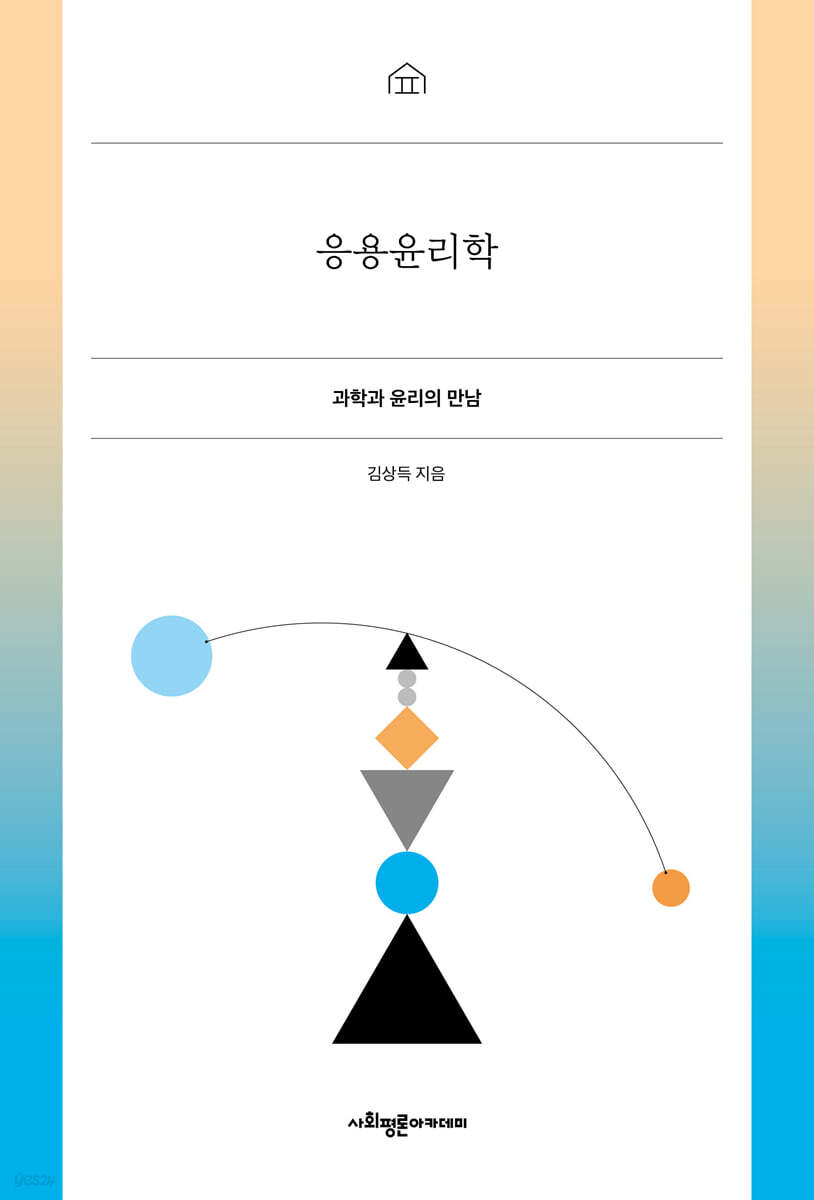
Applied Ethics
 |
Description
Book Introduction
This is truly the era of AI.
Until now, we have been pondering how to utilize science and technology to enrich human life, and as a result, we live in a world where the limits of technology are being updated every day.
But what is the world like now?
Now, humans have reached a point where they cannot survive even a single day without the help of AI and science and technology.
The world of the future will be the same.
Those who fail to adapt to new technologies will become increasingly marginalized, and people will become insensitive to AI and technology in controlling their environment and life.
'Applied Ethics' gives us food for thought in modern society where this tendency is becoming increasingly severe.
Applied ethics, which emerged in the 1960s amidst environmental movements and criticism of science and technology, is now divided into life, environment, information, AI robots, neurology, and technology/research ethics, intervening in our daily lives and decisions.
From a consent form in a hospital room, to a lab worksheet, to a line of code from a developer, to a single sentence in a policy, every decision we make invokes ethics.
This book does not lightly touch on the formation of applied ethics and current issues, but rather addresses key questions in each dilemma, leading readers to develop their own criteria for judgment.
In a world of evolving technology and shifting values, what criteria should we use to make decisions? This book offers a clue and aims to help members of society make responsible decisions.
Until now, we have been pondering how to utilize science and technology to enrich human life, and as a result, we live in a world where the limits of technology are being updated every day.
But what is the world like now?
Now, humans have reached a point where they cannot survive even a single day without the help of AI and science and technology.
The world of the future will be the same.
Those who fail to adapt to new technologies will become increasingly marginalized, and people will become insensitive to AI and technology in controlling their environment and life.
'Applied Ethics' gives us food for thought in modern society where this tendency is becoming increasingly severe.
Applied ethics, which emerged in the 1960s amidst environmental movements and criticism of science and technology, is now divided into life, environment, information, AI robots, neurology, and technology/research ethics, intervening in our daily lives and decisions.
From a consent form in a hospital room, to a lab worksheet, to a line of code from a developer, to a single sentence in a policy, every decision we make invokes ethics.
This book does not lightly touch on the formation of applied ethics and current issues, but rather addresses key questions in each dilemma, leading readers to develop their own criteria for judgment.
In a world of evolving technology and shifting values, what criteria should we use to make decisions? This book offers a clue and aims to help members of society make responsible decisions.
- You can preview some of the book's contents.
Preview
index
Acknowledgements
Introduction: Is Science Ethically Free?
Part 1: Questions of Bioethics
Chapter 1: The Ethics of Abortion: Does the Right to Abortion Help Liberate Women?
Chapter 2: The Ethics of Surrogacy: What are the Ethical Issues of Surrogacy?
Chapter 3: The Ethics of Embryo Adoption: Is Embryo Adoption Ethically Permissible?
Chapter 4: The Ethics of Gene Editing: Can Genetic Scissors Be Used Ethically?
Chapter 5: The Ethics of Human Cloning: Is It Possible to Create Children Using Somatic Cell Cloning?
Chapter 6: The Ethics of Euthanasia: Do Humans Have the Right to Die?
Part 2: Questions of Applied Ethics
Chapter 7 Environmental Ethics: Why and How We Should Protect the Environment
Chapter 8: Cyber Ethics: Should We Be Ethical in Cyberspace?
Chapter 9: Robot Ethics: Can AI Robots Make Ethical Decisions?
Chapter 10: Neuroethics: Does Free Will Really Exist?
Chapter 11: Technological Ethics: Is Technology Just a Tool for Ethics Implementation?
Chapter 12: Research Ethics: Why Research Needs Ethics
Appendix 1: What is Applied Ethics?
Appendix 2: How Bioethics Was Born
References
Search
Introduction: Is Science Ethically Free?
Part 1: Questions of Bioethics
Chapter 1: The Ethics of Abortion: Does the Right to Abortion Help Liberate Women?
Chapter 2: The Ethics of Surrogacy: What are the Ethical Issues of Surrogacy?
Chapter 3: The Ethics of Embryo Adoption: Is Embryo Adoption Ethically Permissible?
Chapter 4: The Ethics of Gene Editing: Can Genetic Scissors Be Used Ethically?
Chapter 5: The Ethics of Human Cloning: Is It Possible to Create Children Using Somatic Cell Cloning?
Chapter 6: The Ethics of Euthanasia: Do Humans Have the Right to Die?
Part 2: Questions of Applied Ethics
Chapter 7 Environmental Ethics: Why and How We Should Protect the Environment
Chapter 8: Cyber Ethics: Should We Be Ethical in Cyberspace?
Chapter 9: Robot Ethics: Can AI Robots Make Ethical Decisions?
Chapter 10: Neuroethics: Does Free Will Really Exist?
Chapter 11: Technological Ethics: Is Technology Just a Tool for Ethics Implementation?
Chapter 12: Research Ethics: Why Research Needs Ethics
Appendix 1: What is Applied Ethics?
Appendix 2: How Bioethics Was Born
References
Search
Into the book
Ethics that deals with practical issues is called applied ethics or practical ethics, in distinction from classical normative ethics.
In particular, the development of science and technology has had a great influence on the birth and activation of applied ethics.
That is, new ethical issues implied by the development of science and technology have brought about a revival of applied ethics.
--- From "Introduction: Is Science Free from Ethics"
To put it more bluntly, the rights discourse contains a 'moral sneer' or 'moral ridicule' that attempts to label women who demand the right to choose abortion as 'bad egoists'.
However, both women who have abortions and women who do not have abortions respect the fetus.
“The fetus is not a rights contestant facing the mother.
“The fetus and the mother are connected and more interdependent than anyone else…”
--- From Chapter 1, The Ethics of Abortion: Does the Right to Abortion Help Liberate Women?
However, the lack of an ethical consensus does not mean that agreement at the policy, legal, or institutional level is impossible.
Or, more precisely, we need to reach a social consensus on laws and systems regarding some ethical questions surrounding assisted reproductive medicine between non-spouses.
--- From “Chapter 2, Ethics of Surrogacy: What are the ethical issues of surrogacy?”
So, even though the embryo has no moral status and is not currently a party to the conflict, it has a 'future interest' in its future self.
And because we have a moral obligation to the future interests of others, it is morally wrong to harm a developing fetus, even if the mother has the right to terminate a pregnancy.
--- From "Chapter 3, Ethics of Embryo Adoption: Is Embryo Adoption Ethically Permissible?"
No one knows whether this will be a boon or a bane to humanity.
Because nature and God are omnipotent, but humans are not.
God knows not only yesterday and today, but also tomorrow.
(Omitted) Compared to God and nature, which are infinite beings, humans are finite, so it is questionable whether humans have the wisdom to lead the entire universe beautifully as the main characters of evolution.
Even if the universe were to do so, would it be able to make choices that would benefit us, even humanity? I can't guarantee it.
But doesn't that mean we can't experiment on humans? Who will take responsibility?
--- From “Chapter 4, Ethics of Gene Editing: Can Genetic Scissors Be Used Ethically?”
Therefore, we must ask how IVF and human cloning differ in terms of outcomes rather than processes.
A human being born through in vitro fertilization has no ontological difference from a human being born naturally.
So what about cloned humans? Their genes are identical to those of the "original human" who provided the nucleus.
It is no exaggeration to say that the debate over human cloning is a difference in interpretation of the meaning of this biological fact.
The representative philosophical problems raised by genetic identity are the questions of personal identity and individuality.
--- From "Chapter 5, Ethics of Human Cloning: Is it Possible to Have Children Using Somatic Cell Cloning?"
Euthanasia must be distinguished from natural death, from accidental death, and from suicide or homicide.
Of course, it is difficult to generalize, but euthanasia usually has an element of suicide in the sense that the patient himself wants to die, but it also has an element of homicide in the sense that the doctor actually carries out the death without killing himself.
Even if suicide is ethically acceptable, euthanasia is ethically problematic precisely because a third party is involved.
--- From “Chapter 6, The Ethics of Euthanasia: Do Humans Have the Right to Die”
But today, the question of who is the subject of environmental justice is entering a new phase.
It is precisely the extension of the scope of justice.
That is, some scholars argue that because animals also have the qualifications of subjects of justice, environmental goods should be distributed fairly to animals as well.
We call this ecological justice.
In this case, there are four subjects of justice.
First is the individual, second is the nation, third is future generations, and finally fourth is animals.
--- From “Chapter 7, Environmental Ethics: Why and How Should We Protect the Environment”
The fundamental question of cyberethics—“Should ethics apply to cyberspace?”—has two philosophical implications.
One is a critical question: “Does the current application of ethics to cyberspace truly have a philosophical foundation?” The other is an ethical question: “Is it truly ethically desirable to apply ethics to cyberspace?”
Ethics arise from the real interactions between people. Cyberspace is literally nothing more than a "virtual space," so why should such ethics apply? This raises ontological questions about cyberspace.
Nevertheless, most everyday people, without considering these philosophical questions, apply the ethics applied in real space to cyberspace and create various ethical rules.
--- From Chapter 8, Cyber Ethics: Should We Be Ethical in Cyberspace?
There is concern that acknowledging the ethical decisions of machines is itself a deviation from humanity, and that this deviation will lead to the 'deskilling' of moral faculties, that is, the decline of human moral judgment.
Since most people no longer think ethically about ethical dilemmas, the problem of moral decision paralysis may arise.
Of course, if 'we all' blindly trust robots' ethical decisions, these concerns seem valid.
But this is nothing more than a slippery slope argument. These concerns about the future of AI robots are a kind of suicidal prophecy.
Looking at human history, we can see that humans have progressed and developed through each crisis.
--- From Chapter 9, Robot Ethics: Can AI Robots Make Ethical Decisions?
Genetics and genomics have provided fertile ground for various ethical reflections on human nature.
However, the relationship between the brain and the self is much more direct than the relationship between genes and the individual.
Although the distinct characteristics of behavior are determined by genes, the areas that are integrated with behavior are located in the brain.
If we can infer behavior through images or manipulate it through the implantation of neural tissue or devices, neurotechnology will fundamentally alter the dynamics between individual subjectivity, responsibility, and free will in ways that genetics has never attempted.
Indeed, neurotechnology as a whole is challenging our sense of humanity and providing society with new tools for judging it.
--- From "Chapter 10, Neuroethics: Does Free Will Really Exist?"
More than any other technology, AI robots possess multiple identities, requiring practical wisdom from humans to use them in an ethically good way.
The so-called "five major problems of AI ethics"—AI bias, AI errors and safety, AI misuse, privacy, and killer robots—clearly demonstrate that AI robots can lead to ethical good, but can also lead to ethical evil.
53 Above all, Bareback's mediation theory clearly demonstrates the importance of design ethics for AI robots.
--- From “Chapter 11, Technological Ethics: Is Technology Just a Tool for Ethics Implementation?”
Adhering to research ethics and exploring research ethics are separate questions.
Of course, scientists can also explore research ethics, and it is clear that they are better suited to explore research ethics than anyone else.
However, to ensure objectivity and fairness in research ethics, an open attitude is needed in which scientists and social scientists in the humanities and social sciences seek to conduct interdisciplinary research together.
In other words, scientists must humbly acknowledge that they are experts in science, not in ethics, and, as "reflective scientists," they must discuss scientific ethics and research ethics with social scientists and the general public, thereby achieving the "democratization of science."
If research ethics are not secured through this deliberation process, the question of the legitimacy of "dirty hands," a hot topic in political philosophy, may be raised among scientists, and scientific research activities themselves may be damaged.
In particular, the development of science and technology has had a great influence on the birth and activation of applied ethics.
That is, new ethical issues implied by the development of science and technology have brought about a revival of applied ethics.
--- From "Introduction: Is Science Free from Ethics"
To put it more bluntly, the rights discourse contains a 'moral sneer' or 'moral ridicule' that attempts to label women who demand the right to choose abortion as 'bad egoists'.
However, both women who have abortions and women who do not have abortions respect the fetus.
“The fetus is not a rights contestant facing the mother.
“The fetus and the mother are connected and more interdependent than anyone else…”
--- From Chapter 1, The Ethics of Abortion: Does the Right to Abortion Help Liberate Women?
However, the lack of an ethical consensus does not mean that agreement at the policy, legal, or institutional level is impossible.
Or, more precisely, we need to reach a social consensus on laws and systems regarding some ethical questions surrounding assisted reproductive medicine between non-spouses.
--- From “Chapter 2, Ethics of Surrogacy: What are the ethical issues of surrogacy?”
So, even though the embryo has no moral status and is not currently a party to the conflict, it has a 'future interest' in its future self.
And because we have a moral obligation to the future interests of others, it is morally wrong to harm a developing fetus, even if the mother has the right to terminate a pregnancy.
--- From "Chapter 3, Ethics of Embryo Adoption: Is Embryo Adoption Ethically Permissible?"
No one knows whether this will be a boon or a bane to humanity.
Because nature and God are omnipotent, but humans are not.
God knows not only yesterday and today, but also tomorrow.
(Omitted) Compared to God and nature, which are infinite beings, humans are finite, so it is questionable whether humans have the wisdom to lead the entire universe beautifully as the main characters of evolution.
Even if the universe were to do so, would it be able to make choices that would benefit us, even humanity? I can't guarantee it.
But doesn't that mean we can't experiment on humans? Who will take responsibility?
--- From “Chapter 4, Ethics of Gene Editing: Can Genetic Scissors Be Used Ethically?”
Therefore, we must ask how IVF and human cloning differ in terms of outcomes rather than processes.
A human being born through in vitro fertilization has no ontological difference from a human being born naturally.
So what about cloned humans? Their genes are identical to those of the "original human" who provided the nucleus.
It is no exaggeration to say that the debate over human cloning is a difference in interpretation of the meaning of this biological fact.
The representative philosophical problems raised by genetic identity are the questions of personal identity and individuality.
--- From "Chapter 5, Ethics of Human Cloning: Is it Possible to Have Children Using Somatic Cell Cloning?"
Euthanasia must be distinguished from natural death, from accidental death, and from suicide or homicide.
Of course, it is difficult to generalize, but euthanasia usually has an element of suicide in the sense that the patient himself wants to die, but it also has an element of homicide in the sense that the doctor actually carries out the death without killing himself.
Even if suicide is ethically acceptable, euthanasia is ethically problematic precisely because a third party is involved.
--- From “Chapter 6, The Ethics of Euthanasia: Do Humans Have the Right to Die”
But today, the question of who is the subject of environmental justice is entering a new phase.
It is precisely the extension of the scope of justice.
That is, some scholars argue that because animals also have the qualifications of subjects of justice, environmental goods should be distributed fairly to animals as well.
We call this ecological justice.
In this case, there are four subjects of justice.
First is the individual, second is the nation, third is future generations, and finally fourth is animals.
--- From “Chapter 7, Environmental Ethics: Why and How Should We Protect the Environment”
The fundamental question of cyberethics—“Should ethics apply to cyberspace?”—has two philosophical implications.
One is a critical question: “Does the current application of ethics to cyberspace truly have a philosophical foundation?” The other is an ethical question: “Is it truly ethically desirable to apply ethics to cyberspace?”
Ethics arise from the real interactions between people. Cyberspace is literally nothing more than a "virtual space," so why should such ethics apply? This raises ontological questions about cyberspace.
Nevertheless, most everyday people, without considering these philosophical questions, apply the ethics applied in real space to cyberspace and create various ethical rules.
--- From Chapter 8, Cyber Ethics: Should We Be Ethical in Cyberspace?
There is concern that acknowledging the ethical decisions of machines is itself a deviation from humanity, and that this deviation will lead to the 'deskilling' of moral faculties, that is, the decline of human moral judgment.
Since most people no longer think ethically about ethical dilemmas, the problem of moral decision paralysis may arise.
Of course, if 'we all' blindly trust robots' ethical decisions, these concerns seem valid.
But this is nothing more than a slippery slope argument. These concerns about the future of AI robots are a kind of suicidal prophecy.
Looking at human history, we can see that humans have progressed and developed through each crisis.
--- From Chapter 9, Robot Ethics: Can AI Robots Make Ethical Decisions?
Genetics and genomics have provided fertile ground for various ethical reflections on human nature.
However, the relationship between the brain and the self is much more direct than the relationship between genes and the individual.
Although the distinct characteristics of behavior are determined by genes, the areas that are integrated with behavior are located in the brain.
If we can infer behavior through images or manipulate it through the implantation of neural tissue or devices, neurotechnology will fundamentally alter the dynamics between individual subjectivity, responsibility, and free will in ways that genetics has never attempted.
Indeed, neurotechnology as a whole is challenging our sense of humanity and providing society with new tools for judging it.
--- From "Chapter 10, Neuroethics: Does Free Will Really Exist?"
More than any other technology, AI robots possess multiple identities, requiring practical wisdom from humans to use them in an ethically good way.
The so-called "five major problems of AI ethics"—AI bias, AI errors and safety, AI misuse, privacy, and killer robots—clearly demonstrate that AI robots can lead to ethical good, but can also lead to ethical evil.
53 Above all, Bareback's mediation theory clearly demonstrates the importance of design ethics for AI robots.
--- From “Chapter 11, Technological Ethics: Is Technology Just a Tool for Ethics Implementation?”
Adhering to research ethics and exploring research ethics are separate questions.
Of course, scientists can also explore research ethics, and it is clear that they are better suited to explore research ethics than anyone else.
However, to ensure objectivity and fairness in research ethics, an open attitude is needed in which scientists and social scientists in the humanities and social sciences seek to conduct interdisciplinary research together.
In other words, scientists must humbly acknowledge that they are experts in science, not in ethics, and, as "reflective scientists," they must discuss scientific ethics and research ethics with social scientists and the general public, thereby achieving the "democratization of science."
If research ethics are not secured through this deliberation process, the question of the legitimacy of "dirty hands," a hot topic in political philosophy, may be raised among scientists, and scientific research activities themselves may be damaged.
--- From Chapter 12, Research Ethics: Why Research Needs Ethics
Publisher's Review
Technological mediation and human choice
As AI becomes increasingly involved in human decision-making, applied ethics moves beyond the question of "what is right" to the practical question of "how should we judge?"
This book examines the rise of applied ethics in the 1960s amidst the civil rights, anti-war, and environmental movements, as well as the critique of science and technology, and clarifies the shift toward philosophy's role in solving real-world moral problems.
Today's applied ethics is divided into life, environment, information, robotics, neuroscience, technology, and research ethics, and intervenes in detail in our daily decisions.
This book is designed to address key issues in each field without lightly touching on them, allowing readers to develop their own consistent standards of judgment.
This book breaks down how technology 'mediates' human behavior, relationships, and even morality itself.
Designers of technology have a responsibility to anticipate the types of mediation—intended and implicit—coercion, persuasion, and inducement, and the moral evaluation of the outcomes.
The book goes on to emphasize the high level of imagination required in technological design. AI robots will change individual decisions and actions, such as those related to healthcare and care, at the micro level, and the very relationship between humans and technology at the macro level.
Therefore, the question “Can AI robots make moral decisions?” leads to the question of whether it is possible to design and adjust the moral capacities of robots, shifting the focus beyond the moral agent debate to how to implement actual decision-making processes.
The Boundaries of Life and Freedom: Questions in Bioethics
Part 1 meticulously dissects the tension between life and freedom along the spectrum of abortion, surrogacy, embryo adoption, gene editing, human cloning, and euthanasia.
In 'The Ethics of Abortion,' we delve deeply into the rights of the fetus and the freedom of the mother, and critically examine three feminist arguments centered on the freedom of the mother.
Next, 'Surrogacy' and 'Embryo Adoption' deal with the subject of reproduction and the concept of parentage, 'Gene Editing' and 'Human Cloning' deal with various dilemmas in situations where technology intervenes in life, and lastly, 'Euthanasia' explores the conditions of well-dying and the right to death.
Each chapter goes beyond simply summarizing the issues of debate, demonstrating the layers of argument that constitute the criteria for judgment, providing a framework for thinking that can be utilized in classrooms, research, and policy settings.
Environmental, Cyber, Robotics, Neuroscience, Technology, and Research Ethics: Questions of Applied Ethics
Part 2 shifts the focus to more comprehensive applied ethics.
Environmental ethics asks, "Why and how should we preserve the environment?" and provides an easy-to-understand introduction to intergenerational justice (the rights of future generations), procedural justice (fairness in the decision-making process), and ecological justice (consideration of non-human beings such as animals).
Cyber ethics points out that “responsibility ultimately lies with the ‘self’ in reality” through the issues of identity, anonymity, and multiple identities in virtual spaces.
Robot ethics divides robots into various types of agents and examines the extent to which they can be designed to make independent decisions.
Technology ethics presents a four-point checklist for designers to keep in mind, while research ethics emphasizes the need to foster ethical awareness through education and systems.
In particular, it is said that scientists do not need to study research ethics in depth, but they must maintain an attitude of complying with research ethics.
Applied ethics to support designing the future
From its inception, applied ethics has turned the focus of philosophy toward 'solving real-world problems.'
The challenge going forward is not to expand the list of issues, but to more precisely translate diverse field problems into the language of systems, education, and design.
For example, research ethics should transcend individual virtue and become a matter of social ethics and justice, and ethical awareness should be fostered through the dual axes of education, law, and system.
In the environmental field, efforts are required to legislate standards for policy and distribution beyond the justification of fairness.
This practical shift will be complete when it extends beyond university classrooms and into ethics that operate in hospitals, laboratories, businesses, and administrative settings.
In the future society, the key is not 'what can be done' through technology, but 'how' technology creates the relationship between humans and the world.
This book guides readers to establish their own judgment principles by addressing core questions in the areas of environment, cyberspace, robotics, neuroscience, technology, and research ethics. It also transforms the question, "Is science free from ethics?" into a practical choice. In a modern society where AI mediates daily life and institutions, this book will equip readers with the language and tools to design better decisions.
As AI becomes increasingly involved in human decision-making, applied ethics moves beyond the question of "what is right" to the practical question of "how should we judge?"
This book examines the rise of applied ethics in the 1960s amidst the civil rights, anti-war, and environmental movements, as well as the critique of science and technology, and clarifies the shift toward philosophy's role in solving real-world moral problems.
Today's applied ethics is divided into life, environment, information, robotics, neuroscience, technology, and research ethics, and intervenes in detail in our daily decisions.
This book is designed to address key issues in each field without lightly touching on them, allowing readers to develop their own consistent standards of judgment.
This book breaks down how technology 'mediates' human behavior, relationships, and even morality itself.
Designers of technology have a responsibility to anticipate the types of mediation—intended and implicit—coercion, persuasion, and inducement, and the moral evaluation of the outcomes.
The book goes on to emphasize the high level of imagination required in technological design. AI robots will change individual decisions and actions, such as those related to healthcare and care, at the micro level, and the very relationship between humans and technology at the macro level.
Therefore, the question “Can AI robots make moral decisions?” leads to the question of whether it is possible to design and adjust the moral capacities of robots, shifting the focus beyond the moral agent debate to how to implement actual decision-making processes.
The Boundaries of Life and Freedom: Questions in Bioethics
Part 1 meticulously dissects the tension between life and freedom along the spectrum of abortion, surrogacy, embryo adoption, gene editing, human cloning, and euthanasia.
In 'The Ethics of Abortion,' we delve deeply into the rights of the fetus and the freedom of the mother, and critically examine three feminist arguments centered on the freedom of the mother.
Next, 'Surrogacy' and 'Embryo Adoption' deal with the subject of reproduction and the concept of parentage, 'Gene Editing' and 'Human Cloning' deal with various dilemmas in situations where technology intervenes in life, and lastly, 'Euthanasia' explores the conditions of well-dying and the right to death.
Each chapter goes beyond simply summarizing the issues of debate, demonstrating the layers of argument that constitute the criteria for judgment, providing a framework for thinking that can be utilized in classrooms, research, and policy settings.
Environmental, Cyber, Robotics, Neuroscience, Technology, and Research Ethics: Questions of Applied Ethics
Part 2 shifts the focus to more comprehensive applied ethics.
Environmental ethics asks, "Why and how should we preserve the environment?" and provides an easy-to-understand introduction to intergenerational justice (the rights of future generations), procedural justice (fairness in the decision-making process), and ecological justice (consideration of non-human beings such as animals).
Cyber ethics points out that “responsibility ultimately lies with the ‘self’ in reality” through the issues of identity, anonymity, and multiple identities in virtual spaces.
Robot ethics divides robots into various types of agents and examines the extent to which they can be designed to make independent decisions.
Technology ethics presents a four-point checklist for designers to keep in mind, while research ethics emphasizes the need to foster ethical awareness through education and systems.
In particular, it is said that scientists do not need to study research ethics in depth, but they must maintain an attitude of complying with research ethics.
Applied ethics to support designing the future
From its inception, applied ethics has turned the focus of philosophy toward 'solving real-world problems.'
The challenge going forward is not to expand the list of issues, but to more precisely translate diverse field problems into the language of systems, education, and design.
For example, research ethics should transcend individual virtue and become a matter of social ethics and justice, and ethical awareness should be fostered through the dual axes of education, law, and system.
In the environmental field, efforts are required to legislate standards for policy and distribution beyond the justification of fairness.
This practical shift will be complete when it extends beyond university classrooms and into ethics that operate in hospitals, laboratories, businesses, and administrative settings.
In the future society, the key is not 'what can be done' through technology, but 'how' technology creates the relationship between humans and the world.
This book guides readers to establish their own judgment principles by addressing core questions in the areas of environment, cyberspace, robotics, neuroscience, technology, and research ethics. It also transforms the question, "Is science free from ethics?" into a practical choice. In a modern society where AI mediates daily life and institutions, this book will equip readers with the language and tools to design better decisions.
GOODS SPECIFICS
- Date of issue: October 31, 2025
- Page count, weight, size: 532 pages | 152*224*35mm
- ISBN13: 9791167072047
- ISBN10: 1167072049
You may also like
카테고리
korean


korean

![ELLE 엘르 스페셜 에디션 A형 : 12월 [2025]](http://librairie.coreenne.fr/cdn/shop/files/b8e27a3de6c9538896439686c6b0e8fb.jpg?v=1766436872&width=3840)


