

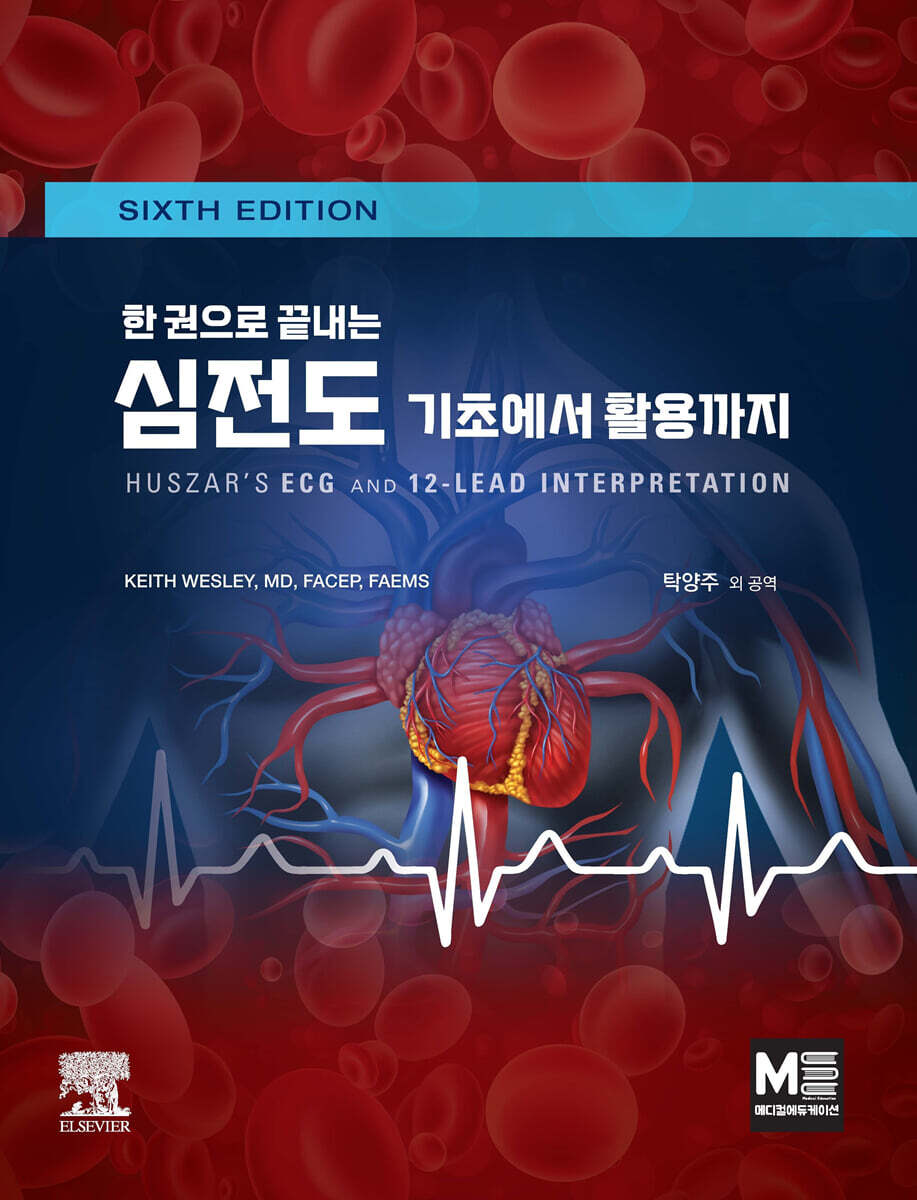
Electrocardiogram in one volume
 |
Description
Book Introduction
"Complete Electrocardiogram in One Book" was created to provide doctors, nurses, and emergency medical workers with the basic knowledge of electrocardiogram interpretation.
It also informs us of the importance of clinical symptoms and signs and appropriate treatment in patients with arrhythmia.
Electrocardiographic monitoring and simple 12-lead electrocardiography are becoming key techniques in the diagnosis and treatment of patients with acute coronary syndrome.
Therefore, part of this textbook covers the interpretation of 12-lead electrocardiograms in patients with acute coronary syndrome, and also discusses the pathophysiology, clinical symptoms and signs, and treatment.
It also informs us of the importance of clinical symptoms and signs and appropriate treatment in patients with arrhythmia.
Electrocardiographic monitoring and simple 12-lead electrocardiography are becoming key techniques in the diagnosis and treatment of patients with acute coronary syndrome.
Therefore, part of this textbook covers the interpretation of 12-lead electrocardiograms in patients with acute coronary syndrome, and also discusses the pathophysiology, clinical symptoms and signs, and treatment.
- You can preview some of the book's contents.
Preview
index
1 Anatomy and Physiology of the Heart 1
2 Electrocardiogram induction and electrocardiogram monitoring 19
3 Basic Elements of an ECG Waveform 29
4-Step ECG Interpretation 57
5 Dongri Rhythm 85
6 Atrial arrhythmia 97
7 Junctional arrhythmia 113
8 Ventricular arrhythmias 125
9 Room Block 143
10 Implanted artificial pacemaker rhythm 157
11 Treatment of Arrhythmias 169
12 12-Lead ECG: Leads and Axis 195
13 Multiple branch blocking (each blocking) and multiple blocking (internal blocking) 221
14 Electrocardiographic findings due to cardiac structural and electrolyte abnormalities, etc. 237
15 Coronary Artery Disease and 12-Lead Electrocardiography 261
16 Electrocardiogram interpretation of myocardial infarction 285
17 Diagnosis and Treatment of Acute Coronary Syndromes 303
Appendix A: Review Questions Answer Key 323
Appendix B: Rhythm Reading: Self-Assessment 325
Appendix C: Self-Assessment Answer Key 401
INDEX 421
2 Electrocardiogram induction and electrocardiogram monitoring 19
3 Basic Elements of an ECG Waveform 29
4-Step ECG Interpretation 57
5 Dongri Rhythm 85
6 Atrial arrhythmia 97
7 Junctional arrhythmia 113
8 Ventricular arrhythmias 125
9 Room Block 143
10 Implanted artificial pacemaker rhythm 157
11 Treatment of Arrhythmias 169
12 12-Lead ECG: Leads and Axis 195
13 Multiple branch blocking (each blocking) and multiple blocking (internal blocking) 221
14 Electrocardiographic findings due to cardiac structural and electrolyte abnormalities, etc. 237
15 Coronary Artery Disease and 12-Lead Electrocardiography 261
16 Electrocardiogram interpretation of myocardial infarction 285
17 Diagnosis and Treatment of Acute Coronary Syndromes 303
Appendix A: Review Questions Answer Key 323
Appendix B: Rhythm Reading: Self-Assessment 325
Appendix C: Self-Assessment Answer Key 401
INDEX 421
Publisher's Review
Author's Preface
Dr.
Keith Wesley's Huszar's ECG and 12-Lead Interpretation has long been a mainstay of emergency medicine and an ally in medical education.
This book provides a systematic approach to interpreting electrocardiograms in clinical practice.
This 6th edition textbook has updated important content to reflect new knowledge regarding the treatment of acute heart disease.
Years ago, Dr.
Robert J.
I met Huszar and he was very passionate about how to treat cardiac disease in emergency medicine.
He was witty, knowledgeable, and respected those who studied electrocardiography.
When I was training paramedics in Texas in the 1970s, I always had Dr.
Huszar's electrocardiography textbook was used (at the time it was titled 'Emergency Cardiac Care').
Dr. Lee, a fellow emergency medicine physician and long-time friend.
Keith Wesley is Dr.
Continuing Huszar's tradition, this textbook was developed to a new level and is still widely used today.
According to the Centers for Disease Control and Prevention, 37 Americans die every second from cardiovascular disease.
As with other medical conditions, early diagnosis is essential in the treatment of cardiovascular disease.
Because an electrocardiogram is the most sensitive diagnostic method for quickly diagnosing a heart attack or other life-threatening conditions, medical professionals, including emergency medical technicians, need to be proficient in measuring and interpreting electrocardiograms.
Dr.
Huszar and Wesley will help you understand the electrocardiogram (ECG) and provide immediate and effective treatment to patients with acute cardiac events.
This 6th edition textbook has been revised to include concise yet comprehensive coverage of electrocardiography.
This book is an excellent textbook for training or reference for all medical professionals who measure and interpret electrocardiograms.
Bryan E.
Bledsoe, DO, FACEP, FAEMS
Professor of Emergency Medicine and Injury Medicine, University of Nevada
Translator's Preface
Although various diagnostic techniques have been developed and used to diagnose functional and morphological abnormalities of the heart, the electrocardiogram, developed by the Dutch physiologist Einthoven 100 years ago, is still used as the most important and basic examination method for diagnosing cardiac arrhythmias.
In addition, 12-lead electrocardiography is recommended as the fastest and standard primary examination method for diagnosing myocardial infarction, and is also used as an auxiliary tool for diagnosing morphological abnormalities of the heart.
Therefore, the ability to monitor electrocardiograms and measure 12-lead electrocardiograms quickly and accurately and to appropriately differentiate abnormalities in electrocardiogram rhythms are the most basic abilities required of medical personnel, especially emergency medical workers.
This book is written by an emergency medicine specialist who has experienced various arrhythmias and heart disease patients for a long time. The author explains the basic principles of electrocardiography and the basic structure of a normal electrocardiogram in an easy-to-understand manner, and explains in detail the diagnostic characteristics and differential diagnosis of various arrhythmias.
In addition, the author explains the basic structure of the 12-lead electrocardiogram and the electrocardiographic characteristics and differential diagnosis of myocardial infarction and intraventricular block based on his experience, focusing on important clinical content.
The important contents of each chapter are summarized in tables and figures for easy understanding at a glance, and at the end of each chapter, there is a list of things to remember, making it convenient for not only students studying electrocardiography for the first time, but also medical professionals working in the medical field to keep it close at hand and refer to it when needed.
The appendix of the book includes various methods for calculating the axis of the electrocardiogram and self-assessment problems that allow you to study electrocardiogram rhythm interpretation on your own, allowing you to evaluate your own electrocardiogram rhythm interpretation skills.
The Korean medical terms used in this book are based on the 6th revised edition of the Medical Terminology Committee of the Korean Medical Association. Important terms or terms that may cause confusion are written in English.
The treatment-related content in Chapters 11 and 17 is based on US clinical guidelines and the author's clinical experience in the US, so please keep in mind that it may differ from domestic clinical guidelines. Please use it as a reference when applying it to the treatment of Korean patients.
I hope that this textbook will be helpful to all those studying electrocardiography, helping them gain a better understanding of the basic principles of electrocardiography and the diagnostic characteristics of arrhythmias, and gain confidence and ease of interpreting electrocardiograms.
Furthermore, I hope that the electrocardiogram interpretation skills learned through this textbook will be fully utilized in urgent medical settings and serve as an important tool for saving patients' lives in critical situations.
August 2024
Translator Representative Tak Yang-ju
Dr.
Keith Wesley's Huszar's ECG and 12-Lead Interpretation has long been a mainstay of emergency medicine and an ally in medical education.
This book provides a systematic approach to interpreting electrocardiograms in clinical practice.
This 6th edition textbook has updated important content to reflect new knowledge regarding the treatment of acute heart disease.
Years ago, Dr.
Robert J.
I met Huszar and he was very passionate about how to treat cardiac disease in emergency medicine.
He was witty, knowledgeable, and respected those who studied electrocardiography.
When I was training paramedics in Texas in the 1970s, I always had Dr.
Huszar's electrocardiography textbook was used (at the time it was titled 'Emergency Cardiac Care').
Dr. Lee, a fellow emergency medicine physician and long-time friend.
Keith Wesley is Dr.
Continuing Huszar's tradition, this textbook was developed to a new level and is still widely used today.
According to the Centers for Disease Control and Prevention, 37 Americans die every second from cardiovascular disease.
As with other medical conditions, early diagnosis is essential in the treatment of cardiovascular disease.
Because an electrocardiogram is the most sensitive diagnostic method for quickly diagnosing a heart attack or other life-threatening conditions, medical professionals, including emergency medical technicians, need to be proficient in measuring and interpreting electrocardiograms.
Dr.
Huszar and Wesley will help you understand the electrocardiogram (ECG) and provide immediate and effective treatment to patients with acute cardiac events.
This 6th edition textbook has been revised to include concise yet comprehensive coverage of electrocardiography.
This book is an excellent textbook for training or reference for all medical professionals who measure and interpret electrocardiograms.
Bryan E.
Bledsoe, DO, FACEP, FAEMS
Professor of Emergency Medicine and Injury Medicine, University of Nevada
Translator's Preface
Although various diagnostic techniques have been developed and used to diagnose functional and morphological abnormalities of the heart, the electrocardiogram, developed by the Dutch physiologist Einthoven 100 years ago, is still used as the most important and basic examination method for diagnosing cardiac arrhythmias.
In addition, 12-lead electrocardiography is recommended as the fastest and standard primary examination method for diagnosing myocardial infarction, and is also used as an auxiliary tool for diagnosing morphological abnormalities of the heart.
Therefore, the ability to monitor electrocardiograms and measure 12-lead electrocardiograms quickly and accurately and to appropriately differentiate abnormalities in electrocardiogram rhythms are the most basic abilities required of medical personnel, especially emergency medical workers.
This book is written by an emergency medicine specialist who has experienced various arrhythmias and heart disease patients for a long time. The author explains the basic principles of electrocardiography and the basic structure of a normal electrocardiogram in an easy-to-understand manner, and explains in detail the diagnostic characteristics and differential diagnosis of various arrhythmias.
In addition, the author explains the basic structure of the 12-lead electrocardiogram and the electrocardiographic characteristics and differential diagnosis of myocardial infarction and intraventricular block based on his experience, focusing on important clinical content.
The important contents of each chapter are summarized in tables and figures for easy understanding at a glance, and at the end of each chapter, there is a list of things to remember, making it convenient for not only students studying electrocardiography for the first time, but also medical professionals working in the medical field to keep it close at hand and refer to it when needed.
The appendix of the book includes various methods for calculating the axis of the electrocardiogram and self-assessment problems that allow you to study electrocardiogram rhythm interpretation on your own, allowing you to evaluate your own electrocardiogram rhythm interpretation skills.
The Korean medical terms used in this book are based on the 6th revised edition of the Medical Terminology Committee of the Korean Medical Association. Important terms or terms that may cause confusion are written in English.
The treatment-related content in Chapters 11 and 17 is based on US clinical guidelines and the author's clinical experience in the US, so please keep in mind that it may differ from domestic clinical guidelines. Please use it as a reference when applying it to the treatment of Korean patients.
I hope that this textbook will be helpful to all those studying electrocardiography, helping them gain a better understanding of the basic principles of electrocardiography and the diagnostic characteristics of arrhythmias, and gain confidence and ease of interpreting electrocardiograms.
Furthermore, I hope that the electrocardiogram interpretation skills learned through this textbook will be fully utilized in urgent medical settings and serve as an important tool for saving patients' lives in critical situations.
August 2024
Translator Representative Tak Yang-ju
GOODS SPECIFICS
- Date of issue: August 30, 2024
- Page count, weight, size: 440 pages | 215*280*30mm
- ISBN13: 9791169002400
- ISBN10: 1169002404
You may also like
카테고리
korean


korean

![GQ KOREA Mark (Monthly): December [2025]](http://librairie.coreenne.fr/cdn/shop/files/8ef265dbbfbf186523ed75ba7319009d.jpg?v=1765340328&width=3840)


