

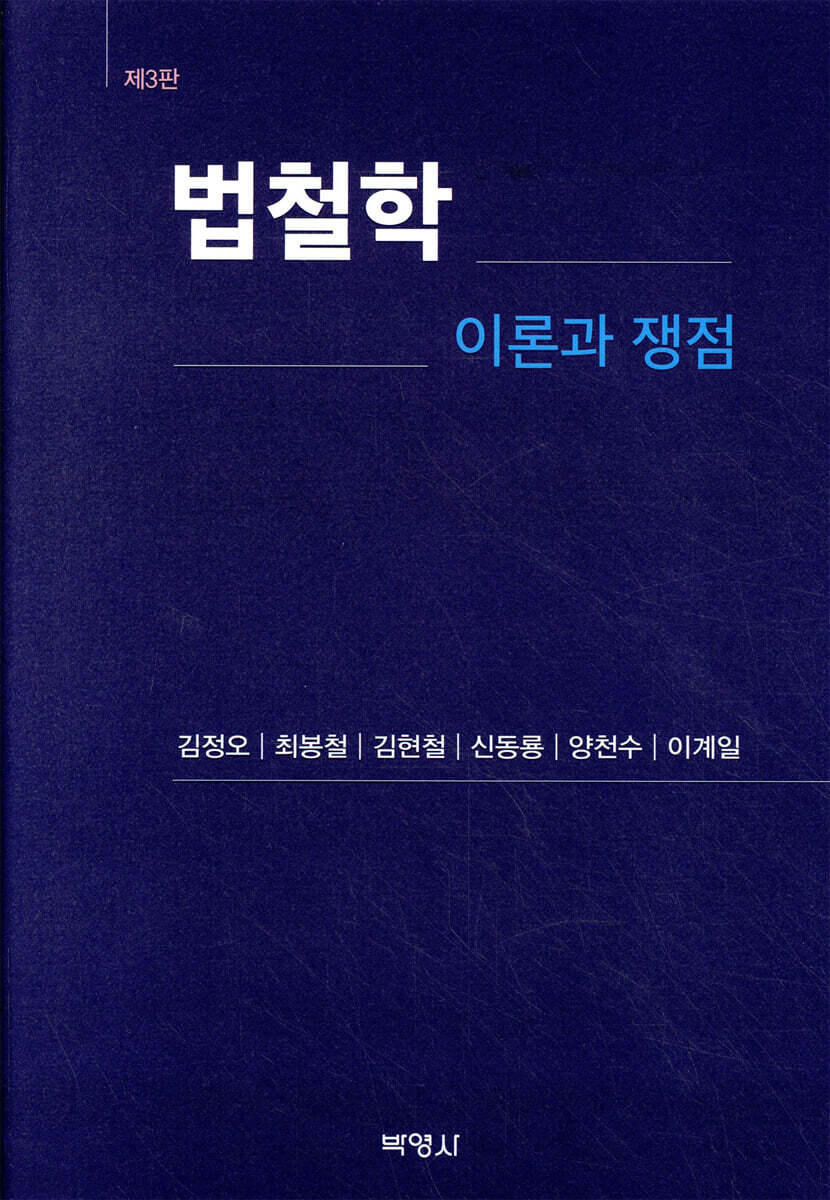
Legal philosophy theories and issues
 |
Description
Book Introduction
Rapid changes in science and technology and changes in the direction of academic research are giving rise to new theories and legal issues.
Accordingly, the third edition attempted to respond to these changes in theory and issues.
In this edition, almost all chapters have been revised, except for the chapters on law, morality, and justice that were intensively revised in the second edition.
Chapters on legal positivism and natural law theory, as well as chapters on basic topics in the philosophy of law, have been revised to supplement existing content, as no new theories or issues have emerged.
Accordingly, the third edition attempted to respond to these changes in theory and issues.
In this edition, almost all chapters have been revised, except for the chapters on law, morality, and justice that were intensively revised in the second edition.
Chapters on legal positivism and natural law theory, as well as chapters on basic topics in the philosophy of law, have been revised to supplement existing content, as no new theories or issues have emerged.
- You can preview some of the book's contents.
Preview
index
Chapter 1: What is Philosophy of Law? 1
Ⅰ.
Various Approaches to Legal Philosophy _1
Ⅱ.
Concepts of Legal Philosophy _3
Ⅲ.
Method and Content of Legal Philosophy _6
Ⅳ.
The Significance of Legal Philosophy _7
V.
Conclusion _14
Chapter 2 Legal Positivism 17
Ⅰ.
Introduction _17
Ⅱ.
Understanding Legal Positivism _18
Ⅲ.
Kelsen's Theory of Law _24
Ⅳ.
Hart's Law Theory _32
Chapter 3: Natural Law 45
Ⅰ.
Introduction _45
Ⅱ.
Natural Law Theory _46
Ⅲ.
Thomas Aquinas's Legal Theory _51
Ⅳ.
Fuller's Natural Law Theory _55
V.
Dworkin's Natural Law Theory _60
Ⅵ.
A Comparison of Legal Positivism and Natural Law Theory _65
Chapter 4: Law and Morality 69
Ⅰ.
The Relationship Between Law and Morality _69
Ⅱ.
Mill and Stephen's Debate _72
Ⅲ.
The Hart and Devlin Debate _76
Ⅳ.
The Williams Commission on Pornography and Dworkin's Debate _84
V.
Legal and Moral Issues in Case Law _90
Chapter 5 Definitions 95
Ⅰ.
Introduction _95
Ⅱ.
The Relationship Between Law and Justice _97
Ⅲ.
What is Justice? _101
Chapter 6: Liberalism and Communitarianism 123
Ⅰ.
Liberalism and Communitarianism in Law _123
Ⅱ.
A Communitarian Critique of Rawls's Theory of Justice _125
Ⅲ.
A Communitarian Critique of Rawls's Political Liberalism _130
Chapter 7 Rights 143
Ⅰ.
The Meaning and Historical Context of Rights _143
Ⅱ.
Formation of the Concept of Rights _145
Ⅲ.
The Essence of Rights _150
Ⅳ.
The Aspects of Rights: Focusing on Hohfeld's Theory _157
V.
The Meaning of the Concept of Rights _162
Chapter 8: Rule of Law 165
Ⅰ.
The Meaning of the Rule of Law _165
Ⅱ.
Various Understandings of the Rule of Law _168
Ⅲ.
The Historical Roots of the Rule of Law _172
Ⅳ.
Aspects of the Rule of Law _181
V.
The Future of the Rule of Law _186
Chapter 9 Obligation to Obey the Law and Civil Disobedience 189
Ⅰ.
Issues on Obedience to the Law and Civil Disobedience _189
Ⅱ.
Obligation to Comply with the Law _190
Ⅲ.
Civil Disobedience _195
Ⅳ.
Right to Resistance _207
Chapter 10 Legal Reasoning 215
Ⅰ.
The Significance of Legal Reasoning _215
Ⅱ.
The Legal Syllogism as a Basic Model of Legal Reasoning _216
Ⅲ.
Step 1: Fact-finding _220
Ⅳ.
Step 2: Elaborating Legal Norms _229
V.
Step 3: Applying the Case _233
Ⅵ.
The Limitations of Traditional Inclusion Theory and Its Reconstruction Through Legal Hermeneutics _234
Chapter 11: American Legal Interpretation 241
Ⅰ.
Introduction _241
Ⅱ.
The Importance of American Legal Interpretation _242
Ⅲ.
Types of American Legal Interpretation Theory _246
Ⅳ.
The Trend of American Legal Interpretation_251
V.
Debate on the Relationship Between Congress and the Courts _257
Ⅵ.
Summary and Conclusion _262
Chapter 12: German Legal Interpretation 265
Ⅰ.
Distinction between narrow interpretation and legal formation _265
Ⅱ.
Narrow Interpretation of Law _266
Ⅲ.
Judges' Law Formation _281
Chapter 13: Legal Interpretation in Korea 291
Ⅰ.
Introduction _291
Ⅱ.
The Supreme Court's General Interpretation of Law _292
Ⅲ.
Specific aspects of the Supreme Court's interpretation theory _297
Chapter 14: Law and Gender 319
Ⅰ.
The Philosophical Significance of Law and Gender _319
Ⅱ.
The Interconnectedness of Law and Gender _320
Ⅲ.
Discussion on Women's Identity _324
Ⅳ.
Direction of Gender Law _329
V.
Problem Areas of Law and Gender _333
Chapter 15: Law and Bioethics 343
Ⅰ.
Modern Society and Bioethics _343
Ⅱ.
The Formation and Development of Bioethics _344
Ⅲ.
Legal Approaches to Bioethics _347
Ⅳ.
Bioethics Cases _349
Chapter 16: Law and Artificial Intelligence 359
Ⅰ.
The Challenges of the Intelligent Information Society and Artificial Intelligence _359
Ⅱ.
The Significance of Artificial Intelligence _360
Ⅲ.
The Risks of Artificial Intelligence _361
Ⅳ.
Legal Control Methods and Limitations of Artificial Intelligence _366
V.
Legal Responses to the Risks of Artificial Intelligence _373
Index 383
Ⅰ.
Various Approaches to Legal Philosophy _1
Ⅱ.
Concepts of Legal Philosophy _3
Ⅲ.
Method and Content of Legal Philosophy _6
Ⅳ.
The Significance of Legal Philosophy _7
V.
Conclusion _14
Chapter 2 Legal Positivism 17
Ⅰ.
Introduction _17
Ⅱ.
Understanding Legal Positivism _18
Ⅲ.
Kelsen's Theory of Law _24
Ⅳ.
Hart's Law Theory _32
Chapter 3: Natural Law 45
Ⅰ.
Introduction _45
Ⅱ.
Natural Law Theory _46
Ⅲ.
Thomas Aquinas's Legal Theory _51
Ⅳ.
Fuller's Natural Law Theory _55
V.
Dworkin's Natural Law Theory _60
Ⅵ.
A Comparison of Legal Positivism and Natural Law Theory _65
Chapter 4: Law and Morality 69
Ⅰ.
The Relationship Between Law and Morality _69
Ⅱ.
Mill and Stephen's Debate _72
Ⅲ.
The Hart and Devlin Debate _76
Ⅳ.
The Williams Commission on Pornography and Dworkin's Debate _84
V.
Legal and Moral Issues in Case Law _90
Chapter 5 Definitions 95
Ⅰ.
Introduction _95
Ⅱ.
The Relationship Between Law and Justice _97
Ⅲ.
What is Justice? _101
Chapter 6: Liberalism and Communitarianism 123
Ⅰ.
Liberalism and Communitarianism in Law _123
Ⅱ.
A Communitarian Critique of Rawls's Theory of Justice _125
Ⅲ.
A Communitarian Critique of Rawls's Political Liberalism _130
Chapter 7 Rights 143
Ⅰ.
The Meaning and Historical Context of Rights _143
Ⅱ.
Formation of the Concept of Rights _145
Ⅲ.
The Essence of Rights _150
Ⅳ.
The Aspects of Rights: Focusing on Hohfeld's Theory _157
V.
The Meaning of the Concept of Rights _162
Chapter 8: Rule of Law 165
Ⅰ.
The Meaning of the Rule of Law _165
Ⅱ.
Various Understandings of the Rule of Law _168
Ⅲ.
The Historical Roots of the Rule of Law _172
Ⅳ.
Aspects of the Rule of Law _181
V.
The Future of the Rule of Law _186
Chapter 9 Obligation to Obey the Law and Civil Disobedience 189
Ⅰ.
Issues on Obedience to the Law and Civil Disobedience _189
Ⅱ.
Obligation to Comply with the Law _190
Ⅲ.
Civil Disobedience _195
Ⅳ.
Right to Resistance _207
Chapter 10 Legal Reasoning 215
Ⅰ.
The Significance of Legal Reasoning _215
Ⅱ.
The Legal Syllogism as a Basic Model of Legal Reasoning _216
Ⅲ.
Step 1: Fact-finding _220
Ⅳ.
Step 2: Elaborating Legal Norms _229
V.
Step 3: Applying the Case _233
Ⅵ.
The Limitations of Traditional Inclusion Theory and Its Reconstruction Through Legal Hermeneutics _234
Chapter 11: American Legal Interpretation 241
Ⅰ.
Introduction _241
Ⅱ.
The Importance of American Legal Interpretation _242
Ⅲ.
Types of American Legal Interpretation Theory _246
Ⅳ.
The Trend of American Legal Interpretation_251
V.
Debate on the Relationship Between Congress and the Courts _257
Ⅵ.
Summary and Conclusion _262
Chapter 12: German Legal Interpretation 265
Ⅰ.
Distinction between narrow interpretation and legal formation _265
Ⅱ.
Narrow Interpretation of Law _266
Ⅲ.
Judges' Law Formation _281
Chapter 13: Legal Interpretation in Korea 291
Ⅰ.
Introduction _291
Ⅱ.
The Supreme Court's General Interpretation of Law _292
Ⅲ.
Specific aspects of the Supreme Court's interpretation theory _297
Chapter 14: Law and Gender 319
Ⅰ.
The Philosophical Significance of Law and Gender _319
Ⅱ.
The Interconnectedness of Law and Gender _320
Ⅲ.
Discussion on Women's Identity _324
Ⅳ.
Direction of Gender Law _329
V.
Problem Areas of Law and Gender _333
Chapter 15: Law and Bioethics 343
Ⅰ.
Modern Society and Bioethics _343
Ⅱ.
The Formation and Development of Bioethics _344
Ⅲ.
Legal Approaches to Bioethics _347
Ⅳ.
Bioethics Cases _349
Chapter 16: Law and Artificial Intelligence 359
Ⅰ.
The Challenges of the Intelligent Information Society and Artificial Intelligence _359
Ⅱ.
The Significance of Artificial Intelligence _360
Ⅲ.
The Risks of Artificial Intelligence _361
Ⅳ.
Legal Control Methods and Limitations of Artificial Intelligence _366
V.
Legal Responses to the Risks of Artificial Intelligence _373
Index 383
Detailed image

Publisher's Review
Ten years have already passed since this book was published.
Although the second edition was published in 2017, with some chapters supplemented and the entire book revised, new theories are being formed and legal issues are emerging due to rapid changes in science and technology and changes in the direction of academic research.
Accordingly, the third edition attempted to respond to these changes in theory and issues.
In this edition, almost all chapters have been revised, except for the chapters on law, morality, and justice that were intensively revised in the second edition.
Chapters on legal positivism and natural law theory, as well as chapters on basic topics in the philosophy of law, have been revised to supplement existing content, as no new theories or issues have emerged.
The chapters on legal interpretation theory are the main areas of focus in the third edition.
Up to the second edition, one chapter each was devoted to legal reasoning and legal interpretation, but recently, discussions surrounding legal interpretation have been actively underway in our academic circles, and legal interpretation theories from Germany, the United States, and the United Kingdom are being introduced at a rapid pace, and research on Korean case law is being conducted in depth.
In a way, it can be said that the most important practical area in law is the court's decision, and it can be said to be the field where theory and practice meet in that legal theory is realized through the decision.
The development of legal interpretation theory varies greatly depending on the characteristics of each country's legal system and legal culture.
Representative examples include the German and American theories of legal interpretation, and in particular, in the United States, the issue of legal interpretation is emerging as a major concern, with not only legal scholars but also judges actively participating in the debate.
In this revised edition, the American and German theories of legal interpretation are covered in independent chapters, and the Korean theories of legal interpretation are written in a separate chapter.
The chapters on American legal interpretation were newly written by Professor Bong-Cheol Choi, who previously wrote the book on legal interpretation, and the chapters on German and Korean legal interpretation were written by Professor Gye-Il Lee, who has been actively publishing papers in this field.
And, judging that it would be more effective to learn legal reasoning and then move on to legal interpretation, the legal reasoning chapter was placed before legal interpretation.
This book deals with the development of science and technology in two chapters: one on law and bioethics and the other on law and information.
Recent technological advancements make law and information feel like relics of the past, and almost all IT-related issues are being absorbed by artificial intelligence, creating new and important issues in the legal field.
In the third edition, issues such as advanced regenerative medicine and gene editing were added to the chapter on law and bioethics, and the chapter on law and information was replaced with the chapter on law and artificial intelligence.
This chapter was newly written by Professor Yang Cheon-su, who has recently shown great interest in the field of artificial intelligence and has been publishing research papers.
The last chapter, Law and Environment, was excluded from this edition as it was planned to be supplemented further in the future.
More than anyone else, I would like to express my gratitude to the professors of legal philosophy who have consistently used this book as a textbook, and to the readers who have taken an interest in legal philosophy and studied it through this book.
Before even conceiving the third edition, I would like to express my gratitude to Director Cho Seong-ho for his continued interest in ensuring the steady publication of this book, and to Assistant Editor Yang Su-jeong for her diligent and meticulous editing.
January 2022
All writers
Although the second edition was published in 2017, with some chapters supplemented and the entire book revised, new theories are being formed and legal issues are emerging due to rapid changes in science and technology and changes in the direction of academic research.
Accordingly, the third edition attempted to respond to these changes in theory and issues.
In this edition, almost all chapters have been revised, except for the chapters on law, morality, and justice that were intensively revised in the second edition.
Chapters on legal positivism and natural law theory, as well as chapters on basic topics in the philosophy of law, have been revised to supplement existing content, as no new theories or issues have emerged.
The chapters on legal interpretation theory are the main areas of focus in the third edition.
Up to the second edition, one chapter each was devoted to legal reasoning and legal interpretation, but recently, discussions surrounding legal interpretation have been actively underway in our academic circles, and legal interpretation theories from Germany, the United States, and the United Kingdom are being introduced at a rapid pace, and research on Korean case law is being conducted in depth.
In a way, it can be said that the most important practical area in law is the court's decision, and it can be said to be the field where theory and practice meet in that legal theory is realized through the decision.
The development of legal interpretation theory varies greatly depending on the characteristics of each country's legal system and legal culture.
Representative examples include the German and American theories of legal interpretation, and in particular, in the United States, the issue of legal interpretation is emerging as a major concern, with not only legal scholars but also judges actively participating in the debate.
In this revised edition, the American and German theories of legal interpretation are covered in independent chapters, and the Korean theories of legal interpretation are written in a separate chapter.
The chapters on American legal interpretation were newly written by Professor Bong-Cheol Choi, who previously wrote the book on legal interpretation, and the chapters on German and Korean legal interpretation were written by Professor Gye-Il Lee, who has been actively publishing papers in this field.
And, judging that it would be more effective to learn legal reasoning and then move on to legal interpretation, the legal reasoning chapter was placed before legal interpretation.
This book deals with the development of science and technology in two chapters: one on law and bioethics and the other on law and information.
Recent technological advancements make law and information feel like relics of the past, and almost all IT-related issues are being absorbed by artificial intelligence, creating new and important issues in the legal field.
In the third edition, issues such as advanced regenerative medicine and gene editing were added to the chapter on law and bioethics, and the chapter on law and information was replaced with the chapter on law and artificial intelligence.
This chapter was newly written by Professor Yang Cheon-su, who has recently shown great interest in the field of artificial intelligence and has been publishing research papers.
The last chapter, Law and Environment, was excluded from this edition as it was planned to be supplemented further in the future.
More than anyone else, I would like to express my gratitude to the professors of legal philosophy who have consistently used this book as a textbook, and to the readers who have taken an interest in legal philosophy and studied it through this book.
Before even conceiving the third edition, I would like to express my gratitude to Director Cho Seong-ho for his continued interest in ensuring the steady publication of this book, and to Assistant Editor Yang Su-jeong for her diligent and meticulous editing.
January 2022
All writers
GOODS SPECIFICS
- Publication date: January 20, 2022
- Format: Hardcover book binding method guide
- Page count, weight, size: 416 pages | 914g | 178*253*25mm
- ISBN13: 9791130340708
- ISBN10: 1130340708
You may also like
카테고리
korean


korean

![GQ KOREA Mark (Monthly): December [2025]](http://librairie.coreenne.fr/cdn/shop/files/8ef265dbbfbf186523ed75ba7319009d.jpg?v=1765340328&width=3840)


