

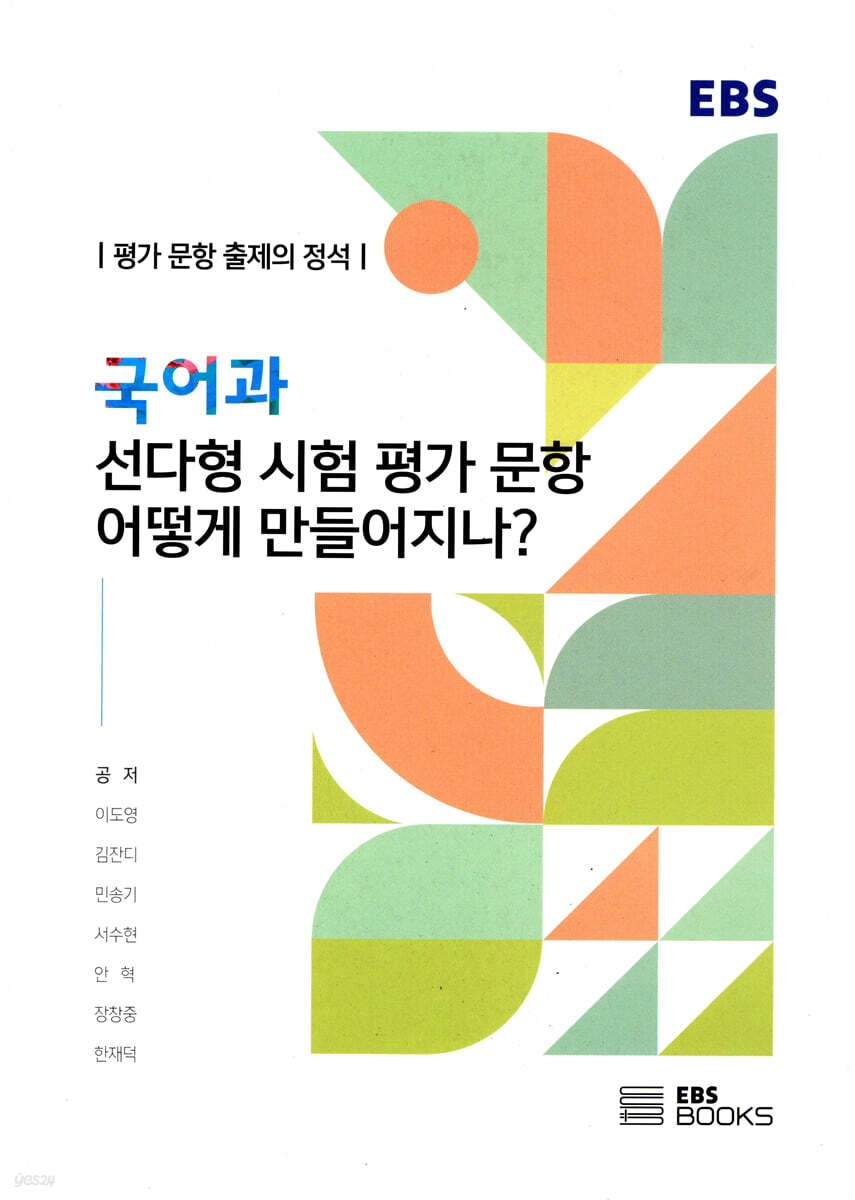
How are the multiple-choice test questions for the Korean language department created?
 |
Description
Book Introduction
EBS's top writers share their expertise in developing questions!
A practical guide to developing assessment items based on real-world types and case studies! Korean language education experts with extensive experience in the field present the entire process of item creation, from item design methods to item review and evaluation, results, and utilization.
For education to be carried out properly, ‘goals’, ‘contents’, ‘teaching and learning methods’, and ‘evaluation’ must be organically well-combined.
Although all four of these factors are important, in reality, 'evaluation' is considered more important than 'goals', 'content', and 'teaching and learning methods' as it is one of the biggest variables in advancing to higher education.
In Korea in particular, interest in evaluation is particularly high because admission to a good university plays a significant role in determining success or failure in life.
Perhaps for this reason, in our country, evaluation exerts such a powerful influence that it can change the goals, content, and teaching/learning methods of education.
But why are we so dissatisfied with our assessments and why do we constantly discuss new assessment systems and methods? There are many reasons, but one of them is that the development of practical assessment items has not kept pace with the current development.
The reality is that many questions fail to assess core competencies and instead ask about peripheral issues, or require answers based on memorized information without using the given language materials.
These questions misguide students' learning methods and fail to properly assess their abilities.
This book aims to revive the original educational function of assessment by developing appropriate assessment items based on this awareness of the problem.
A practical guide to developing assessment items based on real-world types and case studies! Korean language education experts with extensive experience in the field present the entire process of item creation, from item design methods to item review and evaluation, results, and utilization.
For education to be carried out properly, ‘goals’, ‘contents’, ‘teaching and learning methods’, and ‘evaluation’ must be organically well-combined.
Although all four of these factors are important, in reality, 'evaluation' is considered more important than 'goals', 'content', and 'teaching and learning methods' as it is one of the biggest variables in advancing to higher education.
In Korea in particular, interest in evaluation is particularly high because admission to a good university plays a significant role in determining success or failure in life.
Perhaps for this reason, in our country, evaluation exerts such a powerful influence that it can change the goals, content, and teaching/learning methods of education.
But why are we so dissatisfied with our assessments and why do we constantly discuss new assessment systems and methods? There are many reasons, but one of them is that the development of practical assessment items has not kept pace with the current development.
The reality is that many questions fail to assess core competencies and instead ask about peripheral issues, or require answers based on memorized information without using the given language materials.
These questions misguide students' learning methods and fail to properly assess their abilities.
This book aims to revive the original educational function of assessment by developing appropriate assessment items based on this awareness of the problem.
- You can preview some of the book's contents.
Preview
index
preface
Ⅰ.
Principles of developing multiple-choice assessment items in the Korean language department
1.
The educational value of multiple-choice assessments
1.1.
Negative views
1.2.
positive outlook
2.
Multiple Choice Assessment Question Template
2.1.
Situation category
2.2.
Language data categories
2.3.
Language data unit category
3.
General Procedure for Developing Multiple-Choice Assessment Items
3.1.
Question design stage
3.2.
Language material production stage
3.3.
Steps for writing the question and answer sheet
Ⅱ.
Selection of evaluation factors
1.
Achievement Standards Analysis
2.
Determining evaluation factors
3.
Determine the difficulty of the assessment
4.
Combining multiple achievement criteria
5.
Creating a dual-purpose classification table or item information table
5.1.
Fill in the content area
5.2.
Create an action area
Practice problems
Ⅲ.
Question design
1.
Single-item design
1.1.
Single question format
1.2.
Things to Consider When Designing a Single Question
2.
Set question design
2.1.
Case study comparison of set item design
2.2.
Mistakes and Considerations When Designing Question Sets
3.
〈Example〉 Question Design
3.1.
〈View〉 Question Type
3.2.
Bad and good views
4.
Representative question design
4.1.
Types of representative questions
4.2.
Things to consider when designing representative items
5.
Integrated Question Design
5.1.
Types of integrated questions
5.2.
Things to consider when designing integrated questions
6.
How to design questions well?
6.1.
Requirements for good question design
6.2.
Analyze question design based on requirements
Practice problems
Ⅳ.
Selection and processing of language materials
1.
Appropriate language resources
1.1.
Understanding the nature of information
1.2.
Determining the adequacy of language materials
1.3.
Direction of processing language data
2.
Selection and processing of language data by domain
2.1.
Selection and processing of materials in the field of literature
2.2.
Selection and processing of materials for the reading area
2.3.
Selection and processing of materials in the areas of speaking and writing
2.4.
Selection and processing of materials in the media field
2.5.
Selection and processing of materials in the grammar area
Practice problems
V.
Writing a sentence
1.
Why is a door necessary?
1.1.
The concept of the sentence
1.2.
The role of the door
1.3.
Requirements for the sentence
2.
General method of writing a sentence
2.1.
How to write positive and negative sentences
2.2.
How to write the beginning of questions with correct and best answers
2.3.
How to write the beginning of a multiple-choice question
2.4.
How to Write the Beginning of a Question Using 〈Example〉 1
2.5.
How to Write Question Headings Using 〈Example〉 2
2.6.
How to write sentences in a variety of ways, breaking away from standard sentence structures.
3.
How to write a sentence from the perspective of the behavioral domain
3.1.
Factual understanding sentence
3.2.
Inferential comprehension question
3.3.
Appreciation and critical understanding
3.4.
Application/creation phrase
3.5.
Vocabulary/concept sentence beginning
4.
How to write a sentence from the content area perspective
4.1.
Reading area heading
4.2.
Literature section
4.3.
The beginning of the speech area
4.4.
Writing section introduction
4.5.
Grammar section beginning
4.6.
Media area topic
Practice problems
Ⅵ.
Completion of questions and production of answer sheets
1.
Principles of answer sheet production
1.1.
True to the word
1.2.
Similar but different
1.3.
No interference
2.
Process and method of producing answer sheets
2.1.
Making an answer sheet
2.2.
Making an answer sheet
Swimming in the swamp of answers
Practice problems
Ⅶ.
Question review and analysis and utilization of evaluation results
1.
The need and method of item review
1.1.
Key points of item review
1.2.
Review and revise questions
2.
Analysis and utilization of evaluation results
2.1.
Analysis and utilization of absolute and relative evaluation results
2.2.
Analysis and utilization of response rate of answer sheet
2.3.
Analysis and utilization of evaluation results using the academic affairs system
Practice problems
supplement
Practice Problem Sample Answers
Item Review Checklist
References
Search
Ⅰ.
Principles of developing multiple-choice assessment items in the Korean language department
1.
The educational value of multiple-choice assessments
1.1.
Negative views
1.2.
positive outlook
2.
Multiple Choice Assessment Question Template
2.1.
Situation category
2.2.
Language data categories
2.3.
Language data unit category
3.
General Procedure for Developing Multiple-Choice Assessment Items
3.1.
Question design stage
3.2.
Language material production stage
3.3.
Steps for writing the question and answer sheet
Ⅱ.
Selection of evaluation factors
1.
Achievement Standards Analysis
2.
Determining evaluation factors
3.
Determine the difficulty of the assessment
4.
Combining multiple achievement criteria
5.
Creating a dual-purpose classification table or item information table
5.1.
Fill in the content area
5.2.
Create an action area
Practice problems
Ⅲ.
Question design
1.
Single-item design
1.1.
Single question format
1.2.
Things to Consider When Designing a Single Question
2.
Set question design
2.1.
Case study comparison of set item design
2.2.
Mistakes and Considerations When Designing Question Sets
3.
〈Example〉 Question Design
3.1.
〈View〉 Question Type
3.2.
Bad and good views
4.
Representative question design
4.1.
Types of representative questions
4.2.
Things to consider when designing representative items
5.
Integrated Question Design
5.1.
Types of integrated questions
5.2.
Things to consider when designing integrated questions
6.
How to design questions well?
6.1.
Requirements for good question design
6.2.
Analyze question design based on requirements
Practice problems
Ⅳ.
Selection and processing of language materials
1.
Appropriate language resources
1.1.
Understanding the nature of information
1.2.
Determining the adequacy of language materials
1.3.
Direction of processing language data
2.
Selection and processing of language data by domain
2.1.
Selection and processing of materials in the field of literature
2.2.
Selection and processing of materials for the reading area
2.3.
Selection and processing of materials in the areas of speaking and writing
2.4.
Selection and processing of materials in the media field
2.5.
Selection and processing of materials in the grammar area
Practice problems
V.
Writing a sentence
1.
Why is a door necessary?
1.1.
The concept of the sentence
1.2.
The role of the door
1.3.
Requirements for the sentence
2.
General method of writing a sentence
2.1.
How to write positive and negative sentences
2.2.
How to write the beginning of questions with correct and best answers
2.3.
How to write the beginning of a multiple-choice question
2.4.
How to Write the Beginning of a Question Using 〈Example〉 1
2.5.
How to Write Question Headings Using 〈Example〉 2
2.6.
How to write sentences in a variety of ways, breaking away from standard sentence structures.
3.
How to write a sentence from the perspective of the behavioral domain
3.1.
Factual understanding sentence
3.2.
Inferential comprehension question
3.3.
Appreciation and critical understanding
3.4.
Application/creation phrase
3.5.
Vocabulary/concept sentence beginning
4.
How to write a sentence from the content area perspective
4.1.
Reading area heading
4.2.
Literature section
4.3.
The beginning of the speech area
4.4.
Writing section introduction
4.5.
Grammar section beginning
4.6.
Media area topic
Practice problems
Ⅵ.
Completion of questions and production of answer sheets
1.
Principles of answer sheet production
1.1.
True to the word
1.2.
Similar but different
1.3.
No interference
2.
Process and method of producing answer sheets
2.1.
Making an answer sheet
2.2.
Making an answer sheet
Swimming in the swamp of answers
Practice problems
Ⅶ.
Question review and analysis and utilization of evaluation results
1.
The need and method of item review
1.1.
Key points of item review
1.2.
Review and revise questions
2.
Analysis and utilization of evaluation results
2.1.
Analysis and utilization of absolute and relative evaluation results
2.2.
Analysis and utilization of response rate of answer sheet
2.3.
Analysis and utilization of evaluation results using the academic affairs system
Practice problems
supplement
Practice Problem Sample Answers
Item Review Checklist
References
Search
Publisher's Review
Chapter 1 introduces the educational value of multiple-choice assessments, the framework for multiple-choice assessment items, and the general process for developing multiple-choice assessment items.
Chapter Ⅱ covers evaluation factors, which are the starting point for developing evaluation items.
First, we looked at the analysis of achievement criteria and determination of evaluation elements, and then specifically explained the issues of determining the difficulty of evaluation, how to combine multiple achievement criteria to create a single item, and how to create a dual-purpose classification table or item information table.
Chapter 3 covers question design.
In order to create evaluation items, the work of determining evaluation objectives and contents and establishing an overall plan was divided into 'single items, set items, 'choice' items, representative items, and integrated items', and the types were examined in detail, and points to consider during design and requirements for good item design were presented.
Chapter Ⅳ examines the basic requirements for appropriate language materials, and then divides the selection and processing methods of language materials into areas such as literature, reading, speaking/writing, media, and grammar, and shows specifically how they are applied in actual test situations.
In Chapter V, we will learn about writing the introduction.
First, we looked at the reasons why a sentence introduction is necessary, dividing them into the concept, role, and requirements of the sentence introduction, and explained the general method of writing a sentence introduction, the method of writing a sentence introduction by action area such as factual understanding, inferential understanding, appreciation, critical understanding, application, creativity, vocabulary, and concept, and the method of writing a sentence introduction by content area such as literature, reading, speaking, writing, grammar, and media.
Chapter VI provides guidance on how to create an answer sheet.
The general principles of answer sheet production and the process and method of answer sheet production are explained in detail by dividing them into correct and incorrect answer sheets, and important tips for answer sheet production are provided through specific examples.
Chapter VII examines ‘question review and analysis and utilization of evaluation results.’
It shows why item review is necessary, what the main focus of item review is, and how to review and revise items through actual evaluation items, and explains how to analyze and utilize evaluation results through specific materials.
At the end of each chapter, practice problems are provided to help you practice the methods presented in the book.
And, in the 'Appendix', we have clearly presented example answers to practice problems and the things that must be checked in order to properly develop multiple-choice questions.
Unlike existing assessment-related books, this book focuses on the procedures that must be followed to develop multiple-choice assessment items.
Each procedure is also presented in as many subheadings as possible, so that you can refer to the table of contents and select the necessary part at the time.
This book focuses on the development of multiple-choice questions, explaining the process of designing, reviewing, evaluating, and utilizing questions according to a systematic and rational procedure, based on actual past exam questions.
It introduces nationwide tests such as the College Scholastic Ability Test, mock exams, the National Joint Scholastic Ability Test, and the National Assessment of Academic Achievement, as well as EBS College Scholastic Ability Test-linked textbooks and tests from each high school, and shows cases where questions were well-developed and cases where they were poorly developed, thereby increasing practical usability.
Additionally, it was written by Korean language education experts with extensive experience writing textbooks for the College Scholastic Ability Test, mock exams, the National Academic Ability Test, and the EBS College Scholastic Ability Test, enhancing its expertise.
Chapter Ⅱ covers evaluation factors, which are the starting point for developing evaluation items.
First, we looked at the analysis of achievement criteria and determination of evaluation elements, and then specifically explained the issues of determining the difficulty of evaluation, how to combine multiple achievement criteria to create a single item, and how to create a dual-purpose classification table or item information table.
Chapter 3 covers question design.
In order to create evaluation items, the work of determining evaluation objectives and contents and establishing an overall plan was divided into 'single items, set items, 'choice' items, representative items, and integrated items', and the types were examined in detail, and points to consider during design and requirements for good item design were presented.
Chapter Ⅳ examines the basic requirements for appropriate language materials, and then divides the selection and processing methods of language materials into areas such as literature, reading, speaking/writing, media, and grammar, and shows specifically how they are applied in actual test situations.
In Chapter V, we will learn about writing the introduction.
First, we looked at the reasons why a sentence introduction is necessary, dividing them into the concept, role, and requirements of the sentence introduction, and explained the general method of writing a sentence introduction, the method of writing a sentence introduction by action area such as factual understanding, inferential understanding, appreciation, critical understanding, application, creativity, vocabulary, and concept, and the method of writing a sentence introduction by content area such as literature, reading, speaking, writing, grammar, and media.
Chapter VI provides guidance on how to create an answer sheet.
The general principles of answer sheet production and the process and method of answer sheet production are explained in detail by dividing them into correct and incorrect answer sheets, and important tips for answer sheet production are provided through specific examples.
Chapter VII examines ‘question review and analysis and utilization of evaluation results.’
It shows why item review is necessary, what the main focus of item review is, and how to review and revise items through actual evaluation items, and explains how to analyze and utilize evaluation results through specific materials.
At the end of each chapter, practice problems are provided to help you practice the methods presented in the book.
And, in the 'Appendix', we have clearly presented example answers to practice problems and the things that must be checked in order to properly develop multiple-choice questions.
Unlike existing assessment-related books, this book focuses on the procedures that must be followed to develop multiple-choice assessment items.
Each procedure is also presented in as many subheadings as possible, so that you can refer to the table of contents and select the necessary part at the time.
This book focuses on the development of multiple-choice questions, explaining the process of designing, reviewing, evaluating, and utilizing questions according to a systematic and rational procedure, based on actual past exam questions.
It introduces nationwide tests such as the College Scholastic Ability Test, mock exams, the National Joint Scholastic Ability Test, and the National Assessment of Academic Achievement, as well as EBS College Scholastic Ability Test-linked textbooks and tests from each high school, and shows cases where questions were well-developed and cases where they were poorly developed, thereby increasing practical usability.
Additionally, it was written by Korean language education experts with extensive experience writing textbooks for the College Scholastic Ability Test, mock exams, the National Academic Ability Test, and the EBS College Scholastic Ability Test, enhancing its expertise.
GOODS SPECIFICS
- Publication date: November 30, 2021
- Page count, weight, size: 384 pages | 718g | 176*246*30mm
- ISBN13: 9788954760461
- ISBN10: 8954760465
You may also like
카테고리
korean


korean

![ELLE 엘르 스페셜 에디션 A형 : 12월 [2025]](http://librairie.coreenne.fr/cdn/shop/files/b8e27a3de6c9538896439686c6b0e8fb.jpg?v=1766436872&width=3840)


