

12 Steps to Designing Korean Language Classes
 |
Description
Book Introduction
Lesson Design for Prospective Teachers: How to Teach
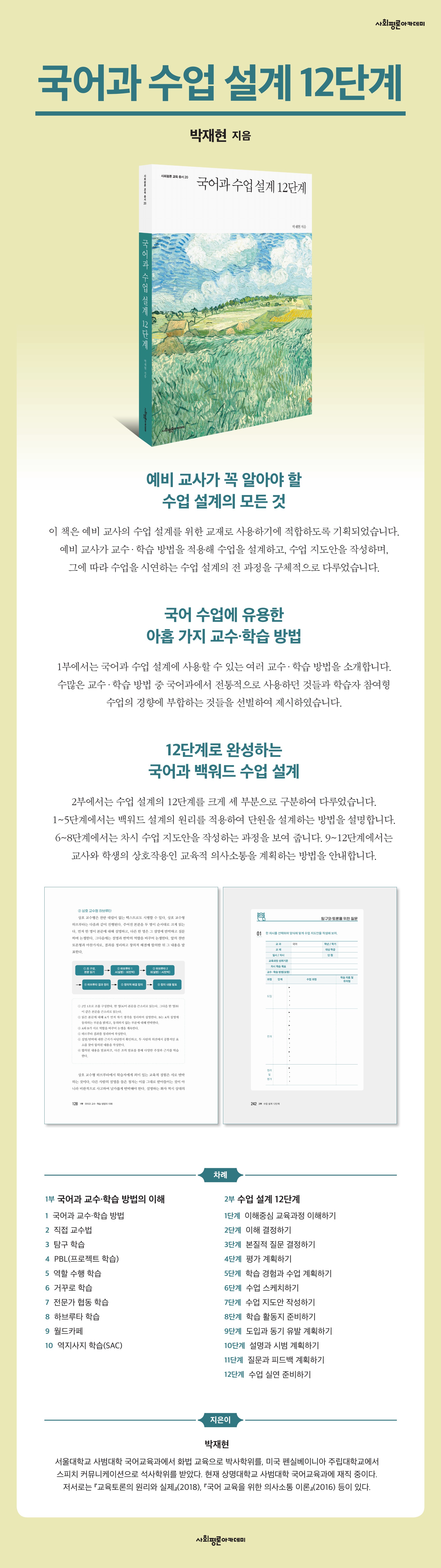
Designing a Korean Language Backward Class in 12 Steps
In the classroom space, teachers create lessons with students.
Teachers must have a clear picture of what learning will occur in the minds and hearts of their students at every moment of the lesson.
The goal of this course is student growth, and teachers must prepare thoroughly for this.
This book introduces the 12 steps that teachers must take when designing a lesson.
These 12 steps are a compilation of the essential elements to know when designing a class, compiled by the author, a professor of Korean language education, who has been teaching the subject of 'Korean language textbook research and teaching methods' to prospective teachers for over a decade.
This book is filled with helpful tips for applying teaching and learning methods, designing lessons, writing lesson plans, and demonstrating lessons accordingly.
Additionally, 'Questions for Exploration and Discussion' are provided at the end of each chapter to help prospective teachers design lessons according to the 12 steps.
As prospective teachers work through these 12 steps, they will gain a clearer picture of their lessons and be inspired to design other lessons.
It will be of great help not only to prospective teachers and the teachers at teacher training colleges who teach them, but also to Korean language teachers in the field who are curious about the latest trends in Korean language teaching and learning methods and lesson design.
Designing a Korean Language Backward Class in 12 Steps
In the classroom space, teachers create lessons with students.
Teachers must have a clear picture of what learning will occur in the minds and hearts of their students at every moment of the lesson.
The goal of this course is student growth, and teachers must prepare thoroughly for this.
This book introduces the 12 steps that teachers must take when designing a lesson.
These 12 steps are a compilation of the essential elements to know when designing a class, compiled by the author, a professor of Korean language education, who has been teaching the subject of 'Korean language textbook research and teaching methods' to prospective teachers for over a decade.
This book is filled with helpful tips for applying teaching and learning methods, designing lessons, writing lesson plans, and demonstrating lessons accordingly.
Additionally, 'Questions for Exploration and Discussion' are provided at the end of each chapter to help prospective teachers design lessons according to the 12 steps.
As prospective teachers work through these 12 steps, they will gain a clearer picture of their lessons and be inspired to design other lessons.
It will be of great help not only to prospective teachers and the teachers at teacher training colleges who teach them, but also to Korean language teachers in the field who are curious about the latest trends in Korean language teaching and learning methods and lesson design.
- You can preview some of the book's contents.
Preview
index
Preface 4
Part 1: Understanding Korean Language Teaching and Learning Methods
1.
Korean Language Teaching and Learning Methods 14
1) Understanding teaching and learning methods 14
2) Learner-participatory teaching and learning 18
3) Application of teaching and learning methods 22
2.
Direct Instruction 33
1) Understanding Direct Teaching Methods 33
2) Application of direct teaching method 39
3.
Inquiry Learning 46
1) Understanding Inquiry Learning 46
2) Application of inquiry learning 50
4. PBL (Project-Based Learning) 62
1) Understanding PBL 62
2) Application of PBL 68
5.
Role-playing learning 80
1) Understanding Role-Playing Learning 80
2) Application of role-playing learning 86
6.
Backwards Learning 98
1) Understanding Flipped Learning 98
2) Applying Flipped Learning 101
7.
Expert Cooperative Learning 107
1) Understanding Cooperative Learning 107
2) Understanding Expert Collaborative Learning 110
3) Application of expert collaborative learning 114
8.
Havruta Study 121
1) Understanding the Discussion and Discussion Teaching and Learning Method 121
2) Understanding Havruta Learning 122
3) Application of Havruta Learning 125
9.
World Cafe 135
1) Understanding World Café 135
2) Application of World Cafe 139
10.
SAC 148
1) Understanding empathy learning 148
2) Application of empathy learning 153
12 Steps to Lesson Design, Part 2
Step 1 [Backward Design] Understanding the Understanding-Centered Curriculum 163
1) Background of the Understanding-Centered Curriculum 163
2) Concepts and Principles of Understanding-Centered Curriculum 166
Step 2 [Backward Design (Determining Desired Outcomes)] Understand and Decide 173
1) Characteristics and Dimensions of Understanding 173
2) Setting of understanding 186
Step 3 [Backward Design (Confirming Desired Outcomes)] Determine the Essential Question 191
1) The concept of essential questions 191
2) Development and Application of Essential Questions 195
Step 4 [Backward Design (Determining Acceptable Evidence)] Planning the Evaluation 203
1) Understanding the Evaluation Plan 203
2) Application of the evaluation plan 208
Step 5 [Backward Design] Planning Learning Experiences and Lessons 214
1) Learning Experience Plan 214
2) Learning Experience Structure and Guidance 215
Step 6: [Lesson Plan] Sketching the Lesson 219
1) Lesson Design 219
2) Class Sketch 220
Step 7: [Writing a Lesson Plan] Writing a Lesson Plan 223
1) Understanding the lesson plan 223
2) Writing a lesson plan 231
Step 8: [Lesson Plan Preparation] Preparing the Learning Worksheets 244
Step 9 [Educational Communication] Planning Introduction and Motivation 248
1) Planning educational communication in lesson design 248
2) Planning the Introduction 251
3) Planning a motivational event 255
Step 10 [Educational Communication] Planning an Explanation and Demonstration 261
1) Planning the Explanation 261
2) Planning a pilot project 265
Step 11 [Educational Communication] Planning Questions and Feedback 273
1) Planning Questions 273
2) Planning Feedback 280
Step 12 [Educational Communication] Preparing for a Classroom Demonstration 290
1) Preparing for class demonstration 290
2) Titles and Language Expressions 292
3) Nonverbal communication 293
4) Use of media materials and writing 296
References 301
Search 305
Part 1: Understanding Korean Language Teaching and Learning Methods
1.
Korean Language Teaching and Learning Methods 14
1) Understanding teaching and learning methods 14
2) Learner-participatory teaching and learning 18
3) Application of teaching and learning methods 22
2.
Direct Instruction 33
1) Understanding Direct Teaching Methods 33
2) Application of direct teaching method 39
3.
Inquiry Learning 46
1) Understanding Inquiry Learning 46
2) Application of inquiry learning 50
4. PBL (Project-Based Learning) 62
1) Understanding PBL 62
2) Application of PBL 68
5.
Role-playing learning 80
1) Understanding Role-Playing Learning 80
2) Application of role-playing learning 86
6.
Backwards Learning 98
1) Understanding Flipped Learning 98
2) Applying Flipped Learning 101
7.
Expert Cooperative Learning 107
1) Understanding Cooperative Learning 107
2) Understanding Expert Collaborative Learning 110
3) Application of expert collaborative learning 114
8.
Havruta Study 121
1) Understanding the Discussion and Discussion Teaching and Learning Method 121
2) Understanding Havruta Learning 122
3) Application of Havruta Learning 125
9.
World Cafe 135
1) Understanding World Café 135
2) Application of World Cafe 139
10.
SAC 148
1) Understanding empathy learning 148
2) Application of empathy learning 153
12 Steps to Lesson Design, Part 2
Step 1 [Backward Design] Understanding the Understanding-Centered Curriculum 163
1) Background of the Understanding-Centered Curriculum 163
2) Concepts and Principles of Understanding-Centered Curriculum 166
Step 2 [Backward Design (Determining Desired Outcomes)] Understand and Decide 173
1) Characteristics and Dimensions of Understanding 173
2) Setting of understanding 186
Step 3 [Backward Design (Confirming Desired Outcomes)] Determine the Essential Question 191
1) The concept of essential questions 191
2) Development and Application of Essential Questions 195
Step 4 [Backward Design (Determining Acceptable Evidence)] Planning the Evaluation 203
1) Understanding the Evaluation Plan 203
2) Application of the evaluation plan 208
Step 5 [Backward Design] Planning Learning Experiences and Lessons 214
1) Learning Experience Plan 214
2) Learning Experience Structure and Guidance 215
Step 6: [Lesson Plan] Sketching the Lesson 219
1) Lesson Design 219
2) Class Sketch 220
Step 7: [Writing a Lesson Plan] Writing a Lesson Plan 223
1) Understanding the lesson plan 223
2) Writing a lesson plan 231
Step 8: [Lesson Plan Preparation] Preparing the Learning Worksheets 244
Step 9 [Educational Communication] Planning Introduction and Motivation 248
1) Planning educational communication in lesson design 248
2) Planning the Introduction 251
3) Planning a motivational event 255
Step 10 [Educational Communication] Planning an Explanation and Demonstration 261
1) Planning the Explanation 261
2) Planning a pilot project 265
Step 11 [Educational Communication] Planning Questions and Feedback 273
1) Planning Questions 273
2) Planning Feedback 280
Step 12 [Educational Communication] Preparing for a Classroom Demonstration 290
1) Preparing for class demonstration 290
2) Titles and Language Expressions 292
3) Nonverbal communication 293
4) Use of media materials and writing 296
References 301
Search 305
Detailed image
Publisher's Review
Part 1 covered various teaching and learning methods that can be used in designing Korean language classes.
Before designing and implementing a class, instructors must consider which teaching and learning method to choose and what philosophy and perspective are embedded in that teaching and learning method.
Additionally, we must anticipate and prepare the educational experiences we will provide to our learners.
This book presents nine teaching and learning methods that are particularly useful in Korean language classes, selected from among numerous teaching and learning methods.
We wanted to introduce both those traditionally used in Korean language classes and those that are in line with the trend of learner-participatory classes emphasized in the 2015 revised Korean language curriculum.
In Part 2, the 12 steps of lesson design are broadly divided into three parts: unit design, lesson plan writing, and educational communication.
In 'Unit Design', the principle of backward design was applied to align the curriculum, class, and assessment by placing the assessment plan before the learning activity plan.
Here, the focus is on setting goals that ensure that learners' learning is transferred to real-world problem-solving skills.
In 'Writing a Lesson Plan', we focused on designing one lesson and covered the details to consider in the introduction, development, and conclusion of the lesson.
In 'Educational Communication', we help improve the quality of classes by considering and preparing during the lesson design stage, such as what words to use to motivate students, how to ask questions to encourage students to explore, and what kind of feedback to provide on students' responses.
Before designing and implementing a class, instructors must consider which teaching and learning method to choose and what philosophy and perspective are embedded in that teaching and learning method.
Additionally, we must anticipate and prepare the educational experiences we will provide to our learners.
This book presents nine teaching and learning methods that are particularly useful in Korean language classes, selected from among numerous teaching and learning methods.
We wanted to introduce both those traditionally used in Korean language classes and those that are in line with the trend of learner-participatory classes emphasized in the 2015 revised Korean language curriculum.
In Part 2, the 12 steps of lesson design are broadly divided into three parts: unit design, lesson plan writing, and educational communication.
In 'Unit Design', the principle of backward design was applied to align the curriculum, class, and assessment by placing the assessment plan before the learning activity plan.
Here, the focus is on setting goals that ensure that learners' learning is transferred to real-world problem-solving skills.
In 'Writing a Lesson Plan', we focused on designing one lesson and covered the details to consider in the introduction, development, and conclusion of the lesson.
In 'Educational Communication', we help improve the quality of classes by considering and preparing during the lesson design stage, such as what words to use to motivate students, how to ask questions to encourage students to explore, and what kind of feedback to provide on students' responses.
GOODS SPECIFICS
- Publication date: September 6, 2021
- Page count, weight, size: 306 pages | 766g | 188*257*20mm
- ISBN13: 9791167070197
- ISBN10: 1167070194
You may also like
카테고리
korean


korean

![ELLE 엘르 스페셜 에디션 A형 : 12월 [2025]](http://librairie.coreenne.fr/cdn/shop/files/b8e27a3de6c9538896439686c6b0e8fb.jpg?v=1766436872&width=3840)


