

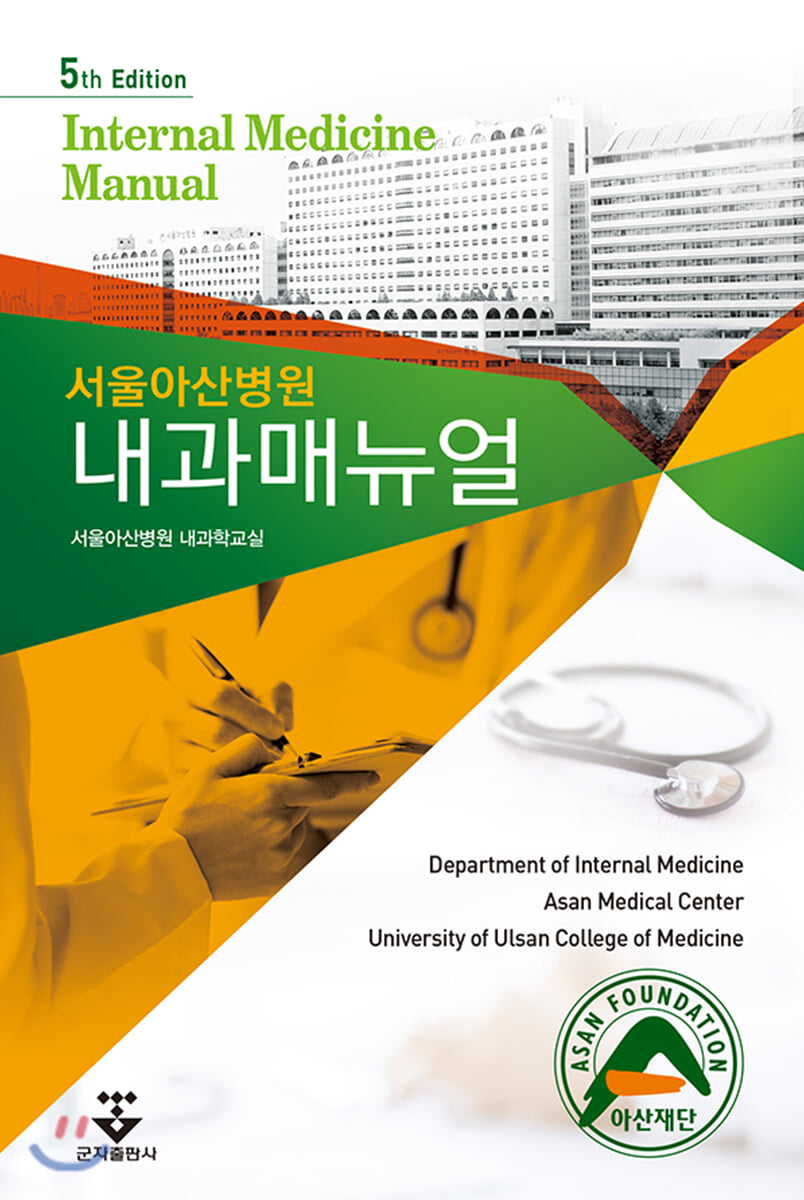
Seoul Asan Medical Center Internal Medicine Manual
 |
Description
Book Introduction
Since the publication of the 4th revised edition of the Seoul Asan Medical Center Internal Medicine Manual, there have been significant advancements in the medical field of internal medicine, and many changes have occurred within the hospital, including the shortening of the internal medicine residency training period, the development of a new computerized medical record and prescription system, and the establishment of a dedicated hospitalist ward.
In this revised 5th edition, we have tried to reflect the latest clinical knowledge in each field of internal medicine, while also including parts related to hospital practice so that they can be easily referenced during treatment.
In this revised 5th edition, we have tried to reflect the latest clinical knowledge in each field of internal medicine, while also including parts related to hospital practice so that they can be easily referenced during treatment.
index
01 Infectious Diseases
Ⅰ.
Understanding Antimicrobial Use
Ⅱ.
Special use of antibiotics
Ⅲ.
Antibiotic treatment for various infections
Ⅳ.
malaria
V.
influenza
Ⅵ.
vaccination
02 Endocrinology
Ⅰ.
diabetes
Ⅱ.
thyroid
Ⅲ.
osteoporosis
Ⅳ.
adrenal disease
V.
pituitary disease
03 Rheumatology
Ⅰ.
Rheumatology Overview
Ⅱ.
Diagnostic tests for rheumatic diseases
Ⅲ.
rheumatoid arthritis
Ⅳ.
Systemic lupus erythematosus
V.
osteoarthritis
Ⅵ.
Behcet's disease
Ⅶ.
spondylitis
Ⅷ.
ventilation
Ⅸ.
inflammatory myopathy
Ⅹ.
Sjogren's syndrome
XI.
systemic sclerosis
XII.
vasculitis
XIII.
Arthrocentesis
04 Gastroenterology
liver
Ⅰ.
outline
Ⅱ.
acute viral hepatitis
Ⅲ.
chronic hepatitis B
Ⅳ.
chronic hepatitis C
V.
alcoholic liver disease
Ⅵ.
nonalcoholic fatty liver disease
Ⅶ.
Autoimmune and genetic metabolic diseases
Ⅷ.
Cirrhosis and its complications
Ⅸ.
hepatocellular carcinoma
Ⅹ.
acute liver failure
XI.
liver transplant
gallbladder
Ⅰ.
Tests for biliary tract diseases
Ⅱ.
Gallbladder and biliary tract diseases
Ⅲ.
Nonsurgical treatments for biliary tract diseases
Ⅳ.
acute pancreatitis
V.
chronic pancreatitis
Ⅵ.
pancreatic cancer
Ⅶ.
pancreatic cystic tumor
Common gastrointestinal
Ⅰ.
gastrointestinal bleeding
Ⅱ.
gastroesophageal reflux disease
Ⅲ.
Esophagitis and gastritis
Ⅳ.
Peptic ulcer and H. pylori
V.
functional dyspepsia
Ⅵ.
Esophageal and gastric motility disorders
Ⅶ.
Benign tumors of the esophagus, stomach, and duodenum
Ⅷ.
esophageal cancer
Ⅸ.
stomach cancer
Ⅹ.
vascular disease
XI.
Irritable bowel syndrome and constipation
XII.
Colon polyps and colon cancer
XIII.
C. difficile infection
XIV.
inflammatory bowel disease
05 Nephrology
Ⅰ.
Symptoms of kidney disease and kidney examination methods
Ⅱ.
The Basics of Fluid Therapy
Ⅲ.
Electrolyte abnormalities
Ⅳ.
Acid-base metabolism disorders
V.
acute kidney injury
Ⅵ.
chronic renal failure
Ⅶ.
dialysis treatment
Ⅷ.
kidney transplant
Ⅸ.
diabetic nephropathy
Ⅹ.
glomerular disease
XI.
tubulointerstitial nephritis
XII.
renovascular hypertension
06 Cardiology
Ⅰ.
high blood pressure
Ⅱ.
heart failure
Ⅲ.
arrhythmia
Ⅳ.
hyperlipidemia
V.
acute aortic syndrome
Ⅵ.
ischemic heart disease
Ⅶ.
valvular disease
Ⅷ.
hypertrophic cardiomyopathy
Ⅸ.
pericardial disease
Ⅹ.
heart tumor
07 Allergy Department
Ⅰ.
When you come to the emergency room with angioedema or laryngeal edema
Ⅱ.
When you develop hives or itchiness
Ⅲ.
When rhinitis and sinusitis are discovered
Ⅳ.
When I came to the emergency room with worsening asthma
V.
When you have a severe or chronic cough
Ⅵ.
When the blood eosinophil count is high
Ⅶ.
When eosinophilic granulomatous polyangiitis is suspected
Ⅷ.
When anaphylaxis occurs
Ⅸ.
When a skin rash occurs after using the drug
Ⅹ. When CT contrast agent hypersensitivity is suspected
XI.
When there is a history of drug allergy
XII.
When a severe skin adverse reaction is suspected
XIII.
When food allergies are suspected
08 Oncology
Ⅰ.
General Oncology
Ⅱ.
breast cancer
Ⅲ.
lung cancer
Ⅳ.
stomach cancer
V.
colon cancer
Ⅵ.
pancreatic cancer
Ⅶ.
testicular cancer
Ⅷ.
Bladder cancer/ureteral cancer
Ⅸ.
renal cell carcinoma
Ⅹ.
prostate cancer
XI.
non-Hodgkin's lymphoma
XII.
Hodgkin's lymphoma
XIII.
multiple myeloma
XⅣ.
Cancer Pain Management
XⅤ.
Managing Nausea and Vomiting
XⅥ.
Emergencies in Oncology
XVII.
Management of terminally ill cancer patients
09 Respiratory Medicine
Ⅰ.
problem-oriented approach
Ⅱ.
Disease-specific approach
Ⅲ.
Major respiratory procedures
Ⅳ.
Inhalants
10 Hematology
Ⅰ.
red blood cell disease
Ⅱ.
bleeding disorders
Ⅲ.
thrombosis
Ⅳ.
hematologic malignancy
V.
hematopoietic stem cell transplantation
Ⅵ.
blood transfusion
11 Geriatrics
Ⅰ.
General principles of care for elderly inpatients
Ⅱ.
Pre- and post-operative care for elderly hospitalized patients
12 Internal Medicine Intensive Care Unit
Basic concept
Ⅰ.
Essential prescriptions for patients admitted to the intensive care unit
Ⅱ.
Nutritional management for critically ill patients
Ⅲ.
Interpretation of arterial blood gas analysis tests
Ⅳ.
Fever in the intensive care unit
V.
shock
Ⅵ.
blood transfusion therapy
Ⅶ.
CPR
Ⅷ.
Integrated Blood Glucose Control Guidelines for Intensive Care Units
Ⅸ.
Internal Medicine Intensive Care Unit Checklist and Severity Assessment System
Ⅹ.
Intensive care unit analgesia, sedation, delirium treatment and medication
XI.
oxygen therapy
XII.
mechanical ventilation method
XIII.
Ventilator Weaning Protocol
XⅣ.
Treatment of acute respiratory distress syndrome
Procedure
Ⅰ.
Endotracheal intubation and airway management
Ⅱ.
tracheostomy
Ⅲ.
cricothyroidotomy
Ⅳ.
Ultrasound-based treatment
13 End-of-life treatment decision
Search
Ⅰ.
Understanding Antimicrobial Use
Ⅱ.
Special use of antibiotics
Ⅲ.
Antibiotic treatment for various infections
Ⅳ.
malaria
V.
influenza
Ⅵ.
vaccination
02 Endocrinology
Ⅰ.
diabetes
Ⅱ.
thyroid
Ⅲ.
osteoporosis
Ⅳ.
adrenal disease
V.
pituitary disease
03 Rheumatology
Ⅰ.
Rheumatology Overview
Ⅱ.
Diagnostic tests for rheumatic diseases
Ⅲ.
rheumatoid arthritis
Ⅳ.
Systemic lupus erythematosus
V.
osteoarthritis
Ⅵ.
Behcet's disease
Ⅶ.
spondylitis
Ⅷ.
ventilation
Ⅸ.
inflammatory myopathy
Ⅹ.
Sjogren's syndrome
XI.
systemic sclerosis
XII.
vasculitis
XIII.
Arthrocentesis
04 Gastroenterology
liver
Ⅰ.
outline
Ⅱ.
acute viral hepatitis
Ⅲ.
chronic hepatitis B
Ⅳ.
chronic hepatitis C
V.
alcoholic liver disease
Ⅵ.
nonalcoholic fatty liver disease
Ⅶ.
Autoimmune and genetic metabolic diseases
Ⅷ.
Cirrhosis and its complications
Ⅸ.
hepatocellular carcinoma
Ⅹ.
acute liver failure
XI.
liver transplant
gallbladder
Ⅰ.
Tests for biliary tract diseases
Ⅱ.
Gallbladder and biliary tract diseases
Ⅲ.
Nonsurgical treatments for biliary tract diseases
Ⅳ.
acute pancreatitis
V.
chronic pancreatitis
Ⅵ.
pancreatic cancer
Ⅶ.
pancreatic cystic tumor
Common gastrointestinal
Ⅰ.
gastrointestinal bleeding
Ⅱ.
gastroesophageal reflux disease
Ⅲ.
Esophagitis and gastritis
Ⅳ.
Peptic ulcer and H. pylori
V.
functional dyspepsia
Ⅵ.
Esophageal and gastric motility disorders
Ⅶ.
Benign tumors of the esophagus, stomach, and duodenum
Ⅷ.
esophageal cancer
Ⅸ.
stomach cancer
Ⅹ.
vascular disease
XI.
Irritable bowel syndrome and constipation
XII.
Colon polyps and colon cancer
XIII.
C. difficile infection
XIV.
inflammatory bowel disease
05 Nephrology
Ⅰ.
Symptoms of kidney disease and kidney examination methods
Ⅱ.
The Basics of Fluid Therapy
Ⅲ.
Electrolyte abnormalities
Ⅳ.
Acid-base metabolism disorders
V.
acute kidney injury
Ⅵ.
chronic renal failure
Ⅶ.
dialysis treatment
Ⅷ.
kidney transplant
Ⅸ.
diabetic nephropathy
Ⅹ.
glomerular disease
XI.
tubulointerstitial nephritis
XII.
renovascular hypertension
06 Cardiology
Ⅰ.
high blood pressure
Ⅱ.
heart failure
Ⅲ.
arrhythmia
Ⅳ.
hyperlipidemia
V.
acute aortic syndrome
Ⅵ.
ischemic heart disease
Ⅶ.
valvular disease
Ⅷ.
hypertrophic cardiomyopathy
Ⅸ.
pericardial disease
Ⅹ.
heart tumor
07 Allergy Department
Ⅰ.
When you come to the emergency room with angioedema or laryngeal edema
Ⅱ.
When you develop hives or itchiness
Ⅲ.
When rhinitis and sinusitis are discovered
Ⅳ.
When I came to the emergency room with worsening asthma
V.
When you have a severe or chronic cough
Ⅵ.
When the blood eosinophil count is high
Ⅶ.
When eosinophilic granulomatous polyangiitis is suspected
Ⅷ.
When anaphylaxis occurs
Ⅸ.
When a skin rash occurs after using the drug
Ⅹ. When CT contrast agent hypersensitivity is suspected
XI.
When there is a history of drug allergy
XII.
When a severe skin adverse reaction is suspected
XIII.
When food allergies are suspected
08 Oncology
Ⅰ.
General Oncology
Ⅱ.
breast cancer
Ⅲ.
lung cancer
Ⅳ.
stomach cancer
V.
colon cancer
Ⅵ.
pancreatic cancer
Ⅶ.
testicular cancer
Ⅷ.
Bladder cancer/ureteral cancer
Ⅸ.
renal cell carcinoma
Ⅹ.
prostate cancer
XI.
non-Hodgkin's lymphoma
XII.
Hodgkin's lymphoma
XIII.
multiple myeloma
XⅣ.
Cancer Pain Management
XⅤ.
Managing Nausea and Vomiting
XⅥ.
Emergencies in Oncology
XVII.
Management of terminally ill cancer patients
09 Respiratory Medicine
Ⅰ.
problem-oriented approach
Ⅱ.
Disease-specific approach
Ⅲ.
Major respiratory procedures
Ⅳ.
Inhalants
10 Hematology
Ⅰ.
red blood cell disease
Ⅱ.
bleeding disorders
Ⅲ.
thrombosis
Ⅳ.
hematologic malignancy
V.
hematopoietic stem cell transplantation
Ⅵ.
blood transfusion
11 Geriatrics
Ⅰ.
General principles of care for elderly inpatients
Ⅱ.
Pre- and post-operative care for elderly hospitalized patients
12 Internal Medicine Intensive Care Unit
Basic concept
Ⅰ.
Essential prescriptions for patients admitted to the intensive care unit
Ⅱ.
Nutritional management for critically ill patients
Ⅲ.
Interpretation of arterial blood gas analysis tests
Ⅳ.
Fever in the intensive care unit
V.
shock
Ⅵ.
blood transfusion therapy
Ⅶ.
CPR
Ⅷ.
Integrated Blood Glucose Control Guidelines for Intensive Care Units
Ⅸ.
Internal Medicine Intensive Care Unit Checklist and Severity Assessment System
Ⅹ.
Intensive care unit analgesia, sedation, delirium treatment and medication
XI.
oxygen therapy
XII.
mechanical ventilation method
XIII.
Ventilator Weaning Protocol
XⅣ.
Treatment of acute respiratory distress syndrome
Procedure
Ⅰ.
Endotracheal intubation and airway management
Ⅱ.
tracheostomy
Ⅲ.
cricothyroidotomy
Ⅳ.
Ultrasound-based treatment
13 End-of-life treatment decision
Search
Publisher's Review
Together with all members of the Department of Internal Medicine, I congratulate the publication of the 5th revised edition of the Internal Medicine Manual of the University of Ulsan College of Medicine, Seoul Asan Medical Center.
The Seoul Asan Medical Center Internal Medicine Manual is a valuable asset that contains the clinical knowledge and experience of all physicians working in the Department of Internal Medicine at Seoul Asan Medical Center, from the first edition in 2004 to the fourth revised edition in 2013.
Since the publication of the 4th revised edition in 2013, there have been significant advancements in the medical field of internal medicine. Furthermore, there have been many changes within the hospital, including shortening the training period for internal medicine residents, developing a new computerized medical record and prescription system, and establishing a dedicated hospitalist ward.
The Internal Medicine Manual must serve as a means to share cutting-edge clinical medical knowledge and provide standardized treatment amidst these changes.
In this revised 5th edition, we have strived to reflect the latest clinical knowledge in each field of internal medicine, while also including parts related to hospital practice for easy reference during treatment.
We sincerely hope that this revised edition will serve as a useful guideline for the internal medicine residents and dedicated professors at our hospital.
Finally, I would like to express my gratitude to the professors and clinical instructors of internal medicine who took on the task of writing this book.
I would especially like to thank the professors of the Internal Medicine Clinical Committee who worked tirelessly throughout the entire manual revision process.
The Seoul Asan Medical Center Internal Medicine Manual is a valuable asset that contains the clinical knowledge and experience of all physicians working in the Department of Internal Medicine at Seoul Asan Medical Center, from the first edition in 2004 to the fourth revised edition in 2013.
Since the publication of the 4th revised edition in 2013, there have been significant advancements in the medical field of internal medicine. Furthermore, there have been many changes within the hospital, including shortening the training period for internal medicine residents, developing a new computerized medical record and prescription system, and establishing a dedicated hospitalist ward.
The Internal Medicine Manual must serve as a means to share cutting-edge clinical medical knowledge and provide standardized treatment amidst these changes.
In this revised 5th edition, we have strived to reflect the latest clinical knowledge in each field of internal medicine, while also including parts related to hospital practice for easy reference during treatment.
We sincerely hope that this revised edition will serve as a useful guideline for the internal medicine residents and dedicated professors at our hospital.
Finally, I would like to express my gratitude to the professors and clinical instructors of internal medicine who took on the task of writing this book.
I would especially like to thank the professors of the Internal Medicine Clinical Committee who worked tirelessly throughout the entire manual revision process.
GOODS SPECIFICS
- Publication date: September 18, 2020
- Page count, weight, size: 1,152 pages | 130*195*60mm
- ISBN13: 9791159556029
- ISBN10: 1159556024
You may also like
카테고리
korean


korean

![ELLE 엘르 스페셜 에디션 A형 : 12월 [2025]](http://librairie.coreenne.fr/cdn/shop/files/b8e27a3de6c9538896439686c6b0e8fb.jpg?v=1766436872&width=3840)


