

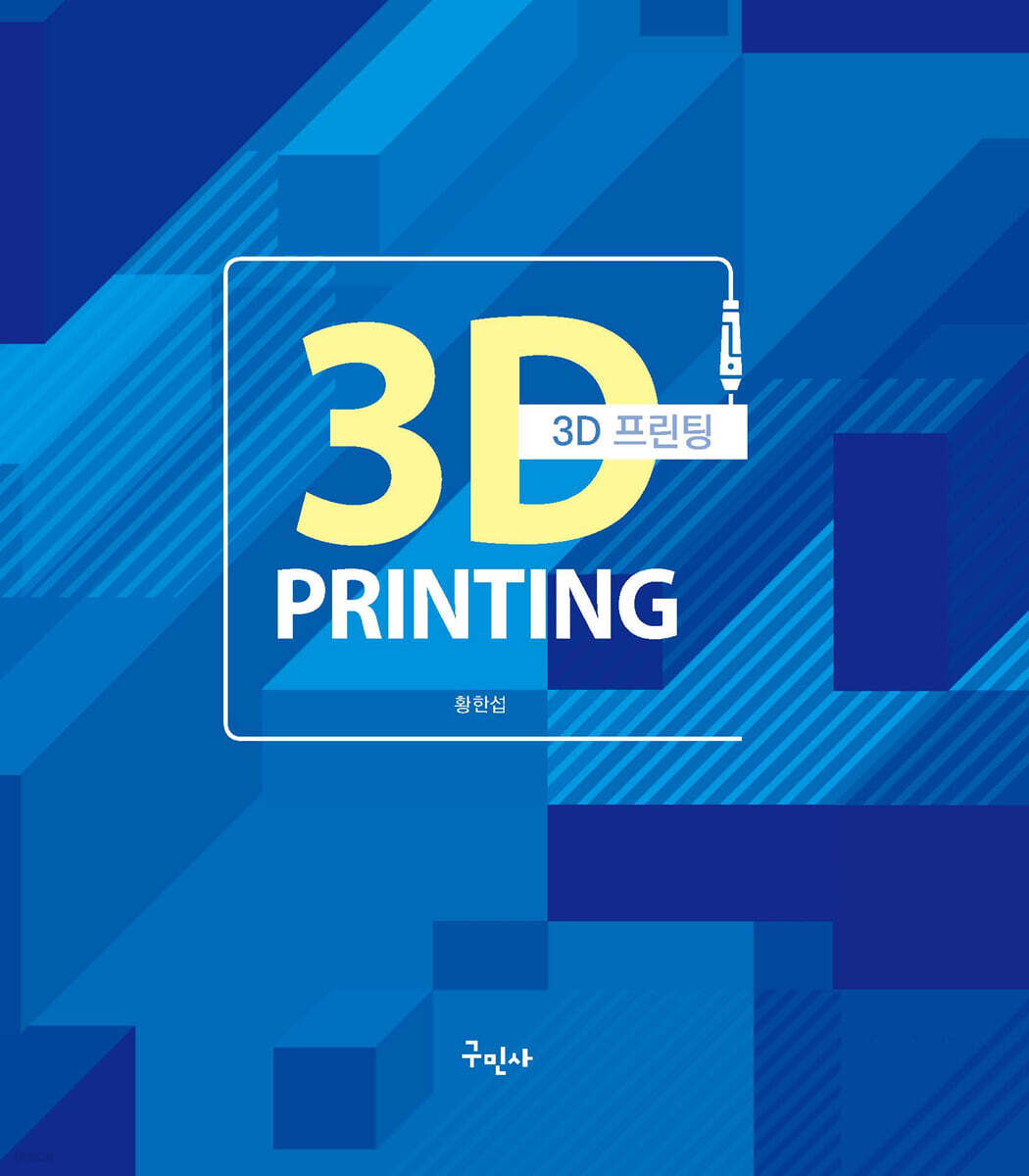
3D printing
 |
Description
Book Introduction
These days, we don't hesitate to purchase a pizza or a whole chicken, but what about the situation when it comes to buying a book? In this age of physical overnutrition, peripheral visual stimulation explodes with videos and mukbangs. Meanwhile, with the decline in direct interaction with others, the place for the wholesome printed word, which soothes our weary hearts, is gradually being pushed aside.
For humans, who find stillness boring and are optimized for three-dimensional visual stimulation, books are treated as a stale product of forced, embodied learning in the harsh educational environment.
And yet, I pick up my pen again.
Why is that?
In fact, preparing a book is like locking yourself in a prison of writing with zero cost-effectiveness.
The book is the result of venting the loneliness and frustration in prison.
Writing a book is such a difficult process, but I confine myself to the prison of writing in hopes of establishing proper lectures and knowledge based on the results I've produced.
Modern society is in turmoil, struggling with the unpredictable future brought about by the sudden onset of the Fourth Industrial Revolution.
Various media outlets mention jobs or positions that will disappear in the future, adding to the anxiety among us living in this era.
I have been an expert in conventional mass production manufacturing methods.
However, as we increasingly recognize that traditional manufacturing methods are under threat, we have begun to compare and learn with 3D printing as a defense mechanism.
As a result, I published a book that summarizes my thoughts and data from conducting comparative research.
The ultimate goal of this book is to properly establish the concept of 3D printing and secure the seeds of wisdom that can penetrate the future.
It can also provide direction to those who are familiar with existing manufacturing methods and are concerned about introducing new methods.
An investment the price of a pizza can give you a balanced view of 3D printing.
Revolutions can dramatically change society, and they can also serve as an opportunity to destroy existing values and establish new ones.
However, after working as an engineer for over 30 years, I realized that professions do not disappear through revolution, but rather progress.
Industrial society can be thought of as a single brick made up of various things such as gravel and sand.
3D printing is also a step forward from various technologies that are deeply rooted in existing industries.
Although this may be somewhat unfamiliar to those accustomed to existing mass production-based manufacturing methods, we have tried to make it as user-friendly as possible.
True progress is built on a solid foundation.
Through this book, I hope to gain a more solid foundation of knowledge, and for the knowledge of the past, present, and future to be fused together like warp and weft, becoming water that merges from a lower position than fire.
I would be most delighted if this book could be of help to engineers, patriots of our time, who, like me, are accustomed to conventional manufacturing methods and fear the coming revolution.
For humans, who find stillness boring and are optimized for three-dimensional visual stimulation, books are treated as a stale product of forced, embodied learning in the harsh educational environment.
And yet, I pick up my pen again.
Why is that?
In fact, preparing a book is like locking yourself in a prison of writing with zero cost-effectiveness.
The book is the result of venting the loneliness and frustration in prison.
Writing a book is such a difficult process, but I confine myself to the prison of writing in hopes of establishing proper lectures and knowledge based on the results I've produced.
Modern society is in turmoil, struggling with the unpredictable future brought about by the sudden onset of the Fourth Industrial Revolution.
Various media outlets mention jobs or positions that will disappear in the future, adding to the anxiety among us living in this era.
I have been an expert in conventional mass production manufacturing methods.
However, as we increasingly recognize that traditional manufacturing methods are under threat, we have begun to compare and learn with 3D printing as a defense mechanism.
As a result, I published a book that summarizes my thoughts and data from conducting comparative research.
The ultimate goal of this book is to properly establish the concept of 3D printing and secure the seeds of wisdom that can penetrate the future.
It can also provide direction to those who are familiar with existing manufacturing methods and are concerned about introducing new methods.
An investment the price of a pizza can give you a balanced view of 3D printing.
Revolutions can dramatically change society, and they can also serve as an opportunity to destroy existing values and establish new ones.
However, after working as an engineer for over 30 years, I realized that professions do not disappear through revolution, but rather progress.
Industrial society can be thought of as a single brick made up of various things such as gravel and sand.
3D printing is also a step forward from various technologies that are deeply rooted in existing industries.
Although this may be somewhat unfamiliar to those accustomed to existing mass production-based manufacturing methods, we have tried to make it as user-friendly as possible.
True progress is built on a solid foundation.
Through this book, I hope to gain a more solid foundation of knowledge, and for the knowledge of the past, present, and future to be fused together like warp and weft, becoming water that merges from a lower position than fire.
I would be most delighted if this book could be of help to engineers, patriots of our time, who, like me, are accustomed to conventional manufacturing methods and fear the coming revolution.
- You can preview some of the book's contents.
Preview
index
Part 01 3D Printing Overview
1-1.
Definition of manufacturing
1-2.
technological advancements
1-3.
Comparison of existing mass production systems and 3D printing
1-4.
Definition of 3D printing
1-5.
3D Printer
1-6.
History of 3D Printing
1-7.
Types of coordinate systems
1-8. FDM 3D printer method
1-9. FDM 3D Printer Configuration and Name
Part 02 3D Printing Classification and Operating Principles
2-1.
3D printing classification
2-2.
3D printing process
2-3. CAM Programming (G-code)
2-4.
G-code examples in cutting processing
2-5.
Idea generation method
2-6.
3D printing using a 3D scanner
2-7.
Principles and types of 3D scanners
2-8. 3D Printing Using CAD Modeling
2-9.
3D printing using website models
2-10.
3D Printing Types and How They Work
Part 03 3D Printing Materials
3-1.
Classification of materials
3-2.
Various 3D printing technologies depending on the material
3-3.
Thermoplastics and thermosetting resins
3-4.
photocurable resin
3-5.
powder material
3-6.
Plastic materials used in 3D printing
3-7.
Common plastic materials and uses
3-8.
biodegradable polymers
3-9.
Metal materials used in 3D printing
3-10.
Metal material application examples
3-11.
Bonding of plastic materials
3-12.
Bonding of metal/ceramic powders
Part 04 3D Modeling and Related Software
4-1.
3D modeling
4-2. Types of CAD models and modeling methods
4-3.
3D modeling software
4-4. CAM software (slicer software)
4-5.
3D model sharing site
4-6. CAD File Format
4-7. STL File Format
Part 05 Existing mass production methods
5-1.
mold
5-2.
Types of molds
5-3.
Mold manufacturing process
5-4.
Structure of injection and press molds
5-5.
Mass production using powdered materials
Part 06 3D Printing Applications
6-1.
Application areas
6-2.
The Future of 3D Printing
6-3.
The Fourth Industrial Revolution and 3D Printing
Part 07 Using a 3D Printer
7-1.
3D printing work
7-2.
3D modeling work
7-3. NC (Numerical Control) code output
1-1.
Definition of manufacturing
1-2.
technological advancements
1-3.
Comparison of existing mass production systems and 3D printing
1-4.
Definition of 3D printing
1-5.
3D Printer
1-6.
History of 3D Printing
1-7.
Types of coordinate systems
1-8. FDM 3D printer method
1-9. FDM 3D Printer Configuration and Name
Part 02 3D Printing Classification and Operating Principles
2-1.
3D printing classification
2-2.
3D printing process
2-3. CAM Programming (G-code)
2-4.
G-code examples in cutting processing
2-5.
Idea generation method
2-6.
3D printing using a 3D scanner
2-7.
Principles and types of 3D scanners
2-8. 3D Printing Using CAD Modeling
2-9.
3D printing using website models
2-10.
3D Printing Types and How They Work
Part 03 3D Printing Materials
3-1.
Classification of materials
3-2.
Various 3D printing technologies depending on the material
3-3.
Thermoplastics and thermosetting resins
3-4.
photocurable resin
3-5.
powder material
3-6.
Plastic materials used in 3D printing
3-7.
Common plastic materials and uses
3-8.
biodegradable polymers
3-9.
Metal materials used in 3D printing
3-10.
Metal material application examples
3-11.
Bonding of plastic materials
3-12.
Bonding of metal/ceramic powders
Part 04 3D Modeling and Related Software
4-1.
3D modeling
4-2. Types of CAD models and modeling methods
4-3.
3D modeling software
4-4. CAM software (slicer software)
4-5.
3D model sharing site
4-6. CAD File Format
4-7. STL File Format
Part 05 Existing mass production methods
5-1.
mold
5-2.
Types of molds
5-3.
Mold manufacturing process
5-4.
Structure of injection and press molds
5-5.
Mass production using powdered materials
Part 06 3D Printing Applications
6-1.
Application areas
6-2.
The Future of 3D Printing
6-3.
The Fourth Industrial Revolution and 3D Printing
Part 07 Using a 3D Printer
7-1.
3D printing work
7-2.
3D modeling work
7-3. NC (Numerical Control) code output
GOODS SPECIFICS
- Date of issue: October 10, 2025
- Page count, weight, size: 275 pages | 210*240*20mm
- ISBN13: 9791168756168
- ISBN10: 1168756162
You may also like
카테고리
korean


korean

![ELLE 엘르 스페셜 에디션 A형 : 12월 [2025]](http://librairie.coreenne.fr/cdn/shop/files/b8e27a3de6c9538896439686c6b0e8fb.jpg?v=1766436872&width=3840)


