

Finding Branding in a Hanok in the City
 |
Description
Book Introduction
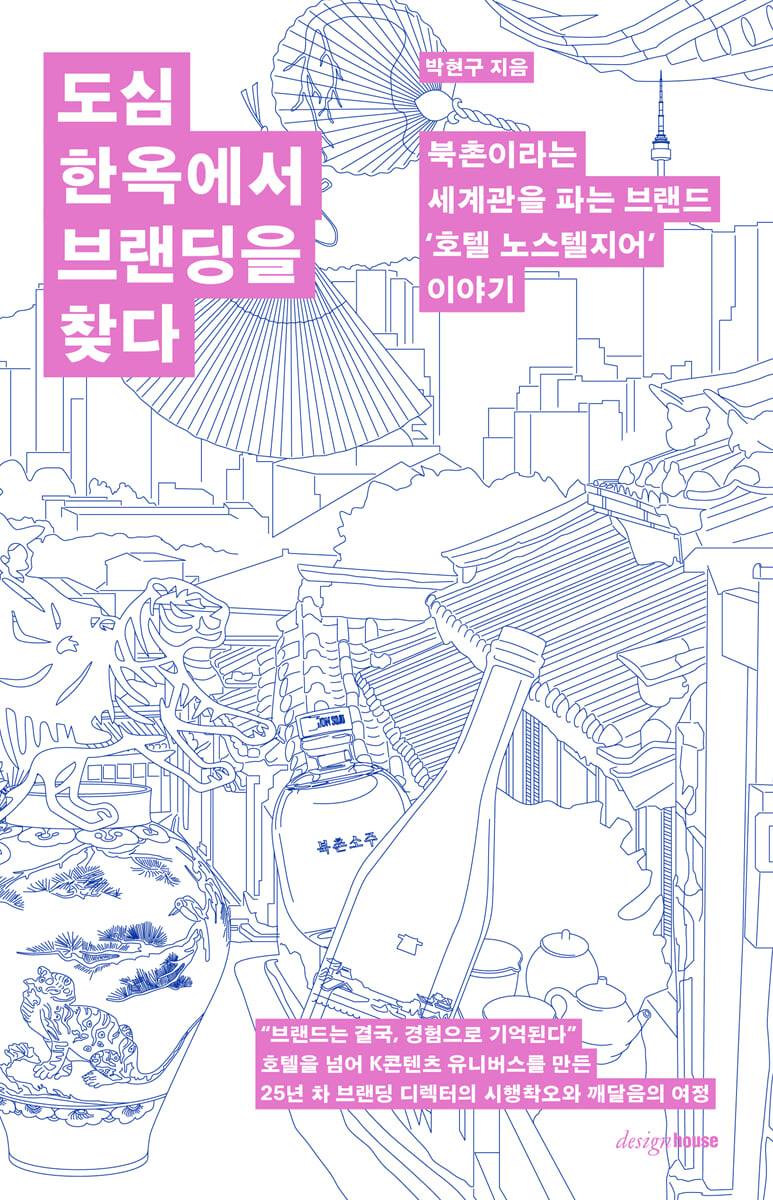
"Branding is ultimately about planning your own system." Beyond hotels, we created a K-content universe.
A journey of trial and error and enlightenment from a branding director with 25 years of experience.
Most products are born with a brand name.
Not only tangible products like jeans, tires, and washing machines, but also intangible services like content and platforms like Netflix and Toss have brands.
Products thrive under the influence of brands, but few survive.
But in today's brand-flooded era, survival alone is not enough.
To ensure growth, a brand must go beyond survival and become loved by customers and earn their absolute trust.
So how can a brand be remembered by people for a long time?
The author of "Finding Branding in Urban Hanok" has been focusing on branding for 25 years while running a branding company.
After working as a brand consulting firm for major corporations such as Hanwha, Hyundai Motors, and Samsung Card, and being in charge of naming familiar brands such as LG's 'Whisen' and CJ's 'Petitzel', he decided to create his own brand rather than someone else's after a long career and opened the doors of the Hanok Hotel Nostalgia in Bukchon, Seoul.
In this book, he shares his journey of creating, growing, and ultimately gaining public and industry recognition through his trials and tribulations.
By following the author's story of nostalgia, a journey of entrepreneurship and brand growth, you can examine every stage of successful branding, from creating a brand name to establishing brand essence, marketing, positioning, and growth strategy.
This includes the process of establishing a company's identity, including its core values and purpose of existence, and then expressing it through design, name, message, tone, and manner, and then building and maintaining relationships with customers and fulfilling its brand promise.
Rather than giving detailed instructions, the author paints a big picture.
Branding is not only important when starting a business, but is also an ongoing process that must be maintained throughout the operation and management of the business.
This book presents a single brand called Nostalgia, but it is not limited to the hotel industry; it introduces a branding mindset that can lead brands to sustained success in any industry.
Drawing on his experience in executing major projects, this book, which contains the author's experience and insights in growing a hotel from scratch into a cultural platform, will serve as a guide for entrepreneurs and branding strategists navigating uncertain times.
A journey of trial and error and enlightenment from a branding director with 25 years of experience.
Most products are born with a brand name.
Not only tangible products like jeans, tires, and washing machines, but also intangible services like content and platforms like Netflix and Toss have brands.
Products thrive under the influence of brands, but few survive.
But in today's brand-flooded era, survival alone is not enough.
To ensure growth, a brand must go beyond survival and become loved by customers and earn their absolute trust.
So how can a brand be remembered by people for a long time?
The author of "Finding Branding in Urban Hanok" has been focusing on branding for 25 years while running a branding company.
After working as a brand consulting firm for major corporations such as Hanwha, Hyundai Motors, and Samsung Card, and being in charge of naming familiar brands such as LG's 'Whisen' and CJ's 'Petitzel', he decided to create his own brand rather than someone else's after a long career and opened the doors of the Hanok Hotel Nostalgia in Bukchon, Seoul.
In this book, he shares his journey of creating, growing, and ultimately gaining public and industry recognition through his trials and tribulations.
By following the author's story of nostalgia, a journey of entrepreneurship and brand growth, you can examine every stage of successful branding, from creating a brand name to establishing brand essence, marketing, positioning, and growth strategy.
This includes the process of establishing a company's identity, including its core values and purpose of existence, and then expressing it through design, name, message, tone, and manner, and then building and maintaining relationships with customers and fulfilling its brand promise.
Rather than giving detailed instructions, the author paints a big picture.
Branding is not only important when starting a business, but is also an ongoing process that must be maintained throughout the operation and management of the business.
This book presents a single brand called Nostalgia, but it is not limited to the hotel industry; it introduces a branding mindset that can lead brands to sustained success in any industry.
Drawing on his experience in executing major projects, this book, which contains the author's experience and insights in growing a hotel from scratch into a cultural platform, will serve as a guide for entrepreneurs and branding strategists navigating uncertain times.
- You can preview some of the book's contents.
Preview
index
Introduction: A nostalgic startup story from scratch, written by a branding director with 25 years of experience.
Chapter 1: The Thinking of a Branding Director Who Made a Luxury Hanok Hotel a Destiny
1. Format: The difference between being loved and being ignored is the difference in the 'thought system'.
2. Stopping and Observing: The Key to Discovering the Real
3. Source: Seize the gold vein rather than the gold mine.
4. Acceptance: Should I do business or invest?
5 Reversal: If you want to see something that no one has seen yet
6. Forward: The magic of ‘selling’ becoming ‘selling’
Chapter 2: Building: Not Creating, but Reinterpreting: A Branding Strategy for Nostalgia
1 The Use of Hanok Beyond the Everyday Life of 'Residence'
Branding is about finding the "archetype" | Familiar yet unfamiliar, yet unfamiliar | Hospitality that exudes familiar nostalgia.
▶ An Old Future Drawn Under Blue Tiles: Blue Ash
Between Preservation and Renovation | Not a Hotel, but a Cultural Platform
2 Dream of Aman, but do not imitate Aman.
How to Make the World Want What You Want | How to Keep Your Differentiation and Authenticity from Being Empty
▶ A new world unfolds with just one door: Slowjae
Guest rooms become works of art | Guests respond to details and storytelling.
Rethinking 3K Heritage
What we create is neither cultural heritage nor museum | Mix it up, and it will sell.
▶ The charm of a narrow Hanok that overcomes limitations in scale: Nukjae
What new customers know, but existing customers don't | Strategically select experts tailored to each project's specifics | Go all-in on differentiating the customer experience
4 System is survival
The Ideal and Reality of Hanok Hotel Ownership | The Fundamentals of Selling Service, Even at Expensive Prices | Internal Marketing Comes First ▶▶ The Timeless Truth
Customers crave the extraordinary: Hilojae
A hotel that serves emotions and experiences | Pushing the boundaries reveals a blue ocean.
5 Don't become stagnant
Hospitality Skills of an Owner Who Doesn't Know the Hotel Industry | Customers Expect "Surprise" Most
▶ What Makes a Brand Mysterious: Hidden Assets
Satisfaction comes from the joy of discovery | Devices and details that imbue space with narrative | The correlation between scarcity and brand value
6 Success is not about going 'fast' but about going 'far'
Why We Stick to Collaborations | Brands thrive on curiosity.
▶ Go together and go far: Double Jae
The Art of Collaboration: Creating Synergy | Customer Experience Design and Optimized Touchpoints
Chapter 3: Digging: Love First, Then You Will Be Loved: The Art of Expanding Your Brand Worldview
1 F&B that sells brands, not products
The reason we created premium makgeolli wasn't to sell it in bulk | Creating a portable K-souvenir
2 What is a Lifestyle Business?
A business started by tourists buying face masks | A hotel selling crafts in New York? | Why hold exhibitions in hotel rooms?
Can Gahoe-dong become Porto?
Heritage, New Heritage | Why We Invest in City Branding
Going Out: From Bukchon to Manhattan, the Dream of a Cultural Embassy
Chapter 1: The Thinking of a Branding Director Who Made a Luxury Hanok Hotel a Destiny
1. Format: The difference between being loved and being ignored is the difference in the 'thought system'.
2. Stopping and Observing: The Key to Discovering the Real
3. Source: Seize the gold vein rather than the gold mine.
4. Acceptance: Should I do business or invest?
5 Reversal: If you want to see something that no one has seen yet
6. Forward: The magic of ‘selling’ becoming ‘selling’
Chapter 2: Building: Not Creating, but Reinterpreting: A Branding Strategy for Nostalgia
1 The Use of Hanok Beyond the Everyday Life of 'Residence'
Branding is about finding the "archetype" | Familiar yet unfamiliar, yet unfamiliar | Hospitality that exudes familiar nostalgia.
▶ An Old Future Drawn Under Blue Tiles: Blue Ash
Between Preservation and Renovation | Not a Hotel, but a Cultural Platform
2 Dream of Aman, but do not imitate Aman.
How to Make the World Want What You Want | How to Keep Your Differentiation and Authenticity from Being Empty
▶ A new world unfolds with just one door: Slowjae
Guest rooms become works of art | Guests respond to details and storytelling.
Rethinking 3K Heritage
What we create is neither cultural heritage nor museum | Mix it up, and it will sell.
▶ The charm of a narrow Hanok that overcomes limitations in scale: Nukjae
What new customers know, but existing customers don't | Strategically select experts tailored to each project's specifics | Go all-in on differentiating the customer experience
4 System is survival
The Ideal and Reality of Hanok Hotel Ownership | The Fundamentals of Selling Service, Even at Expensive Prices | Internal Marketing Comes First ▶▶ The Timeless Truth
Customers crave the extraordinary: Hilojae
A hotel that serves emotions and experiences | Pushing the boundaries reveals a blue ocean.
5 Don't become stagnant
Hospitality Skills of an Owner Who Doesn't Know the Hotel Industry | Customers Expect "Surprise" Most
▶ What Makes a Brand Mysterious: Hidden Assets
Satisfaction comes from the joy of discovery | Devices and details that imbue space with narrative | The correlation between scarcity and brand value
6 Success is not about going 'fast' but about going 'far'
Why We Stick to Collaborations | Brands thrive on curiosity.
▶ Go together and go far: Double Jae
The Art of Collaboration: Creating Synergy | Customer Experience Design and Optimized Touchpoints
Chapter 3: Digging: Love First, Then You Will Be Loved: The Art of Expanding Your Brand Worldview
1 F&B that sells brands, not products
The reason we created premium makgeolli wasn't to sell it in bulk | Creating a portable K-souvenir
2 What is a Lifestyle Business?
A business started by tourists buying face masks | A hotel selling crafts in New York? | Why hold exhibitions in hotel rooms?
Can Gahoe-dong become Porto?
Heritage, New Heritage | Why We Invest in City Branding
Going Out: From Bukchon to Manhattan, the Dream of a Cultural Embassy
Detailed image

Into the book
I define a business environment as a system, a framework within which meaning can be realized.
To make a successful career, a talented chef needs kitchen equipment, a food supply chain, and the right location.
Even if your head is full of ingenious flavor combinations, if you don't have a tangible or intangible system to implement them, they will remain just fantasy.
The same goes for the innovative ideas of startup founders.
Anyone can create an app, but to make it commercially successful, you need a realistic operating system, including a business location, communications facilities, and distribution network.
Money, personal networks, and market conditions are also part of the system.
A vision becomes a tangible outcome only when there is a solid implementation system to support it.
Even abstract intentions can only be transformed into concrete values if there is a multi-layered system to support them.
In this context, this book is a field experience of someone who struggled to create a system and is still in the process of creating one.
--- From "A Nostalgic Startup Story from '0' by a Branding Director with 25 Years of Experience"
When we first meet someone, we get a sense of their character through their appearance, speech, and behavior.
The same goes for brands.
Every touchpoint—brand name, online platform, offline store atmosphere, employee service, product quality—reveals the brand's character.
What you sell is important, but now it's more important to pursue certain values, create specific products, and provide specific experiences to customers through those products.
A brand is an intangible asset formed through a deep connection with consumers, at the point where emotion and logic meet.
--- From "Chapter 1 Thinking 'Form (形式): The difference in thought system that determines whether you are loved or ignored'"
In an age where convenience has become a religion, spring water, not well water, is found in places that everyone avoids.
Items that the world deems impossible have less risk of loss, and things that people are reluctant to do create value.
The moment you think it's difficult to make, a barrier to entry is automatically created.
If you can do the impossible, you will have a monopoly.
--- From "Chapter 1 Thinking 'Form (形式): The difference in thought system that determines whether you are loved or ignored'"
A hotel is a commercial space, not a residential space, and is a space for lodging and service.
It is a space of a different dimension from motels or pensions whose main purpose is relaxation.
Services are intangible activities that meet customers' expectations and needs, and aim to deliver usefulness and satisfaction to customers.
Today's customers have a wealth of hospitality experiences and very sophisticated tastes.
To ensure service satisfaction, you must provide unexpected surprises to those who anticipate the service's development process.
The hospitality code of Nostalgia, designed for these customers, can be defined by the following '3U's':
Uncharted (never attempted), Unexpected (no one expected it), Unwilling (no one wanted to do it).
--- From "Chapter 2 Building: The Usefulness of Hanok Beyond the Everyday Life of Housing"
It is unusual to run a 100-year-old hanok as a hotel in the heart of Seoul.
The experience of staying overnight in a heritage-listed building with modern amenities is a rare one.
It's the experience of sleeping under a half-height ceiling and listening to the sound of rain falling on blue tiles handcrafted by the same tile craftsman who created the roof tiles of the Blue House.
Also, wearing a traditional hanbok created by a master hanbok artist instead of a regular rental hanbok, drinking tea while listening to gayageum performances, and inviting foreign embassy staff to a dinner in a hanok are all experiences that are not easily available at a 'hanok hotel.'
--- From "Chapter 2 Building: The Usefulness of Hanok Beyond the Everyday Life of Housing"
I think perfection is about fitting myself into the world's standards, and breaking new ground is about creating my own standards.
Perfection is safe but ordinary, and unconventional is risky but special.
This uniqueness is a powerful growth tool that will help us navigate through uncertain times.
People who strive for perfection follow established formulas for success.
We follow the path that others have made in the name of benchmarking.
But those who pursue innovation create paths no one has taken.
Create a unique experience for your customers, even if it means sacrificing profitability.
Even if the operation is complex and difficult, we design services that cannot be imitated anywhere else.
--- From "Chapter 2 Building 'Dreaming of Aman, but Not Imitating Aman'"
The most important thing I kept in mind while planning Slowjae was to make staying at Slowjae a complete journey in itself.
This is in line with Aman's secret to global success.
Just as Aman was recognized for its luxury by breaking down the boundaries of accommodation and embodying the value of tranquility in its space, Slowjae also wanted to open up a new horizon of experience by embodying the 'density of time' in its space.
--- From "Chapter 2 Building 'A new world unfolds when you open just one door: Slowjae'"
Managing Nostalgia's unique operational complexities required a completely different system than a typical hotel.
What was needed was a three-dimensional system that could connect non-adjacent Hanoks to create a reasonable route, rather than the vertical system of a typical hotel or the horizontal system of a resort.
--- From "Chapter 2 Building 'System is Survival'"
Nostalgia's internally shared brand slogan is 'Expect Exceptional', meaning 'Make people expect amazing experiences.'
This doctrine is rooted in the human psyche, which is not aware of its own desires.
In fact, 'Expect Exceptional' is a phrase that Branding.com developed as the brand slogan for Incheon Airport, but it is now being used as the business model slogan for Nostalgia.
The result of this nostalgia that embodies this slogan is the Welcome Center.
When you think of the information desk at a Hanok hotel, you usually picture an elderly person wearing a Hanbok welcoming you with a “welcome,” but the reality is completely different.
A blue-eyed foreign welcome master who speaks English well and Korean even better will systematically serve you at the hotel-level front desk.
The reaction from first-time customers is consistent.
“Huh? This kind of service in a traditional Korean house?” At this very moment, in the gap between expectation and reality, the customer experiences a positive surprise.
--- From "Chapter 2 Building 'System is Survival'"
When discussing brands, I focus on how heritage connects to present-day values.
If tradition is confined to museum displays, it is nothing more than a relic of the past.
However, it is only when that value is reinterpreted in contemporary language and incorporated into people's daily lives that it gains vitality.
This is exactly what I focused on while planning the Hanok Hotel Nostalgia.
I call this attempt to recreate and expand upon tradition in today's context without damaging its essence "new heritage."
To make a successful career, a talented chef needs kitchen equipment, a food supply chain, and the right location.
Even if your head is full of ingenious flavor combinations, if you don't have a tangible or intangible system to implement them, they will remain just fantasy.
The same goes for the innovative ideas of startup founders.
Anyone can create an app, but to make it commercially successful, you need a realistic operating system, including a business location, communications facilities, and distribution network.
Money, personal networks, and market conditions are also part of the system.
A vision becomes a tangible outcome only when there is a solid implementation system to support it.
Even abstract intentions can only be transformed into concrete values if there is a multi-layered system to support them.
In this context, this book is a field experience of someone who struggled to create a system and is still in the process of creating one.
--- From "A Nostalgic Startup Story from '0' by a Branding Director with 25 Years of Experience"
When we first meet someone, we get a sense of their character through their appearance, speech, and behavior.
The same goes for brands.
Every touchpoint—brand name, online platform, offline store atmosphere, employee service, product quality—reveals the brand's character.
What you sell is important, but now it's more important to pursue certain values, create specific products, and provide specific experiences to customers through those products.
A brand is an intangible asset formed through a deep connection with consumers, at the point where emotion and logic meet.
--- From "Chapter 1 Thinking 'Form (形式): The difference in thought system that determines whether you are loved or ignored'"
In an age where convenience has become a religion, spring water, not well water, is found in places that everyone avoids.
Items that the world deems impossible have less risk of loss, and things that people are reluctant to do create value.
The moment you think it's difficult to make, a barrier to entry is automatically created.
If you can do the impossible, you will have a monopoly.
--- From "Chapter 1 Thinking 'Form (形式): The difference in thought system that determines whether you are loved or ignored'"
A hotel is a commercial space, not a residential space, and is a space for lodging and service.
It is a space of a different dimension from motels or pensions whose main purpose is relaxation.
Services are intangible activities that meet customers' expectations and needs, and aim to deliver usefulness and satisfaction to customers.
Today's customers have a wealth of hospitality experiences and very sophisticated tastes.
To ensure service satisfaction, you must provide unexpected surprises to those who anticipate the service's development process.
The hospitality code of Nostalgia, designed for these customers, can be defined by the following '3U's':
Uncharted (never attempted), Unexpected (no one expected it), Unwilling (no one wanted to do it).
--- From "Chapter 2 Building: The Usefulness of Hanok Beyond the Everyday Life of Housing"
It is unusual to run a 100-year-old hanok as a hotel in the heart of Seoul.
The experience of staying overnight in a heritage-listed building with modern amenities is a rare one.
It's the experience of sleeping under a half-height ceiling and listening to the sound of rain falling on blue tiles handcrafted by the same tile craftsman who created the roof tiles of the Blue House.
Also, wearing a traditional hanbok created by a master hanbok artist instead of a regular rental hanbok, drinking tea while listening to gayageum performances, and inviting foreign embassy staff to a dinner in a hanok are all experiences that are not easily available at a 'hanok hotel.'
--- From "Chapter 2 Building: The Usefulness of Hanok Beyond the Everyday Life of Housing"
I think perfection is about fitting myself into the world's standards, and breaking new ground is about creating my own standards.
Perfection is safe but ordinary, and unconventional is risky but special.
This uniqueness is a powerful growth tool that will help us navigate through uncertain times.
People who strive for perfection follow established formulas for success.
We follow the path that others have made in the name of benchmarking.
But those who pursue innovation create paths no one has taken.
Create a unique experience for your customers, even if it means sacrificing profitability.
Even if the operation is complex and difficult, we design services that cannot be imitated anywhere else.
--- From "Chapter 2 Building 'Dreaming of Aman, but Not Imitating Aman'"
The most important thing I kept in mind while planning Slowjae was to make staying at Slowjae a complete journey in itself.
This is in line with Aman's secret to global success.
Just as Aman was recognized for its luxury by breaking down the boundaries of accommodation and embodying the value of tranquility in its space, Slowjae also wanted to open up a new horizon of experience by embodying the 'density of time' in its space.
--- From "Chapter 2 Building 'A new world unfolds when you open just one door: Slowjae'"
Managing Nostalgia's unique operational complexities required a completely different system than a typical hotel.
What was needed was a three-dimensional system that could connect non-adjacent Hanoks to create a reasonable route, rather than the vertical system of a typical hotel or the horizontal system of a resort.
--- From "Chapter 2 Building 'System is Survival'"
Nostalgia's internally shared brand slogan is 'Expect Exceptional', meaning 'Make people expect amazing experiences.'
This doctrine is rooted in the human psyche, which is not aware of its own desires.
In fact, 'Expect Exceptional' is a phrase that Branding.com developed as the brand slogan for Incheon Airport, but it is now being used as the business model slogan for Nostalgia.
The result of this nostalgia that embodies this slogan is the Welcome Center.
When you think of the information desk at a Hanok hotel, you usually picture an elderly person wearing a Hanbok welcoming you with a “welcome,” but the reality is completely different.
A blue-eyed foreign welcome master who speaks English well and Korean even better will systematically serve you at the hotel-level front desk.
The reaction from first-time customers is consistent.
“Huh? This kind of service in a traditional Korean house?” At this very moment, in the gap between expectation and reality, the customer experiences a positive surprise.
--- From "Chapter 2 Building 'System is Survival'"
When discussing brands, I focus on how heritage connects to present-day values.
If tradition is confined to museum displays, it is nothing more than a relic of the past.
However, it is only when that value is reinterpreted in contemporary language and incorporated into people's daily lives that it gains vitality.
This is exactly what I focused on while planning the Hanok Hotel Nostalgia.
I call this attempt to recreate and expand upon tradition in today's context without damaging its essence "new heritage."
--- From "Chapter 3 Digging 'Can Gahoe-dong Become Porto?'"
Publisher's Review
To remain as the 'only one' among countless names
A brand that cannot replace imperfect ideas
The struggles of a nurtured entrepreneur
As you walk through Bukchon along the narrow, sloping alleys, your eyes are drawn to the low tiled roofs, soaring eaves, and old wooden gates.
The peaceful atmosphere has long since disappeared due to the daily influx of tourists, but this only makes me more curious about the world behind the high walls.
Most of the Hanoks in Bukchon are private residences, so you can't even step outside their gates. However, there are places where you can fully experience the charm of Hanoks as living spaces and traditional houses.
It is the Hanok Hotel Nostalgia.
Guests can enjoy traditional tea, foot baths, and a garden view in rooms equipped with modern amenities such as beds, lighting, and appliances, and fall asleep looking up at the 100-year-old ceiling beams.
Opened in Bukchon in 2022, this place operates six hanok (traditional Korean houses).
80% of its customers are foreigners, and it goes beyond its role as a simple lodging facility, operating pottery and tea classes to provide a place to experience traditional culture. It also serves as a meeting place for embassy officials from various countries and a showroom for luxury brands such as Chanel and Prada.
This is where the special nature of nostalgia comes into play.
What makes Nostalgia unique is that it is not only a comfortable place to sleep that usually comes to mind when thinking of a 'good hotel', but also a space for experiences.
The ‘journey of experience’ is the most important part of branding.
The fact that Nostalgia was able to become the first property in Northeast Asia to be listed on Airbnb's top premium collection, Luxe, just three years after its opening is also because the author, a branding specialist, fully utilized his expertise to develop the brand.
In the book, the author talks about how he, who was building a career in branding, entered the hotel industry with no knowledge, purchased a hanok in Bukchon and founded Nostalgia, and through many trials and errors, developed it into a special space that offers various amenities such as relaxation, sightseeing, cultural experiences, shopping, and a showroom.
How are long-loved brands created?
Creating our brand's own 'experience' and 'memory'
The art of thinking, executing, and expanding
The first step in branding is to figure out what makes you unique and clarify what values you pursue.
This can be expressed in one word as brand essence. It is the first element that consumers recognize about a brand, the foundation of all branding activities, and the condition that differentiates it from other brands.
What drives the continued growth of dual brands is differentiation and absolute rarity.
Based on this, the author established the brand essence of nostalgia by adding differentiation through face-to-face service that welcomes guests directly, ignoring the general non-face-to-face trend in hanok stays, to the absolute rarity of the experience of staying in a Bukchon Hanok.
Born from the intersection of 600 years of Bukchon's history and modern hospitality, 'New Heritage' embodies the essence of nostalgia.
Based on this, we establish a brand name, design, and slogan, maintain relationships with customers, and grow the brand.
This series of processes is reflected in six Hanoks, each with a different concept and service.
Bluejae, the first Hanok that realized the author's dream idea, is a space of over 100 pyeong that effectively combines the preservation of a traditional house with modern conveniences, making it a living museum.
Slowjae is an experiential space filled with artistic devices that awaken the senses of sight, touch, smell, hearing, and taste. Customers experience healing through walls with kinetic art, a studio where pottery classes are held, and music and scents created exclusively for Slowjae.
Although the narrow space of Nookjae was a hindrance, this actually became an opportunity to attract customers who had difficulty accessing nostalgia due to the high accommodation prices.
At Hilojae, you can experience the special moment when art becomes part of your daily life by using artworks that were previously only seen in galleries as everyday items such as tables, stools, and kettles.
Hiddenjae is connected so that customers can experience the rhythm of the space called Hanok as they move through the yard, main building, annex, and cave that was used as an air-raid shelter during the Japanese colonial period, starting from the main gate.
Double Jae, which connects two individual Hanoks, is a collaborative effort between three brands and nine artists. It hosts exhibitions, concerts, tea ceremonies, and other cultural events, allowing visitors to experience the true value of Korean tradition.
In addition to the structural shortcomings of Hanok, such as insulation and soundproofing, there are many issues to be resolved when operating a Hanok hotel, such as the problem of disinfecting and cleaning a Hanok of cultural heritage status, and the problem of moving multiple independent houses built on a hill.
However, the author solves the problem by creating a unique system one by one according to the service code of nostalgia: 'something that has never been tried before', 'something new that no one expected', and 'something that no one wants to do'.
The author's branding thinking system comes into play every time a company overcomes the constant challenges of operating, from building a gap with competitors to expanding its brand.
By 'seeing broadly, seeing high, and seeing deeply', you can find new perspectives that others have not thought of.
If you don't just see your brand as a resource to be consumed, but find ways to continuously create new value, you can sustain your business.
Making a brand irreplaceable sometimes requires experimentation and the willingness to sacrifice efficiency and profitability.
The perspective of seeing a crisis as an opportunity and a weakness as an advantage becomes a powerful weapon.
If you choose the slow but sure path over the easy and comfortable path, you will reap greater rewards later.
This book will serve as a workbook that demonstrates how the author's thinking system can be applied in the branding process.
A brand that cannot replace imperfect ideas
The struggles of a nurtured entrepreneur
As you walk through Bukchon along the narrow, sloping alleys, your eyes are drawn to the low tiled roofs, soaring eaves, and old wooden gates.
The peaceful atmosphere has long since disappeared due to the daily influx of tourists, but this only makes me more curious about the world behind the high walls.
Most of the Hanoks in Bukchon are private residences, so you can't even step outside their gates. However, there are places where you can fully experience the charm of Hanoks as living spaces and traditional houses.
It is the Hanok Hotel Nostalgia.
Guests can enjoy traditional tea, foot baths, and a garden view in rooms equipped with modern amenities such as beds, lighting, and appliances, and fall asleep looking up at the 100-year-old ceiling beams.
Opened in Bukchon in 2022, this place operates six hanok (traditional Korean houses).
80% of its customers are foreigners, and it goes beyond its role as a simple lodging facility, operating pottery and tea classes to provide a place to experience traditional culture. It also serves as a meeting place for embassy officials from various countries and a showroom for luxury brands such as Chanel and Prada.
This is where the special nature of nostalgia comes into play.
What makes Nostalgia unique is that it is not only a comfortable place to sleep that usually comes to mind when thinking of a 'good hotel', but also a space for experiences.
The ‘journey of experience’ is the most important part of branding.
The fact that Nostalgia was able to become the first property in Northeast Asia to be listed on Airbnb's top premium collection, Luxe, just three years after its opening is also because the author, a branding specialist, fully utilized his expertise to develop the brand.
In the book, the author talks about how he, who was building a career in branding, entered the hotel industry with no knowledge, purchased a hanok in Bukchon and founded Nostalgia, and through many trials and errors, developed it into a special space that offers various amenities such as relaxation, sightseeing, cultural experiences, shopping, and a showroom.
How are long-loved brands created?
Creating our brand's own 'experience' and 'memory'
The art of thinking, executing, and expanding
The first step in branding is to figure out what makes you unique and clarify what values you pursue.
This can be expressed in one word as brand essence. It is the first element that consumers recognize about a brand, the foundation of all branding activities, and the condition that differentiates it from other brands.
What drives the continued growth of dual brands is differentiation and absolute rarity.
Based on this, the author established the brand essence of nostalgia by adding differentiation through face-to-face service that welcomes guests directly, ignoring the general non-face-to-face trend in hanok stays, to the absolute rarity of the experience of staying in a Bukchon Hanok.
Born from the intersection of 600 years of Bukchon's history and modern hospitality, 'New Heritage' embodies the essence of nostalgia.
Based on this, we establish a brand name, design, and slogan, maintain relationships with customers, and grow the brand.
This series of processes is reflected in six Hanoks, each with a different concept and service.
Bluejae, the first Hanok that realized the author's dream idea, is a space of over 100 pyeong that effectively combines the preservation of a traditional house with modern conveniences, making it a living museum.
Slowjae is an experiential space filled with artistic devices that awaken the senses of sight, touch, smell, hearing, and taste. Customers experience healing through walls with kinetic art, a studio where pottery classes are held, and music and scents created exclusively for Slowjae.
Although the narrow space of Nookjae was a hindrance, this actually became an opportunity to attract customers who had difficulty accessing nostalgia due to the high accommodation prices.
At Hilojae, you can experience the special moment when art becomes part of your daily life by using artworks that were previously only seen in galleries as everyday items such as tables, stools, and kettles.
Hiddenjae is connected so that customers can experience the rhythm of the space called Hanok as they move through the yard, main building, annex, and cave that was used as an air-raid shelter during the Japanese colonial period, starting from the main gate.
Double Jae, which connects two individual Hanoks, is a collaborative effort between three brands and nine artists. It hosts exhibitions, concerts, tea ceremonies, and other cultural events, allowing visitors to experience the true value of Korean tradition.
In addition to the structural shortcomings of Hanok, such as insulation and soundproofing, there are many issues to be resolved when operating a Hanok hotel, such as the problem of disinfecting and cleaning a Hanok of cultural heritage status, and the problem of moving multiple independent houses built on a hill.
However, the author solves the problem by creating a unique system one by one according to the service code of nostalgia: 'something that has never been tried before', 'something new that no one expected', and 'something that no one wants to do'.
The author's branding thinking system comes into play every time a company overcomes the constant challenges of operating, from building a gap with competitors to expanding its brand.
By 'seeing broadly, seeing high, and seeing deeply', you can find new perspectives that others have not thought of.
If you don't just see your brand as a resource to be consumed, but find ways to continuously create new value, you can sustain your business.
Making a brand irreplaceable sometimes requires experimentation and the willingness to sacrifice efficiency and profitability.
The perspective of seeing a crisis as an opportunity and a weakness as an advantage becomes a powerful weapon.
If you choose the slow but sure path over the easy and comfortable path, you will reap greater rewards later.
This book will serve as a workbook that demonstrates how the author's thinking system can be applied in the branding process.
GOODS SPECIFICS
- Date of issue: November 3, 2025
- Page count, weight, size: 212 pages | 454g | 145*225*15mm
- ISBN13: 9788970413235
- ISBN10: 8970413235
You may also like
카테고리
korean


korean

![ELLE 엘르 스페셜 에디션 A형 : 12월 [2025]](http://librairie.coreenne.fr/cdn/shop/files/b8e27a3de6c9538896439686c6b0e8fb.jpg?v=1766436872&width=3840)


