

The Power of Silicon Valley Processes
 |
Description
Book Introduction
Even in an unprecedented business environment where cutting-edge technological innovations, led by AI, and globalization are driving rapid change across industries, Silicon Valley companies are consistently innovating and leading the market.
Because they were born digital natives, they were able to develop organizational operations that were optimally suited to technology-centric industries and businesses.
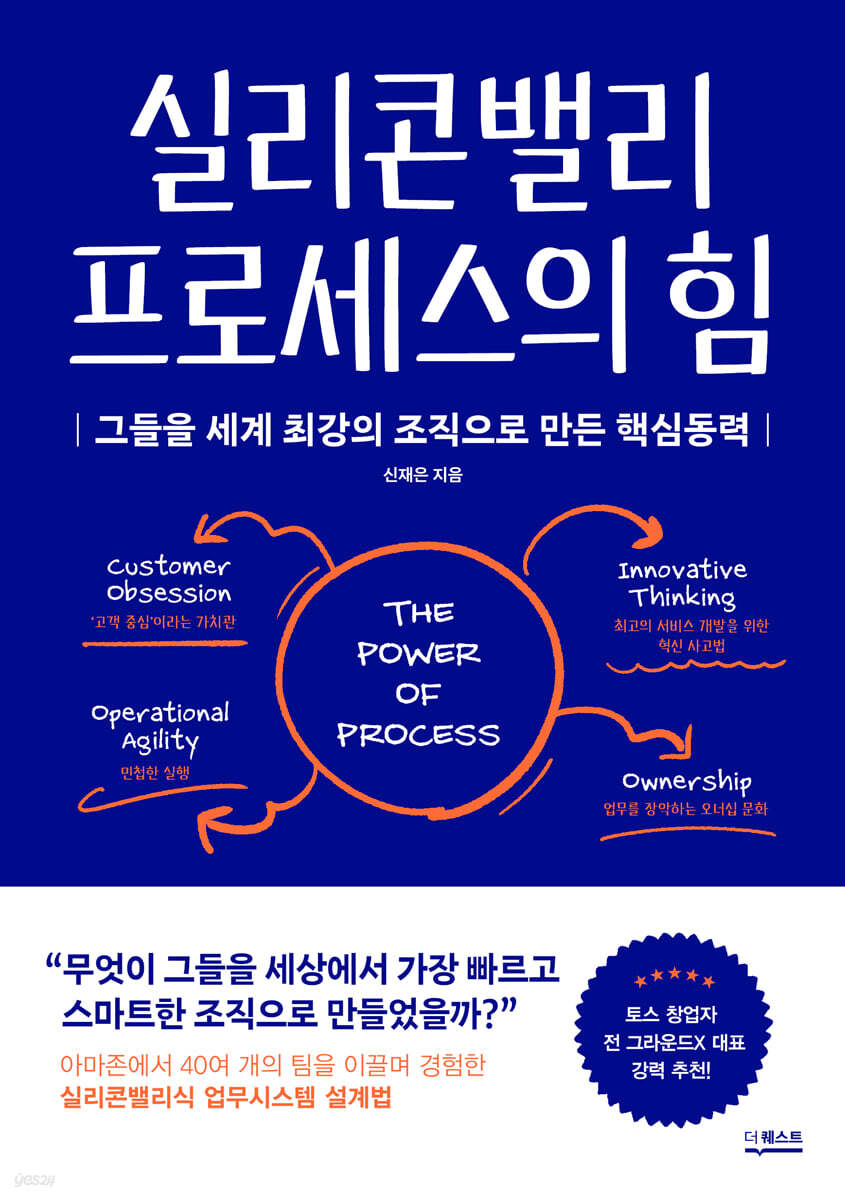
This book explains the "process-centered organizational management method" that enables the continued success of leading Silicon Valley companies.
Specifically, it presents process design methods and practical implementation plans that systematically implement (1) launching innovative products, (2) strengthening the organization's execution capabilities, and (3) building a strong organizational culture.
Managers struggling with organizational speed and execution, executives seeking more systematic organizational management, and leaders seeking to create continuous innovation and success will learn Silicon Valley-style process management techniques to achieve corporate goals and deliver successful outcomes even in uncertain environments.
Because they were born digital natives, they were able to develop organizational operations that were optimally suited to technology-centric industries and businesses.
This book explains the "process-centered organizational management method" that enables the continued success of leading Silicon Valley companies.
Specifically, it presents process design methods and practical implementation plans that systematically implement (1) launching innovative products, (2) strengthening the organization's execution capabilities, and (3) building a strong organizational culture.
Managers struggling with organizational speed and execution, executives seeking more systematic organizational management, and leaders seeking to create continuous innovation and success will learn Silicon Valley-style process management techniques to achieve corporate goals and deliver successful outcomes even in uncertain environments.
- You can preview some of the book's contents.
Preview
index
Prologue | The Unchanging Habits and Processes of Successful Companies
Chapter 1: Designing Success with Processes
The brilliant visionary Steve Jobs and the quiet operator Tim Cook
Great managers change the very DNA of their companies.
Balancing Vision and Process: Insights from a UK Startup Experience
The power of systematic operations needed in a rapidly changing era
Two pillars underpinning our operational system: customer focus and organizational strength.
The Power of Processes to Build Winning Habits in Your Business
To make it a process for everyone, not just theirs.
Processes work in any company.
Chapter 2: Standard Operating Processes for Creating Innovative Products
Innovative products are born from innovative processes.
[Product Ideation Framework 1] Defining the Customer's Problem
[Product Ideation Framework 2] Focus on the "Perfect Solution" to the Problem
[Product Ideation Framework 3] Future Back Planning Starting with the Ideal Customer Experience
Applying an Ideation Framework for Innovative Product Planning
An idea is just the beginning. It's time to examine the business feasibility.
Practical PR/FAQ templates for immediate use on-site
The importance of writing that elicits logical thinking
[Implementing PR/FAQ for Product Launch 1] Internal Language Protocol for Accurate Information Delivery
The PR/FAQ process is even more necessary for startups.
[Using PR/FAQ for Product Launch 2] Secure a Basis Everyone Can Understand
To properly implement the PR/FAQ process in practice:
Chapter 3: Standard Operating Processes for Creating an Agile Organization
The Critical Difference Between Slow and Fast Execution Organizations
A business management process that accelerates execution
Weekly meeting management practices that anticipate and prevent problems in advance
Things to keep in mind when introducing agile processes
How to Use Processes to Maximize Your Business' ROI
Chapter 4: Standard Operating Processes for Creating an Enterprising Organizational Culture
The True Meaning and Power of Organizational Culture
Characteristics of an organizational culture centered around processes
Hire the 'owners' of the work, not the employees.
Leadership principles: a standard that verifies both skills and values.
Behavioral event interviewing to identify the applicant's past behavioral patterns
The single purpose of creating a strong organizational culture: "Customer-centricity."
Why Customer Voice Should Be Influenced in Business and Promotion
The Secret of a Startup That Became Number 2 in Its Industry in Just Six Years
Standard Operating Process for Fair Performance Evaluation
How to apply the self-evaluation system
Chapter 5: What Leaders Who Want to Design Success Through Processes Need to Know
A balance between process and people is important.
The effectiveness of a process depends on the leader's decision.
Epilogue | From Visionary to Operator
Chapter 1: Designing Success with Processes
The brilliant visionary Steve Jobs and the quiet operator Tim Cook
Great managers change the very DNA of their companies.
Balancing Vision and Process: Insights from a UK Startup Experience
The power of systematic operations needed in a rapidly changing era
Two pillars underpinning our operational system: customer focus and organizational strength.
The Power of Processes to Build Winning Habits in Your Business
To make it a process for everyone, not just theirs.
Processes work in any company.
Chapter 2: Standard Operating Processes for Creating Innovative Products
Innovative products are born from innovative processes.
[Product Ideation Framework 1] Defining the Customer's Problem
[Product Ideation Framework 2] Focus on the "Perfect Solution" to the Problem
[Product Ideation Framework 3] Future Back Planning Starting with the Ideal Customer Experience
Applying an Ideation Framework for Innovative Product Planning
An idea is just the beginning. It's time to examine the business feasibility.
Practical PR/FAQ templates for immediate use on-site
The importance of writing that elicits logical thinking
[Implementing PR/FAQ for Product Launch 1] Internal Language Protocol for Accurate Information Delivery
The PR/FAQ process is even more necessary for startups.
[Using PR/FAQ for Product Launch 2] Secure a Basis Everyone Can Understand
To properly implement the PR/FAQ process in practice:
Chapter 3: Standard Operating Processes for Creating an Agile Organization
The Critical Difference Between Slow and Fast Execution Organizations
A business management process that accelerates execution
Weekly meeting management practices that anticipate and prevent problems in advance
Things to keep in mind when introducing agile processes
How to Use Processes to Maximize Your Business' ROI
Chapter 4: Standard Operating Processes for Creating an Enterprising Organizational Culture
The True Meaning and Power of Organizational Culture
Characteristics of an organizational culture centered around processes
Hire the 'owners' of the work, not the employees.
Leadership principles: a standard that verifies both skills and values.
Behavioral event interviewing to identify the applicant's past behavioral patterns
The single purpose of creating a strong organizational culture: "Customer-centricity."
Why Customer Voice Should Be Influenced in Business and Promotion
The Secret of a Startup That Became Number 2 in Its Industry in Just Six Years
Standard Operating Process for Fair Performance Evaluation
How to apply the self-evaluation system
Chapter 5: What Leaders Who Want to Design Success Through Processes Need to Know
A balance between process and people is important.
The effectiveness of a process depends on the leader's decision.
Epilogue | From Visionary to Operator
Detailed image

Into the book
Successful companies are born when visionaries and operators coexist and create synergy together.
As Jack Welch, former CEO of General Electric (GE) and considered the greatest manager of the century, emphasized, there is no entrepreneur as powerful as someone who possesses both vision and strategy as well as the ability to execute.
A company's vision without action is nothing more than a beautiful fantasy, but a company backed by the operational capabilities to turn that vision into reality can change the world.
Just as the brilliant visionary Steve Jobs and the perfect operator Tim Cook came together to create the most valuable company on Earth.
--- From "Designing Success with Chapter 1 Process"
Another advantage of processes is that they build a foundation for long-term success, not just one-time, flashy results, by accumulating behaviors that steadily strengthen an organization's capabilities.
When you plan your products and services according to a well-designed process that focuses on creating customer-centric products, these behaviors will gradually become ingrained within your company.
And these accumulated behavior patterns become ingrained as organizational habits, enabling the company to continuously launch innovative products and services that are loved by customers.
Vince Lombardi, a famous American football coach and former head coach of the Green Bay Packers, famously said, "Winning is a habit," emphasizing that in order to win a game, a team must consistently do everything necessary to win, not just do it once in a while.
--- From "Designing Success with Chapter 1 Process"
To maximize a company's ROI by efficiently utilizing limited resources, it is necessary to selectively launch only those products that can maximize future corporate value.
Therefore, a systematic process that empowers employees to only conceive of innovative products with a high probability of market success and meticulously analyze and review the feasibility of product launches from various perspectives is a crucial operational strategy for strengthening a company's product management capabilities.
According to research by Clayton Christensen, a former Harvard Business School professor, more than 30,000 new consumer products are launched each year, but 95 percent of them fail.
They say that only 5 percent of products are successful in the market, so let's think about whether our company's current product can be included in that 5 percent.
--- From "Chapter 2: Standard Operating Processes for Creating Innovative Products"
Tech companies in Silicon Valley use a slightly different approach to managing their work.
In the same situation as above, these companies gave their sales team members a specific plan to achieve 5 billion won in sales by the end of this quarter.
Ask for the stroke and manage the execution of specific actions reflected in the plan.
In other words, rather than measuring only the ‘results’ of sales performance, it is about managing the ‘execution of actions’ that can produce such results.
Let's say you start working out with a fitness trainer with the goal of losing weight.
Trainer A teaches me exercises every week and just checks to see if I've lost weight.
However, Trainer B not only teaches me exercises, but also tells me what exercises and diet plan I should do on a regular basis to achieve my goals within a set period of time, periodically checks my performance, and continuously corrects and manages my actions.
Which of these two trainers, A or B, would you find more successful in losing weight with? The answer is clear.
--- From "Chapter 3: Standard Operating Processes for Creating Agile Organizations"
The biggest obstacle in the job market is the relative scarcity of applicants with a strong sense of job ownership and the ability to work independently.
Therefore, it is very important for companies to regularly operate a recruitment process based on the Behavioral Event Interview (BEI), which can identify the tendencies of applicants, and to select applicants with proactive tendencies over sufficient time.
Rather than simply asking about the applicant's "past work performance," it is designed to objectively analyze the applicant's "past behavioral patterns" to determine whether their work style matches the standards desired by our company.
--- From "Chapter 4: Standard Operating Processes for Creating an Enterprising Organizational Culture"
In general, when motivating members of an organization, companies mainly use a motivation model based on 'rewards' such as salary increases and bonuses, and 'ego (self-esteem)' such as evaluations and promotions.
However, Silicon Valley companies utilize 'ideology', the motivation factor that can most powerfully drive human behavior among these four motivation models, as a very core element in building their organizational culture.
As Jack Welch, former CEO of General Electric (GE) and considered the greatest manager of the century, emphasized, there is no entrepreneur as powerful as someone who possesses both vision and strategy as well as the ability to execute.
A company's vision without action is nothing more than a beautiful fantasy, but a company backed by the operational capabilities to turn that vision into reality can change the world.
Just as the brilliant visionary Steve Jobs and the perfect operator Tim Cook came together to create the most valuable company on Earth.
--- From "Designing Success with Chapter 1 Process"
Another advantage of processes is that they build a foundation for long-term success, not just one-time, flashy results, by accumulating behaviors that steadily strengthen an organization's capabilities.
When you plan your products and services according to a well-designed process that focuses on creating customer-centric products, these behaviors will gradually become ingrained within your company.
And these accumulated behavior patterns become ingrained as organizational habits, enabling the company to continuously launch innovative products and services that are loved by customers.
Vince Lombardi, a famous American football coach and former head coach of the Green Bay Packers, famously said, "Winning is a habit," emphasizing that in order to win a game, a team must consistently do everything necessary to win, not just do it once in a while.
--- From "Designing Success with Chapter 1 Process"
To maximize a company's ROI by efficiently utilizing limited resources, it is necessary to selectively launch only those products that can maximize future corporate value.
Therefore, a systematic process that empowers employees to only conceive of innovative products with a high probability of market success and meticulously analyze and review the feasibility of product launches from various perspectives is a crucial operational strategy for strengthening a company's product management capabilities.
According to research by Clayton Christensen, a former Harvard Business School professor, more than 30,000 new consumer products are launched each year, but 95 percent of them fail.
They say that only 5 percent of products are successful in the market, so let's think about whether our company's current product can be included in that 5 percent.
--- From "Chapter 2: Standard Operating Processes for Creating Innovative Products"
Tech companies in Silicon Valley use a slightly different approach to managing their work.
In the same situation as above, these companies gave their sales team members a specific plan to achieve 5 billion won in sales by the end of this quarter.
Ask for the stroke and manage the execution of specific actions reflected in the plan.
In other words, rather than measuring only the ‘results’ of sales performance, it is about managing the ‘execution of actions’ that can produce such results.
Let's say you start working out with a fitness trainer with the goal of losing weight.
Trainer A teaches me exercises every week and just checks to see if I've lost weight.
However, Trainer B not only teaches me exercises, but also tells me what exercises and diet plan I should do on a regular basis to achieve my goals within a set period of time, periodically checks my performance, and continuously corrects and manages my actions.
Which of these two trainers, A or B, would you find more successful in losing weight with? The answer is clear.
--- From "Chapter 3: Standard Operating Processes for Creating Agile Organizations"
The biggest obstacle in the job market is the relative scarcity of applicants with a strong sense of job ownership and the ability to work independently.
Therefore, it is very important for companies to regularly operate a recruitment process based on the Behavioral Event Interview (BEI), which can identify the tendencies of applicants, and to select applicants with proactive tendencies over sufficient time.
Rather than simply asking about the applicant's "past work performance," it is designed to objectively analyze the applicant's "past behavioral patterns" to determine whether their work style matches the standards desired by our company.
--- From "Chapter 4: Standard Operating Processes for Creating an Enterprising Organizational Culture"
In general, when motivating members of an organization, companies mainly use a motivation model based on 'rewards' such as salary increases and bonuses, and 'ego (self-esteem)' such as evaluations and promotions.
However, Silicon Valley companies utilize 'ideology', the motivation factor that can most powerfully drive human behavior among these four motivation models, as a very core element in building their organizational culture.
--- From "Chapter 4: Standard Operating Processes for Creating an Enterprising Organizational Culture"
Publisher's Review
How did they
Are you consistently leading the market and innovating?
Even organizations of one million people can be quick and efficient.
The best way to run a business that makes people work
Today's business environment is more unpredictable and subject to rapid change than ever before.
Technological innovation constantly creates new markets and intensifies competition, forcing companies to constantly adapt to change to survive and grow.
In this environment, Silicon Valley companies, from traditional companies to emerging startups, are still attracting attention.
This is because Silicon Valley's leading companies are constantly innovating and leading the market to keep pace with the pace of change.
They generate innovative ideas, quickly implement them, and present them to the world through flexible organizational structures and quick decision-making.
'How on earth do they manage to innovate and achieve consistent results?'
Innovate the 'system', not the 'people'!
When we think of 'Silicon Valley,' we often think of genius leaders with extraordinary brains and powerful charisma, like Steve Jobs, Elon Musk, and Jeff Bezos.
However, the author of this book, Jae-eun Shin, who has worked at various Silicon Valley companies, including Amazon, a leading American tech company, says that surprisingly, the secret to leading Silicon Valley companies to consistent innovation and success is not the leadership or ability of an individual, but an organizational management method that makes the entire organization run properly, called “process-centered operation.”
A 'process' is a standardized guideline that outlines the steps involved in performing a task.
In other words, it is a system designed to achieve a specific goal within a certain time frame and with a certain quality.
Process-centric operating methods effectively leverage this within an organization to help individual members achieve their best work performance.
Process-centric operations have significant advantages in the following six areas:
First, standardized procedures reduce unnecessary work and maximize efficiency.
Second, the characteristics, nationality, and work type of the members (ex.
It can continuously produce consistent quality results regardless of whether you are working from home, in the office, etc.
Third, systematically develop and share employees' capabilities to enhance the competitiveness of the entire organization.
Fourth, it reduces risk and increases the likelihood of success by enabling decision-making based on objective data.
Fifth, we can actively respond to changing environments by continuously improving our processes.
Finally, we build trust and foster a collaborative organizational culture through transparent and fair processes.
* Advantages of 'process-centered organizational operation'
1.
Increase work efficiency
2.
Improved performance predictability
3.
Strengthening organizational capacity
4.
Data-driven decision making
5.
continuous improvement
6.
Organizational culture innovation
Experience leading over 40 departments and over 200 people at Amazon
Silicon Valley-style work process 3
If we were to name the key management strategies that create a company with sustained success, they would be launching innovative products and strengthening organizational capabilities.
Because only innovative products and services can open up new markets and give companies a unique competitive advantage.
To achieve this on an ongoing basis, the organization must have strong execution capabilities.
This book explains the strategies that have driven the consistent success of Silicon Valley's leading companies: (1) launching innovative products, (2) strengthening organizational execution, and (3) systematically implementing a process-centered corporate management method, its design method, and practical implementation methods.
During the product planning stage, we thoroughly analyze customer issues through a process designed with the "Futureback Ideation Framework" and "PR/FAQ" tools, and conduct verification that takes market competitiveness into account.
Next, in the execution capability strengthening stage, based on the 'agile work management tool', the 'execution process' rather than the 'results' is systematically managed to enable quick and flexible decision-making.
Finally, in the organizational culture building stage, we utilize 'leadership principles' and 'behavioral event interviews' to select and evaluate talents who align with the company's values, thereby promoting the continuous development of the organizational culture.
There have been many attempts in the past to introduce the operational know-how of Silicon Valley companies, but most of them have not been very effective.
This is because it was a method of improving only some elements of the organization while maintaining the existing management style.
The author of this book leads over 40 departments and over 200 employees at Amazon, gaining operational expertise from leading companies. Based on this experience, he actively provides consulting, training, and lectures to standardize work methods and establish processes for domestic companies.
This book is a perfect infusion of the author's experience of thoroughly comparing global and domestic companies at the forefront of technology. The author does not simply explain the operational know-how of leading digital native companies, but also provides interpretations and application cases tailored to the Korean situation necessary for proper introduction, as well as precautions when introducing the technology.
This approach will serve as a foundation for successfully applying the innovation models demonstrated by Silicon Valley companies to domestic companies as well.
The know-how of global companies
How can we apply this to our businesses and organizations?
This book delves into the fundamental causal relationships that drive the remarkable achievements and innovations of Silicon Valley companies, including the internal "processes" that create them, and why they are inevitably able to achieve such results.
By taking a closer look at the process, we can explore how successful companies actually operate and think about specific methods we can apply to our own businesses.
In other words, this book is not just about “good-to-know information,” but contains “practical plans applicable to our corporate environment” and “actionable knowledge.” Managers who are concerned about organizational speed and execution, executives who want to operate their organizations more systematically, and leaders who want to create continuous innovation and success will learn the operational know-how of the world’s strongest organizations from this book, and ultimately, they will be able to acquire powerful management tools that will help companies achieve their goals and create successful results even in an environment dominated by uncertainty.
Are you consistently leading the market and innovating?
Even organizations of one million people can be quick and efficient.
The best way to run a business that makes people work
Today's business environment is more unpredictable and subject to rapid change than ever before.
Technological innovation constantly creates new markets and intensifies competition, forcing companies to constantly adapt to change to survive and grow.
In this environment, Silicon Valley companies, from traditional companies to emerging startups, are still attracting attention.
This is because Silicon Valley's leading companies are constantly innovating and leading the market to keep pace with the pace of change.
They generate innovative ideas, quickly implement them, and present them to the world through flexible organizational structures and quick decision-making.
'How on earth do they manage to innovate and achieve consistent results?'
Innovate the 'system', not the 'people'!
When we think of 'Silicon Valley,' we often think of genius leaders with extraordinary brains and powerful charisma, like Steve Jobs, Elon Musk, and Jeff Bezos.
However, the author of this book, Jae-eun Shin, who has worked at various Silicon Valley companies, including Amazon, a leading American tech company, says that surprisingly, the secret to leading Silicon Valley companies to consistent innovation and success is not the leadership or ability of an individual, but an organizational management method that makes the entire organization run properly, called “process-centered operation.”
A 'process' is a standardized guideline that outlines the steps involved in performing a task.
In other words, it is a system designed to achieve a specific goal within a certain time frame and with a certain quality.
Process-centric operating methods effectively leverage this within an organization to help individual members achieve their best work performance.
Process-centric operations have significant advantages in the following six areas:
First, standardized procedures reduce unnecessary work and maximize efficiency.
Second, the characteristics, nationality, and work type of the members (ex.
It can continuously produce consistent quality results regardless of whether you are working from home, in the office, etc.
Third, systematically develop and share employees' capabilities to enhance the competitiveness of the entire organization.
Fourth, it reduces risk and increases the likelihood of success by enabling decision-making based on objective data.
Fifth, we can actively respond to changing environments by continuously improving our processes.
Finally, we build trust and foster a collaborative organizational culture through transparent and fair processes.
* Advantages of 'process-centered organizational operation'
1.
Increase work efficiency
2.
Improved performance predictability
3.
Strengthening organizational capacity
4.
Data-driven decision making
5.
continuous improvement
6.
Organizational culture innovation
Experience leading over 40 departments and over 200 people at Amazon
Silicon Valley-style work process 3
If we were to name the key management strategies that create a company with sustained success, they would be launching innovative products and strengthening organizational capabilities.
Because only innovative products and services can open up new markets and give companies a unique competitive advantage.
To achieve this on an ongoing basis, the organization must have strong execution capabilities.
This book explains the strategies that have driven the consistent success of Silicon Valley's leading companies: (1) launching innovative products, (2) strengthening organizational execution, and (3) systematically implementing a process-centered corporate management method, its design method, and practical implementation methods.
During the product planning stage, we thoroughly analyze customer issues through a process designed with the "Futureback Ideation Framework" and "PR/FAQ" tools, and conduct verification that takes market competitiveness into account.
Next, in the execution capability strengthening stage, based on the 'agile work management tool', the 'execution process' rather than the 'results' is systematically managed to enable quick and flexible decision-making.
Finally, in the organizational culture building stage, we utilize 'leadership principles' and 'behavioral event interviews' to select and evaluate talents who align with the company's values, thereby promoting the continuous development of the organizational culture.
There have been many attempts in the past to introduce the operational know-how of Silicon Valley companies, but most of them have not been very effective.
This is because it was a method of improving only some elements of the organization while maintaining the existing management style.
The author of this book leads over 40 departments and over 200 employees at Amazon, gaining operational expertise from leading companies. Based on this experience, he actively provides consulting, training, and lectures to standardize work methods and establish processes for domestic companies.
This book is a perfect infusion of the author's experience of thoroughly comparing global and domestic companies at the forefront of technology. The author does not simply explain the operational know-how of leading digital native companies, but also provides interpretations and application cases tailored to the Korean situation necessary for proper introduction, as well as precautions when introducing the technology.
This approach will serve as a foundation for successfully applying the innovation models demonstrated by Silicon Valley companies to domestic companies as well.
The know-how of global companies
How can we apply this to our businesses and organizations?
This book delves into the fundamental causal relationships that drive the remarkable achievements and innovations of Silicon Valley companies, including the internal "processes" that create them, and why they are inevitably able to achieve such results.
By taking a closer look at the process, we can explore how successful companies actually operate and think about specific methods we can apply to our own businesses.
In other words, this book is not just about “good-to-know information,” but contains “practical plans applicable to our corporate environment” and “actionable knowledge.” Managers who are concerned about organizational speed and execution, executives who want to operate their organizations more systematically, and leaders who want to create continuous innovation and success will learn the operational know-how of the world’s strongest organizations from this book, and ultimately, they will be able to acquire powerful management tools that will help companies achieve their goals and create successful results even in an environment dominated by uncertainty.
GOODS SPECIFICS
- Date of issue: February 26, 2025
- Page count, weight, size: 304 pages | 426g | 148*210*20mm
- ISBN13: 9791140712625
- ISBN10: 1140712624
You may also like
카테고리
korean


korean

![ELLE 엘르 스페셜 에디션 A형 : 12월 [2025]](http://librairie.coreenne.fr/cdn/shop/files/b8e27a3de6c9538896439686c6b0e8fb.jpg?v=1766436872&width=3840)


