

Huawei Shock
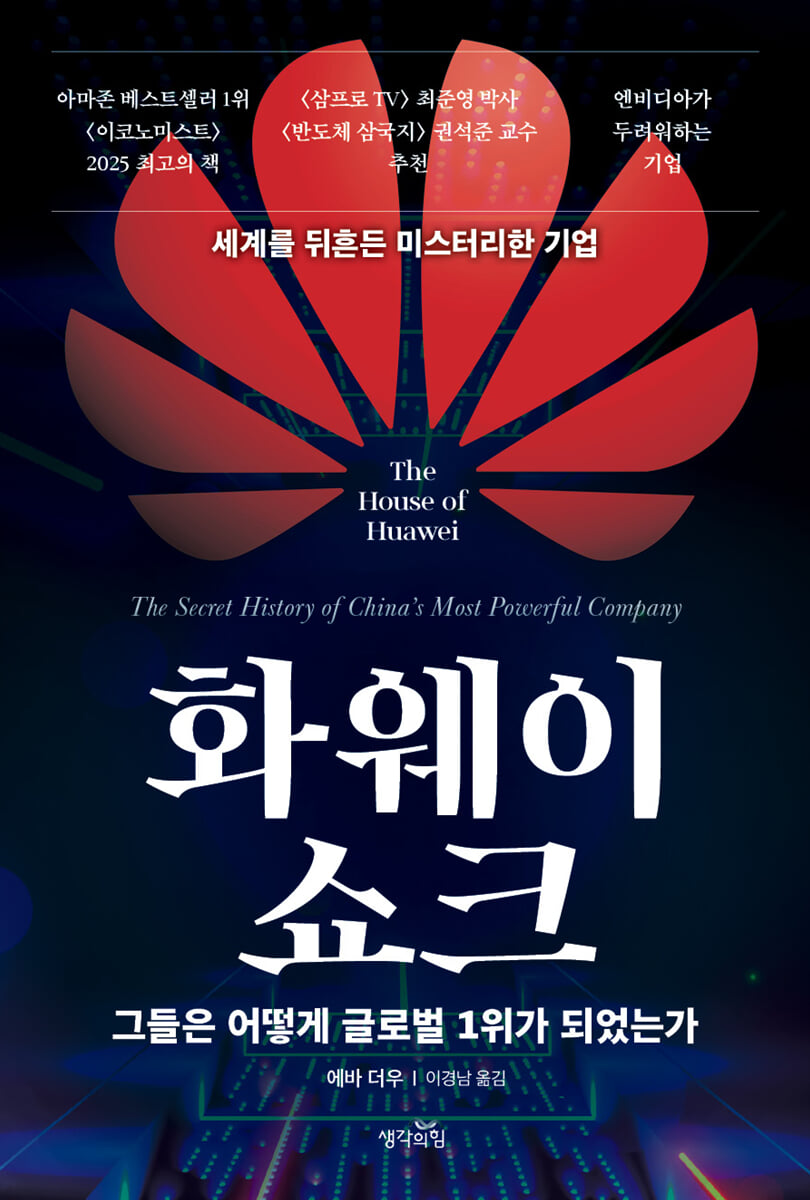 |
Description
Book Introduction
Which Chinese company is the US government most concerned about? Which company does Nvidia fear the most? Huawei.
Huawei, a symbol of China's technological prowess, has achieved technological independence amid the turmoil of the US-China trade war, developing its own smartphones and supplying chips to AI firm DeepSec, effectively defying US sanctions.
Huawei is closely following Samsung in the foldable phone sector, where it has established itself as the world's number one, taking second place.
It's time to take notice of those who are good at everything.
"Huawei Shock" offers a three-dimensional analysis of Huawei, the secretive tech empire that has always been shrouded in mystery.
This book chronicles the life and development of founder Ren Zhengfei, as well as the latest trends, and meticulously depicts key episodes based on internal Huawei data, allowing readers to gain a deeper understanding of the company.
This book will provide essential information to businesses and investors.
Huawei successfully launched its self-developed smartphone "Mate" series, building on the foundation of its position as the world's leading telecommunications equipment manufacturer, having already expanded into the Middle East, Africa, and Europe, and overcame US sanctions with overwhelming domestic consumption.
Huawei's performance, which ranked second in sales in 2024, was remarkable.
20% of sales were invested in research and development.
This was nearly three times the net profit.
Huawei, which faces suspicions about its backdoors, ties to the Chinese Communist Party, and its governance structure, is trying to overcome these by prioritizing talent and focusing on research and development.
Completed through close investigation by a Washington Post tech reporter, "Huawei Shock" will be the first book to thoroughly dissect Huawei, the most pressing issue of the moment.
Huawei, a symbol of China's technological prowess, has achieved technological independence amid the turmoil of the US-China trade war, developing its own smartphones and supplying chips to AI firm DeepSec, effectively defying US sanctions.
Huawei is closely following Samsung in the foldable phone sector, where it has established itself as the world's number one, taking second place.
It's time to take notice of those who are good at everything.
"Huawei Shock" offers a three-dimensional analysis of Huawei, the secretive tech empire that has always been shrouded in mystery.
This book chronicles the life and development of founder Ren Zhengfei, as well as the latest trends, and meticulously depicts key episodes based on internal Huawei data, allowing readers to gain a deeper understanding of the company.
This book will provide essential information to businesses and investors.
Huawei successfully launched its self-developed smartphone "Mate" series, building on the foundation of its position as the world's leading telecommunications equipment manufacturer, having already expanded into the Middle East, Africa, and Europe, and overcame US sanctions with overwhelming domestic consumption.
Huawei's performance, which ranked second in sales in 2024, was remarkable.
20% of sales were invested in research and development.
This was nearly three times the net profit.
Huawei, which faces suspicions about its backdoors, ties to the Chinese Communist Party, and its governance structure, is trying to overcome these by prioritizing talent and focusing on research and development.
Completed through close investigation by a Washington Post tech reporter, "Huawei Shock" will be the first book to thoroughly dissect Huawei, the most pressing issue of the moment.
- You can preview some of the book's contents.
Preview
index
Recommendation/Preface to the Korean edition/People in the book/Author's note/Introduction
Part 1
1 Bookstore owner
2 Factory in the Cave
3 A New Beginning
4 Special Economic Zones
5 domestically produced exchangers
6 Common Interests
7 wolf packs
8 Farewell to the Top Leader
Part 2
9 Steel Troops
10 Huawei Basic Law
11 Winter
12 surprise attacks
13 Road to the Empire
14 Separation of Powers
15 Holy Fire
16 Western Front
17 Revolution
18 hearings
19 Media Aversion
20 Shot Giant
Part 3
21 Eyes 'Xiaoliang'
22 Recreated Beauty, Dongguan Campus
23 Eavesdropping Countries
24 Hostage Diplomacy
25 Waterloo
26th trial
27 Welcome Hero
28 Black Swan
Acknowledgments / Huawei Corporate Governance / Timeline / Further Reading / Photo Credits / Notes / Index
Part 1
1 Bookstore owner
2 Factory in the Cave
3 A New Beginning
4 Special Economic Zones
5 domestically produced exchangers
6 Common Interests
7 wolf packs
8 Farewell to the Top Leader
Part 2
9 Steel Troops
10 Huawei Basic Law
11 Winter
12 surprise attacks
13 Road to the Empire
14 Separation of Powers
15 Holy Fire
16 Western Front
17 Revolution
18 hearings
19 Media Aversion
20 Shot Giant
Part 3
21 Eyes 'Xiaoliang'
22 Recreated Beauty, Dongguan Campus
23 Eavesdropping Countries
24 Hostage Diplomacy
25 Waterloo
26th trial
27 Welcome Hero
28 Black Swan
Acknowledgments / Huawei Corporate Governance / Timeline / Further Reading / Photo Credits / Notes / Index
Detailed image

Into the book
Even as the Korean edition approaches publication, Huawei Technologies continues to assert its presence in the international landscape.
The tech giant, known for its telecommunications equipment and smartphones, has recently emerged as China's leader in AI chips, a key indicator of a country's next-generation technological prowess, competing directly with Nvidia.
Huawei is also expanding its reach beyond electric vehicles and humanoid robots, looking beyond a number of future technology fields.
Many Western governments are still closely monitoring Huawei's moves, keeping a close eye on its policies.
The Trump administration's second term imposed new regulations targeting Huawei's chip business, and the European Union launched a bribery investigation targeting Huawei in the spring of 2025.
---From the "Korean Edition Preface"
Rundo was also put to work in rural labor, but he was luckier than others.
Guizhou Province was very close to the Vietnamese border, and for several years Mao Zedong had been sending artillery, shells, tanks, radio transmitters, and telephones to Hanoi to support Vietnam in its fight against the United States.
The hills of Guizhou provided excellent cover from the sky, so the Chinese military dug tunnels there and built secret air force bases and camouflaged factories.
Whatever Mao Zedong himself said about science, to keep this proxy war rolling, more trained engineers than anyone else were needed.
Thanks to this, after graduating from college, Run was assigned to the familiar hills of Guizhou, and instead of digging potatoes or making steel, he was put to work building a secret military production base.
The secret base's codename was 011.
---From "Chapter 1: The Bookstore Owner"
Run was also going through a difficult time due to family issues.
His relationship with his wife, Mengjun, had deteriorated, and they eventually agreed to divorce.
(...) As Run wandered, someone from the Propaganda Science and Technology Bureau suggested that he try starting a business.
Thus, Run founded Huawei Technologies Co.
Run was 42 years old.
That's how my first career as a military engineer ended.
It wasn't a decision I made on purpose.
My second career, a brief stint in a government department, was also drawing to a close.
Now, Run Zhengfei has decided to jump into a business that is tempting, but prone to gossip and fraught with danger.
I decided to become a capitalist.
---From "Chapter 4 Special Economic Zones"
On January 28, 1996, Ren Zhengfei held Huawei's first "mass resignation ceremony."
Each regional sales office manager was instructed to submit two reports: a job summary and a resignation letter.
“I will only sign one of the two reports,” Run Zhengfei said.
(...) Run climbed up to the podium and spoke.
“Being an executive at Huawei means taking on responsibility, and that means being willing to sacrifice your personal happiness.” (...) In the end, Run accepted the resignations of six of the 26 sales office managers and replaced about 30% of the sales staff.
Huawei executives often cited this mass resignation as an example of the identity of the "Huawei people."
Employees could move up or down in rank depending on the company's needs.
---From "Chapter 7: The Wolf Pack"
During his time in charge of sales, Sun was recognized as a capable and strong leader, but what differentiated him from others and how he rose to the top position at Huawei remain a mystery.
As Huawei's chairman, Sun spearheaded the company's strategic direction, appointed, evaluated, and compensated Ren as CEO, and appointed and approved the compensation of other senior managers.
At least on paper, Sun held all the power.
It's unclear exactly how she and Run shared power.
Some believed that Sun's experience working for China's security agency, the Ministry of State Security, was the source of his power, but this has been difficult to prove or disprove.
“As Huawei’s chairman, I feel that Sun Yafang represented a specific government department,” said Wan Lunnan, founder of one of China’s earliest tech companies, Sitong Group.
---From Chapter 10 of Huawei's Basic Law
The Iraq experience taught Huawei executives one thing.
Even countries subject to US sanctions can succeed if they conduct business cautiously.
Huawei has faced challenges, including the bombing of its fiber-optic network in Iraq in 2001 at the direction of the U.S. Department of Defense and the threat of being punished for violating UN sanctions, but they have persevered and persevered.
In fact, Huawei was able to receive compensation because it went to places that others avoided.
When sanctions were lifted in 2003, Huawei quickly gained a foothold in Iraq's new mobile network.
---From "Chapter 13: The Road to the Empire"
Rogers turned his attention to Huawei's Communist Party committee.
The fact that private companies have party committees is both interesting and puzzling to Westerners.
There was much unknown about the powers of the Party Committee, whether it was a kind of reading group where members discussed Marxism after work hours or whether it actually intervened in important business decisions.
Rogers noted that he has not yet received any detailed information from Huawei or ZTE about the composition of such a committee or the extent of its internal influence.
---From "Chapter 18 Hearings"
In 2015, Xi Jinping's government created lucrative new business opportunities for suppliers like Huawei.
It was a program called 'Sharp Eyes' that monitored the entire country through a network of security cameras.
The goal was to cover 100% of China's public spaces by 2020.
As President Xi Jinping embarks on a visit to the UK, Beijing police have announced there are no more blind spots in the Chinese capital.
Electronic eyes monitored every corner of Beijing.
---From "Chapter 21 Sharp Eyes"
The next morning, the FBI reported that Meng had boarded an overnight flight from Hong Kong.
He said he was accompanied by a female. The FBI provided Meng's physical characteristics.
He said his hair was slightly below his shoulders, he was wearing white shoes and dark pants, and his white T-shirt had writing on the front.
Meng's flight went smoothly, arriving at Gate 65 at Vancouver International Airport (YVR) at 11:18 a.m., 12 minutes ahead of schedule.
Things started to go wrong as soon as she entered the airport.
Two airport security officers were checking passengers' passports at the gate.
They approached her and asked for her cell phone.
---From "Chapter 24 Hostage Diplomacy"
Huawei quietly released a new smartphone in late August 2023.
Huawei skipped its usual promotional events and didn't even reveal the specifications of the Mate 60 Pro.
But people were muttering that Huawei had found a way to circumvent US sanctions.
Rarely have so many people bought a new phone with the intention of tearing it apart and taking it apart piece by piece.
Analysts were convinced that the rumors were true.
Huawei managed to produce its 5G processors through SMIC, a Chinese foundry.
This development came as both companies faced US sanctions aimed at blocking the production of such advanced chips.
No one could explain with certainty how this was possible.
The tech giant, known for its telecommunications equipment and smartphones, has recently emerged as China's leader in AI chips, a key indicator of a country's next-generation technological prowess, competing directly with Nvidia.
Huawei is also expanding its reach beyond electric vehicles and humanoid robots, looking beyond a number of future technology fields.
Many Western governments are still closely monitoring Huawei's moves, keeping a close eye on its policies.
The Trump administration's second term imposed new regulations targeting Huawei's chip business, and the European Union launched a bribery investigation targeting Huawei in the spring of 2025.
---From the "Korean Edition Preface"
Rundo was also put to work in rural labor, but he was luckier than others.
Guizhou Province was very close to the Vietnamese border, and for several years Mao Zedong had been sending artillery, shells, tanks, radio transmitters, and telephones to Hanoi to support Vietnam in its fight against the United States.
The hills of Guizhou provided excellent cover from the sky, so the Chinese military dug tunnels there and built secret air force bases and camouflaged factories.
Whatever Mao Zedong himself said about science, to keep this proxy war rolling, more trained engineers than anyone else were needed.
Thanks to this, after graduating from college, Run was assigned to the familiar hills of Guizhou, and instead of digging potatoes or making steel, he was put to work building a secret military production base.
The secret base's codename was 011.
---From "Chapter 1: The Bookstore Owner"
Run was also going through a difficult time due to family issues.
His relationship with his wife, Mengjun, had deteriorated, and they eventually agreed to divorce.
(...) As Run wandered, someone from the Propaganda Science and Technology Bureau suggested that he try starting a business.
Thus, Run founded Huawei Technologies Co.
Run was 42 years old.
That's how my first career as a military engineer ended.
It wasn't a decision I made on purpose.
My second career, a brief stint in a government department, was also drawing to a close.
Now, Run Zhengfei has decided to jump into a business that is tempting, but prone to gossip and fraught with danger.
I decided to become a capitalist.
---From "Chapter 4 Special Economic Zones"
On January 28, 1996, Ren Zhengfei held Huawei's first "mass resignation ceremony."
Each regional sales office manager was instructed to submit two reports: a job summary and a resignation letter.
“I will only sign one of the two reports,” Run Zhengfei said.
(...) Run climbed up to the podium and spoke.
“Being an executive at Huawei means taking on responsibility, and that means being willing to sacrifice your personal happiness.” (...) In the end, Run accepted the resignations of six of the 26 sales office managers and replaced about 30% of the sales staff.
Huawei executives often cited this mass resignation as an example of the identity of the "Huawei people."
Employees could move up or down in rank depending on the company's needs.
---From "Chapter 7: The Wolf Pack"
During his time in charge of sales, Sun was recognized as a capable and strong leader, but what differentiated him from others and how he rose to the top position at Huawei remain a mystery.
As Huawei's chairman, Sun spearheaded the company's strategic direction, appointed, evaluated, and compensated Ren as CEO, and appointed and approved the compensation of other senior managers.
At least on paper, Sun held all the power.
It's unclear exactly how she and Run shared power.
Some believed that Sun's experience working for China's security agency, the Ministry of State Security, was the source of his power, but this has been difficult to prove or disprove.
“As Huawei’s chairman, I feel that Sun Yafang represented a specific government department,” said Wan Lunnan, founder of one of China’s earliest tech companies, Sitong Group.
---From Chapter 10 of Huawei's Basic Law
The Iraq experience taught Huawei executives one thing.
Even countries subject to US sanctions can succeed if they conduct business cautiously.
Huawei has faced challenges, including the bombing of its fiber-optic network in Iraq in 2001 at the direction of the U.S. Department of Defense and the threat of being punished for violating UN sanctions, but they have persevered and persevered.
In fact, Huawei was able to receive compensation because it went to places that others avoided.
When sanctions were lifted in 2003, Huawei quickly gained a foothold in Iraq's new mobile network.
---From "Chapter 13: The Road to the Empire"
Rogers turned his attention to Huawei's Communist Party committee.
The fact that private companies have party committees is both interesting and puzzling to Westerners.
There was much unknown about the powers of the Party Committee, whether it was a kind of reading group where members discussed Marxism after work hours or whether it actually intervened in important business decisions.
Rogers noted that he has not yet received any detailed information from Huawei or ZTE about the composition of such a committee or the extent of its internal influence.
---From "Chapter 18 Hearings"
In 2015, Xi Jinping's government created lucrative new business opportunities for suppliers like Huawei.
It was a program called 'Sharp Eyes' that monitored the entire country through a network of security cameras.
The goal was to cover 100% of China's public spaces by 2020.
As President Xi Jinping embarks on a visit to the UK, Beijing police have announced there are no more blind spots in the Chinese capital.
Electronic eyes monitored every corner of Beijing.
---From "Chapter 21 Sharp Eyes"
The next morning, the FBI reported that Meng had boarded an overnight flight from Hong Kong.
He said he was accompanied by a female. The FBI provided Meng's physical characteristics.
He said his hair was slightly below his shoulders, he was wearing white shoes and dark pants, and his white T-shirt had writing on the front.
Meng's flight went smoothly, arriving at Gate 65 at Vancouver International Airport (YVR) at 11:18 a.m., 12 minutes ahead of schedule.
Things started to go wrong as soon as she entered the airport.
Two airport security officers were checking passengers' passports at the gate.
They approached her and asked for her cell phone.
---From "Chapter 24 Hostage Diplomacy"
Huawei quietly released a new smartphone in late August 2023.
Huawei skipped its usual promotional events and didn't even reveal the specifications of the Mate 60 Pro.
But people were muttering that Huawei had found a way to circumvent US sanctions.
Rarely have so many people bought a new phone with the intention of tearing it apart and taking it apart piece by piece.
Analysts were convinced that the rumors were true.
Huawei managed to produce its 5G processors through SMIC, a Chinese foundry.
This development came as both companies faced US sanctions aimed at blocking the production of such advanced chips.
No one could explain with certainty how this was possible.
---From "Chapter 28 Black Swan"
Publisher's Review
Beyond communications equipment and smartphones, to semiconductors for AI DeepSearch.
Everything You Need to Know About Huawei, the Secretive Tech Empire That Rocked the World
In its annual report published in February, Nvidia identified Huawei as a competitor for the second consecutive year.
It was in 4 out of 5 categories.
Huawei, which has been the world's leading telecommunications equipment company and is now threatening Nvidia, the leading company in advanced AI semiconductors, is a symbol of China's technological rise.
Despite the U.S. government's attempts to squelch Huawei through various sanctions, the company continues to demonstrate its viability by producing semiconductors and 5G smartphones.
Huawei, which is closely following Samsung, the world's leader in foldable phones, is now a company we need to get to know better.
Huawei has been shrouded in secrecy due to its nature as a Chinese company, an unlisted company, and an employee-owned company.
"Huawei Shock" covers the life of founder Ren Zhengfei, the company's founding process, its development, and the latest trends, quenching your thirst for knowledge about the mysterious tech empire of Huawei.
Founder Ren Zhengfei, a former military engineer, founded Huawei, a telephone exchange venture, in the Shenzhen Special Economic Zone, adjacent to Hong Kong.
Huawei has achieved success despite US sanctions and Middle Eastern conflicts, thanks to the support of the Communist Party, the dedication of its employees, and its aggressive expansion into the Middle East, Africa, and Europe.
By selling not only communications equipment but also managed services and real-time surveillance systems, the company has laid the foundation for becoming a global leader in 5G.
Not content with this, the company quickly established a chip subsidiary, HiSilicon, to venture into smartphone and AI chips, ultimately leading to the launch of DeepSeak.
This full story about Huawei was completed through in-depth reporting by Washington Post tech reporter Eva Dou.
The author obtained internal Huawei documents and interviewed numerous officials to uncover the secretive tech empire.
This book provides essential information to businesses and investors seeking to understand Huawei, and the relationship between Chinese companies and the Communist Party, by covering key figures surrounding Huawei, its governance structure, and a chronology of events.
Trump's "Huawei is a disaster" slams Huawei, further solidifying its grip on the market.
During his first term, President Trump labeled Huawei a "disaster" and raised concerns about China's security threat.
This has entrenched the US-China trade war, diplomatic conflict, and technological cold war.
Huawei was unable to avoid a crisis due to the US's comprehensive semiconductor export sanctions, but it soon achieved technological independence, achieved success, and successfully rebounded.
The company's self-developed 5G smartphone, the Mate 60, is showing brisk sales in China, laying the foundation for a new leap forward.
Huawei, which also achieved a hit with its next series, the 'Mate 70', achieved sales growth of 22.4% year-on-year to 862.1 billion yuan (174 trillion won) in 2024.
This is the second-highest performance since 2020, with the smartphone business seeing a 38% increase in sales.
The cloud sector also grew by 8.5%, and R&D investment increased by 9.1% to 179.7 billion yuan (36 trillion won).
Huawei has been challenging new businesses and focusing on research and development based on its telecommunications equipment sector, where it holds the top global market share (31%).
This resulted in immediate results and was one of the factors that maintained the balance of power between the United States and China.
The book details America's conflicts, sanctions, and search for a way out.
Representative examples include the US House of Representatives hearing of Huawei's US representative Charles Ding and the Canadian detention of Meng Wanzhou, the daughter of Huawei Chairman Ren Zhengfei and current rotating chairwoman.
Despite persistent questioning by the U.S. House Intelligence Committee, Huawei has denied any backdoors (access to computers and encryption systems without going through normal authentication procedures) and ties to the Chinese Communist Party.
Meng Wanzhou was tried in Canada due to US intervention, and her detention period attracted public attention as she was able to shop and go out freely.
China responded by detaining and torturing two Canadians, a move known as "hostage diplomacy."
Meng Wanzhou's detention led to increased patriotic spending on Huawei, and her rise to rotating chairperson, despite Ren Zhengfei's assertion that her family would not inherit the company, is detailed in "Huawei Shock."
One of the interesting episodes related to the United States is how the US became convinced of Huawei's backdoor.
That's because the United States was wiretapping.
Obsession with technical talent
The answer is ultimately R&D.
Huawei invested 36 trillion won, or 20% of its sales, in research and development in 2024.
Even though net profit decreased by 28% year-on-year (KRW 13 trillion), research and development expenses increased by 9.1%.
The book also details how much effort Huawei puts into research and development.
The story of the R&D team working day and night to create a "mattress culture" in the early days of the company's founding, and Chairman Ren Zhengfei encouraging them while sleeping on a makeshift bed in the office, as well as the magnificent view of the Dongguan Oxhorn Campus, the R&D center, seem to guide the path that the Korean high-tech industry should take.
This is why we shouldn't underestimate Huawei's legacy, which began as a small telephone exchange company and established its semiconductor subsidiary, HiSilicon, laying the foundation for China's technological independence.
"Huawei Shock" serves as an important resource for comprehensively understanding the company by accurately capturing both its strengths and weaknesses.
Copying competitors' products, excessive hospitality, and a work environment that takes away personal life have driven away many competitors in China, and have also had the negative side effect of directly affecting employee unhappiness.
However, Huawei has been actively pursuing talent recruitment, following China's policy of shortening working hours.
This provides a valuable lesson for Korea, contrasting it with Trump, who pressured immigrants and universities, causing a brain drain.
Huawei established a "Noah's Ark Lab" in Hong Kong to focus on AI, and expanded its branches to Paris, Moscow, and Montreal, recruiting the world's top talent, including not only engineers but also mathematicians and quantum physicists.
Huawei has always been faithful to the basics while aiming to be a technology platform.
After achieving hegemony in 5G, Huawei invited Professor Erdal Arikan, the father of polar codes who provided the theoretical basis for the technology, to a celebratory event.
This is a passage that clearly demonstrates Huawei's sincerity towards talent and research and development.
Everything You Need to Know About Huawei, the Secretive Tech Empire That Rocked the World
In its annual report published in February, Nvidia identified Huawei as a competitor for the second consecutive year.
It was in 4 out of 5 categories.
Huawei, which has been the world's leading telecommunications equipment company and is now threatening Nvidia, the leading company in advanced AI semiconductors, is a symbol of China's technological rise.
Despite the U.S. government's attempts to squelch Huawei through various sanctions, the company continues to demonstrate its viability by producing semiconductors and 5G smartphones.
Huawei, which is closely following Samsung, the world's leader in foldable phones, is now a company we need to get to know better.
Huawei has been shrouded in secrecy due to its nature as a Chinese company, an unlisted company, and an employee-owned company.
"Huawei Shock" covers the life of founder Ren Zhengfei, the company's founding process, its development, and the latest trends, quenching your thirst for knowledge about the mysterious tech empire of Huawei.
Founder Ren Zhengfei, a former military engineer, founded Huawei, a telephone exchange venture, in the Shenzhen Special Economic Zone, adjacent to Hong Kong.
Huawei has achieved success despite US sanctions and Middle Eastern conflicts, thanks to the support of the Communist Party, the dedication of its employees, and its aggressive expansion into the Middle East, Africa, and Europe.
By selling not only communications equipment but also managed services and real-time surveillance systems, the company has laid the foundation for becoming a global leader in 5G.
Not content with this, the company quickly established a chip subsidiary, HiSilicon, to venture into smartphone and AI chips, ultimately leading to the launch of DeepSeak.
This full story about Huawei was completed through in-depth reporting by Washington Post tech reporter Eva Dou.
The author obtained internal Huawei documents and interviewed numerous officials to uncover the secretive tech empire.
This book provides essential information to businesses and investors seeking to understand Huawei, and the relationship between Chinese companies and the Communist Party, by covering key figures surrounding Huawei, its governance structure, and a chronology of events.
Trump's "Huawei is a disaster" slams Huawei, further solidifying its grip on the market.
During his first term, President Trump labeled Huawei a "disaster" and raised concerns about China's security threat.
This has entrenched the US-China trade war, diplomatic conflict, and technological cold war.
Huawei was unable to avoid a crisis due to the US's comprehensive semiconductor export sanctions, but it soon achieved technological independence, achieved success, and successfully rebounded.
The company's self-developed 5G smartphone, the Mate 60, is showing brisk sales in China, laying the foundation for a new leap forward.
Huawei, which also achieved a hit with its next series, the 'Mate 70', achieved sales growth of 22.4% year-on-year to 862.1 billion yuan (174 trillion won) in 2024.
This is the second-highest performance since 2020, with the smartphone business seeing a 38% increase in sales.
The cloud sector also grew by 8.5%, and R&D investment increased by 9.1% to 179.7 billion yuan (36 trillion won).
Huawei has been challenging new businesses and focusing on research and development based on its telecommunications equipment sector, where it holds the top global market share (31%).
This resulted in immediate results and was one of the factors that maintained the balance of power between the United States and China.
The book details America's conflicts, sanctions, and search for a way out.
Representative examples include the US House of Representatives hearing of Huawei's US representative Charles Ding and the Canadian detention of Meng Wanzhou, the daughter of Huawei Chairman Ren Zhengfei and current rotating chairwoman.
Despite persistent questioning by the U.S. House Intelligence Committee, Huawei has denied any backdoors (access to computers and encryption systems without going through normal authentication procedures) and ties to the Chinese Communist Party.
Meng Wanzhou was tried in Canada due to US intervention, and her detention period attracted public attention as she was able to shop and go out freely.
China responded by detaining and torturing two Canadians, a move known as "hostage diplomacy."
Meng Wanzhou's detention led to increased patriotic spending on Huawei, and her rise to rotating chairperson, despite Ren Zhengfei's assertion that her family would not inherit the company, is detailed in "Huawei Shock."
One of the interesting episodes related to the United States is how the US became convinced of Huawei's backdoor.
That's because the United States was wiretapping.
Obsession with technical talent
The answer is ultimately R&D.
Huawei invested 36 trillion won, or 20% of its sales, in research and development in 2024.
Even though net profit decreased by 28% year-on-year (KRW 13 trillion), research and development expenses increased by 9.1%.
The book also details how much effort Huawei puts into research and development.
The story of the R&D team working day and night to create a "mattress culture" in the early days of the company's founding, and Chairman Ren Zhengfei encouraging them while sleeping on a makeshift bed in the office, as well as the magnificent view of the Dongguan Oxhorn Campus, the R&D center, seem to guide the path that the Korean high-tech industry should take.
This is why we shouldn't underestimate Huawei's legacy, which began as a small telephone exchange company and established its semiconductor subsidiary, HiSilicon, laying the foundation for China's technological independence.
"Huawei Shock" serves as an important resource for comprehensively understanding the company by accurately capturing both its strengths and weaknesses.
Copying competitors' products, excessive hospitality, and a work environment that takes away personal life have driven away many competitors in China, and have also had the negative side effect of directly affecting employee unhappiness.
However, Huawei has been actively pursuing talent recruitment, following China's policy of shortening working hours.
This provides a valuable lesson for Korea, contrasting it with Trump, who pressured immigrants and universities, causing a brain drain.
Huawei established a "Noah's Ark Lab" in Hong Kong to focus on AI, and expanded its branches to Paris, Moscow, and Montreal, recruiting the world's top talent, including not only engineers but also mathematicians and quantum physicists.
Huawei has always been faithful to the basics while aiming to be a technology platform.
After achieving hegemony in 5G, Huawei invited Professor Erdal Arikan, the father of polar codes who provided the theoretical basis for the technology, to a celebratory event.
This is a passage that clearly demonstrates Huawei's sincerity towards talent and research and development.
GOODS SPECIFICS
- Date of issue: July 16, 2025
- Page count, weight, size: 584 pages | 874g | 152*225*37mm
- ISBN13: 9791194880073
- ISBN10: 119488007X
You may also like
카테고리
korean


korean

![GQ KOREA Mark (Monthly): December [2025]](http://librairie.coreenne.fr/cdn/shop/files/8ef265dbbfbf186523ed75ba7319009d.jpg?v=1765340328&width=3840)


