

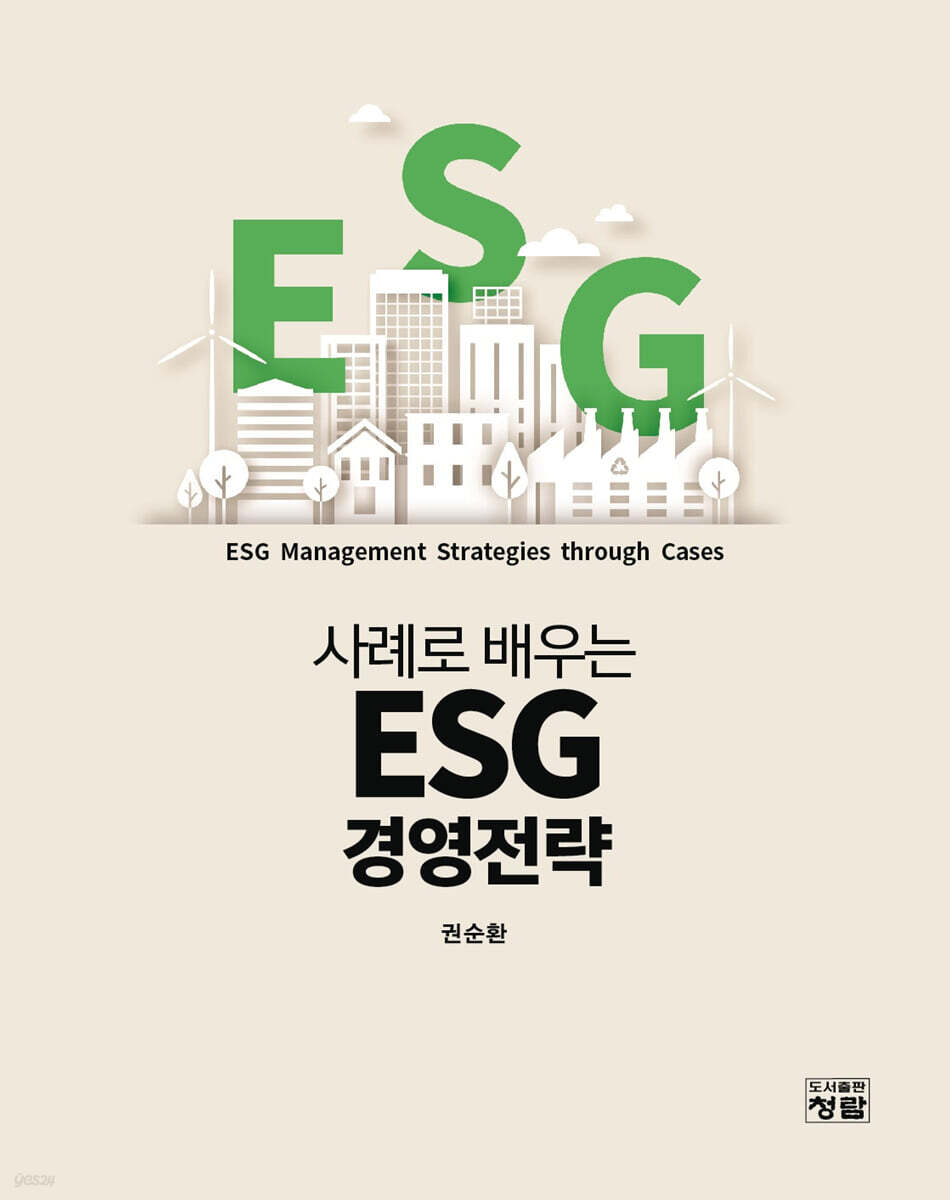
ESG Management Strategy: Learning from Case Studies
 |
Description
Book Introduction
Author's Preface
In recent years, ESG (Environmental, Social, Governance) has gone beyond being a simple trend and has become a core concept of sustainable corporate management.
Corporate responses to climate change, social value creation and social responsibility, and efforts to establish sound governance structures are now directly linked to corporate survival and competitiveness, and ESG is now recognized as a necessity rather than an option.
This trend is spreading globally, and in Korea, interest in and demand for ESG management is steadily increasing across industries, including the government, local governments, public institutions, financial institutions, large corporations, SMEs, and startups. [Learning ESG Management Strategies through Case Studies] was designed to respond to this trend.
This book has the following distinguishing features:
First, this book is designed to help undergraduate students who are new to ESG management clearly understand and learn the concept of ESG.
Since being appointed to Keimyung University in 2022, the author has been participating in the "ESG Management Specialist Training Department with K-NICE Capabilities" and has focused on developing customized lectures and textbooks for undergraduate students.
At the request of the Office of Education Innovation at Keimyung University, I was assigned to teach ESG-related lectures and develop textbooks, and began full-scale writing in 2023.
This book attempts to provide an integrated explanation of ESG based on the concepts, history, and core theory of ESG, including stakeholder theory, as well as theories from various academic fields such as management, economics, law, sociology, and environmental studies.
For example, stakeholder theory and sustainability form the foundation of ESG thinking, and institutional theory is closely related to the institutional and regulatory aspects of ESG.
Furthermore, if ESG is interpreted as a growth strategy, it is linked to mergers and acquisitions and strategic alliances, and is organically linked to management resource theory, shared value creation theory, and agency theory.
The author systematically organized various theories related to ESG so that students can easily understand them.
Second, this book is designed to be a useful resource not only for undergraduate students but also for corporate executives and employees seeking to apply ESG management in practice.
After introducing the theory, various domestic and international corporate cases were presented to help with realistic and practical understanding.
For example, in the chapter explaining social responsibility, the theory of creating shared value (CSV) was first presented, and then the case of Yuhan-Kimberly, a representative company that is putting this theory into practice, was linked.
This approach focuses on bridging the gap between theory and practice and providing insights that can apply ESG management to actual business activities.
Third, the author reinterprets ESG from the strategic perspectives of "risk management" and "value creation," and proposes corresponding strategies for each chapter. Failure to comply with ESG-related systems and regulations can make it difficult to secure investment from key stakeholders, such as governments and financial institutions, and can also lead to fines and sanctions.
Therefore, companies must respond quickly to changes in ESG systems and manage risks in advance.
Furthermore, by leveraging ESG as a strategic tool beyond simple regulatory compliance, companies can enhance their competitiveness and sustainable value.
This book presents a practical strategic direction by analyzing ESG from the two axes of risk management and value creation while maintaining consistency with existing theories.
This book was written based on the author's undergraduate and graduate courses on "Global Ethics Management" and "Global Strategy," as well as ESG-related papers he has written since 2021. In addition to existing ESG-related literature, the author extensively consulted various reports, consulting materials, newspapers, and news articles to ensure a compelling and relevant perspective.
In particular, we utilized data from government agencies, public institutions, private companies, and global consulting firms (KPMG, McKinsey & Company, etc.), and actively reflected the research achievements of renowned scholars.
Through this book, I aimed to comprehensively and in-depthly convey domestic and international ESG trends. I received help and advice from many people during the writing process.
My experience as a specialist member of the Sustainable Management Committee of Dalseo-gu, Daegu Metropolitan City, management consulting at BearingPoint, and sustainability-related research at the National Agricultural Cooperative Federation have been invaluable in connecting theory and practice.
In recent years, ESG (Environmental, Social, Governance) has gone beyond being a simple trend and has become a core concept of sustainable corporate management.
Corporate responses to climate change, social value creation and social responsibility, and efforts to establish sound governance structures are now directly linked to corporate survival and competitiveness, and ESG is now recognized as a necessity rather than an option.
This trend is spreading globally, and in Korea, interest in and demand for ESG management is steadily increasing across industries, including the government, local governments, public institutions, financial institutions, large corporations, SMEs, and startups. [Learning ESG Management Strategies through Case Studies] was designed to respond to this trend.
This book has the following distinguishing features:
First, this book is designed to help undergraduate students who are new to ESG management clearly understand and learn the concept of ESG.
Since being appointed to Keimyung University in 2022, the author has been participating in the "ESG Management Specialist Training Department with K-NICE Capabilities" and has focused on developing customized lectures and textbooks for undergraduate students.
At the request of the Office of Education Innovation at Keimyung University, I was assigned to teach ESG-related lectures and develop textbooks, and began full-scale writing in 2023.
This book attempts to provide an integrated explanation of ESG based on the concepts, history, and core theory of ESG, including stakeholder theory, as well as theories from various academic fields such as management, economics, law, sociology, and environmental studies.
For example, stakeholder theory and sustainability form the foundation of ESG thinking, and institutional theory is closely related to the institutional and regulatory aspects of ESG.
Furthermore, if ESG is interpreted as a growth strategy, it is linked to mergers and acquisitions and strategic alliances, and is organically linked to management resource theory, shared value creation theory, and agency theory.
The author systematically organized various theories related to ESG so that students can easily understand them.
Second, this book is designed to be a useful resource not only for undergraduate students but also for corporate executives and employees seeking to apply ESG management in practice.
After introducing the theory, various domestic and international corporate cases were presented to help with realistic and practical understanding.
For example, in the chapter explaining social responsibility, the theory of creating shared value (CSV) was first presented, and then the case of Yuhan-Kimberly, a representative company that is putting this theory into practice, was linked.
This approach focuses on bridging the gap between theory and practice and providing insights that can apply ESG management to actual business activities.
Third, the author reinterprets ESG from the strategic perspectives of "risk management" and "value creation," and proposes corresponding strategies for each chapter. Failure to comply with ESG-related systems and regulations can make it difficult to secure investment from key stakeholders, such as governments and financial institutions, and can also lead to fines and sanctions.
Therefore, companies must respond quickly to changes in ESG systems and manage risks in advance.
Furthermore, by leveraging ESG as a strategic tool beyond simple regulatory compliance, companies can enhance their competitiveness and sustainable value.
This book presents a practical strategic direction by analyzing ESG from the two axes of risk management and value creation while maintaining consistency with existing theories.
This book was written based on the author's undergraduate and graduate courses on "Global Ethics Management" and "Global Strategy," as well as ESG-related papers he has written since 2021. In addition to existing ESG-related literature, the author extensively consulted various reports, consulting materials, newspapers, and news articles to ensure a compelling and relevant perspective.
In particular, we utilized data from government agencies, public institutions, private companies, and global consulting firms (KPMG, McKinsey & Company, etc.), and actively reflected the research achievements of renowned scholars.
Through this book, I aimed to comprehensively and in-depthly convey domestic and international ESG trends. I received help and advice from many people during the writing process.
My experience as a specialist member of the Sustainable Management Committee of Dalseo-gu, Daegu Metropolitan City, management consulting at BearingPoint, and sustainability-related research at the National Agricultural Cooperative Federation have been invaluable in connecting theory and practice.
index
Chapter 1: The Concept and Importance of ESG Management
*Introduction: The Short but Long History of ESG Management… From the Brundtland Report to Sustainable Management
1. ESG Concept and Corporate ESG Management
2.
Rethinking Capitalism
3. Why ESG is important to companies
*Case Study: Hyundai Mobis rises to an A+ in the environmental sector, strengthening its decarbonization capabilities to enhance its global market competitiveness.
4. ESG and Corporate Management
*Closing Case Study: Creating a "Steel Village" for the Poor… "POSCO is a Grateful Neighbor"
*Learning summary questions
Chapter 2 ESG and Risk Management
*Introduction Case: Hanwha Systems unveils 'ESG ON,' an ESG management system that comprehensively responds to ESG assessments and disclosures.
1. ESG Risk Management
*Case Study: ESG Management of Financial Investment Companies: A Look at the Case of Goldman Sachs
2. Response Strategies to Reduce ESG Risks
*Closing Case: Pouring Water into a Bottomless Bucket… Overcoming the ESG Dilemma
*Learning summary questions
Chapter 3 ESG and Value Creation
*Case Study: VCs Investing in Good Startups
1. ESG and Value Creation
*Case Study: ESG Investing: How Far Has Korea Come?
2. ESG and Value Creation
*Closing Case: ESG Emerging as a Theme in the M&A Market
*Learning summary questions
Chapter 4 Environmental Management and Sustainability
*Case Study: Indonesian Startups: Agritech and Cleantech
1. ESG and Environmental Management
*Case Study: Governments Failing to Address Population Problems… ESG-Driven Companies Emerge as Solutions
2.
Recent corporate environmental management trends and response trends
3.
Risk management and value creation strategies tailored to the environment
*Closing Case: Global ESG Cases Focusing on the Environment
*Learning summary questions
Chapter 5 Corporate Social Responsibility and Social Value
*Case Study: Hana Platech Co., Ltd.: Welfare, Coexistence, and Communication Management through ESG
1.
Corporate Social Responsibility and Social Value
*Case Study: "Banks are reducing their branches, so we're going to the station"… Banks are increasing services specifically for seniors.
2.
Recent corporate social responsibility trends and response trends
3.
Corporate risk management and value creation strategies related to social responsibility
*Closing Case 1: How to Measure Social Value*
*Closing Case 2: Why Corporate Social Value Creation Matters: Value Management is Essential for Corporate Survival
*Learning summary questions
Chapter 6 Corporate Governance and Stakeholders
*Case Study: Pullip Line Co., Ltd.: Dreaming of a world where everyone is happy through environmental friendliness and value-based management.
1. ESG and corporate governance
Case Study: Namyang Dairy's 60-Year Ownership Ends
2.
Recent corporate governance trends and response trends
3.
Corporate risk management and value creation strategies related to governance structure
*Closing Case: The Secret to Successful Family Businesses: The "4+5" Formula Discovered by McKinsey
*Learning summary questions
Chapter 7 ESG Disclosure and Evaluation
*Case Study: Global institutional investors actively call for mandatory ESG disclosure in Korea.
1. ESG information disclosure and evaluation
*Case Study: ESG Management: Must be Proven with Objective Data Showing Performance
2. ESG Information Disclosure System and Corporate Response Plans
3. Investment strategies utilizing ESG information disclosure
*Closing Case: Corporate Strategic Tasks for Executive Appointment: Establishing a Process for Recommending Outside Director Candidates
*Learning summary questions
*Introduction: The Short but Long History of ESG Management… From the Brundtland Report to Sustainable Management
1. ESG Concept and Corporate ESG Management
2.
Rethinking Capitalism
3. Why ESG is important to companies
*Case Study: Hyundai Mobis rises to an A+ in the environmental sector, strengthening its decarbonization capabilities to enhance its global market competitiveness.
4. ESG and Corporate Management
*Closing Case Study: Creating a "Steel Village" for the Poor… "POSCO is a Grateful Neighbor"
*Learning summary questions
Chapter 2 ESG and Risk Management
*Introduction Case: Hanwha Systems unveils 'ESG ON,' an ESG management system that comprehensively responds to ESG assessments and disclosures.
1. ESG Risk Management
*Case Study: ESG Management of Financial Investment Companies: A Look at the Case of Goldman Sachs
2. Response Strategies to Reduce ESG Risks
*Closing Case: Pouring Water into a Bottomless Bucket… Overcoming the ESG Dilemma
*Learning summary questions
Chapter 3 ESG and Value Creation
*Case Study: VCs Investing in Good Startups
1. ESG and Value Creation
*Case Study: ESG Investing: How Far Has Korea Come?
2. ESG and Value Creation
*Closing Case: ESG Emerging as a Theme in the M&A Market
*Learning summary questions
Chapter 4 Environmental Management and Sustainability
*Case Study: Indonesian Startups: Agritech and Cleantech
1. ESG and Environmental Management
*Case Study: Governments Failing to Address Population Problems… ESG-Driven Companies Emerge as Solutions
2.
Recent corporate environmental management trends and response trends
3.
Risk management and value creation strategies tailored to the environment
*Closing Case: Global ESG Cases Focusing on the Environment
*Learning summary questions
Chapter 5 Corporate Social Responsibility and Social Value
*Case Study: Hana Platech Co., Ltd.: Welfare, Coexistence, and Communication Management through ESG
1.
Corporate Social Responsibility and Social Value
*Case Study: "Banks are reducing their branches, so we're going to the station"… Banks are increasing services specifically for seniors.
2.
Recent corporate social responsibility trends and response trends
3.
Corporate risk management and value creation strategies related to social responsibility
*Closing Case 1: How to Measure Social Value*
*Closing Case 2: Why Corporate Social Value Creation Matters: Value Management is Essential for Corporate Survival
*Learning summary questions
Chapter 6 Corporate Governance and Stakeholders
*Case Study: Pullip Line Co., Ltd.: Dreaming of a world where everyone is happy through environmental friendliness and value-based management.
1. ESG and corporate governance
Case Study: Namyang Dairy's 60-Year Ownership Ends
2.
Recent corporate governance trends and response trends
3.
Corporate risk management and value creation strategies related to governance structure
*Closing Case: The Secret to Successful Family Businesses: The "4+5" Formula Discovered by McKinsey
*Learning summary questions
Chapter 7 ESG Disclosure and Evaluation
*Case Study: Global institutional investors actively call for mandatory ESG disclosure in Korea.
1. ESG information disclosure and evaluation
*Case Study: ESG Management: Must be Proven with Objective Data Showing Performance
2. ESG Information Disclosure System and Corporate Response Plans
3. Investment strategies utilizing ESG information disclosure
*Closing Case: Corporate Strategic Tasks for Executive Appointment: Establishing a Process for Recommending Outside Director Candidates
*Learning summary questions
GOODS SPECIFICS
- Date of issue: June 25, 2025
- Page count, weight, size: 298 pages | 190*240*20mm
- ISBN13: 9791194641315
- ISBN10: 1194641318
You may also like
카테고리
korean


korean

![GQ KOREA Mark (Monthly): December [2025]](http://librairie.coreenne.fr/cdn/shop/files/8ef265dbbfbf186523ed75ba7319009d.jpg?v=1765340328&width=3840)


