

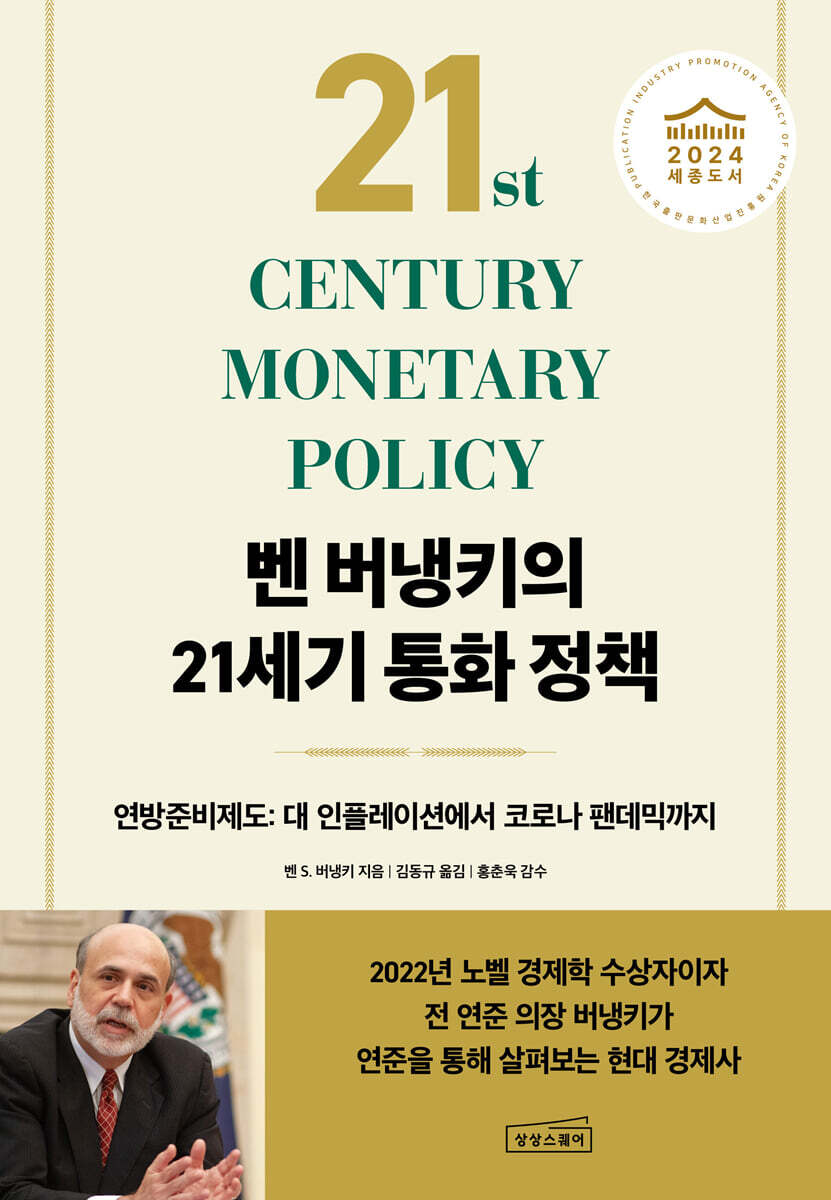
Ben Bernanke's 21st Century Monetary Policy
 |
Description
Book Introduction
A new book by 2022 Nobel Prize winner in economics, Ben Bernanke
A must-read for studying money and economics today. A book that covers everything about the Federal Reserve, which moves the global economy. "Ben Bernanke's 21st Century Monetary Policy" is a book that condenses the expertise of Ben Bernanke, winner of the 2022 Nobel Prize in Economics and former Chairman of the U.S. Federal Reserve. In this book, Bernanke explains the history of monetary policy during the 20th century and predicts changes in monetary policy and the economy in the 21st century. For anyone who feels the need to study money to survive in a rapidly changing economic environment, "Ben Bernanke's 21st Century Monetary Policy" will be an excellent teacher and textbook. Today's global economy is closely interconnected, and the influence of the U.S. economy is particularly powerful. As U.S. interest rates fluctuate, global interest rates, exchange rates, and various economic conditions, including imports and exports, are affected. Therefore, to properly understand today's economic situation, we must properly understand U.S. monetary policy. The institution that determines such important U.S. monetary policy is the U.S. Federal Reserve. And Ben Bernanke is considered to have had the most outstanding performance among all Federal Reserve Chairman. Ben Bernanke's 21st Century Monetary Policy is a book in which Ben Bernanke, the former chairman of the Federal Reserve, personally analyzes the entire Federal Reserve system. Ben Bernanke not only explains the Federal Reserve's policies in a friendly and accessible manner, but also explains in detail the intentions and psychology behind their policies. Here, even the political dynamics that only insiders would know are depicted in detail. If you want to understand the ins and outs of the Federal Reserve System, you'll find no book more clear and in-depth. Especially considering South Korea's close political and economic ties to the United States, "Ben Bernanke's 21st Century Monetary Policy" is a must-read for the people of South Korea. There is a saying, 'When America coughs, Korea catches a cold.' To that extent, the Korean economy is greatly influenced by the United States, and the Federal Reserve System is the one that determines and coordinates the direction of the American economy. Therefore, the more we properly understand the Federal Reserve System, the greater our chances of survival and success in 21st century Korea. Ben Bernanke's 21st Century Monetary Policy is the book that provides the best opportunity to do so. If you want to study money properly, I strongly recommend that you do not miss this book. In the 21st century, a time of crisis, including inflation, cryptocurrency, and financial instability, this book will provide insight into the future. |
- You can preview some of the book's contents.
Preview
index
Part 1.
Monetary Policy in the 21st Century: The Rise and Fall of Inflation
Chapter 1.
Great Inflation
Chapter 2.
Burns and Volker
Chapter 3.
Greenspan and the Great Boom of the 1990s
Part 2.
Monetary Policy in the 21st Century: The Global Financial Crisis and the Great Recession
Chapter 4.
A new century and new challenges
Chapter 5.
global financial crisis
Chapter 6.
New Monetary System: First and Second Quantitative Easing
Chapter 7.
Monetary Policy Evolution: QE3 and the Austerity Paroxysm
Part 3.
Monetary Policy in the 21st Century: From Takeoff to the Corona Pandemic
Chapter 8.
take-off
Chapter 9.
Powell and Trump
Chapter 10.
pandemic
Part 4.
Monetary Policy in the 21st Century: What's Next?
Chapter 11.
The Fed's Policy Tools Since 2008: Quantitative Easing and Preemptive Guidance
Chapter 12.
Are the Fed's policy tools sufficient?
Chapter 13.
Policy Strengthening Measures: New Tools and Systems
Chapter 14.
Monetary Policy and Financial Stability
Monetary Policy in the 21st Century: The Rise and Fall of Inflation
Chapter 1.
Great Inflation
Chapter 2.
Burns and Volker
Chapter 3.
Greenspan and the Great Boom of the 1990s
Part 2.
Monetary Policy in the 21st Century: The Global Financial Crisis and the Great Recession
Chapter 4.
A new century and new challenges
Chapter 5.
global financial crisis
Chapter 6.
New Monetary System: First and Second Quantitative Easing
Chapter 7.
Monetary Policy Evolution: QE3 and the Austerity Paroxysm
Part 3.
Monetary Policy in the 21st Century: From Takeoff to the Corona Pandemic
Chapter 8.
take-off
Chapter 9.
Powell and Trump
Chapter 10.
pandemic
Part 4.
Monetary Policy in the 21st Century: What's Next?
Chapter 11.
The Fed's Policy Tools Since 2008: Quantitative Easing and Preemptive Guidance
Chapter 12.
Are the Fed's policy tools sufficient?
Chapter 13.
Policy Strengthening Measures: New Tools and Systems
Chapter 14.
Monetary Policy and Financial Stability
Detailed image

Into the book
This book examines the Federal Reserve today (and in the future) primarily through the lens of history.
This is exactly how I see the topic, and I don't know of a better way to fully understand the tools, strategies, and communication methods the Fed has developed to this day.
---From "Introduction p.17"
Even today, monetary policy, banking supervision, and addressing threats to financial stability remain among the Fed's most important functions.
---From "Introduction p.22"
The Fed's tools, policy framework, and communication methods have changed dramatically since the 1951 agreement between the Treasury and the Fed that allowed the central bank to pursue macroeconomic objectives.
This shift is the result of three broad economic shifts that have combined to shape how central banks view their objectives and limitations.
The first change is that 'the movement of inflation, and especially the relationship between inflation and employment, has been continuously changing.'
[…] The second change is that ‘the equilibrium interest rate has fallen over a long period of time.’
[…] The third and final long-term change is that ‘instability in the financial system has emerged as a major risk factor.’
---From "Introduction p.34-36"
There is a famous painting by Paul Gauguin titled "Where do we come from? Who are we? Where are we going?"
This book seeks to answer this question posed to the United States' central bank.
As its remarkable performance during the pandemic crisis demonstrates, the Federal Reserve has undergone tremendous change since the days of William McChesney Martin and Arthur Burns.
The Fed has significantly revamped its policy tools, strategies, and communications.
We have maintained our policy independence while navigating shifting political climates, while working collaboratively with the administration and Congress to respond to crises and support other national priorities.
---From "Chapter 15 - The Federal Reserve's Independence and Social Role, p.566"
It is clear that the Fed's systems and policies must reflect the broad and sustained benefits of a strong labor market.
But the Fed will not (and should not) ignore the other of its twin mandates: price stability.
Maintaining stable inflation not only benefits the economy (for example, by improving market functioning and facilitating long-term planning), but is also crucial for maintaining high levels of employment.
---From "Chapter 15 - The Federal Reserve's Independence and Social Role, p.568"
Beyond economic and policy challenges, the Fed also faces increased public awareness.
By taking a leading role in responding to the recent financial and economic crises, this once-unsung institution has now become a subject of national attention.
This is exactly how I see the topic, and I don't know of a better way to fully understand the tools, strategies, and communication methods the Fed has developed to this day.
---From "Introduction p.17"
Even today, monetary policy, banking supervision, and addressing threats to financial stability remain among the Fed's most important functions.
---From "Introduction p.22"
The Fed's tools, policy framework, and communication methods have changed dramatically since the 1951 agreement between the Treasury and the Fed that allowed the central bank to pursue macroeconomic objectives.
This shift is the result of three broad economic shifts that have combined to shape how central banks view their objectives and limitations.
The first change is that 'the movement of inflation, and especially the relationship between inflation and employment, has been continuously changing.'
[…] The second change is that ‘the equilibrium interest rate has fallen over a long period of time.’
[…] The third and final long-term change is that ‘instability in the financial system has emerged as a major risk factor.’
---From "Introduction p.34-36"
There is a famous painting by Paul Gauguin titled "Where do we come from? Who are we? Where are we going?"
This book seeks to answer this question posed to the United States' central bank.
As its remarkable performance during the pandemic crisis demonstrates, the Federal Reserve has undergone tremendous change since the days of William McChesney Martin and Arthur Burns.
The Fed has significantly revamped its policy tools, strategies, and communications.
We have maintained our policy independence while navigating shifting political climates, while working collaboratively with the administration and Congress to respond to crises and support other national priorities.
---From "Chapter 15 - The Federal Reserve's Independence and Social Role, p.566"
It is clear that the Fed's systems and policies must reflect the broad and sustained benefits of a strong labor market.
But the Fed will not (and should not) ignore the other of its twin mandates: price stability.
Maintaining stable inflation not only benefits the economy (for example, by improving market functioning and facilitating long-term planning), but is also crucial for maintaining high levels of employment.
---From "Chapter 15 - The Federal Reserve's Independence and Social Role, p.568"
Beyond economic and policy challenges, the Fed also faces increased public awareness.
By taking a leading role in responding to the recent financial and economic crises, this once-unsung institution has now become a subject of national attention.
---From "Chapter 15 - The Federal Reserve's Independence and Social Role, p.571"
Publisher's Review
From the history of the Federal Reserve to its future,
A masterpiece of its time, dissecting every detail of the Federal Reserve.
If you want to know the world economy, look up and read this book!
"Ben Bernanke's 21st Century Monetary Policy" is a masterpiece that encapsulates the expertise of Ben Bernanke, winner of the 2022 Nobel Prize in Economics and former Chairman of the Federal Reserve System (hereafter, the Fed).
If you read this book properly, your perspective on economics and history will completely change.
The Federal Reserve Chairman is called the economic president of the world, not just the United States.
Considering the impact the Fed's policy decisions have on the global economy, this is hardly an exaggeration.
Ben Bernanke's 21st Century Monetary Policy is a book written by Ben Bernanke himself, the former Chairman of the Federal Reserve.
To use a metaphor, it can be seen as a book that describes in detail the history of the Blue House after the president's term ends and deeply analyzes the background behind it.
Ben Bernanke is called the most successful Federal Reserve Chairman of all time.
He is credited with putting out the flames of the Great Recession triggered by the global financial crisis through massive quantitative easing, and is even credited with preventing World War III.
But practical skills aren't everything about Ben Bernanke.
He is also known to have outstanding research capabilities as a scholar.
The reason he became head of the Federal Reserve was because he was a leading expert on monetary policy and the Great Depression.
Ben Bernanke's 21st Century Monetary Policy embodies the talents of Ben Bernanke, both a leading practitioner and a leading scholar.
This book is also a book filled with Ben Bernanke's ambitions.
With this book, Bernanke hopes to follow in the footsteps of Milton Friedman, a prominent representative of neoliberalism, and Anna Schwartz's co-authored book, "A Monetary History of the United States, 1867-1960."
Not only does it provide a clear overview of U.S. monetary policy from the late 20th century to the early 21st century, it also aims to project the future through the past and suggest the direction in which monetary policy should proceed in the 21st century.
To my delight and surprise, Bernanke's ambitions as an author are successful.
Bernanke is a masterful storyteller, not only presenting the Fed's past in an accessible and engaging way, but also drawing on his former economic president's expertise to make a compelling case for future monetary policy.
Readers of this book will find themselves nodding their heads throughout.
Ben Bernanke's 21st Century Monetary Policy will become a 21st-century classic and must-read for anyone studying economics.
If you want to broaden your perspective on money and the world, don't miss this book.
This book contains tips for living wisely in a rapidly changing economic environment.
A masterpiece of its time, dissecting every detail of the Federal Reserve.
If you want to know the world economy, look up and read this book!
"Ben Bernanke's 21st Century Monetary Policy" is a masterpiece that encapsulates the expertise of Ben Bernanke, winner of the 2022 Nobel Prize in Economics and former Chairman of the Federal Reserve System (hereafter, the Fed).
If you read this book properly, your perspective on economics and history will completely change.
The Federal Reserve Chairman is called the economic president of the world, not just the United States.
Considering the impact the Fed's policy decisions have on the global economy, this is hardly an exaggeration.
Ben Bernanke's 21st Century Monetary Policy is a book written by Ben Bernanke himself, the former Chairman of the Federal Reserve.
To use a metaphor, it can be seen as a book that describes in detail the history of the Blue House after the president's term ends and deeply analyzes the background behind it.
Ben Bernanke is called the most successful Federal Reserve Chairman of all time.
He is credited with putting out the flames of the Great Recession triggered by the global financial crisis through massive quantitative easing, and is even credited with preventing World War III.
But practical skills aren't everything about Ben Bernanke.
He is also known to have outstanding research capabilities as a scholar.
The reason he became head of the Federal Reserve was because he was a leading expert on monetary policy and the Great Depression.
Ben Bernanke's 21st Century Monetary Policy embodies the talents of Ben Bernanke, both a leading practitioner and a leading scholar.
This book is also a book filled with Ben Bernanke's ambitions.
With this book, Bernanke hopes to follow in the footsteps of Milton Friedman, a prominent representative of neoliberalism, and Anna Schwartz's co-authored book, "A Monetary History of the United States, 1867-1960."
Not only does it provide a clear overview of U.S. monetary policy from the late 20th century to the early 21st century, it also aims to project the future through the past and suggest the direction in which monetary policy should proceed in the 21st century.
To my delight and surprise, Bernanke's ambitions as an author are successful.
Bernanke is a masterful storyteller, not only presenting the Fed's past in an accessible and engaging way, but also drawing on his former economic president's expertise to make a compelling case for future monetary policy.
Readers of this book will find themselves nodding their heads throughout.
Ben Bernanke's 21st Century Monetary Policy will become a 21st-century classic and must-read for anyone studying economics.
If you want to broaden your perspective on money and the world, don't miss this book.
This book contains tips for living wisely in a rapidly changing economic environment.
GOODS SPECIFICS
- Date of issue: June 7, 2023
- Format: Hardcover book binding method guide
- Page count, weight, size: 648 pages | 1,068g | 152*225*37mm
- ISBN13: 9791192389219
- ISBN10: 1192389212
You may also like
카테고리
korean


korean

![ELLE 엘르 스페셜 에디션 A형 : 12월 [2025]](http://librairie.coreenne.fr/cdn/shop/files/b8e27a3de6c9538896439686c6b0e8fb.jpg?v=1766436872&width=3840)


