

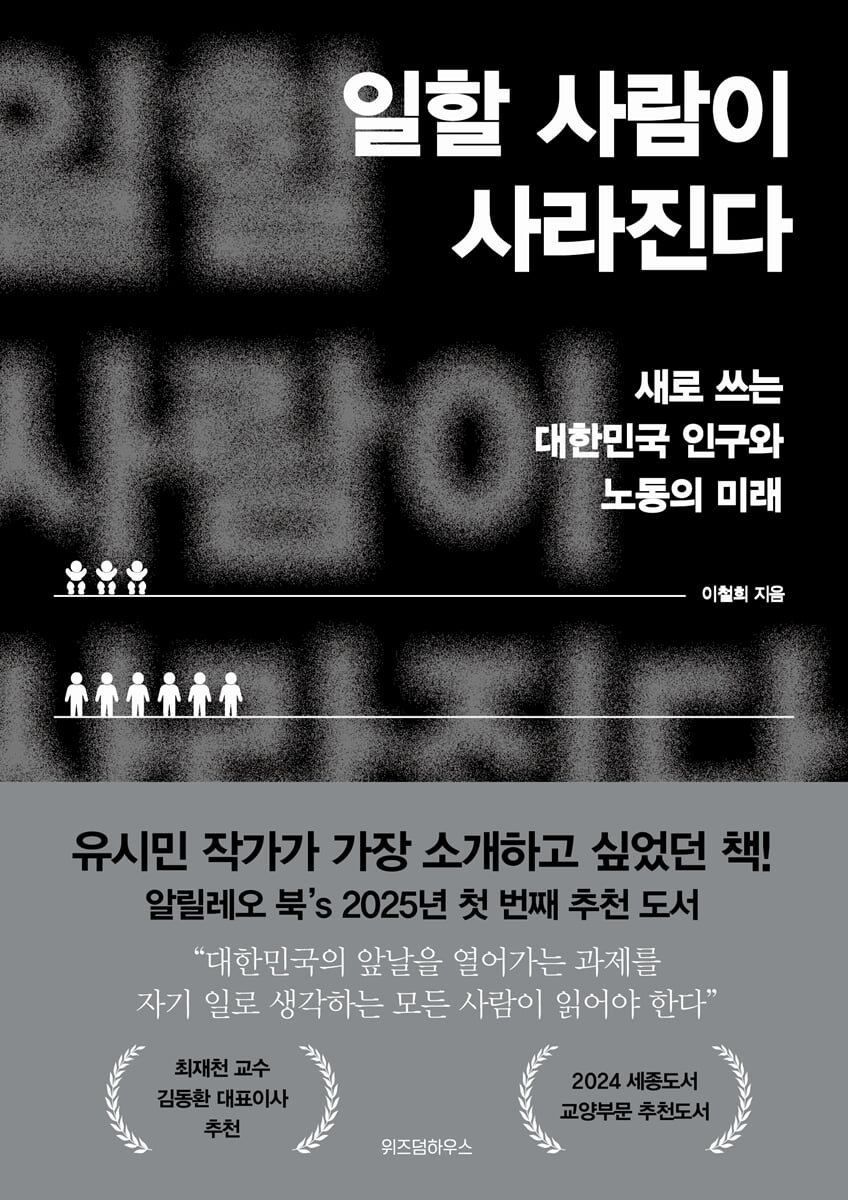
People who work disappear
 |
Description
Book Introduction
Professor Lee Cheol-hee, head of the population cluster at Seoul National University's National Future Strategy Institute
Korea's Labor Crisis Survival Strategy!
Everyone says that the future of the population of South Korea is determined.
It has been a long time since we entered a low birth rate phase, the population is bound to decline, and the Republic of Korea may even disappear.
Professor Lee Cheol-hee, the head of the population cluster at Seoul National University's National Strategy Institute and a leading population economist in Korea, cautiously counters in "Working People Are Disappearing" that the future of South Korea, especially the future of its population and labor market, has not yet been determined.
To be precise, the long-term low birth rate will lead to a decline in the working-age population, but the future will actually depend on how we prepare and act now. After an in-depth analysis, the author offers cool-headed yet realistic advice.
What if older workers filled the void left by younger workers? What if we further encouraged the labor force participation of women and middle-aged and older workers? What if we maximized the utilization of foreign workers? If we could find effective solutions and implement them in practice, South Korea's future could be rewritten without any gloom.
As South Korea's population declines and the number of workers is steadily decreasing, this book, which densely covers survival strategies and the path forward, is intended to help readers view the population crisis from a slightly different perspective and reflect on it in a constructive way.
Korea's Labor Crisis Survival Strategy!
Everyone says that the future of the population of South Korea is determined.
It has been a long time since we entered a low birth rate phase, the population is bound to decline, and the Republic of Korea may even disappear.
Professor Lee Cheol-hee, the head of the population cluster at Seoul National University's National Strategy Institute and a leading population economist in Korea, cautiously counters in "Working People Are Disappearing" that the future of South Korea, especially the future of its population and labor market, has not yet been determined.
To be precise, the long-term low birth rate will lead to a decline in the working-age population, but the future will actually depend on how we prepare and act now. After an in-depth analysis, the author offers cool-headed yet realistic advice.
What if older workers filled the void left by younger workers? What if we further encouraged the labor force participation of women and middle-aged and older workers? What if we maximized the utilization of foreign workers? If we could find effective solutions and implement them in practice, South Korea's future could be rewritten without any gloom.
As South Korea's population declines and the number of workers is steadily decreasing, this book, which densely covers survival strategies and the path forward, is intended to help readers view the population crisis from a slightly different perspective and reflect on it in a constructive way.
- You can preview some of the book's contents.
Preview
index
Recommendation
preface
Chapter 1: A Hidden Path Shrouded in Fog
Is larger population better?
The impact of the Black Death on population change in 14th-century Europe
Korea's 21st-Century Population Crisis: Too Much, Too Fast
Korea's 21st-Century Population Crisis: A Complex and Difficult Challenge
Our ability to cope with demographic change has improved, and there is hope for overcoming the crisis.
Carefully looking into a dim future that has not yet been determined
Chapter 2: Will demographic change lead to a labor force cliff?
The working population will decline, but the rate of decline will be slower than expected.
The illusion that demographic change reduces productivity
A demographic cliff or a gentle decline?
Chapter 3: Will Population Change Create a Shortage of Workers?
If the gap in the male workforce is filled by women and the middle-aged,
Even if the population declines, if labor productivity improves dramatically
The possibility that labor force decline will be mitigated by increasing economic activity participation rates and labor productivity.
As a result, the 'total amount' of labor may not decrease, but...
Chapter 4: What imbalances will occur in the labor market due to population change?
Why we can't replace the shortage of young workers with a growing number of older workers.
Demographic changes are expected to lead to a sharp decline in the number of low-educated drivers and an increase in the number of highly educated real estate agents.
The labor shortage problem is becoming more serious in social welfare services, restaurants, construction, and transportation industries.
The future of demographic change is already upon us, disrupting the labor supply and demand balance.
Chapter 5 Who will heal and care for us?
Shortage of doctors in the short term, surplus of doctors in the long term?!
In the near future, you may have to travel to a foreign hospital for brain surgery.
As the number of one- and two-person households increases, the inevitable gap in care for the elderly and infants will become apparent.
We must make every effort now to establish policies and make political decisions.
Chapter 6: Young People Disappear from the Workplace
After 2050, the number of young workers will fall to less than half of what it is now.
Why the Decline in the Youth Workforce Is Harming the Entire Labor Market
The youth population is rapidly declining in industries that determine the future of the Korean economy.
A Two-Pronged Reform Plan to Fill the Young Workforce Vacancy
Chapter 7: A Country for Old People, a Society Without Old People
The era of healthier, more educated, and more motivated seniors is coming.
South Korea has the world's highest senior employment rate, but there are pitfalls.
Five Reasons Why Raising the Retirement Age Isn't an Effective Solution
Senior-friendly jobs are friendly to everyone.
An age-neutral culture improves a rigid labor market.
A diverse, inclusive, and free society is the fundamental solution to the population problem.
Chapter 8: Is a 'nation of immigrants' our future?
Low-skilled, low-wage foreign workers hired to do jobs that locals dislike
The current introduction of foreign workers does not solve the labor supply-demand imbalance problem.
To effectively introduce foreign workers and protect domestic workers to the greatest extent possible,
Seven Suggestions for Improving Foreign Policy
Expanding immigration isn't a panacea for our population problems.
Chapter 9: For the future of demographic change that has not yet been determined
A society that values people, a society that adapts to people, a society that provides opportunities, a society that protects people
Why flexible and detailed information updates and a resilient and sophisticated political system are urgently needed.
Balancing between immediate action and strategies for the distant future.
Neither policies to alleviate the low birth rate nor policies to address population change should be abandoned.
Responding to demographic change is a marathon, not a sprint.
supplement
Acknowledgements
main
References
preface
Chapter 1: A Hidden Path Shrouded in Fog
Is larger population better?
The impact of the Black Death on population change in 14th-century Europe
Korea's 21st-Century Population Crisis: Too Much, Too Fast
Korea's 21st-Century Population Crisis: A Complex and Difficult Challenge
Our ability to cope with demographic change has improved, and there is hope for overcoming the crisis.
Carefully looking into a dim future that has not yet been determined
Chapter 2: Will demographic change lead to a labor force cliff?
The working population will decline, but the rate of decline will be slower than expected.
The illusion that demographic change reduces productivity
A demographic cliff or a gentle decline?
Chapter 3: Will Population Change Create a Shortage of Workers?
If the gap in the male workforce is filled by women and the middle-aged,
Even if the population declines, if labor productivity improves dramatically
The possibility that labor force decline will be mitigated by increasing economic activity participation rates and labor productivity.
As a result, the 'total amount' of labor may not decrease, but...
Chapter 4: What imbalances will occur in the labor market due to population change?
Why we can't replace the shortage of young workers with a growing number of older workers.
Demographic changes are expected to lead to a sharp decline in the number of low-educated drivers and an increase in the number of highly educated real estate agents.
The labor shortage problem is becoming more serious in social welfare services, restaurants, construction, and transportation industries.
The future of demographic change is already upon us, disrupting the labor supply and demand balance.
Chapter 5 Who will heal and care for us?
Shortage of doctors in the short term, surplus of doctors in the long term?!
In the near future, you may have to travel to a foreign hospital for brain surgery.
As the number of one- and two-person households increases, the inevitable gap in care for the elderly and infants will become apparent.
We must make every effort now to establish policies and make political decisions.
Chapter 6: Young People Disappear from the Workplace
After 2050, the number of young workers will fall to less than half of what it is now.
Why the Decline in the Youth Workforce Is Harming the Entire Labor Market
The youth population is rapidly declining in industries that determine the future of the Korean economy.
A Two-Pronged Reform Plan to Fill the Young Workforce Vacancy
Chapter 7: A Country for Old People, a Society Without Old People
The era of healthier, more educated, and more motivated seniors is coming.
South Korea has the world's highest senior employment rate, but there are pitfalls.
Five Reasons Why Raising the Retirement Age Isn't an Effective Solution
Senior-friendly jobs are friendly to everyone.
An age-neutral culture improves a rigid labor market.
A diverse, inclusive, and free society is the fundamental solution to the population problem.
Chapter 8: Is a 'nation of immigrants' our future?
Low-skilled, low-wage foreign workers hired to do jobs that locals dislike
The current introduction of foreign workers does not solve the labor supply-demand imbalance problem.
To effectively introduce foreign workers and protect domestic workers to the greatest extent possible,
Seven Suggestions for Improving Foreign Policy
Expanding immigration isn't a panacea for our population problems.
Chapter 9: For the future of demographic change that has not yet been determined
A society that values people, a society that adapts to people, a society that provides opportunities, a society that protects people
Why flexible and detailed information updates and a resilient and sophisticated political system are urgently needed.
Balancing between immediate action and strategies for the distant future.
Neither policies to alleviate the low birth rate nor policies to address population change should be abandoned.
Responding to demographic change is a marathon, not a sprint.
supplement
Acknowledgements
main
References
Detailed image

Into the book
What is more concerning about the future population projections that suggest the population could decline to 35 million within the next 60 years is not the 'scale' of 35 million, but the 'speed' represented by the period within 60 years.
If South Korea's population was expected to gradually decline to 35 million over the next 200 or 100 years, even a New York Times columnist probably wouldn't have used the word "crisis."
Because responding to or adapting to gradual, slow changes is relatively easy and inexpensive.
The problem of a shortage of military service personnel due to a decrease in the number of births can be addressed more easily if this population change occurs gradually.
For example, the Ministry of National Defense is currently exploring ways to reduce the number of troops by introducing cutting-edge technology. However, replacing personnel with equipment and technology and adapting to them takes a long time.
If changes in market demand due to population decline occur gradually, companies will be able to respond to them at relatively low costs.
However, if the population declines rapidly, it can create serious imbalances in a country's various systems that are geared towards a given population size, and this can result in enormous costs.
Even if there is no specific optimal population and the population size of 35 million is not a major problem in itself, the fact that the population will decrease by one-third by the time the current generation of young people becomes elderly can come as a considerable shock.
Because the younger generation will face a world that is completely different from what they know, expect, and have prepared for.
The experience and knowledge you have already gained will become outdated and no longer relevant to reality.
Adapting to rapidly changing common sense and norms will become more difficult.
Businesses and governments will also face enormous costs in correcting existing systems and practices that are out of sync with the changing world.
--- pp.29-30
Securing a labor force was not only important to American industrialization in the early 19th century.
As a child growing up in the 1970s, I often heard that the most important driving force for economic development in resource-poor Korea was an abundant and highly qualified workforce.
Even in the 21st century, when the introduction of robots and AI is increasing, labor remains a crucial element in the production process.
When a company selects a country or region to establish a production facility or research and development base, the availability of a workforce suitable for the business is one of the most important considerations.
Given the importance of the workforce, it's not surprising that the most frequently cited concern about the impact of rapid demographic change on our society and economy is a shrinking workforce.
The main basis for these concerns is the forecast that the working-age population aged 15 to 64 will rapidly decline.
According to the 2023 future population projections, Korea's working-age population, currently at 36.74 million, is projected to decrease to 16.58 million by 2072.
The prediction that the working-age population will shrink to 45% of its current level within 50 years is quite shocking.
This is the background to the argument that extraordinary measures, such as extending the retirement age and accepting mass immigration, are needed to cope with these changes.
--- pp.46-47
The interruption of women's labor market careers due to childbirth and childcare is also a major factor in the decline in women's productivity.
According to a recent report by the Korea Labor Institute, the gender wage gap appears to widen mainly after the mid-30s.
This phenomenon is interpreted as a result of the tendency for women to be re-employed primarily in informal or non-regular jobs after a career break, and wages in these jobs do not increase as they age.
These factors that make it difficult for women to work also play a role in lowering their productivity.
In this light, policies that promote work-life balance and eliminate the disadvantages women face in the workplace can not only positively expand female employment but also help women fully utilize their capabilities and increase productivity.
Therefore, if the current childcare support, work-life balance enhancement, improved working conditions, and various anti-discrimination policies are successful, we can expect to see women's productivity approaching that of men.
--- pp.78-79
In the future, the number of older workers in the labor market will increase while the number of young workers will decrease.
However, older and younger people differ in the characteristics of their human capital and the nature of the work they primarily undertake in the labor market.
Each job requires different types of personnel.
Some jobs rely primarily on younger workers, while others are better suited to older people.
Therefore, if the age composition of the workforce changes rapidly, an imbalance in labor supply and demand may occur.
Let's use baseball as an example again.
Although this isn't necessarily the case, let's assume that young, fit players are primarily the starting pitchers, and experienced veterans serve as relief pitchers.
If there is a sudden decline in the number of young players and older players delaying retirement, there will be a shortage of starting pitchers and a glut of relief pitchers.
The same goes for the general labor market.
Industries such as healthcare, restaurants and bars, other professional, scientific, and technical services, and sports and entertainment services tend to have a high concentration of young workers in their 20s and early 30s.
On the other hand, industries such as agriculture, forestry, mining, real estate, and transportation have relatively few young workers.
Therefore, if the proportion of young workers decreases due to changes in population structure, the labor supply in industries that are highly dependent on them will decrease more significantly.
--- pp.100-101
To alleviate the imbalance in the supply and demand of medical personnel, we must quickly reach a social compromise to expand medical school enrollment to an appropriate level. To prevent the growth of medically underserved areas, we must devise measures to strengthen public healthcare.
Institutional improvements are also needed to alleviate the imbalance between subjects.
In February 2024, the government announced a policy to increase the number of medical school students by 2,000 starting in 2025 and maintain this number for five years.
This is a plan to increase the number of doctors by 10,000 by 2035.
The medical community strongly opposed this measure, leading to the majority of residents leaving the hospital and medical school professors deciding to resign.
As of early May 2024, when this book was being finalized, the government has allowed each university to voluntarily reduce its quota, adjusting the quota for medical schools to approximately 1,500 by 2025. However, the sharp conflict within the medical school system continues.
Even if the medical school quota is finalized, numerous difficult tasks remain, including the potential deterioration of the quality of medical school education due to a sudden increase in enrollment, determining how to adjust the quota to reflect changes in demand after 2030, and devising measures to address imbalances between subjects.
--- p.155
The proportion of the economically active population aged 65 or older with a college degree in the total working population will also increase rapidly.
Figure 7-4 shows the projected changes in the size and proportion of the economically active population by age and education level until 2072, if the median projection of the future population projection is realized.
The proportion of college graduates aged 65 or older in the total economically active population is expected to increase rapidly from the current very low level, reaching a similar proportion to the economically active population of college graduates aged 35 to 49 by 2072.
The economically active population aged 55 and older, including the middle-aged population aged 55 to 64, is expected to become the main force in the labor market, accounting for approximately one-third of the entire economically active population by 2072.
In this way, the future elderly population will have a higher level of education than the current elderly population, and highly educated elderly workers will account for a significant portion of the overall workforce.
As we saw in Chapter 2, the improved educational level of older adults will act as a factor in improving productivity.
This is because the productivity of highly educated people is generally higher than that of less educated people.
--- pp.196-197
In the United States and some European countries, the economic participation rate of the elderly, which had been declining for a long time, has been rebounding and increasing since around 1990, and this is analyzed to be mainly due to the expansion of employment of power seniors.
This shift is not unrelated to the fact that American jobs have been transformed into age-friendly jobs over the past 30 years.
A recent study used the characteristics of age-friendly jobs introduced above to calculate an age-friendliness index for each occupation.
And we analyzed how this index changed over the long term.
The results show that the age-friendliness index improved in about three-quarters of occupations from 1990 to 2020.
In addition, the proportion of older people employed in occupations with high scores on this index has also increased.
An interesting finding is that the employment of women and young, highly educated people was also positively affected by the increase in age-friendly jobs.
In other words, in occupations with a high senior-friendliness index, employment of women and highly educated young people has also increased relatively over the past 30 years.
This is consistent with research findings showing that women and highly educated young people prefer jobs with age-friendly characteristics.
Recently, it has been detected that the younger generation in Korea also prefers jobs with high autonomy and flexibility.
In the future, this generation will enter the elderly age group.
Therefore, transforming jobs to be more age-friendly can serve as an important foundation for the post-baby boomer generation and even the current young generation to fully demonstrate their productive capabilities even after they grow older.
--- p.220
Foreign workers are not an infinite resource that Korea can import as much as it needs whenever it wants.
Considering the level of skill Korea needs and the cultural background that fits well with Korean society, foreign workers who are currently playing a role in our labor market and contributing to the maintenance of industry and the economy can be considered a scarce resource in the long term.
Therefore, it is not reasonable and may even be dangerous to establish a foreign policy that responds to population changes under the assumption that the supply of foreign workers will remain elastic in the long term.
So how should we approach this problem?
First, we need to make Korea a country preferred by foreigners.
As previously noted, the rise of competitors and the economic growth of sending countries will make it difficult for a policy of attracting foreign workers solely based on wage advantages to be sustainable.
If Korea's labor regulations become more stringent in the future, making it more difficult to work long hours, the wage advantage compared to neighboring countries may decline.
Therefore, efforts are needed to make conditions other than wages more attractive.
In other words, when Korea and Japan pay similar wages, we need to provide a reason to choose Korea.
(syncopation)
Second, it would be better to abandon the attitude of thinking that introducing foreign workers is a panacea for resolving population problems.
Appropriately expanding the introduction of foreign workers will undoubtedly help mitigate the various impacts that demographic change will have on Korean society.
However, realistically, it is difficult to solve all of the social problems in Korea caused by population change by introducing foreign workers.
Moreover, as emphasized just above, it is uncertain whether the influx of foreign workers can be a sustainable solution to the population problem.
If South Korea's population was expected to gradually decline to 35 million over the next 200 or 100 years, even a New York Times columnist probably wouldn't have used the word "crisis."
Because responding to or adapting to gradual, slow changes is relatively easy and inexpensive.
The problem of a shortage of military service personnel due to a decrease in the number of births can be addressed more easily if this population change occurs gradually.
For example, the Ministry of National Defense is currently exploring ways to reduce the number of troops by introducing cutting-edge technology. However, replacing personnel with equipment and technology and adapting to them takes a long time.
If changes in market demand due to population decline occur gradually, companies will be able to respond to them at relatively low costs.
However, if the population declines rapidly, it can create serious imbalances in a country's various systems that are geared towards a given population size, and this can result in enormous costs.
Even if there is no specific optimal population and the population size of 35 million is not a major problem in itself, the fact that the population will decrease by one-third by the time the current generation of young people becomes elderly can come as a considerable shock.
Because the younger generation will face a world that is completely different from what they know, expect, and have prepared for.
The experience and knowledge you have already gained will become outdated and no longer relevant to reality.
Adapting to rapidly changing common sense and norms will become more difficult.
Businesses and governments will also face enormous costs in correcting existing systems and practices that are out of sync with the changing world.
--- pp.29-30
Securing a labor force was not only important to American industrialization in the early 19th century.
As a child growing up in the 1970s, I often heard that the most important driving force for economic development in resource-poor Korea was an abundant and highly qualified workforce.
Even in the 21st century, when the introduction of robots and AI is increasing, labor remains a crucial element in the production process.
When a company selects a country or region to establish a production facility or research and development base, the availability of a workforce suitable for the business is one of the most important considerations.
Given the importance of the workforce, it's not surprising that the most frequently cited concern about the impact of rapid demographic change on our society and economy is a shrinking workforce.
The main basis for these concerns is the forecast that the working-age population aged 15 to 64 will rapidly decline.
According to the 2023 future population projections, Korea's working-age population, currently at 36.74 million, is projected to decrease to 16.58 million by 2072.
The prediction that the working-age population will shrink to 45% of its current level within 50 years is quite shocking.
This is the background to the argument that extraordinary measures, such as extending the retirement age and accepting mass immigration, are needed to cope with these changes.
--- pp.46-47
The interruption of women's labor market careers due to childbirth and childcare is also a major factor in the decline in women's productivity.
According to a recent report by the Korea Labor Institute, the gender wage gap appears to widen mainly after the mid-30s.
This phenomenon is interpreted as a result of the tendency for women to be re-employed primarily in informal or non-regular jobs after a career break, and wages in these jobs do not increase as they age.
These factors that make it difficult for women to work also play a role in lowering their productivity.
In this light, policies that promote work-life balance and eliminate the disadvantages women face in the workplace can not only positively expand female employment but also help women fully utilize their capabilities and increase productivity.
Therefore, if the current childcare support, work-life balance enhancement, improved working conditions, and various anti-discrimination policies are successful, we can expect to see women's productivity approaching that of men.
--- pp.78-79
In the future, the number of older workers in the labor market will increase while the number of young workers will decrease.
However, older and younger people differ in the characteristics of their human capital and the nature of the work they primarily undertake in the labor market.
Each job requires different types of personnel.
Some jobs rely primarily on younger workers, while others are better suited to older people.
Therefore, if the age composition of the workforce changes rapidly, an imbalance in labor supply and demand may occur.
Let's use baseball as an example again.
Although this isn't necessarily the case, let's assume that young, fit players are primarily the starting pitchers, and experienced veterans serve as relief pitchers.
If there is a sudden decline in the number of young players and older players delaying retirement, there will be a shortage of starting pitchers and a glut of relief pitchers.
The same goes for the general labor market.
Industries such as healthcare, restaurants and bars, other professional, scientific, and technical services, and sports and entertainment services tend to have a high concentration of young workers in their 20s and early 30s.
On the other hand, industries such as agriculture, forestry, mining, real estate, and transportation have relatively few young workers.
Therefore, if the proportion of young workers decreases due to changes in population structure, the labor supply in industries that are highly dependent on them will decrease more significantly.
--- pp.100-101
To alleviate the imbalance in the supply and demand of medical personnel, we must quickly reach a social compromise to expand medical school enrollment to an appropriate level. To prevent the growth of medically underserved areas, we must devise measures to strengthen public healthcare.
Institutional improvements are also needed to alleviate the imbalance between subjects.
In February 2024, the government announced a policy to increase the number of medical school students by 2,000 starting in 2025 and maintain this number for five years.
This is a plan to increase the number of doctors by 10,000 by 2035.
The medical community strongly opposed this measure, leading to the majority of residents leaving the hospital and medical school professors deciding to resign.
As of early May 2024, when this book was being finalized, the government has allowed each university to voluntarily reduce its quota, adjusting the quota for medical schools to approximately 1,500 by 2025. However, the sharp conflict within the medical school system continues.
Even if the medical school quota is finalized, numerous difficult tasks remain, including the potential deterioration of the quality of medical school education due to a sudden increase in enrollment, determining how to adjust the quota to reflect changes in demand after 2030, and devising measures to address imbalances between subjects.
--- p.155
The proportion of the economically active population aged 65 or older with a college degree in the total working population will also increase rapidly.
Figure 7-4 shows the projected changes in the size and proportion of the economically active population by age and education level until 2072, if the median projection of the future population projection is realized.
The proportion of college graduates aged 65 or older in the total economically active population is expected to increase rapidly from the current very low level, reaching a similar proportion to the economically active population of college graduates aged 35 to 49 by 2072.
The economically active population aged 55 and older, including the middle-aged population aged 55 to 64, is expected to become the main force in the labor market, accounting for approximately one-third of the entire economically active population by 2072.
In this way, the future elderly population will have a higher level of education than the current elderly population, and highly educated elderly workers will account for a significant portion of the overall workforce.
As we saw in Chapter 2, the improved educational level of older adults will act as a factor in improving productivity.
This is because the productivity of highly educated people is generally higher than that of less educated people.
--- pp.196-197
In the United States and some European countries, the economic participation rate of the elderly, which had been declining for a long time, has been rebounding and increasing since around 1990, and this is analyzed to be mainly due to the expansion of employment of power seniors.
This shift is not unrelated to the fact that American jobs have been transformed into age-friendly jobs over the past 30 years.
A recent study used the characteristics of age-friendly jobs introduced above to calculate an age-friendliness index for each occupation.
And we analyzed how this index changed over the long term.
The results show that the age-friendliness index improved in about three-quarters of occupations from 1990 to 2020.
In addition, the proportion of older people employed in occupations with high scores on this index has also increased.
An interesting finding is that the employment of women and young, highly educated people was also positively affected by the increase in age-friendly jobs.
In other words, in occupations with a high senior-friendliness index, employment of women and highly educated young people has also increased relatively over the past 30 years.
This is consistent with research findings showing that women and highly educated young people prefer jobs with age-friendly characteristics.
Recently, it has been detected that the younger generation in Korea also prefers jobs with high autonomy and flexibility.
In the future, this generation will enter the elderly age group.
Therefore, transforming jobs to be more age-friendly can serve as an important foundation for the post-baby boomer generation and even the current young generation to fully demonstrate their productive capabilities even after they grow older.
--- p.220
Foreign workers are not an infinite resource that Korea can import as much as it needs whenever it wants.
Considering the level of skill Korea needs and the cultural background that fits well with Korean society, foreign workers who are currently playing a role in our labor market and contributing to the maintenance of industry and the economy can be considered a scarce resource in the long term.
Therefore, it is not reasonable and may even be dangerous to establish a foreign policy that responds to population changes under the assumption that the supply of foreign workers will remain elastic in the long term.
So how should we approach this problem?
First, we need to make Korea a country preferred by foreigners.
As previously noted, the rise of competitors and the economic growth of sending countries will make it difficult for a policy of attracting foreign workers solely based on wage advantages to be sustainable.
If Korea's labor regulations become more stringent in the future, making it more difficult to work long hours, the wage advantage compared to neighboring countries may decline.
Therefore, efforts are needed to make conditions other than wages more attractive.
In other words, when Korea and Japan pay similar wages, we need to provide a reason to choose Korea.
(syncopation)
Second, it would be better to abandon the attitude of thinking that introducing foreign workers is a panacea for resolving population problems.
Appropriately expanding the introduction of foreign workers will undoubtedly help mitigate the various impacts that demographic change will have on Korean society.
However, realistically, it is difficult to solve all of the social problems in Korea caused by population change by introducing foreign workers.
Moreover, as emphasized just above, it is uncertain whether the influx of foreign workers can be a sustainable solution to the population problem.
--- pp.260-262
Publisher's Review
“The country that may be the first to disappear from the Earth,
“A must-read for all Koreans”_Choi Jae-cheon
***Recommended by Choi Jae-cheon, Professor Emeritus at Ewha Womans University
***Recommended by Kim Dong-hwan, CEO of 3PROTV
***In-depth analysis and advice from Korea's leading population economist.
The future of population decline is set
But the future of the labor market is uncertain.
There is a video that became so popular on the internet in 2023 that it became a meme.
When Professor Emeritus Joan Williams of the University of California heard that Korea's total fertility rate was 0.78 as of 2022, she grabbed her hair and said, "South Korea is completely ruined."
This is the scene where he says, “Wow!”
This further fueled the gloomy and tragic outlook that South Korea's population will decline and even disappear due to low birth rates and an aging population that are at the level of a "national disaster."
Are Korea's declining birth rate and aging population so serious that we should be concerned about an extremely bleak future? Is the bleak future brought about by demographic change already predetermined and difficult to change? Is there a way to move beyond vague fears about the future and gradually change what might happen next?
Professor Lee Cheol-hee, the director of the Population Cluster at Seoul National University's Institute for National Future Strategy and a leading population economist in Korea, actively writes and advises on population issues and policies, says, "The future of population change is not yet clearly defined."
The socioeconomic impacts of population change are more variable than population change itself, and therefore difficult to predict accurately.
For example, even if the future trend of the number of children born is fixed, the scale of labor input can change depending on how productive they grow into a workforce, how high a proportion of them participate in the labor market, and how long they continue to work.
And the extent of future labor market supply-demand imbalances due to demographic change will vary depending on changes in labor demand brought about by technological and industrial changes.
Therefore, the future of population change is a realm of uncertainty, sometimes vague and sometimes not even clearly defined, unlike the clear tables and figures presented in the future population projection report.
"The Disappearance of Workers" focuses on the labor market, analyzing the socioeconomic impacts of future demographic changes and exploring what needs to be done to address them.
The reason the author addresses the future of labor in his first popular book is because he believes this topic is a key to predicting and preparing for the future demographic changes in South Korea.
If we could understand when and how much the labor force will decrease due to demographic change, how productivity will change, what types of labor supply and demand imbalances will arise in which sectors, and how these imbalances can be mitigated, we would be able to accurately predict and rationally respond to the impact that demographic change in South Korea will have on individuals, businesses, industries, and the national economy as a whole.
Korea's population crisis: What's the problem? Is there a solution?
Rigorous and sophisticated analysis based on statistics, and cool-headed and sharp insights based on an economic perspective!
Chapter 1 lays out the big picture that serves as the background for the book's content by explaining the nature of the demographic crisis facing Korea.
The reason why Korea's population crisis in the 21st century is particularly problematic is because the scale of the decline is so large and the pace is so rapid, and the resulting imbalance in population structure will have a serious impact on Korean society.
In this respect, Korea's population problem can be said to be a very complex and difficult challenge to deal with, with no historical precedent.
Chapters 2 through 5 present the results of an in-depth analysis and forecast of the impact of future population change on the labor market.
The chapters are structured to begin with a simple analysis of the overall labor market and progress to a complex and detailed analysis of each subsector and type.
This chapter covers changes in the overall labor force size due to population changes (Chapter 2), changes in labor input when considering changes in economic activity participation rate and productivity (Chapter 3), the scale of labor shortages by industry and occupation considering changes in labor supply and demand by industry, occupation, age, and education level (Chapter 4), and the imbalance in labor supply and demand in the medical and care service sectors, where future labor shortages are expected to be the most serious (Chapter 5).
Each chapter also discusses policy measures to alleviate the labor supply-demand imbalance that demographic change will bring.
Chapters 6 through 8 examine in detail issues related to youth, the elderly, and foreigners, population groups that will determine the future of demographic change.
Chapter 6 forecasts the extent and extent of the youth workforce decline in each sector, diagnoses the impact these changes will have on the labor market, and proposes measures to mitigate the impact.
Chapter 7 forecasts how the characteristics of future seniors and their importance in the labor market will change, and explores ways to fully and effectively utilize future seniors.
Chapter 8 analyzes the current state of foreign inflow and employment in Korea, forecasts future changes in demand for foreign workers, and then identifies the direction of foreign policy to appropriately respond to demographic changes.
The final chapter, Chapter 9, comprehensively discusses measures to address population change that were not fully covered in the previous chapters.
This also includes how our society and politics must change to successfully overcome the demographic crisis facing Korea.
The book's skeleton is based on the author's recent research, and a significant portion of it reflects the results of reanalysis using the latest data, including Statistics Korea's 2023 Future Population Projections.
We have explained the rigid and specialized research methods and content in an easy-to-understand manner using various examples, and have made every effort to use graphs to help readers visually understand the results of various statistical analyses.
For the future of demographic change that has not yet been determined
What should we pay attention to and what should we do right now?
While Korea's 21st-century population crisis is a complex and challenging challenge, we should not conclude that the situation is entirely bleak and pessimistic.
In this book, the author meticulously analyzes domestic and international situations from the past to the present, and carefully predicts the future. Based on these findings, he presents a variety of proposals for overcoming the labor crisis caused by population decline.
In Korea, about two-thirds of the population aged 15 to 64 are currently participating in economic activities, which is lower than the OECD average.
In particular, the economic activity participation rate of women and the middle-aged population (50-64 years old) is relatively low, so if they work more, the decrease in the labor force due to population decline can be alleviated.
The economic participation rate of women and the middle-aged population has shown a long-term upward trend and is likely to increase further in the future thanks to various current policy efforts.
There is also an open way to respond to the decline in the labor force due to population change by increasing the influx of foreign workers.
A significant number of foreign workers are already filling job vacancies in manufacturing, agriculture, and service industries where domestic workers are in short supply.
The influx of foreign workers, which had plummeted due to the COVID-19 pandemic, is rapidly increasing again with the end of the pandemic, and the number of foreign workers is expected to approach 1 million by 2023.
As policies are being implemented to actively increase the introduction of foreign workers as a way to address population issues, the number of foreign workers in Korea is expected to increase further in the future.
It has also become possible to compensate for the decline in the working population by improving the quality of human capital.
If labor productivity doubles, the labor force can be halved and the actual labor input can be maintained.
If we can foster a new generation of more creative and productive individuals through educational innovation, we can alleviate some of the problems that may arise from the rapid decline in the young workforce.
Furthermore, if we improve the health and increase productivity of the growing elderly population through lifelong health management, education, and training, we can prevent, to some extent, the quantitative and qualitative decline in labor input due to population aging.
Introducing new technologies and equipment to replace labor or increase labor productivity is also an option worth actively pursuing.
In fact, automation, robotics, and artificial intelligence technologies have already been introduced in many fields, replacing people in production sites.
Meanwhile, new technologies can also play a role in increasing labor productivity by supplementing people's physical strength and cognitive abilities.
The development and introduction of new technologies like these are expected to become more active as the labor shortage problem becomes more serious due to demographic changes.
Neither policies to alleviate the low birth rate nor policies to address population change should be abandoned.
Remember, we are running a marathon, not a sprint!
Demographic change is a critical issue that could threaten the nation in the future, just like financial crises, security crises, and infectious disease crises.
However, the pace of population change is relatively slow, and it is difficult for the majority of the population to perceive it as an urgent "my problem." Furthermore, the perception and attitude toward its impact vary from person to person, and it spans various fields and government agencies, making it an issue that is difficult to resolve and could become more serious.
The current focus of the Korean government and society is on policies to alleviate the low birth rate, and to an excessive degree, relatively little attention is paid to policies to respond to population change.
Voices of concern and fear for the post-low birth rate Korean society are heard everywhere, with the total fertility rate plummeting every year highlighted in bold red letters. However, relatively few voices analyze and provide insight into how to calmly and appropriately respond to the reality that we have already entered a phase of population decline.
Because alleviating the low birth rate and responding to population change are intertwined and complementary policies, an appropriate balance must be struck between the two.
This is why this book is all the more valuable, as it focuses on responding to population change, focusing on the labor market.
As we must respond to demographic change, we must remember in our heads and hearts that we are running a marathon, not a sprint.
We need to study research results from various fields, coordinate the conflicting interests of various institutions and groups, and persuade the public to endure the pain and costs for future generations, with the mindset of sowing and watering seeds decades ahead.
I hope that after reading this book, many people will develop the sincerity and determination to protect the future before it is too late.
“A must-read for all Koreans”_Choi Jae-cheon
***Recommended by Choi Jae-cheon, Professor Emeritus at Ewha Womans University
***Recommended by Kim Dong-hwan, CEO of 3PROTV
***In-depth analysis and advice from Korea's leading population economist.
The future of population decline is set
But the future of the labor market is uncertain.
There is a video that became so popular on the internet in 2023 that it became a meme.
When Professor Emeritus Joan Williams of the University of California heard that Korea's total fertility rate was 0.78 as of 2022, she grabbed her hair and said, "South Korea is completely ruined."
This is the scene where he says, “Wow!”
This further fueled the gloomy and tragic outlook that South Korea's population will decline and even disappear due to low birth rates and an aging population that are at the level of a "national disaster."
Are Korea's declining birth rate and aging population so serious that we should be concerned about an extremely bleak future? Is the bleak future brought about by demographic change already predetermined and difficult to change? Is there a way to move beyond vague fears about the future and gradually change what might happen next?
Professor Lee Cheol-hee, the director of the Population Cluster at Seoul National University's Institute for National Future Strategy and a leading population economist in Korea, actively writes and advises on population issues and policies, says, "The future of population change is not yet clearly defined."
The socioeconomic impacts of population change are more variable than population change itself, and therefore difficult to predict accurately.
For example, even if the future trend of the number of children born is fixed, the scale of labor input can change depending on how productive they grow into a workforce, how high a proportion of them participate in the labor market, and how long they continue to work.
And the extent of future labor market supply-demand imbalances due to demographic change will vary depending on changes in labor demand brought about by technological and industrial changes.
Therefore, the future of population change is a realm of uncertainty, sometimes vague and sometimes not even clearly defined, unlike the clear tables and figures presented in the future population projection report.
"The Disappearance of Workers" focuses on the labor market, analyzing the socioeconomic impacts of future demographic changes and exploring what needs to be done to address them.
The reason the author addresses the future of labor in his first popular book is because he believes this topic is a key to predicting and preparing for the future demographic changes in South Korea.
If we could understand when and how much the labor force will decrease due to demographic change, how productivity will change, what types of labor supply and demand imbalances will arise in which sectors, and how these imbalances can be mitigated, we would be able to accurately predict and rationally respond to the impact that demographic change in South Korea will have on individuals, businesses, industries, and the national economy as a whole.
Korea's population crisis: What's the problem? Is there a solution?
Rigorous and sophisticated analysis based on statistics, and cool-headed and sharp insights based on an economic perspective!
Chapter 1 lays out the big picture that serves as the background for the book's content by explaining the nature of the demographic crisis facing Korea.
The reason why Korea's population crisis in the 21st century is particularly problematic is because the scale of the decline is so large and the pace is so rapid, and the resulting imbalance in population structure will have a serious impact on Korean society.
In this respect, Korea's population problem can be said to be a very complex and difficult challenge to deal with, with no historical precedent.
Chapters 2 through 5 present the results of an in-depth analysis and forecast of the impact of future population change on the labor market.
The chapters are structured to begin with a simple analysis of the overall labor market and progress to a complex and detailed analysis of each subsector and type.
This chapter covers changes in the overall labor force size due to population changes (Chapter 2), changes in labor input when considering changes in economic activity participation rate and productivity (Chapter 3), the scale of labor shortages by industry and occupation considering changes in labor supply and demand by industry, occupation, age, and education level (Chapter 4), and the imbalance in labor supply and demand in the medical and care service sectors, where future labor shortages are expected to be the most serious (Chapter 5).
Each chapter also discusses policy measures to alleviate the labor supply-demand imbalance that demographic change will bring.
Chapters 6 through 8 examine in detail issues related to youth, the elderly, and foreigners, population groups that will determine the future of demographic change.
Chapter 6 forecasts the extent and extent of the youth workforce decline in each sector, diagnoses the impact these changes will have on the labor market, and proposes measures to mitigate the impact.
Chapter 7 forecasts how the characteristics of future seniors and their importance in the labor market will change, and explores ways to fully and effectively utilize future seniors.
Chapter 8 analyzes the current state of foreign inflow and employment in Korea, forecasts future changes in demand for foreign workers, and then identifies the direction of foreign policy to appropriately respond to demographic changes.
The final chapter, Chapter 9, comprehensively discusses measures to address population change that were not fully covered in the previous chapters.
This also includes how our society and politics must change to successfully overcome the demographic crisis facing Korea.
The book's skeleton is based on the author's recent research, and a significant portion of it reflects the results of reanalysis using the latest data, including Statistics Korea's 2023 Future Population Projections.
We have explained the rigid and specialized research methods and content in an easy-to-understand manner using various examples, and have made every effort to use graphs to help readers visually understand the results of various statistical analyses.
For the future of demographic change that has not yet been determined
What should we pay attention to and what should we do right now?
While Korea's 21st-century population crisis is a complex and challenging challenge, we should not conclude that the situation is entirely bleak and pessimistic.
In this book, the author meticulously analyzes domestic and international situations from the past to the present, and carefully predicts the future. Based on these findings, he presents a variety of proposals for overcoming the labor crisis caused by population decline.
In Korea, about two-thirds of the population aged 15 to 64 are currently participating in economic activities, which is lower than the OECD average.
In particular, the economic activity participation rate of women and the middle-aged population (50-64 years old) is relatively low, so if they work more, the decrease in the labor force due to population decline can be alleviated.
The economic participation rate of women and the middle-aged population has shown a long-term upward trend and is likely to increase further in the future thanks to various current policy efforts.
There is also an open way to respond to the decline in the labor force due to population change by increasing the influx of foreign workers.
A significant number of foreign workers are already filling job vacancies in manufacturing, agriculture, and service industries where domestic workers are in short supply.
The influx of foreign workers, which had plummeted due to the COVID-19 pandemic, is rapidly increasing again with the end of the pandemic, and the number of foreign workers is expected to approach 1 million by 2023.
As policies are being implemented to actively increase the introduction of foreign workers as a way to address population issues, the number of foreign workers in Korea is expected to increase further in the future.
It has also become possible to compensate for the decline in the working population by improving the quality of human capital.
If labor productivity doubles, the labor force can be halved and the actual labor input can be maintained.
If we can foster a new generation of more creative and productive individuals through educational innovation, we can alleviate some of the problems that may arise from the rapid decline in the young workforce.
Furthermore, if we improve the health and increase productivity of the growing elderly population through lifelong health management, education, and training, we can prevent, to some extent, the quantitative and qualitative decline in labor input due to population aging.
Introducing new technologies and equipment to replace labor or increase labor productivity is also an option worth actively pursuing.
In fact, automation, robotics, and artificial intelligence technologies have already been introduced in many fields, replacing people in production sites.
Meanwhile, new technologies can also play a role in increasing labor productivity by supplementing people's physical strength and cognitive abilities.
The development and introduction of new technologies like these are expected to become more active as the labor shortage problem becomes more serious due to demographic changes.
Neither policies to alleviate the low birth rate nor policies to address population change should be abandoned.
Remember, we are running a marathon, not a sprint!
Demographic change is a critical issue that could threaten the nation in the future, just like financial crises, security crises, and infectious disease crises.
However, the pace of population change is relatively slow, and it is difficult for the majority of the population to perceive it as an urgent "my problem." Furthermore, the perception and attitude toward its impact vary from person to person, and it spans various fields and government agencies, making it an issue that is difficult to resolve and could become more serious.
The current focus of the Korean government and society is on policies to alleviate the low birth rate, and to an excessive degree, relatively little attention is paid to policies to respond to population change.
Voices of concern and fear for the post-low birth rate Korean society are heard everywhere, with the total fertility rate plummeting every year highlighted in bold red letters. However, relatively few voices analyze and provide insight into how to calmly and appropriately respond to the reality that we have already entered a phase of population decline.
Because alleviating the low birth rate and responding to population change are intertwined and complementary policies, an appropriate balance must be struck between the two.
This is why this book is all the more valuable, as it focuses on responding to population change, focusing on the labor market.
As we must respond to demographic change, we must remember in our heads and hearts that we are running a marathon, not a sprint.
We need to study research results from various fields, coordinate the conflicting interests of various institutions and groups, and persuade the public to endure the pain and costs for future generations, with the mindset of sowing and watering seeds decades ahead.
I hope that after reading this book, many people will develop the sincerity and determination to protect the future before it is too late.
GOODS SPECIFICS
- Date of issue: May 22, 2024
- Page count, weight, size: 312 pages | 532g | 152*215*18mm
- ISBN13: 9791171712014
- ISBN10: 1171712014
You may also like
카테고리
korean


korean

![ELLE 엘르 스페셜 에디션 A형 : 12월 [2025]](http://librairie.coreenne.fr/cdn/shop/files/b8e27a3de6c9538896439686c6b0e8fb.jpg?v=1766436872&width=3840)


