

The answer lies in the complexities of inheritance tax practice.
 |
Description
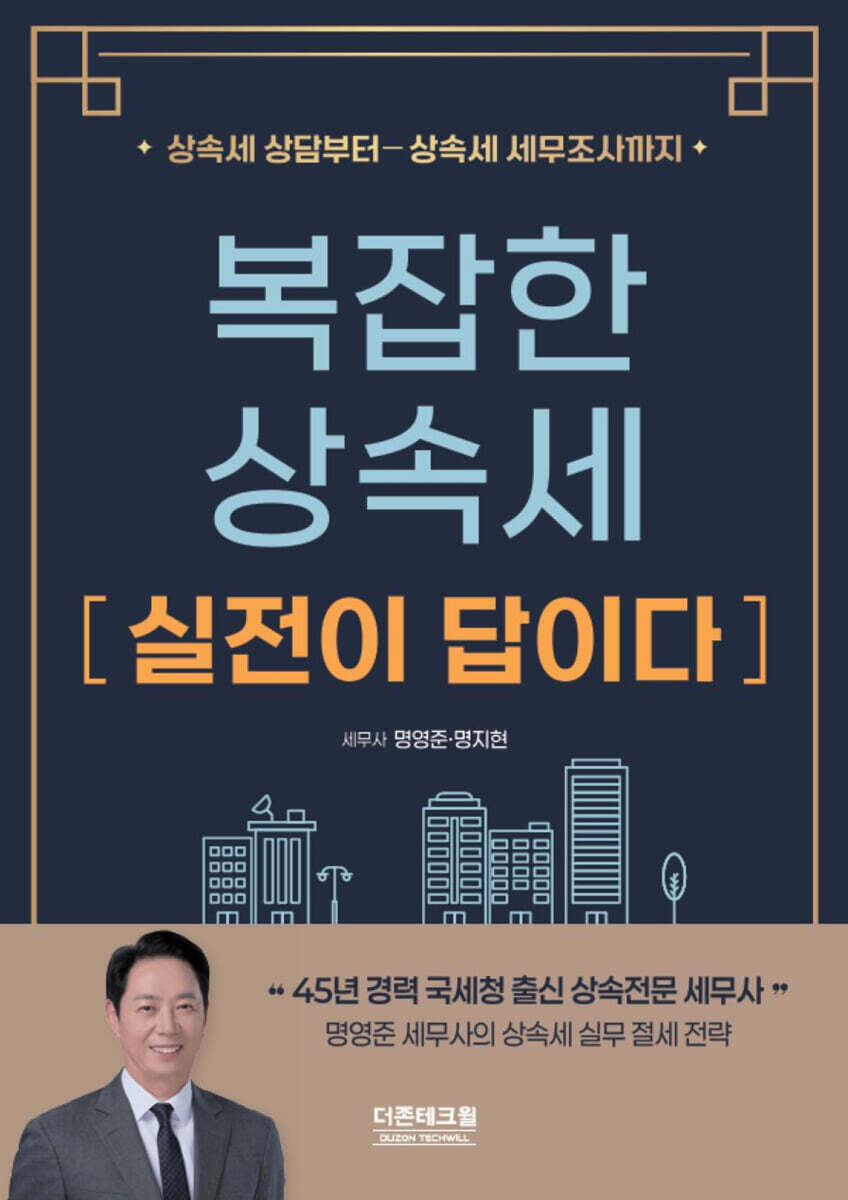
Book Introduction
Inheritance tax is easy to understand as it is a tax levied only on the inherited property left behind by the deceased.
However, inheritance tax is levied on the inheritance property left by the deceased, including property considered as inherited property such as insurance money and retirement pay, and even the value of property already gifted before the date of commencement of inheritance.
In addition, the inheritance tax is calculated not based on the inheritance property each heir received, but on the total amount of inheritance left by the deceased.
In addition, the current inheritance tax rate is a progressive tax rate, meaning that the more inheritance there is, the higher the tax rate is applied.
Accordingly, not only high net worth individuals but also ordinary people are becoming more interested in inheritance tax, and various methods are being used to reduce inheritance tax.
In this environment, when inheritance is initiated, the heir must identify the inherited property on his/her own, file an inheritance tax return with the National Tax Service within the inheritance tax return deadline, and pay the tax.
And when the National Tax Service receives an inheritance tax return, it conducts a tax investigation to verify the inheritance tax return details and ultimately determines the inheritance tax.
Recently, as real estate prices have skyrocketed, there are more and more cases of people disposing of their homes because they cannot pay inheritance tax when the inheritance is opened, even if they only own the house where the deceased lives and some financial assets.
Accordingly, the government is also trying to revise the tax law to impose inheritance tax based on the property inherited by each heir rather than the total amount of the deceased's inheritance in order to reduce the inheritance tax burden on the middle class, or to significantly increase the inheritance tax deduction, but the tax law revision has not yet been implemented.
Having specialized in inheritance tax matters for many years, the authors have often encountered cases where the testator and heirs received incorrect information about inheritance tax and ended up increasing their inheritance tax burden.
In addition, based on numerous experiences with frequently pointed out items in inheritance tax audits conducted by the National Tax Service Investigation Bureau or the tax office investigation team after inheritance tax reporting, we are establishing tax investigation response measures in advance at the inheritance tax reporting stage.
Inheritance tax practice is not simply a process of learning tax laws.
This is because, even if the transactions between the testator and the heir appear to be the same, they may be legally interpreted differently if the background of each transaction is different.
In addition, even after filing an inheritance tax return, the National Tax Service conducts a tax audit and conducts a detailed verification of the reported information, so it is a reality that those who lack practical experience with inheritance tax will face difficulties.
This book is based on the authors' practical experience with the National Tax Service and their experience in inheritance tax reporting and tax investigations. Among the many cases studied and analyzed, this book selects items that inheritance tax practitioners are likely to make mistakes on or frequently encounter problems with, and provides theoretical explanations and countermeasures for these.
I hope this book will be of some help to those who are interested in inheritance tax reduction methods or to those who work in inheritance tax practice.
Finally, I would like to express my deepest gratitude to CEO Jin-ho Kim of Thezone Techwill Co., Ltd., who made it possible for me to publish this book, and to Director Tae-dong Lee and Manager Jeong-am Gyeong, who meticulously took care of me throughout the publishing process.
And I would like to express my gratitude to my family who silently supported me.
July 2025
Authors: Myung Yeong-jun and Myung Ji-hyeon
However, inheritance tax is levied on the inheritance property left by the deceased, including property considered as inherited property such as insurance money and retirement pay, and even the value of property already gifted before the date of commencement of inheritance.
In addition, the inheritance tax is calculated not based on the inheritance property each heir received, but on the total amount of inheritance left by the deceased.
In addition, the current inheritance tax rate is a progressive tax rate, meaning that the more inheritance there is, the higher the tax rate is applied.
Accordingly, not only high net worth individuals but also ordinary people are becoming more interested in inheritance tax, and various methods are being used to reduce inheritance tax.
In this environment, when inheritance is initiated, the heir must identify the inherited property on his/her own, file an inheritance tax return with the National Tax Service within the inheritance tax return deadline, and pay the tax.
And when the National Tax Service receives an inheritance tax return, it conducts a tax investigation to verify the inheritance tax return details and ultimately determines the inheritance tax.
Recently, as real estate prices have skyrocketed, there are more and more cases of people disposing of their homes because they cannot pay inheritance tax when the inheritance is opened, even if they only own the house where the deceased lives and some financial assets.
Accordingly, the government is also trying to revise the tax law to impose inheritance tax based on the property inherited by each heir rather than the total amount of the deceased's inheritance in order to reduce the inheritance tax burden on the middle class, or to significantly increase the inheritance tax deduction, but the tax law revision has not yet been implemented.
Having specialized in inheritance tax matters for many years, the authors have often encountered cases where the testator and heirs received incorrect information about inheritance tax and ended up increasing their inheritance tax burden.
In addition, based on numerous experiences with frequently pointed out items in inheritance tax audits conducted by the National Tax Service Investigation Bureau or the tax office investigation team after inheritance tax reporting, we are establishing tax investigation response measures in advance at the inheritance tax reporting stage.
Inheritance tax practice is not simply a process of learning tax laws.
This is because, even if the transactions between the testator and the heir appear to be the same, they may be legally interpreted differently if the background of each transaction is different.
In addition, even after filing an inheritance tax return, the National Tax Service conducts a tax audit and conducts a detailed verification of the reported information, so it is a reality that those who lack practical experience with inheritance tax will face difficulties.
This book is based on the authors' practical experience with the National Tax Service and their experience in inheritance tax reporting and tax investigations. Among the many cases studied and analyzed, this book selects items that inheritance tax practitioners are likely to make mistakes on or frequently encounter problems with, and provides theoretical explanations and countermeasures for these.
I hope this book will be of some help to those who are interested in inheritance tax reduction methods or to those who work in inheritance tax practice.
Finally, I would like to express my deepest gratitude to CEO Jin-ho Kim of Thezone Techwill Co., Ltd., who made it possible for me to publish this book, and to Director Tae-dong Lee and Manager Jeong-am Gyeong, who meticulously took care of me throughout the publishing process.
And I would like to express my gratitude to my family who silently supported me.
July 2025
Authors: Myung Yeong-jun and Myung Ji-hyeon
index
preface
Part 1│The Basics of Inheritance
1.
Basic concepts of inheritance
2.
Order of inheritance and inheritance share
3.
Is it possible to renounce an inheritance while your parents are still alive?
4.
Parents who abandon their children are deprived of their inheritance rights.
5.
How to write a will
6.
Reserved portion that guarantees a minimum share of inheritance
7.
Decision on unconstitutionality and inconsistency of the siblings' reserved portion
8.
The Truth and Falsehood of Filial Piety Contracts
9.
Inheritance tax subject to taxation and taxpayer
10.
Property considered as inherited property
11.
Treatment of assets held in another person's name under tax law
12.
Division of inherited property
13.
Inheritance tax calculation structure
Part 2│Preparing for Inheritance in Advance
1.
How to Avoid Gift Tax on Financial Transactions Between Family Members
2.
Is it okay to borrow up to 200 million won between family members?
3.
Whether or not gift tax is imposed on wedding congratulatory money
4.
Marriage and Childbirth Gift Tax Deduction
5.
Misunderstandings about gift tax deductions
6.
Why Generation-Skipping Gifts Are On the Rise
7.
If you donate to someone else, the heir is responsible for the inheritance tax.
8.
Gifts made during life that do not require additional inheritance tax payment
9.
Burden-bearing gift tax and acquisition tax on housing
10.
Inheritance tax savings through exemption of corporate bond debt
11.
If a will is made and then real estate is disposed of, the will is valid.
Part 3: Inheritance Procedures and Inheritance Tax Report Preparation
Section 1. Inheritance procedures that can lead to significant losses if done incorrectly
1.
Inheritance procedures that must be followed after death
2.
After death, you must not arbitrarily withdraw deposits or apply for a seal certificate.
3.
Are condolence money also considered inherited property?
4.
How to find inherited deposits
5.
Withdrawing deposits before the inheritance commencement date will result in significant losses.
6.
Even if you renounce your inheritance, you can still receive life insurance benefits.
7.
Surcharge on inheritance renunciation and generation skipping
8.
Do I have to pay inheritance tax in Korea even if I immigrate?
9.
If the seller dies after concluding a real estate sales contract
10.
Inheritance tax is imposed even if the inherited claim is voluntarily waived.
11.
Mistakes in the inheritance process for a housing rental business can result in significant losses.
Section 2. Methods of dividing inherited property for tax savings
1.
Method of dividing inherited property by agreement for tax savings
2.
Reporting and payment of acquisition tax due to inheritance
3.
Special acquisition tax rate for inherited housing
4.
Comprehensive real estate tax on inherited housing
5.
How to avoid overtaxation of comprehensive real estate tax on inherited houses
6.
Application of higher tax rates for jointly inherited housing and capital gains tax
7.
If it is difficult to register inheritance because an agreement on property division has not been reached,
8.
Is the National Housing Bond discount I'm paying appropriate?
Part 4│Inheritance Tax Reporting and Payment
Section 1: Key points of tax savings, including inheritance property valuation
1.
The inherited property value is less than 1 billion won. Do I need to report inheritance tax?
2.
Valuation method based on similar transaction price
3.
Things to keep in mind when evaluating using the National Tax Service Hometax
4.
In cases where it is difficult to recognize the similar transaction price as the market price
5.
Special provisions for the valuation of property subject to mortgages, etc.
6.
Tax-saving methods when selling inherited real estate in a hurry
7.
Funeral expense deduction scope
8.
How to deduct rental deposit as inherited debt
9.
If I take out a loan in the name of the deceased, will the entire amount be recognized as inherited debt?
10.
How to file a comprehensive income tax return for the deceased
11.
Special deadline for reporting and paying inheritance tax and acquisition tax for non-residents
Section 2: My own tax-saving methods, including inheritance deductions
1.
Tax-saving methods using spousal inheritance deduction
2.
In case of death before receiving the balance after the sales contract, spouse inheritance tax deduction
3.
Officetels are also eligible for the cohabitation housing inheritance tax deduction.
4.
Houses eligible for the cohabitation housing inheritance tax deduction
5.
Business inheritance tax deduction
6.
Requirements for a corporation's advance payments to be recognized as inherited debt
7.
Things to keep in mind when applying for gift tax deduction
8.
Tax deduction for short-term re-inheritance
9.
Inheritance tax deferred payment system
10.
Inheritance tax payment in kind system where inheritance tax is paid with real estate
11.
How to Pay Inheritance Tax with Artwork
Part 5: Inheritance Tax Investigation and Post-Management
Section 1 Inheritance Tax Investigation Site
1.
When the National Tax Service begins its inheritance tax investigation
2.
Can I avoid inheritance tax if I don't report the death?
3.
How much living expenses will the National Tax Service recognize?
4.
Withdrawals made within 2 years are subject to intensive tax investigation.
5.
Why You Shouldn't Withdraw Your Savings Before You Die
6.
How does the National Tax Service view interfamily account transfers?
7.
Can I avoid inheritance tax by buying gold bars?
8.
The National Tax Service will double its appraisal budget by 2025.
9.
If a check issued from the deceased's deposit account is not paid
10.
Is it a gift or a loan of money?
11.
If the deceased acquired a house under joint ownership by a married couple
Section 2 Post-Tax Investigation Management
1.
Post-mortem care for high-income heirs
2.
Post-management of inherited debt
3.
Can inheritance tax be collected even after the tax investigation is concluded?
4.
Exercise of the right to claim return of reserved portion and inheritance tax
5.
Reduction of capital gains tax when transferring inherited farmland
6.
How to save on capital gains tax on inherited real estate if you haven't filed an inheritance tax return
[Appendix 1] Inheritance Tax and Gift Tax Administration Regulations
[Appendix 2] Evaluation Review Committee Operation Regulations
Search by topic
Part 1│The Basics of Inheritance
1.
Basic concepts of inheritance
2.
Order of inheritance and inheritance share
3.
Is it possible to renounce an inheritance while your parents are still alive?
4.
Parents who abandon their children are deprived of their inheritance rights.
5.
How to write a will
6.
Reserved portion that guarantees a minimum share of inheritance
7.
Decision on unconstitutionality and inconsistency of the siblings' reserved portion
8.
The Truth and Falsehood of Filial Piety Contracts
9.
Inheritance tax subject to taxation and taxpayer
10.
Property considered as inherited property
11.
Treatment of assets held in another person's name under tax law
12.
Division of inherited property
13.
Inheritance tax calculation structure
Part 2│Preparing for Inheritance in Advance
1.
How to Avoid Gift Tax on Financial Transactions Between Family Members
2.
Is it okay to borrow up to 200 million won between family members?
3.
Whether or not gift tax is imposed on wedding congratulatory money
4.
Marriage and Childbirth Gift Tax Deduction
5.
Misunderstandings about gift tax deductions
6.
Why Generation-Skipping Gifts Are On the Rise
7.
If you donate to someone else, the heir is responsible for the inheritance tax.
8.
Gifts made during life that do not require additional inheritance tax payment
9.
Burden-bearing gift tax and acquisition tax on housing
10.
Inheritance tax savings through exemption of corporate bond debt
11.
If a will is made and then real estate is disposed of, the will is valid.
Part 3: Inheritance Procedures and Inheritance Tax Report Preparation
Section 1. Inheritance procedures that can lead to significant losses if done incorrectly
1.
Inheritance procedures that must be followed after death
2.
After death, you must not arbitrarily withdraw deposits or apply for a seal certificate.
3.
Are condolence money also considered inherited property?
4.
How to find inherited deposits
5.
Withdrawing deposits before the inheritance commencement date will result in significant losses.
6.
Even if you renounce your inheritance, you can still receive life insurance benefits.
7.
Surcharge on inheritance renunciation and generation skipping
8.
Do I have to pay inheritance tax in Korea even if I immigrate?
9.
If the seller dies after concluding a real estate sales contract
10.
Inheritance tax is imposed even if the inherited claim is voluntarily waived.
11.
Mistakes in the inheritance process for a housing rental business can result in significant losses.
Section 2. Methods of dividing inherited property for tax savings
1.
Method of dividing inherited property by agreement for tax savings
2.
Reporting and payment of acquisition tax due to inheritance
3.
Special acquisition tax rate for inherited housing
4.
Comprehensive real estate tax on inherited housing
5.
How to avoid overtaxation of comprehensive real estate tax on inherited houses
6.
Application of higher tax rates for jointly inherited housing and capital gains tax
7.
If it is difficult to register inheritance because an agreement on property division has not been reached,
8.
Is the National Housing Bond discount I'm paying appropriate?
Part 4│Inheritance Tax Reporting and Payment
Section 1: Key points of tax savings, including inheritance property valuation
1.
The inherited property value is less than 1 billion won. Do I need to report inheritance tax?
2.
Valuation method based on similar transaction price
3.
Things to keep in mind when evaluating using the National Tax Service Hometax
4.
In cases where it is difficult to recognize the similar transaction price as the market price
5.
Special provisions for the valuation of property subject to mortgages, etc.
6.
Tax-saving methods when selling inherited real estate in a hurry
7.
Funeral expense deduction scope
8.
How to deduct rental deposit as inherited debt
9.
If I take out a loan in the name of the deceased, will the entire amount be recognized as inherited debt?
10.
How to file a comprehensive income tax return for the deceased
11.
Special deadline for reporting and paying inheritance tax and acquisition tax for non-residents
Section 2: My own tax-saving methods, including inheritance deductions
1.
Tax-saving methods using spousal inheritance deduction
2.
In case of death before receiving the balance after the sales contract, spouse inheritance tax deduction
3.
Officetels are also eligible for the cohabitation housing inheritance tax deduction.
4.
Houses eligible for the cohabitation housing inheritance tax deduction
5.
Business inheritance tax deduction
6.
Requirements for a corporation's advance payments to be recognized as inherited debt
7.
Things to keep in mind when applying for gift tax deduction
8.
Tax deduction for short-term re-inheritance
9.
Inheritance tax deferred payment system
10.
Inheritance tax payment in kind system where inheritance tax is paid with real estate
11.
How to Pay Inheritance Tax with Artwork
Part 5: Inheritance Tax Investigation and Post-Management
Section 1 Inheritance Tax Investigation Site
1.
When the National Tax Service begins its inheritance tax investigation
2.
Can I avoid inheritance tax if I don't report the death?
3.
How much living expenses will the National Tax Service recognize?
4.
Withdrawals made within 2 years are subject to intensive tax investigation.
5.
Why You Shouldn't Withdraw Your Savings Before You Die
6.
How does the National Tax Service view interfamily account transfers?
7.
Can I avoid inheritance tax by buying gold bars?
8.
The National Tax Service will double its appraisal budget by 2025.
9.
If a check issued from the deceased's deposit account is not paid
10.
Is it a gift or a loan of money?
11.
If the deceased acquired a house under joint ownership by a married couple
Section 2 Post-Tax Investigation Management
1.
Post-mortem care for high-income heirs
2.
Post-management of inherited debt
3.
Can inheritance tax be collected even after the tax investigation is concluded?
4.
Exercise of the right to claim return of reserved portion and inheritance tax
5.
Reduction of capital gains tax when transferring inherited farmland
6.
How to save on capital gains tax on inherited real estate if you haven't filed an inheritance tax return
[Appendix 1] Inheritance Tax and Gift Tax Administration Regulations
[Appendix 2] Evaluation Review Committee Operation Regulations
Search by topic
GOODS SPECIFICS
- Date of issue: August 29, 2025
- Page count, weight, size: 376 pages | 165*235*30mm
- ISBN13: 9791163061298
You may also like
카테고리
korean


korean

![ELLE 엘르 스페셜 에디션 A형 : 12월 [2025]](http://librairie.coreenne.fr/cdn/shop/files/b8e27a3de6c9538896439686c6b0e8fb.jpg?v=1766436872&width=3840)


