

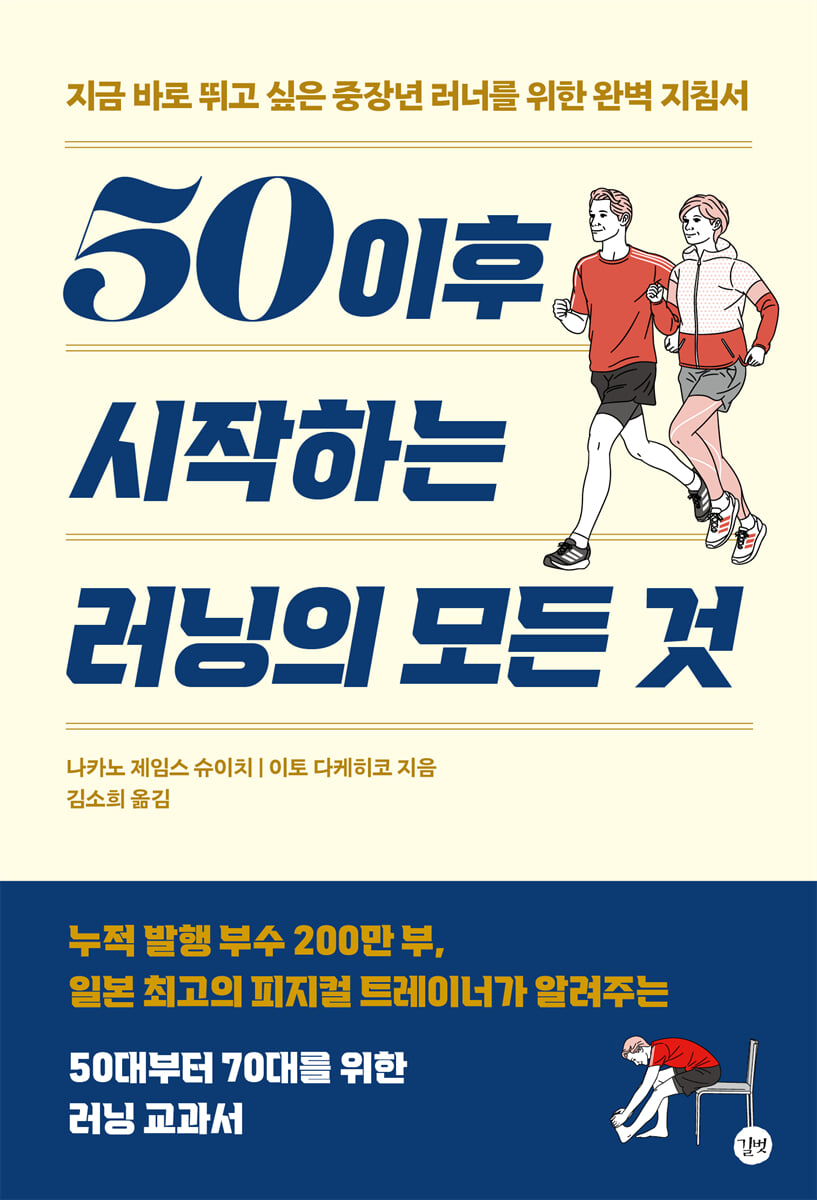
Everything You Need to Know About Running After 50
 |
Description
Book Introduction
Recommended for people over 50!
∨Those who want to find a new driving force in life as they approach retirement age
∨For those who want to start exercising right now
∨People who want to lose weight healthily without starving
∨People who are concerned about lifestyle diseases such as diabetes and high blood pressure
Are you running now? We're in an era where the number of runners is 10 million, but somewhere in my heart, I wonder, "Isn't that just young people running?" I've reached an age where I'm starting to wonder, "Can I run again?" "Am I going to get hurt for no reason?"
It's not too late.
It's time to run again.
I recommend this book to help you run longer and healthier.
A running textbook for those in their 50s to 70s, starting from scratch! The perfect guide for middle-aged and older runners who want to start running right away.
∨Those who want to find a new driving force in life as they approach retirement age
∨For those who want to start exercising right now
∨People who want to lose weight healthily without starving
∨People who are concerned about lifestyle diseases such as diabetes and high blood pressure
Are you running now? We're in an era where the number of runners is 10 million, but somewhere in my heart, I wonder, "Isn't that just young people running?" I've reached an age where I'm starting to wonder, "Can I run again?" "Am I going to get hurt for no reason?"
It's not too late.
It's time to run again.
I recommend this book to help you run longer and healthier.
A running textbook for those in their 50s to 70s, starting from scratch! The perfect guide for middle-aged and older runners who want to start running right away.
- You can preview some of the book's contents.
Preview
index
Preface · 4
Starting the warm-up · 6
Chapter 1: How to Run Beyond 50 · 17
Chapter 2: The Benefits of Running You'll Want to Know Again · 41
Q01 Why is running effective for weight loss? · 42
Q02 Why can running help you maintain a regular rhythm? · 46
Q03: Is it true that running can suppress anger and prevent cognitive impairment? · 50
Q04: Running is said to be good for digital detox. What are its benefits? · 53
Q05 I have a friend who says his back pain disappeared after running regularly. What's the mechanism behind this? · 56
Q06 Now that I am over sixty, illness becomes a topic of conversation at peer gatherings.
Does running lower blood sugar or blood pressure? · 59
Q07 If I run consistently every day, will I be able to improve my sleep quality by falling asleep without realizing it due to moderate fatigue? · 62
Q08: Running helps me focus better and organize my tasks, making me feel like I'm making quick progress. Why is that? · 64
Q09: They say running boosts your confidence and makes you look younger. Is that true? · 66
Q10: If I keep running, won't I end up eating too many calories because I'll start to crave food? · 68
Chapter 3: Preparations You Must Make Before Running · 71
Q11 After decades of not exercising, can I suddenly start running?
Do I need a warm-up? · 72
Q12 Please tell me the exercises that I should do consistently during the preparation period, organized by age.
· 78
Q13: How can someone over 50 know if they're gaining muscle mass? · 84
Q14 I've cut down on drinking compared to before. Should I improve my diet along with strength training? · 86
Q15 I wake up early in the morning and feel like my sleep quality is poor.
Is sleep important for exercise? · 89
Chapter 4: How to Make Running a Habit · 91
Q16: How long should I spend running for the first time? And how should I rest? · 92
Q17 How should I determine the driving distance per ride?
Is it a good idea to aim for 10km? · 95
Q18 If you go to a specialty store, there are so many sports equipment that it is difficult to choose.
How to choose good clothes and shoes? · 97
Q19 If you watch a marathon or a relay race, you will see that the postures are also very diverse.
What is correct posture? · 100
Q20: Running is said to easily cause knee and joint pain. How do I identify or detect pain? · 103
Q21 I go to the swimming pool around summer.
Can I run and swim together? · 105
Q22: Is it necessary to stretch or warm up before and after running? · 107
Chapter 5: Making It a Daily Routine · 109
Q23: They say 200km per month is the standard. How much time and distance should I run to make running a regular part of my routine? · 110
Q24 Please tell me how to apply a cold compress when I feel pain or discomfort and how to use a brace to support my joints.
· 113
Q25 Please tell me the correct posture for setting distance and time.
You said I didn't have to worry about it, but when I actually tried to run, it kept bothering me.
· 116
Q26: Do you have any tips for choosing a course for a long run, such as setting a goal, finishing at a favorite location, or something similar? · 118
Q27: When is the best time to run? Morning or evening? Or before or after meals? · 121
Q28 When is it best to rehydrate: before, during, or after running? · 124
Q29: Running during spring and summer can be quite sweaty. What precautions should I take to prevent heatstroke? · 128
Q30 I often hear from friends and family, “You’re type A.”
Even though I'm still confident in my physical strength, is there a goal-setting method that works for me, who works too hard? · 131
Chapter 6: The Secret to Running Longer, Even for a Day · 133
Q31 Do you need daily goals, like "Let's speed up today" or "Let's run slowly and for a long time today"? · 134
Q32 I heard that heart rate is not only related to the effectiveness of exercise, but also to distance and speed.
How to Use Your Smartwatch Effectively? · 136
Q33 I know a runner who achieved sub-4 in platform shoes.
Do you need platform shoes? ·140
Q34 Are there any precautions for running at dawn or at night? · 143
After running Q35, a bath and a beer are my pleasure.
I've heard that taking a bath after running is good for your health. Is that true? · 146
Q36: Is it necessary to warm up before running and stretch after? · 148
Q37 As I get older, I often lose my appetite, especially after strenuous exercise.
What's the best diet for long-distance running? · 151
I was able to run 10km, which is the Q38 standard.
So, from now on, is distance or speed more important? How do I set my next goal? · 156
Q39 I understand goal setting.
Are there any other secrets to running long and healthy? · 161
Chapter 7: If You Want to Challenge a Record or Race · 163
Now that I can run the 10km, I want to challenge myself with a higher goal. I'm thinking about running a half marathon next. Will it be difficult? · 164
Q41 After competing in a few half marathons, I'm ready to tackle my dream full marathon.
What are the key points when choosing a race? · 166
Q42 The first race is both exciting and nerve-wracking.
What's a good way to finish your first race safely? · 168
Q43 Tomorrow I will be competing in my first full marathon.
How should I spend the night before or the night before a race? · 170
It seems like many people use the Q44 app to communicate with their friends and share records or data.
How to Use the App Effectively? · 172
Completing the Q45 100km may seem daunting, but it is challenging and motivates the spirit of challenge.
Is an ultramarathon too difficult for seniors? · 175
Chapter 8: Bold, Healthy, and Extra Ways to Run Longer · 177
Q46 What should I think about while running? · 179
Q47 What should I listen to while running? · 183
Q48 Is it better to run with a running club or friends? · 186
Q49 Is it a good idea to run according to the app plan? · 189
Q50 Is it good to run on bumpy or unfamiliar roads? · 191
Q51 Is it good to run while traveling? · 193
Q52 How old can you be to run? · 199
Chapter 9: Stretching for Longevity · 203
Q53 Are there any effective stretches for post-run care? · 204
Cooldown Completion · 216
Starting the warm-up · 6
Chapter 1: How to Run Beyond 50 · 17
Chapter 2: The Benefits of Running You'll Want to Know Again · 41
Q01 Why is running effective for weight loss? · 42
Q02 Why can running help you maintain a regular rhythm? · 46
Q03: Is it true that running can suppress anger and prevent cognitive impairment? · 50
Q04: Running is said to be good for digital detox. What are its benefits? · 53
Q05 I have a friend who says his back pain disappeared after running regularly. What's the mechanism behind this? · 56
Q06 Now that I am over sixty, illness becomes a topic of conversation at peer gatherings.
Does running lower blood sugar or blood pressure? · 59
Q07 If I run consistently every day, will I be able to improve my sleep quality by falling asleep without realizing it due to moderate fatigue? · 62
Q08: Running helps me focus better and organize my tasks, making me feel like I'm making quick progress. Why is that? · 64
Q09: They say running boosts your confidence and makes you look younger. Is that true? · 66
Q10: If I keep running, won't I end up eating too many calories because I'll start to crave food? · 68
Chapter 3: Preparations You Must Make Before Running · 71
Q11 After decades of not exercising, can I suddenly start running?
Do I need a warm-up? · 72
Q12 Please tell me the exercises that I should do consistently during the preparation period, organized by age.
· 78
Q13: How can someone over 50 know if they're gaining muscle mass? · 84
Q14 I've cut down on drinking compared to before. Should I improve my diet along with strength training? · 86
Q15 I wake up early in the morning and feel like my sleep quality is poor.
Is sleep important for exercise? · 89
Chapter 4: How to Make Running a Habit · 91
Q16: How long should I spend running for the first time? And how should I rest? · 92
Q17 How should I determine the driving distance per ride?
Is it a good idea to aim for 10km? · 95
Q18 If you go to a specialty store, there are so many sports equipment that it is difficult to choose.
How to choose good clothes and shoes? · 97
Q19 If you watch a marathon or a relay race, you will see that the postures are also very diverse.
What is correct posture? · 100
Q20: Running is said to easily cause knee and joint pain. How do I identify or detect pain? · 103
Q21 I go to the swimming pool around summer.
Can I run and swim together? · 105
Q22: Is it necessary to stretch or warm up before and after running? · 107
Chapter 5: Making It a Daily Routine · 109
Q23: They say 200km per month is the standard. How much time and distance should I run to make running a regular part of my routine? · 110
Q24 Please tell me how to apply a cold compress when I feel pain or discomfort and how to use a brace to support my joints.
· 113
Q25 Please tell me the correct posture for setting distance and time.
You said I didn't have to worry about it, but when I actually tried to run, it kept bothering me.
· 116
Q26: Do you have any tips for choosing a course for a long run, such as setting a goal, finishing at a favorite location, or something similar? · 118
Q27: When is the best time to run? Morning or evening? Or before or after meals? · 121
Q28 When is it best to rehydrate: before, during, or after running? · 124
Q29: Running during spring and summer can be quite sweaty. What precautions should I take to prevent heatstroke? · 128
Q30 I often hear from friends and family, “You’re type A.”
Even though I'm still confident in my physical strength, is there a goal-setting method that works for me, who works too hard? · 131
Chapter 6: The Secret to Running Longer, Even for a Day · 133
Q31 Do you need daily goals, like "Let's speed up today" or "Let's run slowly and for a long time today"? · 134
Q32 I heard that heart rate is not only related to the effectiveness of exercise, but also to distance and speed.
How to Use Your Smartwatch Effectively? · 136
Q33 I know a runner who achieved sub-4 in platform shoes.
Do you need platform shoes? ·140
Q34 Are there any precautions for running at dawn or at night? · 143
After running Q35, a bath and a beer are my pleasure.
I've heard that taking a bath after running is good for your health. Is that true? · 146
Q36: Is it necessary to warm up before running and stretch after? · 148
Q37 As I get older, I often lose my appetite, especially after strenuous exercise.
What's the best diet for long-distance running? · 151
I was able to run 10km, which is the Q38 standard.
So, from now on, is distance or speed more important? How do I set my next goal? · 156
Q39 I understand goal setting.
Are there any other secrets to running long and healthy? · 161
Chapter 7: If You Want to Challenge a Record or Race · 163
Now that I can run the 10km, I want to challenge myself with a higher goal. I'm thinking about running a half marathon next. Will it be difficult? · 164
Q41 After competing in a few half marathons, I'm ready to tackle my dream full marathon.
What are the key points when choosing a race? · 166
Q42 The first race is both exciting and nerve-wracking.
What's a good way to finish your first race safely? · 168
Q43 Tomorrow I will be competing in my first full marathon.
How should I spend the night before or the night before a race? · 170
It seems like many people use the Q44 app to communicate with their friends and share records or data.
How to Use the App Effectively? · 172
Completing the Q45 100km may seem daunting, but it is challenging and motivates the spirit of challenge.
Is an ultramarathon too difficult for seniors? · 175
Chapter 8: Bold, Healthy, and Extra Ways to Run Longer · 177
Q46 What should I think about while running? · 179
Q47 What should I listen to while running? · 183
Q48 Is it better to run with a running club or friends? · 186
Q49 Is it a good idea to run according to the app plan? · 189
Q50 Is it good to run on bumpy or unfamiliar roads? · 191
Q51 Is it good to run while traveling? · 193
Q52 How old can you be to run? · 199
Chapter 9: Stretching for Longevity · 203
Q53 Are there any effective stretches for post-run care? · 204
Cooldown Completion · 216
Detailed image

Into the book
As a physical trainer, I have worked with the bodies and minds of top athletes and ordinary clients.
So, what I recommend to my clients who want to lose weight, putting aside their commercial interests, is running.
Why is that?
Because running is the most effective sport for dieting among all types of exercise.
--- From "Chapter 2: The Benefits of Running You Want to Know Again"
If you don't build up your leg muscles, you won't burn any more calories when you run, and you'll be running unstable, making it easier for your joints to get injured.
Building a foundation is all about increasing muscle mass.
At least get your muscle mass back to what it was in your 40s.
Let's start with strength training before going for a walk to change our mood and running in earnest.
--- From "Preparations You Must Make Before Running Chapter 3"
Regardless of the purpose of distance or time, think of 'making it a habit' as the first step in running.
Even if you start running, your body won't respond if you only run once a month.
It's just an event.
If you run two to three times a week, you should make it a habit to do it automatically, like waking up in the morning and brushing your teeth or washing your face.
For the first two weeks, let's just think about this 'habituation'.
--- From "Chapter 4: How to Make Running a Habit"
From a psychological perspective, in order to run consistently, it is important to have options such as '0.5' or '0.3' in addition to '1' or '0'.
For example, what if you're planning to go for a run but feel like you have less than an hour to dedicate to it? Choosing "don't do it" is the answer, but that leads to the experience of failure: "I couldn't run."
However, if you are prepared in various ways, such as a course that can be returned within an hour, you can choose the alternative of '0.5'.
--- From "Chapter 5: How to Make It a Daily Routine"
First of all, is running more than 10km a good thing? From a health perspective and ensuring a minimum amount and quality of exercise, 10km is sufficient.
It's so amazing that I could go on and on about it, but just reading this book and being able to run 10km is a huge accomplishment.
So wouldn't it be rewarding to extend the period of time you can run 10km to a year or two? After 10km, it's not a bad idea to set a goal of running 15km, then half marathon, and then even longer distances.
However, for runners in their 50s to 70s, I believe that running 10km will be valuable and important even after 5 or 10 years.
--- From "Chapter 6: The Secret to Running Long Even for a Day"
Major televised marathons only show the battle for the top spots.
Because of this, it is easy to mistakenly believe that everyone has completed the race, but not all regular participants cross the finish line.
In light competitions, most people walk to the finish line.
It's not that you shouldn't walk, nor is it against the rules.
With this in mind, anyone thinking about competing in a full marathon in the future should consider competing in a half race at least once.
So, what I recommend to my clients who want to lose weight, putting aside their commercial interests, is running.
Why is that?
Because running is the most effective sport for dieting among all types of exercise.
--- From "Chapter 2: The Benefits of Running You Want to Know Again"
If you don't build up your leg muscles, you won't burn any more calories when you run, and you'll be running unstable, making it easier for your joints to get injured.
Building a foundation is all about increasing muscle mass.
At least get your muscle mass back to what it was in your 40s.
Let's start with strength training before going for a walk to change our mood and running in earnest.
--- From "Preparations You Must Make Before Running Chapter 3"
Regardless of the purpose of distance or time, think of 'making it a habit' as the first step in running.
Even if you start running, your body won't respond if you only run once a month.
It's just an event.
If you run two to three times a week, you should make it a habit to do it automatically, like waking up in the morning and brushing your teeth or washing your face.
For the first two weeks, let's just think about this 'habituation'.
--- From "Chapter 4: How to Make Running a Habit"
From a psychological perspective, in order to run consistently, it is important to have options such as '0.5' or '0.3' in addition to '1' or '0'.
For example, what if you're planning to go for a run but feel like you have less than an hour to dedicate to it? Choosing "don't do it" is the answer, but that leads to the experience of failure: "I couldn't run."
However, if you are prepared in various ways, such as a course that can be returned within an hour, you can choose the alternative of '0.5'.
--- From "Chapter 5: How to Make It a Daily Routine"
First of all, is running more than 10km a good thing? From a health perspective and ensuring a minimum amount and quality of exercise, 10km is sufficient.
It's so amazing that I could go on and on about it, but just reading this book and being able to run 10km is a huge accomplishment.
So wouldn't it be rewarding to extend the period of time you can run 10km to a year or two? After 10km, it's not a bad idea to set a goal of running 15km, then half marathon, and then even longer distances.
However, for runners in their 50s to 70s, I believe that running 10km will be valuable and important even after 5 or 10 years.
--- From "Chapter 6: The Secret to Running Long Even for a Day"
Major televised marathons only show the battle for the top spots.
Because of this, it is easy to mistakenly believe that everyone has completed the race, but not all regular participants cross the finish line.
In light competitions, most people walk to the finish line.
It's not that you shouldn't walk, nor is it against the rules.
With this in mind, anyone thinking about competing in a full marathon in the future should consider competing in a half race at least once.
--- From "If you want to challenge a record or race in Chapter 7"
Publisher's Review
1.
Why You Need to Run as You Get Older
Why start now? While interest in health increases among those over 50, few actually exercise.
The author emphasizes that running offers a wide range of health benefits beyond simple aerobic exercise, including weight control, improved sleep, cognitive enhancement, emotional stability, and prevention of lifestyle-related diseases such as diabetes, high blood pressure, and high cholesterol.
Running, in particular, effectively uses the large muscles of the lower body to increase basal metabolic rate, and is very effective for weight loss and body fat reduction when done consistently at a 'moderately difficult' intensity.
Additionally, regular running habits have a great effect on improving the health of middle-aged and older people by maintaining consistent sleep and wake times, which stabilizes brain function and helps prevent cognitive decline.
2.
From pre-run preparation to how to establish habits and routines, to your race goals! The complete guide.
"I want to start running right now, but where should I start?" The author provides an easy-to-understand explanation of the warm-up period and method for each age group.
Also, in the running habit formation section, which should begin after the preparation period, we focus on answering questions that beginner runners often wonder about, such as how much time to run and how much rest to take, and how to set the distance per run.
The part about making running a part of your daily life, beyond just a habit, explains tips for choosing a course, proper posture while running, and how to replenish your water supply. Finally, it even provides various advice for runners who are challenging records or races.
This book provides a complete guide from preparation to practice for middle-aged and older people who are just starting to run.
3 Interviews with middle-aged and older runners in neighboring Japan and pre- and post-run stretching methods for beginners
Through interviews with middle-aged and older runners in Japan, where the running boom took off much faster than in Korea, we explore their goals for running, what they think about while running, what music they listen to, and what apps they use to help them, offering a variety of small but helpful tips for running healthily and for a long time.
We also provide detailed explanations and illustrations of stretching methods before and after running to help beginner runners prevent injuries.
Why You Need to Run as You Get Older
Why start now? While interest in health increases among those over 50, few actually exercise.
The author emphasizes that running offers a wide range of health benefits beyond simple aerobic exercise, including weight control, improved sleep, cognitive enhancement, emotional stability, and prevention of lifestyle-related diseases such as diabetes, high blood pressure, and high cholesterol.
Running, in particular, effectively uses the large muscles of the lower body to increase basal metabolic rate, and is very effective for weight loss and body fat reduction when done consistently at a 'moderately difficult' intensity.
Additionally, regular running habits have a great effect on improving the health of middle-aged and older people by maintaining consistent sleep and wake times, which stabilizes brain function and helps prevent cognitive decline.
2.
From pre-run preparation to how to establish habits and routines, to your race goals! The complete guide.
"I want to start running right now, but where should I start?" The author provides an easy-to-understand explanation of the warm-up period and method for each age group.
Also, in the running habit formation section, which should begin after the preparation period, we focus on answering questions that beginner runners often wonder about, such as how much time to run and how much rest to take, and how to set the distance per run.
The part about making running a part of your daily life, beyond just a habit, explains tips for choosing a course, proper posture while running, and how to replenish your water supply. Finally, it even provides various advice for runners who are challenging records or races.
This book provides a complete guide from preparation to practice for middle-aged and older people who are just starting to run.
3 Interviews with middle-aged and older runners in neighboring Japan and pre- and post-run stretching methods for beginners
Through interviews with middle-aged and older runners in Japan, where the running boom took off much faster than in Korea, we explore their goals for running, what they think about while running, what music they listen to, and what apps they use to help them, offering a variety of small but helpful tips for running healthily and for a long time.
We also provide detailed explanations and illustrations of stretching methods before and after running to help beginner runners prevent injuries.
GOODS SPECIFICS
- Date of issue: October 22, 2025
- Page count, weight, size: 224 pages | 304g | 130*190*13mm
- ISBN13: 9791140715763
You may also like
카테고리
korean


korean

![GQ KOREA Mark (Monthly): December [2025]](http://librairie.coreenne.fr/cdn/shop/files/8ef265dbbfbf186523ed75ba7319009d.jpg?v=1765340328&width=3840)


