

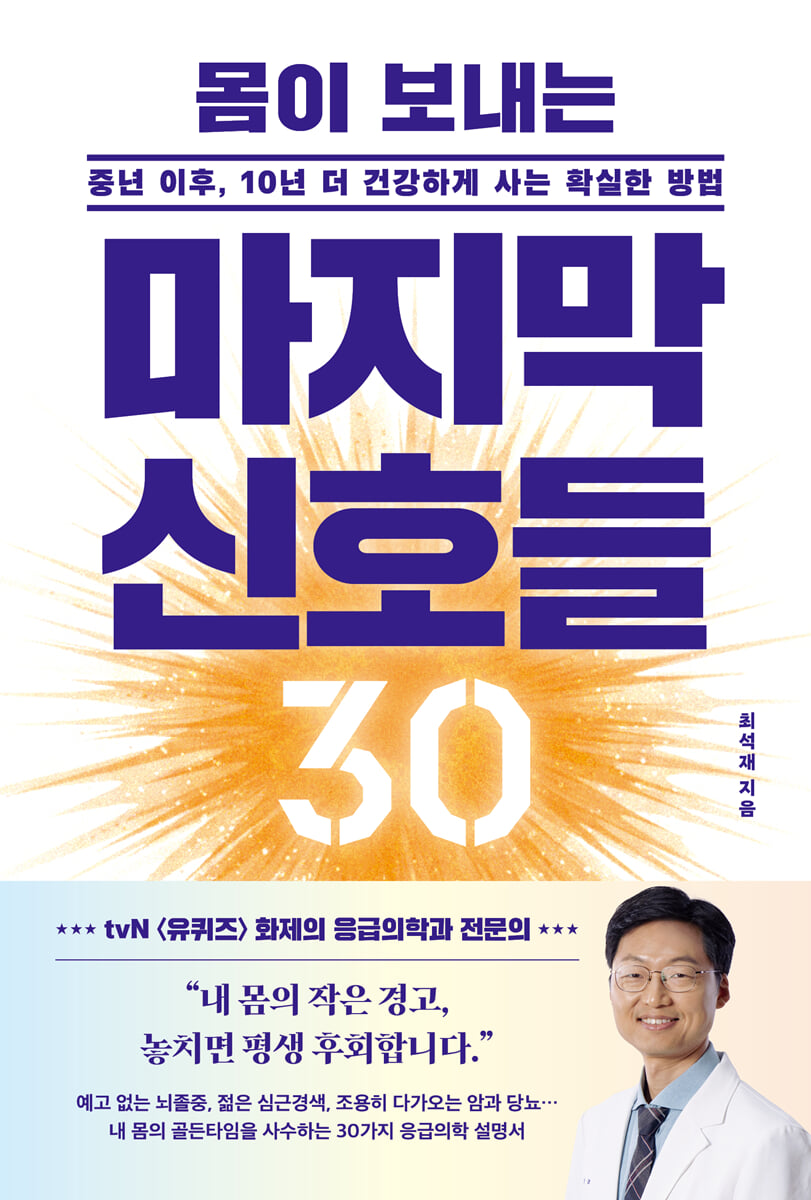
30 Last Signals Your Body Sends You
 |
Description
Book Introduction
Time to add health to my life, the '100-Year Life' series.
“My body’s little warning. If I miss it, I’ll regret it for the rest of my life.”
30 Emergency Medicine Manuals to Protect Your Body's Golden Time
All the knowledge you need to live a healthy life is gathered together! The fifth book in the "100-Year-Old Life" series, a fascinating knowledge experience presented by Korea's leading medical team, has been published.
The Life 100-Year-Old Series provides the most practical health and cultural content for the 100-year lifespan era, carefully selecting the best medical knowledge in Korea.
It is a family brand of the 'Life's Best Rivers' series, a knowledge and culture brand that allows you to encounter the best knowledge content in everyday life through online lectures, YouTube, and podcasts.
Stroke and myocardial infarction, which strike without warning, and cancer and diabetes, which progress silently, are fatal diseases that threaten the health of modern people.
Dr. Choi Seok-jae, an emergency medicine specialist who has saved countless lives in the emergency room for 19 years, says this crisis is the result of missing signals from the body for a long time.
"30 Last Signals Your Body Sends" focuses on how to identify disease "signals" early and respond within the golden time.
It emphasizes the importance of habits that address the root causes of illness, not just simple first aid measures.
This book is a practical guide to creating a virtuous cycle of health through awareness, connection, and action.
“My body’s little warning. If I miss it, I’ll regret it for the rest of my life.”
30 Emergency Medicine Manuals to Protect Your Body's Golden Time
All the knowledge you need to live a healthy life is gathered together! The fifth book in the "100-Year-Old Life" series, a fascinating knowledge experience presented by Korea's leading medical team, has been published.
The Life 100-Year-Old Series provides the most practical health and cultural content for the 100-year lifespan era, carefully selecting the best medical knowledge in Korea.
It is a family brand of the 'Life's Best Rivers' series, a knowledge and culture brand that allows you to encounter the best knowledge content in everyday life through online lectures, YouTube, and podcasts.
Stroke and myocardial infarction, which strike without warning, and cancer and diabetes, which progress silently, are fatal diseases that threaten the health of modern people.
Dr. Choi Seok-jae, an emergency medicine specialist who has saved countless lives in the emergency room for 19 years, says this crisis is the result of missing signals from the body for a long time.
"30 Last Signals Your Body Sends" focuses on how to identify disease "signals" early and respond within the golden time.
It emphasizes the importance of habits that address the root causes of illness, not just simple first aid measures.
This book is a practical guide to creating a virtuous cycle of health through awareness, connection, and action.
- You can preview some of the book's contents.
Preview
index
index
Introduction|Don't miss the signals your body sends you.
PART 1: Cardiovascular Disease: The Leading Cause of Sudden Death
Chapter 1: Warnings from the Heart: Cardiovascular Disease
Chapter 2: Small Daily Choices Change the Fate of Your Heart
Chapter 3: Read the Heart's Warning
Chapter 4: What if you develop cardiovascular disease? Here's how to deal with it!
Chapter 5: Common Misconceptions and Truths About Cardiovascular Disease
PART 2: The Time Bomb in Your Head: Cerebrovascular Disease
Chapter 1: Why Cerebrovascular Disease is So Fearful
Chapter 2 What Destroys the Brain?
Chapter 3: Warning Signs of Stroke and the FAST Rule
Chapter 4: Time is life? Time is the brain!
Chapter 5: Another Disaster After Stroke: Vascular Dementia
Chapter 6: Common Misconceptions and Truths About Brain Disease
PART 3: Cancer, the Silent Killer
Chapter 1: The Secret of Cancer, the Secret Invader
Chapter 2 What Causes Cancer?
Chapter 3: Common Cancers in Koreans: Symptoms
Chapter 4: If You Have Cancer, Just Keep This in Mind
Chapter 5: Common Misconceptions and Truths About Cancer
PART 4: Lifestyle Habits Shape Us: Chronic Metabolic Disease
Chapter 1: Diseases Caused by Habits: Chronic Metabolic Diseases
Chapter 2: The Two-Week Miracle: Stopping the Domino Effect of Metabolic Disease
Chapter 3 Diabetes, a disease that damages blood vessels
Chapter 4: Cardiovascular Disease Caused by Hypertension and Hyperlipidemia
Chapter 5: Warning Signs of Obesity, Fatty Liver, and Metabolic Disease
Chapter 6: Metabolic Diseases Cause Cancer
Chapter 7: Common Misconceptions and Truths About Chronic Metabolic Disease
PART 5: Healthy Habits That Keep You Away from the Emergency Room
Chapter 1: Your Eating Habits Shape Your Body
Chapter 2: Foods and Lifestyle Habits to Avoid
Chapter 3 Exercise: The Best Medicine for Your Heart and Blood Vessels
Chapter 4: Manage Stress with Meditation and Sleep
Chapter 5: Body Temperature and Oxygen Determine Health
Chapter 6: When and how should I get a health checkup?
Chapter 7: A Small Guide to Health
Outgoing Writing | A Life That Gets Better Every Day
References
Introduction|Don't miss the signals your body sends you.
PART 1: Cardiovascular Disease: The Leading Cause of Sudden Death
Chapter 1: Warnings from the Heart: Cardiovascular Disease
Chapter 2: Small Daily Choices Change the Fate of Your Heart
Chapter 3: Read the Heart's Warning
Chapter 4: What if you develop cardiovascular disease? Here's how to deal with it!
Chapter 5: Common Misconceptions and Truths About Cardiovascular Disease
PART 2: The Time Bomb in Your Head: Cerebrovascular Disease
Chapter 1: Why Cerebrovascular Disease is So Fearful
Chapter 2 What Destroys the Brain?
Chapter 3: Warning Signs of Stroke and the FAST Rule
Chapter 4: Time is life? Time is the brain!
Chapter 5: Another Disaster After Stroke: Vascular Dementia
Chapter 6: Common Misconceptions and Truths About Brain Disease
PART 3: Cancer, the Silent Killer
Chapter 1: The Secret of Cancer, the Secret Invader
Chapter 2 What Causes Cancer?
Chapter 3: Common Cancers in Koreans: Symptoms
Chapter 4: If You Have Cancer, Just Keep This in Mind
Chapter 5: Common Misconceptions and Truths About Cancer
PART 4: Lifestyle Habits Shape Us: Chronic Metabolic Disease
Chapter 1: Diseases Caused by Habits: Chronic Metabolic Diseases
Chapter 2: The Two-Week Miracle: Stopping the Domino Effect of Metabolic Disease
Chapter 3 Diabetes, a disease that damages blood vessels
Chapter 4: Cardiovascular Disease Caused by Hypertension and Hyperlipidemia
Chapter 5: Warning Signs of Obesity, Fatty Liver, and Metabolic Disease
Chapter 6: Metabolic Diseases Cause Cancer
Chapter 7: Common Misconceptions and Truths About Chronic Metabolic Disease
PART 5: Healthy Habits That Keep You Away from the Emergency Room
Chapter 1: Your Eating Habits Shape Your Body
Chapter 2: Foods and Lifestyle Habits to Avoid
Chapter 3 Exercise: The Best Medicine for Your Heart and Blood Vessels
Chapter 4: Manage Stress with Meditation and Sleep
Chapter 5: Body Temperature and Oxygen Determine Health
Chapter 6: When and how should I get a health checkup?
Chapter 7: A Small Guide to Health
Outgoing Writing | A Life That Gets Better Every Day
References
Detailed image

Into the book
The scariest thing is something else.
As soon as a myocardial infarction occurs, the heart muscle trembles and falls into 'ventricular fibrillation', which is when the heart loses its pumping function of sending blood to the whole body.
Because blood flow to the brain is cut off, brain cell damage begins after just one minute.
After 4 minutes, irreversible brain damage occurs.
If CPR is not performed immediately, the mortality rate increases by 10% for every minute.
--- p.19 From “Why Cardiovascular Disease is a Silent Killer”
The golden time for myocardial infarction is ‘within 2 hours’ after symptoms occur.
It is best to arrive at an emergency room capable of cardiovascular intervention within 'one hour' of symptom onset.
Because it takes time to call the on-call surgical team while preparing for emergency surgery.
Permanent damage to the heart muscle can be minimized if coronary angioplasty is performed within 2 hours of symptom onset.
Naturally, the shorter the time, the higher the survival rate and the better the prognosis.
--- p.46 From "Protect the Golden Time"
High blood pressure is the biggest risk factor for cerebrovascular disease, but it is often called the "silent killer" because it has no symptoms.
Many patients say, “I didn’t know I had high blood pressure; I had no symptoms.”
However, high blood pressure puts excessive pressure on large blood vessels over years, sometimes decades, gradually worsening their condition.
When cerebrovascular disease occurs, treatment must be administered within a very short period of time.
In the case of cerebral infarction, thrombolytic agents must be administered within 4.5 hours of the onset of symptoms to be effective.
If it is delayed any longer, the risk of cerebral hemorrhage increases, so thrombolytics cannot be used.
--- p.74 From “The Silent Killer, High Blood Pressure”
The most important information in stroke treatment is 'when did the symptoms start?'
Because the optimal treatment with fewer complications will vary depending on how long it has been since symptoms started.
It would be helpful for patients or their caregivers to know the time and minute when symptoms occurred.
If you did not see the moment the symptoms appeared, you should record the time the person was normal and the time the symptoms appeared, and then report this to 119 or medical staff.
--- p.102 From “Important Points to Consider When Going to the Emergency Room”
Identical twin studies support this.
According to a 2016 Nordic study, when one identical twin is diagnosed with cancer, the other twin's risk of developing cancer is only about 14% higher than in the general population.
Of these, 62% develop other cancers.
This suggests that environmental factors, in addition to genetic abnormalities, play a decisive role.
Epigenetic research suggests that differences in cancer risk between twins with identical DNA are due to differences in the regulation of gene expression caused by different environmental exposures.
For example, in twins with identical genes, one smoking habit was found to change DNA methylation patterns, which can advance the onset of lung cancer by up to 12 years.
--- p.175 From “Cancer is determined by genes?”
Our body's normal body temperature varies slightly depending on the measurement method, but is usually defined as 36.5 to 37.4℃.
This temperature provides the optimal environment for our body's enzymes and cells to function most actively.
Immune cells are very sensitive to body temperature.
What happens when your body temperature rises? When your body temperature rises to 39°C (102°F), the mild fever stage, immune cells such as T cells and NK cells become more active and proliferate.
This helps your immune system fight infections.
As soon as a myocardial infarction occurs, the heart muscle trembles and falls into 'ventricular fibrillation', which is when the heart loses its pumping function of sending blood to the whole body.
Because blood flow to the brain is cut off, brain cell damage begins after just one minute.
After 4 minutes, irreversible brain damage occurs.
If CPR is not performed immediately, the mortality rate increases by 10% for every minute.
--- p.19 From “Why Cardiovascular Disease is a Silent Killer”
The golden time for myocardial infarction is ‘within 2 hours’ after symptoms occur.
It is best to arrive at an emergency room capable of cardiovascular intervention within 'one hour' of symptom onset.
Because it takes time to call the on-call surgical team while preparing for emergency surgery.
Permanent damage to the heart muscle can be minimized if coronary angioplasty is performed within 2 hours of symptom onset.
Naturally, the shorter the time, the higher the survival rate and the better the prognosis.
--- p.46 From "Protect the Golden Time"
High blood pressure is the biggest risk factor for cerebrovascular disease, but it is often called the "silent killer" because it has no symptoms.
Many patients say, “I didn’t know I had high blood pressure; I had no symptoms.”
However, high blood pressure puts excessive pressure on large blood vessels over years, sometimes decades, gradually worsening their condition.
When cerebrovascular disease occurs, treatment must be administered within a very short period of time.
In the case of cerebral infarction, thrombolytic agents must be administered within 4.5 hours of the onset of symptoms to be effective.
If it is delayed any longer, the risk of cerebral hemorrhage increases, so thrombolytics cannot be used.
--- p.74 From “The Silent Killer, High Blood Pressure”
The most important information in stroke treatment is 'when did the symptoms start?'
Because the optimal treatment with fewer complications will vary depending on how long it has been since symptoms started.
It would be helpful for patients or their caregivers to know the time and minute when symptoms occurred.
If you did not see the moment the symptoms appeared, you should record the time the person was normal and the time the symptoms appeared, and then report this to 119 or medical staff.
--- p.102 From “Important Points to Consider When Going to the Emergency Room”
Identical twin studies support this.
According to a 2016 Nordic study, when one identical twin is diagnosed with cancer, the other twin's risk of developing cancer is only about 14% higher than in the general population.
Of these, 62% develop other cancers.
This suggests that environmental factors, in addition to genetic abnormalities, play a decisive role.
Epigenetic research suggests that differences in cancer risk between twins with identical DNA are due to differences in the regulation of gene expression caused by different environmental exposures.
For example, in twins with identical genes, one smoking habit was found to change DNA methylation patterns, which can advance the onset of lung cancer by up to 12 years.
--- p.175 From “Cancer is determined by genes?”
Our body's normal body temperature varies slightly depending on the measurement method, but is usually defined as 36.5 to 37.4℃.
This temperature provides the optimal environment for our body's enzymes and cells to function most actively.
Immune cells are very sensitive to body temperature.
What happens when your body temperature rises? When your body temperature rises to 39°C (102°F), the mild fever stage, immune cells such as T cells and NK cells become more active and proliferate.
This helps your immune system fight infections.
--- p.280 From “Why immunity decreases when body temperature drops”
Publisher's Review
A common message from countless patients: "If only I had known sooner..."
Survival and Health Guidelines from Emergency Medicine Specialist Choi Seok-jae, Who Has Prevented Sudden Death
The author, who spent a long time in the emergency room as an emergency medicine specialist, says that saving patients has confirmed one thing.
Sudden death is the result of signals the body has been sending us for a long time, and we often miss those signals and only seek medical attention at the 'final' stage.
To end this helplessness, he compiled into one book various diseases caused by lifestyle habits, their root causes, and solutions.
We carefully identify what, why, and how to change, starting from specific symptoms.
The main idea of the book is to teach you how to read the 'final signal' early and respond in time.
It covers everything from how to distinguish chest pain that leads to an emergency, how to respond quickly to a stroke, how to use prescribed medications correctly, and even how to address the root cause through habit modification.
Drawing on the author's clinical experience and cutting-edge medical information, this book effectively presents a path away from the emergency room by redesigning the broken systems of everyday life.
“This book is the emergency doctor you need in your home!”
Protect your body's time with anomaly detection, golden time response, and daily routines.
The book is divided into five parts. Part 1 covers cardiovascular disease, helping readers accurately interpret life-threatening heart signals like chest pain and shortness of breath. Part 2 illustrates the pathogenesis of cerebrovascular disease through case studies and figures.
It describes typical warning signs, such as sudden weakness in one arm or leg, facial asymmetry, and slurred speech, and encourages immediate response by remembering the FAST (Face, Arm, Speech, Time) principle. Part 3 covers the biological mechanisms and risk factors of cancer, helping prevent it within the context of everyday life. Part 4 connects lifestyle habits with chronic metabolic diseases.
It views hypertension, hyperlipidemia, fatty liver, diabetes, and obesity as a single chain, and explains how eating habits and activity levels cause metabolic disturbances, increasing the risk of cardiovascular disease and cancer.
The final PART 5 contains practical guidelines for moving away from the emergency room.
Drawing on firsthand experience, he warns us how a diet high in ultra-processed foods can be a ticket to the emergency room, and suggests ways to improve our eating habits based on common principles that apply to everyone.
This book thus serves as the most realistic guide for those who are struggling with illness.
By understanding your body's small signals, vague fears can be transformed into powerful preventative measures.
Through this book, readers will be able to become their own doctors and protect their own bodies without having to visit a hospital emergency room.
Survival and Health Guidelines from Emergency Medicine Specialist Choi Seok-jae, Who Has Prevented Sudden Death
The author, who spent a long time in the emergency room as an emergency medicine specialist, says that saving patients has confirmed one thing.
Sudden death is the result of signals the body has been sending us for a long time, and we often miss those signals and only seek medical attention at the 'final' stage.
To end this helplessness, he compiled into one book various diseases caused by lifestyle habits, their root causes, and solutions.
We carefully identify what, why, and how to change, starting from specific symptoms.
The main idea of the book is to teach you how to read the 'final signal' early and respond in time.
It covers everything from how to distinguish chest pain that leads to an emergency, how to respond quickly to a stroke, how to use prescribed medications correctly, and even how to address the root cause through habit modification.
Drawing on the author's clinical experience and cutting-edge medical information, this book effectively presents a path away from the emergency room by redesigning the broken systems of everyday life.
“This book is the emergency doctor you need in your home!”
Protect your body's time with anomaly detection, golden time response, and daily routines.
The book is divided into five parts. Part 1 covers cardiovascular disease, helping readers accurately interpret life-threatening heart signals like chest pain and shortness of breath. Part 2 illustrates the pathogenesis of cerebrovascular disease through case studies and figures.
It describes typical warning signs, such as sudden weakness in one arm or leg, facial asymmetry, and slurred speech, and encourages immediate response by remembering the FAST (Face, Arm, Speech, Time) principle. Part 3 covers the biological mechanisms and risk factors of cancer, helping prevent it within the context of everyday life. Part 4 connects lifestyle habits with chronic metabolic diseases.
It views hypertension, hyperlipidemia, fatty liver, diabetes, and obesity as a single chain, and explains how eating habits and activity levels cause metabolic disturbances, increasing the risk of cardiovascular disease and cancer.
The final PART 5 contains practical guidelines for moving away from the emergency room.
Drawing on firsthand experience, he warns us how a diet high in ultra-processed foods can be a ticket to the emergency room, and suggests ways to improve our eating habits based on common principles that apply to everyone.
This book thus serves as the most realistic guide for those who are struggling with illness.
By understanding your body's small signals, vague fears can be transformed into powerful preventative measures.
Through this book, readers will be able to become their own doctors and protect their own bodies without having to visit a hospital emergency room.
GOODS SPECIFICS
- Date of issue: September 29, 2025
- Page count, weight, size: 316 pages | 142*210*30mm
- ISBN13: 9791173575099
- ISBN10: 117357509X
You may also like
카테고리
korean


korean

![GQ KOREA Mark (Monthly): December [2025]](http://librairie.coreenne.fr/cdn/shop/files/8ef265dbbfbf186523ed75ba7319009d.jpg?v=1765340328&width=3840)


