

Absolute Tennis
 |
Description
Book Introduction
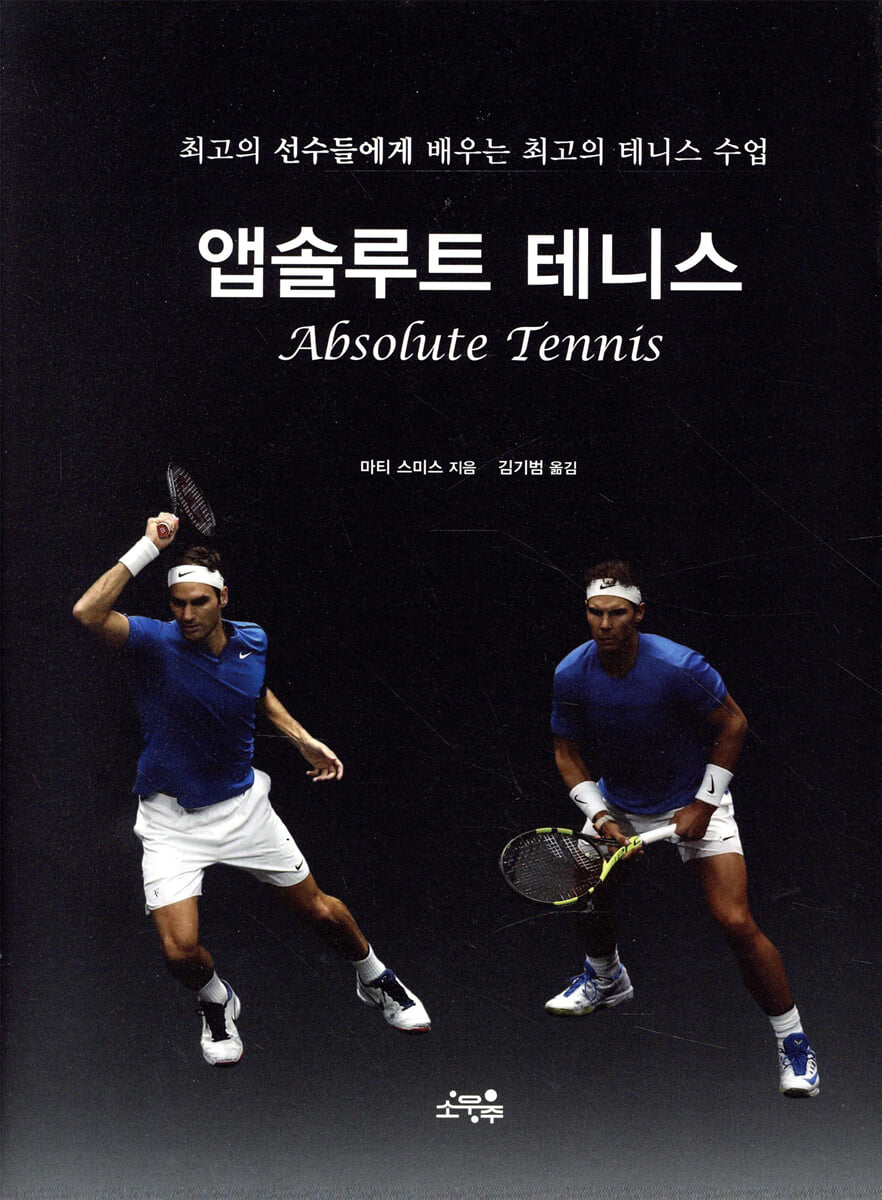
This comprehensive guide covers all aspects of tennis, from the basics to advanced techniques, as well as singles and doubles match management, fitness, and psychology, based on vivid photos of world-class tennis players.
- You can preview some of the book's contents.
Preview
index
Recommendation
introduction
Chapter 1 Balance
Chapter 2 Kinetic Chains
Chapter 3 Movement
Chapter 4 Grip
Chapter 5 Sub
Chapter 6 Sub Return
Chapter 7 Forehand
Chapter 8 Backhand
Chapter 9 Drop Shots and Lobs
Chapter 10 Approach Shot
Chapter 11 Bali
Chapter 12: Tennis of the Future
Chapter 13 Fasting
Chapter 14 Doubles
Chapter 15 Psychology
Chapter 16 Fitness
introduction
Chapter 1 Balance
Chapter 2 Kinetic Chains
Chapter 3 Movement
Chapter 4 Grip
Chapter 5 Sub
Chapter 6 Sub Return
Chapter 7 Forehand
Chapter 8 Backhand
Chapter 9 Drop Shots and Lobs
Chapter 10 Approach Shot
Chapter 11 Bali
Chapter 12: Tennis of the Future
Chapter 13 Fasting
Chapter 14 Doubles
Chapter 15 Psychology
Chapter 16 Fitness
Detailed image

Into the book
It is difficult to accurately angle the racket head when you are off balance.
If your body tilts, the angle of your grip may be maintained, but the angle of the racket relative to the ground will be shaken.
When the body leans backwards, the racket face opens up, often making the shot longer.
If you lean forward again, the racket face closes and the ball hits the net.
Likewise, if your body tilts to the left or right, the ball may be pushed to one side.
If you lose your balance, not only will the angle of your racket relative to the ground change, but your weight will also be concentrated in an unintended direction, so you need to be aware of these changes and quickly readjust your swing.
--- p.3
The head weighs only 3.5 to 5.5 kg, but when tilted at a 30-degree angle, it feels like it weighs almost 20 kg.
It has a huge impact on the balance.
Therefore, when swinging, it is important to keep your head upright and aligned with your center of gravity.
--- p.6
If you don't use the kinetic chain well and rely only on the movements of your upper body and arms, you will fail to control the racket and make mistakes.
If you swing your arms violently without securing support from your lower body, it will be difficult to maintain balance on the racket at the point of impact.
On the other hand, if you use the kinetic chain correctly, you can gain not only stroke power but also stability.
Since power comes from the entire body, the arms and wrists can be used to control the racket and secure the accurate contact point needed for stable shots rather than increasing power.
--- p.11
The split step begins with taking an athletic stance.
Athletic stance is a posture where the knees are slightly bent, the legs are wider than shoulder-width apart, and the height is lowered by about 15 to 20 cm.
In this crouching position, lean your upper body slightly forward, but keep your pelvis back and your back straight.
The athletic stance not only lowers your center of gravity, but also shifts some of your weight from your legs to your hips.
This makes the body 'light' and allows for quicker reactions to the opponent's shots.
If we use an automobile analogy again, the athletic stance can be said to correspond to the design of a Formula One machine.
This racing car has a long wheelbase (the distance between the front and rear axles) and a very low center of gravity, allowing it to ride slightly lifted off the ground.
This design allows these vehicles to move quickly and change direction quickly.
--- p.19
The continental grip places the base knuckle of the index finger on the 2nd grip.
This grip can be used in many ways.
It is not only used for serves, volleys, slices, and trick shots, but also when defending low balls that go left or right.
The reason the continental grip is used for serving is because it allows for wrist pronation and is optimal for increasing racket speed.
It can also increase the point of contact of the serve and extend the windup motion to impart powerful spin.
With a continental grip, you can respond to fast balls without having to change your forehand and backhand grips.
When trying to slice, drop, or lob shots, the continental grip opens the face of the racket to help you hit the ball more accurately and control the ball more precisely as it touches the racket strings.
Lastly, this grip naturally opens up the racket face, making it ideal for dealing with low balls, and because the point of contact is formed relatively far back, it is suitable for quickly dealing with balls that come in deep from the left or right.
--- p.30
Top players are well aware of the importance of stance and backswing in their serve, and often experiment to adjust their technique.
Rafael Nadal once switched from a platform stance to a pinpoint stance when serving early in his career.
These changes have dramatically improved Nadal's serve speed.
Novak Djokovic's serve also had an excessively long backswing, causing confusion and inconsistency until 2010.
In 2010, Djokovic relaxed his arms, bent his elbows more, and shifted his backswing slightly to the right, making his motion more streamlined.
By changing to a more efficient posture, my balance improved and I was able to hit the ball at the top and serve from a more comfortable position.
After making these changes, Djokovic went on a remarkable winning streak, fueled by his upgraded serve.
--- p.42
High-speed analysis of the footage shows that to improve return timing, professional players use less than half the stroke spin on their returns as they do during baseline rallies.
Andre Agassi and Jimmy Connors, considered the greatest returners of all time, used a neutral forehand grip and a flat return.
Conversely, players with an extreme forehand Western grip struggled to return fast serves, as the palm of the hand is positioned relatively low on the grip, making it less suited to withstanding powerful impact.
Additionally, the Western grip has the weakness of not being suitable for the horizontal swing required to reliably return a fast serve.
If you are using a forehand Western grip, you may want to consider switching to a semi-Western grip on your return to add some spin.
--- p.70
Because the wrist is the joint closest to the racket in our body, we must not forget that the alignment and movement of the wrist at impact are absolutely crucial to the success of every shot.
If you break down the techniques of tennis one by one, they are actually very simple.
There are different wrist movements for the three main shots: the serve, the topspin groundstroke, and the volley.
Of course, there are many other factors involved, but if you can properly learn how to pronate your wrists on the serve, lift your wrists on the topspin stroke, and keep your wrists still on the volley, you will be able to play tennis at a pretty good level.
--- p.100
The first serve probability is important in singles, but it is even more important in doubles because the difference in scoring rate between the first and second serves is significant.
The ideal first serve success rate in doubles is 75-80%, which is higher than 60-65% in singles.
To achieve such a high first serve success rate, you need to widen the target area toward the center of the service box and use spin serves frequently.
If your second serve is strong, you can force your first serve harder, which can lead to a missed return.
If your second serve isn't great, it's not a bad idea to slow down your first serve a bit and focus on placement and stability.
--- p.241
There is a common mistake that receivers make when attempting a down-the-line return.
This means that you are trying to send the ball to the doubles line, but in this case, it is easy to make a mistake.
Therefore, it is wise to aim for the net player or singles line.
This not only reduces the risk of errors, but can also often lead to awkward volleys from the net player.
Also, you should not swing too quickly because you are worried that there is someone in front of the net.
This is actually why many players find cross-court returns more reliable than down-the-line returns.
Let's assume for a moment that there is no net player and that you are sending a down-the-line return deep into the court.
--- p.247
In doubles, when both opponents are at the net, the mechanics of the stroke influence the choice of shot.
If you hit towards your opponent's body, you can send the ball towards the right side of their hip, that is, towards their forehand, making it difficult for them to receive the ball.
Conversely, when hitting a powerful ball that goes to the opponent's side, it is more effective to aim to the left, that is, the backhand side.
Because the backhand must be hit from a point further forward than the forehand.
If your body tilts, the angle of your grip may be maintained, but the angle of the racket relative to the ground will be shaken.
When the body leans backwards, the racket face opens up, often making the shot longer.
If you lean forward again, the racket face closes and the ball hits the net.
Likewise, if your body tilts to the left or right, the ball may be pushed to one side.
If you lose your balance, not only will the angle of your racket relative to the ground change, but your weight will also be concentrated in an unintended direction, so you need to be aware of these changes and quickly readjust your swing.
--- p.3
The head weighs only 3.5 to 5.5 kg, but when tilted at a 30-degree angle, it feels like it weighs almost 20 kg.
It has a huge impact on the balance.
Therefore, when swinging, it is important to keep your head upright and aligned with your center of gravity.
--- p.6
If you don't use the kinetic chain well and rely only on the movements of your upper body and arms, you will fail to control the racket and make mistakes.
If you swing your arms violently without securing support from your lower body, it will be difficult to maintain balance on the racket at the point of impact.
On the other hand, if you use the kinetic chain correctly, you can gain not only stroke power but also stability.
Since power comes from the entire body, the arms and wrists can be used to control the racket and secure the accurate contact point needed for stable shots rather than increasing power.
--- p.11
The split step begins with taking an athletic stance.
Athletic stance is a posture where the knees are slightly bent, the legs are wider than shoulder-width apart, and the height is lowered by about 15 to 20 cm.
In this crouching position, lean your upper body slightly forward, but keep your pelvis back and your back straight.
The athletic stance not only lowers your center of gravity, but also shifts some of your weight from your legs to your hips.
This makes the body 'light' and allows for quicker reactions to the opponent's shots.
If we use an automobile analogy again, the athletic stance can be said to correspond to the design of a Formula One machine.
This racing car has a long wheelbase (the distance between the front and rear axles) and a very low center of gravity, allowing it to ride slightly lifted off the ground.
This design allows these vehicles to move quickly and change direction quickly.
--- p.19
The continental grip places the base knuckle of the index finger on the 2nd grip.
This grip can be used in many ways.
It is not only used for serves, volleys, slices, and trick shots, but also when defending low balls that go left or right.
The reason the continental grip is used for serving is because it allows for wrist pronation and is optimal for increasing racket speed.
It can also increase the point of contact of the serve and extend the windup motion to impart powerful spin.
With a continental grip, you can respond to fast balls without having to change your forehand and backhand grips.
When trying to slice, drop, or lob shots, the continental grip opens the face of the racket to help you hit the ball more accurately and control the ball more precisely as it touches the racket strings.
Lastly, this grip naturally opens up the racket face, making it ideal for dealing with low balls, and because the point of contact is formed relatively far back, it is suitable for quickly dealing with balls that come in deep from the left or right.
--- p.30
Top players are well aware of the importance of stance and backswing in their serve, and often experiment to adjust their technique.
Rafael Nadal once switched from a platform stance to a pinpoint stance when serving early in his career.
These changes have dramatically improved Nadal's serve speed.
Novak Djokovic's serve also had an excessively long backswing, causing confusion and inconsistency until 2010.
In 2010, Djokovic relaxed his arms, bent his elbows more, and shifted his backswing slightly to the right, making his motion more streamlined.
By changing to a more efficient posture, my balance improved and I was able to hit the ball at the top and serve from a more comfortable position.
After making these changes, Djokovic went on a remarkable winning streak, fueled by his upgraded serve.
--- p.42
High-speed analysis of the footage shows that to improve return timing, professional players use less than half the stroke spin on their returns as they do during baseline rallies.
Andre Agassi and Jimmy Connors, considered the greatest returners of all time, used a neutral forehand grip and a flat return.
Conversely, players with an extreme forehand Western grip struggled to return fast serves, as the palm of the hand is positioned relatively low on the grip, making it less suited to withstanding powerful impact.
Additionally, the Western grip has the weakness of not being suitable for the horizontal swing required to reliably return a fast serve.
If you are using a forehand Western grip, you may want to consider switching to a semi-Western grip on your return to add some spin.
--- p.70
Because the wrist is the joint closest to the racket in our body, we must not forget that the alignment and movement of the wrist at impact are absolutely crucial to the success of every shot.
If you break down the techniques of tennis one by one, they are actually very simple.
There are different wrist movements for the three main shots: the serve, the topspin groundstroke, and the volley.
Of course, there are many other factors involved, but if you can properly learn how to pronate your wrists on the serve, lift your wrists on the topspin stroke, and keep your wrists still on the volley, you will be able to play tennis at a pretty good level.
--- p.100
The first serve probability is important in singles, but it is even more important in doubles because the difference in scoring rate between the first and second serves is significant.
The ideal first serve success rate in doubles is 75-80%, which is higher than 60-65% in singles.
To achieve such a high first serve success rate, you need to widen the target area toward the center of the service box and use spin serves frequently.
If your second serve is strong, you can force your first serve harder, which can lead to a missed return.
If your second serve isn't great, it's not a bad idea to slow down your first serve a bit and focus on placement and stability.
--- p.241
There is a common mistake that receivers make when attempting a down-the-line return.
This means that you are trying to send the ball to the doubles line, but in this case, it is easy to make a mistake.
Therefore, it is wise to aim for the net player or singles line.
This not only reduces the risk of errors, but can also often lead to awkward volleys from the net player.
Also, you should not swing too quickly because you are worried that there is someone in front of the net.
This is actually why many players find cross-court returns more reliable than down-the-line returns.
Let's assume for a moment that there is no net player and that you are sending a down-the-line return deep into the court.
--- p.247
In doubles, when both opponents are at the net, the mechanics of the stroke influence the choice of shot.
If you hit towards your opponent's body, you can send the ball towards the right side of their hip, that is, towards their forehand, making it difficult for them to receive the ball.
Conversely, when hitting a powerful ball that goes to the opponent's side, it is more effective to aim to the left, that is, the backhand side.
Because the backhand must be hit from a point further forward than the forehand.
--- p.267
Publisher's Review
A book that compiles all techniques from the basics to application of tennis.
"Absolute Tennis" provides comprehensive tennis knowledge in an easy-to-understand and clear manner through over 500 individual and series photos of the world's top players.
The author describes in detail not only basic tennis skills such as serves, forehand and backhand strokes, and volleys, but also the movements, balance, and kinetic chains that underlie these shots. He also devotes considerable space to explaining match management strategies, psychology, and fitness in singles and doubles.
We also added useful tips through a corner called “Coaching Box.”
Through this book, beginners can learn the fundamentals of tennis, and advanced players can take their skills to the next level.
The three core elements that underpin every stroke are balance, the kinetic chain, and movement.
Tennis is a sport that demands tremendous physical strength, so it is crucial to utilize your body to maximize strength and accuracy, and to utilize your body appropriately to improve your balance, power, and court coverage.
Balance may not be the most important aspect of the court, but a strong, stable stroke comes from establishing good balance, so it's important to know how to use your body to improve your balanced stance, power, and court coverage.
The Kinetic Chain reconstructs our bodies as a single connecting line.
In other words, the lower body energy is strengthened as it moves to the upper body, and it finishes by pouring out all the power at the moment of impact, which enhances the power and stability of the shot, maintains energy, and helps prevent injury. Movement has a huge impact on the timing and balance of the shot, allows you to receive difficult balls, extends the rally, and establishes the proper posture for the swing.
Therefore, it is necessary to learn about the different types of steps that must be taken sequentially to achieve movements that occur on the court and excellent shots, namely the split step, the strong first step, the adjustment step, and the sliding.
From serves to returns, forehands, backhands, volleys, and even drop shots and lobs.
After covering these fundamentals, we move on to the next sections (Chapters 4-12) where we discuss the grip, various groundstrokes such as serves, returns, forehands, backhands, and volleys, as well as the types of spin and the shots derived from them.
Each stroke consists of several key steps, which we'll examine one by one, and then suggest the ideal way for amateurs to compete against professional players.
The sub-chapters are divided into three main sections: Sub-Techniques, Sub-Strategies, and Sub-Practice.
The serving technique section, which takes up the largest portion, explains step-by-step how to develop a powerful and stable serve, and then goes on to discuss the serving routine, stance, backswing, ball toss, trophy position and racket drop, wrist adduction, body position at impact, and follow-through on a flat serve.
Then we will learn how to use slice serves, slice-topspin serves, and kick serves.
Serve returns have become more aggressive in recent years, so we'll explore how to best grip the serve, how to anticipate your opponent's serve, and how to improve your reaction speed through footwork.
Forehand, we will discuss the advantages and techniques of the three main stances, then look at the upper body phases of the forehand swing: unit turn, backswing, forward swing, impact, and follow-through.
We'll then look at the different forehand types and conclude with suggestions for groundstroke drills and forehand training.
In the backhand section, we'll cover two-handed and one-handed topspin backhands, as well as slice backhands. We'll first discuss the pros and cons of one-handed and two-handed backhands, then look at the various stances and detail the upper body movements required for the three backhands: unit turn, backswing, forward swing, and impact, as well as the follow-through.
When playing tennis, you will realize that topspin and slice are not the only effective shots, and sometimes technical shots like drop shots and lobs are the right answer.
These two shots often lead to points, but they are also strategically significant because they can disrupt an opponent's court position, wear them down, and even break their mentality.
At the amateur level, most people enjoy doubles games, so volleyball is even more important.
Here, we will learn about the main components of the volley: grip, preparation, footwork, impact, and grip strength. Then, we will explain the swing technique for forehand and backhand volleys, as well as swing volleys, drop volleys, half volleys, and smashing.
Chapter 12, our final chapter on strokes, will also explore potential “future strokes,” briefly examining the development of modern tennis technique and then asking a crucial question:
"Are there any tennis shots not taught today that will evolve into more common ones in the future?" Many tennis experts, including myself, predict that speed, stamina, and serving will become increasingly important in the future, and based on this, we propose several new strokes.
Maximizing your ability to manage real matches in singles and doubles
Chapters 13 and 14 explain how to strategically defeat your opponents in singles and doubles.
In Chapter 13, you'll learn how to smoothly navigate various rally situations to select the right court position and shot, how to minimize your own errors while inducing errors from your opponent, and how to develop game plans to defeat all types of singles opponents, whether defensive or aggressive.
Chapter 14 will cover the roles of the four doubles players, court positioning, poaching, different formations for serving and receiving, shot selection, game planning, communication, and how to choose the right partner for you.
Mental management and physical strength are essential to use all techniques stably.
Rafael Nadal emphasized the importance of the psychological aspect in tennis.
“Tennis is a sport where mental strength is more important than any other sport.
“The player who can overcome fear and ups and downs in more matches can become the world’s number one.” Even in matches where one should have won based on stroke skills alone, one can lose due to a lack of focus and grit.
Maintaining determination requires mental strength and positive thinking.
Chapter 15 will discuss tennis psychological tactics, offering ways to gain a psychological advantage over your opponent through inner voice, immersion, focusing on the game, confidence, overcoming adversity, and mental imagery.
How to swing a racket, various strategies, and the ability to maintain a positive mental attitude and focus are all empty knowledge without physical strength to support them.
The last 16 chapters are about fitness.
Few sports use the body as much and in such a variety of ways as tennis.
Because it requires flexibility, agility, quickness, core stability, strength, and endurance.
So, we'll introduce some exercises that can help you strengthen these elements, and we'll conclude by discussing nutrition and hydration to keep you energized throughout the game.
"Absolute Tennis" provides comprehensive tennis knowledge in an easy-to-understand and clear manner through over 500 individual and series photos of the world's top players.
The author describes in detail not only basic tennis skills such as serves, forehand and backhand strokes, and volleys, but also the movements, balance, and kinetic chains that underlie these shots. He also devotes considerable space to explaining match management strategies, psychology, and fitness in singles and doubles.
We also added useful tips through a corner called “Coaching Box.”
Through this book, beginners can learn the fundamentals of tennis, and advanced players can take their skills to the next level.
The three core elements that underpin every stroke are balance, the kinetic chain, and movement.
Tennis is a sport that demands tremendous physical strength, so it is crucial to utilize your body to maximize strength and accuracy, and to utilize your body appropriately to improve your balance, power, and court coverage.
Balance may not be the most important aspect of the court, but a strong, stable stroke comes from establishing good balance, so it's important to know how to use your body to improve your balanced stance, power, and court coverage.
The Kinetic Chain reconstructs our bodies as a single connecting line.
In other words, the lower body energy is strengthened as it moves to the upper body, and it finishes by pouring out all the power at the moment of impact, which enhances the power and stability of the shot, maintains energy, and helps prevent injury. Movement has a huge impact on the timing and balance of the shot, allows you to receive difficult balls, extends the rally, and establishes the proper posture for the swing.
Therefore, it is necessary to learn about the different types of steps that must be taken sequentially to achieve movements that occur on the court and excellent shots, namely the split step, the strong first step, the adjustment step, and the sliding.
From serves to returns, forehands, backhands, volleys, and even drop shots and lobs.
After covering these fundamentals, we move on to the next sections (Chapters 4-12) where we discuss the grip, various groundstrokes such as serves, returns, forehands, backhands, and volleys, as well as the types of spin and the shots derived from them.
Each stroke consists of several key steps, which we'll examine one by one, and then suggest the ideal way for amateurs to compete against professional players.
The sub-chapters are divided into three main sections: Sub-Techniques, Sub-Strategies, and Sub-Practice.
The serving technique section, which takes up the largest portion, explains step-by-step how to develop a powerful and stable serve, and then goes on to discuss the serving routine, stance, backswing, ball toss, trophy position and racket drop, wrist adduction, body position at impact, and follow-through on a flat serve.
Then we will learn how to use slice serves, slice-topspin serves, and kick serves.
Serve returns have become more aggressive in recent years, so we'll explore how to best grip the serve, how to anticipate your opponent's serve, and how to improve your reaction speed through footwork.
Forehand, we will discuss the advantages and techniques of the three main stances, then look at the upper body phases of the forehand swing: unit turn, backswing, forward swing, impact, and follow-through.
We'll then look at the different forehand types and conclude with suggestions for groundstroke drills and forehand training.
In the backhand section, we'll cover two-handed and one-handed topspin backhands, as well as slice backhands. We'll first discuss the pros and cons of one-handed and two-handed backhands, then look at the various stances and detail the upper body movements required for the three backhands: unit turn, backswing, forward swing, and impact, as well as the follow-through.
When playing tennis, you will realize that topspin and slice are not the only effective shots, and sometimes technical shots like drop shots and lobs are the right answer.
These two shots often lead to points, but they are also strategically significant because they can disrupt an opponent's court position, wear them down, and even break their mentality.
At the amateur level, most people enjoy doubles games, so volleyball is even more important.
Here, we will learn about the main components of the volley: grip, preparation, footwork, impact, and grip strength. Then, we will explain the swing technique for forehand and backhand volleys, as well as swing volleys, drop volleys, half volleys, and smashing.
Chapter 12, our final chapter on strokes, will also explore potential “future strokes,” briefly examining the development of modern tennis technique and then asking a crucial question:
"Are there any tennis shots not taught today that will evolve into more common ones in the future?" Many tennis experts, including myself, predict that speed, stamina, and serving will become increasingly important in the future, and based on this, we propose several new strokes.
Maximizing your ability to manage real matches in singles and doubles
Chapters 13 and 14 explain how to strategically defeat your opponents in singles and doubles.
In Chapter 13, you'll learn how to smoothly navigate various rally situations to select the right court position and shot, how to minimize your own errors while inducing errors from your opponent, and how to develop game plans to defeat all types of singles opponents, whether defensive or aggressive.
Chapter 14 will cover the roles of the four doubles players, court positioning, poaching, different formations for serving and receiving, shot selection, game planning, communication, and how to choose the right partner for you.
Mental management and physical strength are essential to use all techniques stably.
Rafael Nadal emphasized the importance of the psychological aspect in tennis.
“Tennis is a sport where mental strength is more important than any other sport.
“The player who can overcome fear and ups and downs in more matches can become the world’s number one.” Even in matches where one should have won based on stroke skills alone, one can lose due to a lack of focus and grit.
Maintaining determination requires mental strength and positive thinking.
Chapter 15 will discuss tennis psychological tactics, offering ways to gain a psychological advantage over your opponent through inner voice, immersion, focusing on the game, confidence, overcoming adversity, and mental imagery.
How to swing a racket, various strategies, and the ability to maintain a positive mental attitude and focus are all empty knowledge without physical strength to support them.
The last 16 chapters are about fitness.
Few sports use the body as much and in such a variety of ways as tennis.
Because it requires flexibility, agility, quickness, core stability, strength, and endurance.
So, we'll introduce some exercises that can help you strengthen these elements, and we'll conclude by discussing nutrition and hydration to keep you energized throughout the game.
GOODS SPECIFICS
- Publication date: September 26, 2022
- Page count, weight, size: 332 pages | 995g | 189*252*19mm
- ISBN13: 9791189895082
- ISBN10: 1189895080
You may also like
카테고리
korean


korean

![GQ KOREA Mark (Monthly): December [2025]](http://librairie.coreenne.fr/cdn/shop/files/8ef265dbbfbf186523ed75ba7319009d.jpg?v=1765340328&width=3840)


