

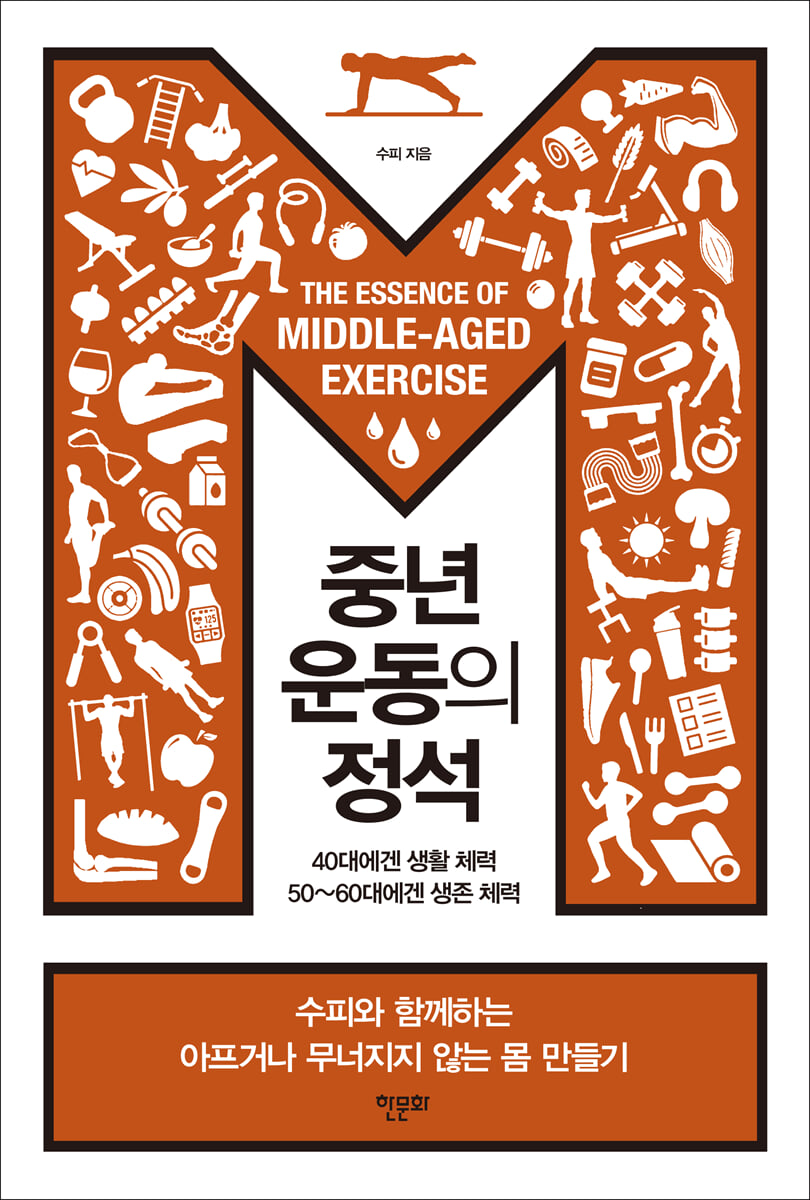
The classics of middle-aged exercise
 |
Description
Book Introduction
With Sufi
Build a body that doesn't get sick or break down!
Supi, who has been well-received by readers for publishing five health series books, including “The Essentials of Fitness - Theory” which covers the theory of exercise in general at two-year intervals since 2016, “The Essentials of Fitness - Strength Training” which covers the theory and methods of strength training and how to structure an exercise program, “The Essentials of Diet” which covers the entire meal management plan for body building from weight loss to bulking up, “The Essentials of Home Training” which covers exercise methods at home that are just as good as those at the gym, and “Health is for Beginners” which is like an orientation for fitness beginners who have never even set foot in a gym, has now published “The Essentials of Middle-Aged Exercise” which covers everything about exercise for middle-aged people.
Our bodies naturally change after we reach our 40s, so why do we still exercise the same way we did in our 20s and 30s? If you're exercising regularly but still experiencing pain here and there, it's time to change your routine! Let's learn how to properly understand the changes in your body and discover realistic, consistent workouts tailored to your specific needs, so you can build a body that won't break down or become sore for life.
Build a body that doesn't get sick or break down!
Supi, who has been well-received by readers for publishing five health series books, including “The Essentials of Fitness - Theory” which covers the theory of exercise in general at two-year intervals since 2016, “The Essentials of Fitness - Strength Training” which covers the theory and methods of strength training and how to structure an exercise program, “The Essentials of Diet” which covers the entire meal management plan for body building from weight loss to bulking up, “The Essentials of Home Training” which covers exercise methods at home that are just as good as those at the gym, and “Health is for Beginners” which is like an orientation for fitness beginners who have never even set foot in a gym, has now published “The Essentials of Middle-Aged Exercise” which covers everything about exercise for middle-aged people.
Our bodies naturally change after we reach our 40s, so why do we still exercise the same way we did in our 20s and 30s? If you're exercising regularly but still experiencing pain here and there, it's time to change your routine! Let's learn how to properly understand the changes in your body and discover realistic, consistent workouts tailored to your specific needs, so you can build a body that won't break down or become sore for life.
- You can preview some of the book's contents.
Preview
index
Preface Now is the time to exercise while knowing and loving yourself better.
Part 01 From 0 to 100 years old
Chapter 01 Things that change with age
Changes in the abilities of the character 'I'
Ability to learn movements | Balance and body control | Power and the ability to exert great force for a short time | Recovery ability | Muscle loss and strength loss | Decreased endurance
How do muscles change with age?
Changes in muscle fibers | Collagen increases, elasticity decreases | Motor neuron problems
What is the best exercise for people in their 20s and older?
Late 20s to early 30s: Still in your prime | Mid 30s to mid 40s: The time when you can tell if you've taken care of yourself or not | Late 40s to 50s: Menopause | After 60: Protect your muscles
Does exercising a lot help you live longer?
Male and female hormones
Chapter 02 If I had a handicap in my body
Diabetes and insulin
How to exercise if you have high blood pressure?
[Case 1] A young, mildly hypertensive patient with no other health problems | [Case 2] An older patient with hypertension but with good exercise capacity | [Case 3] An older patient with hypertension and significantly reduced exercise capacity
Can I exercise if I have back problems?
The Three Biggest Back Troublemakers: Sprains, Disc Herniation, and Stenosis | What to Do First When You Have Back Pain | Walking and Decompression Therapy | Are Other Cardio Exercises Safe? | Strength Training for Back Pain
My knees hurt after exercising!
What was it like before the problem occurred? | Where does your knee hurt? | Damage caused by impact and friction | When the wrong direction of force becomes the problem
Chapter 03 Things to be more concerned about than when you were twenty
Fatigue management
What happens to my body after exercise? | How to reduce fatigue after exercise | What kind of exercise should I do and how much after middle age?
Smoking and drinking
How Smoking Affects Cardio and Endurance | How Smoking Affects Muscle Growth and Strength | How Drinking Ruins Your Bodybuilding Plans
Should I wear joint protectors?
Knee pads | Back pads
Part 02: Nutritional Studies That Can't Be Avoided Even in Middle Age
Chapter 01 What nutrients should I eat?
Why Protein Is Important When You Exercise
Good Protein vs. Bad Protein | How and How Much Protein Should You Eat? | How to Eat Protein Well
Eat healthy and limit carbohydrates
Understanding Carbohydrates Easily | Fast and Slow Carbs | Carbohydrate-Based Foods Around Us | How to Eat Carbohydrates in a Healthier Way
Fat, Very Bad or Good (Feat. Cholesterol)
Not all fats are created equal | Prioritizing fats and carbohydrates | Is cholesterol a fat? | What fats are good for you?
micronutrients
Chapter 02 The Best Diet for Over 40
What is the difference between weight and body fat management?
As we age, we expend less energy | Body fat | Blood sugar and blood lipid management | Diet comes before exercise |
You won't be fooled if you just look at the nutrition facts label.
[Step 1] Check the Reference Amount | [Step 2] Check Calories | [Step 3] Check the 3 Major Nutrients | Remember that nutritional labels can contain errors | Always check the order of the "raw ingredients" in processed foods.
How much energy do I use in a day?
Components of the TDEE | How do I know how much to eat? | Applying the TDEE in practice | How much should I eat? | Diet management for each case
Sports supplements that are more necessary after middle age
Protein Supplements and Leucine - The Most Useful Supplements | Creatine - The Most Proven Performance Supplement | Arginine, Citrulline, and Red Beetroot - The Nitric Oxide Trio | Caffeine - Powerful and Versatile, but a Dangerous One | Collagen - Should You Eat This? | Beta-Alanine - The Endurance Booster
Part 03 Building up your health and physical strength
Chapter 01 Basic physical fitness and health exercise
Now it's not aerobic exercise, it's basic physical exercise
Limitations and Safety of Aerobic Exercise
Aerobic exercise, what should I do?
LISS, Interval, and the In-Between | How to Determine the Intensity of Aerobic Exercise | How Many Calories Does Aerobic Exercise Burn?
Warm-up and stretching before exercise
Why Warm Up | Basic Full-Body Warm-Up | Body-Specific Warm-Ups | Strength Training-Specific Preparation
Chapter 02 Exercises for basic physical strength
Walking and hiking - the default for all activities and exercises
What posture should I use when walking? | Power walking vs. treadmill walking | How breathlessly should I walk? | What to prepare before walking | Setting up walking for your age | Walking with walking sticks | Is it okay to go hiking?
Running - You can do it, but be careful
Is it okay to run after middle age? | Running form | Running tips for beginners | Which route should I run on? | How to start running | If your goal is health and weight management | You should definitely try on running shoes before buying | If you are middle age or older, you should wear knee pads
Bicycles, outdoor and indoor, and even virtual reality
Standing vs. Recreational Bikes | Indoor Cycling Posture | Light and Fast vs. Hard and Slow | How to Avoid Sluggishness | Spinning or Zwift?
Swimming is a great exercise, but it's missing 5 percent.
The pros are great, but the cons are also great | Why You Should Swim Anyway
Staircase, stairwell, or stairway to heaven?
Things to watch out for when climbing stairs | Avoiding raccoon holes and climbing the stairway to heaven
Other exercises, elliptical / Zumba (aerobics) / rowing machine
What about ellipticals and steppers? | Zumba, dance sports - both fun and exercise | Rowing machines - Is it more about where to place them than the machines themselves?
Part 04 Exercises for Strength and Muscle
Chapter 01 Strength Training: Let's Start with This Much Knowledge
Choosing Strength Training Equipment After Middle Age
Bodyweight exercises | Free weights (barbells, dumbbells, etc.) | Machines and cable machines | Band exercises | Park equipment (aka.
Sansjang) | Home training equipment
Strength training is complete only when combined with nutrition.
Step 1 - Calorie Surplus and Daily Total Protein | Step 2 - When and How to Eat
What weight, reps, and rest periods are right for me?
Things to decide before starting a strength training program | How many total sets per week is appropriate? | I'm done with my workout today, how many days should I rest?
How to Divide Momentum 1 - The Non-Division Method
How to Divide Momentum 2 - The Division Method
Various strength training common sense
Strength Training Breathing Techniques | How to Hold Equipment: Undergrip, Overgrip, and Neutral | Is Muscle Soreness a Sign of Muscle Growth? | Why Do I Look So Fit Right After Strength Training?
Chapter 02 Basic Strength Training for Muscle Mass and Strength
lower body exercises
Types and Priorities of Lower Body Exercises | Squats | Lunges | Leg Presses | Hip Thrusts | Leg Extensions | Leg Curls | Calf Raises | Step-Ups
Core and Abdominal Exercises
Core Exercises for Middle Age and Beyond | Plank | Superman, Pron Cobra | Dead Bug, Hollow Body Hold | Bird Dog | Crunches | Knee Raises | Torso Twist
back exercises
Types and Priorities of Back Exercises | Deadlifts | Romanian Deadlifts | Chins (Pull-ups, Chins) | Lat Pulldowns | Rows | Back Extensions | Straight-Arm Pulldowns | Face Pulls | Shrugs
Chest and shoulder exercises
Chest and Shoulder Exercise Types and Priorities | Bench Press | Overhead Press (Military Press) | Push-ups | Dips | Chest Fly | Side Lateral Raise | Bent-Over Lateral Raise | Front Raise | Upright Row
Arm and Forearm Exercises
Arm Exercise Types and Priorities | Bicep Curls | Tricep Extensions | (Reverse) Wrist Curls | Grip Machines | Weight Rollers
Chapter 03 Strength Training for Physical Fitness and Sports
The Three Paths of Strength Training: Bulking, Strength, and Power
Strength Training for Muscles vs. Strength Training for Competition
Strength training for running, walking, and hiking
Lower Body | Core and Upper Body
Strength training for cycling
Strength training for swimming
Strength training for racket sports such as golf and tennis
Strength training for soccer
Conclusion: Investing just 30 minutes a day can change your life.
Take a break
Can exercise raise your blood pressure? | Which sex positions are easier on your back? | Can you get your protein from beans? | The melamine and amino acid spike scandal | How to get rid of age spots? | Why do we get injured more often after middle age? | Lower body exercises that even people who can't squat can do | What if you absolutely must do unilateral exercises?
[Appendix] Calorie Table by Food
Home-cooked and restaurant-style menus (rice/noodles) | Home-cooked and restaurant-style menus (soup/porridge/steamed dishes) | Home-cooked and restaurant-style menus (grilled/pancakes/stir-fried/fried dishes) | Home-cooked and restaurant-style menus (rice cakes/other snacks) | Major agricultural products | Meat and seafood
Part 01 From 0 to 100 years old
Chapter 01 Things that change with age
Changes in the abilities of the character 'I'
Ability to learn movements | Balance and body control | Power and the ability to exert great force for a short time | Recovery ability | Muscle loss and strength loss | Decreased endurance
How do muscles change with age?
Changes in muscle fibers | Collagen increases, elasticity decreases | Motor neuron problems
What is the best exercise for people in their 20s and older?
Late 20s to early 30s: Still in your prime | Mid 30s to mid 40s: The time when you can tell if you've taken care of yourself or not | Late 40s to 50s: Menopause | After 60: Protect your muscles
Does exercising a lot help you live longer?
Male and female hormones
Chapter 02 If I had a handicap in my body
Diabetes and insulin
How to exercise if you have high blood pressure?
[Case 1] A young, mildly hypertensive patient with no other health problems | [Case 2] An older patient with hypertension but with good exercise capacity | [Case 3] An older patient with hypertension and significantly reduced exercise capacity
Can I exercise if I have back problems?
The Three Biggest Back Troublemakers: Sprains, Disc Herniation, and Stenosis | What to Do First When You Have Back Pain | Walking and Decompression Therapy | Are Other Cardio Exercises Safe? | Strength Training for Back Pain
My knees hurt after exercising!
What was it like before the problem occurred? | Where does your knee hurt? | Damage caused by impact and friction | When the wrong direction of force becomes the problem
Chapter 03 Things to be more concerned about than when you were twenty
Fatigue management
What happens to my body after exercise? | How to reduce fatigue after exercise | What kind of exercise should I do and how much after middle age?
Smoking and drinking
How Smoking Affects Cardio and Endurance | How Smoking Affects Muscle Growth and Strength | How Drinking Ruins Your Bodybuilding Plans
Should I wear joint protectors?
Knee pads | Back pads
Part 02: Nutritional Studies That Can't Be Avoided Even in Middle Age
Chapter 01 What nutrients should I eat?
Why Protein Is Important When You Exercise
Good Protein vs. Bad Protein | How and How Much Protein Should You Eat? | How to Eat Protein Well
Eat healthy and limit carbohydrates
Understanding Carbohydrates Easily | Fast and Slow Carbs | Carbohydrate-Based Foods Around Us | How to Eat Carbohydrates in a Healthier Way
Fat, Very Bad or Good (Feat. Cholesterol)
Not all fats are created equal | Prioritizing fats and carbohydrates | Is cholesterol a fat? | What fats are good for you?
micronutrients
Chapter 02 The Best Diet for Over 40
What is the difference between weight and body fat management?
As we age, we expend less energy | Body fat | Blood sugar and blood lipid management | Diet comes before exercise |
You won't be fooled if you just look at the nutrition facts label.
[Step 1] Check the Reference Amount | [Step 2] Check Calories | [Step 3] Check the 3 Major Nutrients | Remember that nutritional labels can contain errors | Always check the order of the "raw ingredients" in processed foods.
How much energy do I use in a day?
Components of the TDEE | How do I know how much to eat? | Applying the TDEE in practice | How much should I eat? | Diet management for each case
Sports supplements that are more necessary after middle age
Protein Supplements and Leucine - The Most Useful Supplements | Creatine - The Most Proven Performance Supplement | Arginine, Citrulline, and Red Beetroot - The Nitric Oxide Trio | Caffeine - Powerful and Versatile, but a Dangerous One | Collagen - Should You Eat This? | Beta-Alanine - The Endurance Booster
Part 03 Building up your health and physical strength
Chapter 01 Basic physical fitness and health exercise
Now it's not aerobic exercise, it's basic physical exercise
Limitations and Safety of Aerobic Exercise
Aerobic exercise, what should I do?
LISS, Interval, and the In-Between | How to Determine the Intensity of Aerobic Exercise | How Many Calories Does Aerobic Exercise Burn?
Warm-up and stretching before exercise
Why Warm Up | Basic Full-Body Warm-Up | Body-Specific Warm-Ups | Strength Training-Specific Preparation
Chapter 02 Exercises for basic physical strength
Walking and hiking - the default for all activities and exercises
What posture should I use when walking? | Power walking vs. treadmill walking | How breathlessly should I walk? | What to prepare before walking | Setting up walking for your age | Walking with walking sticks | Is it okay to go hiking?
Running - You can do it, but be careful
Is it okay to run after middle age? | Running form | Running tips for beginners | Which route should I run on? | How to start running | If your goal is health and weight management | You should definitely try on running shoes before buying | If you are middle age or older, you should wear knee pads
Bicycles, outdoor and indoor, and even virtual reality
Standing vs. Recreational Bikes | Indoor Cycling Posture | Light and Fast vs. Hard and Slow | How to Avoid Sluggishness | Spinning or Zwift?
Swimming is a great exercise, but it's missing 5 percent.
The pros are great, but the cons are also great | Why You Should Swim Anyway
Staircase, stairwell, or stairway to heaven?
Things to watch out for when climbing stairs | Avoiding raccoon holes and climbing the stairway to heaven
Other exercises, elliptical / Zumba (aerobics) / rowing machine
What about ellipticals and steppers? | Zumba, dance sports - both fun and exercise | Rowing machines - Is it more about where to place them than the machines themselves?
Part 04 Exercises for Strength and Muscle
Chapter 01 Strength Training: Let's Start with This Much Knowledge
Choosing Strength Training Equipment After Middle Age
Bodyweight exercises | Free weights (barbells, dumbbells, etc.) | Machines and cable machines | Band exercises | Park equipment (aka.
Sansjang) | Home training equipment
Strength training is complete only when combined with nutrition.
Step 1 - Calorie Surplus and Daily Total Protein | Step 2 - When and How to Eat
What weight, reps, and rest periods are right for me?
Things to decide before starting a strength training program | How many total sets per week is appropriate? | I'm done with my workout today, how many days should I rest?
How to Divide Momentum 1 - The Non-Division Method
How to Divide Momentum 2 - The Division Method
Various strength training common sense
Strength Training Breathing Techniques | How to Hold Equipment: Undergrip, Overgrip, and Neutral | Is Muscle Soreness a Sign of Muscle Growth? | Why Do I Look So Fit Right After Strength Training?
Chapter 02 Basic Strength Training for Muscle Mass and Strength
lower body exercises
Types and Priorities of Lower Body Exercises | Squats | Lunges | Leg Presses | Hip Thrusts | Leg Extensions | Leg Curls | Calf Raises | Step-Ups
Core and Abdominal Exercises
Core Exercises for Middle Age and Beyond | Plank | Superman, Pron Cobra | Dead Bug, Hollow Body Hold | Bird Dog | Crunches | Knee Raises | Torso Twist
back exercises
Types and Priorities of Back Exercises | Deadlifts | Romanian Deadlifts | Chins (Pull-ups, Chins) | Lat Pulldowns | Rows | Back Extensions | Straight-Arm Pulldowns | Face Pulls | Shrugs
Chest and shoulder exercises
Chest and Shoulder Exercise Types and Priorities | Bench Press | Overhead Press (Military Press) | Push-ups | Dips | Chest Fly | Side Lateral Raise | Bent-Over Lateral Raise | Front Raise | Upright Row
Arm and Forearm Exercises
Arm Exercise Types and Priorities | Bicep Curls | Tricep Extensions | (Reverse) Wrist Curls | Grip Machines | Weight Rollers
Chapter 03 Strength Training for Physical Fitness and Sports
The Three Paths of Strength Training: Bulking, Strength, and Power
Strength Training for Muscles vs. Strength Training for Competition
Strength training for running, walking, and hiking
Lower Body | Core and Upper Body
Strength training for cycling
Strength training for swimming
Strength training for racket sports such as golf and tennis
Strength training for soccer
Conclusion: Investing just 30 minutes a day can change your life.
Take a break
Can exercise raise your blood pressure? | Which sex positions are easier on your back? | Can you get your protein from beans? | The melamine and amino acid spike scandal | How to get rid of age spots? | Why do we get injured more often after middle age? | Lower body exercises that even people who can't squat can do | What if you absolutely must do unilateral exercises?
[Appendix] Calorie Table by Food
Home-cooked and restaurant-style menus (rice/noodles) | Home-cooked and restaurant-style menus (soup/porridge/steamed dishes) | Home-cooked and restaurant-style menus (grilled/pancakes/stir-fried/fried dishes) | Home-cooked and restaurant-style menus (rice cakes/other snacks) | Major agricultural products | Meat and seafood
Into the book
Even after middle age, taking care of one's body has become a basic requirement.
Most people are into at least one or two types of exercise, whether it's working out, golfing, tennis, or just walking or running in the park regularly.
But in reality, people in their 40s and 50s who have been exercising actively since they were young are starting to feel their physical limitations.
It means that it is now difficult to continue pushing your body to its limits with the exercise concepts, methods, and knowledge you learned in your youth.
Now is the time to understand the changes and limitations of my own body, and to cherish and love it more and exercise.
--- From the "Preface"
Physical abilities, especially those involving learning movements and motor skills that involve a large part of the nervous system, decline more quickly.
So, it is best to learn any exercise as early as possible.
The ability to slow down the rate of decline and to stop it with exercise is strength and endurance.
Power declines quickly, but this decline can be halted with exercises that emphasize power.
So these days, the recommended exercise methods for people in their middle age and older are quite different from those of the past.
--- From "Part 01 'From 0 to 100 Years Old'"
Exercise is the most reliable way to lower blood pressure.
Among these, isometric exercises that require strength and endurance lower blood pressure the most.
However, if you consider long-term muscle mass gains and health benefits, combining strength training and aerobic exercise is more effective.
…knee injuries can be caused by impact and friction, or by not being able to support force in the wrong direction.
The first solution to this is posture, and the second solution is to strengthen the muscles around the knees.
However, in the short term, you need to check your posture, and in the long term, you need to build lower body strength.
--- From "Part 01 'From 0 to 100 Years Old'"
The ability to relieve fatigue is greatly influenced by age.
It is recommended to exercise no more than 5 days per week, and high-intensity exercise should not exceed 2 times per week.
When doing strength training, don't focus on one area at a time, but split it into at least 2-3 sessions.
--- From "Part 01 'From 0 to 100 Years Old'"
Smoking has a significant negative effect on endurance and high-repetition strength training, but has a relatively small effect on low-repetition strength training.
The adverse effects increase more rapidly as you get older than when you are young.
Meanwhile, drinking alcohol has an overall negative effect on muscle growth.
In terms of performance, it primarily reduces long-term exercise capacity and causes body fat to accumulate around the internal organs.
--- From "Part 01 'From 0 to 100 Years Old'"
Since protein is a key nutrient for building muscle, it is very important to consume enough of it.
If you value your health, you should eat at least 1.2g of protein per kg of body weight. If you are doing high-intensity strength training with the goal of increasing muscle mass, you should eat 1.6-2.2g of protein per kg of body weight.
Carbohydrates are the largest source of energy among the three macronutrients, accounting for the largest proportion of our calories.
Since carbohydrates are closely related to blood sugar and diabetes management, it is a healthy choice to consume foods that are less sweet, solid, rough, and slow to digest.
--- From "Part 02 'Nutrition Study That Cannot Be Avoided Even in Middle Age'"
Swimming is a full-body exercise that places very little impact on the body and puts very little strain on the knees.
However, it is also certain that it can be a burden on the lower back and is detrimental to the development of lower body muscles.
So, you should check in advance whether your body condition is suitable for swimming, and be sure to add strength training to complement swimming rather than just swimming.
--- From "Part 03 'Building Health and Physical Strength'"
The chest and shoulders have different muscles that play a primary role in each direction that they need to push, so there are quite a few different exercises.
Among them, there are muscles that are particularly overworked, such as the rotator cuff and the anterior deltoid.
So, after middle age when regression begins in earnest, you need to carefully select the type and weight.
If you're not serious about weight records, it's best to go with a medium to low weight and do multiple reps per set.
--- From "Part 04 'Exercise for Strength and Muscles'"
Unilateral sports such as golf, tennis, table tennis, and badminton require much more left-right movement of the core than running, cycling, or swimming, which we discussed earlier.
Therefore, rotational movements that use the oblique muscles a lot are essential.
Strength training using the limbs also requires exercising the left and right sides separately, like dumbbells, rather than exercising with both sides simultaneously, like barbells.
This is because the body is already accustomed to using only one side, so even if you try to apply strength to both sides, you unconsciously put more strength on the side that is well developed.
So, you need to exercise the left and right sides separately so that they use their strength independently.
Most people are into at least one or two types of exercise, whether it's working out, golfing, tennis, or just walking or running in the park regularly.
But in reality, people in their 40s and 50s who have been exercising actively since they were young are starting to feel their physical limitations.
It means that it is now difficult to continue pushing your body to its limits with the exercise concepts, methods, and knowledge you learned in your youth.
Now is the time to understand the changes and limitations of my own body, and to cherish and love it more and exercise.
--- From the "Preface"
Physical abilities, especially those involving learning movements and motor skills that involve a large part of the nervous system, decline more quickly.
So, it is best to learn any exercise as early as possible.
The ability to slow down the rate of decline and to stop it with exercise is strength and endurance.
Power declines quickly, but this decline can be halted with exercises that emphasize power.
So these days, the recommended exercise methods for people in their middle age and older are quite different from those of the past.
--- From "Part 01 'From 0 to 100 Years Old'"
Exercise is the most reliable way to lower blood pressure.
Among these, isometric exercises that require strength and endurance lower blood pressure the most.
However, if you consider long-term muscle mass gains and health benefits, combining strength training and aerobic exercise is more effective.
…knee injuries can be caused by impact and friction, or by not being able to support force in the wrong direction.
The first solution to this is posture, and the second solution is to strengthen the muscles around the knees.
However, in the short term, you need to check your posture, and in the long term, you need to build lower body strength.
--- From "Part 01 'From 0 to 100 Years Old'"
The ability to relieve fatigue is greatly influenced by age.
It is recommended to exercise no more than 5 days per week, and high-intensity exercise should not exceed 2 times per week.
When doing strength training, don't focus on one area at a time, but split it into at least 2-3 sessions.
--- From "Part 01 'From 0 to 100 Years Old'"
Smoking has a significant negative effect on endurance and high-repetition strength training, but has a relatively small effect on low-repetition strength training.
The adverse effects increase more rapidly as you get older than when you are young.
Meanwhile, drinking alcohol has an overall negative effect on muscle growth.
In terms of performance, it primarily reduces long-term exercise capacity and causes body fat to accumulate around the internal organs.
--- From "Part 01 'From 0 to 100 Years Old'"
Since protein is a key nutrient for building muscle, it is very important to consume enough of it.
If you value your health, you should eat at least 1.2g of protein per kg of body weight. If you are doing high-intensity strength training with the goal of increasing muscle mass, you should eat 1.6-2.2g of protein per kg of body weight.
Carbohydrates are the largest source of energy among the three macronutrients, accounting for the largest proportion of our calories.
Since carbohydrates are closely related to blood sugar and diabetes management, it is a healthy choice to consume foods that are less sweet, solid, rough, and slow to digest.
--- From "Part 02 'Nutrition Study That Cannot Be Avoided Even in Middle Age'"
Swimming is a full-body exercise that places very little impact on the body and puts very little strain on the knees.
However, it is also certain that it can be a burden on the lower back and is detrimental to the development of lower body muscles.
So, you should check in advance whether your body condition is suitable for swimming, and be sure to add strength training to complement swimming rather than just swimming.
--- From "Part 03 'Building Health and Physical Strength'"
The chest and shoulders have different muscles that play a primary role in each direction that they need to push, so there are quite a few different exercises.
Among them, there are muscles that are particularly overworked, such as the rotator cuff and the anterior deltoid.
So, after middle age when regression begins in earnest, you need to carefully select the type and weight.
If you're not serious about weight records, it's best to go with a medium to low weight and do multiple reps per set.
--- From "Part 04 'Exercise for Strength and Muscles'"
Unilateral sports such as golf, tennis, table tennis, and badminton require much more left-right movement of the core than running, cycling, or swimming, which we discussed earlier.
Therefore, rotational movements that use the oblique muscles a lot are essential.
Strength training using the limbs also requires exercising the left and right sides separately, like dumbbells, rather than exercising with both sides simultaneously, like barbells.
This is because the body is already accustomed to using only one side, so even if you try to apply strength to both sides, you unconsciously put more strength on the side that is well developed.
So, you need to exercise the left and right sides separately so that they use their strength independently.
--- From "Part 04 'Exercise for Strength and Muscles'"
Publisher's Review
Middle Age: Why Should You Change Your Exercise Method?
As you pass your 40s, your body naturally changes.
Muscle mass decreases by 1 percent each year, and fat replaces the lost muscle mass.
Joints and ligaments are much weaker than when you were younger, putting you at greater risk for injury even with the same level of intensity.
Cardiopulmonary function also gradually declines, making it difficult to continue exercising until you are out of breath like before.
Yet, many middle-aged people still stick to the same exercise routine they had in their 20s and 30s.
Representative examples include high-intensity running, excessive strength training, and high-intensity interval training.
Exercising this way with a middle-aged body is more likely to cause injury and chronic pain than to improve fitness.
"The Essentials of Middle-Aged Exercise" breaks the stereotype that one must exercise the same way as one did in one's youth even after middle age, emphasizing that "body changes are natural, and acknowledging this fact is the starting point for middle-aged exercise."
Accepting physical changes and transitioning to an age-appropriate exercise routine is the first step toward extending your healthy lifespan.
The moment you accept that as your body changes, so must your exercise goals and methods, exercise ceases to be a painful experience and becomes an enjoyable habit!
Realistic and Sustainable Exercise for Middle Age
The author, Sufi, is an amateur athlete and journalist, not a professional trainer.
However, the author's exercise solutions are based on over 30 years of diverse exercise experience and the latest research, earning him solid trust from readers.
Drawing on insights gained from a wide range of experiences in rowing, fitness, swimming, marathons, and martial arts, this book contains the essential exercise principles and methods for middle-aged people.
For middle-aged people, it is important to maintain and improve physical fitness through sustainable exercise that reduces the risk of injury rather than high-intensity training.
The book suggests exercises that balance strength, flexibility, and cardiopulmonary function, and guides you through how to perform each movement safely.
In addition to aerobic exercise and strength training, the book also introduces exercises that are helpful for various sports enjoyed as part of daily life, such as swimming, golf, tennis, cycling, and soccer, so readers can find the exercise that best suits their physical condition and preferences through the book.
This book does not talk about short-term, dramatic changes.
When it comes to exercising in middle age, the most important thing is whether you can do it consistently rather than achieving short-term results, and whether you can create exercise habits that can be incorporated into your daily life without overdoing it.
If you're in your 40s, it's not too late. If you're in your 60s, now is the fastest time.
Starting an age-appropriate exercise routine is more than just a matter of maintaining good health; it's a crucial decision that can affect the quality of your remaining life.
If you start preparing now in your 40s, you can live a vibrant life until old age, and if you start now in your 60s, you can recover your physical strength and health.
The exercise programs in the book are designed to be easy to start, and even beginners can follow along without any burden.
We guide you through strengthening specific muscle groups first to protect your joints and adjusting exercise intensity to account for physical decline due to hormonal changes.
In particular, abdominal obesity and postural imbalance are the main culprits that rapidly reduce the quality of life after middle age, so customized exercise methods to improve these are also covered in detail.
By following the guidelines in this book, practicing safe and sustainable exercise without being greedy and taking into account the physiological and physical changes that occur during middle age, you can build a body that will not get sick or break down throughout your life.
Now, we desperately need a movement that improves the quality of life, not just numbers!
As you pass your 40s, your body naturally changes.
Muscle mass decreases by 1 percent each year, and fat replaces the lost muscle mass.
Joints and ligaments are much weaker than when you were younger, putting you at greater risk for injury even with the same level of intensity.
Cardiopulmonary function also gradually declines, making it difficult to continue exercising until you are out of breath like before.
Yet, many middle-aged people still stick to the same exercise routine they had in their 20s and 30s.
Representative examples include high-intensity running, excessive strength training, and high-intensity interval training.
Exercising this way with a middle-aged body is more likely to cause injury and chronic pain than to improve fitness.
"The Essentials of Middle-Aged Exercise" breaks the stereotype that one must exercise the same way as one did in one's youth even after middle age, emphasizing that "body changes are natural, and acknowledging this fact is the starting point for middle-aged exercise."
Accepting physical changes and transitioning to an age-appropriate exercise routine is the first step toward extending your healthy lifespan.
The moment you accept that as your body changes, so must your exercise goals and methods, exercise ceases to be a painful experience and becomes an enjoyable habit!
Realistic and Sustainable Exercise for Middle Age
The author, Sufi, is an amateur athlete and journalist, not a professional trainer.
However, the author's exercise solutions are based on over 30 years of diverse exercise experience and the latest research, earning him solid trust from readers.
Drawing on insights gained from a wide range of experiences in rowing, fitness, swimming, marathons, and martial arts, this book contains the essential exercise principles and methods for middle-aged people.
For middle-aged people, it is important to maintain and improve physical fitness through sustainable exercise that reduces the risk of injury rather than high-intensity training.
The book suggests exercises that balance strength, flexibility, and cardiopulmonary function, and guides you through how to perform each movement safely.
In addition to aerobic exercise and strength training, the book also introduces exercises that are helpful for various sports enjoyed as part of daily life, such as swimming, golf, tennis, cycling, and soccer, so readers can find the exercise that best suits their physical condition and preferences through the book.
This book does not talk about short-term, dramatic changes.
When it comes to exercising in middle age, the most important thing is whether you can do it consistently rather than achieving short-term results, and whether you can create exercise habits that can be incorporated into your daily life without overdoing it.
If you're in your 40s, it's not too late. If you're in your 60s, now is the fastest time.
Starting an age-appropriate exercise routine is more than just a matter of maintaining good health; it's a crucial decision that can affect the quality of your remaining life.
If you start preparing now in your 40s, you can live a vibrant life until old age, and if you start now in your 60s, you can recover your physical strength and health.
The exercise programs in the book are designed to be easy to start, and even beginners can follow along without any burden.
We guide you through strengthening specific muscle groups first to protect your joints and adjusting exercise intensity to account for physical decline due to hormonal changes.
In particular, abdominal obesity and postural imbalance are the main culprits that rapidly reduce the quality of life after middle age, so customized exercise methods to improve these are also covered in detail.
By following the guidelines in this book, practicing safe and sustainable exercise without being greedy and taking into account the physiological and physical changes that occur during middle age, you can build a body that will not get sick or break down throughout your life.
Now, we desperately need a movement that improves the quality of life, not just numbers!
GOODS SPECIFICS
- Date of issue: September 1, 2025
- Page count, weight, size: 364 pages | 624g | 152*225*21mm
- ISBN13: 9788956994949
You may also like
카테고리
korean


korean

![GQ KOREA Mark (Monthly): December [2025]](http://librairie.coreenne.fr/cdn/shop/files/8ef265dbbfbf186523ed75ba7319009d.jpg?v=1765340328&width=3840)


