

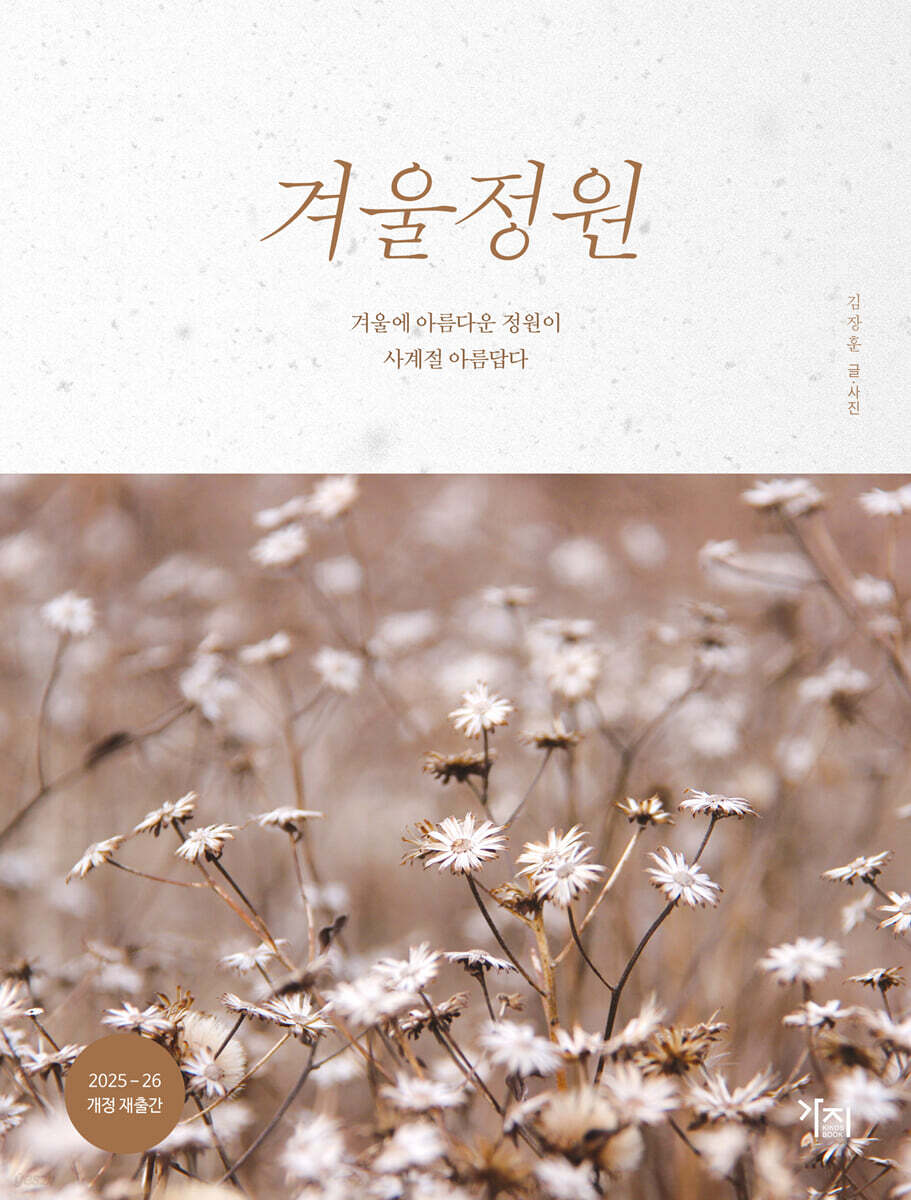
Winter Garden
 |
Description
Book Introduction
First published in 2017,
A book that breathes new light into domestic garden culture.
'Gardeners' Favorite Books' that I take out and read again year after year
It will be republished with additional revisions in the winter of 2025-26.
The mind and studies of a gardener who dreams of a beautiful garden in all four seasons
A classic garden reading that unfolds in winter and covers the entire year.
The history, design, plant selection, and appreciation of winter gardens
Since its first publication in 2017, "Winter Garden" has been especially loved as a "gardener's favorite book."
It is being republished in a revised edition after eight years, reflecting the rapidly growing domestic gardening trend.
Winter is a harsh season for plants too.
So, it's easy to think that gardens aren't much to look at in winter, but there are gardeners who dream of designing beautiful gardens even in winter by noticing the special beauty and forms of plants that stand out only in that season.
Dutch gardener Piet Oudolf, who praised the brown beauty that decorates winter grasslands, and Adrian Bloom, founder of Brassingham Gardens in England, who created the prototype of today's winter garden.
Author Kim Jang-hoon, who wrote this book early on, paying attention to the beauty of the winter forest, is one of them.
"Winter Garden" introduces the concept of the winter garden, which has evolved with particular love in Europe, where garden culture is developed, to Korea for the first time, and teaches gardeners the basics of design that they must not miss in order to create a beautiful garden in all four seasons.
The book, which divides the beauty that must be captured in a winter garden into detailed topics such as the inner skin of winter trees, grass and dry plants, evergreen trees and grasses, and flowers and fruits that can only be seen in winter, is full of insight into gardening practices, but is written in easy and lyrical sentences, making it a good read that will broaden the knowledge of garden and plant appreciation enthusiasts.
This revised edition includes a design analysis of the 'Cheonliposu Arboretum Winter Garden,' Korea's first winter-themed garden, and a significantly expanded list of plants that are well-suited for Korean winter gardens, from the original 200 to a total of 366 species.
A book that breathes new light into domestic garden culture.
'Gardeners' Favorite Books' that I take out and read again year after year
It will be republished with additional revisions in the winter of 2025-26.
The mind and studies of a gardener who dreams of a beautiful garden in all four seasons
A classic garden reading that unfolds in winter and covers the entire year.
The history, design, plant selection, and appreciation of winter gardens
Since its first publication in 2017, "Winter Garden" has been especially loved as a "gardener's favorite book."
It is being republished in a revised edition after eight years, reflecting the rapidly growing domestic gardening trend.
Winter is a harsh season for plants too.
So, it's easy to think that gardens aren't much to look at in winter, but there are gardeners who dream of designing beautiful gardens even in winter by noticing the special beauty and forms of plants that stand out only in that season.
Dutch gardener Piet Oudolf, who praised the brown beauty that decorates winter grasslands, and Adrian Bloom, founder of Brassingham Gardens in England, who created the prototype of today's winter garden.
Author Kim Jang-hoon, who wrote this book early on, paying attention to the beauty of the winter forest, is one of them.
"Winter Garden" introduces the concept of the winter garden, which has evolved with particular love in Europe, where garden culture is developed, to Korea for the first time, and teaches gardeners the basics of design that they must not miss in order to create a beautiful garden in all four seasons.
The book, which divides the beauty that must be captured in a winter garden into detailed topics such as the inner skin of winter trees, grass and dry plants, evergreen trees and grasses, and flowers and fruits that can only be seen in winter, is full of insight into gardening practices, but is written in easy and lyrical sentences, making it a good read that will broaden the knowledge of garden and plant appreciation enthusiasts.
This revised edition includes a design analysis of the 'Cheonliposu Arboretum Winter Garden,' Korea's first winter-themed garden, and a significantly expanded list of plants that are well-suited for Korean winter gardens, from the original 200 to a total of 366 species.
- You can preview some of the book's contents.
Preview
index
Introducing the Revised Edition - Looking at the Evolution of the Winter Garden
Preface to the First Edition _ A Garden Story Beginning in Winter
Part 1: Winter Garden
Bringing winter to the garden
The winter forest is alive
Winter Garden in England
How to Design a Winter Garden
Part 2: Things You Can Only See in Winter Trees
Tree type: The true face of a tree revealed in winter
Trunk: The bare face of a tree carved with time
Young Branches: Adding Color to Your Winter Garden
Fruit: Flowers of the winter tree that embrace warmth
Part 3: Love Brown
Dry grass: brown is the color of winter
Dry Grass: A Key Player in Designing Brown Gardens
Dry Leaves: Keeping Every Last Leaf in Your Garden
Part 4: The Preciousness of 'Evergreen' Things
Evergreen Conifers: The Value of Green That Shines Even Brighter in Winter
Evergreen Grasses: In Search of the Green That Never Disappeared
Evergreens: A Short Reflection on What Never Changes
Part 5: Hearing the Sound of Spring Coming
Winter-Flowering Bulbs: Garden Magicians Bridging Winter and Spring
Trees that bloom in winter: The colder it gets, the more intense the fragrance.
Winter Wildflowers: Where Does Spring Come From in the Garden?
Part 6: Dreaming of a Korean-style winter garden
Go to Cheonliposu Arboretum Winter Garden
[Appendix] List of Plants Suitable for Winter Gardens
A tree with a beautiful shape
A tree with a beautiful trunk
A tree with beautiful young branches
A tree with beautiful winter fruits
Grass with a beautiful dry appearance
Grass with a beautiful dry appearance
A tree with a beautiful dry appearance
A tree that doesn't lose its leaves all winter
Evergreen grasses perfect for planting in winter gardens
Evergreen conifers perfect for planting in winter gardens
Evergreen broadleaf trees suitable for planting in winter gardens
Name: Spring-flowering bulb
Trees that bloom in winter
Beautiful winter wildflowers
[Table] Plant Search Table for Winter Gardens
Search by scientific name
Search by country name
References
Acknowledgements
Preface to the First Edition _ A Garden Story Beginning in Winter
Part 1: Winter Garden
Bringing winter to the garden
The winter forest is alive
Winter Garden in England
How to Design a Winter Garden
Part 2: Things You Can Only See in Winter Trees
Tree type: The true face of a tree revealed in winter
Trunk: The bare face of a tree carved with time
Young Branches: Adding Color to Your Winter Garden
Fruit: Flowers of the winter tree that embrace warmth
Part 3: Love Brown
Dry grass: brown is the color of winter
Dry Grass: A Key Player in Designing Brown Gardens
Dry Leaves: Keeping Every Last Leaf in Your Garden
Part 4: The Preciousness of 'Evergreen' Things
Evergreen Conifers: The Value of Green That Shines Even Brighter in Winter
Evergreen Grasses: In Search of the Green That Never Disappeared
Evergreens: A Short Reflection on What Never Changes
Part 5: Hearing the Sound of Spring Coming
Winter-Flowering Bulbs: Garden Magicians Bridging Winter and Spring
Trees that bloom in winter: The colder it gets, the more intense the fragrance.
Winter Wildflowers: Where Does Spring Come From in the Garden?
Part 6: Dreaming of a Korean-style winter garden
Go to Cheonliposu Arboretum Winter Garden
[Appendix] List of Plants Suitable for Winter Gardens
A tree with a beautiful shape
A tree with a beautiful trunk
A tree with beautiful young branches
A tree with beautiful winter fruits
Grass with a beautiful dry appearance
Grass with a beautiful dry appearance
A tree with a beautiful dry appearance
A tree that doesn't lose its leaves all winter
Evergreen grasses perfect for planting in winter gardens
Evergreen conifers perfect for planting in winter gardens
Evergreen broadleaf trees suitable for planting in winter gardens
Name: Spring-flowering bulb
Trees that bloom in winter
Beautiful winter wildflowers
[Table] Plant Search Table for Winter Gardens
Search by scientific name
Search by country name
References
Acknowledgements
Detailed image

Into the book
Eight winters have already passed since the book "Winter Garden" was published.
After the book came out, I developed a habit of looking more deeply into winter.
And in the meantime, I feel that many changes are taking place in the thoughts and flow regarding the winter garden.
Above all, people's perspective on winter gardens is changing.
--- p.10 Revised edition
We don't decorate our gardens just to make them look nice in the winter.
A garden that is beautiful in winter will be even more beautiful in other seasons, as the garden's basic framework and foundation must be well-maintained to create a beautiful winter landscape.
Therefore, it can be said that the process of creating a beautiful garden in all four seasons begins with cultivating a winter garden.
--- p.27 Preface to the first edition
It wasn't long ago that the dream winter garden was realized in England, the land of gardens.
The word "winter garden" was first used in the early 19th century, but it had a completely different meaning than the winter garden we know today.
From the 19th century to the early 20th century, during the reign of Queen Victoria, the winter garden referred to a large ornamental greenhouse built for banquets.
…
--- p.42 Winter Garden in England
Tree branches look more beautiful in winter.
This is because only after the tree sheds its lush green leaves without regret and reveals its bare branches, does it reveal its true nature and shape, which had been hidden by the leaves.
The withered winter tree, frozen in place and unable to move, may seem pitiful and pitiful, but it is actually a dignified sight that best reveals the tree's inherent beauty.
--- p.66 Tree Prisoner: The true face of a tree revealed on a winter day
Every November, Pandora, a gardener at Longwood Gardens in Philadelphia, USA, works with volunteers to create a Wildlife Tree, a Christmas tree for wild animals.
It is a method of making decorations using fruits such as millet, sorghum, and beans and hanging them on trees to help wild animals that lack food during the cold winter.
--- p.96 Fruit: The Flower of the Winter Tree Embracing Warmth
There is someone who actively utilized the color brown, which everyone had overlooked, in the garden and made its value known.
This is Dutch garden designer Piet Oudolf.
The first scene of the documentary, which introduces him as a superstar in the field of landscape design, begins with his deep gaze gazing at a garden in late autumn.
“In this brown garden, I still find beauty.”
--- p.110 Dry grass: brown is the color of winter
There is a reason why conifers keep their leaves green even in winter.
In a region where summers are too short compared to long winters, it is more advantageous to survive the winter with old leaves attached than to expend a lot of energy to grow new leaves each year.
It is said that even the leaves of the spruce tree have a lifespan of about 15 years.
Come to think of it, aren't conifers truly patient trees? Or should I say, intelligent trees?
--- p.146 Evergreen Conifers: The Value of Green That Shines Even More in Winter
A good fragrance is what makes a garden memorable for a long time.
We enjoy the garden not only with our eyes, but also with our five senses.
Sometimes I remember the garden by the sound of leaves rustling or the feel of my skin brushing against the grass.
Walking along the narrow winter paths of Seville Gardens in England, the scent of Nepalese cedar fills the air.
Anyone can't help but let out a shallow exclamation along with the thought, 'Wow, what kind of scent is this?'
--- p.200 Trees that bloom in winter: The colder it gets, the more intense the fragrance.
Some ecologists have called the forest's appearance at this time a "window of opportunity."
The trees have not yet sprouted leaves, leaving the forest canopy open, and the light filtering through provides a moderately bright illumination for the small plants on the forest floor.
After this period, the forest floor is blocked by thick foliage and not enough light reaches the ground.
The little wildflowers, knowing that they must hurry, bravely raise their heads in droves.
So early spring is the time for small wildflowers.
After the book came out, I developed a habit of looking more deeply into winter.
And in the meantime, I feel that many changes are taking place in the thoughts and flow regarding the winter garden.
Above all, people's perspective on winter gardens is changing.
--- p.10 Revised edition
We don't decorate our gardens just to make them look nice in the winter.
A garden that is beautiful in winter will be even more beautiful in other seasons, as the garden's basic framework and foundation must be well-maintained to create a beautiful winter landscape.
Therefore, it can be said that the process of creating a beautiful garden in all four seasons begins with cultivating a winter garden.
--- p.27 Preface to the first edition
It wasn't long ago that the dream winter garden was realized in England, the land of gardens.
The word "winter garden" was first used in the early 19th century, but it had a completely different meaning than the winter garden we know today.
From the 19th century to the early 20th century, during the reign of Queen Victoria, the winter garden referred to a large ornamental greenhouse built for banquets.
…
--- p.42 Winter Garden in England
Tree branches look more beautiful in winter.
This is because only after the tree sheds its lush green leaves without regret and reveals its bare branches, does it reveal its true nature and shape, which had been hidden by the leaves.
The withered winter tree, frozen in place and unable to move, may seem pitiful and pitiful, but it is actually a dignified sight that best reveals the tree's inherent beauty.
--- p.66 Tree Prisoner: The true face of a tree revealed on a winter day
Every November, Pandora, a gardener at Longwood Gardens in Philadelphia, USA, works with volunteers to create a Wildlife Tree, a Christmas tree for wild animals.
It is a method of making decorations using fruits such as millet, sorghum, and beans and hanging them on trees to help wild animals that lack food during the cold winter.
--- p.96 Fruit: The Flower of the Winter Tree Embracing Warmth
There is someone who actively utilized the color brown, which everyone had overlooked, in the garden and made its value known.
This is Dutch garden designer Piet Oudolf.
The first scene of the documentary, which introduces him as a superstar in the field of landscape design, begins with his deep gaze gazing at a garden in late autumn.
“In this brown garden, I still find beauty.”
--- p.110 Dry grass: brown is the color of winter
There is a reason why conifers keep their leaves green even in winter.
In a region where summers are too short compared to long winters, it is more advantageous to survive the winter with old leaves attached than to expend a lot of energy to grow new leaves each year.
It is said that even the leaves of the spruce tree have a lifespan of about 15 years.
Come to think of it, aren't conifers truly patient trees? Or should I say, intelligent trees?
--- p.146 Evergreen Conifers: The Value of Green That Shines Even More in Winter
A good fragrance is what makes a garden memorable for a long time.
We enjoy the garden not only with our eyes, but also with our five senses.
Sometimes I remember the garden by the sound of leaves rustling or the feel of my skin brushing against the grass.
Walking along the narrow winter paths of Seville Gardens in England, the scent of Nepalese cedar fills the air.
Anyone can't help but let out a shallow exclamation along with the thought, 'Wow, what kind of scent is this?'
--- p.200 Trees that bloom in winter: The colder it gets, the more intense the fragrance.
Some ecologists have called the forest's appearance at this time a "window of opportunity."
The trees have not yet sprouted leaves, leaving the forest canopy open, and the light filtering through provides a moderately bright illumination for the small plants on the forest floor.
After this period, the forest floor is blocked by thick foliage and not enough light reaches the ground.
The little wildflowers, knowing that they must hurry, bravely raise their heads in droves.
So early spring is the time for small wildflowers.
--- p.212 Winter Wildflowers: Where Does Spring Come from in the Garden?
Publisher's Review
Dreaming of a beautiful Korean winter garden in all four seasons,
A garden story that begins again in winter
Garden Design with Winter in Mind
A winter garden is a garden that is designed to be enjoyed even in the cold winter by making good use of the characteristics of plant components such as flowers, leaves, fruits, bark, tree shape, and fragrance.
This term was first used in the early 19th century in England, where garden culture was developed, with the emergence of greenhouse gardens, but it gradually evolved into a design trend that made the entire garden look rich in all four seasons.
The prototype of the representative winter garden, which is loved as a beautiful garden even in winter in advanced garden countries such as Europe, North America, and Australia, first appeared in the 1960s by Adrian Bloom, founder of Brassingham Gardens in England.
Peter Oudolf, a Dutch gardener who is now well known in our country, is also famous as an admirer of winter gardens.
The first person to introduce the concept of a winter garden, along with overseas designers who express it well, gardens worth visiting, and plants that stand out when planted in a winter garden, was gardener Kim Jang-hoon, the author of this book.
Since the first edition was published in 2017, the domestic garden culture has rapidly grown and spread, and it is encouraging to see that the number of cases of adopting this concept to design beautiful gardens in all four seasons has increased significantly.
The case of Cheonliposu Arboretum, which was comprehensively analyzed and introduced in this revised edition along with the entire design plan and planting list, can be said to be the most representative example.
The true colors of plants are revealed only in winter.
In this book, the author records in detail his long study and the dreams he had of becoming a gardener who would bring the natural beauty of Korea's winter forests to life.
After majoring in botany in college and becoming a gardener, he is someone who understands better than anyone the true nature of plants that is revealed only in winter.
The magnificent tree shape and branching that are revealed only in the season when the leaves fall, the trunk bark that can be said to be the bare face of the tree that has been engraved with time, the colorful colors of young branches that stand out even more in winter, the fruits that grow on winter trees and the flowers that bloom in a hurry before spring arrives…
Every tree and every blade of grass has a precious sight that can only be seen in winter.
And a feast of grass, grasses and dry leaves that exude brown beauty in various textures and colors.
On the other hand, there are evergreen grasses and trees that shine and do not lose their green even in winter.
Including the list added to this revised edition, the book now lists over 300 plants suitable for winter gardens.
The author says that countless attractive designs can be created by considering the various sights of winter plants and how they are arranged in consideration of the garden's land and framework.
The important thing to note is that when designing a garden in a country like England, which has four seasons, the beauty of the long winter days must be absolutely taken into consideration.
A classic garden reading that adds depth to your appreciation.
In fact, this book is good to read in any season, not just winter.
Because it helps develop an eye for discovering and appreciating the beauty of plants in any space where plants are present all year round.
The external characteristics of plants that we have not paid attention to each have their own interesting stories.
Research has shown that the reason young branches of winter trees turn so colorful is because they camouflage themselves as if they are sick or in danger, thereby protecting the delicate branches from animals. It is also said that the reason coniferous trees in cold regions have a cone-shaped shape that narrows as they go up is to effectively shed the snow that accumulates on their branches.
Each and every thing in nature is created and lives according to its own principles.
The author's sincere advice is that true gardening begins with understanding the true nature and unique characteristics of plants and striving to incorporate them into the garden.
I sincerely hope that through reading this book, more gardeners and appreciators will learn to aesthetically reinterpret the dry grass and bare trees, previously thought of as "dried and dead," as beautiful winter scenery, and that more beautiful and creative Korean winter gardens will emerge in our rapidly developing garden culture.
Beauty is not far away.
We just have to look a little closer.
A garden story that begins again in winter
Garden Design with Winter in Mind
A winter garden is a garden that is designed to be enjoyed even in the cold winter by making good use of the characteristics of plant components such as flowers, leaves, fruits, bark, tree shape, and fragrance.
This term was first used in the early 19th century in England, where garden culture was developed, with the emergence of greenhouse gardens, but it gradually evolved into a design trend that made the entire garden look rich in all four seasons.
The prototype of the representative winter garden, which is loved as a beautiful garden even in winter in advanced garden countries such as Europe, North America, and Australia, first appeared in the 1960s by Adrian Bloom, founder of Brassingham Gardens in England.
Peter Oudolf, a Dutch gardener who is now well known in our country, is also famous as an admirer of winter gardens.
The first person to introduce the concept of a winter garden, along with overseas designers who express it well, gardens worth visiting, and plants that stand out when planted in a winter garden, was gardener Kim Jang-hoon, the author of this book.
Since the first edition was published in 2017, the domestic garden culture has rapidly grown and spread, and it is encouraging to see that the number of cases of adopting this concept to design beautiful gardens in all four seasons has increased significantly.
The case of Cheonliposu Arboretum, which was comprehensively analyzed and introduced in this revised edition along with the entire design plan and planting list, can be said to be the most representative example.
The true colors of plants are revealed only in winter.
In this book, the author records in detail his long study and the dreams he had of becoming a gardener who would bring the natural beauty of Korea's winter forests to life.
After majoring in botany in college and becoming a gardener, he is someone who understands better than anyone the true nature of plants that is revealed only in winter.
The magnificent tree shape and branching that are revealed only in the season when the leaves fall, the trunk bark that can be said to be the bare face of the tree that has been engraved with time, the colorful colors of young branches that stand out even more in winter, the fruits that grow on winter trees and the flowers that bloom in a hurry before spring arrives…
Every tree and every blade of grass has a precious sight that can only be seen in winter.
And a feast of grass, grasses and dry leaves that exude brown beauty in various textures and colors.
On the other hand, there are evergreen grasses and trees that shine and do not lose their green even in winter.
Including the list added to this revised edition, the book now lists over 300 plants suitable for winter gardens.
The author says that countless attractive designs can be created by considering the various sights of winter plants and how they are arranged in consideration of the garden's land and framework.
The important thing to note is that when designing a garden in a country like England, which has four seasons, the beauty of the long winter days must be absolutely taken into consideration.
A classic garden reading that adds depth to your appreciation.
In fact, this book is good to read in any season, not just winter.
Because it helps develop an eye for discovering and appreciating the beauty of plants in any space where plants are present all year round.
The external characteristics of plants that we have not paid attention to each have their own interesting stories.
Research has shown that the reason young branches of winter trees turn so colorful is because they camouflage themselves as if they are sick or in danger, thereby protecting the delicate branches from animals. It is also said that the reason coniferous trees in cold regions have a cone-shaped shape that narrows as they go up is to effectively shed the snow that accumulates on their branches.
Each and every thing in nature is created and lives according to its own principles.
The author's sincere advice is that true gardening begins with understanding the true nature and unique characteristics of plants and striving to incorporate them into the garden.
I sincerely hope that through reading this book, more gardeners and appreciators will learn to aesthetically reinterpret the dry grass and bare trees, previously thought of as "dried and dead," as beautiful winter scenery, and that more beautiful and creative Korean winter gardens will emerge in our rapidly developing garden culture.
Beauty is not far away.
We just have to look a little closer.
GOODS SPECIFICS
- Date of issue: November 15, 2025
- Page count, weight, size: 360 pages | 594g | 152*200*20mm
- ISBN13: 9791193810088
You may also like
카테고리
korean


korean

![ELLE 엘르 스페셜 에디션 A형 : 12월 [2025]](http://librairie.coreenne.fr/cdn/shop/files/b8e27a3de6c9538896439686c6b0e8fb.jpg?v=1766436872&width=3840)


