

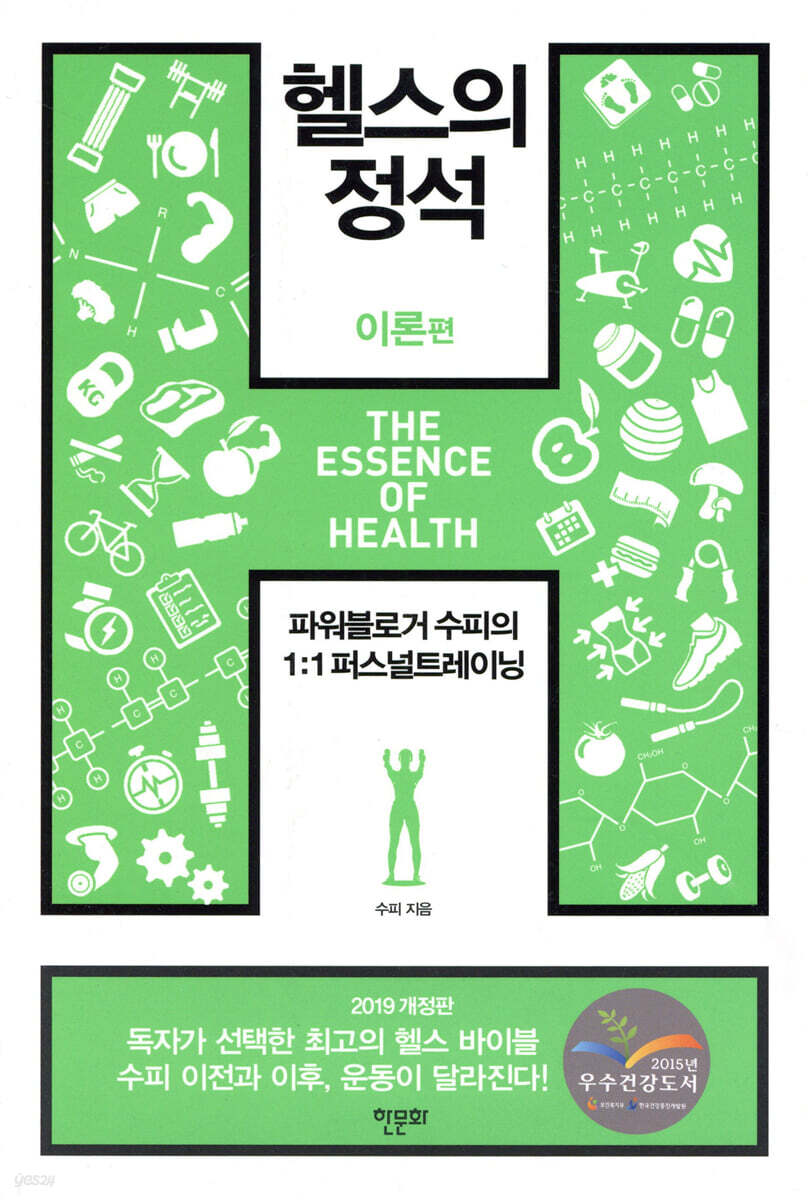
The Essentials of Fitness: Theory (2019 Revised Edition)
 |
Description
Book Introduction
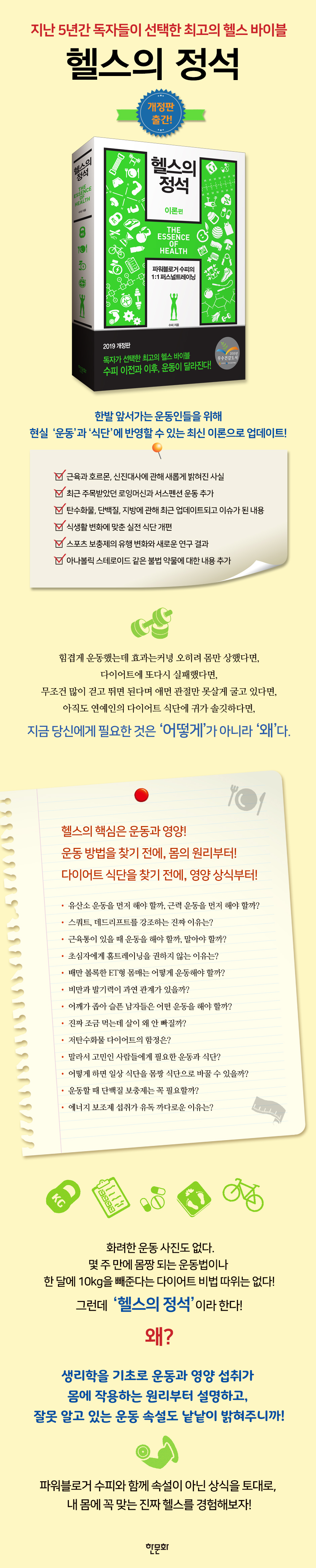
The Ultimate Fitness Bible, "The Essentials of Fitness," 2019 Revised Edition The theory section of "The Essentials of Fitness" contains the very essence of fitness, from basic concepts about the body, exercise, and nutrition that you need to know about fitness to practical tips on exercise and diet. Readers cheered this book even though it didn't contain any workout routines that would get them in shape in a few weeks or magical diet secrets that would help them lose 10kg in a month. This is because it shows what real health is through the principles of how exercise and nutrition affect our bodies based on physiology, and it properly tells us what health common sense we need to know instead of sweating it out at the gym and diligently eating chicken breast armed with all kinds of myths without understanding the body or knowledge about exercise and nutrition. In the revised theory section of "The Essentials of Health," released five years after its first publication, we've removed outdated information that has become obsolete and supplemented it with the latest information that can be applied to real-world exercise and diet among the theories that have emerged over the past five years. Part 1, “Exercise and the Body,” includes new findings on muscles, hormones, and metabolism, as well as recently popularized or popularized exercise types. Part 2, ‘Nutrition and Weight Management,’ includes recently updated and updated information on the three major nutrients. The practical diet has also been revised to reflect changing eating habits, sports supplements have been updated to reflect changing trends and new research findings, and illegal drugs such as anabolic steroids have also been addressed. |
- You can preview some of the book's contents.
Preview
index
Preface to the Revised Edition | What's Changed in the Last Five Years?
Preface to the First Edition | The best truth is common sense. Stop relying on other people's experiences!
Part 1.
Exercise and Body
Chapter 1 The Big Blueprint of My Body
1.
Big muscles, small muscles, strange muscles
Basic Muscle Classification | Agonist, Auxiliary, and Antagonist Muscles | Large and Small Muscles | Muscle Structure
· [Break] What's the deal with spraying a fallen athlete? | Gym nuisance
2.
Becoming a person with substance
Joints over Bones | Blessings from the Gods of Body Shape and Genes
· [Relax] Awkward Rehabilitation Exercises and Leg Extensions | Why Tall Glamour Is Rare
3.
nerves and hormones
Nervous system | Hormonal system
4.
The energy that moves our bodies
The Big Hand in Energy | Controversies Around Fat Burning | Basal Metabolic Rate
· [Break] Were eunuchs really that small and hunched?
5.
Cardiopulmonary capacity
What You Need to Know About Your Heart | The Iron Heart, the Running Shoe Heart | Strength Training and Breathing
Chapter 2 What kind of exercise should I do to build my body?
1.
Free weights and machines
Barbells and Dumbbells | Machines | Cable Machines | Kettlebells | Bands, Suspension Exercises | Which Exercise Is Right for Me | How to Choose the Right Equipment
· [Break] Why You Shouldn't Show Off Your Strength with Machine Weights
2.
aerobic exercise
Walking | Running | Indoor Treadmill | Elliptical Trainer | Jump Rope | Stationary Bike | Swimming | Rowing Machine | The Most Frequently Asked Questions About Cardio
· [Take a break] I'm wearing a sweatshirt and I'm getting heat rash.
3.
Warm-up and stretching
Warm-up Tips | Stretching | Effective Workout Sequence
4.
My own strength training program
Things to Consider When Starting a Workout | Beginner Program | Intermediate and Advanced Sets | Modified Sets for Intensity | Lifting More Weight | Circuit Training | Interval Training
· [Break] How far should I consider myself a beginner? | What are the days I miss in a split workout? | My bench press weight isn't increasing! | Misconceptions about Tabata training
5.
From exercise in your 20s to exercise in your 100s
Once you miss the opportunity, it's hard to do it again | Body changes after reaching the peak
· [Break] Selden's theory of the origin of the germ layer
Chapter 3: Practical Exercise: What I'm Curious About
1.
Don't be fooled by pumping and muscle soreness.
What's a Pump? | Why Heavy, Compound Exercises Don't Pump Well | Pumping, Muscle Soreness, Muscle Growth
· [Take a break] Take a picture of your body
2.
Obesity and exercise
Exercise isn't always the best | Muscle Loss Fear: Knowing is a Disease! | Losing Weight in Steps
· [Take a break] My stomach sticks out after liposuction!
3 How to know your body fat percentage
Body densitometry | Double-layer skin gripping | Bioelectrical impedance measurement | Various medical devices
· [Break] Body fat is 3 times bigger than muscle?
4.
What the heck are abs?
Anatomy of the Abs | Principles of Abdominal Exercises | More About the Abs
5.
Criteria for choosing running shoes
Classification by Support Type | Classification by Use | Useful Tips for Buying Sneakers
· [Take a break] Clearance sale sneakers
Part 2.
Nutrition and Weight Management
Chapter 4: 3 Major Nutrients + α
1.
carbohydrate
Carbohydrates as a chemical | Carbohydrates as an energy source | Glycemic index (GI) | Carbohydrate food groups
· [Break] How much rye is in rye bread?
2.
protein
Amino Acids Like Lego Pieces | Proteins That Roll | Your Daily Protein Intake
· [Take a break] Semen and protein?
3.
province
Fatty Acids, the Face of Fat | Misconceptions About Cholesterol | Fat as an Energy Source | Fat as a Body Component | Myths About Fat
· [Break] Fried cereal? | Will applying steroid ointment make you gain muscle? | Are gladiators vegetarian?
4.
water
Why Athletes Need to Drink More Water | How Much Water Do You Need Each Day?
5.
Vitamins and minerals
Vitamins and Minerals Especially Important for Athletes | Vitamins: Overdose is a Problem
· [Take a break] Why are there so many things that are good for the body?
Chapter 5: Nutritional Intake in Practice
1.
Diet Equation
Even "Grandpa Fitness" Can't Stop Eating | I Eat So Little, But Why Can't I Lose Weight? | Diet Exit Strategy | Memories of Obesity
· [Break] How Much Should You Trust the News? | Obesity, Erectile Dysfunction, and Penis Size
2.
People who are worried about being dry
Thinness and obesity are two sides of the same coin | Weight-gain exercise principles | Weight-gain diet principles | Weight-gain diet for thin people
3.
A bulging belly, ET's dilemma
How did I get a belly? | Abdominal obesity in men and women | Diet and exercise for those with abdominal obesity
· [Rest] Rectus abdominis diastasis
4.
Window of Opportunity
Understanding the Window of Opportunity | Carbohydrates and the Window of Opportunity | Protein and the Window of Opportunity
5.
Building a Vegetarian Body
Vegetarianism and Humans | Vegetarianism and Athletic Performance | Vegetarianism and Antinutrients | Vegetarians and Protein | To Supplement with Vitamin B12?
6.
Transform your daily diet into a bodybuilding diet
How to Approach Gatherings and Holidays | Meat Grades and Health | Fast Food Nutrition
· [Take a break] The stigma of salt
Chapter 6 Sports Supplements
1.
nutritional supplements
Protein Supplements | Weight Gainers | Meal Replacement Supplements | Energy Supplements | Amino Acid Supplements
2.
Exercise performance supplements
Various Supplements | Common Ingredients in Supplements
· [Take a break] When taking the physical test
3.
Illegal supplements
Synthetic hormones | Narcotics, other drugs
· [Break] Cold War, Anabolic Steroids, and Isometrics
4.
Things to consider when choosing supplements
Domestic Supplements | Foreign Supplements | Why Protein Is More Expensive Than Gainers | Beware of Amino Acid Spikes | Precautions When Using Multiple Supplements Simultaneously
annotation
Preface to the First Edition | The best truth is common sense. Stop relying on other people's experiences!
Part 1.
Exercise and Body
Chapter 1 The Big Blueprint of My Body
1.
Big muscles, small muscles, strange muscles
Basic Muscle Classification | Agonist, Auxiliary, and Antagonist Muscles | Large and Small Muscles | Muscle Structure
· [Break] What's the deal with spraying a fallen athlete? | Gym nuisance
2.
Becoming a person with substance
Joints over Bones | Blessings from the Gods of Body Shape and Genes
· [Relax] Awkward Rehabilitation Exercises and Leg Extensions | Why Tall Glamour Is Rare
3.
nerves and hormones
Nervous system | Hormonal system
4.
The energy that moves our bodies
The Big Hand in Energy | Controversies Around Fat Burning | Basal Metabolic Rate
· [Break] Were eunuchs really that small and hunched?
5.
Cardiopulmonary capacity
What You Need to Know About Your Heart | The Iron Heart, the Running Shoe Heart | Strength Training and Breathing
Chapter 2 What kind of exercise should I do to build my body?
1.
Free weights and machines
Barbells and Dumbbells | Machines | Cable Machines | Kettlebells | Bands, Suspension Exercises | Which Exercise Is Right for Me | How to Choose the Right Equipment
· [Break] Why You Shouldn't Show Off Your Strength with Machine Weights
2.
aerobic exercise
Walking | Running | Indoor Treadmill | Elliptical Trainer | Jump Rope | Stationary Bike | Swimming | Rowing Machine | The Most Frequently Asked Questions About Cardio
· [Take a break] I'm wearing a sweatshirt and I'm getting heat rash.
3.
Warm-up and stretching
Warm-up Tips | Stretching | Effective Workout Sequence
4.
My own strength training program
Things to Consider When Starting a Workout | Beginner Program | Intermediate and Advanced Sets | Modified Sets for Intensity | Lifting More Weight | Circuit Training | Interval Training
· [Break] How far should I consider myself a beginner? | What are the days I miss in a split workout? | My bench press weight isn't increasing! | Misconceptions about Tabata training
5.
From exercise in your 20s to exercise in your 100s
Once you miss the opportunity, it's hard to do it again | Body changes after reaching the peak
· [Break] Selden's theory of the origin of the germ layer
Chapter 3: Practical Exercise: What I'm Curious About
1.
Don't be fooled by pumping and muscle soreness.
What's a Pump? | Why Heavy, Compound Exercises Don't Pump Well | Pumping, Muscle Soreness, Muscle Growth
· [Take a break] Take a picture of your body
2.
Obesity and exercise
Exercise isn't always the best | Muscle Loss Fear: Knowing is a Disease! | Losing Weight in Steps
· [Take a break] My stomach sticks out after liposuction!
3 How to know your body fat percentage
Body densitometry | Double-layer skin gripping | Bioelectrical impedance measurement | Various medical devices
· [Break] Body fat is 3 times bigger than muscle?
4.
What the heck are abs?
Anatomy of the Abs | Principles of Abdominal Exercises | More About the Abs
5.
Criteria for choosing running shoes
Classification by Support Type | Classification by Use | Useful Tips for Buying Sneakers
· [Take a break] Clearance sale sneakers
Part 2.
Nutrition and Weight Management
Chapter 4: 3 Major Nutrients + α
1.
carbohydrate
Carbohydrates as a chemical | Carbohydrates as an energy source | Glycemic index (GI) | Carbohydrate food groups
· [Break] How much rye is in rye bread?
2.
protein
Amino Acids Like Lego Pieces | Proteins That Roll | Your Daily Protein Intake
· [Take a break] Semen and protein?
3.
province
Fatty Acids, the Face of Fat | Misconceptions About Cholesterol | Fat as an Energy Source | Fat as a Body Component | Myths About Fat
· [Break] Fried cereal? | Will applying steroid ointment make you gain muscle? | Are gladiators vegetarian?
4.
water
Why Athletes Need to Drink More Water | How Much Water Do You Need Each Day?
5.
Vitamins and minerals
Vitamins and Minerals Especially Important for Athletes | Vitamins: Overdose is a Problem
· [Take a break] Why are there so many things that are good for the body?
Chapter 5: Nutritional Intake in Practice
1.
Diet Equation
Even "Grandpa Fitness" Can't Stop Eating | I Eat So Little, But Why Can't I Lose Weight? | Diet Exit Strategy | Memories of Obesity
· [Break] How Much Should You Trust the News? | Obesity, Erectile Dysfunction, and Penis Size
2.
People who are worried about being dry
Thinness and obesity are two sides of the same coin | Weight-gain exercise principles | Weight-gain diet principles | Weight-gain diet for thin people
3.
A bulging belly, ET's dilemma
How did I get a belly? | Abdominal obesity in men and women | Diet and exercise for those with abdominal obesity
· [Rest] Rectus abdominis diastasis
4.
Window of Opportunity
Understanding the Window of Opportunity | Carbohydrates and the Window of Opportunity | Protein and the Window of Opportunity
5.
Building a Vegetarian Body
Vegetarianism and Humans | Vegetarianism and Athletic Performance | Vegetarianism and Antinutrients | Vegetarians and Protein | To Supplement with Vitamin B12?
6.
Transform your daily diet into a bodybuilding diet
How to Approach Gatherings and Holidays | Meat Grades and Health | Fast Food Nutrition
· [Take a break] The stigma of salt
Chapter 6 Sports Supplements
1.
nutritional supplements
Protein Supplements | Weight Gainers | Meal Replacement Supplements | Energy Supplements | Amino Acid Supplements
2.
Exercise performance supplements
Various Supplements | Common Ingredients in Supplements
· [Take a break] When taking the physical test
3.
Illegal supplements
Synthetic hormones | Narcotics, other drugs
· [Break] Cold War, Anabolic Steroids, and Isometrics
4.
Things to consider when choosing supplements
Domestic Supplements | Foreign Supplements | Why Protein Is More Expensive Than Gainers | Beware of Amino Acid Spikes | Precautions When Using Multiple Supplements Simultaneously
annotation
Detailed image
Into the book
It's easy to say something like, 'Run for 30 minutes a day.'
Health information from mass media, which targets the uninterested majority, usually delivers only the conclusion without any further details.
But if you're really serious about exercising or dieting, you should know why you're running for 30 minutes.
--- p.9
No matter how hard you work your arms or train your abs, it can't compare to the muscle mass you gain by working out your lower body or back.
Because large muscles handle heavy weights, they burn more energy even when exercising for the same amount of time, making them beneficial for dieting.
Even if you're not exercising specifically for looks, large muscle groups can provide a much greater return on investment.
--- p.31
I often see people who have started strength training for less than a month and are looking for a needle in a haystack, wondering why they are not building muscle.
As mentioned earlier, during the first month or so of strength training, your strength will increase rapidly, but your volume will not increase much.
It's a response to develop the nervous system first rather than using the muscles that use energy, and to make the most of the muscles that already exist.
The increase in strength in the early stages of exercise is due to the development of the nervous system, not the muscles.
(.…) Image training, which is the increase in muscle strength that occurs simply by imagining an exercise situation, or the increase in muscle strength in one arm even when only one arm is trained, can also be explained by the development of this nervous system.
--- p.80
Exercise is not work.
Just as sitting in the library for a long time doesn't make you a top student, sitting at the gym for a long time doesn't make you build muscle.
Sometimes it's the opposite.
Whether it's aerobic or strength training, this workout will peak at around 40 minutes to an hour.
Aim to finish your main workout of the day within an hour, as longer workouts will only have the opposite effect.
If you are not good at exercising, it may take longer, but at least try to make sure you don't waste any time.
--- p.174~175
If you think about it the other way around, pumping means that waste products have accumulated within the muscles.
Here you can see the connection between pumping and post-workout muscle soreness.
According to the general theory, short-term muscle soreness that occurs within 24 hours after exercise is due to the accumulation of waste products such as lactic acid in the muscles.
Pumping is associated with this type of short-term muscle soreness.
This means that you worked hard, but it does not mean that you stimulated your muscles strongly enough to induce muscle growth.
--- p.219~220
The low-glycemic index (GI) diet, which advocates for weight loss by eating foods that raise blood sugar levels slowly, is partially correct. This is because low-GI foods are generally low in simple sugars and high in fiber, which slows digestion and absorption, leading to greater feelings of fullness and less food intake.
However, this is limited to carbohydrate-rich foods such as grains, potatoes, and fruits.
Also, just because something has a low GI doesn't mean you can eat it until you burst.
This means that if the amount and calories are the same, choosing ingredients with a lower GI is more helpful for weight management.
--- p.266
The commonality of abdominal obesity is that they are ‘basically thin.’
It's rare for someone with general body obesity to develop thin arms and legs while also developing abdominal obesity. The ET body type occurs when, for various reasons, a person of normal or lean build accumulates visceral fat, resulting in a protruding belly.
Why does fat accumulate on the stomach, which is so visible, and not on the buttocks, which act as cushions when you squat, or on the muscular thighs? It's because of the liver.
--- p.364
Performance supplements are a general term for ingredients that temporarily improve athletic performance or promote recovery.
Broadly speaking, it falls into the category of sports supplements.
However, unlike nutritional supplements, which are processed foods, they have a strong medicinal character.
While some performance-enhancing supplements are relatively safe when used in moderation, like caffeine or soda, others are dangerous and even illegal, with serious side effects or the potential to increase the risk of injury.
Some drugs are classified as doping and are considered a major culprit in hindering fair play in sports.
Health information from mass media, which targets the uninterested majority, usually delivers only the conclusion without any further details.
But if you're really serious about exercising or dieting, you should know why you're running for 30 minutes.
--- p.9
No matter how hard you work your arms or train your abs, it can't compare to the muscle mass you gain by working out your lower body or back.
Because large muscles handle heavy weights, they burn more energy even when exercising for the same amount of time, making them beneficial for dieting.
Even if you're not exercising specifically for looks, large muscle groups can provide a much greater return on investment.
--- p.31
I often see people who have started strength training for less than a month and are looking for a needle in a haystack, wondering why they are not building muscle.
As mentioned earlier, during the first month or so of strength training, your strength will increase rapidly, but your volume will not increase much.
It's a response to develop the nervous system first rather than using the muscles that use energy, and to make the most of the muscles that already exist.
The increase in strength in the early stages of exercise is due to the development of the nervous system, not the muscles.
(.…) Image training, which is the increase in muscle strength that occurs simply by imagining an exercise situation, or the increase in muscle strength in one arm even when only one arm is trained, can also be explained by the development of this nervous system.
--- p.80
Exercise is not work.
Just as sitting in the library for a long time doesn't make you a top student, sitting at the gym for a long time doesn't make you build muscle.
Sometimes it's the opposite.
Whether it's aerobic or strength training, this workout will peak at around 40 minutes to an hour.
Aim to finish your main workout of the day within an hour, as longer workouts will only have the opposite effect.
If you are not good at exercising, it may take longer, but at least try to make sure you don't waste any time.
--- p.174~175
If you think about it the other way around, pumping means that waste products have accumulated within the muscles.
Here you can see the connection between pumping and post-workout muscle soreness.
According to the general theory, short-term muscle soreness that occurs within 24 hours after exercise is due to the accumulation of waste products such as lactic acid in the muscles.
Pumping is associated with this type of short-term muscle soreness.
This means that you worked hard, but it does not mean that you stimulated your muscles strongly enough to induce muscle growth.
--- p.219~220
The low-glycemic index (GI) diet, which advocates for weight loss by eating foods that raise blood sugar levels slowly, is partially correct. This is because low-GI foods are generally low in simple sugars and high in fiber, which slows digestion and absorption, leading to greater feelings of fullness and less food intake.
However, this is limited to carbohydrate-rich foods such as grains, potatoes, and fruits.
Also, just because something has a low GI doesn't mean you can eat it until you burst.
This means that if the amount and calories are the same, choosing ingredients with a lower GI is more helpful for weight management.
--- p.266
The commonality of abdominal obesity is that they are ‘basically thin.’
It's rare for someone with general body obesity to develop thin arms and legs while also developing abdominal obesity. The ET body type occurs when, for various reasons, a person of normal or lean build accumulates visceral fat, resulting in a protruding belly.
Why does fat accumulate on the stomach, which is so visible, and not on the buttocks, which act as cushions when you squat, or on the muscular thighs? It's because of the liver.
--- p.364
Performance supplements are a general term for ingredients that temporarily improve athletic performance or promote recovery.
Broadly speaking, it falls into the category of sports supplements.
However, unlike nutritional supplements, which are processed foods, they have a strong medicinal character.
While some performance-enhancing supplements are relatively safe when used in moderation, like caffeine or soda, others are dangerous and even illegal, with serious side effects or the potential to increase the risk of injury.
Some drugs are classified as doping and are considered a major culprit in hindering fair play in sports.
--- p.433
Publisher's Review
Everyone is crying out for a great body and diet!
If you don't know who to believe, common sense is the answer!
Have you been working out hard, only to find no results and instead end up harming yourself? Are you stuck on the roller coaster of dieting and yo-yoing? Are you searching for a body-building workout routine online, where all sorts of unsubstantiated myths abound? Are you still captivated by the diet plans of certain celebrities? Both exercise and dieting require effort and time.
However, various media outlets are full of information claiming that it will help you lose weight and build your body in the short term.
And then there are sports supplements that lure beginners with claims of muscle-building potions, meal replacements branded after famous doctors, and all sorts of diets that don't suit my physique! With all this information, who should I trust? What's truly right for me? Let's stop relying on others' experiences or unverified myths, using our own bodies as collateral.
Wrong exercise will leave you with pain and injuries, and the wrong diet will lead to yo-yoing.
If you don't want to end up like a pawn in the fitness or diet industry, from now on, choose the exercise that's closest to common sense!
A healthy crossover of exercise and nutrition,
Everything you need to know about health!
"The Essentials of Fitness" is a book that covers all the essentials of building a strong and beautiful body, and the author is Naver Power Blogger Sufi.
From the basic concepts of the body, exercise, and nutrition that we need to know about health to practical tips on exercise and diet, it is a classic in both quality and quantity, just as the title suggests.
If you've decided to exercise for real, without being swayed by shortcuts or tricks, and if you're not feeling any changes in your body despite exercising and dieting, this book will give you the answer.
The key to health is exercise and nutrition.
Muscle can be built purely through exercise and nutrition, not surgery or drugs.
If losing weight was so easy, if building muscle was so easy, the diet and fitness industries wouldn't exist in the first place.
In "The Essentials of Fitness," there are no eye-popping workouts that will get you in shape in a few weeks or magical diet secrets that will help you lose 10 kg in a month.
Instead, it provides a clear and easy-to-understand explanation of how exercise and nutrition affect our bodies, based on physiology.
Because you need to know the principles to be able to take care of your own body.
Instead of sweating it out at the gym and gorging on chicken breasts, armed with all sorts of myths and no knowledge of your body, exercise, or nutrition, let's find out what fitness common sense we really need to know.
This book is broadly divided into [Exercise and Body] and [Nutrition and Weight Management], and shows the basics of body building and dieting.
In Chapter 1 of [Exercise and Body], we will look at the mechanisms of our body, focusing on the most important muscles, bones, nerves and hormones, energy metabolism, and cardiopulmonary capacity from the perspective of exercising.
Chapter 2 explores the mechanical characteristics and ultimate differences between different types of exercise, and how to find the exercise that best suits your body.
Chapter 3 addresses misconceptions and myths that can easily arise from hot topics like pumping, obesity, body fat, and abs, and clearly addresses questions about actual exercise.
In the [Nutrition and Weight Management] section, we examine the nutritional impact of food, the greatest enemy and friend of dieting, on our bodies.
In Chapter 4, we will learn how the three major nutrients (carbohydrates, proteins, and fats), water, and vitamins that make up the body and produce energy, work in our bodies.
Chapter 5 presents exercise and nutrition methods according to body type, such as those who want to lose weight, those who are concerned about being thin, and those who are not fat but have a protruding stomach.
Chapter 6 covers sports supplements, which often create both a misconception and an illusion of being "muscle-building drugs."
Be careful, as there are drugs that target people who are looking for an easy way out, even at the risk of harming their health, rather than simply being supplements.
It also covers illegal supplements that tempt people with the curiosity of, "I'll be okay, just once," and clearly shows the safe and dangerous areas of sports supplements.
Should I do cardio first or strength training first? How much is considered a beginner level? Should I exercise when I feel sore, or should I stop? Is it true that increasing my basal metabolic rate leads to less weight gain? Why aren't home workouts recommended for beginners? How should I work out for an ET-type body with a protruding belly? What's the point of pumping? Is there really a connection between obesity and erectile dysfunction? Why can't I lose weight even if I eat less? What kind of exercise and diet are necessary for those struggling with thinness? How far should I embrace the window of opportunity? Are protein supplements really necessary when exercising? These and other health-related questions are clearly explained.
It's full of valuable information that will help you build strong bones and muscles, from tips on choosing running shoes, how to handle holidays and drinking parties, and even fast food nutrition.
Power blogger Sufi's 1:1 personal training
Before and after Sufi, your workouts will be different!
Among people who exercise, the name 'Sufi' alone is enough to make them believe in him and he is a power blogger with great influence and recognition.
The author is neither an athlete nor a professional trainer, but has been active as a social activist based on amateurism for over 20 years, participating in various sports such as rowing, fitness, swimming, marathon, and martial arts.
I loved both practical training and theory, so I dug deep into it for 20 years. And because I have a personality that requires me to directly experience something if I'm curious, I've read a wide range of foreign papers and journals that aren't easily accessible in Korea.
Not only does the author correct the misinformation that is rampant about incorrect exercise and dieting reported online and in the media, as well as the misinformation misused for commercial purposes, with his meticulous information power, but he also uses his witty writing skills to explain even the specialized terms and complex contents of exercise physiology and nutrition in an easy and fun way, so everyone from beginners to active trainers pays attention to the author's writing and is enthusiastic about it.
It tells you everything about health, including how your body is made up, what to eat, how to exercise to build a strong and beautiful body, and why you should do it.
Exercise is no longer an option for health, but a necessity.
Whether you're working out now or not, one thing's for sure: your workouts will be different after meeting Sufi.
“In reality, most of the exercise and diet information that the general public comes across comes from mass media such as TV and magazines.
However, much of this information is nothing more than sensational gossip articles with added editorial intent or with 'all the hair cut off' and only the conclusion left.
Even distorted columns that secretly conceal commercialism give rise to new myths.
This is why it is difficult to unconditionally trust health information from the mass media.
My conclusion is simple.
The best truth with the highest accuracy in exercise and health is 'common sense'.
Information or theories that defy common sense are likely to be distorted, and experiences that defy common sense are likely to be personal experiences that cannot be universally applied.
Anything that promotes unconventional health methods, exercise routines, or specific foods is likely just a passing fad, designed to grab your wallet.
If you think about it, the people who are the simplest, most sensible, and most honest are the ones who will ultimately succeed in body building or dieting.
Many people search for secrets, their ears perk up whenever they see a tempting article, and they search through theories or latest papers that seem to be found only in the corners of books. However, these people are already halfway to failure.
That's why I titled this book 'The Classic', which might sound a bit dated."
- From the preface
If you don't know who to believe, common sense is the answer!
Have you been working out hard, only to find no results and instead end up harming yourself? Are you stuck on the roller coaster of dieting and yo-yoing? Are you searching for a body-building workout routine online, where all sorts of unsubstantiated myths abound? Are you still captivated by the diet plans of certain celebrities? Both exercise and dieting require effort and time.
However, various media outlets are full of information claiming that it will help you lose weight and build your body in the short term.
And then there are sports supplements that lure beginners with claims of muscle-building potions, meal replacements branded after famous doctors, and all sorts of diets that don't suit my physique! With all this information, who should I trust? What's truly right for me? Let's stop relying on others' experiences or unverified myths, using our own bodies as collateral.
Wrong exercise will leave you with pain and injuries, and the wrong diet will lead to yo-yoing.
If you don't want to end up like a pawn in the fitness or diet industry, from now on, choose the exercise that's closest to common sense!
A healthy crossover of exercise and nutrition,
Everything you need to know about health!
"The Essentials of Fitness" is a book that covers all the essentials of building a strong and beautiful body, and the author is Naver Power Blogger Sufi.
From the basic concepts of the body, exercise, and nutrition that we need to know about health to practical tips on exercise and diet, it is a classic in both quality and quantity, just as the title suggests.
If you've decided to exercise for real, without being swayed by shortcuts or tricks, and if you're not feeling any changes in your body despite exercising and dieting, this book will give you the answer.
The key to health is exercise and nutrition.
Muscle can be built purely through exercise and nutrition, not surgery or drugs.
If losing weight was so easy, if building muscle was so easy, the diet and fitness industries wouldn't exist in the first place.
In "The Essentials of Fitness," there are no eye-popping workouts that will get you in shape in a few weeks or magical diet secrets that will help you lose 10 kg in a month.
Instead, it provides a clear and easy-to-understand explanation of how exercise and nutrition affect our bodies, based on physiology.
Because you need to know the principles to be able to take care of your own body.
Instead of sweating it out at the gym and gorging on chicken breasts, armed with all sorts of myths and no knowledge of your body, exercise, or nutrition, let's find out what fitness common sense we really need to know.
This book is broadly divided into [Exercise and Body] and [Nutrition and Weight Management], and shows the basics of body building and dieting.
In Chapter 1 of [Exercise and Body], we will look at the mechanisms of our body, focusing on the most important muscles, bones, nerves and hormones, energy metabolism, and cardiopulmonary capacity from the perspective of exercising.
Chapter 2 explores the mechanical characteristics and ultimate differences between different types of exercise, and how to find the exercise that best suits your body.
Chapter 3 addresses misconceptions and myths that can easily arise from hot topics like pumping, obesity, body fat, and abs, and clearly addresses questions about actual exercise.
In the [Nutrition and Weight Management] section, we examine the nutritional impact of food, the greatest enemy and friend of dieting, on our bodies.
In Chapter 4, we will learn how the three major nutrients (carbohydrates, proteins, and fats), water, and vitamins that make up the body and produce energy, work in our bodies.
Chapter 5 presents exercise and nutrition methods according to body type, such as those who want to lose weight, those who are concerned about being thin, and those who are not fat but have a protruding stomach.
Chapter 6 covers sports supplements, which often create both a misconception and an illusion of being "muscle-building drugs."
Be careful, as there are drugs that target people who are looking for an easy way out, even at the risk of harming their health, rather than simply being supplements.
It also covers illegal supplements that tempt people with the curiosity of, "I'll be okay, just once," and clearly shows the safe and dangerous areas of sports supplements.
Should I do cardio first or strength training first? How much is considered a beginner level? Should I exercise when I feel sore, or should I stop? Is it true that increasing my basal metabolic rate leads to less weight gain? Why aren't home workouts recommended for beginners? How should I work out for an ET-type body with a protruding belly? What's the point of pumping? Is there really a connection between obesity and erectile dysfunction? Why can't I lose weight even if I eat less? What kind of exercise and diet are necessary for those struggling with thinness? How far should I embrace the window of opportunity? Are protein supplements really necessary when exercising? These and other health-related questions are clearly explained.
It's full of valuable information that will help you build strong bones and muscles, from tips on choosing running shoes, how to handle holidays and drinking parties, and even fast food nutrition.
Power blogger Sufi's 1:1 personal training
Before and after Sufi, your workouts will be different!
Among people who exercise, the name 'Sufi' alone is enough to make them believe in him and he is a power blogger with great influence and recognition.
The author is neither an athlete nor a professional trainer, but has been active as a social activist based on amateurism for over 20 years, participating in various sports such as rowing, fitness, swimming, marathon, and martial arts.
I loved both practical training and theory, so I dug deep into it for 20 years. And because I have a personality that requires me to directly experience something if I'm curious, I've read a wide range of foreign papers and journals that aren't easily accessible in Korea.
Not only does the author correct the misinformation that is rampant about incorrect exercise and dieting reported online and in the media, as well as the misinformation misused for commercial purposes, with his meticulous information power, but he also uses his witty writing skills to explain even the specialized terms and complex contents of exercise physiology and nutrition in an easy and fun way, so everyone from beginners to active trainers pays attention to the author's writing and is enthusiastic about it.
It tells you everything about health, including how your body is made up, what to eat, how to exercise to build a strong and beautiful body, and why you should do it.
Exercise is no longer an option for health, but a necessity.
Whether you're working out now or not, one thing's for sure: your workouts will be different after meeting Sufi.
“In reality, most of the exercise and diet information that the general public comes across comes from mass media such as TV and magazines.
However, much of this information is nothing more than sensational gossip articles with added editorial intent or with 'all the hair cut off' and only the conclusion left.
Even distorted columns that secretly conceal commercialism give rise to new myths.
This is why it is difficult to unconditionally trust health information from the mass media.
My conclusion is simple.
The best truth with the highest accuracy in exercise and health is 'common sense'.
Information or theories that defy common sense are likely to be distorted, and experiences that defy common sense are likely to be personal experiences that cannot be universally applied.
Anything that promotes unconventional health methods, exercise routines, or specific foods is likely just a passing fad, designed to grab your wallet.
If you think about it, the people who are the simplest, most sensible, and most honest are the ones who will ultimately succeed in body building or dieting.
Many people search for secrets, their ears perk up whenever they see a tempting article, and they search through theories or latest papers that seem to be found only in the corners of books. However, these people are already halfway to failure.
That's why I titled this book 'The Classic', which might sound a bit dated."
- From the preface
GOODS SPECIFICS
- Date of issue: October 1, 2019
- Page count, weight, size: 480 pages | 826g | 152*225*27mm
- ISBN13: 9788956993683
- ISBN10: 8956993688
You may also like
카테고리
korean


korean

![ELLE 엘르 스페셜 에디션 A형 : 12월 [2025]](http://librairie.coreenne.fr/cdn/shop/files/b8e27a3de6c9538896439686c6b0e8fb.jpg?v=1766436872&width=3840)


