

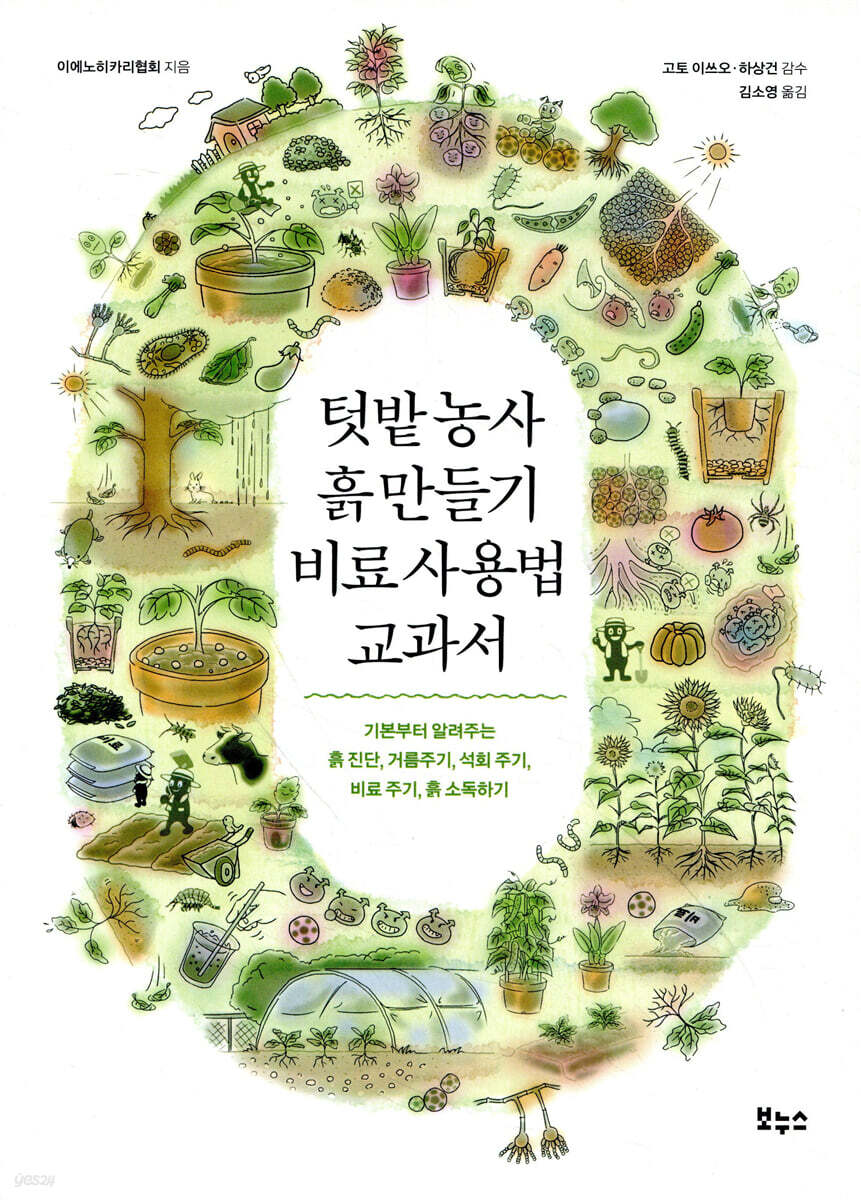
A textbook on how to use fertilizer for gardening and soil preparation.
 |
Description
Book Introduction
This book explains how to make soil and use fertilizer, which are essential for gardening.
Making soil is not about creating new soil.
This refers to the work of creating a good farming environment by managing the acidity and nutrient status of the soil so that crops can grow healthily.
After making the soil, use fertilizer appropriately to help the crops grow.
Proper soil preparation and fertilizer use are the basics and key to ensuring a good harvest.
This book provides detailed information on how to manage and utilize soil and fertilizer, which gardeners can easily neglect.
Making soil is not about creating new soil.
This refers to the work of creating a good farming environment by managing the acidity and nutrient status of the soil so that crops can grow healthily.
After making the soil, use fertilizer appropriately to help the crops grow.
Proper soil preparation and fertilizer use are the basics and key to ensuring a good harvest.
This book provides detailed information on how to manage and utilize soil and fertilizer, which gardeners can easily neglect.
- You can preview some of the book's contents.
Preview
index
Introduction To grow delicious vegetables and pretty flowers, you must first make the soil.
Chapter 1: What is Soil?
1-1 Precious Resource, Soil
Soil is the skin of the earth
Soil that heals the human heart
Where did the soil come from?
Korean soil is old
Types of soil distributed in Korea
Japan's soil is not fertile
Types of soil distributed in Japan
1-2 Properties and structure of soil
Properties that vary with particle size
Understanding the structure of soil
Organic matter creates swarms in the soil
1-3 Relationship between soil and plants
Plant growth structure and the role of soil
1-4 Plant-Friendly Soil
Three soil conditions you should know
Physical properties of soil: drainage and absorption
Soil Chemistry: pH and Fertility
1-5 Various soil microorganisms
The cycle of plants, animals, and microorganisms
The role of various microorganisms
Food varies depending on the species
Do you like or hate air?
1-6 Microbial activity in soil
Plant roots and microorganisms
How plants protect themselves
Coexistence and antagonism of microorganisms
Soil-borne diseases caused by continuous planting
column Small animals in the soil
Chapter 2: Soil Health Diagnosis
2-1 Observing the soil (checking physical properties)
Health checkups are the same for both people and soil.
See and touch the soil directly
Digging the dirt
2-2 Measuring the pH of the soil (Chemical Check ①)
pH test solution and litmus paper
2-3 Finding out about the nutrients in the soil (chemical properties check ②)
A simple nutrient analysis method you can do at home
2-4 Check if the soil is alive (Biological Check)
See the activity of microorganisms or small insects
How to see the biological nature of soil
How to improve the biodiversity of soil
2-5 How to Request a Soil Test
What is Soil Testing?
How to collect samples and request assays
A Complete Guide to Soil Health Diagnosis
Chapter 3: The Basics of Soil Making and Cultivation
3-1 Making Soil
Purpose of tilling the land
Order of inputting materials
3-2 Compost cycle
The Role and Use of Compost
3-3 Lime material cycle
The role of lime materials
How to apply lime
Beware of overinvestment
3-4 Improving Alkaline Soil
Difficult to improve than acidic soil
3-5 fertilizer cycles
Finishing up nutrient adjustment with fertilizer
3-6 Removal of salts and disinfection of field soil
Prevents continuous cropping
Crops that absorb excess nutrients
Soil disinfection using solar energy
Column Soil Disinfection Tweezers Lesson
Chapter 4: Making Soil for Flower Pots and Garden Boxes
4-1 Characteristics of box cultivation
There is little space to spread roots
Drainage is important in growing soil.
Fertilize frequently
4-2 Characteristics of major cultivation soils
Mixing is basic
Basic soil for growing the base
Soil to supplement basic growing soil
Different crops require different types of soil
Soil mixes tailored to your lifestyle
4-3 Choosing a Flower Pot and Garden Box
Box material
The bottom of the box is important
Replace the pot as the plant grows.
Relationship between plant and pot size
4-4 How to choose the right commercial potting soil
Convenient commercially available potting soil
4-5 Basic Soil Mix for Cultivation
Adjustment according to differences in basic cultivation soil
How to Make Nutrient-Rich Growing Soil
4-6 Soil disinfection
Disinfection with solar energy
Using column regeneration soil
Chapter 5: Fertilizer Basics and Selection
5-1 Relationship between soil and fertilizer
Why do we need fertilizer?
To make vegetables and flowers
5-2 Types of elements required by plants
17 essential elements
The three elements of fertilizer
5-3 Make sure there is no excess or deficiency of nutrients
Replenishing deficient nutrients
If there is a deficiency, these symptoms appear.
Excessive nutrients are also a problem
Nutrient balance is important
5-4 Fertilizer Classification 1 (Classification by Raw Materials)
Three fertilizer classifications
Inorganic and organic fertilizers
Organic fertilizers are slow-acting and long-lasting.
Compound fertilizer and single-use fertilizer
5-5 Fertilizer Classification 2 (Classification by Form)
Solid and liquid fertilizers
The effect varies depending on the form
5-6 Fertilizer Classification 3 (Classification by Effect)
How to use fast-acting fertilizer
How to use slow-release fertilizer
How to use slow-release fertilizer
Effectiveness rate varies depending on fertilizer composition
5-7 Fertilizer at a Glance
5-8 Choose the right fertilizer
Free from prejudice and equally
Make good use of the rain
How to buy and store column fertilizer
Chapter 6: How to Use Fertilizers
6-1 Basic Usage
Let's stick to the proper fertilizer usage amount
Basics of Fertilizer Use
6-2 Differences in fertilizer amount depending on crop
Delicious vegetables 'slowly release nitrogen'
How to see the effect of fertilizer
Determine the amount of fertilizer
Necessary ingredients for each growing season
6-3 Differences in fertilizer amount according to season
In spring and fall, there is plenty
6-4 Fertilizer cycle
Front and rear siding
6-5 Laughing Cycle
The basics of laughter
Drilling holes, digging grooves, scattering
Where should I put my laughter to be effective?
Laughing is a no-no in times like this
6-6 Liquid Fertilizer Cycle
Liquid fertilizer given instead of water
Liquid fertilizer is mainly composed of nitrogen and potassium.
6-7 How to use fermented fertilizer
Home gardening made easy with laughter
The Basics of Fermented Fertilizers
How to Make 6-8 Fermented Fertilizer
Making fermented fertilizer using familiar ingredients
Search
Chapter 1: What is Soil?
1-1 Precious Resource, Soil
Soil is the skin of the earth
Soil that heals the human heart
Where did the soil come from?
Korean soil is old
Types of soil distributed in Korea
Japan's soil is not fertile
Types of soil distributed in Japan
1-2 Properties and structure of soil
Properties that vary with particle size
Understanding the structure of soil
Organic matter creates swarms in the soil
1-3 Relationship between soil and plants
Plant growth structure and the role of soil
1-4 Plant-Friendly Soil
Three soil conditions you should know
Physical properties of soil: drainage and absorption
Soil Chemistry: pH and Fertility
1-5 Various soil microorganisms
The cycle of plants, animals, and microorganisms
The role of various microorganisms
Food varies depending on the species
Do you like or hate air?
1-6 Microbial activity in soil
Plant roots and microorganisms
How plants protect themselves
Coexistence and antagonism of microorganisms
Soil-borne diseases caused by continuous planting
column Small animals in the soil
Chapter 2: Soil Health Diagnosis
2-1 Observing the soil (checking physical properties)
Health checkups are the same for both people and soil.
See and touch the soil directly
Digging the dirt
2-2 Measuring the pH of the soil (Chemical Check ①)
pH test solution and litmus paper
2-3 Finding out about the nutrients in the soil (chemical properties check ②)
A simple nutrient analysis method you can do at home
2-4 Check if the soil is alive (Biological Check)
See the activity of microorganisms or small insects
How to see the biological nature of soil
How to improve the biodiversity of soil
2-5 How to Request a Soil Test
What is Soil Testing?
How to collect samples and request assays
A Complete Guide to Soil Health Diagnosis
Chapter 3: The Basics of Soil Making and Cultivation
3-1 Making Soil
Purpose of tilling the land
Order of inputting materials
3-2 Compost cycle
The Role and Use of Compost
3-3 Lime material cycle
The role of lime materials
How to apply lime
Beware of overinvestment
3-4 Improving Alkaline Soil
Difficult to improve than acidic soil
3-5 fertilizer cycles
Finishing up nutrient adjustment with fertilizer
3-6 Removal of salts and disinfection of field soil
Prevents continuous cropping
Crops that absorb excess nutrients
Soil disinfection using solar energy
Column Soil Disinfection Tweezers Lesson
Chapter 4: Making Soil for Flower Pots and Garden Boxes
4-1 Characteristics of box cultivation
There is little space to spread roots
Drainage is important in growing soil.
Fertilize frequently
4-2 Characteristics of major cultivation soils
Mixing is basic
Basic soil for growing the base
Soil to supplement basic growing soil
Different crops require different types of soil
Soil mixes tailored to your lifestyle
4-3 Choosing a Flower Pot and Garden Box
Box material
The bottom of the box is important
Replace the pot as the plant grows.
Relationship between plant and pot size
4-4 How to choose the right commercial potting soil
Convenient commercially available potting soil
4-5 Basic Soil Mix for Cultivation
Adjustment according to differences in basic cultivation soil
How to Make Nutrient-Rich Growing Soil
4-6 Soil disinfection
Disinfection with solar energy
Using column regeneration soil
Chapter 5: Fertilizer Basics and Selection
5-1 Relationship between soil and fertilizer
Why do we need fertilizer?
To make vegetables and flowers
5-2 Types of elements required by plants
17 essential elements
The three elements of fertilizer
5-3 Make sure there is no excess or deficiency of nutrients
Replenishing deficient nutrients
If there is a deficiency, these symptoms appear.
Excessive nutrients are also a problem
Nutrient balance is important
5-4 Fertilizer Classification 1 (Classification by Raw Materials)
Three fertilizer classifications
Inorganic and organic fertilizers
Organic fertilizers are slow-acting and long-lasting.
Compound fertilizer and single-use fertilizer
5-5 Fertilizer Classification 2 (Classification by Form)
Solid and liquid fertilizers
The effect varies depending on the form
5-6 Fertilizer Classification 3 (Classification by Effect)
How to use fast-acting fertilizer
How to use slow-release fertilizer
How to use slow-release fertilizer
Effectiveness rate varies depending on fertilizer composition
5-7 Fertilizer at a Glance
5-8 Choose the right fertilizer
Free from prejudice and equally
Make good use of the rain
How to buy and store column fertilizer
Chapter 6: How to Use Fertilizers
6-1 Basic Usage
Let's stick to the proper fertilizer usage amount
Basics of Fertilizer Use
6-2 Differences in fertilizer amount depending on crop
Delicious vegetables 'slowly release nitrogen'
How to see the effect of fertilizer
Determine the amount of fertilizer
Necessary ingredients for each growing season
6-3 Differences in fertilizer amount according to season
In spring and fall, there is plenty
6-4 Fertilizer cycle
Front and rear siding
6-5 Laughing Cycle
The basics of laughter
Drilling holes, digging grooves, scattering
Where should I put my laughter to be effective?
Laughing is a no-no in times like this
6-6 Liquid Fertilizer Cycle
Liquid fertilizer given instead of water
Liquid fertilizer is mainly composed of nitrogen and potassium.
6-7 How to use fermented fertilizer
Home gardening made easy with laughter
The Basics of Fermented Fertilizers
How to Make 6-8 Fermented Fertilizer
Making fermented fertilizer using familiar ingredients
Search
Detailed image

Publisher's Review
If you want to enjoy the joy of harvest
Be careful with your soil and fertilizer!
The garden is ruined.
When I first started gardening, I had all kinds of hopes and excitement, but now all that's left are bare stems and dried leaves.
I don't want to think about gardening again, let alone the joy of harvest.
If you are thinking like this, check your farming methods right now.
Have you ever planted seedlings, watered them, and fertilized them without any care?
If not done correctly, all the effort you put into your garden can end up being detrimental to your crops.
If you want to experience the joy of holding fresh vegetables and fruits in your hands, you need to start paying attention to the soil and fertilizer from now on.
Those who succeed in gardening first prepare soil and fertilizer.
Because soil and fertilizer are the foundation of farming and a guarantee of success.
It's not that difficult.
Just make the soil and use fertilizer step by step as instructed in the “Garden Soil Making and Fertilizer Usage Textbook.”
The way is open to growing crops as originally planned.
This book is a practical guide that contains the essentials of farming.
For those of us who are starting a garden, there are three steps to remember from the book.
Step one is to know what kind of soil your plants like, and step two is to check the health of your garden.
The next step is to create the right soil and apply fertilizer according to the health of your garden.
It is no exaggeration to say that the foundation of gardening is made up of these three steps.
The success or failure of garden farming
How to make the right soil and use fertilizer
Let's look at step 1.
For anyone starting out in farming, the first thing to do is to understand the basic characteristics and structure of the soil that crops like.
Although each crop has slightly different preferred soil, most crops prefer soil that is slightly acidic to slightly acidic (pH 6.5 to 5.5).
With this in mind, let us next bear in mind that the soil must have a granular structure to be suitable for farming.
If the soil has a granular structure, it has good water retention and fertility.
That is, it retains water well while also containing sufficient nutrients.
The swarm structure is formed and maintained by spreading organic matter and lime on the soil and tilling it well. Anyone who farms, regardless of the scale of cultivation, tries to maintain the swarm structure.
Because the crops we want do not grow in dry, loose soil.
Now that you've learned about the properties, structure, and types of soil, you can begin step two.
It's time to check the health of your garden.
It's so obvious to check the health of your garden before starting to grow, but so many people neglect it.
As I keep emphasizing, crops grow on the soil.
Since all farming work is done in the soil, checking the condition of the soil is very important.
This book teaches you how to check the health of your soil by examining its physical, chemical, and biological properties.
There are many quick and simple methods, including touching the soil, observing the activity of microorganisms and insects, and using litmus paper.
Be sure to familiarize yourself with it, check the condition of your garden, and respond appropriately.
In addition, for those who want to know precise measurements, we have compiled information on how to request soil testing from each city/county's rural technology center.
From stage 3 onwards, it becomes full-fledged farming work.
It is often said that farmers begin farming before they sow their seeds, and gardeners also prepare good soil for farming in the third stage and select and use appropriate fertilizers.
Naturally, the book details how to create soil that your plants will love, as well as how to prepare soil for your pots and garden boxes.
Even beginners without any farming knowledge can learn the basics and apply them to farming.
In particular, the chapters explaining 'Removing salts and disinfecting field soil' and 'Improving alkaline soil' are very useful.
When you are given a plot of land, you usually have no way of knowing what crops were grown there or what diseases were encountered.
Additionally, gardeners tend to overuse fertilizers and manure, which often leaves salts, or excess fertilizer components, in their gardens.
Pests, diseases, and salts left behind by previously grown crops.
These two factors are likely to cause problems in the vegetable garden, so vegetable gardeners should be mindful of this. However, using salt removal and solar disinfection methods can help overcome these difficulties.
Solar disinfection is also a method highly recommended by the author.
Disinfecting fields using sunlight is highly effective and does not require any special equipment or pesticides.
Practical farming methods you can read and practice today
Full of valuable information and know-how for successful farming
If you just digest the fertilizer-related information introduced in the latter half of the book, you might become a fertilizer expert in your neighborhood.
That means that only the necessary things have been organized well.
The book explains why fertilizers are necessary, explains the principles of using fertilizers properly, and classifies fertilizers according to their raw materials, form, and effects.
Of course, fertilizer usage methods are categorized by crop and season, and we explain how to effectively apply base fertilizer and top fertilizer to help solve problems that may be encountered while actually farming.
We have also compiled instructions on how to make and use 'fermented fertilizer' so that gardeners can enjoy the pleasure of making and using fertilizer themselves, which will also be very useful.
Before you start anything, set a goal and make a plan to achieve it.
The same goes for farming.
No matter how small your garden is, if you start farming without a plan, you won't get any results.
You must know that vaguely using a lot of fertilizer and frequently applying fertilizer will not lead to good farming.
Let's just put into practice the three steps presented in this book.
After checking the condition of my garden, I just need to cultivate the soil appropriately and select and use fertilizer.
Even a little attention to soil and fertilizer can make a huge difference in the results.
Instead of withered stems and small fruits, you will be able to enjoy the joy of harvest season with abundant fruit.
Be careful with your soil and fertilizer!
The garden is ruined.
When I first started gardening, I had all kinds of hopes and excitement, but now all that's left are bare stems and dried leaves.
I don't want to think about gardening again, let alone the joy of harvest.
If you are thinking like this, check your farming methods right now.
Have you ever planted seedlings, watered them, and fertilized them without any care?
If not done correctly, all the effort you put into your garden can end up being detrimental to your crops.
If you want to experience the joy of holding fresh vegetables and fruits in your hands, you need to start paying attention to the soil and fertilizer from now on.
Those who succeed in gardening first prepare soil and fertilizer.
Because soil and fertilizer are the foundation of farming and a guarantee of success.
It's not that difficult.
Just make the soil and use fertilizer step by step as instructed in the “Garden Soil Making and Fertilizer Usage Textbook.”
The way is open to growing crops as originally planned.
This book is a practical guide that contains the essentials of farming.
For those of us who are starting a garden, there are three steps to remember from the book.
Step one is to know what kind of soil your plants like, and step two is to check the health of your garden.
The next step is to create the right soil and apply fertilizer according to the health of your garden.
It is no exaggeration to say that the foundation of gardening is made up of these three steps.
The success or failure of garden farming
How to make the right soil and use fertilizer
Let's look at step 1.
For anyone starting out in farming, the first thing to do is to understand the basic characteristics and structure of the soil that crops like.
Although each crop has slightly different preferred soil, most crops prefer soil that is slightly acidic to slightly acidic (pH 6.5 to 5.5).
With this in mind, let us next bear in mind that the soil must have a granular structure to be suitable for farming.
If the soil has a granular structure, it has good water retention and fertility.
That is, it retains water well while also containing sufficient nutrients.
The swarm structure is formed and maintained by spreading organic matter and lime on the soil and tilling it well. Anyone who farms, regardless of the scale of cultivation, tries to maintain the swarm structure.
Because the crops we want do not grow in dry, loose soil.
Now that you've learned about the properties, structure, and types of soil, you can begin step two.
It's time to check the health of your garden.
It's so obvious to check the health of your garden before starting to grow, but so many people neglect it.
As I keep emphasizing, crops grow on the soil.
Since all farming work is done in the soil, checking the condition of the soil is very important.
This book teaches you how to check the health of your soil by examining its physical, chemical, and biological properties.
There are many quick and simple methods, including touching the soil, observing the activity of microorganisms and insects, and using litmus paper.
Be sure to familiarize yourself with it, check the condition of your garden, and respond appropriately.
In addition, for those who want to know precise measurements, we have compiled information on how to request soil testing from each city/county's rural technology center.
From stage 3 onwards, it becomes full-fledged farming work.
It is often said that farmers begin farming before they sow their seeds, and gardeners also prepare good soil for farming in the third stage and select and use appropriate fertilizers.
Naturally, the book details how to create soil that your plants will love, as well as how to prepare soil for your pots and garden boxes.
Even beginners without any farming knowledge can learn the basics and apply them to farming.
In particular, the chapters explaining 'Removing salts and disinfecting field soil' and 'Improving alkaline soil' are very useful.
When you are given a plot of land, you usually have no way of knowing what crops were grown there or what diseases were encountered.
Additionally, gardeners tend to overuse fertilizers and manure, which often leaves salts, or excess fertilizer components, in their gardens.
Pests, diseases, and salts left behind by previously grown crops.
These two factors are likely to cause problems in the vegetable garden, so vegetable gardeners should be mindful of this. However, using salt removal and solar disinfection methods can help overcome these difficulties.
Solar disinfection is also a method highly recommended by the author.
Disinfecting fields using sunlight is highly effective and does not require any special equipment or pesticides.
Practical farming methods you can read and practice today
Full of valuable information and know-how for successful farming
If you just digest the fertilizer-related information introduced in the latter half of the book, you might become a fertilizer expert in your neighborhood.
That means that only the necessary things have been organized well.
The book explains why fertilizers are necessary, explains the principles of using fertilizers properly, and classifies fertilizers according to their raw materials, form, and effects.
Of course, fertilizer usage methods are categorized by crop and season, and we explain how to effectively apply base fertilizer and top fertilizer to help solve problems that may be encountered while actually farming.
We have also compiled instructions on how to make and use 'fermented fertilizer' so that gardeners can enjoy the pleasure of making and using fertilizer themselves, which will also be very useful.
Before you start anything, set a goal and make a plan to achieve it.
The same goes for farming.
No matter how small your garden is, if you start farming without a plan, you won't get any results.
You must know that vaguely using a lot of fertilizer and frequently applying fertilizer will not lead to good farming.
Let's just put into practice the three steps presented in this book.
After checking the condition of my garden, I just need to cultivate the soil appropriately and select and use fertilizer.
Even a little attention to soil and fertilizer can make a huge difference in the results.
Instead of withered stems and small fruits, you will be able to enjoy the joy of harvest season with abundant fruit.
GOODS SPECIFICS
- Date of issue: April 5, 2022
- Page count, weight, size: 160 pages | 418g | 172*235*20mm
- ISBN13: 9788964945414
- ISBN10: 8964945417
You may also like
카테고리
korean


korean

![ELLE 엘르 스페셜 에디션 A형 : 12월 [2025]](http://librairie.coreenne.fr/cdn/shop/files/b8e27a3de6c9538896439686c6b0e8fb.jpg?v=1766436872&width=3840)


