

Aiden Rome Travel Map
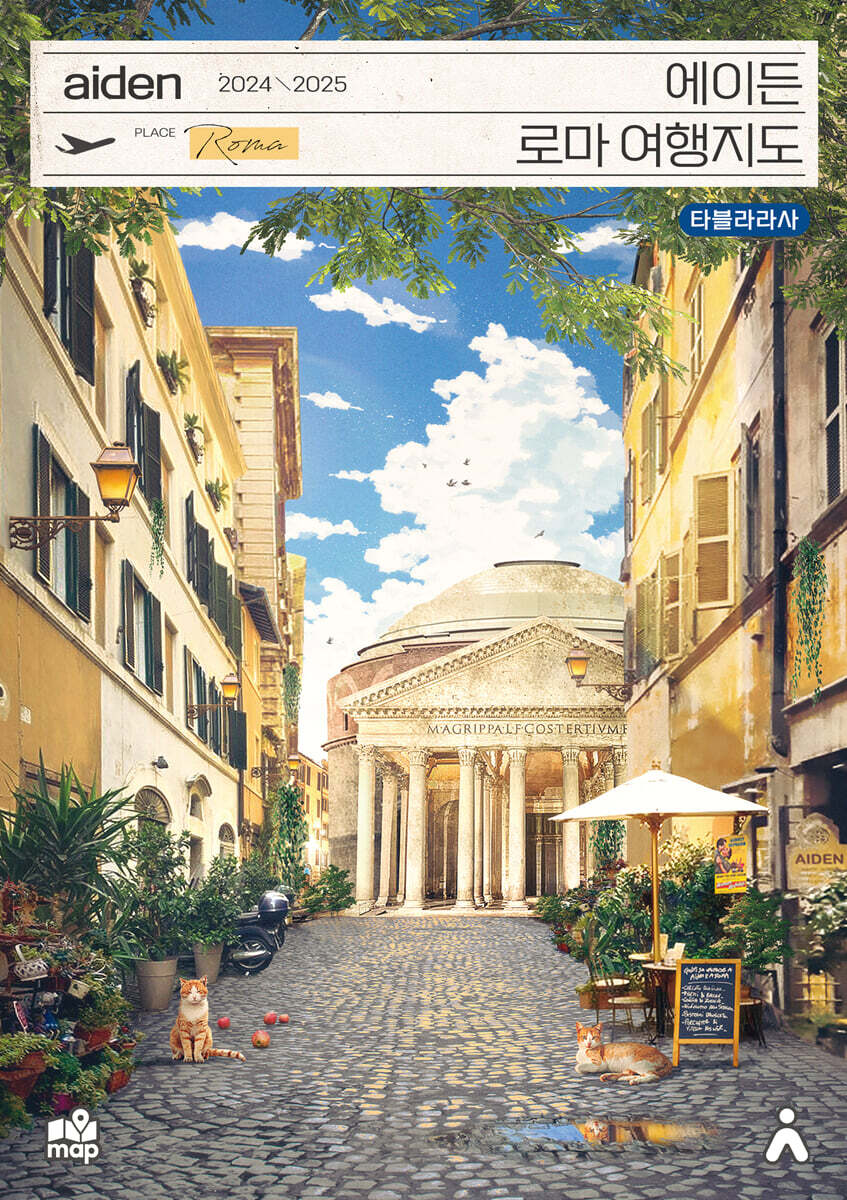 |
Description
Book Introduction
Tabula Rasa, famous for its travel maps, has released the Rome Travel Map 2024-2025 from its 'Aiden Travel Map'.
Descriptions of Rome's numerous historical tourist attractions are also densely packed on the map, allowing you to experience the convenience of travel planning that cannot be achieved with a general guidebook.
Additionally, this map can be unfolded and folded at any time on site, serving as an alternative to a guidebook.
Guidebooks are ultimately left at your accommodation, but Aiden's maps will always be with you, and they are made of tear-resistant, waterproof paper to ensure they last.
It also improves the print quality and material quality of the mapbook and provides tools for planning your trip by adding travel notes.
Descriptions of Rome's numerous historical tourist attractions are also densely packed on the map, allowing you to experience the convenience of travel planning that cannot be achieved with a general guidebook.
Additionally, this map can be unfolded and folded at any time on site, serving as an alternative to a guidebook.
Guidebooks are ultimately left at your accommodation, but Aiden's maps will always be with you, and they are made of tear-resistant, waterproof paper to ensure they last.
It also improves the print quality and material quality of the mapbook and provides tools for planning your trip by adding travel notes.
index
1.
Rome travel map
From Termini to Vatican City
From Trastevere to the Borghese Gallery
2.
Rome Main Area Travel Map
Traffic information
Subway route map
Vatican City Map Detailed Map
Detailed map of Pororomano
From Piazza del Campidoglio to Piazza del Popolo and the Roman Forum
3.
Rome Map Book
Around the Borghese Gallery in Piazza del Popolo
Around the Colosseum in the Roman Forum
Sant'Angelo around the Vatican
Around Trastevere
Around Termini
Around the Trevi Fountain in Piazza Navona
Between Piazza del Popolo and Castel Sant'Angelo
Spanish Steps and Trevi Fountain area
Around the Pantheon in Piazza Navona
Rome Metro Map
Vatican City
Pororomano
4.
Rome Travel Notes
Rome travel map
From Termini to Vatican City
From Trastevere to the Borghese Gallery
2.
Rome Main Area Travel Map
Traffic information
Subway route map
Vatican City Map Detailed Map
Detailed map of Pororomano
From Piazza del Campidoglio to Piazza del Popolo and the Roman Forum
3.
Rome Map Book
Around the Borghese Gallery in Piazza del Popolo
Around the Colosseum in the Roman Forum
Sant'Angelo around the Vatican
Around Trastevere
Around Termini
Around the Trevi Fountain in Piazza Navona
Between Piazza del Popolo and Castel Sant'Angelo
Spanish Steps and Trevi Fountain area
Around the Pantheon in Piazza Navona
Rome Metro Map
Vatican City
Pororomano
4.
Rome Travel Notes
Detailed image

Into the book
<Pantheon>
[Pantheon] The pinnacle of ancient Roman architecture.
Designated as a UNESCO World Heritage Site in 1980 and 1990.
Built by Agrippa in 27 BC as a temple to all the Roman gods (aka the Pantheon), it was rebuilt in 125 AD after a fire.
Thanks to its use as the 'Cathedral of Santa Maria Rotonda' until the 19th century, the original form of the building has been well preserved without the stigma of being pagan.
It is the world's largest concrete dome built without the use of steel reinforcement.
The oculus, a 9-meter diameter ceiling opening shaped like the sun, provides natural lighting and also provides cooling and ventilation.
Inside, there are ossuaries of famous people such as Vittorio Emanuele II and Raphael.
Free admission
Vatican City
[Vatican City] An independent Catholic state located in the city of Rome (landlocked state).
The smallest country in the world.
The Swiss Guard is the Vatican's sole military force responsible for security.
In 1984, the entire city was designated a UNESCO World Heritage Site.
The internal buildings include the Vatican Museums, the Sistine Chapel, and St. Peter's Basilica, and a guided tour is recommended for a proper viewing.
When visiting the Vatican, please note that there is a thorough security check (X-ray) upon entry, and you will not be allowed entry if you are carrying sharp objects such as knives, nail clippers, or scissors.
Clothing that exposes the knees or shoulders is also not permitted, and large backpacks are not permitted.
Although it is an independent country, a passport is not required as entry is only permitted in the general travel zone.
There is no air conditioning, so it is essential to prepare drinking water in the summer.
Raphael's Rooms
[Stanze di Raffaello] A room where you can appreciate Raphael's frescoes.
It consists of a total of 4 rooms.
The Hall of the Signature was the place where the famous 'School of Athens' work was located, the Hall of Helioduos was the Pope's audience room, the Hall of the Fire of the Borgo was an audience room, and the Hall of Constantine was a place where the Pope invited outside dignitaries and held parties.
The Room of Constantine is a room that was completed by Raphael's disciple after his death after the sketch was drawn.
Spanish Steps
[Spanish Steps] 137 steps from Piazza di Spagna to the Trinita dei Monti church.
Designated as a UNESCO World Heritage Site in 1980 and 1990.
Trinity Stairs.
It is famous for the scene in 'Roman Holiday' where Audrey Hepburn eats gelato here.
However, please be careful as currently, for the purpose of protecting cultural heritage, even just sitting on the stairs, let alone eating, is subject to a fine.
Since it is a place that is especially crowded with tourists, you can take commemorative photos leisurely if you visit early in the morning.
Borghese Gallery
[Galleria Borghese] National art gallery located in the Villa Borghese.
It houses over 600 works of art, second only to the Vatican Museum, including paintings by Caravaggio, Botticelli, and Raphael, as well as Bernini's sculptures of David and Apollo and Daphne.
Reservations are required (in 2-hour increments) as the number of visitors is limited.
Even your phone will be turned off due to strict security checks!
Summary of Italian History
Italy 8th-7th century BC Ancient Greeks occupy southern Italy In 753 BC, Romulus and Remus establish Rome on the Palatine Hill Abolish the monarchy in 509 BC, and a republic for 450 years Republic: separation of powers between classes (consuls, senate system) The Roman Republic and its allies won three Punic Wars against Carthage (present-day Tunisia) in the 3rd century BC, destroying Carthage and occupying North Africa and Sicily Gaining hegemony over the entire Mediterranean Sea, merging with Greek culture to form Greco-Roman culture In 117 BC, the territory of the Roman Empire reached its maximum expansion to all of Western Europe, northern Africa, and the northern Arabian Peninsula including Turkey. In 395 BC, the Roman Empire was divided into the Eastern Roman Empire and the Western Roman Empire. After the Western Roman Empire (England, Western Europe, and Northern Africa) was destroyed by the migration of Germanic peoples, the Western Roman Empire came under the rule of the Frankish Kingdom and then the Holy Roman Empire. Formation of city-states in the 11th century, expansion of power by Florence, Venice, Genoa, Milan, etc. Development of scholarship and art centered on city-states in the 16th to 19th centuries Discovered artists such as Michelangelo, Leonardo da Vinci, and Raphael from the Medici family in Florence In 1453, the Eastern Roman Empire was destroyed by the Ottoman Empire In 1870, the Italian Peninsula was unified by Victor Emmanuel II Victorious in World War I, in 1923, Mussolini's fascist regime joined forces with Germany and Japan in World War II, becoming a defeated country In 1946, the monarchy was abolished through elections and the Italian Republic was established
[Pantheon] The pinnacle of ancient Roman architecture.
Designated as a UNESCO World Heritage Site in 1980 and 1990.
Built by Agrippa in 27 BC as a temple to all the Roman gods (aka the Pantheon), it was rebuilt in 125 AD after a fire.
Thanks to its use as the 'Cathedral of Santa Maria Rotonda' until the 19th century, the original form of the building has been well preserved without the stigma of being pagan.
It is the world's largest concrete dome built without the use of steel reinforcement.
The oculus, a 9-meter diameter ceiling opening shaped like the sun, provides natural lighting and also provides cooling and ventilation.
Inside, there are ossuaries of famous people such as Vittorio Emanuele II and Raphael.
Free admission
Vatican City
[Vatican City] An independent Catholic state located in the city of Rome (landlocked state).
The smallest country in the world.
The Swiss Guard is the Vatican's sole military force responsible for security.
In 1984, the entire city was designated a UNESCO World Heritage Site.
The internal buildings include the Vatican Museums, the Sistine Chapel, and St. Peter's Basilica, and a guided tour is recommended for a proper viewing.
When visiting the Vatican, please note that there is a thorough security check (X-ray) upon entry, and you will not be allowed entry if you are carrying sharp objects such as knives, nail clippers, or scissors.
Clothing that exposes the knees or shoulders is also not permitted, and large backpacks are not permitted.
Although it is an independent country, a passport is not required as entry is only permitted in the general travel zone.
There is no air conditioning, so it is essential to prepare drinking water in the summer.
Raphael's Rooms
[Stanze di Raffaello] A room where you can appreciate Raphael's frescoes.
It consists of a total of 4 rooms.
The Hall of the Signature was the place where the famous 'School of Athens' work was located, the Hall of Helioduos was the Pope's audience room, the Hall of the Fire of the Borgo was an audience room, and the Hall of Constantine was a place where the Pope invited outside dignitaries and held parties.
The Room of Constantine is a room that was completed by Raphael's disciple after his death after the sketch was drawn.
Spanish Steps
[Spanish Steps] 137 steps from Piazza di Spagna to the Trinita dei Monti church.
Designated as a UNESCO World Heritage Site in 1980 and 1990.
Trinity Stairs.
It is famous for the scene in 'Roman Holiday' where Audrey Hepburn eats gelato here.
However, please be careful as currently, for the purpose of protecting cultural heritage, even just sitting on the stairs, let alone eating, is subject to a fine.
Since it is a place that is especially crowded with tourists, you can take commemorative photos leisurely if you visit early in the morning.
Borghese Gallery
[Galleria Borghese] National art gallery located in the Villa Borghese.
It houses over 600 works of art, second only to the Vatican Museum, including paintings by Caravaggio, Botticelli, and Raphael, as well as Bernini's sculptures of David and Apollo and Daphne.
Reservations are required (in 2-hour increments) as the number of visitors is limited.
Even your phone will be turned off due to strict security checks!
Summary of Italian History
Italy 8th-7th century BC Ancient Greeks occupy southern Italy In 753 BC, Romulus and Remus establish Rome on the Palatine Hill Abolish the monarchy in 509 BC, and a republic for 450 years Republic: separation of powers between classes (consuls, senate system) The Roman Republic and its allies won three Punic Wars against Carthage (present-day Tunisia) in the 3rd century BC, destroying Carthage and occupying North Africa and Sicily Gaining hegemony over the entire Mediterranean Sea, merging with Greek culture to form Greco-Roman culture In 117 BC, the territory of the Roman Empire reached its maximum expansion to all of Western Europe, northern Africa, and the northern Arabian Peninsula including Turkey. In 395 BC, the Roman Empire was divided into the Eastern Roman Empire and the Western Roman Empire. After the Western Roman Empire (England, Western Europe, and Northern Africa) was destroyed by the migration of Germanic peoples, the Western Roman Empire came under the rule of the Frankish Kingdom and then the Holy Roman Empire. Formation of city-states in the 11th century, expansion of power by Florence, Venice, Genoa, Milan, etc. Development of scholarship and art centered on city-states in the 16th to 19th centuries Discovered artists such as Michelangelo, Leonardo da Vinci, and Raphael from the Medici family in Florence In 1453, the Eastern Roman Empire was destroyed by the Ottoman Empire In 1870, the Italian Peninsula was unified by Victor Emmanuel II Victorious in World War I, in 1923, Mussolini's fascist regime joined forces with Germany and Japan in World War II, becoming a defeated country In 1946, the monarchy was abolished through elections and the Italian Republic was established
--- From the text
Publisher's Review
The Aiden Roman Map booklet includes two A1 size (841*594) maps made of waterproof paper and folded into A5 size.
One covers the entirety of Rome, traveling from Termini Station in the east to the Vatican in the west, while another zooms in from Piazza del Popolo to Piazza del Campidoglio, offering detailed recommendations for restaurants and local spots.
Also included are enlarged maps of the Roman Forum and the Vatican.
And we are compressing these two key maps and providing them as a small mini map book.
Travel Note provides maps and checklists to help you plan your trip.
You can check the places you have been to or want to visit using the flag stickers we provide.
Aiden's map is pure content with no ads whatsoever.
As this map focuses on travel and history, it cannot be compared to other maps.
"Aiden Rome Travel Map 2024-2025" is the most efficient travel map that allows those who wish to travel to the 'Rome' region to see the route and travel information at a glance.
The travel maps created by existing tourism offices are not just travel maps.
It also contains detailed information, making it ideal for planning your travel itinerary and trip.
Of course it's not cheap.
However, it is very convenient and has far greater utility because all the information is contained on one sheet.
And I can confidently say that this map is the only one of its kind in our country, and indeed in the entire world, called “Aiden Travel Map.”
If you want to save time and enjoy your trip, be sure to choose this map and have a happy trip plan.
One covers the entirety of Rome, traveling from Termini Station in the east to the Vatican in the west, while another zooms in from Piazza del Popolo to Piazza del Campidoglio, offering detailed recommendations for restaurants and local spots.
Also included are enlarged maps of the Roman Forum and the Vatican.
And we are compressing these two key maps and providing them as a small mini map book.
Travel Note provides maps and checklists to help you plan your trip.
You can check the places you have been to or want to visit using the flag stickers we provide.
Aiden's map is pure content with no ads whatsoever.
As this map focuses on travel and history, it cannot be compared to other maps.
"Aiden Rome Travel Map 2024-2025" is the most efficient travel map that allows those who wish to travel to the 'Rome' region to see the route and travel information at a glance.
The travel maps created by existing tourism offices are not just travel maps.
It also contains detailed information, making it ideal for planning your travel itinerary and trip.
Of course it's not cheap.
However, it is very convenient and has far greater utility because all the information is contained on one sheet.
And I can confidently say that this map is the only one of its kind in our country, and indeed in the entire world, called “Aiden Travel Map.”
If you want to save time and enjoy your trip, be sure to choose this map and have a happy trip plan.
GOODS SPECIFICS
- Date of issue: March 1, 2024
- Page count, weight, size: 60 pages | 408g | 148*210*30mm
- ISBN13: 9791190073400
- ISBN10: 1190073404
You may also like
카테고리
korean


korean

![ELLE 엘르 스페셜 에디션 A형 : 12월 [2025]](http://librairie.coreenne.fr/cdn/shop/files/b8e27a3de6c9538896439686c6b0e8fb.jpg?v=1766436872&width=3840)


