

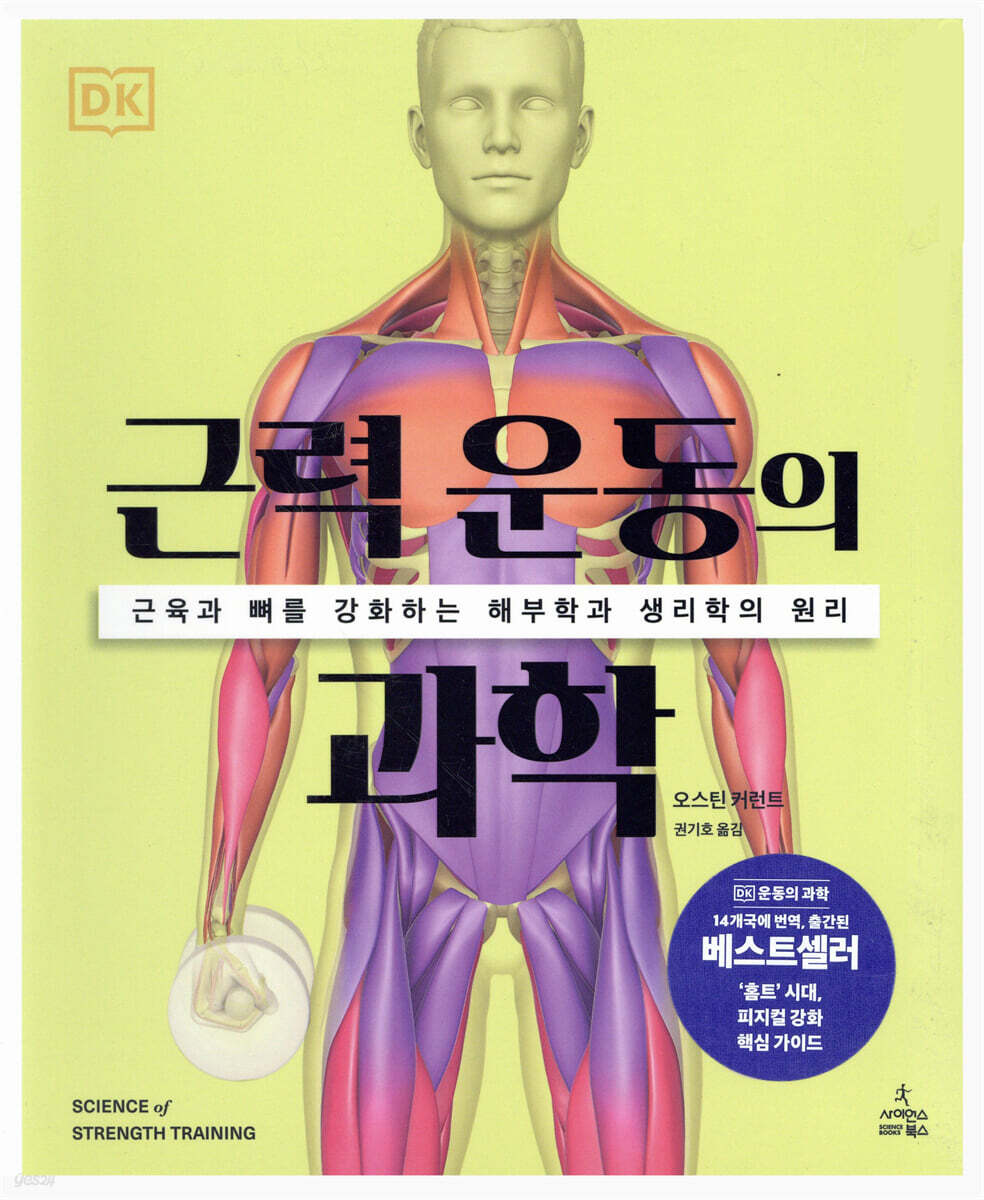
The Science of Strength Training
 |
Description
Book Introduction
31 Basic Movements That Control 600 Muscles
Strength Training for Everyone
The biggest barriers to starting strength training are complex exercise programs and lack of gym knowledge.
The goal of this book is to break down that wall.
―Austin Current, Certified Strength and Conditioning Specialist (CSCS), American Strength and Conditioning Association; Certified Sports Nutritionist (CISSN), International Society of Sports Nutrition
This is a must-read book for anyone exercising to treat chronic musculoskeletal pain.
Kim Du-young, Professor of Rehabilitation Medicine, International St. Mary's Hospital, Catholic Kwandong University School of Medicine
In a time when the body and mind are prone to shrinking, the importance of muscles is emphasized more than ever.
If the home workout equipment you ordered like crazy or the gym membership you paid for with great determination have become a burden, it's time to get your body and mind in order.
Austin Current, author of "The Science of Strength Training: The Anatomy and Physiology of Strengthening Muscles and Bones," the third book in the Science of Exercise series published by Science Books, is a fitness expert.
He received his professional certification from the International Federation of Bodybuilding (IFBB) in 2014 at the age of 20 and earned a bachelor's degree in Kinesiology and Exercise Science from the University of Southern Indiana in 2016.
Since early 2018, I have been teaching seminars in North America and Europe about anatomy, exercise execution methods, biomechanics, nutrition, and exercise program design.
As co-owner of Physique Development Consulting (physiquedevelopment.com), I provide online and offline coaching services to members worldwide. I also run a YouTube channel (Austin Current) where you can watch a variety of interesting videos, such as 'Coach Austin Technique Videos' and 'Training Tips'.
Coach Austin Current's ability to explain complex concepts in an accessible way and to motivate students through education is fully demonstrated in "The Science of Strength Training."
Professor Kwon Ki-ho, who translated the first series of science books on exercise, 『Science of Yoga』 and 『Encyclopedia of the Human Body』, has once again translated 『Science of Strength Training』 into Korean accurately and fluently.
This book, rich in anatomical and physiological information, combines infographics with explanations that convey the most essential points to readers, making it an essential guide to life for modern people.
This book is also strongly recommended by Professor Kim Du-young of the Department of Rehabilitation Medicine at the Catholic Kwandong University College of Medicine, International St. Mary's Hospital, who has emphasized the importance of exercise in clinical settings.
This four-part book explains the science behind strength training and teaches both experienced and beginners how to properly perform strength training without injury.
Part 1 explains how muscles work and develop, how our bodies generate strength, and explores the overall benefits of exercise for the mind and body.
Part 2 shows which muscles are used for each movement for each target muscle group, and explains how to learn the correct posture and technique and avoid mistakes.
Part 3 covers routines that include proper warm-up, along with how to avoid injury during resistance training and how to resume exercise after an injury.
Part 4 outlines everything you need to know about effective strength training applications and includes examples of various programs that can help you build from the ground up over weeks, months, or even years.
Strength Training for Everyone
The biggest barriers to starting strength training are complex exercise programs and lack of gym knowledge.
The goal of this book is to break down that wall.
―Austin Current, Certified Strength and Conditioning Specialist (CSCS), American Strength and Conditioning Association; Certified Sports Nutritionist (CISSN), International Society of Sports Nutrition
This is a must-read book for anyone exercising to treat chronic musculoskeletal pain.
Kim Du-young, Professor of Rehabilitation Medicine, International St. Mary's Hospital, Catholic Kwandong University School of Medicine
In a time when the body and mind are prone to shrinking, the importance of muscles is emphasized more than ever.
If the home workout equipment you ordered like crazy or the gym membership you paid for with great determination have become a burden, it's time to get your body and mind in order.
Austin Current, author of "The Science of Strength Training: The Anatomy and Physiology of Strengthening Muscles and Bones," the third book in the Science of Exercise series published by Science Books, is a fitness expert.
He received his professional certification from the International Federation of Bodybuilding (IFBB) in 2014 at the age of 20 and earned a bachelor's degree in Kinesiology and Exercise Science from the University of Southern Indiana in 2016.
Since early 2018, I have been teaching seminars in North America and Europe about anatomy, exercise execution methods, biomechanics, nutrition, and exercise program design.
As co-owner of Physique Development Consulting (physiquedevelopment.com), I provide online and offline coaching services to members worldwide. I also run a YouTube channel (Austin Current) where you can watch a variety of interesting videos, such as 'Coach Austin Technique Videos' and 'Training Tips'.
Coach Austin Current's ability to explain complex concepts in an accessible way and to motivate students through education is fully demonstrated in "The Science of Strength Training."
Professor Kwon Ki-ho, who translated the first series of science books on exercise, 『Science of Yoga』 and 『Encyclopedia of the Human Body』, has once again translated 『Science of Strength Training』 into Korean accurately and fluently.
This book, rich in anatomical and physiological information, combines infographics with explanations that convey the most essential points to readers, making it an essential guide to life for modern people.
This book is also strongly recommended by Professor Kim Du-young of the Department of Rehabilitation Medicine at the Catholic Kwandong University College of Medicine, International St. Mary's Hospital, who has emphasized the importance of exercise in clinical settings.
This four-part book explains the science behind strength training and teaches both experienced and beginners how to properly perform strength training without injury.
Part 1 explains how muscles work and develop, how our bodies generate strength, and explores the overall benefits of exercise for the mind and body.
Part 2 shows which muscles are used for each movement for each target muscle group, and explains how to learn the correct posture and technique and avoid mistakes.
Part 3 covers routines that include proper warm-up, along with how to avoid injury during resistance training and how to resume exercise after an injury.
Part 4 outlines everything you need to know about effective strength training applications and includes examples of various programs that can help you build from the ground up over weeks, months, or even years.
- You can preview some of the book's contents.
Preview
index
Preface 6 / Strength Training for Everyone 8
Human Physiology 10
Muscle Anatomy 12 / How Muscles Work 14 / How Muscles Develop 18 / How Strength Training Promotes Muscle Development 20 / How Strength Training Increases Bone Strength 24 / Exercise Biomechanics 26 / Strengthening Muscle Activity 28 / Energy Sources for Strength Training 30 / Understanding Your Body's Energy Needs 32 / Diet for Strength Training 34 / Strength Training and the Brain 38
Strength Training 42
Getting Started with Exercise 44 / Glossary 50
Leg Strength Exercises 52 / Barbell Back Squat 54 / Adapted Movement 56 / Leg Press 58 / Hack Squat 60 / Dumbbell Stationary Lunge 62 / Adapted Movement 64 / Dumbbell Step Up 66 / Leg Curl 68 / Adapted Movement 70 / Hamstring Ball Curl 72 / Leg Extension 74 / Adapted Movement 76 / Barbell Glute Bridge 78 / Adapted Movement 80 / Calf Raise 82 / Adapted Movement 84 / Traditional Deadlift 86 / Adapted Movement 88
Chest Strength Exercises 90 / Barbell Bench Press 92 / Applied Movements 94 / Dumbbell Bench Press 96 / Applied Movements 98 / Hi-Lo Cable Chest Fly 100 / Applied Movements 102 / Machine Chest Fly 104 / Dumbbell Chest Fly 106
Back Strength Exercises 108 / Wide-Grip Vertical Pulldown 110 / Adapted Movements 112 / Neutral-Grip Horizontal Row 114 / Adapted Movements 116 / Dumbbell Trap Shrug 118 / Adapted Movements 120
Shoulder Strength Exercises 122 / Barbell Overhead Shoulder Press 124 / Adapted Movements 126 / Dumbbell Lateral Raise 128 / Adapted Movements 30 / Dumbbell Front Raise 132 / Adapted Movements 134 / Dumbbell Rear Deltoid Fly 136 / Adapted Movements 138
Arm Strength Exercises 140 / Dumbbell Biceps Curl 142 / Adapted Movement 144 / Dumbbell Triceps Extension 146 / Adapted Movement 148 / Rope Triceps Pushdown 150 / Adapted Movement 152
Abdominal Strength Exercises 154 / Front Plank Rotation 156 / Side Plank Rotation 158 / Transverse Abdominal 160 / Ball Crunch / Adapted Movement 162 / Hanging Knee Raise 164 / Adapted Movement 166 / Cable Rotational 168 / Oblique Twist / Adapted Movement 170
Injury Prevention 172
Injury Risk 174 / Delayed-Onset Muscle Soreness 176 / Common Injuries 178 / Shoulder Injuries 179 / Elbow Injuries 180 / Lumbar Spinal Injuries 181 / Hip Injuries 182 / Knee Injuries 183 / Resuming Exercise After Injury 184 / Routine Design 186 / Mobility Exercises 188 / Cool-Down 194
Strength Training Method 196
The Varieties of Strength Training 198 / Strength Training Programs 201 / Building Muscle: Beginners 202 / Building Muscle: Advanced 204 / Building Strength: Beginners 206 / Building Strength: Advanced 208 / Improving Endurance: Beginners 210 / Improving Endurance: Advanced 212
Glossary 215 / Index 217 / References 222 / Acknowledgements 224 / Copyright 224
Human Physiology 10
Muscle Anatomy 12 / How Muscles Work 14 / How Muscles Develop 18 / How Strength Training Promotes Muscle Development 20 / How Strength Training Increases Bone Strength 24 / Exercise Biomechanics 26 / Strengthening Muscle Activity 28 / Energy Sources for Strength Training 30 / Understanding Your Body's Energy Needs 32 / Diet for Strength Training 34 / Strength Training and the Brain 38
Strength Training 42
Getting Started with Exercise 44 / Glossary 50
Leg Strength Exercises 52 / Barbell Back Squat 54 / Adapted Movement 56 / Leg Press 58 / Hack Squat 60 / Dumbbell Stationary Lunge 62 / Adapted Movement 64 / Dumbbell Step Up 66 / Leg Curl 68 / Adapted Movement 70 / Hamstring Ball Curl 72 / Leg Extension 74 / Adapted Movement 76 / Barbell Glute Bridge 78 / Adapted Movement 80 / Calf Raise 82 / Adapted Movement 84 / Traditional Deadlift 86 / Adapted Movement 88
Chest Strength Exercises 90 / Barbell Bench Press 92 / Applied Movements 94 / Dumbbell Bench Press 96 / Applied Movements 98 / Hi-Lo Cable Chest Fly 100 / Applied Movements 102 / Machine Chest Fly 104 / Dumbbell Chest Fly 106
Back Strength Exercises 108 / Wide-Grip Vertical Pulldown 110 / Adapted Movements 112 / Neutral-Grip Horizontal Row 114 / Adapted Movements 116 / Dumbbell Trap Shrug 118 / Adapted Movements 120
Shoulder Strength Exercises 122 / Barbell Overhead Shoulder Press 124 / Adapted Movements 126 / Dumbbell Lateral Raise 128 / Adapted Movements 30 / Dumbbell Front Raise 132 / Adapted Movements 134 / Dumbbell Rear Deltoid Fly 136 / Adapted Movements 138
Arm Strength Exercises 140 / Dumbbell Biceps Curl 142 / Adapted Movement 144 / Dumbbell Triceps Extension 146 / Adapted Movement 148 / Rope Triceps Pushdown 150 / Adapted Movement 152
Abdominal Strength Exercises 154 / Front Plank Rotation 156 / Side Plank Rotation 158 / Transverse Abdominal 160 / Ball Crunch / Adapted Movement 162 / Hanging Knee Raise 164 / Adapted Movement 166 / Cable Rotational 168 / Oblique Twist / Adapted Movement 170
Injury Prevention 172
Injury Risk 174 / Delayed-Onset Muscle Soreness 176 / Common Injuries 178 / Shoulder Injuries 179 / Elbow Injuries 180 / Lumbar Spinal Injuries 181 / Hip Injuries 182 / Knee Injuries 183 / Resuming Exercise After Injury 184 / Routine Design 186 / Mobility Exercises 188 / Cool-Down 194
Strength Training Method 196
The Varieties of Strength Training 198 / Strength Training Programs 201 / Building Muscle: Beginners 202 / Building Muscle: Advanced 204 / Building Strength: Beginners 206 / Building Strength: Advanced 208 / Improving Endurance: Beginners 210 / Improving Endurance: Advanced 212
Glossary 215 / Index 217 / References 222 / Acknowledgements 224 / Copyright 224
Detailed image

Publisher's Review
Can children do strength training?
Can a vegetarian diet help you build muscle?
How effective is foam rolling?
Are you born with bad genes (for building strength)? Genetics are important, but they're not everything.
Being told you're bad at something, regardless of your genetic expression, can have a negative impact on your achievements.
Since accurate genetic testing is not possible in most cases, it is important to believe in yourself and not limit yourself by labeling yourself.
Then, we can create positive results. - From the text
Part 1, "Human Physiology," approaches the body from anatomic and physiological perspectives to optimize it for strength training.
The human body is a finely tuned machine capable of any exercise, from endurance sports like a marathon to fast, intense exercise like a barbell back squat.
When you first start strength training, your nervous system tries to activate both the agonist and antagonist muscles at the same time, which causes your movements to be uncoordinated.
Through practice, your nervous system adapts, making joint movements smoother and more efficient, as well as increasing your range of motion.
Improving the connection between your nervous system and your muscles can help you increase strength.
The greater the load and physical tension placed on the target muscle, the greater the potential for muscle development.
When muscles pull on bones to move the body using the principle of leverage, proper preparation and execution of exercise reduces tension on the tissues, thus reducing injuries.
The respiratory and circulatory systems work in concert with the energy demands of exercise to supply energy to the muscles.
The key to maximizing the effectiveness of strength training is to keep your abdominal muscles engaged.
The cardiovascular system supplies energy to muscles and removes waste products.
The number of calories you consume directly affects your ability to gain, lose, or maintain weight.
Nutrition before and after exercise can be an important factor in overall exercise performance and recovery.
Some experts recommend consuming protein immediately after your workout to maximize recovery, while others advise eating a protein-rich meal within one to three hours after your workout.
There is little disagreement that consuming high-quality protein, either as a supplement or through a meal after exercise, is good for building muscle.
Strength training while on a vegan or vegetarian diet can be just as effective as strength training while on a meat-based diet.
Most of the physical adaptations that occur in the first 2 to 4 weeks in response to strength training occur in the nervous system.
Reducing stress, increasing productivity, and improving focus are just a few.
Aerobic exercise combined with strength training increases neurotrophic levels, increasing the size of the hippocampus and improving long-term memory.
The same goes for muscle memory.
Even when you take a break and start exercising again, it's easy thanks to your brain's memory of past exercise routines and tasks.
This memory speeds up muscle recovery because it takes less time to relearn the movement.
A Fitness Guide for Modern People
The effects of strength training are as follows:
* Reduces the risk of cardiovascular disease and type 2 diabetes.
* Muscle mass, strength, and bone density do not decrease with age.
* Improves cognitive function, memory, and concentration.
* Prevents Alzheimer's disease and dementia.
* Relieves depression and anxiety.
- In the text
Part 2, “Strength Training,” analyzes 31 major movements from an anatomical and physiological perspective, while also introducing applied movements performed with various equipment.
When you begin strength training, your goal is to get maximum benefit from every movement.
Before introducing the optimal way to train specific muscle groups in the order of legs, chest, back, shoulders, and stomach, we cover the basics, proper breathing techniques, and safe exercise methods.
Whether it's at the gym or at home, I try to recognize the pros and cons of each situation and adjust accordingly.
Building leg muscles and increasing leg strength can improve your overall athletic performance.
Training your calf muscles not only increases the strength and tone of your calves, but also improves the stability of your knee joints.
Start with light weights and gradually increase the load as you feel comfortable moving.
Representative movements include back squats and deadlifts, which involve two or more joints, and leg extensions and calf raises, which involve only one joint.
The leg press (page 58) mimics the back squat (pages 54-55), but places less load on the spine, making it particularly good for preventing or avoiding injury.
To get the most benefit, you should only bend at the hips and knees, but if your butt lifts off the seat or your lower back comes off the backrest, you're bending your legs too much.
Chest strength training is not simply lifting weights to the top of the movement, but rather pushing or moving the weights with the upper arms.
The main function of the pectoralis major is to pull the upper arm toward the midline of the chest.
The pectoralis major muscle allows for a wide range of functional movements of the upper body at the shoulder joint area.
The pectoralis minor and serratus anterior muscles extend the arms forward during bench presses and chest flys (100 reps).
Using bands or cables can help you train your chest muscles safely and effectively.
Cable machines maintain tension in the pectoralis major muscles, which are used for the up and down movements of each rep.
Strengthening your back muscles allows you to perform a wider range of movement patterns with perfect coordination.
The main muscles that move the back are the latissimus dorsi, which is the widest muscle closest to the skin; the trapezius, which is a shallow muscle that plays an important role; the rhomboids, which is a deep muscle beneath the trapezius; and the extensor spinae, which is a deep muscle beneath the rhomboids.
When performing exercises that target your back muscles, combining different muscles as needed will allow you to properly achieve the full range of motion.
It can be divided into rowing application movements and pull-down application movements.
Strengthening your upper body muscles improves posture, mobility, flexibility, and range of motion.
The primary role of the deltoid, a key muscle that moves the shoulder in shoulder strength training, is to raise or extend the arm.
Because the deltoid muscle is used repeatedly in daily life and strength training, it is important to train it with a variety of loads and rep settings.
You can target the anterior and middle deltoid muscles using press and raise movements.
Rowing and fly movements can work the posterior deltoid muscles.
Strengthening your arm muscles, which are just as important as your leg muscles, will allow you to increase the load on other muscle groups in strength training.
The main muscles that move the arm are the biceps brachii at the front of the upper arm, the triceps brachii at the back of the upper arm, and several forearm muscles involved in controlling the motion of holding weights or gripping posture.
In exercises that focus on bending and extension, the elbow and shoulder joints must be fixed in position to increase the amount of load placed on the target muscles and prevent strain on the joints.
The abdominal muscles assist in breathing and are involved in maintaining the overall strength and structure of the trunk.
Strengthening your core strengthens your core, protects your spine, and reduces your risk of back injury.
The main muscles responsible for movement in the abdomen are the rectus abdominis, which corresponds to the six-pack, the external oblique and internal oblique muscles on both sides of the torso, and the transverse abdominis, which is the deepest abdominal muscle.
You can work your rectus abdominis using body weight or weighted loads by performing movements like grunches or hanging knee raises.
The transverse abdominal muscles act as an internal lifting belt, stabilizing the torso and protecting the spine through a pressing and tightening force.
How to Exercise Without Injury
Maintaining good posture is paramount in preventing spinal injuries.
Coordination and dynamics are important.
Engaging your core muscles can improve stability and control, helping prevent back injuries. —From the text
Although strength training is considered one of the safest forms of exercise, it is not without its risks of injury.
You can prevent injuries by knowing the common injuries described in Part 3, "Injury Prevention."
When it comes to any exercise, following proper execution techniques is the best way to avoid injury.
It is also very important to prepare your body before exercising and to recover after exercising.
Following a sequential exercise program gives your body time to adapt, build strength, and increase muscle mass.
The benefits of strength training can only be achieved with consistency.
Sticking to a good exercise program is the key to success and reducing your risk of injury.
Injuries that occur from strength training include overuse injuries and muscle strains.
Failure to warm up or exceeding the limits of your muscles increases your risk of injury.
You should not rush your return to exercise while recovering from an injury.
Follow medical guidelines, including adaptation procedures and medication.
Exercising too early or too much can lead to recurring injuries and worsening of your condition.
Foam rolling is a type of self-massage. When you find a painful area under the pressure of the roller, roll the roller over that area, focusing on it until the pain is relieved.
Stretching your muscles before exercise can provide short-term improvements in mobility without sacrificing strength.
After exercise, it relieves muscle pain and improves recovery.
To prevent injuries, you need to exercise efficiently and safely, and you need to develop good exercise habits from the beginning.
You should start with a warm-up consisting of aerobic movements or dynamic stretches to prepare your body for the exercise that follows.
Once you have done your warm-up exercises, you should move the parts you will be working before doing strength training.
Following a warm-up or warm-up routine will prepare you for your workout.
The length of your strength training routine will vary depending on your workout session and the sequence of muscles used that day, but it always ends with a cool-down.
Muscles may be sore and stiff for several days after strength training, during which time the target muscles may not be able to exert their full strength and exercise performance may be reduced.
Delayed-onset muscle soreness is a normal response to strength training, although it can cause significant damage.
Because the extent of muscle damage can be overwhelming and unlikely to improve over time, it's important to keep track of how you feel before strength training and follow a well-designed, sequential exercise program.
Finishing with a cool-down exercise will help your body recover and your mind return to normal.
Find the program that's right for you
How should you combine different movements? Let's examine Part 4, "Strength Training Methods," to understand the principles of exercise step by step and learn how to put them into practice.
By implementing this principle, you can improve your muscles, strength, and endurance.
Adjust the amount of exercise depending on whether your goal is to build muscle, improve endurance, or increase strength.
You can increase your workout volume by adding reps, loads, or sets.
When following an exercise program structured around various variables, such as exercise volume, exercise intensity, exercise selection, fatigue management, difficulty, and frequency, you can choose a program that works 3, 4, or 5 times a week, depending on your exercise experience, exercise goals, and available time.
Typically, beginner programs follow a pattern of four weeks of progressive overload followed by a five-week deload for recovery.
Exercise volume peaks at week 14.
The advanced program has a lot of exercise and a large increase in exercise volume, but the pattern is the same as the beginner program.
During weeks 16-19, exercise stimulation is reduced to promote recovery.
Rest (the time between exercise sets) is also very important for recovery.
Rest periods in advanced exercise programs vary from 15 seconds to 5 minutes depending on exercise goals, exercise intensity, set length, and exercise experience.
Beginners should take a rest period until their body's response to the exercise has largely calmed down.
Strength training is beneficial for everyone.
It helps not only with muscle strength and endurance, but also with brain function and mental health.
Regardless of gender, it is the most effective way to change your body shape, build muscle, and reduce body fat in areas you want to improve.
Strength training classes are available for girls and boys starting at age 11 and 13, respectively.
Safe and appropriate programs can improve motor function, increase well-being, and help you develop exercise habits early in life.
Above all, strength training is the most effective individual exercise strategy for preventing the loss of muscle mass and strength that occurs with age.
After age 40, muscle size decreases every year.
However, this gradual decline can be reduced by continuing to exercise while consuming sufficient protein.
In particular, physical activity such as strength training can help prevent or treat sarcopenia and muscle wasting.
Strengthening your muscles can help prevent age-related declines in physical function and independence.
Regardless of your level of knowledge and ability in strength training, and whether you train alone or in conjunction with other types of exercise, this book provides the information and methods you need to learn, understand, and confidently engage in strength training.
Can a vegetarian diet help you build muscle?
How effective is foam rolling?
Are you born with bad genes (for building strength)? Genetics are important, but they're not everything.
Being told you're bad at something, regardless of your genetic expression, can have a negative impact on your achievements.
Since accurate genetic testing is not possible in most cases, it is important to believe in yourself and not limit yourself by labeling yourself.
Then, we can create positive results. - From the text
Part 1, "Human Physiology," approaches the body from anatomic and physiological perspectives to optimize it for strength training.
The human body is a finely tuned machine capable of any exercise, from endurance sports like a marathon to fast, intense exercise like a barbell back squat.
When you first start strength training, your nervous system tries to activate both the agonist and antagonist muscles at the same time, which causes your movements to be uncoordinated.
Through practice, your nervous system adapts, making joint movements smoother and more efficient, as well as increasing your range of motion.
Improving the connection between your nervous system and your muscles can help you increase strength.
The greater the load and physical tension placed on the target muscle, the greater the potential for muscle development.
When muscles pull on bones to move the body using the principle of leverage, proper preparation and execution of exercise reduces tension on the tissues, thus reducing injuries.
The respiratory and circulatory systems work in concert with the energy demands of exercise to supply energy to the muscles.
The key to maximizing the effectiveness of strength training is to keep your abdominal muscles engaged.
The cardiovascular system supplies energy to muscles and removes waste products.
The number of calories you consume directly affects your ability to gain, lose, or maintain weight.
Nutrition before and after exercise can be an important factor in overall exercise performance and recovery.
Some experts recommend consuming protein immediately after your workout to maximize recovery, while others advise eating a protein-rich meal within one to three hours after your workout.
There is little disagreement that consuming high-quality protein, either as a supplement or through a meal after exercise, is good for building muscle.
Strength training while on a vegan or vegetarian diet can be just as effective as strength training while on a meat-based diet.
Most of the physical adaptations that occur in the first 2 to 4 weeks in response to strength training occur in the nervous system.
Reducing stress, increasing productivity, and improving focus are just a few.
Aerobic exercise combined with strength training increases neurotrophic levels, increasing the size of the hippocampus and improving long-term memory.
The same goes for muscle memory.
Even when you take a break and start exercising again, it's easy thanks to your brain's memory of past exercise routines and tasks.
This memory speeds up muscle recovery because it takes less time to relearn the movement.
A Fitness Guide for Modern People
The effects of strength training are as follows:
* Reduces the risk of cardiovascular disease and type 2 diabetes.
* Muscle mass, strength, and bone density do not decrease with age.
* Improves cognitive function, memory, and concentration.
* Prevents Alzheimer's disease and dementia.
* Relieves depression and anxiety.
- In the text
Part 2, “Strength Training,” analyzes 31 major movements from an anatomical and physiological perspective, while also introducing applied movements performed with various equipment.
When you begin strength training, your goal is to get maximum benefit from every movement.
Before introducing the optimal way to train specific muscle groups in the order of legs, chest, back, shoulders, and stomach, we cover the basics, proper breathing techniques, and safe exercise methods.
Whether it's at the gym or at home, I try to recognize the pros and cons of each situation and adjust accordingly.
Building leg muscles and increasing leg strength can improve your overall athletic performance.
Training your calf muscles not only increases the strength and tone of your calves, but also improves the stability of your knee joints.
Start with light weights and gradually increase the load as you feel comfortable moving.
Representative movements include back squats and deadlifts, which involve two or more joints, and leg extensions and calf raises, which involve only one joint.
The leg press (page 58) mimics the back squat (pages 54-55), but places less load on the spine, making it particularly good for preventing or avoiding injury.
To get the most benefit, you should only bend at the hips and knees, but if your butt lifts off the seat or your lower back comes off the backrest, you're bending your legs too much.
Chest strength training is not simply lifting weights to the top of the movement, but rather pushing or moving the weights with the upper arms.
The main function of the pectoralis major is to pull the upper arm toward the midline of the chest.
The pectoralis major muscle allows for a wide range of functional movements of the upper body at the shoulder joint area.
The pectoralis minor and serratus anterior muscles extend the arms forward during bench presses and chest flys (100 reps).
Using bands or cables can help you train your chest muscles safely and effectively.
Cable machines maintain tension in the pectoralis major muscles, which are used for the up and down movements of each rep.
Strengthening your back muscles allows you to perform a wider range of movement patterns with perfect coordination.
The main muscles that move the back are the latissimus dorsi, which is the widest muscle closest to the skin; the trapezius, which is a shallow muscle that plays an important role; the rhomboids, which is a deep muscle beneath the trapezius; and the extensor spinae, which is a deep muscle beneath the rhomboids.
When performing exercises that target your back muscles, combining different muscles as needed will allow you to properly achieve the full range of motion.
It can be divided into rowing application movements and pull-down application movements.
Strengthening your upper body muscles improves posture, mobility, flexibility, and range of motion.
The primary role of the deltoid, a key muscle that moves the shoulder in shoulder strength training, is to raise or extend the arm.
Because the deltoid muscle is used repeatedly in daily life and strength training, it is important to train it with a variety of loads and rep settings.
You can target the anterior and middle deltoid muscles using press and raise movements.
Rowing and fly movements can work the posterior deltoid muscles.
Strengthening your arm muscles, which are just as important as your leg muscles, will allow you to increase the load on other muscle groups in strength training.
The main muscles that move the arm are the biceps brachii at the front of the upper arm, the triceps brachii at the back of the upper arm, and several forearm muscles involved in controlling the motion of holding weights or gripping posture.
In exercises that focus on bending and extension, the elbow and shoulder joints must be fixed in position to increase the amount of load placed on the target muscles and prevent strain on the joints.
The abdominal muscles assist in breathing and are involved in maintaining the overall strength and structure of the trunk.
Strengthening your core strengthens your core, protects your spine, and reduces your risk of back injury.
The main muscles responsible for movement in the abdomen are the rectus abdominis, which corresponds to the six-pack, the external oblique and internal oblique muscles on both sides of the torso, and the transverse abdominis, which is the deepest abdominal muscle.
You can work your rectus abdominis using body weight or weighted loads by performing movements like grunches or hanging knee raises.
The transverse abdominal muscles act as an internal lifting belt, stabilizing the torso and protecting the spine through a pressing and tightening force.
How to Exercise Without Injury
Maintaining good posture is paramount in preventing spinal injuries.
Coordination and dynamics are important.
Engaging your core muscles can improve stability and control, helping prevent back injuries. —From the text
Although strength training is considered one of the safest forms of exercise, it is not without its risks of injury.
You can prevent injuries by knowing the common injuries described in Part 3, "Injury Prevention."
When it comes to any exercise, following proper execution techniques is the best way to avoid injury.
It is also very important to prepare your body before exercising and to recover after exercising.
Following a sequential exercise program gives your body time to adapt, build strength, and increase muscle mass.
The benefits of strength training can only be achieved with consistency.
Sticking to a good exercise program is the key to success and reducing your risk of injury.
Injuries that occur from strength training include overuse injuries and muscle strains.
Failure to warm up or exceeding the limits of your muscles increases your risk of injury.
You should not rush your return to exercise while recovering from an injury.
Follow medical guidelines, including adaptation procedures and medication.
Exercising too early or too much can lead to recurring injuries and worsening of your condition.
Foam rolling is a type of self-massage. When you find a painful area under the pressure of the roller, roll the roller over that area, focusing on it until the pain is relieved.
Stretching your muscles before exercise can provide short-term improvements in mobility without sacrificing strength.
After exercise, it relieves muscle pain and improves recovery.
To prevent injuries, you need to exercise efficiently and safely, and you need to develop good exercise habits from the beginning.
You should start with a warm-up consisting of aerobic movements or dynamic stretches to prepare your body for the exercise that follows.
Once you have done your warm-up exercises, you should move the parts you will be working before doing strength training.
Following a warm-up or warm-up routine will prepare you for your workout.
The length of your strength training routine will vary depending on your workout session and the sequence of muscles used that day, but it always ends with a cool-down.
Muscles may be sore and stiff for several days after strength training, during which time the target muscles may not be able to exert their full strength and exercise performance may be reduced.
Delayed-onset muscle soreness is a normal response to strength training, although it can cause significant damage.
Because the extent of muscle damage can be overwhelming and unlikely to improve over time, it's important to keep track of how you feel before strength training and follow a well-designed, sequential exercise program.
Finishing with a cool-down exercise will help your body recover and your mind return to normal.
Find the program that's right for you
How should you combine different movements? Let's examine Part 4, "Strength Training Methods," to understand the principles of exercise step by step and learn how to put them into practice.
By implementing this principle, you can improve your muscles, strength, and endurance.
Adjust the amount of exercise depending on whether your goal is to build muscle, improve endurance, or increase strength.
You can increase your workout volume by adding reps, loads, or sets.
When following an exercise program structured around various variables, such as exercise volume, exercise intensity, exercise selection, fatigue management, difficulty, and frequency, you can choose a program that works 3, 4, or 5 times a week, depending on your exercise experience, exercise goals, and available time.
Typically, beginner programs follow a pattern of four weeks of progressive overload followed by a five-week deload for recovery.
Exercise volume peaks at week 14.
The advanced program has a lot of exercise and a large increase in exercise volume, but the pattern is the same as the beginner program.
During weeks 16-19, exercise stimulation is reduced to promote recovery.
Rest (the time between exercise sets) is also very important for recovery.
Rest periods in advanced exercise programs vary from 15 seconds to 5 minutes depending on exercise goals, exercise intensity, set length, and exercise experience.
Beginners should take a rest period until their body's response to the exercise has largely calmed down.
Strength training is beneficial for everyone.
It helps not only with muscle strength and endurance, but also with brain function and mental health.
Regardless of gender, it is the most effective way to change your body shape, build muscle, and reduce body fat in areas you want to improve.
Strength training classes are available for girls and boys starting at age 11 and 13, respectively.
Safe and appropriate programs can improve motor function, increase well-being, and help you develop exercise habits early in life.
Above all, strength training is the most effective individual exercise strategy for preventing the loss of muscle mass and strength that occurs with age.
After age 40, muscle size decreases every year.
However, this gradual decline can be reduced by continuing to exercise while consuming sufficient protein.
In particular, physical activity such as strength training can help prevent or treat sarcopenia and muscle wasting.
Strengthening your muscles can help prevent age-related declines in physical function and independence.
Regardless of your level of knowledge and ability in strength training, and whether you train alone or in conjunction with other types of exercise, this book provides the information and methods you need to learn, understand, and confidently engage in strength training.
GOODS SPECIFICS
- Date of issue: December 1, 2021
- Format: Paperback book binding method guide
- Page count, weight, size: 224 pages | 668g | 195*230*20mm
- ISBN13: 9791191187342
- ISBN10: 1191187349
You may also like
카테고리
korean


korean

![ELLE 엘르 스페셜 에디션 A형 : 12월 [2025]](http://librairie.coreenne.fr/cdn/shop/files/b8e27a3de6c9538896439686c6b0e8fb.jpg?v=1766436872&width=3840)


