

Airplane Structure Textbook
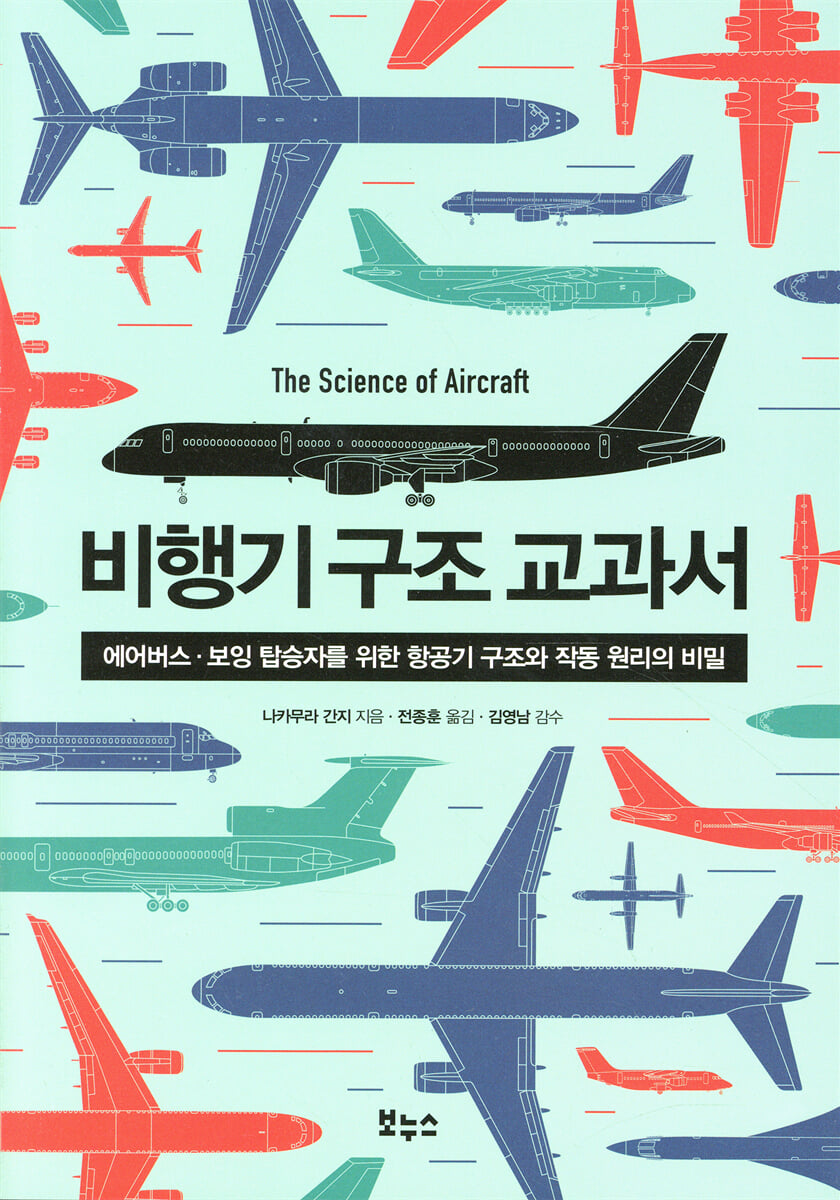 |
Description
Book Introduction
This aviation textbook, written by a veteran pilot with 30 years of experience, is designed to help the general public understand the operating principles and structure of airplanes without having to attend aviation school or a specialized aviation institute.
If you have ever been curious about the structure and principles of airplanes, 『Airplane Structure Textbook』 will be of great help, as it features accurate explanations and illustrations.
If you have ever been curious about the structure and principles of airplanes, 『Airplane Structure Textbook』 will be of great help, as it features accurate explanations and illustrations.
- You can preview some of the book's contents.
Preview
index
Preface _ 5
Chapter 1 What is a Jet Airliner?
1-01 The Fairy's Wings and Icarus's Wings _ 14
1-02 How can birds fly? _ 16
1-03 Why can't chickens fly? _ 18
1-04 Penguins Can Fly _ 20
1-05 Who was the first person to fly in the world? _ 22
1-06 Lift is used for a variety of purposes, not just for flight _ 24
1-07 The best altitude for flying is the stratosphere _ 26
1-08 International Standard Atmosphere is the 'standard' of the atmosphere _ 28
1-09 The power of air is tremendous _ 30
1-10 Wings are subject to air reaction _ 32
1-11 Lift and Drag Equations _ 34
1-12 What is the relationship between the forces acting on an airplane during flight? _ 36
1-13 How to Move Forward? _ 38
1-14 How much power does an airplane use to fly? _ 40
Common Sense Tip 1: The Beautiful but Dangerous Stratosphere _ 42
Chapter 2 Types of Jet Passengers
2-01 What is the difference between an airplane and a plane? _ 44
2-02 Why can't passenger planes fly at high altitudes? _ 46
2-03 Role of Each Part of the Airplane _ 48
2-04 Why There Are Various Wing Shapes _ 50
2-05 Shock waves are generated when flying at the speed of sound _ 52
2-06 Why Supersonic Passenger Jets Don't Exist Now _ 54
2-07 Why There Are No Single-Engine Passenger Planes _ 56
2-08 Differences between Propeller and Jet Aircraft _ 58
2-09 The Difference Between Horsepower and Thrust _ 60
Common Sense 2: Airplanes are based on magnetic north, not true north _ 62
Chapter 3 Structure and Principles for Flying
3-01 What does the cockpit look like? _ 64
3-02 Three Directions the Plane Flys _ 66
3-03 Relationship between the control stick and aircraft movement _ 68
3-04 Instrument panel showing aircraft attitude _ 70
3-05 How can I know my current location? _ 72
3-06 Evolved Autopilot _ 74
3-07 How to Measure Flight Speed? _ 76
3-08 What is flight altitude? _ 78
3-09 Landing Gear Structure _ 80
3-10 Structure for a Safe Landing _ 82
3-11 Flaps in action during takeoff and landing _ 84
3-12 Manipulating distant keys with the power of oil _ 86
3-13 The Relationship Between Air Conditioning and Pressure _ 88
3-14 The Role of the Auxiliary Power Unit (APU) _ 90
3-15 Various anti-icing devices protecting the aircraft _ 92
3-16 Making the most of the power of air _ 94
3-17 Various communications to assist flight _ 96
3-18 How do airplanes obtain the power they need? _ 98
3-19 Where is the fuel tank? _ 100
Bit of Common Sense 3: Dark nights and moonlit nights are very different _ 102
Chapter 4 Jet Engine Structure
4-01 What is a Gas Turbine Engine? _ 104
4-02 The Advent of the Jet Engine _ 106
4-03 What is the thrust of a jet engine? _ 108
4-04 Ideas for Efficient Power Generation _ 110
4-05 Turbofan Engines, Now a Mainstream _ 112
What is the role of the fan in the 4-06 engine? _ 114
4-07 What is the fan speed? _ 116
How much power does a 4-08 engine produce? _ 118
4-09 Airplane accelerators are operated by hand _ 120
4-10 How to increase output? _ 122
4-11 What is Engine Reverse Injection? _ 124
4-12 What is a Jet Engine Instrument Panel? _ 126
4-13 Instrument that indicates thrust size _ 128
4-14 How to Start the Engine _ 130
4-15 The Four Forces Created by an Engine _ 132
What is a Checklist? _ 134
Chapter 5 Structure of the Operation System
5-01 When the Plane Wakes Up _ 136
5-02 Plane ready for departure _ 138
5-03 What is a Flight Plan? _ 140
5-04 Carefully calculate the amount of fuel to be loaded _ 142
5-05 What are the departure and arrival times? _ 144
5-06 Why turn on the red light? _ 146
5-07 Flying with various thrusts _ 148
5-08 What is the takeoff speed? _ 150
5-09 How far does it take to take off? _ 152
5-10 The Secret of Flaps Used During Takeoff _ 154
5-11 It is not rising in the solar calendar _ 156
5-12 What do you rely on to rise? _ 158
How high can a 5-13 passenger plane go? _ 160
5-14 At what rate will it rise? _ 162
5-15 Ground speed reflects wind speed _ 164
5-16 The Slightly Scary World of Maha _ 166
5-17 How to accurately measure flight altitude _ 168
5-18 How to Determine Cruising Altitude? _ 170
The mainstream of the 5-19 cruise is 'economic cruise' _ 172
5-20 How much power does it cruise with? _ 174
5-21 If it's heavy, do you descend slowly? _ 176
5-22 What is the strength of children during descent? _ 178
5-23 There is no reason to set the pressure to 1 atm _ 180
5-24 The plane gets heavier when turning _ 182
5-25 Why You Can See the Runway Even in Thick Fog _ 184
What is the landing distance of a 5-26 passenger plane? _ 186
Facts and Facts 5 There are different types of briefings _ 188
Chapter 6 Safety Measures for Jet Passenger Aircraft
6-01 Why should I turn off my cell phone? _ 190
6-02 If the engine stops starting _ 192
6-03 What if the engine fails during takeoff? _ 194
6-04 Why the table is returned to its original position when taking off _ 196
6-05 In an emergency, release fuel to reduce weight _ 198
6-06 What are some typical examples of engine failure? _ 200
6-07 Various Fire Prevention Measures to Protect Airplanes _ 202
6-08 Snow and Ice: A Must-Have _ 204
6-09 What should I do if a sudden depressurization occurs? _ 206
6-10 Should I go or should I go back? Timing is important _ 208
6-11 Not lost even in the middle of the Pacific Ocean _ 210
What if trouble breaks out in the middle of the Pacific? _ 212
6-13 Measures to Prevent Collisions _ 214
6-14 Criteria for deciding whether to land or not _ 216
6-15 CRM that enhances flight safety _ 218
Training LOFT _ 220 for teams of 6-16
6-17 Regular Inspections You Must Perform for Safety _ 222
Search _ 225
References _ 231
Chapter 1 What is a Jet Airliner?
1-01 The Fairy's Wings and Icarus's Wings _ 14
1-02 How can birds fly? _ 16
1-03 Why can't chickens fly? _ 18
1-04 Penguins Can Fly _ 20
1-05 Who was the first person to fly in the world? _ 22
1-06 Lift is used for a variety of purposes, not just for flight _ 24
1-07 The best altitude for flying is the stratosphere _ 26
1-08 International Standard Atmosphere is the 'standard' of the atmosphere _ 28
1-09 The power of air is tremendous _ 30
1-10 Wings are subject to air reaction _ 32
1-11 Lift and Drag Equations _ 34
1-12 What is the relationship between the forces acting on an airplane during flight? _ 36
1-13 How to Move Forward? _ 38
1-14 How much power does an airplane use to fly? _ 40
Common Sense Tip 1: The Beautiful but Dangerous Stratosphere _ 42
Chapter 2 Types of Jet Passengers
2-01 What is the difference between an airplane and a plane? _ 44
2-02 Why can't passenger planes fly at high altitudes? _ 46
2-03 Role of Each Part of the Airplane _ 48
2-04 Why There Are Various Wing Shapes _ 50
2-05 Shock waves are generated when flying at the speed of sound _ 52
2-06 Why Supersonic Passenger Jets Don't Exist Now _ 54
2-07 Why There Are No Single-Engine Passenger Planes _ 56
2-08 Differences between Propeller and Jet Aircraft _ 58
2-09 The Difference Between Horsepower and Thrust _ 60
Common Sense 2: Airplanes are based on magnetic north, not true north _ 62
Chapter 3 Structure and Principles for Flying
3-01 What does the cockpit look like? _ 64
3-02 Three Directions the Plane Flys _ 66
3-03 Relationship between the control stick and aircraft movement _ 68
3-04 Instrument panel showing aircraft attitude _ 70
3-05 How can I know my current location? _ 72
3-06 Evolved Autopilot _ 74
3-07 How to Measure Flight Speed? _ 76
3-08 What is flight altitude? _ 78
3-09 Landing Gear Structure _ 80
3-10 Structure for a Safe Landing _ 82
3-11 Flaps in action during takeoff and landing _ 84
3-12 Manipulating distant keys with the power of oil _ 86
3-13 The Relationship Between Air Conditioning and Pressure _ 88
3-14 The Role of the Auxiliary Power Unit (APU) _ 90
3-15 Various anti-icing devices protecting the aircraft _ 92
3-16 Making the most of the power of air _ 94
3-17 Various communications to assist flight _ 96
3-18 How do airplanes obtain the power they need? _ 98
3-19 Where is the fuel tank? _ 100
Bit of Common Sense 3: Dark nights and moonlit nights are very different _ 102
Chapter 4 Jet Engine Structure
4-01 What is a Gas Turbine Engine? _ 104
4-02 The Advent of the Jet Engine _ 106
4-03 What is the thrust of a jet engine? _ 108
4-04 Ideas for Efficient Power Generation _ 110
4-05 Turbofan Engines, Now a Mainstream _ 112
What is the role of the fan in the 4-06 engine? _ 114
4-07 What is the fan speed? _ 116
How much power does a 4-08 engine produce? _ 118
4-09 Airplane accelerators are operated by hand _ 120
4-10 How to increase output? _ 122
4-11 What is Engine Reverse Injection? _ 124
4-12 What is a Jet Engine Instrument Panel? _ 126
4-13 Instrument that indicates thrust size _ 128
4-14 How to Start the Engine _ 130
4-15 The Four Forces Created by an Engine _ 132
What is a Checklist? _ 134
Chapter 5 Structure of the Operation System
5-01 When the Plane Wakes Up _ 136
5-02 Plane ready for departure _ 138
5-03 What is a Flight Plan? _ 140
5-04 Carefully calculate the amount of fuel to be loaded _ 142
5-05 What are the departure and arrival times? _ 144
5-06 Why turn on the red light? _ 146
5-07 Flying with various thrusts _ 148
5-08 What is the takeoff speed? _ 150
5-09 How far does it take to take off? _ 152
5-10 The Secret of Flaps Used During Takeoff _ 154
5-11 It is not rising in the solar calendar _ 156
5-12 What do you rely on to rise? _ 158
How high can a 5-13 passenger plane go? _ 160
5-14 At what rate will it rise? _ 162
5-15 Ground speed reflects wind speed _ 164
5-16 The Slightly Scary World of Maha _ 166
5-17 How to accurately measure flight altitude _ 168
5-18 How to Determine Cruising Altitude? _ 170
The mainstream of the 5-19 cruise is 'economic cruise' _ 172
5-20 How much power does it cruise with? _ 174
5-21 If it's heavy, do you descend slowly? _ 176
5-22 What is the strength of children during descent? _ 178
5-23 There is no reason to set the pressure to 1 atm _ 180
5-24 The plane gets heavier when turning _ 182
5-25 Why You Can See the Runway Even in Thick Fog _ 184
What is the landing distance of a 5-26 passenger plane? _ 186
Facts and Facts 5 There are different types of briefings _ 188
Chapter 6 Safety Measures for Jet Passenger Aircraft
6-01 Why should I turn off my cell phone? _ 190
6-02 If the engine stops starting _ 192
6-03 What if the engine fails during takeoff? _ 194
6-04 Why the table is returned to its original position when taking off _ 196
6-05 In an emergency, release fuel to reduce weight _ 198
6-06 What are some typical examples of engine failure? _ 200
6-07 Various Fire Prevention Measures to Protect Airplanes _ 202
6-08 Snow and Ice: A Must-Have _ 204
6-09 What should I do if a sudden depressurization occurs? _ 206
6-10 Should I go or should I go back? Timing is important _ 208
6-11 Not lost even in the middle of the Pacific Ocean _ 210
What if trouble breaks out in the middle of the Pacific? _ 212
6-13 Measures to Prevent Collisions _ 214
6-14 Criteria for deciding whether to land or not _ 216
6-15 CRM that enhances flight safety _ 218
Training LOFT _ 220 for teams of 6-16
6-17 Regular Inspections You Must Perform for Safety _ 222
Search _ 225
References _ 231
Detailed image

Publisher's Review
How do airplanes work and move?
The best aviation textbook that explains the flight principles and structure of aircraft.
Anyone who sees an airplane as large as a building ascending into the sky is bound to have an instinctive sense of wonder and wonder.
At this time, countless questions fill our minds, but few people can answer them.
The structure and principles of airplanes are something I have never learned in school, and most of the books I can find are specialized textbooks that do not take the general public's level of understanding into account at all. Furthermore, the information available on the Internet, a vast ocean of information, is fragmented and distracting.
Finding consistently well-organized material is almost a given.
Jet engines? Navigation systems? Landing gear? Safety measures
100 Key Knowledge to Understanding the Crystalline of Aeronautical Science
The author, a veteran pilot with 30 years of experience, wrote "Airplane Structure Textbook" with the goal of creating a systematic and well-organized aviation education book.
This book is written with the author's hope that the general public will be able to understand the operating principles and structure of airplanes without having to attend aviation school or a specialized aviation institute.
The author, who introduced passenger aircraft piloting from a general perspective in the 2016 『Airplane Piloting Textbook』, focused this time on explaining the structure and operating principles of an airplane rather than piloting techniques.
In particular, the author says he wrote the book focusing on the following points:
First, I made it so that it could be understood sensorily even if I couldn't explain it in detail.
To understand airplanes, it's good to know what lift is and how it's generated, but going too deep will only diminish your understanding.
The author explains the force of gravity as a reaction of air to make it more sensible.
This may not be a sufficient explanation for an expert, but it is enough for the average person to understand the principles of flight.
Second, we valued pictures and diagrams over complex and lengthy explanations.
The content and information that you must know are summarized and presented in pictures.
This book consists of a total of 100 items, and each item is well explained with pictures and diagrams.
Anyone with some knowledge can understand the entire contents of the book just by looking at the diagrams and graphs.
Third, rather than simply introducing related formulas, we used actual numbers to provide a realistic explanation.
When explaining the formulas for calculating lift and drag, the formula for calculating lift-to-drag ratio, maximum takeoff weight, or bypass ratio, I used actual examples of passenger aircraft operated in actual aviation settings.
For example, it shows the actual net thrust and total thrust calculated by comparing the early turbofan engines JT8D and GE90-115B.
Fourth, always think and explain using a close example.
When explaining thrust, the force that moves an airplane forward, a representative example is a balloon that moves forward by spraying air.
An airplane sucks in air, sends it backwards, and uses the reaction to generate thrust, and balloons fly through the air using the same principle as airplanes.
The 『Airplane Structure Textbook』, consisting of six chapters, covers various topics related to lift in Chapter 1, and examines the differences between aircraft and airplanes and their relationship to the speed of sound in Chapter 2.
The structure and principles of actual airplanes will be explored in detail starting in Chapter 3.
It explains in an interesting way the principles of an airplane, in which numerous devices are organically combined to operate.
Chapter 4 examines the structure of jet engines.
Learn how jet engines generate power and use real-world figures to calculate the magnitude of the force.
Chapter 5 describes aircraft operations and related figures.
When flying, various forces act on the airplane, and the relationship between each force and its magnitude are actually calculated.
The last six chapters cover safety measures for airplanes.
When designing and operating an aircraft, always assume the worst case scenario.
Because of this, there are a lot of safety measures in place, and since it is a matter of life and death, safety measures are also very important when understanding airplanes.
Easy and fast, but deep!
Pictures and diagrams that explain complex content in a concise manner
It is very difficult for the average person to understand airplanes in one go.
First of all, there is so much to know to understand what an airplane is.
You need to understand aerodynamics and know the roles and principles of numerous mechanical devices.
An airplane is a more complex machine than a car, made up of tens of thousands of parts.
The advantage of the "Airplane Structure Textbook" is that it allows the general public to understand complex aircraft relatively easily and quickly.
Key concepts are conveyed with clear explanations and illustrations, and difficult-to-understand concepts or formulas are introduced with appropriate examples and real-world cases.
This book, which aims to be a general education book, thoroughly answers the question of "why," and therefore can be easily understood by anyone with a basic knowledge of physics and mathematics.
If you read slowly, following the author's friendly explanations, you will find clear answers to many questions, such as how jet engines generate power, how airplanes land in conditions where there is no visibility, and how airplanes weighing hundreds of tons can stay aloft.
The author says that he hopes that through this book, many people will become interested in airplanes and that there will be at least one more person who likes airplanes.
If you've ever been curious about the structure and principles of airplanes, the "Airplane Structure Textbook" will be of great help.
The best aviation textbook that explains the flight principles and structure of aircraft.
Anyone who sees an airplane as large as a building ascending into the sky is bound to have an instinctive sense of wonder and wonder.
At this time, countless questions fill our minds, but few people can answer them.
The structure and principles of airplanes are something I have never learned in school, and most of the books I can find are specialized textbooks that do not take the general public's level of understanding into account at all. Furthermore, the information available on the Internet, a vast ocean of information, is fragmented and distracting.
Finding consistently well-organized material is almost a given.
Jet engines? Navigation systems? Landing gear? Safety measures
100 Key Knowledge to Understanding the Crystalline of Aeronautical Science
The author, a veteran pilot with 30 years of experience, wrote "Airplane Structure Textbook" with the goal of creating a systematic and well-organized aviation education book.
This book is written with the author's hope that the general public will be able to understand the operating principles and structure of airplanes without having to attend aviation school or a specialized aviation institute.
The author, who introduced passenger aircraft piloting from a general perspective in the 2016 『Airplane Piloting Textbook』, focused this time on explaining the structure and operating principles of an airplane rather than piloting techniques.
In particular, the author says he wrote the book focusing on the following points:
First, I made it so that it could be understood sensorily even if I couldn't explain it in detail.
To understand airplanes, it's good to know what lift is and how it's generated, but going too deep will only diminish your understanding.
The author explains the force of gravity as a reaction of air to make it more sensible.
This may not be a sufficient explanation for an expert, but it is enough for the average person to understand the principles of flight.
Second, we valued pictures and diagrams over complex and lengthy explanations.
The content and information that you must know are summarized and presented in pictures.
This book consists of a total of 100 items, and each item is well explained with pictures and diagrams.
Anyone with some knowledge can understand the entire contents of the book just by looking at the diagrams and graphs.
Third, rather than simply introducing related formulas, we used actual numbers to provide a realistic explanation.
When explaining the formulas for calculating lift and drag, the formula for calculating lift-to-drag ratio, maximum takeoff weight, or bypass ratio, I used actual examples of passenger aircraft operated in actual aviation settings.
For example, it shows the actual net thrust and total thrust calculated by comparing the early turbofan engines JT8D and GE90-115B.
Fourth, always think and explain using a close example.
When explaining thrust, the force that moves an airplane forward, a representative example is a balloon that moves forward by spraying air.
An airplane sucks in air, sends it backwards, and uses the reaction to generate thrust, and balloons fly through the air using the same principle as airplanes.
The 『Airplane Structure Textbook』, consisting of six chapters, covers various topics related to lift in Chapter 1, and examines the differences between aircraft and airplanes and their relationship to the speed of sound in Chapter 2.
The structure and principles of actual airplanes will be explored in detail starting in Chapter 3.
It explains in an interesting way the principles of an airplane, in which numerous devices are organically combined to operate.
Chapter 4 examines the structure of jet engines.
Learn how jet engines generate power and use real-world figures to calculate the magnitude of the force.
Chapter 5 describes aircraft operations and related figures.
When flying, various forces act on the airplane, and the relationship between each force and its magnitude are actually calculated.
The last six chapters cover safety measures for airplanes.
When designing and operating an aircraft, always assume the worst case scenario.
Because of this, there are a lot of safety measures in place, and since it is a matter of life and death, safety measures are also very important when understanding airplanes.
Easy and fast, but deep!
Pictures and diagrams that explain complex content in a concise manner
It is very difficult for the average person to understand airplanes in one go.
First of all, there is so much to know to understand what an airplane is.
You need to understand aerodynamics and know the roles and principles of numerous mechanical devices.
An airplane is a more complex machine than a car, made up of tens of thousands of parts.
The advantage of the "Airplane Structure Textbook" is that it allows the general public to understand complex aircraft relatively easily and quickly.
Key concepts are conveyed with clear explanations and illustrations, and difficult-to-understand concepts or formulas are introduced with appropriate examples and real-world cases.
This book, which aims to be a general education book, thoroughly answers the question of "why," and therefore can be easily understood by anyone with a basic knowledge of physics and mathematics.
If you read slowly, following the author's friendly explanations, you will find clear answers to many questions, such as how jet engines generate power, how airplanes land in conditions where there is no visibility, and how airplanes weighing hundreds of tons can stay aloft.
The author says that he hopes that through this book, many people will become interested in airplanes and that there will be at least one more person who likes airplanes.
If you've ever been curious about the structure and principles of airplanes, the "Airplane Structure Textbook" will be of great help.
GOODS SPECIFICS
- Date of issue: March 20, 2017
- Page count, weight, size: 232 pages | 399g | 148*210*15mm
- ISBN13: 9788964942802
- ISBN10: 8964942809
You may also like
카테고리
korean


korean

![GQ KOREA Mark (Monthly): December [2025]](http://librairie.coreenne.fr/cdn/shop/files/8ef265dbbfbf186523ed75ba7319009d.jpg?v=1765340328&width=3840)


