

Diamond Core Stretch
 |
Description
Book Introduction
“Stop vague core exercises.
Now, your body is completely different.”
A pain-free life suggested by a movement expert with 30 years of experience.
A body correction project that 'corrects my body on my own'
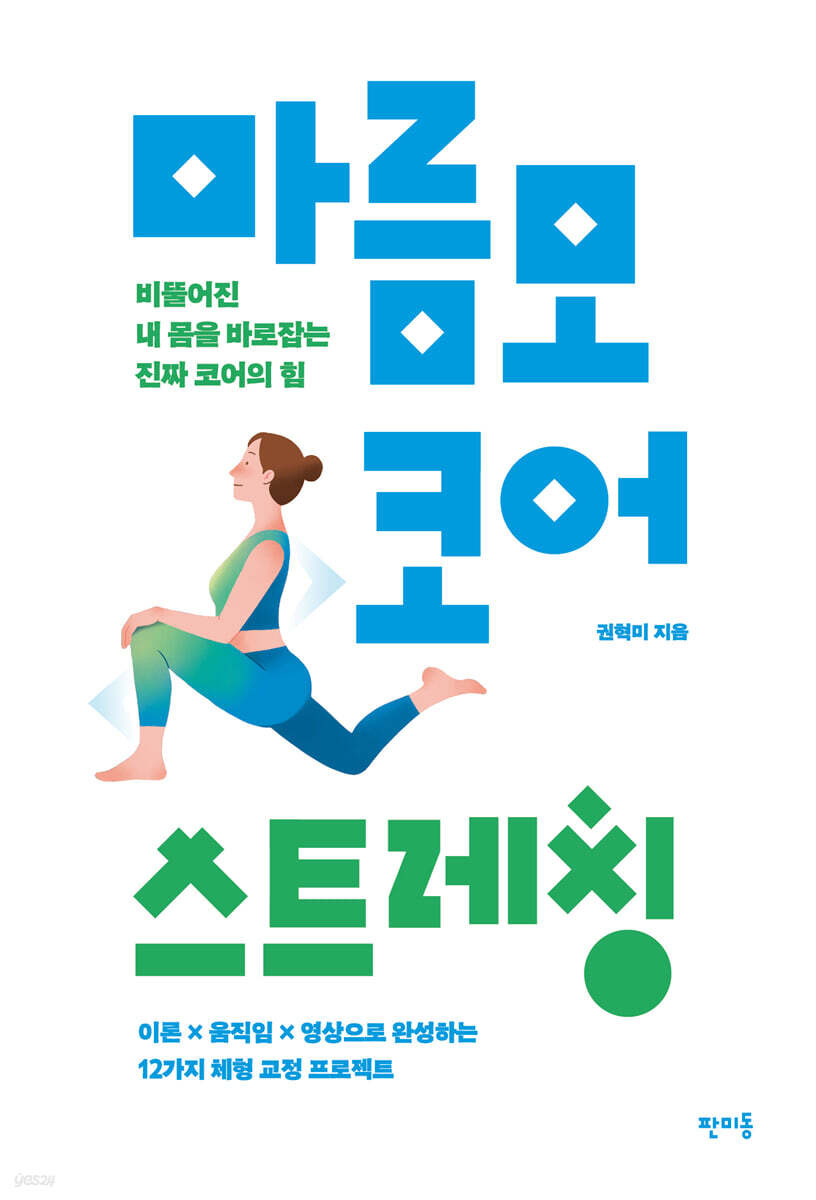
『Rhombus Core Stretching』, which corrects common misconceptions about the core and guides you to correct the pain caused by incorrect posture on your own, has been published by Panmi-dong.
Drawing on insights gleaned from over 30 years of experience in dance, sports, anatomy, and rehabilitation, the author redefines the core as not simply a "muscle strengthening area," but a "space to open and expand."
This book explains the 'diamond-shaped force' formed along the skeletal and muscular fibers, and the process of creating internal pressure by activating the deep muscles in all directions.
Through this, it awakens the spine, pelvis, and shoulders to naturally respond to gravity and elasticity, and provides 12 exercises that can correct imbalanced body conditions.
Beyond simply listing anatomical knowledge, it contains a step-by-step process of concept-principle-application-addition, and details 12 key corrective movements through abundant illustrations and video QR codes.
By learning how to restore the spine's natural curvature, stabilise the pelvis and torso, and leverage grounding with the floor, this book will help us experience new movements and breathing in our daily lives, leading to a life of good posture and pain-free living.
For those who know the importance of the core but have a vague understanding of it, this book will serve as a starting point for fundamentally improving the quality of life, from restoring movement to correcting posture and improving athletic ability.
Now, your body is completely different.”
A pain-free life suggested by a movement expert with 30 years of experience.
A body correction project that 'corrects my body on my own'
『Rhombus Core Stretching』, which corrects common misconceptions about the core and guides you to correct the pain caused by incorrect posture on your own, has been published by Panmi-dong.
Drawing on insights gleaned from over 30 years of experience in dance, sports, anatomy, and rehabilitation, the author redefines the core as not simply a "muscle strengthening area," but a "space to open and expand."
This book explains the 'diamond-shaped force' formed along the skeletal and muscular fibers, and the process of creating internal pressure by activating the deep muscles in all directions.
Through this, it awakens the spine, pelvis, and shoulders to naturally respond to gravity and elasticity, and provides 12 exercises that can correct imbalanced body conditions.
Beyond simply listing anatomical knowledge, it contains a step-by-step process of concept-principle-application-addition, and details 12 key corrective movements through abundant illustrations and video QR codes.
By learning how to restore the spine's natural curvature, stabilise the pelvis and torso, and leverage grounding with the floor, this book will help us experience new movements and breathing in our daily lives, leading to a life of good posture and pain-free living.
For those who know the importance of the core but have a vague understanding of it, this book will serve as a starting point for fundamentally improving the quality of life, from restoring movement to correcting posture and improving athletic ability.
- You can preview some of the book's contents.
Preview
index
Prologue - Why a Rhombus Core?
PART 1 Understanding the Rhombus Core [Concept]
CHAPTER 1: Good and Bad Posture, Puffy and Deflated Balls 21
CHAPTER 2: Replenishing pressure within the body by contracting deep muscles that move back and forth 35
CHAPTER 3 Vertical diamonds extending the length of the spine
CHAPTER 4 Lower Horizontal Diamond Creating a Neutral Pelvis
CHAPTER 5 Upper horizontal diamond extending the torso forward and backward
CHAPTER 6 Pulling the Spine Hanging in the Air Like a Bowstring
CHAPTER 7: The Real Meaning of Using Cores Well
PART 2: Discovering the Power of the Rhombus Core in Your Body [Principle]
CHAPTER 8 Establishing the First Pillar of My Body
CHAPTER 9 Finding Alignment That Brings Core Pressure to Life
CHAPTER 10: CREATING THE MOST IMPORTANT NEUTRAL PELVA
CHAPTER 11 The power to straighten your thighs
CHAPTER 12 The ship is deliberately inserted and does not exert force.
CHAPTER 13 Body, Breathing, and Head Position
PART 3: Increasing Body Pressure with Diamond Core Energy [Apply]
CHAPTER 14 The Pillars of Movement That Support Our Body
CHAPTER 15 Forces that press down on the floor and forces that rise from the floor
CHAPTER 16 The Power of Expansion, Spreading Out in All Directions
CHAPTER 17 Stable Energy Like a Pyramid
CHAPTER 18 The Deepest and Largest Breath, Circular Breathing
CHAPTER 19 True Flexibility Using Deep Muscles Throughout the Body
PART 4: Creating Proper Movement with Diamond Core Stretches [Advanced]
PRACTICE 1 Standing upright
PRACTICE 2: Stretching the spine and leaning back
PRACTICE 3 Lunge Pose
PRACTICE 4 Squatting and Standing Up
PRACTICE 5 Sit up straight with your legs straight
PRACTICE 6 Sitting with legs straight and leaning forward
PRACTICE 7 Lying down properly and breathing deeply
PRACTICE 8: Making Frog Legs Lying Down
PRACTICE 9 Bridge Pose
PRACTICE 10 Pigeon Pose
PRACTICE 11 Prone Leg Lifts
PRACTICE 12 Cobra Pose
Epilogue
PART 1 Understanding the Rhombus Core [Concept]
CHAPTER 1: Good and Bad Posture, Puffy and Deflated Balls 21
CHAPTER 2: Replenishing pressure within the body by contracting deep muscles that move back and forth 35
CHAPTER 3 Vertical diamonds extending the length of the spine
CHAPTER 4 Lower Horizontal Diamond Creating a Neutral Pelvis
CHAPTER 5 Upper horizontal diamond extending the torso forward and backward
CHAPTER 6 Pulling the Spine Hanging in the Air Like a Bowstring
CHAPTER 7: The Real Meaning of Using Cores Well
PART 2: Discovering the Power of the Rhombus Core in Your Body [Principle]
CHAPTER 8 Establishing the First Pillar of My Body
CHAPTER 9 Finding Alignment That Brings Core Pressure to Life
CHAPTER 10: CREATING THE MOST IMPORTANT NEUTRAL PELVA
CHAPTER 11 The power to straighten your thighs
CHAPTER 12 The ship is deliberately inserted and does not exert force.
CHAPTER 13 Body, Breathing, and Head Position
PART 3: Increasing Body Pressure with Diamond Core Energy [Apply]
CHAPTER 14 The Pillars of Movement That Support Our Body
CHAPTER 15 Forces that press down on the floor and forces that rise from the floor
CHAPTER 16 The Power of Expansion, Spreading Out in All Directions
CHAPTER 17 Stable Energy Like a Pyramid
CHAPTER 18 The Deepest and Largest Breath, Circular Breathing
CHAPTER 19 True Flexibility Using Deep Muscles Throughout the Body
PART 4: Creating Proper Movement with Diamond Core Stretches [Advanced]
PRACTICE 1 Standing upright
PRACTICE 2: Stretching the spine and leaning back
PRACTICE 3 Lunge Pose
PRACTICE 4 Squatting and Standing Up
PRACTICE 5 Sit up straight with your legs straight
PRACTICE 6 Sitting with legs straight and leaning forward
PRACTICE 7 Lying down properly and breathing deeply
PRACTICE 8: Making Frog Legs Lying Down
PRACTICE 9 Bridge Pose
PRACTICE 10 Pigeon Pose
PRACTICE 11 Prone Leg Lifts
PRACTICE 12 Cobra Pose
Epilogue
Detailed image

Into the book
As we can see from the relationship with gravity, what we commonly refer to as 'good posture' is not simply standing upright, but rather a state in which our body is aligned in a stable manner while naturally responding to gravity.
In other words, the key to good movement is to align our bodies so that they are directly on the 'line of gravity' throughout all phases of the movement.
In this position, unnecessary force is not used, and movements occur much more smoothly and efficiently.
--- p.22
Just as when you put air into a deflated ball, the air moves away from each other and creates a tight pressure, so too do the core spaces within the body move away from each other and the pressure in these spaces increases.
And this pressure is what keeps the body upright, creates stability when moving, and as a result, creates good posture.
The posture at this time is not simply straight, but it feels wide, as if it has been expanded abundantly in the front and back.
--- p.30
In particular, the scapula is a part that has more mobility than stability, so it is easy for balance to be broken by repetitive use of the arm, especially excessive use of one arm.
Because most people have a unilateral lifestyle that favors either the right or left hand, there is a high possibility that the force will be continuously accumulated in one direction, which will cause the alignment of the scapula to be disrupted and one side of the torso to become wider or longer, creating a tilt in the entire spine.
This tilt soon leads to an imbalance in the entire torso, and the left-right balance of the ribs is lost.
--- p.74
The spine can be viewed as a structure that is 'suspended' in the air, as a pillar that connects to the floor through the feet, legs, and pelvis.
Since the spine is behind the legs, the spine is hanging with tension toward the back.
For this reason, if your spine is 'ahead of the line of gravity', your legs and feet will not be able to properly support the weight, and the force will act in a way that causes your entire body to collapse forward.
--- p.77
As a result, the deepest breaths begin at the top of the spine, travel down the spine to the pelvis, and then return back through the hip joints, expanding forward and upward.
The depth and range of breathing are determined by the distance the force applied to the floor reaches.
Conversely, short, shallow breaths or mouth breathing mostly occur when there is no force to press down on the floor.
--- p.213
The key to the cobra pose is not to lift your chest first, as it connects your entire body and creates a line.
From a prone position, you should feel your chest lift up sequentially from the pelvis using the 'force of pushing the spine backwards'.
In this movement, ‘the power to pull left and right with the spine as the center’ is essential.
This force allows the spine to lengthen vertically.
In other words, the key to good movement is to align our bodies so that they are directly on the 'line of gravity' throughout all phases of the movement.
In this position, unnecessary force is not used, and movements occur much more smoothly and efficiently.
--- p.22
Just as when you put air into a deflated ball, the air moves away from each other and creates a tight pressure, so too do the core spaces within the body move away from each other and the pressure in these spaces increases.
And this pressure is what keeps the body upright, creates stability when moving, and as a result, creates good posture.
The posture at this time is not simply straight, but it feels wide, as if it has been expanded abundantly in the front and back.
--- p.30
In particular, the scapula is a part that has more mobility than stability, so it is easy for balance to be broken by repetitive use of the arm, especially excessive use of one arm.
Because most people have a unilateral lifestyle that favors either the right or left hand, there is a high possibility that the force will be continuously accumulated in one direction, which will cause the alignment of the scapula to be disrupted and one side of the torso to become wider or longer, creating a tilt in the entire spine.
This tilt soon leads to an imbalance in the entire torso, and the left-right balance of the ribs is lost.
--- p.74
The spine can be viewed as a structure that is 'suspended' in the air, as a pillar that connects to the floor through the feet, legs, and pelvis.
Since the spine is behind the legs, the spine is hanging with tension toward the back.
For this reason, if your spine is 'ahead of the line of gravity', your legs and feet will not be able to properly support the weight, and the force will act in a way that causes your entire body to collapse forward.
--- p.77
As a result, the deepest breaths begin at the top of the spine, travel down the spine to the pelvis, and then return back through the hip joints, expanding forward and upward.
The depth and range of breathing are determined by the distance the force applied to the floor reaches.
Conversely, short, shallow breaths or mouth breathing mostly occur when there is no force to press down on the floor.
--- p.213
The key to the cobra pose is not to lift your chest first, as it connects your entire body and creates a line.
From a prone position, you should feel your chest lift up sequentially from the pelvis using the 'force of pushing the spine backwards'.
In this movement, ‘the power to pull left and right with the spine as the center’ is essential.
This force allows the spine to lengthen vertically.
--- pp.268-269
Publisher's Review
Redefining the core as "a force of space, not a muscle."
While typical core exercises focus on strengthening the abdominal muscles, diamond core stretching contracts the deep muscles of the body in multiple directions simultaneously, creating tight internal pressure.
This pressure is a key force that stabilizes the spine and supports movement.
During growth, there is enough tension between the bones and the muscles to pull them together, but when growth stops, this strength weakens and only gravity remains, causing the core to collapse.
If incorrect posture accumulates here, muscle tension can become disrupted, which can eventually lead to body shape deformation or pain.
"Rhombus Core Stretching" corrects these problems by expanding strength in all directions along the horizontal and vertical rhombus structure created by muscle fibers, helping to restore spatiality within the body.
Specifically, it restores balance and stability to the entire body through the 'vertical diamond' formed along the spine and the 'horizontal diamond' formed by the shoulders and pelvis.
Even the slightest misalignment of the core muscles is corrected 'by itself'.
『Rhombus Core Stretching』 goes beyond simple exercise to help you view your body as an organic energy circulation system.
For example, one-sided use can upset the balance of the spine, which in turn negatively affects breathing and overall body movement.
To correct this imbalance, the authors visualized the direction of tension as muscles pull apart and become tighter using a diamond-shaped shape.
Applying this principle can fundamentally improve the structure and movement of the body by restoring the natural curvature of the spine, correcting pelvic imbalances, breathing correctly, and learning to use energy without straining the joints.
Furthermore, this book presents readers with methods for self-correcting and balancing their bodies based on systematic principles of body alignment with gravity and bidirectional energy expansion.
In addition to understanding the natural muscle fibers that create correct posture, it also helps you check your current condition through videos provided via QR codes and fundamentally correct your body shape and movements from a long-term perspective.
I highly recommend this to these people.
◆ People who suffer from discomfort such as turtle neck, twisted pelvis, and spinal imbalance
◆ People who experience recurrence of pain even after exercising, such as Pilates, yoga, or weight training
◆ Those who want to correct their posture and body shape that tends to deteriorate with age
◆ Those looking for a systematic core training method that can be followed at home
"The most fundamental and healing movement that countless exercises and rehabilitation treatments never taught me!" Lee*Hyun (40s, female)
"It contains the meticulousness of using every tiny muscle, and the incredible insight that consistently penetrates the entire body." ?Kim*pyeong (male, 70s)
"I've been eagerly awaiting a book that clearly explains the rhombus core stretching." Choi*Hee (50s, female)
"I highly recommend this to anyone interested in exercising but struggling to get started due to poor posture or back pain!" ? Seok*Yun (30s, female)
"I found a workout that gave me the confidence that I could change my body on my own." Shin*ok (50s, female)
"I no longer view physical discomfort as an indelible scar." Moon*Hoon (male, 40s)
"I used to just follow the movements while working out, doing yoga, Pilates, ballet, etc., but I learned the true principles through the diamond core." ? Jeon*hee (40s, female)
"I've tried everything during my 10 years of suffering from Parkinson's disease, but after meeting the Rhombus Core, I feel like I've escaped that nightmarish tunnel." Lee*man (male, 80s)
While typical core exercises focus on strengthening the abdominal muscles, diamond core stretching contracts the deep muscles of the body in multiple directions simultaneously, creating tight internal pressure.
This pressure is a key force that stabilizes the spine and supports movement.
During growth, there is enough tension between the bones and the muscles to pull them together, but when growth stops, this strength weakens and only gravity remains, causing the core to collapse.
If incorrect posture accumulates here, muscle tension can become disrupted, which can eventually lead to body shape deformation or pain.
"Rhombus Core Stretching" corrects these problems by expanding strength in all directions along the horizontal and vertical rhombus structure created by muscle fibers, helping to restore spatiality within the body.
Specifically, it restores balance and stability to the entire body through the 'vertical diamond' formed along the spine and the 'horizontal diamond' formed by the shoulders and pelvis.
Even the slightest misalignment of the core muscles is corrected 'by itself'.
『Rhombus Core Stretching』 goes beyond simple exercise to help you view your body as an organic energy circulation system.
For example, one-sided use can upset the balance of the spine, which in turn negatively affects breathing and overall body movement.
To correct this imbalance, the authors visualized the direction of tension as muscles pull apart and become tighter using a diamond-shaped shape.
Applying this principle can fundamentally improve the structure and movement of the body by restoring the natural curvature of the spine, correcting pelvic imbalances, breathing correctly, and learning to use energy without straining the joints.
Furthermore, this book presents readers with methods for self-correcting and balancing their bodies based on systematic principles of body alignment with gravity and bidirectional energy expansion.
In addition to understanding the natural muscle fibers that create correct posture, it also helps you check your current condition through videos provided via QR codes and fundamentally correct your body shape and movements from a long-term perspective.
I highly recommend this to these people.
◆ People who suffer from discomfort such as turtle neck, twisted pelvis, and spinal imbalance
◆ People who experience recurrence of pain even after exercising, such as Pilates, yoga, or weight training
◆ Those who want to correct their posture and body shape that tends to deteriorate with age
◆ Those looking for a systematic core training method that can be followed at home
"The most fundamental and healing movement that countless exercises and rehabilitation treatments never taught me!" Lee*Hyun (40s, female)
"It contains the meticulousness of using every tiny muscle, and the incredible insight that consistently penetrates the entire body." ?Kim*pyeong (male, 70s)
"I've been eagerly awaiting a book that clearly explains the rhombus core stretching." Choi*Hee (50s, female)
"I highly recommend this to anyone interested in exercising but struggling to get started due to poor posture or back pain!" ? Seok*Yun (30s, female)
"I found a workout that gave me the confidence that I could change my body on my own." Shin*ok (50s, female)
"I no longer view physical discomfort as an indelible scar." Moon*Hoon (male, 40s)
"I used to just follow the movements while working out, doing yoga, Pilates, ballet, etc., but I learned the true principles through the diamond core." ? Jeon*hee (40s, female)
"I've tried everything during my 10 years of suffering from Parkinson's disease, but after meeting the Rhombus Core, I feel like I've escaped that nightmarish tunnel." Lee*man (male, 80s)
GOODS SPECIFICS
- Date of issue: September 24, 2025
- Page count, weight, size: 276 pages | 125*188*20mm
- ISBN13: 9791170526704
- ISBN10: 1170526705
You may also like
카테고리
korean


korean

![GQ KOREA Mark (Monthly): December [2025]](http://librairie.coreenne.fr/cdn/shop/files/8ef265dbbfbf186523ed75ba7319009d.jpg?v=1765340328&width=3840)


