

A golf book to read when you miss a shot
 |
Description
Book Introduction
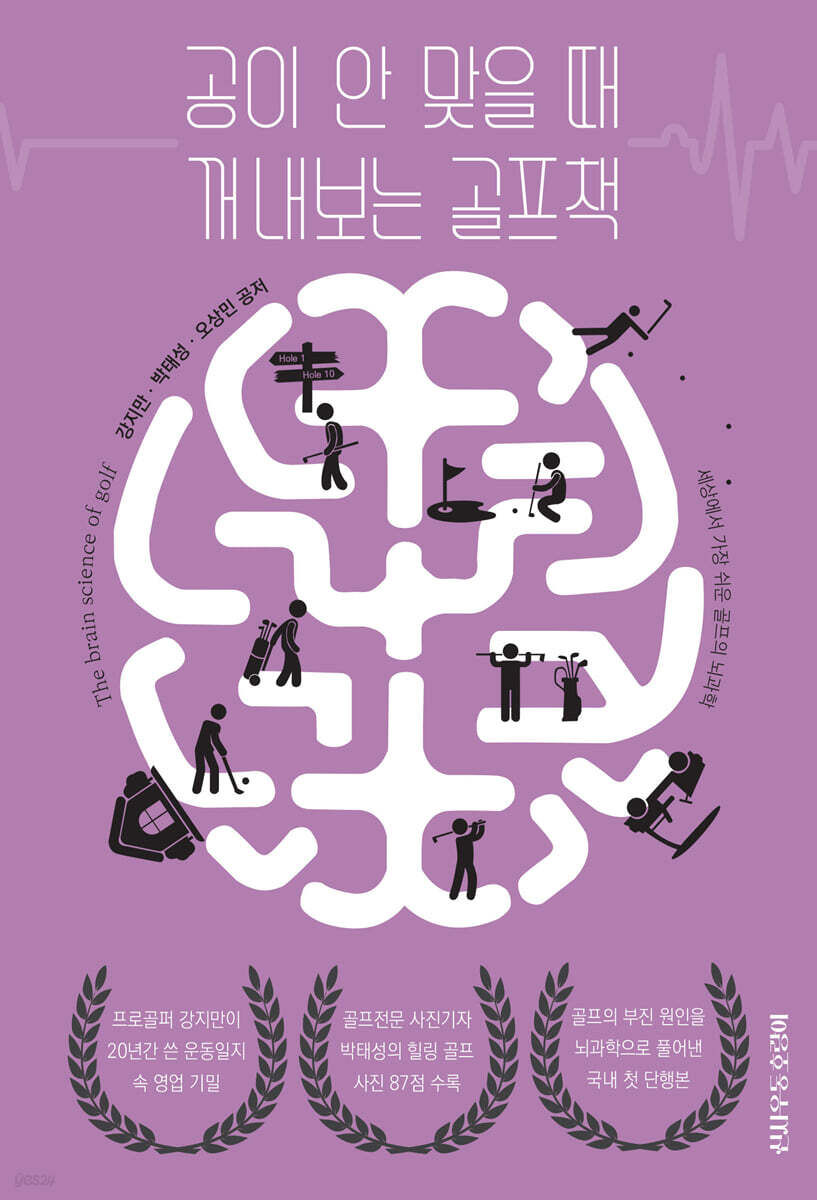
This is the reflection of Kang Ji-man, the 2006 Shinhan Donghae Open champion, and a trade secret kept in his training journal for over 20 years.
It can be said to be a collection of knowledge and lessons gained from playing on tour and running an academy and mentoring many people after retirement.
We've compiled content that's easy to understand and tailored to the needs of all golfers, from amateur golfers just starting out to professional golfers on tour.
The subtitle is 'The World's Easiest Brain Science of Golf'.
Based on golf and brain science, we have compiled and organized the principles and phenomena of golf that are permeated by brain science.
As the title suggests, this is a golf book that you can easily and conveniently take out and read whenever you miss a shot.
There is also a lot of fun to be had looking at golf healing photos by professional golf photographer Taeseong Park.
The concept is to understand while reading and to heal while looking at pictures.
It's one book, but it's actually two books.
It can be said to be a collection of knowledge and lessons gained from playing on tour and running an academy and mentoring many people after retirement.
We've compiled content that's easy to understand and tailored to the needs of all golfers, from amateur golfers just starting out to professional golfers on tour.
The subtitle is 'The World's Easiest Brain Science of Golf'.
Based on golf and brain science, we have compiled and organized the principles and phenomena of golf that are permeated by brain science.
As the title suggests, this is a golf book that you can easily and conveniently take out and read whenever you miss a shot.
There is also a lot of fun to be had looking at golf healing photos by professional golf photographer Taeseong Park.
The concept is to understand while reading and to heal while looking at pictures.
It's one book, but it's actually two books.
- You can preview some of the book's contents.
Preview
index
Preface to the Book _ Consciousness and Unconsciousness 4
Publishing a Book _ Momentary Healing 7
Introducing the Book _ The Brain Science of Golf 10
〈Chapter 1〉 To a professional golfer
Is there a lip? 20
Do you have post-traumatic stress disorder? 26
Did you learn it implicitly? 31
Is the amount of practice appropriate? 36
Understand Justin Thomas' Distance Secrets 41
Are you keeping a workout journal? 46
Did you walk briskly and confidently? 51
Did you maintain good posture? 55
Did you manage your facial expressions well? 59
Have you trained your core muscles? 63
Have you trained your mental strength? 67
Can You Sleep Well Anywhere? 72
Did you get a good rest? 77
Are you afraid of being alone? 82
Did you breathe through your nose? 85
Do you have low self-esteem? 90
Where do you belong 94
Have you ever been jealous of someone? 98
Can Routines Be Used Strategically? 102
Failed to adjust to jet lag 107
Do you have a good coach by your side? 112
Is the purpose of exercise to sweat? 116
Are you running a mental simulator? 120
Are there different training methods? 124
〈Chapter 2〉 To aspiring professionals
Are you living the life of a trainee? 130
How many rounds did you play on the actual course? 135
Can you regulate your body rhythm? 140
Is the awakening level optimal? 145
Do you understand the mechanics of the course layout? 149
Did you review after round 153?
Do you understand the purpose of integrity? 159
Have you lost the good feeling of shooting? 163
Are you aware of your actual score? 168
Are you self-studying by watching YouTube videos? 173
Have you ever seen it through a caddy's eyes? 178
Are your goals and plans specific? 183
Have you made a daily plan? 187
Have you experienced the placebo effect? 190
Is the colon strong? 195
Studying golf theory 200
Is this an environment where you can focus on golf? 204
Is there a way to deal with optical illusions? 208
Are you aiming high? 212
Did you stay away from alcohol? 217
〈Chapter 3〉 To the top level amateurs
Do you exercise while listening to music? 222
Hesitant to Strength Train? 228
Have you stuck to the basics? 233
Looking for a great practice range and batting position? 239
How much do you rely on your caddie? 244
Use a metronome 249
Did you receive adequate compensation? 252
Do you know your body map? 256
How did you do image training? 260
Do you have any bad habits? 265
Do you know the cognitive map of a golfer? 270
Are you dependent on machines? 274
Do you enjoy coffee? 279
Are you managing your emotions well? 283
Do you trust your experience and seniority? 287
Are you getting enough water during the round? 292
Do you practice immersion? 296
What do you think about during the round 301?
Do you feel limited in your ability to improve? 305
〈Chapter 4〉 For beginners in golf
Are you not good at golf? 310
Can I play round 316 without a power cart?
Do you think it's hard because you're a woman? 321
Looking for a shortcut to success? 326
Is the driver shot practice method effective? 330
Did you train actively? 334
Did you start exercising late? 338
Did you stretch before and after exercising? 343
Have you ever put off practicing? 347
Is this an environment conducive to playing golf well? 351
Is your play inconsistent? 355
How many repetitions did you practice? 359
Are you teaching yourself golf? 363
Is there someone you want to be like? 367
Are there any good people around you? 371
Is it a stagnation period? 375
Are you confident in your play around the green? 379
Do you have a lot of field experience? 383
Are you particularly weak in real combat? 387
Isn't golf fun? 391
Week 396
Publishing a Book _ Momentary Healing 7
Introducing the Book _ The Brain Science of Golf 10
〈Chapter 1〉 To a professional golfer
Is there a lip? 20
Do you have post-traumatic stress disorder? 26
Did you learn it implicitly? 31
Is the amount of practice appropriate? 36
Understand Justin Thomas' Distance Secrets 41
Are you keeping a workout journal? 46
Did you walk briskly and confidently? 51
Did you maintain good posture? 55
Did you manage your facial expressions well? 59
Have you trained your core muscles? 63
Have you trained your mental strength? 67
Can You Sleep Well Anywhere? 72
Did you get a good rest? 77
Are you afraid of being alone? 82
Did you breathe through your nose? 85
Do you have low self-esteem? 90
Where do you belong 94
Have you ever been jealous of someone? 98
Can Routines Be Used Strategically? 102
Failed to adjust to jet lag 107
Do you have a good coach by your side? 112
Is the purpose of exercise to sweat? 116
Are you running a mental simulator? 120
Are there different training methods? 124
〈Chapter 2〉 To aspiring professionals
Are you living the life of a trainee? 130
How many rounds did you play on the actual course? 135
Can you regulate your body rhythm? 140
Is the awakening level optimal? 145
Do you understand the mechanics of the course layout? 149
Did you review after round 153?
Do you understand the purpose of integrity? 159
Have you lost the good feeling of shooting? 163
Are you aware of your actual score? 168
Are you self-studying by watching YouTube videos? 173
Have you ever seen it through a caddy's eyes? 178
Are your goals and plans specific? 183
Have you made a daily plan? 187
Have you experienced the placebo effect? 190
Is the colon strong? 195
Studying golf theory 200
Is this an environment where you can focus on golf? 204
Is there a way to deal with optical illusions? 208
Are you aiming high? 212
Did you stay away from alcohol? 217
〈Chapter 3〉 To the top level amateurs
Do you exercise while listening to music? 222
Hesitant to Strength Train? 228
Have you stuck to the basics? 233
Looking for a great practice range and batting position? 239
How much do you rely on your caddie? 244
Use a metronome 249
Did you receive adequate compensation? 252
Do you know your body map? 256
How did you do image training? 260
Do you have any bad habits? 265
Do you know the cognitive map of a golfer? 270
Are you dependent on machines? 274
Do you enjoy coffee? 279
Are you managing your emotions well? 283
Do you trust your experience and seniority? 287
Are you getting enough water during the round? 292
Do you practice immersion? 296
What do you think about during the round 301?
Do you feel limited in your ability to improve? 305
〈Chapter 4〉 For beginners in golf
Are you not good at golf? 310
Can I play round 316 without a power cart?
Do you think it's hard because you're a woman? 321
Looking for a shortcut to success? 326
Is the driver shot practice method effective? 330
Did you train actively? 334
Did you start exercising late? 338
Did you stretch before and after exercising? 343
Have you ever put off practicing? 347
Is this an environment conducive to playing golf well? 351
Is your play inconsistent? 355
How many repetitions did you practice? 359
Are you teaching yourself golf? 363
Is there someone you want to be like? 367
Are there any good people around you? 371
Is it a stagnation period? 375
Are you confident in your play around the green? 379
Do you have a lot of field experience? 383
Are you particularly weak in real combat? 387
Isn't golf fun? 391
Week 396
Detailed image

Into the book
As we age, our muscles decrease and our range of motion decreases.
It's a natural phenomenon.
However, you don't have to focus solely on strength training to improve your lost muscle strength.
Flexibility exercises to maintain the elasticity of connective tissue are more important than strength training.
If you lack flexibility, you won't be able to properly utilize the strength your muscles have.
To compensate for this, you end up using unnecessary muscle and strength.
The more this happens, the more sloppy the swing becomes and the less distance is gained.
It's easy to understand when you look at the wooden swings of middle-aged and older amateur golfers.
--- p.43
Resting requires just as much effort as exercising.
Think about whether you usually finish your training and return home or to your accommodations to get some quality rest.
During your break, spending long hours browsing the internet on your smartphone, browsing social media, texting on mobile messengers, watching YouTube videos, or watching movies or dramas on Netflix is not a quality rest.
When you do this, your brain doesn't perceive it as rest.
I'm using up my energy by being active like I was when I was training.
Instead of resting, I feel more tired.
--- p.79
It shouldn't end with just waking up early in the morning.
You need to be in the best condition early in the morning.
In medical terminology, there is a term called level of awakening.
It refers to the degree to which one has awakened from sleep and regained consciousness.
The reason we practice going to bed early and waking up early is to optimize our level of arousal.
--- p.145
Anyone who plays a round of 18 holes makes countless mistakes.
The same goes for professional golfers.
Even if it seems like you're playing perfectly, it's not.
If you ask professional golfers about their rounds after a game, you'll rarely find someone who says, "I played perfectly today."
An 18-hole round ends after making countless mistakes and going through all kinds of hardships.
It's full of mistakes.
If we just cover up those many mistakes without checking them, then of course there will be no progress.
Reviewing is absolutely necessary to find the cause of the mistake that day and have time for reflection and introspection.
--- p.154
Our brains can't focus on two things at once.
While it's possible to do two things simultaneously, such as watching TV while eating, it's difficult to expect the best results from quality immersion.
When you exercise while listening to music, the energy that should be focused on exercising and moving your body is diverted towards listening to the music.
This means that the energy that should be focused on exercise is diverted elsewhere.
--- p.224
In order to swing like this, you need to change your usual practice method.
For example, it is better to plan how many swings you will make per club than to plan how many hours you will practice your swing.
If you practice for a set time, you will have to practice your swing according to the time, so it is more likely to be about filling time rather than acquiring accurate technique.
--- p.234
Why does the brain make it a habit to procrastinate on exercise, even though it causes more stress?
Because the human brain prefers instant gratification.
They react quickly and sensitively to short-term, immediate gratification rather than long-term goals.
That's why we have a hard time resisting the temptation of things that provide instant pleasure, such as drugs, smoking, and alcohol, even though we know they are not good for our bodies.
--- p.348~349
To exercise effectively, you must repeatedly practice the correct swing.
Even if you only practice swinging a few times, you must execute them with the correct form.
To do this, you need a coach who can correct your incorrect swing motion.
This way, you can increase your learning effectiveness and reach your destination in the shortest possible time without having to take a long detour.
It's a natural phenomenon.
However, you don't have to focus solely on strength training to improve your lost muscle strength.
Flexibility exercises to maintain the elasticity of connective tissue are more important than strength training.
If you lack flexibility, you won't be able to properly utilize the strength your muscles have.
To compensate for this, you end up using unnecessary muscle and strength.
The more this happens, the more sloppy the swing becomes and the less distance is gained.
It's easy to understand when you look at the wooden swings of middle-aged and older amateur golfers.
--- p.43
Resting requires just as much effort as exercising.
Think about whether you usually finish your training and return home or to your accommodations to get some quality rest.
During your break, spending long hours browsing the internet on your smartphone, browsing social media, texting on mobile messengers, watching YouTube videos, or watching movies or dramas on Netflix is not a quality rest.
When you do this, your brain doesn't perceive it as rest.
I'm using up my energy by being active like I was when I was training.
Instead of resting, I feel more tired.
--- p.79
It shouldn't end with just waking up early in the morning.
You need to be in the best condition early in the morning.
In medical terminology, there is a term called level of awakening.
It refers to the degree to which one has awakened from sleep and regained consciousness.
The reason we practice going to bed early and waking up early is to optimize our level of arousal.
--- p.145
Anyone who plays a round of 18 holes makes countless mistakes.
The same goes for professional golfers.
Even if it seems like you're playing perfectly, it's not.
If you ask professional golfers about their rounds after a game, you'll rarely find someone who says, "I played perfectly today."
An 18-hole round ends after making countless mistakes and going through all kinds of hardships.
It's full of mistakes.
If we just cover up those many mistakes without checking them, then of course there will be no progress.
Reviewing is absolutely necessary to find the cause of the mistake that day and have time for reflection and introspection.
--- p.154
Our brains can't focus on two things at once.
While it's possible to do two things simultaneously, such as watching TV while eating, it's difficult to expect the best results from quality immersion.
When you exercise while listening to music, the energy that should be focused on exercising and moving your body is diverted towards listening to the music.
This means that the energy that should be focused on exercise is diverted elsewhere.
--- p.224
In order to swing like this, you need to change your usual practice method.
For example, it is better to plan how many swings you will make per club than to plan how many hours you will practice your swing.
If you practice for a set time, you will have to practice your swing according to the time, so it is more likely to be about filling time rather than acquiring accurate technique.
--- p.234
Why does the brain make it a habit to procrastinate on exercise, even though it causes more stress?
Because the human brain prefers instant gratification.
They react quickly and sensitively to short-term, immediate gratification rather than long-term goals.
That's why we have a hard time resisting the temptation of things that provide instant pleasure, such as drugs, smoking, and alcohol, even though we know they are not good for our bodies.
--- p.348~349
To exercise effectively, you must repeatedly practice the correct swing.
Even if you only practice swinging a few times, you must execute them with the correct form.
To do this, you need a coach who can correct your incorrect swing motion.
This way, you can increase your learning effectiveness and reach your destination in the shortest possible time without having to take a long detour.
--- p.364
Publisher's Review
Even Lee Byung-chul, the founder of Samsung and the richest man in Korea, did not go as planned in three ways.
‘Health’, ‘golf’, and ‘children’.
In particular, it is said that no matter how much money you spend to learn golf from a famous professional golfer, your skills will not improve as much as you want.
Harry Vardon, the legendary British professional golfer, said, “Golf is a game where you gain confidence in the morning and lose it in the evening.” Billy Graham, considered the greatest Protestant pastor in American history, said, “The only place where my prayers don’t work is on the golf course.”
Golf has always been synonymous with difficult sports for everyone, both past and present.
There's no need to be discouraged if your golf skills aren't improving.
Golf talent is half innate, half must be discovered and cultivated.
Natural talent alone cannot make you a great player, let alone a professional golfer.
Sincerity must be added to aspiration.
Sincerity will eventually catch up with talent.
If you want to play golf well, you must first reduce your thoughts.
We need to reduce unnecessary thoughts so that bad thoughts do not take hold and spread.
That is the main theme of this book, and the secret to opening your eyes to golf once again.
This book approaches the difficulties of golf from the perspective of brain science, which is the starting point of all thoughts and movements.
Analyze the causes and principles of sluggishness and suggest new solutions.
By helping golfers understand the causes and principles of their own struggles, we teach them how to actively enjoy and improve their golf skills.
Introducing the world's easiest brain science of golf.
‘Health’, ‘golf’, and ‘children’.
In particular, it is said that no matter how much money you spend to learn golf from a famous professional golfer, your skills will not improve as much as you want.
Harry Vardon, the legendary British professional golfer, said, “Golf is a game where you gain confidence in the morning and lose it in the evening.” Billy Graham, considered the greatest Protestant pastor in American history, said, “The only place where my prayers don’t work is on the golf course.”
Golf has always been synonymous with difficult sports for everyone, both past and present.
There's no need to be discouraged if your golf skills aren't improving.
Golf talent is half innate, half must be discovered and cultivated.
Natural talent alone cannot make you a great player, let alone a professional golfer.
Sincerity must be added to aspiration.
Sincerity will eventually catch up with talent.
If you want to play golf well, you must first reduce your thoughts.
We need to reduce unnecessary thoughts so that bad thoughts do not take hold and spread.
That is the main theme of this book, and the secret to opening your eyes to golf once again.
This book approaches the difficulties of golf from the perspective of brain science, which is the starting point of all thoughts and movements.
Analyze the causes and principles of sluggishness and suggest new solutions.
By helping golfers understand the causes and principles of their own struggles, we teach them how to actively enjoy and improve their golf skills.
Introducing the world's easiest brain science of golf.
GOODS SPECIFICS
- Date of issue: August 27, 2025
- Page count, weight, size: 400 pages | 512g | 128*188*21mm
- ISBN13: 9791197678691
You may also like
카테고리
korean


korean

![GQ KOREA Mark (Monthly): December [2025]](http://librairie.coreenne.fr/cdn/shop/files/8ef265dbbfbf186523ed75ba7319009d.jpg?v=1765340328&width=3840)


