

Japanese Local Bread Encyclopedia
 |
Description
Book Introduction
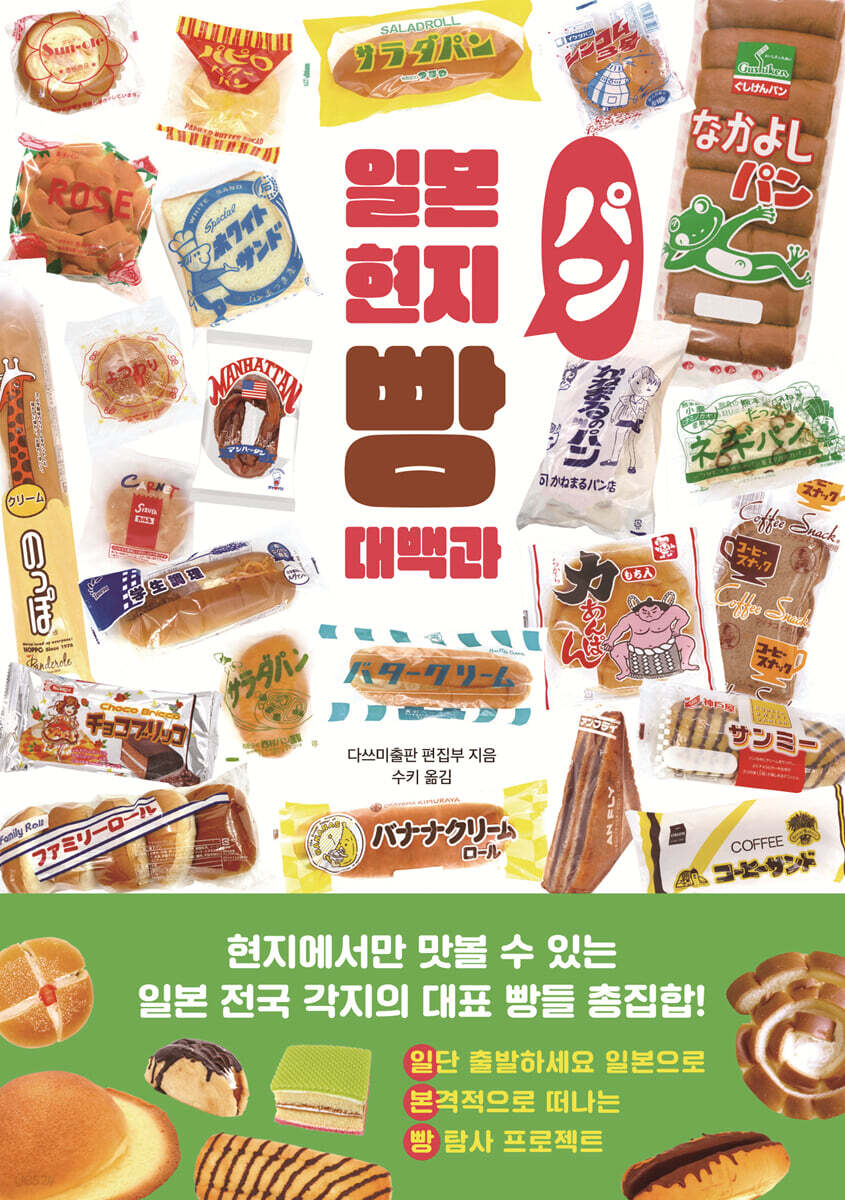
From classic breads like red bean bread, cream bread, and milk bread, Japanese breads such as yokan bread, melon bread, and yakisoba bread, Breads with unique flavors such as soybean paste bread, green onion bread, oil bread, and seaweed sandwich, From brain bread, pot bread, to space Apollo, and other unimaginable breads. Bread lovers and bakers' quiet Samsi Sebbang, the Japanese bread pilgrimage bible! We've gathered nearly every bread you can find only in Japan! Featuring 264 varieties from 158 bakeries and manufacturers across Japan. For each bread, the origin, ingredients, taste characteristics, and consumer reactions were introduced clearly and wittily, as was the history, personality, and main menu of each bakery. Part 1 features 'soul bread', which can only be found in certain regions. These include Nagano's milk bread, Kochi's hat bread, Ishikawa's white sandwich, and Kanagawa's potato chip bread. Part 2 is bread that can be found anywhere in the country, but the taste and appearance of bread are completely different depending on the region. For example, in Niigata, Nakagawa Bakery's Castella Sand is famous, and in Iwate, Orion Bakery's Triangle Castella is the representative. Part 3 focuses on beloved neighborhood bakeries from all over Japan. Examples include Nagano's Kofurui Confectionery, founded in 1932; Anne of Green Gables, a green-roofed bakery & cafe in Choshi, Chiba Prefecture; and Nara's Maruti Bakery, which retains the retro interior from its founding days. A bakery in Tokyo was even featured in a mini-special feature. In the final part 4, we have gathered some of Japan's representative breads. We introduce breads of the same name and type from all over the country, such as red bean bread, yakisoba bread, curry bread, and jam bread. But it's also interesting that there are slight changes depending on the region. Murakami Bakery in Hiroshima makes square yakisoba buns, and ROUTE271 in Osaka combines yakisoba with Thai pad thai. Other interesting stories about Japanese bread include columns about Japanese school lunch bread, vending machine bread, school cafeteria bread, and bread called brain bread. At the very back of the book, there is a list of bakeries that make each of these breads, along with their addresses, which is a great help to those who want to actually visit them. Japan is a popular travel destination because it's close and convenient. Now, let's take a trip with this book and the theme of bread! |
- You can preview some of the book's contents.
Preview
index
Welcome to the world of 'Japanese local bread'!
Part 1
Soul Bread, still popular today!
Milk Bread / Hat Bread / Cream Box / White Sandwich / Salad Bread / Potato Chip Bread / Other
Bread and Bakery Design Gallery①
Part 2
A collection of local breads from all over Japan
Cream / Chocolate / Castella / Yokan / Japanese / Other
Part 3
Everyone's Neighborhood Bakery
East Japan
Haramachi Bakery / Futabaya Bakery / Pan no Kabuto / Kofurui Confectionery Shop / Kiyokawa Confectionery Bakery / Koti Bakery / Joshiya / Bakery & Cafe Anne of Green Gables / Miyoshino / Fukuda Bread / Kotake Confectionery / Kimuraya Bakery / Asia Bakery / Nitta Bread / Osamano Bread
Bread and Bakery Design Gallery②
Western Japan
Nagano Asahido / Okumura Bakery / Maruts Bakery / Seiyoken / Dongu / Sugimoto Bakery / Michaeldo / Ogiro Bread / Ikkei-an Lobano Bread Studio / Lobano Bread Sakamoto / Shimizu Bakery / Handmade Plum Bread Pinocchio / Domizu / Tokyo Doburi Bakery
Bread and Bakery Design Gallery ③
Part 4
Consistent flavors and unique varieties! Our signature breads
Yakisoba bread / curry bread / red bean bread / jam bread / fried bread / cream bread / melon bread
Bread and Bakery Design Gallery④
Bread List
Column
1) The Secret of Brain Bread
2) The vending machine bread I miss
3) Nostalgic school lunch bread
4) Ichinomiya City, the birthplace of morning service
5) Local sweet called 'bread'
Mini Special
Bonus Story | Earthquake Disaster: The Birth of Canned Bread
Lunchtime rush! School cafeteria bread
Exploring Tokyo's Quaint Bakeries
A Variety of Flavors! The Story Behind a Triangle Sandwich Specialty Shop
Part 1
Soul Bread, still popular today!
Milk Bread / Hat Bread / Cream Box / White Sandwich / Salad Bread / Potato Chip Bread / Other
Bread and Bakery Design Gallery①
Part 2
A collection of local breads from all over Japan
Cream / Chocolate / Castella / Yokan / Japanese / Other
Part 3
Everyone's Neighborhood Bakery
East Japan
Haramachi Bakery / Futabaya Bakery / Pan no Kabuto / Kofurui Confectionery Shop / Kiyokawa Confectionery Bakery / Koti Bakery / Joshiya / Bakery & Cafe Anne of Green Gables / Miyoshino / Fukuda Bread / Kotake Confectionery / Kimuraya Bakery / Asia Bakery / Nitta Bread / Osamano Bread
Bread and Bakery Design Gallery②
Western Japan
Nagano Asahido / Okumura Bakery / Maruts Bakery / Seiyoken / Dongu / Sugimoto Bakery / Michaeldo / Ogiro Bread / Ikkei-an Lobano Bread Studio / Lobano Bread Sakamoto / Shimizu Bakery / Handmade Plum Bread Pinocchio / Domizu / Tokyo Doburi Bakery
Bread and Bakery Design Gallery ③
Part 4
Consistent flavors and unique varieties! Our signature breads
Yakisoba bread / curry bread / red bean bread / jam bread / fried bread / cream bread / melon bread
Bread and Bakery Design Gallery④
Bread List
Column
1) The Secret of Brain Bread
2) The vending machine bread I miss
3) Nostalgic school lunch bread
4) Ichinomiya City, the birthplace of morning service
5) Local sweet called 'bread'
Mini Special
Bonus Story | Earthquake Disaster: The Birth of Canned Bread
Lunchtime rush! School cafeteria bread
Exploring Tokyo's Quaint Bakeries
A Variety of Flavors! The Story Behind a Triangle Sandwich Specialty Shop
Detailed image

Into the book
A semi-circular bread topped with a flat, round castella dough.
The story of its birth began in the mid-1950s, when melon bread was being made.
It is said that just before baking, there was no biscuit dough on top of the melon bread, so castella dough was poured instead and baked, resulting in a hat shape.
Soon, it became loved as a local bread in Kochi under the name of ‘Hat Bread.’
Its origins lie in the content proposed by Takashi Hayashi, a brain physiologist and author, in his book, “A Book That Makes You Smarter: Brain Physiological Management Methods,” published in the same year.
According to him, eating bread made with 'brain flour made using a milling method that contains a large amount of vitamin B1 found in wheat' as the raw material activates brain function, improving memory and thinking ability.
This is because the brain only needs glucose as an energy source, and vitamin B1 is essential for breaking down glucose.
Kanazawa Flour Mill in Ishikawa Prefecture immediately developed "brain flour" based on his theory.
Ten bakeries across the country formed the 'Brain Bread Federation' and named bread made with brain flour 'Brain Bread', which each company began selling.
It was developed around 1965 by the president of Furukawa Confectionery with the aim of creating a product that could be a snack for farmers.
By preserving the flavor of soybean paste and adding molasses or corn syrup for a solid texture and deep savory flavor, it becomes a filling snack bread.
Among riders traveling in Hokkaido, a lunch of miso bread and a carbonated drink is popular and called the "satiety course."
Mornings are filled with freshly brewed coffee, toast, boiled eggs, fried foods, steamed eggs, rice balls, miso soup, and even desserts, making you wonder if this is even possible.
It is only natural that Nagoya's unique food culture, "Ogura Toast," would be added to such a morning.
Okura toast is thick toast spread with butter or margarine and topped with okura bean paste.
This is one of Nagoya's dishes, believed to have originated from a cafe in the Sakae district of Nagoya City during the Taisho period.
It may be a difficult combination for people from other regions to imagine, but there is no discomfort in the taste of salty and sweet.
Nagoya people believe that this will become a national dish.
Sakai Coast in Miyazaki, Asahi-machi, Toyama Prefecture is known for the jade stones that wash up there, and is locally called the Jade Coast.
Shimizu Bakery is a bakery that was founded in 1949 in Asahi-machi.
One day in the mid-1950s, the founder thought, "You can't let something you're going to eat go to waste," so he applied green bean jelly, used in making Japanese sweets, to cover up the burnt parts of a sweet red bean bun, and a new bread was born.
Originally called Yanggaeng Bread, it was renamed to Bichu Bread because of its color, making it more popular among local residents.
Although it was a product that started from a failure, it became a bestseller that has lasted for over 60 years as a local bread in Toyama.
According to the Japan Curry Bread Association, the original Western-style bread is believed to have been registered as a utility model in 1927 by the second-generation owner of Meikado (now Catorea) in Tokyo.
Meanwhile, there are several stores across the country that are believed to have invented curry bread.
At that time, all bakeries were coming up with creative ideas to create new breads simultaneously.
It would be more natural to think that there was such a historical background.
Of course, the original curry bread from Catorea is still alive and well today.
It is filled with plenty of vegetables such as carrots and onions, and fried in high-quality vegetable oil and cottonseed oil, resulting in the best taste without being greasy.
It has been made less spicy so that it can be loved by everyone, and it is Catorea's signature product, selling 1,000 pieces a day.
The three major snack breads in Japan are red bean buns, jam buns, and cream buns.
Red bean buns were invented by Ginza Kimuraya, and jam buns were invented by Kimuraya Sohonten.
The origin of cream buns is here, Shinjuku Nakamuraya.
Towards the end of the Meiji period, the founders, Soma Aizo and Soma Kokko, tried cream puffs for the first time and were impressed by their taste.
The two thought that it would definitely be delicious if custard cream was added to the red bean buns instead of the filling.
Additionally, it is said that cream made with dairy products is considered good for children in terms of nutritional value.
In 1904, a cream bun that was hastily made and put into stores was very well received.
When it was first released, it was crescent-shaped, but after World War II, a scabbard was added to remove air so that there was no empty space inside.
As a result, the shape of the bread became glove-shaped as it is today.
The story of its birth began in the mid-1950s, when melon bread was being made.
It is said that just before baking, there was no biscuit dough on top of the melon bread, so castella dough was poured instead and baked, resulting in a hat shape.
Soon, it became loved as a local bread in Kochi under the name of ‘Hat Bread.’
Its origins lie in the content proposed by Takashi Hayashi, a brain physiologist and author, in his book, “A Book That Makes You Smarter: Brain Physiological Management Methods,” published in the same year.
According to him, eating bread made with 'brain flour made using a milling method that contains a large amount of vitamin B1 found in wheat' as the raw material activates brain function, improving memory and thinking ability.
This is because the brain only needs glucose as an energy source, and vitamin B1 is essential for breaking down glucose.
Kanazawa Flour Mill in Ishikawa Prefecture immediately developed "brain flour" based on his theory.
Ten bakeries across the country formed the 'Brain Bread Federation' and named bread made with brain flour 'Brain Bread', which each company began selling.
It was developed around 1965 by the president of Furukawa Confectionery with the aim of creating a product that could be a snack for farmers.
By preserving the flavor of soybean paste and adding molasses or corn syrup for a solid texture and deep savory flavor, it becomes a filling snack bread.
Among riders traveling in Hokkaido, a lunch of miso bread and a carbonated drink is popular and called the "satiety course."
Mornings are filled with freshly brewed coffee, toast, boiled eggs, fried foods, steamed eggs, rice balls, miso soup, and even desserts, making you wonder if this is even possible.
It is only natural that Nagoya's unique food culture, "Ogura Toast," would be added to such a morning.
Okura toast is thick toast spread with butter or margarine and topped with okura bean paste.
This is one of Nagoya's dishes, believed to have originated from a cafe in the Sakae district of Nagoya City during the Taisho period.
It may be a difficult combination for people from other regions to imagine, but there is no discomfort in the taste of salty and sweet.
Nagoya people believe that this will become a national dish.
Sakai Coast in Miyazaki, Asahi-machi, Toyama Prefecture is known for the jade stones that wash up there, and is locally called the Jade Coast.
Shimizu Bakery is a bakery that was founded in 1949 in Asahi-machi.
One day in the mid-1950s, the founder thought, "You can't let something you're going to eat go to waste," so he applied green bean jelly, used in making Japanese sweets, to cover up the burnt parts of a sweet red bean bun, and a new bread was born.
Originally called Yanggaeng Bread, it was renamed to Bichu Bread because of its color, making it more popular among local residents.
Although it was a product that started from a failure, it became a bestseller that has lasted for over 60 years as a local bread in Toyama.
According to the Japan Curry Bread Association, the original Western-style bread is believed to have been registered as a utility model in 1927 by the second-generation owner of Meikado (now Catorea) in Tokyo.
Meanwhile, there are several stores across the country that are believed to have invented curry bread.
At that time, all bakeries were coming up with creative ideas to create new breads simultaneously.
It would be more natural to think that there was such a historical background.
Of course, the original curry bread from Catorea is still alive and well today.
It is filled with plenty of vegetables such as carrots and onions, and fried in high-quality vegetable oil and cottonseed oil, resulting in the best taste without being greasy.
It has been made less spicy so that it can be loved by everyone, and it is Catorea's signature product, selling 1,000 pieces a day.
The three major snack breads in Japan are red bean buns, jam buns, and cream buns.
Red bean buns were invented by Ginza Kimuraya, and jam buns were invented by Kimuraya Sohonten.
The origin of cream buns is here, Shinjuku Nakamuraya.
Towards the end of the Meiji period, the founders, Soma Aizo and Soma Kokko, tried cream puffs for the first time and were impressed by their taste.
The two thought that it would definitely be delicious if custard cream was added to the red bean buns instead of the filling.
Additionally, it is said that cream made with dairy products is considered good for children in terms of nutritional value.
In 1904, a cream bun that was hastily made and put into stores was very well received.
When it was first released, it was crescent-shaped, but after World War II, a scabbard was added to remove air so that there was no empty space inside.
As a result, the shape of the bread became glove-shaped as it is today.
--- From the text
GOODS SPECIFICS
- Date of issue: April 17, 2023
- Page count, weight, size: 168 pages | 496g | 148*210*13mm
- ISBN13: 9791192512259
- ISBN10: 1192512251
You may also like
카테고리
korean


korean

![GQ KOREA Mark (Monthly): December [2025]](http://librairie.coreenne.fr/cdn/shop/files/8ef265dbbfbf186523ed75ba7319009d.jpg?v=1765340328&width=3840)


