

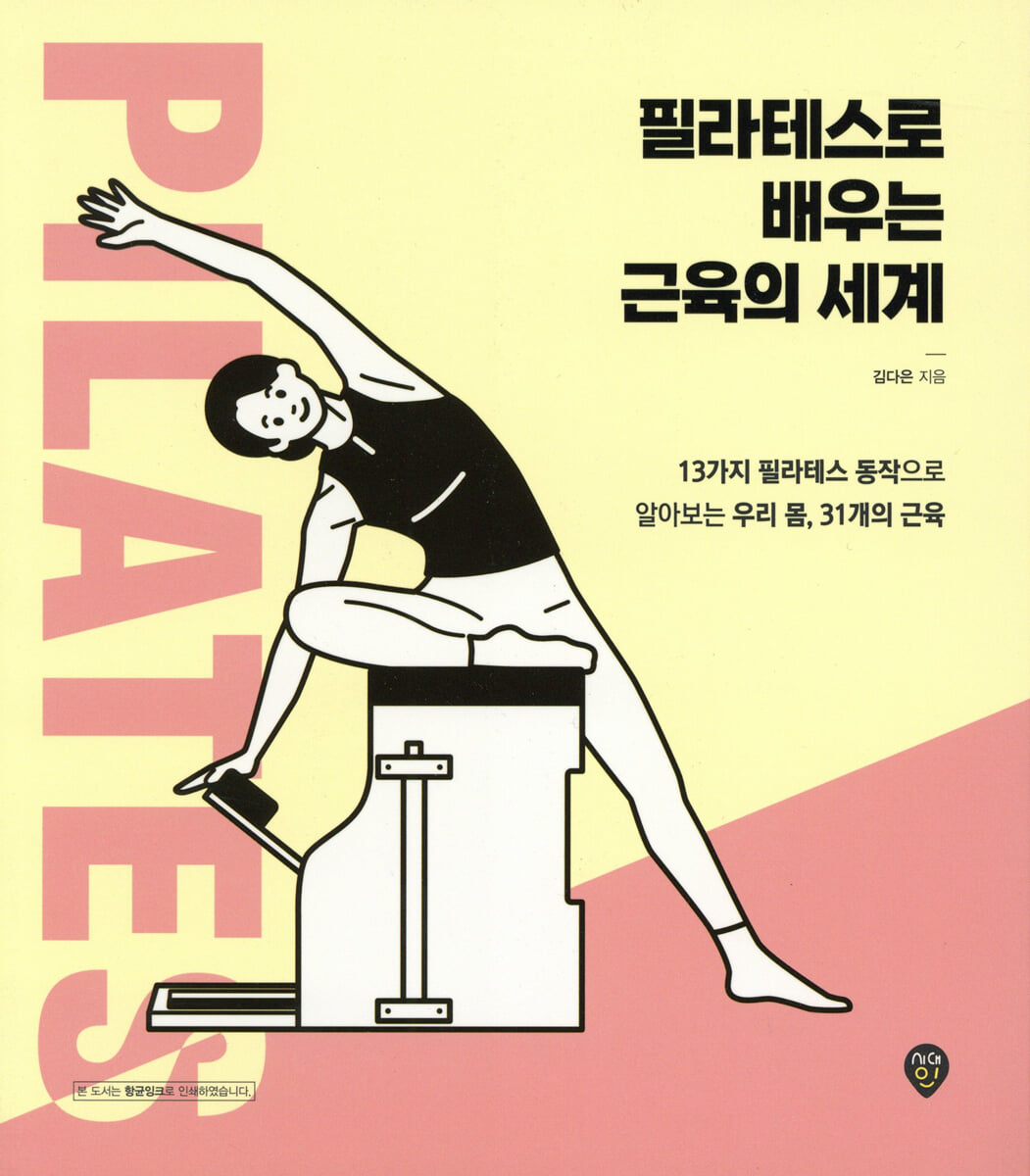
The World of Muscles Learned Through Pilates
 |
Description
Book Introduction
“What muscles are being used in the Pilates movements I am doing now?”
Even if you're doing just one Pilates movement, let's learn and use the muscles properly.
Pilates: Learn anatomically and easily
“Please take a deep breath and close your ribs.”
“I will try using it by separating the member’s pelvis and legs.”
The instructor's terrifying cueing that appears in every Pilates class.
How on earth do you close your ribs? And what does it mean to separate your pelvis and legs? Furthermore, where are the muscles and joints that appear in every class—the hip joints, gluteus, and adductors—located?
These days, it's not hard to find a large sign that says "Pilates," so Pilates has become a really popular exercise.
However, I don't think there is a book that explains Pilates terminology in an easy-to-understand anatomical way.
Pilates is a very delicate exercise, so you need to understand exactly which muscles and joints are being used when performing the movements, and then train your body accordingly.
If you just follow the movements that your body feels comfortable with without this kind of knowledge, it will actually be toxic to your body.
So, you could say that the instructors' fearsome cuing is filled with their earnest desire to train their members' precious muscles.
Through "Learning the World of Muscles with Pilates," we will teach you how to accurately understand the instructor's cues and perform them with movements.
A Pilates class that introduces 13 easy Pilates movements that can be easily done at home and focuses on 31 important muscles in the body.
It starts now.
Even if you're doing just one Pilates movement, let's learn and use the muscles properly.
Pilates: Learn anatomically and easily
“Please take a deep breath and close your ribs.”
“I will try using it by separating the member’s pelvis and legs.”
The instructor's terrifying cueing that appears in every Pilates class.
How on earth do you close your ribs? And what does it mean to separate your pelvis and legs? Furthermore, where are the muscles and joints that appear in every class—the hip joints, gluteus, and adductors—located?
These days, it's not hard to find a large sign that says "Pilates," so Pilates has become a really popular exercise.
However, I don't think there is a book that explains Pilates terminology in an easy-to-understand anatomical way.
Pilates is a very delicate exercise, so you need to understand exactly which muscles and joints are being used when performing the movements, and then train your body accordingly.
If you just follow the movements that your body feels comfortable with without this kind of knowledge, it will actually be toxic to your body.
So, you could say that the instructors' fearsome cuing is filled with their earnest desire to train their members' precious muscles.
Through "Learning the World of Muscles with Pilates," we will teach you how to accurately understand the instructor's cues and perform them with movements.
A Pilates class that introduces 13 easy Pilates movements that can be easily done at home and focuses on 31 important muscles in the body.
It starts now.
- You can preview some of the book's contents.
Preview
index
1st period members, please close your ribs while exhaling deeply.
Pilates Movement: Hundred
First muscle: diaphragm
Second muscle: intercostal muscles
Second period member, pull your chin down toward your chest and look at your belly button.
Pilates Move: Single Leg Stretch
Third muscle: rectus abdominis
Fourth muscle: external oblique
Fifth muscle: internal oblique
Sixth muscle: transverse abdominis
Third period member, try to make it seem like your legs are coming by themselves.
Pilates Move: Scissors
Seventh muscle: psoas major
4th period member, this is not an arm exercise.
Pilates Move: Open Leg Rocker
Eighth muscle: Rectus femoris
Ninth muscle: vastus lateralis
Tenth Muscle: Vastus Medialis
Eleventh Muscle: Vastus Intermedius
5th period member, pull down your shoulders
Pilates Movement: Spine Stretch Forward
Twelfth Muscle: Trapezius
Thirteenth Muscle: Latissimus Dorsi
In the 6th period, members will stretch their arms out to the sides.
Pilates Movement: Saw
Fourteenth Muscle: Deltoid
7th period, I'll pop the mini ball with my thigh.
Pilates Movement: Shoulder Bridge
Fifteenth Muscle: Adductor Longus
Sixteenth Muscle: Adductor Brevis
Seventeenth Muscle: Adductor Magna
8th period member, push Jeong Su-ri up to the ceiling
Pilates Movement: Swan
Eighteenth Muscle: Multifidus
Nineteenth Muscle: Erector Spinae
9th period members, lift your knees and kick my butt.
Pilates Move: Double Leg Kick
Twentieth Muscle: Biceps Femoris
Twenty-first muscle: Semitendinosus
Twenty-second muscle: Semimembranosus
10th period member, I will try to separate the pelvis and legs.
Pilates Movement: Side Kick Series Up and Down
Twenty-third muscle: gluteus maximus
Twenty-fourth muscle: Gluteus medius
Twenty-fifth muscle: gluteus minimus
11th period members, knees and insteps facing the ceiling
Pilates Movement: Side Kick Series Circle
Twenty-sixth Muscle: Piriformis
Twenty-seventh muscle: Hip external rotator group
12th period member, please fill in the space between your shoulder blades
Pilates Movement: Leg Pull Front
Twenty-eighth muscle: Serratus anterior
Twenty-ninth muscle: pectoralis major
Thirty Muscle: Pectoralis Minor
13th period member, stretch your torso like a stick and turn it sideways.
Pilates Move: Mermaid Stretch
Thirty-first muscle: Quadratus lumborum
Pilates Movement: Hundred
First muscle: diaphragm
Second muscle: intercostal muscles
Second period member, pull your chin down toward your chest and look at your belly button.
Pilates Move: Single Leg Stretch
Third muscle: rectus abdominis
Fourth muscle: external oblique
Fifth muscle: internal oblique
Sixth muscle: transverse abdominis
Third period member, try to make it seem like your legs are coming by themselves.
Pilates Move: Scissors
Seventh muscle: psoas major
4th period member, this is not an arm exercise.
Pilates Move: Open Leg Rocker
Eighth muscle: Rectus femoris
Ninth muscle: vastus lateralis
Tenth Muscle: Vastus Medialis
Eleventh Muscle: Vastus Intermedius
5th period member, pull down your shoulders
Pilates Movement: Spine Stretch Forward
Twelfth Muscle: Trapezius
Thirteenth Muscle: Latissimus Dorsi
In the 6th period, members will stretch their arms out to the sides.
Pilates Movement: Saw
Fourteenth Muscle: Deltoid
7th period, I'll pop the mini ball with my thigh.
Pilates Movement: Shoulder Bridge
Fifteenth Muscle: Adductor Longus
Sixteenth Muscle: Adductor Brevis
Seventeenth Muscle: Adductor Magna
8th period member, push Jeong Su-ri up to the ceiling
Pilates Movement: Swan
Eighteenth Muscle: Multifidus
Nineteenth Muscle: Erector Spinae
9th period members, lift your knees and kick my butt.
Pilates Move: Double Leg Kick
Twentieth Muscle: Biceps Femoris
Twenty-first muscle: Semitendinosus
Twenty-second muscle: Semimembranosus
10th period member, I will try to separate the pelvis and legs.
Pilates Movement: Side Kick Series Up and Down
Twenty-third muscle: gluteus maximus
Twenty-fourth muscle: Gluteus medius
Twenty-fifth muscle: gluteus minimus
11th period members, knees and insteps facing the ceiling
Pilates Movement: Side Kick Series Circle
Twenty-sixth Muscle: Piriformis
Twenty-seventh muscle: Hip external rotator group
12th period member, please fill in the space between your shoulder blades
Pilates Movement: Leg Pull Front
Twenty-eighth muscle: Serratus anterior
Twenty-ninth muscle: pectoralis major
Thirty Muscle: Pectoralis Minor
13th period member, stretch your torso like a stick and turn it sideways.
Pilates Move: Mermaid Stretch
Thirty-first muscle: Quadratus lumborum
Detailed image

Publisher's Review
13 Pilates moves you can easily do at home
Pilates classes that specifically target and train 31 key muscles in the body.
“Isn’t Pilates something that requires expensive equipment?”
Pilates is often perceived as an exercise that requires equipment and therefore cannot be done at home.
So, the book introduces 13 Pilates movements that can be easily followed at home with just a mat, and specifically introduces 31 muscles that are used when performing the movements.
The most important thing in Pilates is knowing exactly which muscles you are working in each movement.
Rather than focusing solely on Pilates movements and their effects, we've included detailed information on each muscle group used in each Pilates movement.
Even if you do one movement, the way to improve your body is to do it with the correct posture and use the right muscles.
The Pilates movements you're doing right now are undoubtedly sore, but have you ever wondered which muscles you're actually working? This book is packed with information, so why not familiarize yourself with it before heading to a Pilates studio?
The world's easiest introduction to difficult Pilates anatomy terms
A book for beginner Pilates instructors and Pilates instructors
More than a hundred years have passed since Joseph Pilates created Pilates.
With easy access to anatomy information online, modern Pilates instructors frequently use the names of bones and muscles during class.
Even Joseph Pilates would probably be speechless if he saw a modern anatomy book filled with such advanced medical information.
But even if you know the difficult terms, not many people would be able to confidently answer someone who asks, “Where is that?”
It is difficult not only for Pilates members but also for beginner instructors.
Pilates is a very intensive exercise that trains and rehabilitates the body, so you should not neglect your knowledge.
This book was created to help those learning Pilates understand the principles of movement and practice the exercises, and to help beginner Pilates instructors provide more accurate movement cueing to their members.
We introduce 13 classic Pilates movements, detailing the principles of the movements and the use of the muscles. At the end of each movement, you can draw the muscles yourself, so you can take the time to master each movement.
Pilates classes that specifically target and train 31 key muscles in the body.
“Isn’t Pilates something that requires expensive equipment?”
Pilates is often perceived as an exercise that requires equipment and therefore cannot be done at home.
So, the book introduces 13 Pilates movements that can be easily followed at home with just a mat, and specifically introduces 31 muscles that are used when performing the movements.
The most important thing in Pilates is knowing exactly which muscles you are working in each movement.
Rather than focusing solely on Pilates movements and their effects, we've included detailed information on each muscle group used in each Pilates movement.
Even if you do one movement, the way to improve your body is to do it with the correct posture and use the right muscles.
The Pilates movements you're doing right now are undoubtedly sore, but have you ever wondered which muscles you're actually working? This book is packed with information, so why not familiarize yourself with it before heading to a Pilates studio?
The world's easiest introduction to difficult Pilates anatomy terms
A book for beginner Pilates instructors and Pilates instructors
More than a hundred years have passed since Joseph Pilates created Pilates.
With easy access to anatomy information online, modern Pilates instructors frequently use the names of bones and muscles during class.
Even Joseph Pilates would probably be speechless if he saw a modern anatomy book filled with such advanced medical information.
But even if you know the difficult terms, not many people would be able to confidently answer someone who asks, “Where is that?”
It is difficult not only for Pilates members but also for beginner instructors.
Pilates is a very intensive exercise that trains and rehabilitates the body, so you should not neglect your knowledge.
This book was created to help those learning Pilates understand the principles of movement and practice the exercises, and to help beginner Pilates instructors provide more accurate movement cueing to their members.
We introduce 13 classic Pilates movements, detailing the principles of the movements and the use of the muscles. At the end of each movement, you can draw the muscles yourself, so you can take the time to master each movement.
GOODS SPECIFICS
- Publication date: April 15, 2022
- Page count, weight, size: 122 pages | 188*215*20mm
- ISBN13: 9791138320993
- ISBN10: 1138320994
You may also like
카테고리
korean


korean

![GQ KOREA Mark (Monthly): December [2025]](http://librairie.coreenne.fr/cdn/shop/files/8ef265dbbfbf186523ed75ba7319009d.jpg?v=1765340328&width=3840)


