

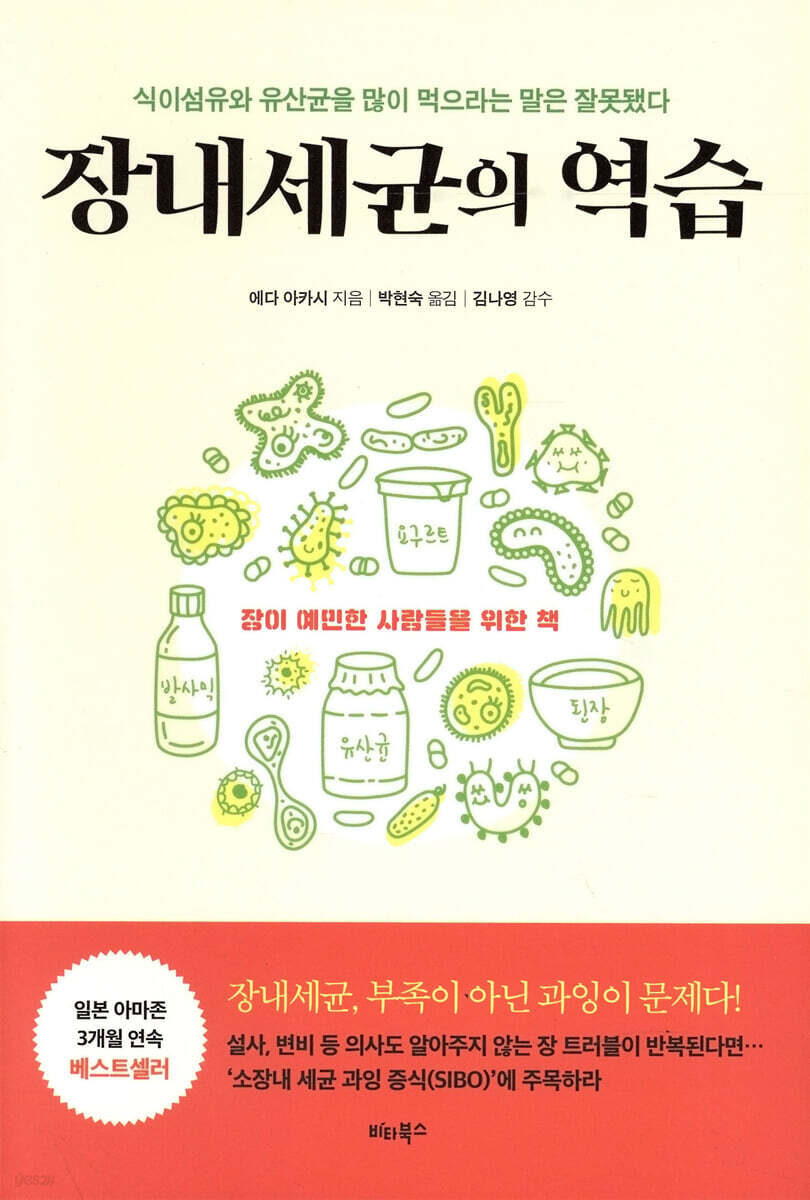
The counterattack of gut bacteria
 |
Description
Book Introduction
If you have recurring intestinal problems that even doctors don't recognize, Pay attention to small intestinal bacterial overgrowth (SIBO). People who frequently have stomach aches, people who are always gassy, people who have difficulty passing stools even when eating fiber… People who frequently experience intestinal problems are always suffering because they can't find the cause of their symptoms. Even when I go to the hospital, all I hear from the doctor is, “We don’t know the cause” or “It’s stress.” I’m still suffering at this moment. If we want to end this tragedy, let's focus on gut bacteria. The problem with modern people is not that they lack intestinal bacteria, but rather that they have too many. Gut bacteria, ravaged by high-fat diets, stress, a glut of junk food, overuse of antibiotics, and urban pollution, are starting to run wild. They become an 'enemy' that threatens health when they mistake their place of residence and proliferate in the small intestine instead of the large intestine. Dr. Akashi Eda, a gastroenterologist and author of this book, calls this phenomenon the "revenge of gut bacteria." This book explains in an easy-to-understand way the mechanisms of these symptoms, which can lead to serious illnesses such as fibromyalgia, Crohn's disease, and cancer when chronic conditions such as irritable bowel syndrome and peptic ulcers become infected with intestinal bacteria. It also suggests practical ways to help humans create a healthy gut environment and turn gut bacteria into friends rather than enemies. This book is recommended for those with sensitive intestines, as it contains essential knowledge on gut health to help you change your diet, choose treatments that won't put a strain on your body, and avoid overdosing on medication. |
- You can preview some of the book's contents.
Preview
index
As I entered, my intestinal bacteria began to run wild.
PART 1: Cold Gas Causes All Diseases
An era where one in ten people suffer from constant stomach discomfort
- A disease that is not life-threatening but is painful enough to cause death
Chronic fatigue, unexplained lethargy, lack of energy, and intestinal problems
Irritable bowel syndrome that steals your concentration
Gut bacteria hack the brain.
- Why do people with poor gut health experience pain all over their body?
- Intestinal bacterial overgrowth interferes with detoxification.
Does it also affect gynecological diseases such as menstrual cramps and endometriosis?
- Why women experience more abdominal pain
PART 2 People controlled by gut bacteria
The oldest living organism settles in the human gut.
- Human psychology controlled by gut bacteria
- The intestines are originally violent and move quickly.
Let's draw a map of the human gut bacteria.
Predicting disease based on gut bacteria
- Intestinal bacteria cause cancer or arteriosclerosis?
- The dental health of modern people is very poor.
- Humans and gut bacteria evolved in a cooperative relationship.
- The more types of intestinal bacteria, the better.
Why Gut-Activating Habits Don't Work for Everyone
- The pitfalls of short-chain fatty acids that prevent obesity
- Bacteria respond to antibiotic overuse by secreting toxins
- Improvement of disturbed intestinal bacteria through fecal transplantation
- Modern people who tire easily
- SIBO, a disease in which intestinal bacteria proliferate excessively in the small intestine
- The relationship between Japanese gut flora and diet
PART 3: Intestinal Problems Even Doctors Don't Know About
Intestinal problems are not a 'mental problem' or 'nervousness'
- Peptic ulcer disease and stomach cancer are infectious diseases.
- Doctors who attribute everything to stress
When Trauma Affects Your Gut Problems
- A gastroenterologist who needs a listening ear
- 'Endoscopic Faith' Leads to Misdiagnosis
Bloating, abdominal gas, and constipation… Diagnosing and treating the cause isn't easy.
- Gas produced by bacteria in the small intestine
- Can treating cavities solve intestinal problems?
Breathing in a lot of air doesn't cause gas.
- Presence of gas in the small intestine, which is directly related to healthy life expectancy
PART 4: SIBO, an incurable disease that has struck the small intestine
Take care of your small intestine to create energy properly.
- The small intestine is a black box inside the stomach
- Converts food into energy
Acid-suppressing drugs backfire
- Repeated swelling and shrinking of the intestines reduces small intestine function.
The intestines are cleansed during fasting hours.
- Beneficial bacteria that turn into harmful bacteria
- The stomach is actually good for your health.
PART 5: The Latest Treatments Every Troubled Person Should Know
Western-style diet breaks down the intestinal barrier.
- Loss of intestinal barrier function, leaky gut syndrome
What We Learned About the Relationship Between Bacteria and Toxins
- A regular lifestyle heals the intestines.
- Actively consume omega-3 fatty acids
Beneficial bacteria or harmful bacteria?
- Eating beneficial bacteria makes you dizzy
A breath test can detect SIBO.
- SIBO treatment cannot be discussed without rifaximin.
- Nutritional supplements containing ingredients that are effective against eosinophilic gastroenteritis
PART 6: The Ultimate Diet Therapy: The Low FODMAP Diet
Don't give bacteria their favorite food.
- The fallacy of saying “Eat plenty of dietary fiber”
- Regain a healthy gut with a low FODMAP diet
Let's eat food that doesn't leave residue in the intestines
Women with constipation have more bifidobacteria
- The intestinal bacteria of Asians are unlike any other country.
17 types of gut bacteria are saving the world.
'Fat bacteria' and 'slim bacteria' are both lies.
- People whose condition is worsened by short-chain fatty acids
- Eat naturally derived antibacterial ingredients
If you have a sensitive stomach, gluten-free is also effective.
- Stomach problems in athletes
- Pitfalls of gut flora testing
The Importance of the Microenvironment Where Intestinal Bacteria Live
References
SUMMARY
Medications, diet, and surgery to improve the intestinal environment
Various causes of SIBO
Progression of a low FODMAP diet
Stomach condition after a low FODMAP meal and a regular meal
Browse high-FODMAP/low-FODMAP foods
Natural antibiotics in plants
PART 1: Cold Gas Causes All Diseases
An era where one in ten people suffer from constant stomach discomfort
- A disease that is not life-threatening but is painful enough to cause death
Chronic fatigue, unexplained lethargy, lack of energy, and intestinal problems
Irritable bowel syndrome that steals your concentration
Gut bacteria hack the brain.
- Why do people with poor gut health experience pain all over their body?
- Intestinal bacterial overgrowth interferes with detoxification.
Does it also affect gynecological diseases such as menstrual cramps and endometriosis?
- Why women experience more abdominal pain
PART 2 People controlled by gut bacteria
The oldest living organism settles in the human gut.
- Human psychology controlled by gut bacteria
- The intestines are originally violent and move quickly.
Let's draw a map of the human gut bacteria.
Predicting disease based on gut bacteria
- Intestinal bacteria cause cancer or arteriosclerosis?
- The dental health of modern people is very poor.
- Humans and gut bacteria evolved in a cooperative relationship.
- The more types of intestinal bacteria, the better.
Why Gut-Activating Habits Don't Work for Everyone
- The pitfalls of short-chain fatty acids that prevent obesity
- Bacteria respond to antibiotic overuse by secreting toxins
- Improvement of disturbed intestinal bacteria through fecal transplantation
- Modern people who tire easily
- SIBO, a disease in which intestinal bacteria proliferate excessively in the small intestine
- The relationship between Japanese gut flora and diet
PART 3: Intestinal Problems Even Doctors Don't Know About
Intestinal problems are not a 'mental problem' or 'nervousness'
- Peptic ulcer disease and stomach cancer are infectious diseases.
- Doctors who attribute everything to stress
When Trauma Affects Your Gut Problems
- A gastroenterologist who needs a listening ear
- 'Endoscopic Faith' Leads to Misdiagnosis
Bloating, abdominal gas, and constipation… Diagnosing and treating the cause isn't easy.
- Gas produced by bacteria in the small intestine
- Can treating cavities solve intestinal problems?
Breathing in a lot of air doesn't cause gas.
- Presence of gas in the small intestine, which is directly related to healthy life expectancy
PART 4: SIBO, an incurable disease that has struck the small intestine
Take care of your small intestine to create energy properly.
- The small intestine is a black box inside the stomach
- Converts food into energy
Acid-suppressing drugs backfire
- Repeated swelling and shrinking of the intestines reduces small intestine function.
The intestines are cleansed during fasting hours.
- Beneficial bacteria that turn into harmful bacteria
- The stomach is actually good for your health.
PART 5: The Latest Treatments Every Troubled Person Should Know
Western-style diet breaks down the intestinal barrier.
- Loss of intestinal barrier function, leaky gut syndrome
What We Learned About the Relationship Between Bacteria and Toxins
- A regular lifestyle heals the intestines.
- Actively consume omega-3 fatty acids
Beneficial bacteria or harmful bacteria?
- Eating beneficial bacteria makes you dizzy
A breath test can detect SIBO.
- SIBO treatment cannot be discussed without rifaximin.
- Nutritional supplements containing ingredients that are effective against eosinophilic gastroenteritis
PART 6: The Ultimate Diet Therapy: The Low FODMAP Diet
Don't give bacteria their favorite food.
- The fallacy of saying “Eat plenty of dietary fiber”
- Regain a healthy gut with a low FODMAP diet
Let's eat food that doesn't leave residue in the intestines
Women with constipation have more bifidobacteria
- The intestinal bacteria of Asians are unlike any other country.
17 types of gut bacteria are saving the world.
'Fat bacteria' and 'slim bacteria' are both lies.
- People whose condition is worsened by short-chain fatty acids
- Eat naturally derived antibacterial ingredients
If you have a sensitive stomach, gluten-free is also effective.
- Stomach problems in athletes
- Pitfalls of gut flora testing
The Importance of the Microenvironment Where Intestinal Bacteria Live
References
SUMMARY
Medications, diet, and surgery to improve the intestinal environment
Various causes of SIBO
Progression of a low FODMAP diet
Stomach condition after a low FODMAP meal and a regular meal
Browse high-FODMAP/low-FODMAP foods
Natural antibiotics in plants
Detailed image

Publisher's Review
“Don’t blindly believe what people say is good for your intestines!”
Gut Health Tips You Should Know If You Have a Sensitive Gut
- Are probiotics and dietary fiber always good for the intestines?
- Are beneficial and harmful bacteria defined?
- Can constipation be worsened by bifidobacteria?
- Are there separate fat bacteria and slim bacteria?
- Are intestinal problems 100% caused by stress?
The latest medical information on gastroenterology that was right then but wrong now!
If you have recurring intestinal problems, such as diarrhea or constipation, that even doctors don't recognize...
Pay attention to small intestinal bacterial overgrowth (SIBO).
Supervised by Professor Na-young Kim of Bundang Seoul National University Hospital, the first Korean recipient of the Marshall & Warren Research Award
“I applaud the author’s flexibility in demonstrating that the distinction between beneficial and harmful bacteria in the digestive tract is not particularly important, but rather the microenvironment in which intestinal bacteria live is more important.”
Professor Na-Young Kim, Department of Gastroenterology, Seoul National University College of Medicine and Seoul National University Bundang Hospital
What is small intestinal bacterial overgrowth (SIBO)?
Author Akashi Eda boldly states that the advice to eat a lot of dietary fiber and probiotics is wrong, and emphasizes that to properly understand the gastrointestinal tract, you need to know intestinal bacteria.
This is because it is difficult to apply to everyone the medical information that is floating around, such as reducing harmful bacteria and increasing beneficial bacteria to cure intestinal problems, or having more slimming bacteria rather than fat-promoting bacteria to prevent obesity.
In reality, the types of gut bacteria that people have are as diverse and unique as fingerprints, and show significant differences depending on gender, age, and eating habits.
Small intestinal bacterial overgrowth (SIBO) occurs when gut bacteria grow abnormally in the wrong habitat.
Unlike the large intestine, the small intestine is narrow in diameter, so if gas is produced by bacterial fermentation, it can become excessively distended, which can be problematic.
If the intestinal bacterial environment in the small intestine deteriorates and is not corrected, reflux esophagitis, peptic ulcers, and irritable bowel syndrome can occur.
This book focuses on the relationship between the digestive tract and intestinal bacteria, providing an easy-to-understand explanation of the mechanisms by which common intestinal problems occur in our bodies.
Drugs, treatments, and diets that can help prevent gut bacteria from overrunning.
Intestinal problems such as diarrhea, constipation, abdominal bloating, and indigestion are often diagnosed as stress because the cause cannot be clearly identified.
However, the author focuses on the problem of dysbiosis, or unbalanced gut bacteria, and identifies the abnormal symptoms of the body one by one.
Additionally, based on papers and comparative studies published in renowned international journals such as [Nature] and [American Journal of Gastroenterology], and sometimes based on my experience as a clinical specialist, I approach appropriate prevention and treatment methods.
The medical information the author has acquired through his interest in domestic and international treatment methods is expected to be useful knowledge for the public as well.
It not only corrects misconceptions about gut health by providing information such as common misconceptions about probiotics and the 17 types of bacteria found in the intestines of people who have lived long and healthy lives, but also serves as a guide in choosing the most ideal medicine, treatment, and diet.
As regulations regarding treatment and medicine vary from country to country, a gastroenterologist familiar with the current situation in our country was in charge of reviewing the book.
For reference, Professor Na-Young Kim, who conducted the review, is the first Korean to receive the Marshall & Warren Research Award and is a renowned gastroenterologist who has been researching Helicobacter pylori and digestive system diseases for over 30 years.
Optimal gut environment managed with a low FODMAP diet
This book suggests a variety of strategies for gut health, including the use of low-tolerance medications, improving the gut environment through fecal transplants, intermittent fasting, and a gluten-free diet. It particularly recommends a low-FODMAP diet.
Unlike medication or hospital treatment, it is a method that anyone can easily access at home and has a 75% improvement effect in intestinal problems.
This diet, which limits carbohydrate intake, which causes rapid bacterial fermentation in the small intestine and leads to abdominal bloating, abdominal pain, constipation, and diarrhea, is ideal for maintaining a stable intestinal environment.
The low FODMAP diet, developed at Monash University in Australia for patients with irritable bowel syndrome, is known to significantly alleviate symptoms in patients with ulcerative colitis and Crohn's disease.
Recently, it has reached the stage of being applied to SIBO patients, and its biggest advantage is that it can directly find the intestinal bacteria and excessively fermented carbohydrates (high FODMAPs) that each individual has.
For example, some people can eat fructan (bread), but eating galactooligosaccharides (beans) can cause particularly severe intestinal problems, while the opposite is true for some.
Professor Kim Na-young, the reviewer, said that the high-FODMAP/low-FODMAP food list included in this book is very useful because Japanese and Koreans have similar eating habits, mainly consuming fermented foods, rice, and steamed dishes.
Gut Health Tips You Should Know If You Have a Sensitive Gut
- Are probiotics and dietary fiber always good for the intestines?
- Are beneficial and harmful bacteria defined?
- Can constipation be worsened by bifidobacteria?
- Are there separate fat bacteria and slim bacteria?
- Are intestinal problems 100% caused by stress?
The latest medical information on gastroenterology that was right then but wrong now!
If you have recurring intestinal problems, such as diarrhea or constipation, that even doctors don't recognize...
Pay attention to small intestinal bacterial overgrowth (SIBO).
Supervised by Professor Na-young Kim of Bundang Seoul National University Hospital, the first Korean recipient of the Marshall & Warren Research Award
“I applaud the author’s flexibility in demonstrating that the distinction between beneficial and harmful bacteria in the digestive tract is not particularly important, but rather the microenvironment in which intestinal bacteria live is more important.”
Professor Na-Young Kim, Department of Gastroenterology, Seoul National University College of Medicine and Seoul National University Bundang Hospital
What is small intestinal bacterial overgrowth (SIBO)?
Author Akashi Eda boldly states that the advice to eat a lot of dietary fiber and probiotics is wrong, and emphasizes that to properly understand the gastrointestinal tract, you need to know intestinal bacteria.
This is because it is difficult to apply to everyone the medical information that is floating around, such as reducing harmful bacteria and increasing beneficial bacteria to cure intestinal problems, or having more slimming bacteria rather than fat-promoting bacteria to prevent obesity.
In reality, the types of gut bacteria that people have are as diverse and unique as fingerprints, and show significant differences depending on gender, age, and eating habits.
Small intestinal bacterial overgrowth (SIBO) occurs when gut bacteria grow abnormally in the wrong habitat.
Unlike the large intestine, the small intestine is narrow in diameter, so if gas is produced by bacterial fermentation, it can become excessively distended, which can be problematic.
If the intestinal bacterial environment in the small intestine deteriorates and is not corrected, reflux esophagitis, peptic ulcers, and irritable bowel syndrome can occur.
This book focuses on the relationship between the digestive tract and intestinal bacteria, providing an easy-to-understand explanation of the mechanisms by which common intestinal problems occur in our bodies.
Drugs, treatments, and diets that can help prevent gut bacteria from overrunning.
Intestinal problems such as diarrhea, constipation, abdominal bloating, and indigestion are often diagnosed as stress because the cause cannot be clearly identified.
However, the author focuses on the problem of dysbiosis, or unbalanced gut bacteria, and identifies the abnormal symptoms of the body one by one.
Additionally, based on papers and comparative studies published in renowned international journals such as [Nature] and [American Journal of Gastroenterology], and sometimes based on my experience as a clinical specialist, I approach appropriate prevention and treatment methods.
The medical information the author has acquired through his interest in domestic and international treatment methods is expected to be useful knowledge for the public as well.
It not only corrects misconceptions about gut health by providing information such as common misconceptions about probiotics and the 17 types of bacteria found in the intestines of people who have lived long and healthy lives, but also serves as a guide in choosing the most ideal medicine, treatment, and diet.
As regulations regarding treatment and medicine vary from country to country, a gastroenterologist familiar with the current situation in our country was in charge of reviewing the book.
For reference, Professor Na-Young Kim, who conducted the review, is the first Korean to receive the Marshall & Warren Research Award and is a renowned gastroenterologist who has been researching Helicobacter pylori and digestive system diseases for over 30 years.
Optimal gut environment managed with a low FODMAP diet
This book suggests a variety of strategies for gut health, including the use of low-tolerance medications, improving the gut environment through fecal transplants, intermittent fasting, and a gluten-free diet. It particularly recommends a low-FODMAP diet.
Unlike medication or hospital treatment, it is a method that anyone can easily access at home and has a 75% improvement effect in intestinal problems.
This diet, which limits carbohydrate intake, which causes rapid bacterial fermentation in the small intestine and leads to abdominal bloating, abdominal pain, constipation, and diarrhea, is ideal for maintaining a stable intestinal environment.
The low FODMAP diet, developed at Monash University in Australia for patients with irritable bowel syndrome, is known to significantly alleviate symptoms in patients with ulcerative colitis and Crohn's disease.
Recently, it has reached the stage of being applied to SIBO patients, and its biggest advantage is that it can directly find the intestinal bacteria and excessively fermented carbohydrates (high FODMAPs) that each individual has.
For example, some people can eat fructan (bread), but eating galactooligosaccharides (beans) can cause particularly severe intestinal problems, while the opposite is true for some.
Professor Kim Na-young, the reviewer, said that the high-FODMAP/low-FODMAP food list included in this book is very useful because Japanese and Koreans have similar eating habits, mainly consuming fermented foods, rice, and steamed dishes.
GOODS SPECIFICS
- Publication date: November 25, 2020
- Page count, weight, size: 268 pages | 420g | 152*220*16mm
- ISBN13: 9791158463465
- ISBN10: 1158463464
You may also like
카테고리
korean


korean

![GQ KOREA Mark (Monthly): December [2025]](http://librairie.coreenne.fr/cdn/shop/files/8ef265dbbfbf186523ed75ba7319009d.jpg?v=1765340328&width=3840)


