

Automotive Maintenance Textbook
 |
Description
Book Introduction
Don't be discouraged at the car center
Now, I can confidently entrust my car to you.
We live surrounded by cars every day.
We use cars to commute to work, travel, or even meet someone.
It's almost impossible to imagine a life without cars.
Yet people don't know much about cars.
If my car breaks down while I'm driving, I just take it to a car center.
Of course, you don't need to know the complex and difficult structure and principles of automobiles.
This is because most inspections and maintenance can be handled at a car center.
But if you're an owner-driver who pays anywhere from tens to millions of won in annual maintenance fees, shouldn't you know at least something about why your car broke down? Shouldn't you know what the numbers on the bill you're holding in your hand mean?
Even if you leave your car at your regular auto repair shop, if you don't know the cause of the breakdown and the repair process, you are likely to be surrounded by various doubts and anxieties.
Many drivers just hesitate when they wonder why their car looks like this.
Since I don't know anything about cars, I always feel intimidated by the mechanic, unable to ask detailed questions even when I'm billed a huge amount for repairs.
A car is usually the most expensive possession a person owns, other than a home.
Moreover, it is a very precious item that can be taken care of even for the lives of oneself and one's family.
It is not right to entrust such a car to someone for repairs and treat it as if a blind man were touching an elephant.
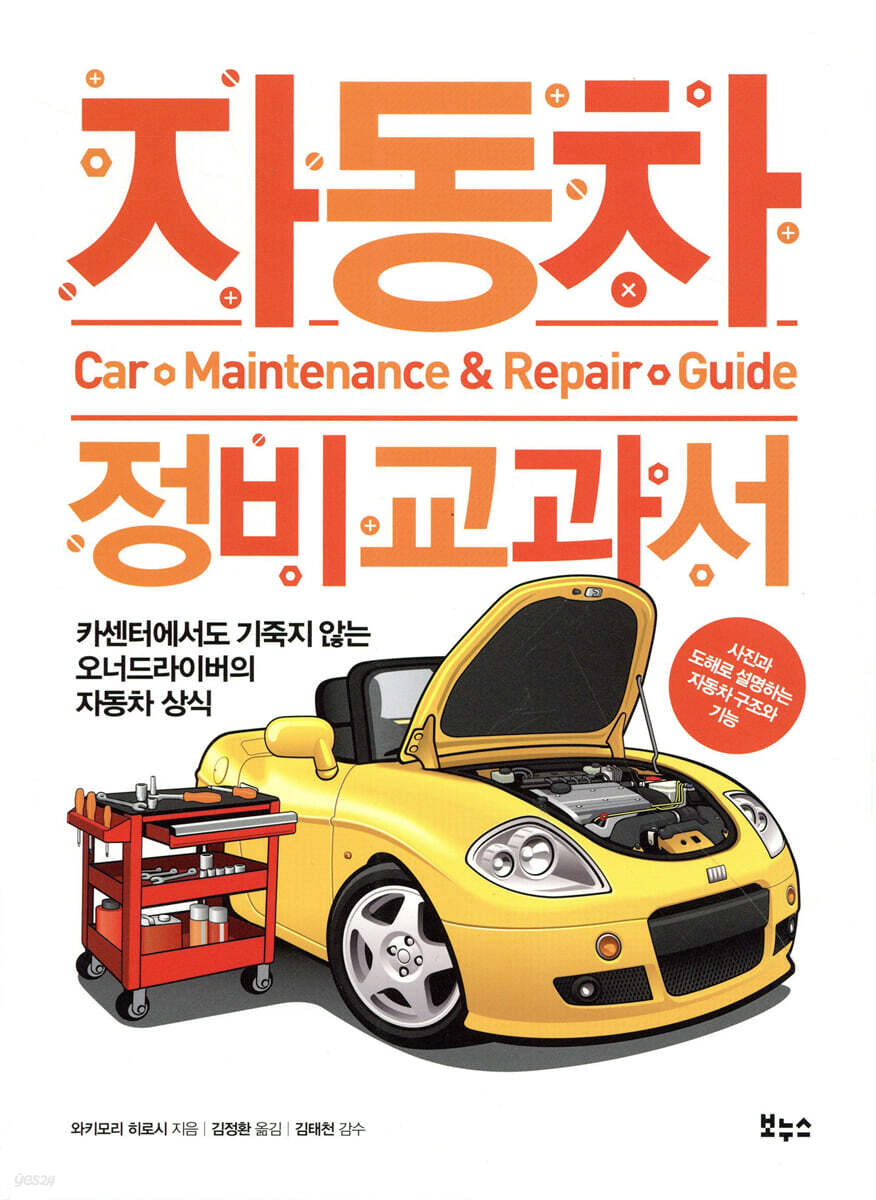
《Automobile Maintenance Textbook》 explains the structure and function of automobiles, how to replace each consumable part, and the maintenance process with detailed photos and diagrams.
Drivers who learn common automotive knowledge through this book will be able to alleviate some of the worries and anxieties they usually feel at car centers.
Drivers who know what car parts are, how they work, and what their replacement cycles are are more likely to take their cars to a car center.
For owner-drivers who know the proper maintenance know-how and maintenance methods, the path opens up to avoiding unnecessary repairs and reducing costs.
Now, I can confidently entrust my car to you.
We live surrounded by cars every day.
We use cars to commute to work, travel, or even meet someone.
It's almost impossible to imagine a life without cars.
Yet people don't know much about cars.
If my car breaks down while I'm driving, I just take it to a car center.
Of course, you don't need to know the complex and difficult structure and principles of automobiles.
This is because most inspections and maintenance can be handled at a car center.
But if you're an owner-driver who pays anywhere from tens to millions of won in annual maintenance fees, shouldn't you know at least something about why your car broke down? Shouldn't you know what the numbers on the bill you're holding in your hand mean?
Even if you leave your car at your regular auto repair shop, if you don't know the cause of the breakdown and the repair process, you are likely to be surrounded by various doubts and anxieties.
Many drivers just hesitate when they wonder why their car looks like this.
Since I don't know anything about cars, I always feel intimidated by the mechanic, unable to ask detailed questions even when I'm billed a huge amount for repairs.
A car is usually the most expensive possession a person owns, other than a home.
Moreover, it is a very precious item that can be taken care of even for the lives of oneself and one's family.
It is not right to entrust such a car to someone for repairs and treat it as if a blind man were touching an elephant.
《Automobile Maintenance Textbook》 explains the structure and function of automobiles, how to replace each consumable part, and the maintenance process with detailed photos and diagrams.
Drivers who learn common automotive knowledge through this book will be able to alleviate some of the worries and anxieties they usually feel at car centers.
Drivers who know what car parts are, how they work, and what their replacement cycles are are more likely to take their cars to a car center.
For owner-drivers who know the proper maintenance know-how and maintenance methods, the path opens up to avoiding unnecessary repairs and reducing costs.
- You can preview some of the book's contents.
Preview
index
Maintenance index by part
Chapter 1: Understanding the Basic Structure of a Car
Engine type
Engine structure and operating principles
Drivetrain and engine layout
Structure of the drive system
Types and structures of suspension
Types and structures of brakes
Steering structure
Structure of the charging and ignition system
Battery structure
Chapter 2 Let's do some simple inspections and maintenance.
Engine room layout and daily inspection points
Pre-driving checks you can do from the driver's seat
Routine inspection of the body and surrounding lamps
Checking the tires
Jack up and tire change
Check the area around the underbody
How to open and close the bonnet
Changing engine oil and filter
Replacing the engine coolant and radiator cap
Checking the brakes and clutch
ATF inspection
Inspection and replacement of the air cleaner
Power Steering Fluid Replacement
Engine belt tension adjustment
Battery inspection
Spark plug replacement
Checking the remaining brake pad/shoe tread
Checking and adjusting the side brake
Washer inspection and adjustment
Wiper replacement
Checking and replacing fuses
Headlight/Various Bulb Replacement
Replacing the tail lamp lens
Door closing adjustment and weather strip replacement
Lubrication of moving parts inside the door
Replacement of small parts
Air conditioner inspection
How to remove the seat
Chapter 3: Learn how to use tools and chemicals
· Tools
double offset wrench
socket wrench
spanner
screwdriver
combination wrench
ratchet wrench
monkey wrench
Phillips wrench
pliers
Groove joint pliers
long nose pliers
Nipper
Clip remover
combination hammer
hex wrench
star wrench
Garage Jack
jack stands
flare nut wrench
door hinge wrench
vice pliers
Magnet Hand
· Chemical products
Rust-preventing lubricating spray
High-adhesion lubricating spray
Spray grease
silicone grease
brake cleaner
Parts cleaning spray
Contact Resurrection Spray
electrical component cleaner
Rubber protection spray
engine conditioner
Engine cleaning spray
Air conditioner cleaner
Chapter 4: Full-scale, high-difficulty maintenance
Battery replacement
Timing belt replacement
Replacing radiator/heater hoses
Replacing the thermostat
Replacing engine mounts
Replacing the engine belt
ATF exchange
Manual Transmission/Differential Oil Replacement
Damper replacement
Replacing brake pads
Replacing brake hoses/clutch hoses
Brake caliper overhaul
Replacing tie rod boots
Replacing headlight lenses
Cylinder head oil leak countermeasures
Bleeding the air from the brakes
Chapter 5: Upgrade My Car
Car navigation
rear camera
black box
Hi-pass terminal
Iridium plugs
Sports Air Cleaner
Simple security system
seismic barrier
Chapter 6 How to deal with various problem situations
The engine overheated.
The engine doesn't start properly.
There is a noise every time I apply the brakes.
The automatic transmission shifts unsmoothly.
The turn signal flashes at an odd interval.
The steering wheel gets heavier and lighter
The tire is worn out on only one side.
A manual transmission car vibrates when starting off.
The car keeps shaking and the ride is uncomfortable.
The car navigation system's location is inaccurate.
There's a strange noise coming from the engine.
There is noise coming from the radio.
Wind noise is loud when driving at high speeds.
The brakes don't respond well when pressed.
Fuel economy has deteriorated.
The steering wheel shakes violently when driving at high speeds.
Rainwater leaks
The car doesn't drive straight.
The car is going straight, but the steering wheel is turned.
The turn signal lever does not return to neutral.
Glossary of Terms to Help You Maintain
Chapter 1: Understanding the Basic Structure of a Car
Engine type
Engine structure and operating principles
Drivetrain and engine layout
Structure of the drive system
Types and structures of suspension
Types and structures of brakes
Steering structure
Structure of the charging and ignition system
Battery structure
Chapter 2 Let's do some simple inspections and maintenance.
Engine room layout and daily inspection points
Pre-driving checks you can do from the driver's seat
Routine inspection of the body and surrounding lamps
Checking the tires
Jack up and tire change
Check the area around the underbody
How to open and close the bonnet
Changing engine oil and filter
Replacing the engine coolant and radiator cap
Checking the brakes and clutch
ATF inspection
Inspection and replacement of the air cleaner
Power Steering Fluid Replacement
Engine belt tension adjustment
Battery inspection
Spark plug replacement
Checking the remaining brake pad/shoe tread
Checking and adjusting the side brake
Washer inspection and adjustment
Wiper replacement
Checking and replacing fuses
Headlight/Various Bulb Replacement
Replacing the tail lamp lens
Door closing adjustment and weather strip replacement
Lubrication of moving parts inside the door
Replacement of small parts
Air conditioner inspection
How to remove the seat
Chapter 3: Learn how to use tools and chemicals
· Tools
double offset wrench
socket wrench
spanner
screwdriver
combination wrench
ratchet wrench
monkey wrench
Phillips wrench
pliers
Groove joint pliers
long nose pliers
Nipper
Clip remover
combination hammer
hex wrench
star wrench
Garage Jack
jack stands
flare nut wrench
door hinge wrench
vice pliers
Magnet Hand
· Chemical products
Rust-preventing lubricating spray
High-adhesion lubricating spray
Spray grease
silicone grease
brake cleaner
Parts cleaning spray
Contact Resurrection Spray
electrical component cleaner
Rubber protection spray
engine conditioner
Engine cleaning spray
Air conditioner cleaner
Chapter 4: Full-scale, high-difficulty maintenance
Battery replacement
Timing belt replacement
Replacing radiator/heater hoses
Replacing the thermostat
Replacing engine mounts
Replacing the engine belt
ATF exchange
Manual Transmission/Differential Oil Replacement
Damper replacement
Replacing brake pads
Replacing brake hoses/clutch hoses
Brake caliper overhaul
Replacing tie rod boots
Replacing headlight lenses
Cylinder head oil leak countermeasures
Bleeding the air from the brakes
Chapter 5: Upgrade My Car
Car navigation
rear camera
black box
Hi-pass terminal
Iridium plugs
Sports Air Cleaner
Simple security system
seismic barrier
Chapter 6 How to deal with various problem situations
The engine overheated.
The engine doesn't start properly.
There is a noise every time I apply the brakes.
The automatic transmission shifts unsmoothly.
The turn signal flashes at an odd interval.
The steering wheel gets heavier and lighter
The tire is worn out on only one side.
A manual transmission car vibrates when starting off.
The car keeps shaking and the ride is uncomfortable.
The car navigation system's location is inaccurate.
There's a strange noise coming from the engine.
There is noise coming from the radio.
Wind noise is loud when driving at high speeds.
The brakes don't respond well when pressed.
Fuel economy has deteriorated.
The steering wheel shakes violently when driving at high speeds.
Rainwater leaks
The car doesn't drive straight.
The car is going straight, but the steering wheel is turned.
The turn signal lever does not return to neutral.
Glossary of Terms to Help You Maintain
Detailed image
.jpg)
Publisher's Review
Don't be discouraged at the car center
Now, I can confidently leave my car to you.
We live surrounded by cars every day.
We use cars to commute to work, travel, or even meet someone.
It's almost impossible to imagine a life without cars.
Yet people don't know much about cars.
If my car breaks down while I'm driving, I just take it to a car center.
Of course, you don't need to know the complex and difficult structure and principles of automobiles.
This is because most inspections and maintenance can be handled at a car center.
But if you're an owner-driver who pays anywhere from tens to millions of won in annual maintenance fees, shouldn't you know at least something about why your car broke down? Shouldn't you know what the numbers on the bill you're holding in your hand mean?
We will inform you of the cause of the breakdown and the cost of repair.
Essential Car Knowledge for Owner Drivers
Even if you leave your car at your regular auto repair shop, if the driver doesn't know the cause of the breakdown and the repair process, he or she is likely to be surrounded by various doubts and anxieties.
Many drivers just hesitate when they wonder why their car looks like this.
Since I don't know anything about cars, I always feel intimidated by the mechanic, unable to ask detailed questions even when I'm billed a huge amount for repairs.
A car is usually the most expensive possession a person owns, other than a home.
Moreover, it is a very precious item that can be taken care of even for the lives of oneself and one's family.
It is not right to entrust such a car to someone for repairs and treat it as if a blind man were touching an elephant.
《Automobile Maintenance Textbook》 explains the structure and function of automobiles, how to replace each consumable part, and the maintenance process with detailed photos and diagrams.
Drivers who learn common automotive knowledge through this book will be able to alleviate some of the worries and anxieties they usually feel at car centers.
Drivers who know what car parts are, how they work, and what their replacement cycles are are more likely to take their cars to a car center.
For owner-drivers who know the proper maintenance know-how and maintenance methods, the path opens up to avoiding unnecessary repairs and reducing costs.
As the driver's knowledge increases,
Car repair costs are reduced
The author, a renowned automotive columnist for decades, is known for delivering information that is both easy to understand and useful for the general reader.
The author's talents are fully demonstrated in the "Automobile Maintenance Textbook," which was written thoroughly for owner-drivers.
This book clearly organizes the essential automotive knowledge that every driver should know, from basic routine maintenance to difficult maintenance that is not easily overlooked.
We have introduced the time required for inspection and maintenance, the cost of parts, and the necessary tools, and have reproduced the entire process with accurate and detailed photos.
Therefore, anyone can easily understand the structure and repair methods of a car, and if they put their mind to it, they can even follow along.
《Automobile Maintenance Textbook》 is composed of a total of 6 chapters.
The first chapter explains the complex structure and operating principles of automobiles with illustrations and easy-to-understand explanations.
We explain the types and structures of engines, and we look at the types of cars according to their driving method, engine layout, suspension, brakes, steering, charging and ignition, and batteries, as well as the overall structure of the car.
The second chapter covers checkpoints that drivers should perform on a daily basis.
It contains information on maintenance that can be done while sitting in the driver's seat, as well as tires, engine oil, brakes, ATF (automatic transmission fluid), air cleaner, etc.
Owner drivers should not be ignorant of the tools and chemicals used for vehicle maintenance and inspection.
In the third chapter, drivers can learn about tools such as wrenches, screwdrivers, and spanners, and the types of chemicals that will take care of rubber parts and electrical circuits.
The fourth chapter describes advanced maintenance performed by experts.
This chapter is certainly difficult, as it is filled with content that is not easily accessible to the general public.
However, drivers who are familiar with the professional maintenance process will not be discouraged by a single harsh word from a mechanic.
The fifth chapter teaches you how to install various gadgets, such as navigation and black boxes.
Although the hardware store often installs it for you, it is definitely helpful to know the installation method and process.
The final sixth chapter describes how to deal with various problem situations that may occur at any time, such as engine overheating and poor brake operation.
A car is made up of over 20,000 parts.
You never know when you might encounter unexpected breakdowns and problems.
If you know the appropriate response methods to prepare for this, you can minimize damage and stay safe.
Now, I can confidently leave my car to you.
We live surrounded by cars every day.
We use cars to commute to work, travel, or even meet someone.
It's almost impossible to imagine a life without cars.
Yet people don't know much about cars.
If my car breaks down while I'm driving, I just take it to a car center.
Of course, you don't need to know the complex and difficult structure and principles of automobiles.
This is because most inspections and maintenance can be handled at a car center.
But if you're an owner-driver who pays anywhere from tens to millions of won in annual maintenance fees, shouldn't you know at least something about why your car broke down? Shouldn't you know what the numbers on the bill you're holding in your hand mean?
We will inform you of the cause of the breakdown and the cost of repair.
Essential Car Knowledge for Owner Drivers
Even if you leave your car at your regular auto repair shop, if the driver doesn't know the cause of the breakdown and the repair process, he or she is likely to be surrounded by various doubts and anxieties.
Many drivers just hesitate when they wonder why their car looks like this.
Since I don't know anything about cars, I always feel intimidated by the mechanic, unable to ask detailed questions even when I'm billed a huge amount for repairs.
A car is usually the most expensive possession a person owns, other than a home.
Moreover, it is a very precious item that can be taken care of even for the lives of oneself and one's family.
It is not right to entrust such a car to someone for repairs and treat it as if a blind man were touching an elephant.
《Automobile Maintenance Textbook》 explains the structure and function of automobiles, how to replace each consumable part, and the maintenance process with detailed photos and diagrams.
Drivers who learn common automotive knowledge through this book will be able to alleviate some of the worries and anxieties they usually feel at car centers.
Drivers who know what car parts are, how they work, and what their replacement cycles are are more likely to take their cars to a car center.
For owner-drivers who know the proper maintenance know-how and maintenance methods, the path opens up to avoiding unnecessary repairs and reducing costs.
As the driver's knowledge increases,
Car repair costs are reduced
The author, a renowned automotive columnist for decades, is known for delivering information that is both easy to understand and useful for the general reader.
The author's talents are fully demonstrated in the "Automobile Maintenance Textbook," which was written thoroughly for owner-drivers.
This book clearly organizes the essential automotive knowledge that every driver should know, from basic routine maintenance to difficult maintenance that is not easily overlooked.
We have introduced the time required for inspection and maintenance, the cost of parts, and the necessary tools, and have reproduced the entire process with accurate and detailed photos.
Therefore, anyone can easily understand the structure and repair methods of a car, and if they put their mind to it, they can even follow along.
《Automobile Maintenance Textbook》 is composed of a total of 6 chapters.
The first chapter explains the complex structure and operating principles of automobiles with illustrations and easy-to-understand explanations.
We explain the types and structures of engines, and we look at the types of cars according to their driving method, engine layout, suspension, brakes, steering, charging and ignition, and batteries, as well as the overall structure of the car.
The second chapter covers checkpoints that drivers should perform on a daily basis.
It contains information on maintenance that can be done while sitting in the driver's seat, as well as tires, engine oil, brakes, ATF (automatic transmission fluid), air cleaner, etc.
Owner drivers should not be ignorant of the tools and chemicals used for vehicle maintenance and inspection.
In the third chapter, drivers can learn about tools such as wrenches, screwdrivers, and spanners, and the types of chemicals that will take care of rubber parts and electrical circuits.
The fourth chapter describes advanced maintenance performed by experts.
This chapter is certainly difficult, as it is filled with content that is not easily accessible to the general public.
However, drivers who are familiar with the professional maintenance process will not be discouraged by a single harsh word from a mechanic.
The fifth chapter teaches you how to install various gadgets, such as navigation and black boxes.
Although the hardware store often installs it for you, it is definitely helpful to know the installation method and process.
The final sixth chapter describes how to deal with various problem situations that may occur at any time, such as engine overheating and poor brake operation.
A car is made up of over 20,000 parts.
You never know when you might encounter unexpected breakdowns and problems.
If you know the appropriate response methods to prepare for this, you can minimize damage and stay safe.
GOODS SPECIFICS
- Date of publication: June 20, 2014
- Page count, weight, size: 216 pages | 571g | 172*235*15mm
- ISBN13: 9788964941386
- ISBN10: 8964941381
You may also like
카테고리
korean


korean

![ELLE 엘르 스페셜 에디션 A형 : 12월 [2025]](http://librairie.coreenne.fr/cdn/shop/files/b8e27a3de6c9538896439686c6b0e8fb.jpg?v=1766436872&width=3840)


