

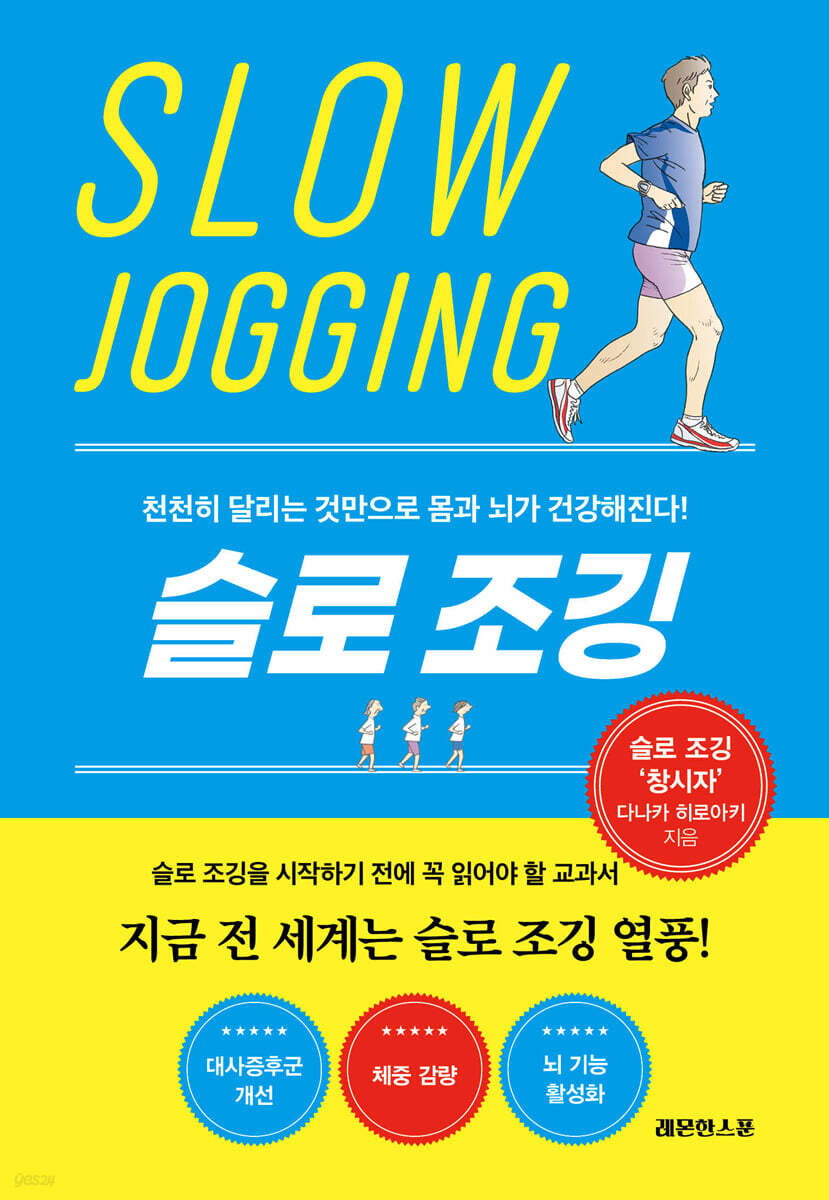
slow jogging
 |
Description
Book Introduction
“Just running slowly for 30 minutes a day will make your body and brain healthy!”
"Slow Jogging Textbook," written by the founder of slow jogging himself.
Slow jogging is an exercise method developed by Professor Hiroaki Tanaka of the Department of Sports Science at Fukuoka University. It is a type of jogging that involves running slowly at a speed that allows you to maintain a smiling face.
The key is to run with narrow strides, landing on the balls of your feet, and not running out of breath.
If you consistently jog slowly for 30 to 60 minutes a day, your body and brain will quickly become healthier.
Metabolic syndrome can be improved and lifestyle-related diseases such as hypertension, diabetes, and hyperlipidemia can be improved or prevented.
It can effectively help you lose weight, reduce the risk of Alzheimer's disease, and activate brain functions such as improving memory and frontal lobe function.
Your stamina will also improve amazingly.
"Slow Jogging" is a textbook on slow jogging written by its founder, Professor Hiroaki Tanaka. It explains specific slow jogging methods, the effects of slow jogging, and everything else you might want to know about slow jogging in a friendly and concise manner with various illustrations.
Before you start slow jogging, read this one book and all your questions will be answered.
"Slow Jogging Textbook," written by the founder of slow jogging himself.
Slow jogging is an exercise method developed by Professor Hiroaki Tanaka of the Department of Sports Science at Fukuoka University. It is a type of jogging that involves running slowly at a speed that allows you to maintain a smiling face.
The key is to run with narrow strides, landing on the balls of your feet, and not running out of breath.
If you consistently jog slowly for 30 to 60 minutes a day, your body and brain will quickly become healthier.
Metabolic syndrome can be improved and lifestyle-related diseases such as hypertension, diabetes, and hyperlipidemia can be improved or prevented.
It can effectively help you lose weight, reduce the risk of Alzheimer's disease, and activate brain functions such as improving memory and frontal lobe function.
Your stamina will also improve amazingly.
"Slow Jogging" is a textbook on slow jogging written by its founder, Professor Hiroaki Tanaka. It explains specific slow jogging methods, the effects of slow jogging, and everything else you might want to know about slow jogging in a friendly and concise manner with various illustrations.
Before you start slow jogging, read this one book and all your questions will be answered.
- You can preview some of the book's contents.
Preview
index
Expert Praise for Slow Jogging
prolog
CHAPTER 1.
How to Slow Jog - Slow Jogging, How to Do It?
Let's run 'slowly and lightly' starting today!
5 Tips for Slow Jogging
POINT 1 Run at a brisk pace
Q1 What is the most important thing in slow jogging?
Q2 What is a good speed for a beginner jogger?
Q3 Why doesn't slow jogging make you tired?
POINT 2 Land on the front of your feet
Q1 What should I be careful about when running?
Q2 How should I move my legs?
POINT 3 Lift your chin and look forward.
Q At school, I often heard people tell me to pull in my chin and run.
POINT 4 Open your mouth slightly and breathe naturally.
Q How do I breathe when I jog slowly?
POINT 5: Exercise for 30 to 60 minutes a day.
Q How much running should I do each day?
Just remember this! _ Run at a pace that allows you to keep a smile on your face.
Take a break _ 'Heel landing' is a recently introduced technique
Running happily every day! _ Neighborhood Slow Jogger ①
CHAPTER 2.
The Benefits of Slow Jogging - How It Changes Your Body and Brain
3 Life-Changing Benefits of Slow Jogging
POINT 1 Improvement of metabolic syndrome!
What is metabolic syndrome and why is it dangerous?
Slow jogging increases endurance and reduces the risk of disease.
It is also effective in treating high blood pressure.
Prevents arteriosclerosis by increasing beneficial cholesterol levels in the body
Blood sugar levels also go down
Why do modern people get diabetes?
POINT 2 Weight loss!
Energy consumption is twice that of walking
How to Lose Belly Fat Without Overdoing It
If you jog slowly, you won't gain weight no matter how much you eat!
Successfully lost about 10 kg in 3 months!
Want to keep losing weight? Tips for maintaining weight loss.
POINT 3 Activate brain function!
Do brain cells decrease as we age?
Slow jogging makes your brain healthy!
Stretching does not increase brain cell count.
Just remember this! _ The human body is suited for running, stay healthy with slow jogging!
Take a break - Modern people are in a state of 'lack of exercise'
Running happily every day! _ Neighborhood Slow Jogger ②
CHAPTER 3.
Slow Jogging FAQ - Everything You Need to Know About Slow Jogging
Q1: Do I need to warm up after jogging?
Q2 What kind of shoes should I wear?
Q3 What kind of clothes should I wear when running?
Q4 When is it best to run: morning, afternoon, or evening?
Q5 Is it better to run before a meal or after a meal?
Q6 Which course would be good to run?
Q7 Can I run while listening to music?
Q8 If you want to run a little faster…
Q9 How should I exercise on a rainy day?
Q10 Is it a good idea to quit drinking and smoking?
Take a break _ Enjoy a slow jog that's 'easy' even for kids!
Epilogue
prolog
CHAPTER 1.
How to Slow Jog - Slow Jogging, How to Do It?
Let's run 'slowly and lightly' starting today!
5 Tips for Slow Jogging
POINT 1 Run at a brisk pace
Q1 What is the most important thing in slow jogging?
Q2 What is a good speed for a beginner jogger?
Q3 Why doesn't slow jogging make you tired?
POINT 2 Land on the front of your feet
Q1 What should I be careful about when running?
Q2 How should I move my legs?
POINT 3 Lift your chin and look forward.
Q At school, I often heard people tell me to pull in my chin and run.
POINT 4 Open your mouth slightly and breathe naturally.
Q How do I breathe when I jog slowly?
POINT 5: Exercise for 30 to 60 minutes a day.
Q How much running should I do each day?
Just remember this! _ Run at a pace that allows you to keep a smile on your face.
Take a break _ 'Heel landing' is a recently introduced technique
Running happily every day! _ Neighborhood Slow Jogger ①
CHAPTER 2.
The Benefits of Slow Jogging - How It Changes Your Body and Brain
3 Life-Changing Benefits of Slow Jogging
POINT 1 Improvement of metabolic syndrome!
What is metabolic syndrome and why is it dangerous?
Slow jogging increases endurance and reduces the risk of disease.
It is also effective in treating high blood pressure.
Prevents arteriosclerosis by increasing beneficial cholesterol levels in the body
Blood sugar levels also go down
Why do modern people get diabetes?
POINT 2 Weight loss!
Energy consumption is twice that of walking
How to Lose Belly Fat Without Overdoing It
If you jog slowly, you won't gain weight no matter how much you eat!
Successfully lost about 10 kg in 3 months!
Want to keep losing weight? Tips for maintaining weight loss.
POINT 3 Activate brain function!
Do brain cells decrease as we age?
Slow jogging makes your brain healthy!
Stretching does not increase brain cell count.
Just remember this! _ The human body is suited for running, stay healthy with slow jogging!
Take a break - Modern people are in a state of 'lack of exercise'
Running happily every day! _ Neighborhood Slow Jogger ②
CHAPTER 3.
Slow Jogging FAQ - Everything You Need to Know About Slow Jogging
Q1: Do I need to warm up after jogging?
Q2 What kind of shoes should I wear?
Q3 What kind of clothes should I wear when running?
Q4 When is it best to run: morning, afternoon, or evening?
Q5 Is it better to run before a meal or after a meal?
Q6 Which course would be good to run?
Q7 Can I run while listening to music?
Q8 If you want to run a little faster…
Q9 How should I exercise on a rainy day?
Q10 Is it a good idea to quit drinking and smoking?
Take a break _ Enjoy a slow jog that's 'easy' even for kids!
Epilogue
Detailed image

Into the book
Slow jogging is an exercise that involves running more slowly than you might imagine.
If you run with a happy smile on your face, you will gain amazing stamina and your body and mind will become healthy.
--- p.16, from "Prologue"
The jogging method recommended in this book is very simple.
Slow jogging is a type of slow jogging that can be enjoyed right away by people with weak physical strength, people who are not good at exercising, and even people with no running experience.
Although it is such a simple exercise, slow jogging has many benefits, including preventing lifestyle-related diseases (adult diseases), improving metabolic syndrome, losing weight, and activating brain function.
Plus, it will help you build the stamina to run a full marathon before your first year.
--- p.24~25, 「Chapter 1.
From "How to Slow Jog"
The point of slow jogging is to run at a 'smiling pace' that allows you to maintain a smiling face.
--- p.30, 「Chapter 1.
From "How to Slow Jog"
Slow jogging uses muscles you don't normally use (tibialis anterior, hamstrings, and psoas major).
These muscles become noticeably weaker as we age and are rarely used when walking.
--- p.40, 「Chapter 1.
From "How to Slow Jog"
Heel strikes are three times more impactful than forefoot strikes.
Therefore, landing on the ball of the foot also has the advantage of reducing the risk of injury.
--- p.45, 「Chapter 1.
From "How to Slow Jog"
If you don't have time, you can run it in several small steps.
Even busy office workers can achieve their goals by running for 10 minutes on the way to work in the morning, 10 minutes round trip to the lunch restaurant, and 10 minutes on the way home.
--- p.64, 「Chapter 1.
From "How to Slow Jog"
It is also effective in treating diabetes, high blood pressure, dyslipidemia, osteoporosis, and preventing recurrence of heart disease.
(…) and brain function and cognitive function are activated, making the body and mind healthy.
In addition, unnecessary fat is lost, resulting in a slim waist, slender legs, and a slender body.
(…) That’s not all.
Even elderly people can develop enough stamina to complete a grueling full marathon if they consistently jog slowly for six months to a year.
--- p.74~75, 「Chapter 2.
From "The Effects of Slow Jogging"
It is clear that lower endurance is associated with higher cancer mortality.
In fact, exercises that increase endurance, such as slow jogging, can boost your immunity.
And slow jogging also has the welcome benefit of relieving constipation, which is especially beneficial for women.
--- p.82, 「Chapter 2.
From "The Effects of Slow Jogging"
When I started slow jogging, my systolic blood pressure improved to 130 mmHg and my diastolic blood pressure to 70 mmHg, which is quite good.
By combining slow jogging with medication, I was able to lower my blood pressure to normal levels, even though it could no longer be lowered by taking medication.
--- p.85, 「Chapter 2.
From "The Effects of Slow Jogging"
My HDL cholesterol level, which had not increased even with medication, increased significantly after I started jogging regularly.
We found that slow jogging not only lowers blood pressure but also increases HDL cholesterol levels.
--- p.86, 「Chapter 2.
From "The Effects of Slow Jogging"
High blood sugar levels are caused by a decrease in the action of a hormone called insulin, which lowers blood sugar levels.
However, slow jogging improves the function of insulin, which lowers blood sugar levels.
--- p.91, 「Chapter 2.
From "The Effects of Slow Jogging"
Slow jogging is more effective for weight loss than walking.
Because slow jogging consumes twice as much energy as walking for the same distance.
So, for those who want to improve metabolic syndrome and reduce their waist size, slow jogging is the most recommended exercise among various exercises.
--- p.96, 「Chapter 2.
From "The Effects of Slow Jogging"
The results showed that people with excellent stamina had larger hippocampal capacity and higher spatial cognitive abilities.
If you jog slowly every day, your stamina will naturally increase, so instead of your hippocampus shrinking, its capacity will increase and your memory will improve.
--- p.116, 「Chapter 2.
From "The Effects of Slow Jogging"
The group that jogged slowly gradually increased their scores, and by the 12th week, they had achieved scores close to perfection.
We found that slow jogging activates the frontal lobe and 'improves brain function'.
--- p.117, 「Chapter 2.
From "The Effects of Slow Jogging"
Running before, after, or at any time has the effect of lowering blood sugar levels.
(…) It’s okay to do it right after a meal.
--- p.145, 「Chapter 3.
From the "Slow Jogging FAQ"
After a few weeks of slow jogging, you may find that you are no longer satisfied with the same pace you were at when you first started running.
It's natural to want to run faster, so let's try to increase our speed a little.
However, you must be careful not to let your breathing become rough or your heartbeat become rapid.
If you run with a happy smile on your face, you will gain amazing stamina and your body and mind will become healthy.
--- p.16, from "Prologue"
The jogging method recommended in this book is very simple.
Slow jogging is a type of slow jogging that can be enjoyed right away by people with weak physical strength, people who are not good at exercising, and even people with no running experience.
Although it is such a simple exercise, slow jogging has many benefits, including preventing lifestyle-related diseases (adult diseases), improving metabolic syndrome, losing weight, and activating brain function.
Plus, it will help you build the stamina to run a full marathon before your first year.
--- p.24~25, 「Chapter 1.
From "How to Slow Jog"
The point of slow jogging is to run at a 'smiling pace' that allows you to maintain a smiling face.
--- p.30, 「Chapter 1.
From "How to Slow Jog"
Slow jogging uses muscles you don't normally use (tibialis anterior, hamstrings, and psoas major).
These muscles become noticeably weaker as we age and are rarely used when walking.
--- p.40, 「Chapter 1.
From "How to Slow Jog"
Heel strikes are three times more impactful than forefoot strikes.
Therefore, landing on the ball of the foot also has the advantage of reducing the risk of injury.
--- p.45, 「Chapter 1.
From "How to Slow Jog"
If you don't have time, you can run it in several small steps.
Even busy office workers can achieve their goals by running for 10 minutes on the way to work in the morning, 10 minutes round trip to the lunch restaurant, and 10 minutes on the way home.
--- p.64, 「Chapter 1.
From "How to Slow Jog"
It is also effective in treating diabetes, high blood pressure, dyslipidemia, osteoporosis, and preventing recurrence of heart disease.
(…) and brain function and cognitive function are activated, making the body and mind healthy.
In addition, unnecessary fat is lost, resulting in a slim waist, slender legs, and a slender body.
(…) That’s not all.
Even elderly people can develop enough stamina to complete a grueling full marathon if they consistently jog slowly for six months to a year.
--- p.74~75, 「Chapter 2.
From "The Effects of Slow Jogging"
It is clear that lower endurance is associated with higher cancer mortality.
In fact, exercises that increase endurance, such as slow jogging, can boost your immunity.
And slow jogging also has the welcome benefit of relieving constipation, which is especially beneficial for women.
--- p.82, 「Chapter 2.
From "The Effects of Slow Jogging"
When I started slow jogging, my systolic blood pressure improved to 130 mmHg and my diastolic blood pressure to 70 mmHg, which is quite good.
By combining slow jogging with medication, I was able to lower my blood pressure to normal levels, even though it could no longer be lowered by taking medication.
--- p.85, 「Chapter 2.
From "The Effects of Slow Jogging"
My HDL cholesterol level, which had not increased even with medication, increased significantly after I started jogging regularly.
We found that slow jogging not only lowers blood pressure but also increases HDL cholesterol levels.
--- p.86, 「Chapter 2.
From "The Effects of Slow Jogging"
High blood sugar levels are caused by a decrease in the action of a hormone called insulin, which lowers blood sugar levels.
However, slow jogging improves the function of insulin, which lowers blood sugar levels.
--- p.91, 「Chapter 2.
From "The Effects of Slow Jogging"
Slow jogging is more effective for weight loss than walking.
Because slow jogging consumes twice as much energy as walking for the same distance.
So, for those who want to improve metabolic syndrome and reduce their waist size, slow jogging is the most recommended exercise among various exercises.
--- p.96, 「Chapter 2.
From "The Effects of Slow Jogging"
The results showed that people with excellent stamina had larger hippocampal capacity and higher spatial cognitive abilities.
If you jog slowly every day, your stamina will naturally increase, so instead of your hippocampus shrinking, its capacity will increase and your memory will improve.
--- p.116, 「Chapter 2.
From "The Effects of Slow Jogging"
The group that jogged slowly gradually increased their scores, and by the 12th week, they had achieved scores close to perfection.
We found that slow jogging activates the frontal lobe and 'improves brain function'.
--- p.117, 「Chapter 2.
From "The Effects of Slow Jogging"
Running before, after, or at any time has the effect of lowering blood sugar levels.
(…) It’s okay to do it right after a meal.
--- p.145, 「Chapter 3.
From the "Slow Jogging FAQ"
After a few weeks of slow jogging, you may find that you are no longer satisfied with the same pace you were at when you first started running.
It's natural to want to run faster, so let's try to increase our speed a little.
However, you must be careful not to let your breathing become rough or your heartbeat become rapid.
--- p.156, 「Chapter 3.
From the "Slow Jogging FAQ"
From the "Slow Jogging FAQ"
Publisher's Review
Structure and contents of this book
CHAPTER 1.
How to slow jog
Chapter 1 explains how to do slow jogging according to the five points of slow jogging.
It provides an explanation by posing questions and answering them, thereby resolving readers' curiosity in advance.
It uses friendly illustrations to help you understand the content and allows you to follow the slow jogging without watching the video.
CHAPTER 2.
The effects of slow jogging
Chapter 2 introduces three representative effects of slow jogging: improving metabolic syndrome, losing weight, and activating brain function, based on various research results.
Various illustrations, diagrams, and graphs help you understand the content and add credibility to the benefits and effects of slow jogging.
CHAPTER 3.
Slow Jogging FAQs
Chapter 3 answers 10 other questions you might have about slow jogging.
The friendly illustrations help you understand and remember the key points.
If you've read this far, you're ready to go out and go for a slow jog!
Special features of this book
A book written by the founder of slow jogging
"Slow Jogging" is a book written by Professor Hiroaki Tanaka, who first invented slow jogging, and you can learn the methods, principles, advantages, and effects of slow jogging.
The author, a medical doctor, physiologist, and professor of sports science, developed a lifestyle-focused exercise called slow jogging based on medical evidence, and in this book, he introduces slow jogging based on medical evidence but in an easy-to-understand way.
Easy-to-understand question-and-answer format
This book is written in a question-and-answer format, with two of its three chapters being questions.
The questions are appropriate for readers new to slow jogging, and the friendly, concise answers that get to the point make it easy to understand.
Various illustrations and graphs to aid understanding
Uses various illustrations, graphs, and diagrams to help understand the content.
It introduces slow jogging posture, landing method, breathing method, and the shape of jogging shoes through illustrations, and concisely shows the action and effects of exercise through illustrations.
And, to help understanding, we introduce several graphs showing the results of various experiments related to slow jogging.
Thanks to the detailed illustrations, you can easily learn slow jogging without a video.
Case studies of people who found new life through slow jogging
It introduces the stories of people in their 20s to 80s who started a new life through slow jogging, and also shares the author's experience of losing about 10 kilograms.
Vivid examples add to the interest and anticipation for slow jogging.
CHAPTER 1.
How to slow jog
Chapter 1 explains how to do slow jogging according to the five points of slow jogging.
It provides an explanation by posing questions and answering them, thereby resolving readers' curiosity in advance.
It uses friendly illustrations to help you understand the content and allows you to follow the slow jogging without watching the video.
CHAPTER 2.
The effects of slow jogging
Chapter 2 introduces three representative effects of slow jogging: improving metabolic syndrome, losing weight, and activating brain function, based on various research results.
Various illustrations, diagrams, and graphs help you understand the content and add credibility to the benefits and effects of slow jogging.
CHAPTER 3.
Slow Jogging FAQs
Chapter 3 answers 10 other questions you might have about slow jogging.
The friendly illustrations help you understand and remember the key points.
If you've read this far, you're ready to go out and go for a slow jog!
Special features of this book
A book written by the founder of slow jogging
"Slow Jogging" is a book written by Professor Hiroaki Tanaka, who first invented slow jogging, and you can learn the methods, principles, advantages, and effects of slow jogging.
The author, a medical doctor, physiologist, and professor of sports science, developed a lifestyle-focused exercise called slow jogging based on medical evidence, and in this book, he introduces slow jogging based on medical evidence but in an easy-to-understand way.
Easy-to-understand question-and-answer format
This book is written in a question-and-answer format, with two of its three chapters being questions.
The questions are appropriate for readers new to slow jogging, and the friendly, concise answers that get to the point make it easy to understand.
Various illustrations and graphs to aid understanding
Uses various illustrations, graphs, and diagrams to help understand the content.
It introduces slow jogging posture, landing method, breathing method, and the shape of jogging shoes through illustrations, and concisely shows the action and effects of exercise through illustrations.
And, to help understanding, we introduce several graphs showing the results of various experiments related to slow jogging.
Thanks to the detailed illustrations, you can easily learn slow jogging without a video.
Case studies of people who found new life through slow jogging
It introduces the stories of people in their 20s to 80s who started a new life through slow jogging, and also shares the author's experience of losing about 10 kilograms.
Vivid examples add to the interest and anticipation for slow jogging.
GOODS SPECIFICS
- Date of issue: June 12, 2025
- Page count, weight, size: 172 pages | 242g | 130*188*16mm
- ISBN13: 9791198936363
- ISBN10: 1198936363
You may also like
카테고리
korean


korean

![GQ KOREA Mark (Monthly): December [2025]](http://librairie.coreenne.fr/cdn/shop/files/8ef265dbbfbf186523ed75ba7319009d.jpg?v=1765340328&width=3840)


