

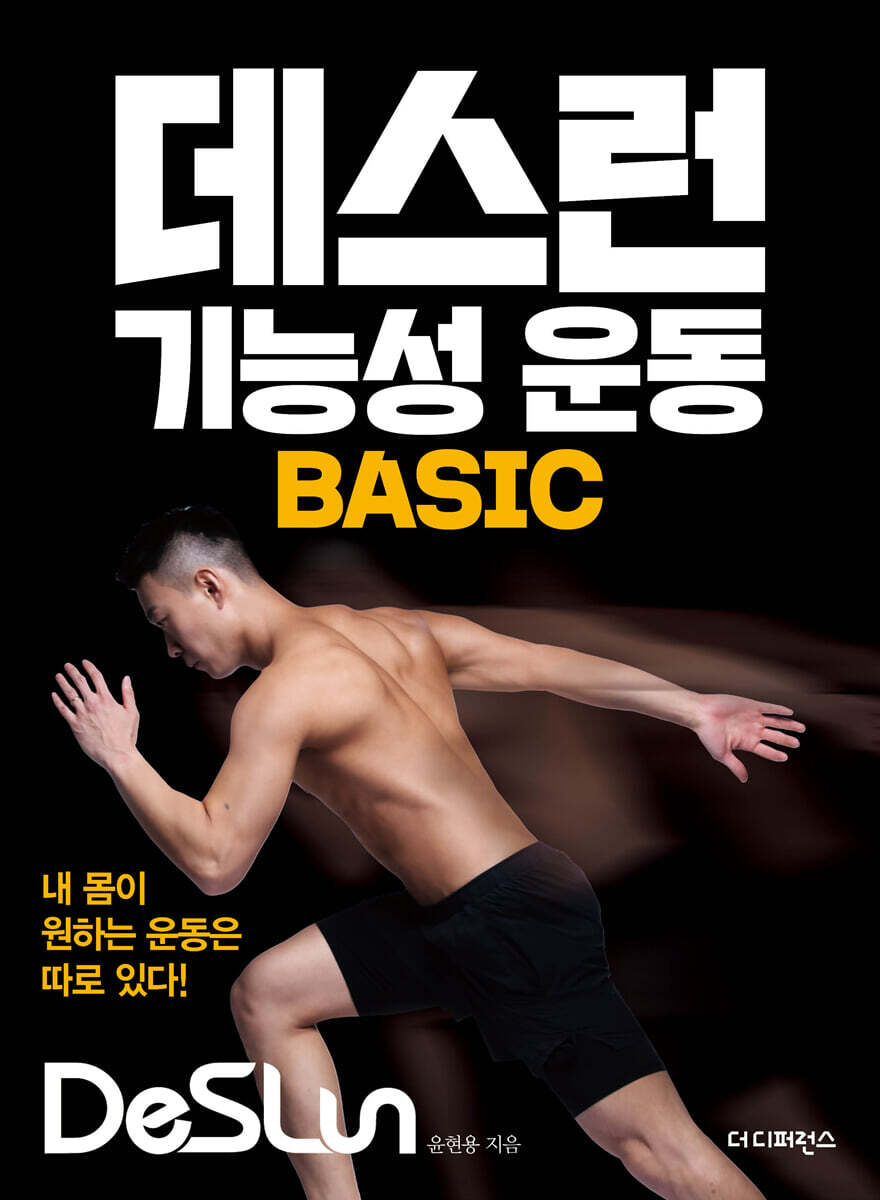
Deathrun Functional Exercise BASIC
 |
Description
Book Introduction
You need to have a deep understanding of your own body and be able to design your own exercise routine that best suits you.
This is the main message the author wants to convey to readers through this book.
Many people who start exercising think only of the benefits of exercise, thinking that Pilates will correct their body shape, working out will build strength and tone their muscles, and yoga will improve flexibility.
But this idea is half right and half wrong.
You can build strength through Pilates or yoga, and you can also correct your body shape through fitness.
Exercise can have various physical improvement effects depending on ‘how’ you do it.
The first thing to consider when exercising is choosing and executing an exercise that suits your body type.
If you follow others without thinking and do exercises that don't suit you, the exercise effect will decrease and the risk of injury will increase.
Health, Pilates, and yoga are all good exercises, but you should not start them without fully understanding your body condition and being unprepared.
Functional exercise can be said to be the basis for effective and safe exercise based on a proper understanding of the movements that one's body needs.
The goal of functional exercise is more than simply moving to build strength; it's about helping your body move more healthily and freely in everyday life.
It is an essential exercise method that restores joint and muscle function, corrects the body's balance, and enables efficient and safe movement.
This book provides advice on how to understand the causes of common injuries and pain during exercise and how to reduce them.
The author says that everyone who enjoys exercising should become their own trainer.
Because my body will be with me my whole life.
The person who understands the condition of my body best is myself, so I have organized the contents in this book so that you can understand your body condition and choose a method that suits it to create your own routine.
Finally, this book is very friendly.
There are many elements in the book.
It explains the author's understanding of exercise, the thoughts of members who have experienced it, Q&A with answers to questions many members have, explanations of exercise cuts in the text, and key points and movement errors that must be known when following the exercise.
Unfortunately, this book is a bit lacking in photos because it incorporates the experiences of many authors.
To cover this, a QR code was placed in the upper right corner of the book cover.
This will allow you to see the author demonstrating the exercises in the text.
『Deathrun Functional Exercise Basics』 is not a book written by the author alone.
It is based on the experiences of many people the author has met throughout his career.
As many cases are included, this book will resonate deeply with readers.
This is the main message the author wants to convey to readers through this book.
Many people who start exercising think only of the benefits of exercise, thinking that Pilates will correct their body shape, working out will build strength and tone their muscles, and yoga will improve flexibility.
But this idea is half right and half wrong.
You can build strength through Pilates or yoga, and you can also correct your body shape through fitness.
Exercise can have various physical improvement effects depending on ‘how’ you do it.
The first thing to consider when exercising is choosing and executing an exercise that suits your body type.
If you follow others without thinking and do exercises that don't suit you, the exercise effect will decrease and the risk of injury will increase.
Health, Pilates, and yoga are all good exercises, but you should not start them without fully understanding your body condition and being unprepared.
Functional exercise can be said to be the basis for effective and safe exercise based on a proper understanding of the movements that one's body needs.
The goal of functional exercise is more than simply moving to build strength; it's about helping your body move more healthily and freely in everyday life.
It is an essential exercise method that restores joint and muscle function, corrects the body's balance, and enables efficient and safe movement.
This book provides advice on how to understand the causes of common injuries and pain during exercise and how to reduce them.
The author says that everyone who enjoys exercising should become their own trainer.
Because my body will be with me my whole life.
The person who understands the condition of my body best is myself, so I have organized the contents in this book so that you can understand your body condition and choose a method that suits it to create your own routine.
Finally, this book is very friendly.
There are many elements in the book.
It explains the author's understanding of exercise, the thoughts of members who have experienced it, Q&A with answers to questions many members have, explanations of exercise cuts in the text, and key points and movement errors that must be known when following the exercise.
Unfortunately, this book is a bit lacking in photos because it incorporates the experiences of many authors.
To cover this, a QR code was placed in the upper right corner of the book cover.
This will allow you to see the author demonstrating the exercises in the text.
『Deathrun Functional Exercise Basics』 is not a book written by the author alone.
It is based on the experiences of many people the author has met throughout his career.
As many cases are included, this book will resonate deeply with readers.
- You can preview some of the book's contents.
Preview
index
prolog
Part 1 Why Functional Exercise?
My body wants a different kind of exercise | 014
Is Your Body Moving in 3D? | 018
A Functional Exercise Guide to Overcoming Pain | 020
A Functional Fitness Approach for Sports Enthusiasts | 022
Part 2: 30 Essential Functional Stretches to Boost Your Movement Intelligence
Stretching alone can change your body this much? | 030
How to Make Your Functional Stretching Routine 200% More Effective | 032
Monday Shoulder Stretch Prescription for Overcoming Monday Blues | 036
01 Chest Stretch on the Floor | 038
02 Threading a Needle on All Fours | 040
03 Latifex Stretch in Prone Position | 042
04 Teacup Exercise in the Prone Position | 044
05 Lunge Pulldown | 046
Tuesday Stretch Prescription for Those Who Sit All Day | 048
06 Lying 90/90 Position Arm Stretches | 050
07 Hip Flexor Stretch in Lunge Position | 052
08 Ceiling Slams from 90/90 Position | 054
09 Spider-Man Thoracic Rotation | 056
10 Arm Rotations in Spider-Man Pose | 058
A Turning Point in Your Week: Wednesday Stretch Prescription for a Straight Spine | 060
11 Side-lying thoracic rotation | 062
12 Side-lying thoracic rotation arm rotations | 064
13 Lunge with Thoracic Rotation | 066
14 Quadruped Thoracic Rotation | 068
15 Prone Thoracic Rotations | 070
Thursday Stretch Prescription to Wake Up Stiff Lower Body | 072
16 Lying Hamstring Stretches | 074
17 Lunges & Bows | 076
18 Bend and straighten your knees while holding your feet | 078
19 Standing Calf Stretches | 080
20? Down Dog Knee Bend and Straighten | 082
Friday Stretch Prescription to Correct the Week's Imbalances | 084
21 Pigeon Pose Arm Stretches | 086
22 Lunge Side Bending | 088
23 Bow & Side Banding | 090
24-legged side banding | 092
25 Standing Diagonal Arm Stretches | 094
Saturday Adductor Stretch Prescription for Weekend Sports | 096
26 Butterfly Pose Stretches | 098
27 Lunge Pose Adductor Stretch | 100
28 Frog Stretches | 102
29 Half Frog Stretches | 104
30 Wide Squats | 106
Part 3: Recipe for Functional Exercise: Cooking the Major Joints
The major joints of the body: hips, shoulders, spine, and ankles | 110
Do you know how your hip joint moves? | 111
The Key to Knee and Back Pain: Focus on Your Hips | 116
More important than running technique: master hip function first | 117
01 Standing Hip Flexion | 120
02 High Plank Hip Bend | 122
03 Quadruped Donkey Kick | 124
04 One-Legged Bridge | 126
05 Hip Hinge | 128
This is how world-class lower body function is created | 130
Functional Workouts of Olympic Gold Medalists | 130
06 Side-lying hip abduction | 132
07 Clamshell Side Plank | 134
08 Bare-Body Monster Walk | 136
Proven Trends in Lower Body Injury Prevention in Sports | 138
09 Side-lying hip adduction | 140
10 Frog Isometric Exercises | 142
11 Side Plank Hip Adduction | 144
Understanding Shoulder Structure Opens the Way to Pain Relief | 146
Shoulder Pain: Why Hospital Treatment Alone Isn't Enough | 149
The Key to Resolving Shoulder Impingement Syndrome Lies in Your Scapula | 150
Three Shoulder Flexion Exercises to Improve Arm Lifting | 152
12 Quadruped Shoulder Bends | 154
13 Plank & Downward Dog | 156
14. Lying Shoulder Bends & Obstacle Jumps | 158
Essentials for Proper Back Muscle Development | 160
15 Lying T-Exercise | 162
16 Lying Down Exercise A | 164
17 Crab Pose One-Hand Release | 166
Restore the Honor of Your Trapezius: Strengthen It, Don't Eliminate It | 168
18 Scapula Elevation and Depression | 170
19 Scapular Abduction and Adduction | 172
20 Scapula Rotations | 174
Thinking of the spine as a single entity fails to fully utilize its functions. | 176
Thoracic health is a healthy body | 178
3 Exercises to Activate Your Thoracic Spine with a Full-Body Workout | 179
21 Squats with Thoracic Rotation | 180
22 Lunge with Thoracic Rotation | 182
23 Hip Hinge Thoracic Rotation | 184
Stabilizing Your Back Doesn't Solve Back Pain | 186
Pelvic Movement Protects Back Health: Three Essential Pelvic Exercises | 188
24 Anterior Pelvic Tilt / Posterior Pelvic Tilt | 190
25 Lateral Pelvic Tilt | 192
26 Pelvic Rotations | 194
The Effectiveness of Isometric Exercises for Neck Strength | 196
Isometric Exercises and Pain Relief | 197
27 Neck Flexor Isometric Exercises | 198
28 Neck Lateral Flexor Isometric Exercises | 200
29 Neck Extensor Isometric Exercises | 202
Ankle User Manual: Unfold Your Ankles Before You Wake Them Up | 204
The Betrayal of Expensive Running Shoes: What Matters More Than High-Performance Shoes | 205
Are your ankles healthy? | 208
Five Exercises to Build a Foundation for Ankle Function | 210
Become the Master of Your Movement | 211
30 Ankle Plantar/Dorsiflexion Exercises | 212
31 Ankle Inversion/Eversion Exercises | 214
32 Ankle Rotation Exercises | 216
33 Standing Plantar Flexion Exercises | 218
34 Standing Dorsiflexion Exercises | 220
Five Practical Ankle Strengthening Exercises Using Body Weight | 222
Why You Should Exercise Barefoot | 222
35 Walking on tiptoes | 224
36 Walking on the Instep | 226
37 Standing on tiptoe, outside/inside exercise | 228
38 Lunge Pose Plantar Flexion Exercise | 230
39 Lunge Pose Dorsiflexion Exercise | 232
Part 4 Core Functional Exercises that Connect the Upper and Lower Body
Do you know the core? | 236
Core from a Functional Perspective | 237
Back Stabilization Exercises Developed by a World-Renowned Spine Authority | 238
01 Curl Up | 240
02 Birddog | 242
03 Side Bridge | 244
Forget the 1-Minute Plank, Build a Real Core That Works in Real Life | 246
Core strength depends on shoulder and hip flexibility | 246
04 Plank with Arm Extensions | 248
05 High Plank Shoulder Touch | 250
06 High Plank Row | 252
07 High Plank Needle Threading | 254
08 Plank & High Plank | 256
Four Plank Exercises to Strengthen Your Core by Engaging Your Lower Body | 258
Movement is not created by a single muscle or joint | 258
09 Plank Hip Abduction | 260
10 Plank Hip Extensions | 262
11 Plank Pelvic Anterior Tilt & Posterior Tilt | 264
12 Four-legged | 266
Five Essential Exercises to Turn Your Lateral Muscles Off and On | 268
13 Knee Side Plank Rows | 270
14 Side Plank with Hip Abduction | 272
15 Side Plank with Thoracic Rotation | 274
16 Side Plank Hip Bends | 276
17 Side Plank Shoulder Bends | 278
Part 5: Functional Strength Training for Improving Both Your Sports and Your Life
One-Leg Exercise | 282
Five Reasons Why You Should Always Do Single-Legged Workouts | 282
Four Single-Leg Exercises That Target Your Ankles, Knees, and Hips Simultaneously | 284
01 Front touch of one leg | 286
02 One-leg side touch | 288
03 Single-Leg Deadlift | 290
04 Hip Airplane | 292
Lunge | 294
The Allure of Lunges: Making Up for Squats | 294
Five Exercises for Lunge Masters | 295
05 Standing Lunge | 296
06 Side Lunge | 298
07 Front Lunge | 300
08 Back Lunge | 302
09 Side-to-Side Lunges | 304
Push-ups | 306
If you can't do a push-up, your shoulder rehab isn't over yet | 306
Five Push-Ups to Master, Step by Step | 308
10 Wave Knee Pushups | 309
11 Negative Knee Pushups & Wave Knee Pushups | 310
12 Knee Pushups | 311
13 Negative Pushups & Knee Pushups | 312
14 pushups | 313
Five Common Push-Up Mistakes | 314
Epilogue: Now Create Your Own Workout Recipe | 318
Part 1 Why Functional Exercise?
My body wants a different kind of exercise | 014
Is Your Body Moving in 3D? | 018
A Functional Exercise Guide to Overcoming Pain | 020
A Functional Fitness Approach for Sports Enthusiasts | 022
Part 2: 30 Essential Functional Stretches to Boost Your Movement Intelligence
Stretching alone can change your body this much? | 030
How to Make Your Functional Stretching Routine 200% More Effective | 032
Monday Shoulder Stretch Prescription for Overcoming Monday Blues | 036
01 Chest Stretch on the Floor | 038
02 Threading a Needle on All Fours | 040
03 Latifex Stretch in Prone Position | 042
04 Teacup Exercise in the Prone Position | 044
05 Lunge Pulldown | 046
Tuesday Stretch Prescription for Those Who Sit All Day | 048
06 Lying 90/90 Position Arm Stretches | 050
07 Hip Flexor Stretch in Lunge Position | 052
08 Ceiling Slams from 90/90 Position | 054
09 Spider-Man Thoracic Rotation | 056
10 Arm Rotations in Spider-Man Pose | 058
A Turning Point in Your Week: Wednesday Stretch Prescription for a Straight Spine | 060
11 Side-lying thoracic rotation | 062
12 Side-lying thoracic rotation arm rotations | 064
13 Lunge with Thoracic Rotation | 066
14 Quadruped Thoracic Rotation | 068
15 Prone Thoracic Rotations | 070
Thursday Stretch Prescription to Wake Up Stiff Lower Body | 072
16 Lying Hamstring Stretches | 074
17 Lunges & Bows | 076
18 Bend and straighten your knees while holding your feet | 078
19 Standing Calf Stretches | 080
20? Down Dog Knee Bend and Straighten | 082
Friday Stretch Prescription to Correct the Week's Imbalances | 084
21 Pigeon Pose Arm Stretches | 086
22 Lunge Side Bending | 088
23 Bow & Side Banding | 090
24-legged side banding | 092
25 Standing Diagonal Arm Stretches | 094
Saturday Adductor Stretch Prescription for Weekend Sports | 096
26 Butterfly Pose Stretches | 098
27 Lunge Pose Adductor Stretch | 100
28 Frog Stretches | 102
29 Half Frog Stretches | 104
30 Wide Squats | 106
Part 3: Recipe for Functional Exercise: Cooking the Major Joints
The major joints of the body: hips, shoulders, spine, and ankles | 110
Do you know how your hip joint moves? | 111
The Key to Knee and Back Pain: Focus on Your Hips | 116
More important than running technique: master hip function first | 117
01 Standing Hip Flexion | 120
02 High Plank Hip Bend | 122
03 Quadruped Donkey Kick | 124
04 One-Legged Bridge | 126
05 Hip Hinge | 128
This is how world-class lower body function is created | 130
Functional Workouts of Olympic Gold Medalists | 130
06 Side-lying hip abduction | 132
07 Clamshell Side Plank | 134
08 Bare-Body Monster Walk | 136
Proven Trends in Lower Body Injury Prevention in Sports | 138
09 Side-lying hip adduction | 140
10 Frog Isometric Exercises | 142
11 Side Plank Hip Adduction | 144
Understanding Shoulder Structure Opens the Way to Pain Relief | 146
Shoulder Pain: Why Hospital Treatment Alone Isn't Enough | 149
The Key to Resolving Shoulder Impingement Syndrome Lies in Your Scapula | 150
Three Shoulder Flexion Exercises to Improve Arm Lifting | 152
12 Quadruped Shoulder Bends | 154
13 Plank & Downward Dog | 156
14. Lying Shoulder Bends & Obstacle Jumps | 158
Essentials for Proper Back Muscle Development | 160
15 Lying T-Exercise | 162
16 Lying Down Exercise A | 164
17 Crab Pose One-Hand Release | 166
Restore the Honor of Your Trapezius: Strengthen It, Don't Eliminate It | 168
18 Scapula Elevation and Depression | 170
19 Scapular Abduction and Adduction | 172
20 Scapula Rotations | 174
Thinking of the spine as a single entity fails to fully utilize its functions. | 176
Thoracic health is a healthy body | 178
3 Exercises to Activate Your Thoracic Spine with a Full-Body Workout | 179
21 Squats with Thoracic Rotation | 180
22 Lunge with Thoracic Rotation | 182
23 Hip Hinge Thoracic Rotation | 184
Stabilizing Your Back Doesn't Solve Back Pain | 186
Pelvic Movement Protects Back Health: Three Essential Pelvic Exercises | 188
24 Anterior Pelvic Tilt / Posterior Pelvic Tilt | 190
25 Lateral Pelvic Tilt | 192
26 Pelvic Rotations | 194
The Effectiveness of Isometric Exercises for Neck Strength | 196
Isometric Exercises and Pain Relief | 197
27 Neck Flexor Isometric Exercises | 198
28 Neck Lateral Flexor Isometric Exercises | 200
29 Neck Extensor Isometric Exercises | 202
Ankle User Manual: Unfold Your Ankles Before You Wake Them Up | 204
The Betrayal of Expensive Running Shoes: What Matters More Than High-Performance Shoes | 205
Are your ankles healthy? | 208
Five Exercises to Build a Foundation for Ankle Function | 210
Become the Master of Your Movement | 211
30 Ankle Plantar/Dorsiflexion Exercises | 212
31 Ankle Inversion/Eversion Exercises | 214
32 Ankle Rotation Exercises | 216
33 Standing Plantar Flexion Exercises | 218
34 Standing Dorsiflexion Exercises | 220
Five Practical Ankle Strengthening Exercises Using Body Weight | 222
Why You Should Exercise Barefoot | 222
35 Walking on tiptoes | 224
36 Walking on the Instep | 226
37 Standing on tiptoe, outside/inside exercise | 228
38 Lunge Pose Plantar Flexion Exercise | 230
39 Lunge Pose Dorsiflexion Exercise | 232
Part 4 Core Functional Exercises that Connect the Upper and Lower Body
Do you know the core? | 236
Core from a Functional Perspective | 237
Back Stabilization Exercises Developed by a World-Renowned Spine Authority | 238
01 Curl Up | 240
02 Birddog | 242
03 Side Bridge | 244
Forget the 1-Minute Plank, Build a Real Core That Works in Real Life | 246
Core strength depends on shoulder and hip flexibility | 246
04 Plank with Arm Extensions | 248
05 High Plank Shoulder Touch | 250
06 High Plank Row | 252
07 High Plank Needle Threading | 254
08 Plank & High Plank | 256
Four Plank Exercises to Strengthen Your Core by Engaging Your Lower Body | 258
Movement is not created by a single muscle or joint | 258
09 Plank Hip Abduction | 260
10 Plank Hip Extensions | 262
11 Plank Pelvic Anterior Tilt & Posterior Tilt | 264
12 Four-legged | 266
Five Essential Exercises to Turn Your Lateral Muscles Off and On | 268
13 Knee Side Plank Rows | 270
14 Side Plank with Hip Abduction | 272
15 Side Plank with Thoracic Rotation | 274
16 Side Plank Hip Bends | 276
17 Side Plank Shoulder Bends | 278
Part 5: Functional Strength Training for Improving Both Your Sports and Your Life
One-Leg Exercise | 282
Five Reasons Why You Should Always Do Single-Legged Workouts | 282
Four Single-Leg Exercises That Target Your Ankles, Knees, and Hips Simultaneously | 284
01 Front touch of one leg | 286
02 One-leg side touch | 288
03 Single-Leg Deadlift | 290
04 Hip Airplane | 292
Lunge | 294
The Allure of Lunges: Making Up for Squats | 294
Five Exercises for Lunge Masters | 295
05 Standing Lunge | 296
06 Side Lunge | 298
07 Front Lunge | 300
08 Back Lunge | 302
09 Side-to-Side Lunges | 304
Push-ups | 306
If you can't do a push-up, your shoulder rehab isn't over yet | 306
Five Push-Ups to Master, Step by Step | 308
10 Wave Knee Pushups | 309
11 Negative Knee Pushups & Wave Knee Pushups | 310
12 Knee Pushups | 311
13 Negative Pushups & Knee Pushups | 312
14 pushups | 313
Five Common Push-Up Mistakes | 314
Epilogue: Now Create Your Own Workout Recipe | 318
Detailed image

Publisher's Review
Exercise is more than just building strength.
The true purpose of exercise is to help my body move more healthily and freely in my daily life.
Functional exercise is an essential approach because it restores joint and muscle function, corrects body balance, and enables efficient and safe movement.
Many people force their bodies into exercise movements.
This method not only reduces the effectiveness of the exercise, but can also increase the risk of injury.
You can build strength through Pilates or yoga, and you can also correct your body shape through fitness.
Exercise can have various physical improvement effects depending on ‘how’ you do it.
The most important thing is to choose an exercise that suits your physical condition and enjoy it.
Functional exercise focuses on optimizing the movement of each joint to later develop the ability to coordinate and integrate various body parts.
The process of optimizing the individual functions of joints becomes the basis for integrating and coordinating various movements thereafter.
Modern pain science emphasizes that the causes of pain are not simply structural.
This is why it is easy to find exercise therapy rooms in hospitals these days.
This means that a functional approach is essential, as pain can be caused by malfunctioning rather than structural issues.
The biggest appeal of functional stretching is that it is ‘exercise tailored to my body.’
While general exercise involves everyone repeating the same movements, functional stretching can be tailored to each individual's physical condition and goals.
If you have any stiff or painful areas in your body, you can adjust the intensity of the stretch accordingly and proceed at your own pace.
Anatomical language facilitates communication with others.
When communicating with professionals like doctors, physical therapists, and trainers, knowing the language of anatomy can help you better understand their explanations.
Additionally, I can express my feelings more specifically, which allows for better questions and answers.
Being specific will help the expert make a more accurate diagnosis and provide appropriate help.
The more you know, the more you see, and the more you know, the better service you can receive.
As a trainer myself, the more knowledge and understanding of anatomy someone has, the more in-depth and detailed the explanations I can give.
Nowadays, physical ability is not simply evaluated by muscle size or absolute strength values.
Advances in sports medicine and exercise science have revealed that injury prevention and performance enhancement are influenced by a variety of factors, including not only muscle size but also balance, stability, flexibility, and coordination.
These changes have also brought about major changes in training methods.
The true purpose of exercise is to help my body move more healthily and freely in my daily life.
Functional exercise is an essential approach because it restores joint and muscle function, corrects body balance, and enables efficient and safe movement.
Many people force their bodies into exercise movements.
This method not only reduces the effectiveness of the exercise, but can also increase the risk of injury.
You can build strength through Pilates or yoga, and you can also correct your body shape through fitness.
Exercise can have various physical improvement effects depending on ‘how’ you do it.
The most important thing is to choose an exercise that suits your physical condition and enjoy it.
Functional exercise focuses on optimizing the movement of each joint to later develop the ability to coordinate and integrate various body parts.
The process of optimizing the individual functions of joints becomes the basis for integrating and coordinating various movements thereafter.
Modern pain science emphasizes that the causes of pain are not simply structural.
This is why it is easy to find exercise therapy rooms in hospitals these days.
This means that a functional approach is essential, as pain can be caused by malfunctioning rather than structural issues.
The biggest appeal of functional stretching is that it is ‘exercise tailored to my body.’
While general exercise involves everyone repeating the same movements, functional stretching can be tailored to each individual's physical condition and goals.
If you have any stiff or painful areas in your body, you can adjust the intensity of the stretch accordingly and proceed at your own pace.
Anatomical language facilitates communication with others.
When communicating with professionals like doctors, physical therapists, and trainers, knowing the language of anatomy can help you better understand their explanations.
Additionally, I can express my feelings more specifically, which allows for better questions and answers.
Being specific will help the expert make a more accurate diagnosis and provide appropriate help.
The more you know, the more you see, and the more you know, the better service you can receive.
As a trainer myself, the more knowledge and understanding of anatomy someone has, the more in-depth and detailed the explanations I can give.
Nowadays, physical ability is not simply evaluated by muscle size or absolute strength values.
Advances in sports medicine and exercise science have revealed that injury prevention and performance enhancement are influenced by a variety of factors, including not only muscle size but also balance, stability, flexibility, and coordination.
These changes have also brought about major changes in training methods.
GOODS SPECIFICS
- Date of issue: March 15, 2025
- Page count, weight, size: 320 pages | 806g | 188*256*17mm
- ISBN13: 9791161255347
- ISBN10: 1161255346
You may also like
카테고리
korean


korean

![ELLE 엘르 스페셜 에디션 A형 : 12월 [2025]](http://librairie.coreenne.fr/cdn/shop/files/b8e27a3de6c9538896439686c6b0e8fb.jpg?v=1766436872&width=3840)


