

Natural pose drawing
 |
Description
Book Introduction
The sequel to the best-selling book, "Natural Human Body Drawing," is out now!
Pose drawing to perfectly understand the human body from any angle, 360°
If you have established the basics of the human body through 『Natural Human Body Drawing』, it is time to study and apply human body movements.
Because drawing the human body ultimately means capturing a moment of movement.
To freely draw various poses, you need to be able to simulate the human body 360° without reference material.
To do that, you must first have a solid foundation, and then, based on this foundation, you must practice drawing poses in a 360° direction to accumulate data and knowledge.
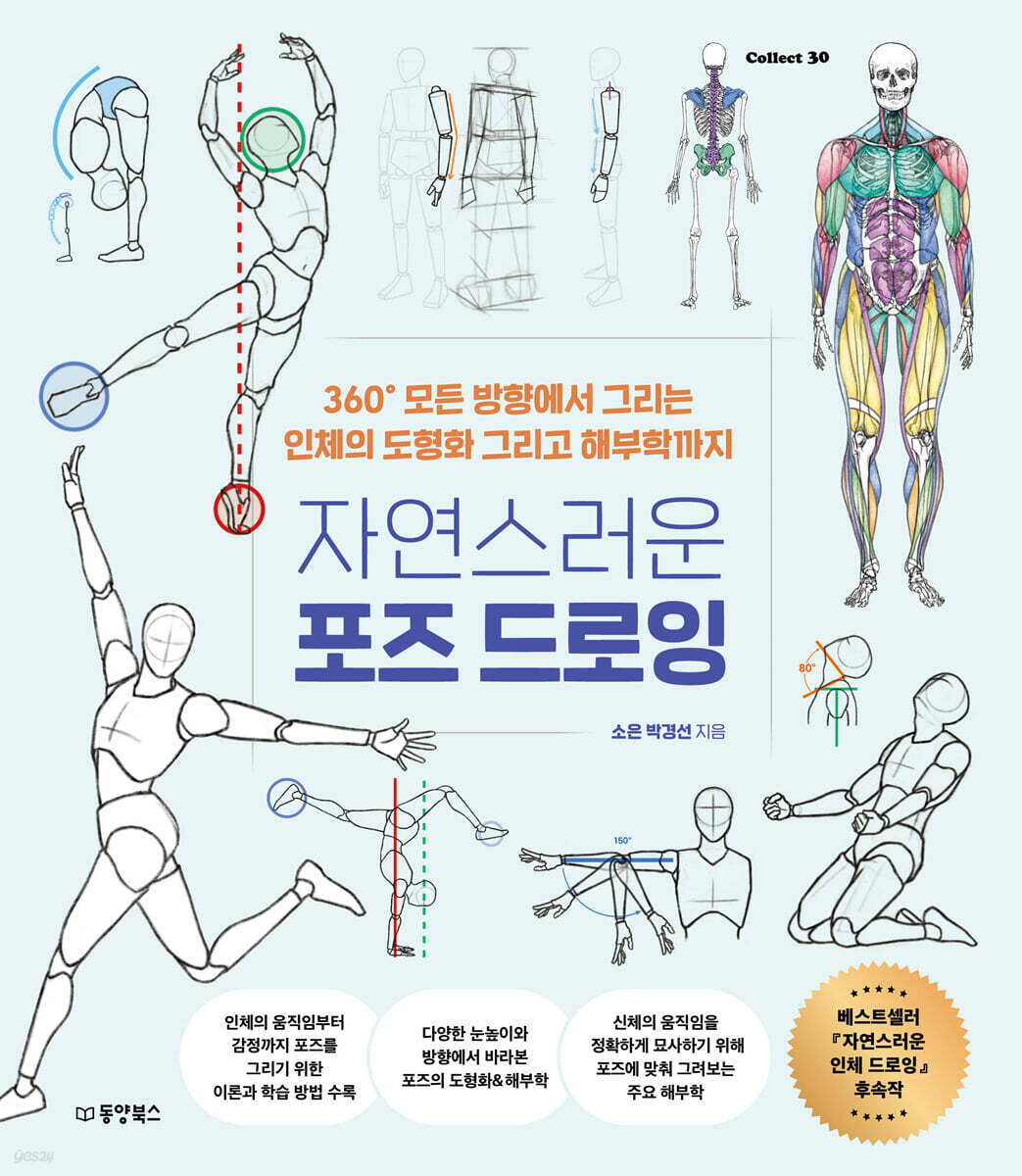
『Natural Pose Drawing』 goes into depth about the characteristics of the body and the principles of stable posture, and is designed to help you clearly understand what three-dimensionality is by drawing poses from a 360° angle through diagrams.
I will also draw muscles and bones in various poses.
I also drew each body part and made it so that you can observe one posture in a 360° direction like a diagram and feel the shape of the muscles and bones in three dimensions.
- Includes theory and learning methods for drawing poses, from human movement to emotions.
- Anatomy and diagrams of poses viewed from various eye heights and directions
- Drawing the main anatomy according to the pose to accurately depict the body's movements
Pose drawing to perfectly understand the human body from any angle, 360°
If you have established the basics of the human body through 『Natural Human Body Drawing』, it is time to study and apply human body movements.
Because drawing the human body ultimately means capturing a moment of movement.
To freely draw various poses, you need to be able to simulate the human body 360° without reference material.
To do that, you must first have a solid foundation, and then, based on this foundation, you must practice drawing poses in a 360° direction to accumulate data and knowledge.
『Natural Pose Drawing』 goes into depth about the characteristics of the body and the principles of stable posture, and is designed to help you clearly understand what three-dimensionality is by drawing poses from a 360° angle through diagrams.
I will also draw muscles and bones in various poses.
I also drew each body part and made it so that you can observe one posture in a 360° direction like a diagram and feel the shape of the muscles and bones in three dimensions.
- Includes theory and learning methods for drawing poses, from human movement to emotions.
- Anatomy and diagrams of poses viewed from various eye heights and directions
- Drawing the main anatomy according to the pose to accurately depict the body's movements
- You can preview some of the book's contents.
Preview
index
Prologue
PART 1 Pose
The Basics of Posing
balance of pose
range of motion of the human body
How to draw poses
Required skills
Imitation vs. Original
Full body vs. face
still pose
Poses that must be drawn with the center of gravity in mind
Poses that should be drawn with weight distribution in mind
Poses that must be drawn with the range of motion in mind
moving pose
walking
Throwing the ball
Poses by emotion
Quadrants based on emotions and body energy
Poses that express emotions
PART 2 Graphic Design
Basics of Shapes
The need for stylization
Types of perspective
The importance of eye level
360° human figure drawing with various eye levels
Basic eye level (standard angle)
frontal
Half-side 1
Side 1
Back view, half-side view 1
verso
Back view, half-side view 2
Side 2
Half-side 2
High angle
frontal
Half-side 1
Side 1
Back view, half-side view 1
verso
Back view, half-side view 2
Side 2
Half-side 2
low eye level (low angle)
frontal
Half-side 1
Side 1
Back view, half-side view 1
verso
Back view, half-side view 2
Side 2
Half-side 2
360° view of the pose
Standing posture with head bowed
frontal
Half-side 1
Side 1
verso
Back view, half-side view 2
Side 2
Half-side 2
kneeling and praying posture
Half-side 1
Side 1
Back view, half-side view 1
verso
Back view, half-side view 2
Side 2
Half-side 2
Sitting posture on a chair
Half-side 1
Side 1
Back view, half-side view 1
verso
Back view, half-side view 2
Side 2
Half-side 2
Lying on your side
Half-side 1
Side 1
Back view, half-side view 1
verso
Back view, half-side view 2
Side 2
Half-side 2
PART 3 ANATOMY
Fundamentals of Anatomy
skeleton
muscles
landmark
Incorporating key anatomy into poses
neck
shoulder
armpit
eight
Waist + stomach
side
etc.
hips
leg
Anatomy of a pose viewed from 360°
Standing posture with head bowed
frontal
Half-side 1
Side 1
Back view, half-side view 1
verso
Back view, half-side view 2
Side 2
Half-side 2
kneeling and praying posture
frontal
Half-side 1
Side 1
Back view, half-side view 1
verso
Back view, half-side view 2
Side 2
Half-side 2
Sitting posture on a chair
frontal
Half-side 1
Side 1
Back view, half-side view 1
verso
Back view, half-side view 2
Side 2
Half-side 2
Lying on your side
frontal
Half-side 1
Side 1
Back view, half-side view 1
verso
Back view, half-side view 2
Side 2
Half-side 2
PART 1 Pose
The Basics of Posing
balance of pose
range of motion of the human body
How to draw poses
Required skills
Imitation vs. Original
Full body vs. face
still pose
Poses that must be drawn with the center of gravity in mind
Poses that should be drawn with weight distribution in mind
Poses that must be drawn with the range of motion in mind
moving pose
walking
Throwing the ball
Poses by emotion
Quadrants based on emotions and body energy
Poses that express emotions
PART 2 Graphic Design
Basics of Shapes
The need for stylization
Types of perspective
The importance of eye level
360° human figure drawing with various eye levels
Basic eye level (standard angle)
frontal
Half-side 1
Side 1
Back view, half-side view 1
verso
Back view, half-side view 2
Side 2
Half-side 2
High angle
frontal
Half-side 1
Side 1
Back view, half-side view 1
verso
Back view, half-side view 2
Side 2
Half-side 2
low eye level (low angle)
frontal
Half-side 1
Side 1
Back view, half-side view 1
verso
Back view, half-side view 2
Side 2
Half-side 2
360° view of the pose
Standing posture with head bowed
frontal
Half-side 1
Side 1
verso
Back view, half-side view 2
Side 2
Half-side 2
kneeling and praying posture
Half-side 1
Side 1
Back view, half-side view 1
verso
Back view, half-side view 2
Side 2
Half-side 2
Sitting posture on a chair
Half-side 1
Side 1
Back view, half-side view 1
verso
Back view, half-side view 2
Side 2
Half-side 2
Lying on your side
Half-side 1
Side 1
Back view, half-side view 1
verso
Back view, half-side view 2
Side 2
Half-side 2
PART 3 ANATOMY
Fundamentals of Anatomy
skeleton
muscles
landmark
Incorporating key anatomy into poses
neck
shoulder
armpit
eight
Waist + stomach
side
etc.
hips
leg
Anatomy of a pose viewed from 360°
Standing posture with head bowed
frontal
Half-side 1
Side 1
Back view, half-side view 1
verso
Back view, half-side view 2
Side 2
Half-side 2
kneeling and praying posture
frontal
Half-side 1
Side 1
Back view, half-side view 1
verso
Back view, half-side view 2
Side 2
Half-side 2
Sitting posture on a chair
frontal
Half-side 1
Side 1
Back view, half-side view 1
verso
Back view, half-side view 2
Side 2
Half-side 2
Lying on your side
frontal
Half-side 1
Side 1
Back view, half-side view 1
verso
Back view, half-side view 2
Side 2
Half-side 2
Detailed image

Publisher's Review
Drawing of the human body from all directions, including anatomy, at 360°!
I have properly captured the movement of the pose I want in theory.
When practicing human figure drawing, rather than drawing any pose at random, it is more effective to choose a pose appropriate for your purpose and draw it systematically to improve your skills.
It contains the theory and learning methods needed to select a pose that suits your purpose and the pose you want to express.
There are many theories related to body movement that must be mastered and applied, not just known.
You need to know the boundaries between possible and impossible poses so that your drawn human body looks natural and not awkward.
To make the human body feel three-dimensional on a flat surface, geometric design is important!
The superficial purpose of figure drawing can be said to be to draw the human body and to observe it better.
You can clearly understand what three-dimensionality is by drawing human figures in 360° directions using various eye heights and poses viewed from 360° directions.
The process is also divided into very detailed parts, so please follow along slowly.
Let's draw the major bones and muscles used in the pose to accurately depict the body shape!
Human movement is a result of the interplay between the bones that make up the skeleton, the joints that connect the bones, and the muscles that move the bones and joints.
Because the body can move in many different directions and these movements involve multiple joints simultaneously, it's helpful to draw the major bones and muscles used in each pose to accurately depict the body's shape.
By choosing poses that are good for studying anatomy and directly applying the bones and muscles that change according to movement, you will study and build your knowledge about the influence of anatomy on form.
I have properly captured the movement of the pose I want in theory.
When practicing human figure drawing, rather than drawing any pose at random, it is more effective to choose a pose appropriate for your purpose and draw it systematically to improve your skills.
It contains the theory and learning methods needed to select a pose that suits your purpose and the pose you want to express.
There are many theories related to body movement that must be mastered and applied, not just known.
You need to know the boundaries between possible and impossible poses so that your drawn human body looks natural and not awkward.
To make the human body feel three-dimensional on a flat surface, geometric design is important!
The superficial purpose of figure drawing can be said to be to draw the human body and to observe it better.
You can clearly understand what three-dimensionality is by drawing human figures in 360° directions using various eye heights and poses viewed from 360° directions.
The process is also divided into very detailed parts, so please follow along slowly.
Let's draw the major bones and muscles used in the pose to accurately depict the body shape!
Human movement is a result of the interplay between the bones that make up the skeleton, the joints that connect the bones, and the muscles that move the bones and joints.
Because the body can move in many different directions and these movements involve multiple joints simultaneously, it's helpful to draw the major bones and muscles used in each pose to accurately depict the body's shape.
By choosing poses that are good for studying anatomy and directly applying the bones and muscles that change according to movement, you will study and build your knowledge about the influence of anatomy on form.
GOODS SPECIFICS
- Date of issue: August 12, 2024
- Page count, weight, size: 432 pages | 1,006g | 200*230*23mm
- ISBN13: 9791172100599
- ISBN10: 1172100594
You may also like
카테고리
korean


korean

![GQ KOREA Mark (Monthly): December [2025]](http://librairie.coreenne.fr/cdn/shop/files/8ef265dbbfbf186523ed75ba7319009d.jpg?v=1765340328&width=3840)


