

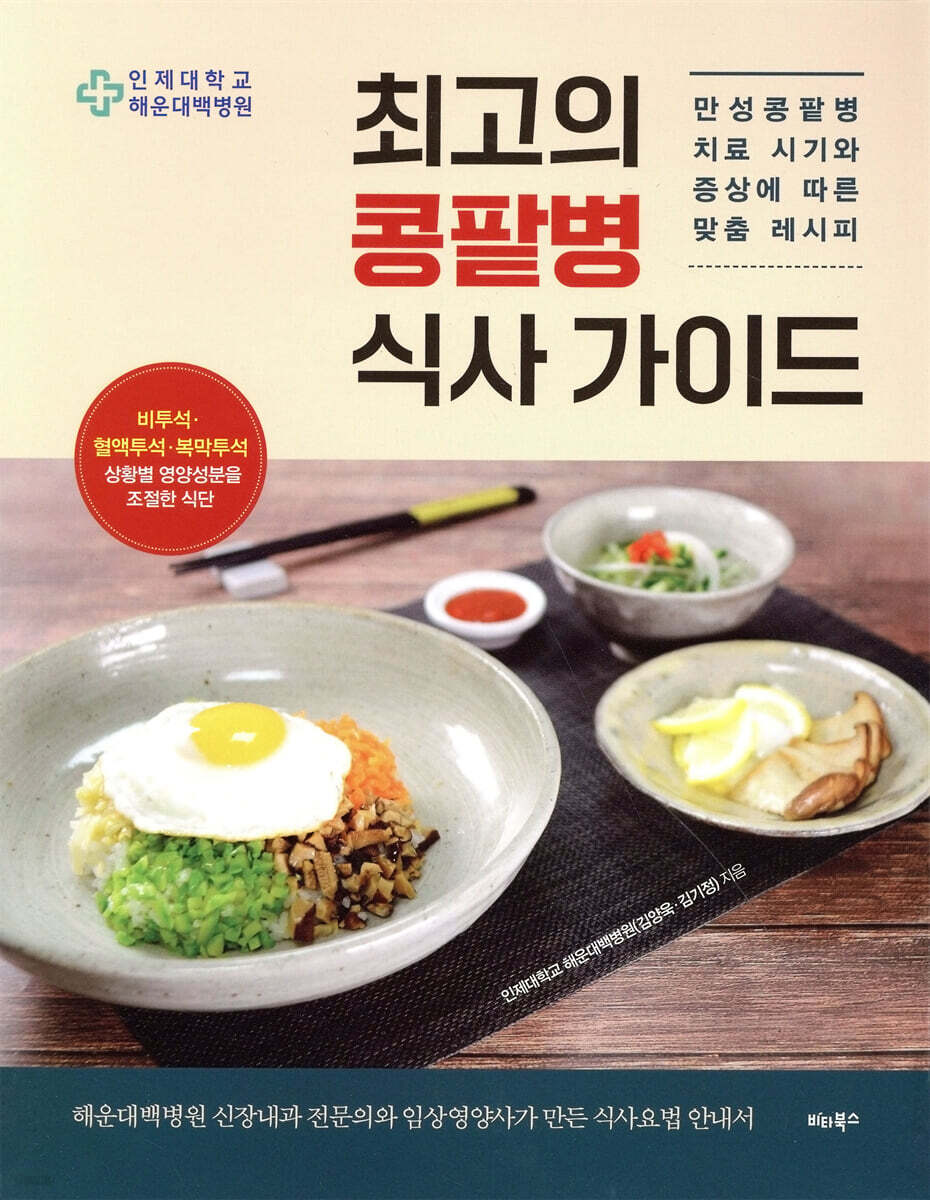
The Ultimate Kidney Disease Diet Guide
 |
Description
Book Introduction
How should people with kidney disease eat?
A meal guide created by university hospital specialists and clinical nutritionists
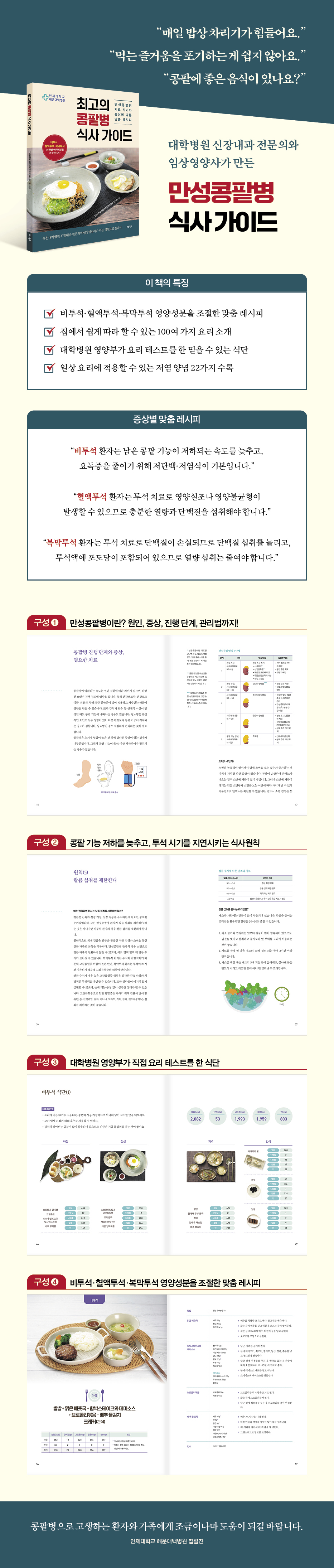
We introduce recipes that patients with chronic kidney disease and their families can easily make at home.
It was created by a nephrologist and clinical nutritionist at Haeundae Paik Hospital, Inje University, based on their experience in counseling and treating patients with chronic kidney disease.
Haeundae Paik Hospital's nutrition department conducts cooking tests and creates meal plans for each treatment stage: non-dialysis, hemodialysis, and peritoneal dialysis, so you can trust and follow them.
When diagnosed with kidney disease, the biggest concern is diet.
Kidney disease is difficult to cure, but maintaining a good diet can slow the decline in kidney function and delay the need for dialysis.
We often hear that we should eat 'light food', 'vegetables with potassium removed', and 'protein as little as possible', but kidney disease has no fixed diet and the diet varies depending on the treatment stage, making it difficult for patients and their families.
The book presents six dietary principles for chronic kidney disease and introduces recipes that apply the principles.
Based on over 100 recipes that can be easily followed at home, we have created a three-meal-a-day diet by adjusting the nutritional content for each stage of non-dialysis, hemodialysis, and peritoneal dialysis.
It also introduces 22 low-sodium seasonings that can be applied to everyday cooking, making it easier for patients and their families to plan meals.
A meal guide created by university hospital specialists and clinical nutritionists
We introduce recipes that patients with chronic kidney disease and their families can easily make at home.
It was created by a nephrologist and clinical nutritionist at Haeundae Paik Hospital, Inje University, based on their experience in counseling and treating patients with chronic kidney disease.
Haeundae Paik Hospital's nutrition department conducts cooking tests and creates meal plans for each treatment stage: non-dialysis, hemodialysis, and peritoneal dialysis, so you can trust and follow them.
When diagnosed with kidney disease, the biggest concern is diet.
Kidney disease is difficult to cure, but maintaining a good diet can slow the decline in kidney function and delay the need for dialysis.
We often hear that we should eat 'light food', 'vegetables with potassium removed', and 'protein as little as possible', but kidney disease has no fixed diet and the diet varies depending on the treatment stage, making it difficult for patients and their families.
The book presents six dietary principles for chronic kidney disease and introduces recipes that apply the principles.
Based on over 100 recipes that can be easily followed at home, we have created a three-meal-a-day diet by adjusting the nutritional content for each stage of non-dialysis, hemodialysis, and peritoneal dialysis.
It also introduces 22 low-sodium seasonings that can be applied to everyday cooking, making it easier for patients and their families to plan meals.
- You can preview some of the book's contents.
Preview
index
prolog
PART 01 Kidney Disease: Understanding It Properly Can Help You Manage It
What do kidneys do?
What is kidney disease?
Kidney disease stages, symptoms, and necessary treatment
How should I take care of my kidneys?
Renal replacement therapy for kidney disease
PART 02 Meal Guide & Recipes for Each Treatment Situation
|Kidney Disease Dietary Principles|
Principle (1) Consume high calories
- Why do patients with chronic kidney disease need to consume high calories?
- How do you consume calories?
- Can I eat canned fruit or cookies as a snack to replenish calories?
- I have chronic kidney disease and diabetes. Is it okay for me to eat mixed grain rice?
- Is it okay to eat boiled sweet potatoes and potatoes?
Principle (2) Protein intake is adjusted according to the stage of kidney disease.
- Why should patients with chronic kidney disease control their protein intake?
- How does protein intake vary from patient to patient?
- Can I substitute protein supplements when I have no appetite?
Principle (3) Control your water intake
- Why should patients with chronic kidney disease be careful about their water intake?
- How can I tell if I have enough water in my body?
- What precautions should patients with chronic kidney disease take to control their fluid intake?
- How much water should a patient with chronic kidney disease consume?
- If my body is swollen, can I drink boiled corn silk or old pumpkin water to help with diuresis?
Principle (4) Limit sodium intake
- Why is a low-salt diet recommended for patients with chronic kidney disease?
- What are the salt restriction standards for each stage of chronic kidney disease progression?
- Can I use low-sodium salt instead of regular salt?
- If I have difficulty eating low-salt foods, can I eat the same amount of side dishes as usual?
- How can I make it taste good even if it's bland?
- What should I do when eating out?
Principle (5) Limit potassium intake
- Why should patients with chronic kidney disease restrict their potassium intake?
- What are some recipes that reduce potassium intake?
Principle (6) Limit intake
- Why should patients with chronic kidney disease follow a low-phosphate diet?
- Foods high in phosphorus
Keep this in mind when following the recipe!
- 22 seasonings with various uses
|Non-dialysis diet|
What should non-dialysis patients eat?
Ingredient Recommendations & Measurement Methods for More Accurate Dietary Supplements for Non-Dialysis Patients
Foods to be cautious about when consumed by non-dialysis patients
- Non-dialysis diet (1)
[Breakfast] Morning bread and strawberry jam + cream soup + lettuce salad with balsamic dressing + beetroot pickle + rice cake with honey
[Lunch] Soboro Bibimbap with Gochujang Seasoning + Cucumber Cold Soup + Grilled Mushrooms + Lemon and Onion Pickle + Grapes
[Dinner] Rice + dried pollack soup with tofu + japchae + cabbage pancake + cabbage water kimchi + yanggaeng (snack)
- Non-dialysis diet (2)
[Breakfast] Rice + clear cabbage soup + hamburger steak with demi sauce + stir-fried broccoli + cabbage water kimchi + crackers
[Lunch] Beef stir-fried rice + seaweed soup + bellflower root + stir-fried garlic chives + pickled red cabbage + apple
[Dinner] Bibim noodles with gochujang sauce + clear radish soup + fried seaweed rolls + pickled radish + jelly
- Non-dialysis diet (3)
[Breakfast] Beef vegetable porridge with soy sauce + glass noodle soup + vegetable pancake + steamed perilla leaves + pickled oyster mushrooms + castella glutinous rice cake
[Lunch] Kimbap + clear oyster mushroom soup + radish wrap + fried bell peppers + cabbage water kimchi + pineapple
[Dinner] Bean sprout rice with soy sauce seasoning + sungnyung (pork soup) + acorn jelly pancake and meat pancake + pickled lettuce + cucumber pickle + caramel
|Hemodialysis Diet|
What should hemodialysis patients eat?
Recommended Ingredient Amounts & Measurement Methods for More Accurate Dietary Supplements for Hemodialysis Patients
Foods to be consumed with caution by hemodialysis patients
- Hemodialysis diet (1)
[Breakfast] Croissant with honey + cream soup + scrambled eggs + lettuce salad with balsamic dressing + beetroot pickle + milk
[Lunch] Rice + Cheongyang pepper bean sprout soup + Dongtae pancake + acorn jelly seaweed salad + paprika pickle + pear
[Dinner] Rice + soybean paste soup + cold chicken breast + steamed eggplant + cabbage water kimchi
- Hemodialysis diet (2)
[Breakfast] Soup with radish greens, braised tuna, fried vegetables with soy sauce, pickled shiitake mushrooms, and plain yogurt
[Lunch] Rice + shiitake mushroom soup + pork cutlet and demi sauce + cabbage salad and kayo sauce + cabbage water kimchi + pineapple
[Dinner] Rice + cod soup + stir-fried cucumber and onion + carrot pancake + radish salad
- Hemodialysis diet (3)
[Breakfast] Rice + eggplant soup + grilled flounder with yuzu sauce + stir-fried bok choy + water cabbage kimchi + yogurt
[Lunch] Pork Japchae Rice + Green Onion Egg Soup + Steamed Sweet Pepper Glutinous Rice + Stir-fried Radish Side Dishes + Pickled Cucumber + Orange
[Dinner] Rice + tofu soybean paste soup + braised beef + fried onions + pickled lettuce
|Peritoneal Dialysis Diet|
What should peritoneal dialysis patients eat?
Recommended Ingredient Amounts & Measurement Methods for More Accurate Peritoneal Dialysis Patient Diets
Foods to be consumed with caution by peritoneal dialysis patients
- Peritoneal dialysis diet (1)
[Breakfast] Toast + Cream Soup + Grilled Salmon and Broccoli + Scrambled Eggs + Lettuce Salad with Balsamic Dressing + Soy Milk
[Lunch] Rice + Cheongyang pepper bean sprout soup + Dongtae pancake + zucchini roll + paprika pickle + apple
[Dinner] Rice + crab soybean paste soup + grilled beef + steamed eggplant + cabbage water kimchi
- Peritoneal dialysis diet (2)
[Breakfast] Rice + clam seaweed soup + grilled seaweed + doraji glutinous rice fritters + cucumber salad + milk
[Lunch] Omelet rice with demi sauce + beef broth + braised lotus root + fried bell peppers + pickled onions and carrots + yellow peas
[Dinner] Rice + dried pollack soup + sesame leaf soup + konjac noodles + cabbage water kimchi
- Peritoneal dialysis diet (3)
[Breakfast] Rice + squid and tofu soup + stir-fried pork + grilled oyster mushrooms + wasabi radish kimchi + plain yogurt
[Lunch] Glutinous rice + chicken leg samgyetang + chive and apple salad + cabbage water kimchi + tangerine
[Dinner] Rice + soybean paste stew + fried tuna + stir-fried shrimp and zucchini + beet radish pickle
PART 01 Kidney Disease: Understanding It Properly Can Help You Manage It
What do kidneys do?
What is kidney disease?
Kidney disease stages, symptoms, and necessary treatment
How should I take care of my kidneys?
Renal replacement therapy for kidney disease
PART 02 Meal Guide & Recipes for Each Treatment Situation
|Kidney Disease Dietary Principles|
Principle (1) Consume high calories
- Why do patients with chronic kidney disease need to consume high calories?
- How do you consume calories?
- Can I eat canned fruit or cookies as a snack to replenish calories?
- I have chronic kidney disease and diabetes. Is it okay for me to eat mixed grain rice?
- Is it okay to eat boiled sweet potatoes and potatoes?
Principle (2) Protein intake is adjusted according to the stage of kidney disease.
- Why should patients with chronic kidney disease control their protein intake?
- How does protein intake vary from patient to patient?
- Can I substitute protein supplements when I have no appetite?
Principle (3) Control your water intake
- Why should patients with chronic kidney disease be careful about their water intake?
- How can I tell if I have enough water in my body?
- What precautions should patients with chronic kidney disease take to control their fluid intake?
- How much water should a patient with chronic kidney disease consume?
- If my body is swollen, can I drink boiled corn silk or old pumpkin water to help with diuresis?
Principle (4) Limit sodium intake
- Why is a low-salt diet recommended for patients with chronic kidney disease?
- What are the salt restriction standards for each stage of chronic kidney disease progression?
- Can I use low-sodium salt instead of regular salt?
- If I have difficulty eating low-salt foods, can I eat the same amount of side dishes as usual?
- How can I make it taste good even if it's bland?
- What should I do when eating out?
Principle (5) Limit potassium intake
- Why should patients with chronic kidney disease restrict their potassium intake?
- What are some recipes that reduce potassium intake?
Principle (6) Limit intake
- Why should patients with chronic kidney disease follow a low-phosphate diet?
- Foods high in phosphorus
Keep this in mind when following the recipe!
- 22 seasonings with various uses
|Non-dialysis diet|
What should non-dialysis patients eat?
Ingredient Recommendations & Measurement Methods for More Accurate Dietary Supplements for Non-Dialysis Patients
Foods to be cautious about when consumed by non-dialysis patients
- Non-dialysis diet (1)
[Breakfast] Morning bread and strawberry jam + cream soup + lettuce salad with balsamic dressing + beetroot pickle + rice cake with honey
[Lunch] Soboro Bibimbap with Gochujang Seasoning + Cucumber Cold Soup + Grilled Mushrooms + Lemon and Onion Pickle + Grapes
[Dinner] Rice + dried pollack soup with tofu + japchae + cabbage pancake + cabbage water kimchi + yanggaeng (snack)
- Non-dialysis diet (2)
[Breakfast] Rice + clear cabbage soup + hamburger steak with demi sauce + stir-fried broccoli + cabbage water kimchi + crackers
[Lunch] Beef stir-fried rice + seaweed soup + bellflower root + stir-fried garlic chives + pickled red cabbage + apple
[Dinner] Bibim noodles with gochujang sauce + clear radish soup + fried seaweed rolls + pickled radish + jelly
- Non-dialysis diet (3)
[Breakfast] Beef vegetable porridge with soy sauce + glass noodle soup + vegetable pancake + steamed perilla leaves + pickled oyster mushrooms + castella glutinous rice cake
[Lunch] Kimbap + clear oyster mushroom soup + radish wrap + fried bell peppers + cabbage water kimchi + pineapple
[Dinner] Bean sprout rice with soy sauce seasoning + sungnyung (pork soup) + acorn jelly pancake and meat pancake + pickled lettuce + cucumber pickle + caramel
|Hemodialysis Diet|
What should hemodialysis patients eat?
Recommended Ingredient Amounts & Measurement Methods for More Accurate Dietary Supplements for Hemodialysis Patients
Foods to be consumed with caution by hemodialysis patients
- Hemodialysis diet (1)
[Breakfast] Croissant with honey + cream soup + scrambled eggs + lettuce salad with balsamic dressing + beetroot pickle + milk
[Lunch] Rice + Cheongyang pepper bean sprout soup + Dongtae pancake + acorn jelly seaweed salad + paprika pickle + pear
[Dinner] Rice + soybean paste soup + cold chicken breast + steamed eggplant + cabbage water kimchi
- Hemodialysis diet (2)
[Breakfast] Soup with radish greens, braised tuna, fried vegetables with soy sauce, pickled shiitake mushrooms, and plain yogurt
[Lunch] Rice + shiitake mushroom soup + pork cutlet and demi sauce + cabbage salad and kayo sauce + cabbage water kimchi + pineapple
[Dinner] Rice + cod soup + stir-fried cucumber and onion + carrot pancake + radish salad
- Hemodialysis diet (3)
[Breakfast] Rice + eggplant soup + grilled flounder with yuzu sauce + stir-fried bok choy + water cabbage kimchi + yogurt
[Lunch] Pork Japchae Rice + Green Onion Egg Soup + Steamed Sweet Pepper Glutinous Rice + Stir-fried Radish Side Dishes + Pickled Cucumber + Orange
[Dinner] Rice + tofu soybean paste soup + braised beef + fried onions + pickled lettuce
|Peritoneal Dialysis Diet|
What should peritoneal dialysis patients eat?
Recommended Ingredient Amounts & Measurement Methods for More Accurate Peritoneal Dialysis Patient Diets
Foods to be consumed with caution by peritoneal dialysis patients
- Peritoneal dialysis diet (1)
[Breakfast] Toast + Cream Soup + Grilled Salmon and Broccoli + Scrambled Eggs + Lettuce Salad with Balsamic Dressing + Soy Milk
[Lunch] Rice + Cheongyang pepper bean sprout soup + Dongtae pancake + zucchini roll + paprika pickle + apple
[Dinner] Rice + crab soybean paste soup + grilled beef + steamed eggplant + cabbage water kimchi
- Peritoneal dialysis diet (2)
[Breakfast] Rice + clam seaweed soup + grilled seaweed + doraji glutinous rice fritters + cucumber salad + milk
[Lunch] Omelet rice with demi sauce + beef broth + braised lotus root + fried bell peppers + pickled onions and carrots + yellow peas
[Dinner] Rice + dried pollack soup + sesame leaf soup + konjac noodles + cabbage water kimchi
- Peritoneal dialysis diet (3)
[Breakfast] Rice + squid and tofu soup + stir-fried pork + grilled oyster mushrooms + wasabi radish kimchi + plain yogurt
[Lunch] Glutinous rice + chicken leg samgyetang + chive and apple salad + cabbage water kimchi + tangerine
[Dinner] Rice + soybean paste stew + fried tuna + stir-fried shrimp and zucchini + beet radish pickle
Detailed image
Publisher's Review
What is chronic kidney disease? Causes, symptoms, stages, and management!
The kidneys are responsible for many functions, including excreting waste products from the body and maintaining electrolyte balance.
When kidney function deteriorates significantly and cannot function properly, it becomes kidney disease, which is commonly called 'kidney disease' or 'kidney failure'.
Even if kidney function deteriorates significantly, symptoms do not appear clearly.
Although there are many cases where it becomes a disease because it is not discovered in time, the incidence of diabetes is recently increasing to 50%.
The book contains key information that patients with kidney disease and their families must know, including symptoms, stages, and treatment management methods (renal replacement therapy).
Difficult medical terms are explained in simple terms so that the general public can understand them after reading them just once.
How should non-dialysis, hemodialysis, and peritoneal dialysis patients eat?
The reason why there is a strong perception that 'kidney disease is scarier than cancer' is because diet management is difficult.
Without a fixed diet, you will need to adjust your intake of calories, protein, sodium, potassium, phosphorus, and water depending on the treatment you are receiving.
For non-dialysis patients, a low-protein, low-salt diet is essential to slow the rate of decline in remaining kidney function and reduce uremia.
Hemodialysis patients should consume sufficient calories and protein because malnutrition or nutritional imbalances may occur due to dialysis treatment.
Peritoneal dialysis patients should increase their protein intake because protein is lost during dialysis treatment, and reduce their calorie intake because the dialysate contains glucose.
In this way, the book introduces a diet plan with nutritional components adjusted to suit the purpose of each treatment stage.
It is easy to follow and apply as it consists of a three-day meal plan for breakfast, lunch, and dinner.
The kidneys are responsible for many functions, including excreting waste products from the body and maintaining electrolyte balance.
When kidney function deteriorates significantly and cannot function properly, it becomes kidney disease, which is commonly called 'kidney disease' or 'kidney failure'.
Even if kidney function deteriorates significantly, symptoms do not appear clearly.
Although there are many cases where it becomes a disease because it is not discovered in time, the incidence of diabetes is recently increasing to 50%.
The book contains key information that patients with kidney disease and their families must know, including symptoms, stages, and treatment management methods (renal replacement therapy).
Difficult medical terms are explained in simple terms so that the general public can understand them after reading them just once.
How should non-dialysis, hemodialysis, and peritoneal dialysis patients eat?
The reason why there is a strong perception that 'kidney disease is scarier than cancer' is because diet management is difficult.
Without a fixed diet, you will need to adjust your intake of calories, protein, sodium, potassium, phosphorus, and water depending on the treatment you are receiving.
For non-dialysis patients, a low-protein, low-salt diet is essential to slow the rate of decline in remaining kidney function and reduce uremia.
Hemodialysis patients should consume sufficient calories and protein because malnutrition or nutritional imbalances may occur due to dialysis treatment.
Peritoneal dialysis patients should increase their protein intake because protein is lost during dialysis treatment, and reduce their calorie intake because the dialysate contains glucose.
In this way, the book introduces a diet plan with nutritional components adjusted to suit the purpose of each treatment stage.
It is easy to follow and apply as it consists of a three-day meal plan for breakfast, lunch, and dinner.
GOODS SPECIFICS
- Date of issue: March 1, 2023
- Page count, weight, size: 136 pages | 422g | 190*245*9mm
- ISBN13: 9791158463939
- ISBN10: 1158463936
You may also like
카테고리
korean


korean

![GQ KOREA Mark (Monthly): December [2025]](http://librairie.coreenne.fr/cdn/shop/files/8ef265dbbfbf186523ed75ba7319009d.jpg?v=1765340328&width=3840)


