

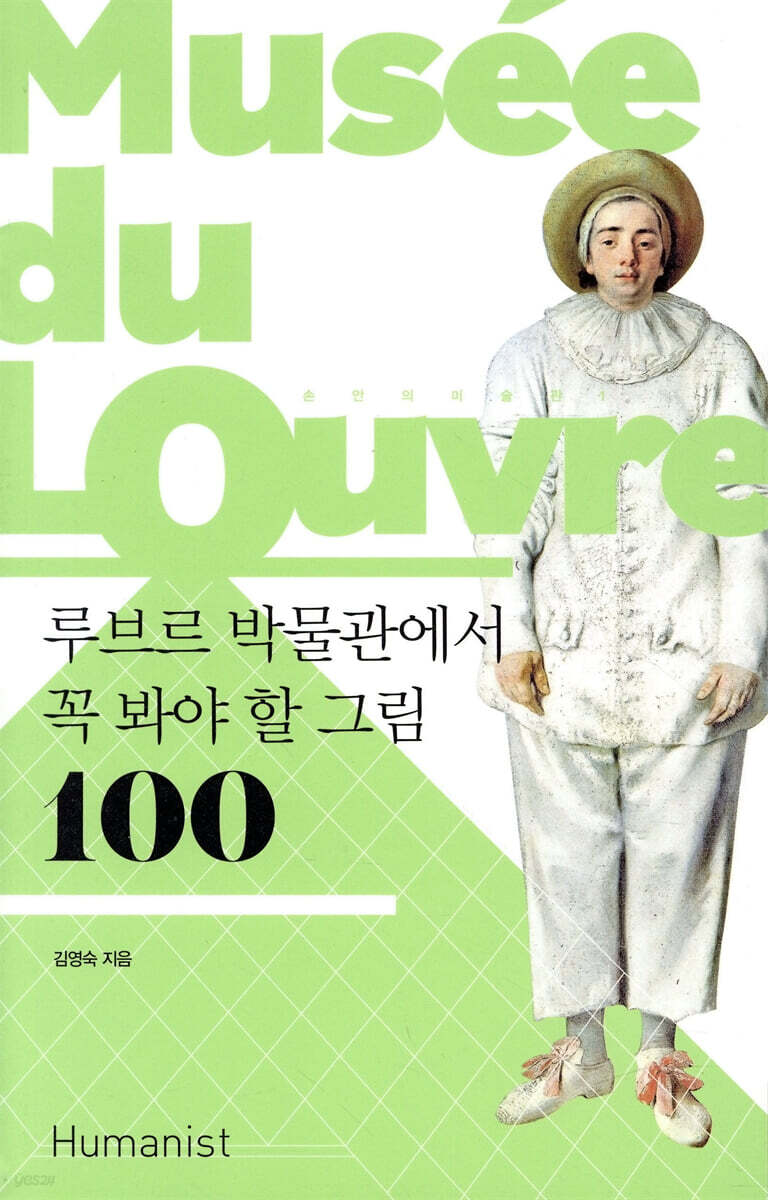
100 Must-See Paintings at the Louvre
 |
Description
Book Introduction
The 'Art Museum in Your Hand' series is a book for those who want to listen to the stories told by artists, even if only a little, during a trip to European art museums, which would most likely be a regret if left unnoticed.
It is also a kind of 'vaccine' for those who wander through the vast ocean-level art museum and become 'ice pillars'.
Although it may be just a 'LAN trip' for now, we cannot leave out those who promise to go someday.
Kim Young-sook, the best art storyteller who has taught us how to read paintings in an exciting way through “Art Books That Make You Want to Go to an Art Museum” and “1 Page Art 365,” points out 100 “must-see paintings” for travelers who are pressed for time and cannot properly see the paintings.
In the hope that travelers can easily view the paintings in European art museums as if looking into the palm of their hand, we recommend works that are easily digestible.
Let's go to the museum in my hand that shows you the famous art museums of Europe right now, starting with the Louvre Museum, the Musée d'Orsay, the National Gallery, the Prado Museum, the Vatican Museum, and the Uffizi Gallery.
It is also a kind of 'vaccine' for those who wander through the vast ocean-level art museum and become 'ice pillars'.
Although it may be just a 'LAN trip' for now, we cannot leave out those who promise to go someday.
Kim Young-sook, the best art storyteller who has taught us how to read paintings in an exciting way through “Art Books That Make You Want to Go to an Art Museum” and “1 Page Art 365,” points out 100 “must-see paintings” for travelers who are pressed for time and cannot properly see the paintings.
In the hope that travelers can easily view the paintings in European art museums as if looking into the palm of their hand, we recommend works that are easily digestible.
Let's go to the museum in my hand that shows you the famous art museums of Europe right now, starting with the Louvre Museum, the Musée d'Orsay, the National Gallery, the Prado Museum, the Vatican Museum, and the Uffizi Gallery.
- You can preview some of the book's contents.
Preview
index
First, for those who want to go to European art museums
Things to know before going to the Louvre Museum
Painting Gallery of the Louvre Museum
Denon
Sandro Botticelli, Young Man Before a Free Society of Arts
Fra Angelico, Christ Crucified
Sandro Botticelli, Madonna and Child with John the Baptist
Giotto di Bondone, St. Francis Receiving the Stigmata
Guido da Siena, The Birth of Jesus and the Presentation of the Temple
Pisanello, Portrait of a Young Princess, Piero della Francesca, Sigismondo Pandolfo Malatesta
Antonello da Messina, Portrait of a Man (Condottiere), Christ at the Column
Giovanni Bellini, Crucifixion
Andrea Mantegna, Saint Sebastian
Domenico Ghirlandaio, "The Old Man and the Boy" and "The Visit"
Bernardino Luini, Salome Receiving the Head of John the Baptist; Andrea di Solario, The Head of John the Baptist
Raphael or Giovanni Francesco Penni, Madonna holding the veil
Raphael, Madonna and Child with John the Baptist (The Beautiful Gardener)
Leonardo da Vinci's "Beautiful Woman with a Ferronière"
Leonardo da Vinci, Madonna and Child with Saint Anne
Leonardo da Vinci, John the Baptist (Bacchus)
Leonardo da Vinci's Mona Lisa
Tintoretto, Self-Portrait
Tintoretto, Susanna and the Elders
Paolo Veronese, The Wedding at Cana
Dosso Doshi, Portrait of Cesare Borgia
Titian, The Burial of Christ, Christ Crowned with Thorns
Titian and Giorgione's "Pastoral Symphony"
Titian, Portrait of Francis I, Portrait of a Man Wearing Gloves
Giuseppe Arcimboldo's 'Four Seasons' series
Pontormo, Madonna and Child with Saint Anne
Rosso Fiorentino's Pieta
Caravaggio's Death of the Virgin
Annibale Carracci, Pietà with St. Francis and Mary Magdalene
Guido Reni, "Behold the Man" and "Nessus the Centaur Abducting Deianira"
Guercino, The Tears of Saint Peter, The Resurrection of Lazarus
Giovanni Paolo Panini, "Gallery with Ancient Roman Scenes" and Canaletto, "The Molo Viewed from the Port of San Marco"
Sir Joshua Reynolds, "The Hair Master"
Thomas Gainsborough, Conversation in the Park
Joseph Mallord William Turner, Riverside View with a Distant Bay
Jacques-Louis David, "Oath of the Horatii" and "The Intervention of the Sabine Women"
Jacques-Louis David, The Coronation of Napoleon
Eugène Delacroix, The Death of Sardanapalus, Dante and Virgil
Theodore Géricault, The Raft of the Medusa
Rechelieu
Jan van Eyck, Madonna of Prime Minister Nicolas Rollin
Rogier van der Weyden and his disciples, The Annunciation
Hans Memling, Diptych by Jan du Selire
Albrecht Dürer, Self-Portrait with Thistle
Quentin Mechis, The Moneylender and His Wife
Peter Paul Rubens, Marie de' Medici's Arrival at Marseilles, Marie de' Medici Meeting Henry IV at Lyon
Anthony van Dyck, Portrait of Charles I on the Hunt
Jacob Jordaens, Diana's Rest, Portrait of a Man
Frans Hals, The Lute Clown and the Gypsy Girl
Judith Leyster, The Merrymakers
Angelica Kaufmann, Baroness Krüdener and Her Son
Rembrandt, Self-Portrait with Beret and Gold Ornaments, Self-Portrait at Easel
Rembrandt, Bathsheba Bathing, Matthew the Evangelist and the Angel
Jan Vermeer, The Astronomer and the Lacemaker
Angérand Quarton's Pietà at Villeneuve-les-Avignon
Jean Fouquet, Portrait of Charles VII
School of Fontainebleau, Portrait of Gabrielle d'Estrées and her sisters, presumed to be the Duchess of Villars
Philippe de Champagne, Portrait of Cardinal Richelieu, Votive Offerings: Sisters Catherine Agnes Arnaud and Catherine de Sainte-Suzanne de Champagne, Body of Christ Lying on a Shroud
Simon Vouet, Allegory of Abundance
Nicolas Poussin, "I Am in Arcadia, Too" (Self-Portrait)
Claude Lorrain, "Cleopatra Landing at Tarsus" and "Landscape with Paris and Oenone"
Nicolas Poussin's 'Four Seasons' series
Sully Hall
Charles Le Brun, Portrait of Pierre Segié, Chief Justice of France
Jean-Antoine Watteau, Pilgrimage to Cythera, Crowd in the Park, Pierrot
François Boucher, Diana Leaving the Bath, Odalisque
Jean-Honoré Fragonard, Imaginary Figures: The Abbot of Saint-Nong, Imaginary Figures: The Study, Women Bathing, The Lock
Jean-Baptiste-Siméon Chardin, "The Stingray" and "Prayer Before Meals"
Jean-Auguste-Dominique Ingres, The Bather at Balpinçon, The Turkish Bath
Theodore Rousseau, The Forest of Fontainebleau, Sunset; Jean-François Millet, The Hay-Burners; Jean-Baptiste-Camille Corot, Memories of Mortefontaine
Figure annotations
Things to know before going to the Louvre Museum
Painting Gallery of the Louvre Museum
Denon
Sandro Botticelli, Young Man Before a Free Society of Arts
Fra Angelico, Christ Crucified
Sandro Botticelli, Madonna and Child with John the Baptist
Giotto di Bondone, St. Francis Receiving the Stigmata
Guido da Siena, The Birth of Jesus and the Presentation of the Temple
Pisanello, Portrait of a Young Princess, Piero della Francesca, Sigismondo Pandolfo Malatesta
Antonello da Messina, Portrait of a Man (Condottiere), Christ at the Column
Giovanni Bellini, Crucifixion
Andrea Mantegna, Saint Sebastian
Domenico Ghirlandaio, "The Old Man and the Boy" and "The Visit"
Bernardino Luini, Salome Receiving the Head of John the Baptist; Andrea di Solario, The Head of John the Baptist
Raphael or Giovanni Francesco Penni, Madonna holding the veil
Raphael, Madonna and Child with John the Baptist (The Beautiful Gardener)
Leonardo da Vinci's "Beautiful Woman with a Ferronière"
Leonardo da Vinci, Madonna and Child with Saint Anne
Leonardo da Vinci, John the Baptist (Bacchus)
Leonardo da Vinci's Mona Lisa
Tintoretto, Self-Portrait
Tintoretto, Susanna and the Elders
Paolo Veronese, The Wedding at Cana
Dosso Doshi, Portrait of Cesare Borgia
Titian, The Burial of Christ, Christ Crowned with Thorns
Titian and Giorgione's "Pastoral Symphony"
Titian, Portrait of Francis I, Portrait of a Man Wearing Gloves
Giuseppe Arcimboldo's 'Four Seasons' series
Pontormo, Madonna and Child with Saint Anne
Rosso Fiorentino's Pieta
Caravaggio's Death of the Virgin
Annibale Carracci, Pietà with St. Francis and Mary Magdalene
Guido Reni, "Behold the Man" and "Nessus the Centaur Abducting Deianira"
Guercino, The Tears of Saint Peter, The Resurrection of Lazarus
Giovanni Paolo Panini, "Gallery with Ancient Roman Scenes" and Canaletto, "The Molo Viewed from the Port of San Marco"
Sir Joshua Reynolds, "The Hair Master"
Thomas Gainsborough, Conversation in the Park
Joseph Mallord William Turner, Riverside View with a Distant Bay
Jacques-Louis David, "Oath of the Horatii" and "The Intervention of the Sabine Women"
Jacques-Louis David, The Coronation of Napoleon
Eugène Delacroix, The Death of Sardanapalus, Dante and Virgil
Theodore Géricault, The Raft of the Medusa
Rechelieu
Jan van Eyck, Madonna of Prime Minister Nicolas Rollin
Rogier van der Weyden and his disciples, The Annunciation
Hans Memling, Diptych by Jan du Selire
Albrecht Dürer, Self-Portrait with Thistle
Quentin Mechis, The Moneylender and His Wife
Peter Paul Rubens, Marie de' Medici's Arrival at Marseilles, Marie de' Medici Meeting Henry IV at Lyon
Anthony van Dyck, Portrait of Charles I on the Hunt
Jacob Jordaens, Diana's Rest, Portrait of a Man
Frans Hals, The Lute Clown and the Gypsy Girl
Judith Leyster, The Merrymakers
Angelica Kaufmann, Baroness Krüdener and Her Son
Rembrandt, Self-Portrait with Beret and Gold Ornaments, Self-Portrait at Easel
Rembrandt, Bathsheba Bathing, Matthew the Evangelist and the Angel
Jan Vermeer, The Astronomer and the Lacemaker
Angérand Quarton's Pietà at Villeneuve-les-Avignon
Jean Fouquet, Portrait of Charles VII
School of Fontainebleau, Portrait of Gabrielle d'Estrées and her sisters, presumed to be the Duchess of Villars
Philippe de Champagne, Portrait of Cardinal Richelieu, Votive Offerings: Sisters Catherine Agnes Arnaud and Catherine de Sainte-Suzanne de Champagne, Body of Christ Lying on a Shroud
Simon Vouet, Allegory of Abundance
Nicolas Poussin, "I Am in Arcadia, Too" (Self-Portrait)
Claude Lorrain, "Cleopatra Landing at Tarsus" and "Landscape with Paris and Oenone"
Nicolas Poussin's 'Four Seasons' series
Sully Hall
Charles Le Brun, Portrait of Pierre Segié, Chief Justice of France
Jean-Antoine Watteau, Pilgrimage to Cythera, Crowd in the Park, Pierrot
François Boucher, Diana Leaving the Bath, Odalisque
Jean-Honoré Fragonard, Imaginary Figures: The Abbot of Saint-Nong, Imaginary Figures: The Study, Women Bathing, The Lock
Jean-Baptiste-Siméon Chardin, "The Stingray" and "Prayer Before Meals"
Jean-Auguste-Dominique Ingres, The Bather at Balpinçon, The Turkish Bath
Theodore Rousseau, The Forest of Fontainebleau, Sunset; Jean-François Millet, The Hay-Burners; Jean-Baptiste-Camille Corot, Memories of Mortefontaine
Figure annotations
Detailed image

Publisher's Review
The most famous in the world
The largest museum, the Louvre
The first place visited by the 'Museum in Your Hand' series was the Louvre Museum.
Opened in 1793 amidst the fervor of the French Revolution, it is the world's largest museum, boasting a vast collection of 380,000 works of art.
It is the most visited art museum in the world, with an average of about 15,000 visitors per day.
The Louvre Museum boasts a wondrous scale, with a walking path stretching for a whopping 60 kilometers.
Even if you just walk around without seeing any of the works, half a day will pass by in no time.
So, if you just go in without making a plan of what pictures to look at, it's easy to get lost.
The Louvre's collection is divided into eight sections: Egyptian antiquities, West Asian antiquities, Greek, Etruscan and Roman antiquities, Islamic art, sculpture, decorative arts, prints and drawings, and paintings.
In "100 Must-See Paintings at the Louvre," you can see 100 must-see paintings from the Paintings Gallery (which houses approximately 6,000 works).
This book may serve as a tranquilizer for those who are amazed by the vastness of the Louvre.
For those who have not yet been to the Louvre, it is also a gallery where you can open it and appreciate the paintings at any time.
Above all, this book will be an essential guide for your Louvre painting tour, and a small album to remember the place when you return to your daily life.
A collection of paintings that encapsulate 500 years of European art history.
What paintings should I see at the Louvre?
The Louvre's painting collection is a veritable picture of 500 years of European art history.
It is filled with world-famous paintings, from Italian Renaissance paintings to Northern European paintings and French paintings.
The Louvre is largely divided into the Denon Wing, the Richelieu Wing, and the Sully Wing, and the paintings introduced in this book are displayed in these three wings.
This book uses the Louvre Museum's painting exhibition halls, Denon, Rechelieu, and Sully, as chapters, and explains one or two or three works in a simple, clear, yet interesting way, in one page.
Additionally, works that would be helpful to view together are included in the 'Picture Notes' to help readers understand.
In the first chapter, “Denon’s Wing,” you can see Italian Renaissance paintings and paintings by French and British artists.
The essence of Denon's collection is Italian Renaissance painting.
It is filled with works by masters of Italian painting, including Sandro Botticelli, Domenico Ghirlandaio, Titian Vecellio, and Raphael Sanzio.
The most famous painting in the Denon wing is, of course, Leonardo da Vinci's Mona Lisa.
This work alone, which clearly demonstrates aerial perspective by making the near parts clear and the far parts blurry, is enough to keep the Denon Gallery busy with visitors.
Eugène Delacroix's "The Death of Sardanapalus," Jacques-Louis David's "The Coronation of Napoleon," and Théodore Géricault's "The Raft of the Medusa," which were all sensational in 19th-century France, are powerful enough to elicit shivers and are unmissable.
In the second chapter, “Richelieu Hall,” you can enjoy paintings by German, Dutch, and Flemish artists.
Here, we introduce Jan van Eyck's "Madonna of Prime Minister Nicolas Rolin," Albrecht Dürer's "Self-Portrait with a Thistle," Peter Paul Rubens' "Marie de' Medici Arrives at Marseille," Rembrandt's "Self-Portrait with a Beret and Gold Ornaments," Jan Vermeer's (Johannes Vermeer) "Lady Lacemaker," and Philippe de Champagne's "Portrait of Cardinal Richelieu," which depicts Cardinal Richelieu, the origin of the exhibition hall.
In addition to the detailed sacred paintings and magnificent commemorative paintings, the works depicting the simple daily lives of ordinary people, including the artist himself, are also very impressive.
In the third chapter, “The Sully Hall,” you can see works by French writers from the 16th to 19th centuries.
In particular, Rococo art, which matches the tastes of the nobility through its splendid colors and delicate materials, captures the attention of visitors.
Representative examples include Jean-Antoine Watteau's "Pierrot," which looks somewhat lonely, François Boucher's "Diana Leaving Her Bath," which sensually depicts the world of mythology, and Jean-Honoré Fragonard's "The Lock," which resembles a scene from a play.
The dynamic changes in French art can be sensed through works such as Jean-Auguste-Dominique Ingres' "The Bathers at Balpincon," which represents Neoclassicism, Jean-François Millet's "The Haybinders," and Jean-Baptiste-Camille Corot's "Memories of Mortefontaine," which began to break away from the old-fashioned art of the academic world.
The 100 paintings featured in “100 Must-See Paintings at the Louvre” vividly illustrate the wonders of the Louvre’s painting collection, along with the flow of 500 years of European art history.
This book guides readers on a journey through the Louvre, featuring a selection of must-see paintings from the Louvre Museum, presented in a refreshingly laid-out manner and with brief, detailed explanations.
This book will be an invaluable guide for those reminiscing about their visit to the Louvre, as well as for those eagerly anticipating their next visit.
* The revised edition of “100 Must-See Paintings at the Louvre” offers even greater enjoyment of viewing the paintings with clearer picture quality and a more sophisticated layout than the previous edition.
We have also increased the font size of the image captions and simplified the content to greatly improve readability.
The figure annotations have also been refined to help you understand the figures more easily.
The largest museum, the Louvre
The first place visited by the 'Museum in Your Hand' series was the Louvre Museum.
Opened in 1793 amidst the fervor of the French Revolution, it is the world's largest museum, boasting a vast collection of 380,000 works of art.
It is the most visited art museum in the world, with an average of about 15,000 visitors per day.
The Louvre Museum boasts a wondrous scale, with a walking path stretching for a whopping 60 kilometers.
Even if you just walk around without seeing any of the works, half a day will pass by in no time.
So, if you just go in without making a plan of what pictures to look at, it's easy to get lost.
The Louvre's collection is divided into eight sections: Egyptian antiquities, West Asian antiquities, Greek, Etruscan and Roman antiquities, Islamic art, sculpture, decorative arts, prints and drawings, and paintings.
In "100 Must-See Paintings at the Louvre," you can see 100 must-see paintings from the Paintings Gallery (which houses approximately 6,000 works).
This book may serve as a tranquilizer for those who are amazed by the vastness of the Louvre.
For those who have not yet been to the Louvre, it is also a gallery where you can open it and appreciate the paintings at any time.
Above all, this book will be an essential guide for your Louvre painting tour, and a small album to remember the place when you return to your daily life.
A collection of paintings that encapsulate 500 years of European art history.
What paintings should I see at the Louvre?
The Louvre's painting collection is a veritable picture of 500 years of European art history.
It is filled with world-famous paintings, from Italian Renaissance paintings to Northern European paintings and French paintings.
The Louvre is largely divided into the Denon Wing, the Richelieu Wing, and the Sully Wing, and the paintings introduced in this book are displayed in these three wings.
This book uses the Louvre Museum's painting exhibition halls, Denon, Rechelieu, and Sully, as chapters, and explains one or two or three works in a simple, clear, yet interesting way, in one page.
Additionally, works that would be helpful to view together are included in the 'Picture Notes' to help readers understand.
In the first chapter, “Denon’s Wing,” you can see Italian Renaissance paintings and paintings by French and British artists.
The essence of Denon's collection is Italian Renaissance painting.
It is filled with works by masters of Italian painting, including Sandro Botticelli, Domenico Ghirlandaio, Titian Vecellio, and Raphael Sanzio.
The most famous painting in the Denon wing is, of course, Leonardo da Vinci's Mona Lisa.
This work alone, which clearly demonstrates aerial perspective by making the near parts clear and the far parts blurry, is enough to keep the Denon Gallery busy with visitors.
Eugène Delacroix's "The Death of Sardanapalus," Jacques-Louis David's "The Coronation of Napoleon," and Théodore Géricault's "The Raft of the Medusa," which were all sensational in 19th-century France, are powerful enough to elicit shivers and are unmissable.
In the second chapter, “Richelieu Hall,” you can enjoy paintings by German, Dutch, and Flemish artists.
Here, we introduce Jan van Eyck's "Madonna of Prime Minister Nicolas Rolin," Albrecht Dürer's "Self-Portrait with a Thistle," Peter Paul Rubens' "Marie de' Medici Arrives at Marseille," Rembrandt's "Self-Portrait with a Beret and Gold Ornaments," Jan Vermeer's (Johannes Vermeer) "Lady Lacemaker," and Philippe de Champagne's "Portrait of Cardinal Richelieu," which depicts Cardinal Richelieu, the origin of the exhibition hall.
In addition to the detailed sacred paintings and magnificent commemorative paintings, the works depicting the simple daily lives of ordinary people, including the artist himself, are also very impressive.
In the third chapter, “The Sully Hall,” you can see works by French writers from the 16th to 19th centuries.
In particular, Rococo art, which matches the tastes of the nobility through its splendid colors and delicate materials, captures the attention of visitors.
Representative examples include Jean-Antoine Watteau's "Pierrot," which looks somewhat lonely, François Boucher's "Diana Leaving Her Bath," which sensually depicts the world of mythology, and Jean-Honoré Fragonard's "The Lock," which resembles a scene from a play.
The dynamic changes in French art can be sensed through works such as Jean-Auguste-Dominique Ingres' "The Bathers at Balpincon," which represents Neoclassicism, Jean-François Millet's "The Haybinders," and Jean-Baptiste-Camille Corot's "Memories of Mortefontaine," which began to break away from the old-fashioned art of the academic world.
The 100 paintings featured in “100 Must-See Paintings at the Louvre” vividly illustrate the wonders of the Louvre’s painting collection, along with the flow of 500 years of European art history.
This book guides readers on a journey through the Louvre, featuring a selection of must-see paintings from the Louvre Museum, presented in a refreshingly laid-out manner and with brief, detailed explanations.
This book will be an invaluable guide for those reminiscing about their visit to the Louvre, as well as for those eagerly anticipating their next visit.
* The revised edition of “100 Must-See Paintings at the Louvre” offers even greater enjoyment of viewing the paintings with clearer picture quality and a more sophisticated layout than the previous edition.
We have also increased the font size of the image captions and simplified the content to greatly improve readability.
The figure annotations have also been refined to help you understand the figures more easily.
GOODS SPECIFICS
- Date of issue: April 11, 2022
- Page count, weight, size: 176 pages | 318g | 140*220*20mm
- ISBN13: 9791160808209
- ISBN10: 1160808201
You may also like
카테고리
korean


korean

![GQ KOREA Mark (Monthly): December [2025]](http://librairie.coreenne.fr/cdn/shop/files/8ef265dbbfbf186523ed75ba7319009d.jpg?v=1765340328&width=3840)


