

All About Running
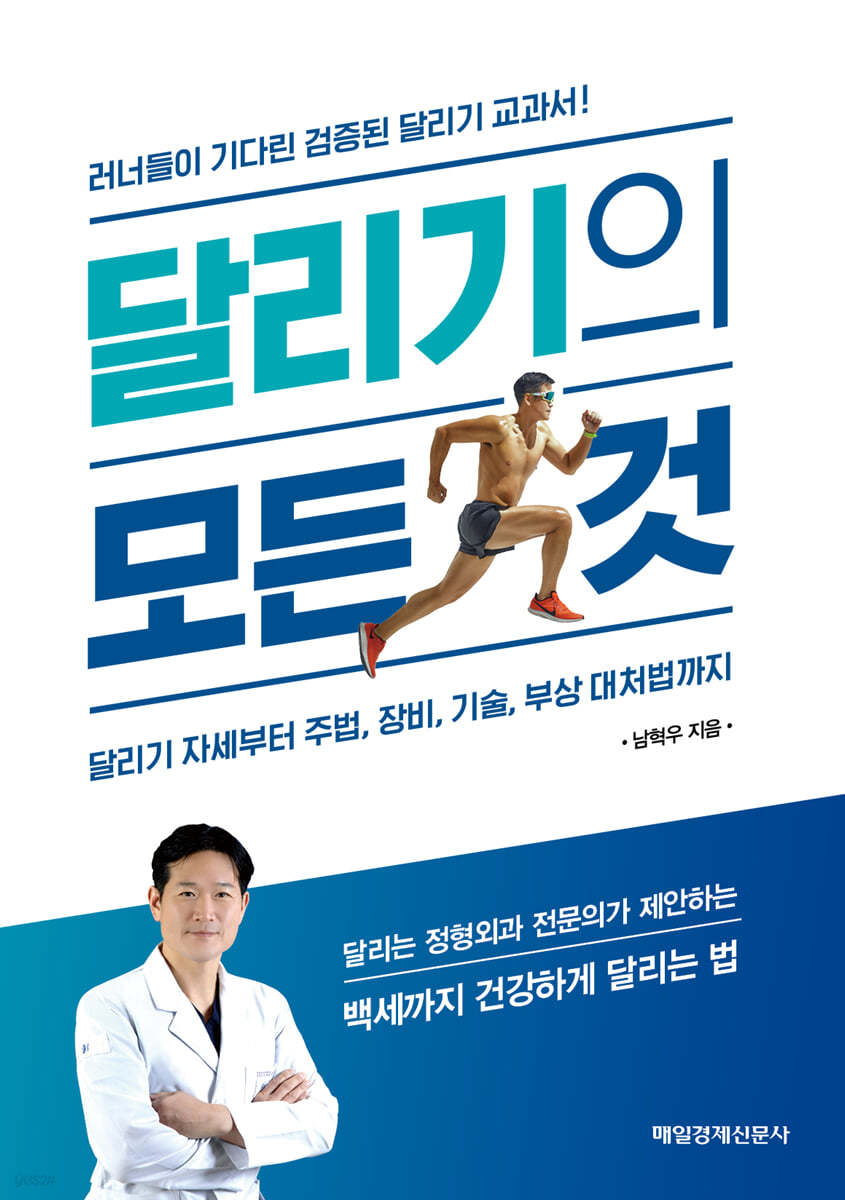 |
Description
Book Introduction
Unfounded running myths are ruining your health!
Introducing a Running Orthopedic Specialist
From running form to technique, equipment, techniques, and how to deal with injuries!
Conquer all the know-how for healthy running in one book.
Why didn't anyone tell me to run for health? Dr. Nam Hyuk-woo, an orthopedic surgeon who runs ultramarathons and triathlons, answers with his accurate and proven running textbook!
Right now, Korea is experiencing a running boom!
Until just a few years ago, there weren't many people on the running tracks in parks or along rivers, and even if there were, most of them were middle-aged or older.
But these days, it's not hard to see young people running alone in the early morning while listening to music or running in groups with a lot of energy and cheering.
Why has the number of runners suddenly increased? Running offers a way to enjoy some alone time amidst the hectic pace of daily life and the deluge of information.
Running doesn't require competing with others.
It shows honest results commensurate with the effort put in.
Find joy in running and feel a sense of accomplishment afterward.
For young people, running provides a source of energy for their weary lives and presents a precious time of meditation that helps them find their lost self.
Introducing a Running Orthopedic Specialist
From running form to technique, equipment, techniques, and how to deal with injuries!
Conquer all the know-how for healthy running in one book.
Why didn't anyone tell me to run for health? Dr. Nam Hyuk-woo, an orthopedic surgeon who runs ultramarathons and triathlons, answers with his accurate and proven running textbook!
Right now, Korea is experiencing a running boom!
Until just a few years ago, there weren't many people on the running tracks in parks or along rivers, and even if there were, most of them were middle-aged or older.
But these days, it's not hard to see young people running alone in the early morning while listening to music or running in groups with a lot of energy and cheering.
Why has the number of runners suddenly increased? Running offers a way to enjoy some alone time amidst the hectic pace of daily life and the deluge of information.
Running doesn't require competing with others.
It shows honest results commensurate with the effort put in.
Find joy in running and feel a sense of accomplishment afterward.
For young people, running provides a source of energy for their weary lives and presents a precious time of meditation that helps them find their lost self.
- You can preview some of the book's contents.
Preview
index
prolog
PART.1 Why Run?
Why did mankind run?
Right now, Korea is experiencing a running boom!
The Gift of Running: Weight Loss
Won't my knees hurt if I run?
The more you run, the healthier your cardiopulmonary function becomes.
Running for a Strong Spine
The Mysterious Potion of Rejuvenation
How does running affect your brain?
Let's blow away the gloomy mood by running
In the 100-Year Lifestyle Era, Let's Change Our Lifestyles
PART 2 For a 'healthy' run
What kind of runner am I?
Why do you run? Running with a purpose
The beginning of running, the correct posture and mindset
Running also requires skill
Your one-of-a-kind running gear! Everything you need to know about running shoes.
PART 3 Running Injuries A to Z
What are running injuries?
Why do running injuries occur?
How often will this happen?
Which part hurts the most?
Myths and Truths About Running Injuries
Running Injury Treatment Stages
PART 4: In-Depth Exploration of Running Injuries
Knee and surrounding pain
Shin and calf pain
Foot and ankle pain
thigh pain
Pelvic and hip pain
Epilogue
PART.1 Why Run?
Why did mankind run?
Right now, Korea is experiencing a running boom!
The Gift of Running: Weight Loss
Won't my knees hurt if I run?
The more you run, the healthier your cardiopulmonary function becomes.
Running for a Strong Spine
The Mysterious Potion of Rejuvenation
How does running affect your brain?
Let's blow away the gloomy mood by running
In the 100-Year Lifestyle Era, Let's Change Our Lifestyles
PART 2 For a 'healthy' run
What kind of runner am I?
Why do you run? Running with a purpose
The beginning of running, the correct posture and mindset
Running also requires skill
Your one-of-a-kind running gear! Everything you need to know about running shoes.
PART 3 Running Injuries A to Z
What are running injuries?
Why do running injuries occur?
How often will this happen?
Which part hurts the most?
Myths and Truths About Running Injuries
Running Injury Treatment Stages
PART 4: In-Depth Exploration of Running Injuries
Knee and surrounding pain
Shin and calf pain
Foot and ankle pain
thigh pain
Pelvic and hip pain
Epilogue
Detailed image

Into the book
Running strengthens the heart and circulates blood quickly throughout the body.
Eliminates airborne bacterial and viral infections through the lungs.
It actively circulates blood containing attacking white blood cells, phagocytes, and lymphocytes, thereby boosting defense activities.
As circulation is activated, it becomes easier to excrete harmful substances through sweat or urine.
Regular running creates a protective barrier that protects our bodies from attacks by constantly changing and evolving viruses and bacteria.
---From "Part 1 Why Run?"
Based on research results, it is advantageous to shorten the stride and increase the stride speed to reduce running injuries.
Of course, since each person has their own unique pace and stride that they are comfortable with, it is not good to hastily change by emphasizing only one side.
It would be nice to have longer strides and faster paces than human limitations, but there are many limitations to generally accepting it.
For regular runners who want to run fast, the secret to running safely and healthily for a long time is to first increase stride rate and raise the lactate threshold, rather than forcibly increasing stride length and causing injury.
---From "Part 2 For 'Healthy' Running"
When you put on your shoes and stand upright, there should be no slight wobble.
It is good if your ankles do not shake and you feel stable when you walk.
If you have severe flat feet, unusually worn soles or heels, feel a slight difference in your gait compared to others, or frequently experience pain in your feet or knees while running, we recommend consulting a medical professional or visiting a marathon specialty store where you can purchase more specialized running shoes.
---From "Part 2 For 'Healthy' Running"
This is why the 10% rule must be followed to prevent running injuries.
When changing the distance you run, the speed you run, the way you run, the shoes you wear, or the stride length, you need to gradually change your running habits by 10% at one-week intervals so that your body can adapt.
I'm reminded of the story of a marathon runner who said it took him two years to increase his stride by 15 centimeters.
It takes patience and effort to let go of greed and wait for your body to adapt to running.
---From "Part 3 Running Injuries A to Z"
Recently, plantar fasciitis is increasingly being caused by rapid changes in running style.
While landing on the forefoot or midfoot can be beneficial for running performance, abrupt changes in landing can actually cause problems.
If a typical runner who is accustomed to landing on the rearfoot suddenly switches to landing on the forefoot or midfoot, the load on the knees and thighs will shift to the forefoot, plantar fascia, and calf muscles.
Rapid pressure changes and increases in load can cause micro-trauma and partial tears in the plantar fascia.
If you also change your shoes to minimalist shoes or zero-drop shoes at the same time, the burden on the plantar fascia will double.
It's a good idea to avoid sudden changes in landing and to have a flexible mindset that doesn't get too tied down to one landing technique while losing weight.
Eliminates airborne bacterial and viral infections through the lungs.
It actively circulates blood containing attacking white blood cells, phagocytes, and lymphocytes, thereby boosting defense activities.
As circulation is activated, it becomes easier to excrete harmful substances through sweat or urine.
Regular running creates a protective barrier that protects our bodies from attacks by constantly changing and evolving viruses and bacteria.
---From "Part 1 Why Run?"
Based on research results, it is advantageous to shorten the stride and increase the stride speed to reduce running injuries.
Of course, since each person has their own unique pace and stride that they are comfortable with, it is not good to hastily change by emphasizing only one side.
It would be nice to have longer strides and faster paces than human limitations, but there are many limitations to generally accepting it.
For regular runners who want to run fast, the secret to running safely and healthily for a long time is to first increase stride rate and raise the lactate threshold, rather than forcibly increasing stride length and causing injury.
---From "Part 2 For 'Healthy' Running"
When you put on your shoes and stand upright, there should be no slight wobble.
It is good if your ankles do not shake and you feel stable when you walk.
If you have severe flat feet, unusually worn soles or heels, feel a slight difference in your gait compared to others, or frequently experience pain in your feet or knees while running, we recommend consulting a medical professional or visiting a marathon specialty store where you can purchase more specialized running shoes.
---From "Part 2 For 'Healthy' Running"
This is why the 10% rule must be followed to prevent running injuries.
When changing the distance you run, the speed you run, the way you run, the shoes you wear, or the stride length, you need to gradually change your running habits by 10% at one-week intervals so that your body can adapt.
I'm reminded of the story of a marathon runner who said it took him two years to increase his stride by 15 centimeters.
It takes patience and effort to let go of greed and wait for your body to adapt to running.
---From "Part 3 Running Injuries A to Z"
Recently, plantar fasciitis is increasingly being caused by rapid changes in running style.
While landing on the forefoot or midfoot can be beneficial for running performance, abrupt changes in landing can actually cause problems.
If a typical runner who is accustomed to landing on the rearfoot suddenly switches to landing on the forefoot or midfoot, the load on the knees and thighs will shift to the forefoot, plantar fascia, and calf muscles.
Rapid pressure changes and increases in load can cause micro-trauma and partial tears in the plantar fascia.
If you also change your shoes to minimalist shoes or zero-drop shoes at the same time, the burden on the plantar fascia will double.
It's a good idea to avoid sudden changes in landing and to have a flexible mindset that doesn't get too tied down to one landing technique while losing weight.
---From "Part 4: In-depth Exploration of Running Injuries by Area"
Publisher's Review
How do I find the right running shoes for me?
It is recommended that it be at least 5mm larger than your foot.
A suitable size is one that leaves about a thumb's width of space when you slide your foot all the way to the back of the shoe.
If there is not enough space in the toe area, the toenails are prone to damage.
If your feet are different sizes, choose the size that best fits your larger foot.
What matters is the width of the ball rather than the length of the foot.
The ball of the foot is the total length of the big toe and the little toe when connected along the line from the inner end of the toes (towards the joint, not the toenail).
Usually, when choosing a running shoe size first and then choosing a ball, there are only one or two options to choose from.
This is because most running shoes are manufactured with a standardized design, such as 'this length and this width of the ball.'
It would be nice to have 4-5 different types of balls for each length, but it is not easy because the production cost increases.
According to the standards of the American shoe brand New Balance, the ball types are D, 2E, and 4E.
D is narrower than the length of the foot, 2E is wider than the length, and 4E is wider than the length.
On average, Americans are closer to type D, and Koreans are closer to type 2E.
If the ball of your foot does not fit properly, blisters can easily form and the risk of injury increases.
The most important thing in running is 'if you keep your wits about you, you will never lose!'
Runners who begin to experience the joy of running begin to look for ways to run faster and longer.
But the important thing here is that rapid changes and repeated overloads are linked to running injuries.
For beginner runners and those just discovering the joy of running, a sudden injury can not only cause a loss of interest in running overall, but can also be extremely stressful due to withdrawal symptoms.
To prevent this from happening, it is recommended to check your condition through a health checkup before running and to clearly set goals for yourself that you want to achieve through running.
You should set a target heart rate and exercise volume according to that goal and continue running without overdoing it.
Running injuries can't be defined in one word!
The causes of running injuries are truly complex.
This is also why it is difficult to find a single, exact cause when running causes pain.
It may be caused by a person's physical characteristics, a sudden increase in the number of times or time they run, or an injury caused by running continuously in one direction.
Rather than focusing on treatment by focusing on just one cause, it is better to open up the possibility of multiple causes and approach the problem from various angles.
Most running injuries caused by complex factors can be recovered with proper treatment and alternative exercises.
In case of direct injury, surgery may be considered in dangerous cases, but most injuries suffered by recreational runners are caused by accumulated fatigue and overuse, so there is no need to worry too much.
What should I do if I get injured while running?
If you have suffered a running injury, it is important to receive appropriate treatment first and then perform alternative exercises after treatment.
The role of alternative running exercises is to help you rest the injured area while maintaining the ability to run.
Although you may want to start exercising as soon as the pain subsides, it's okay to start strengthening exercises or alternative exercises earlier.
Just make sure you don't irritate the injured muscle.
The best exercises to replace running are running and swimming.
Running, cycling, and swimming are all full-body exercises that use the entire body, making them the best aerobic exercises for improving cardiopulmonary function and increasing physical strength.
To build the strength you need to run again after recovering from an injury, it's also a good idea to do strength training exercises like lunges, squats, deadlifts, calf raises, and V-up pushups.
It's also a good idea to check your condition without overdoing it and create your own alternative exercise program for running.
It is recommended that it be at least 5mm larger than your foot.
A suitable size is one that leaves about a thumb's width of space when you slide your foot all the way to the back of the shoe.
If there is not enough space in the toe area, the toenails are prone to damage.
If your feet are different sizes, choose the size that best fits your larger foot.
What matters is the width of the ball rather than the length of the foot.
The ball of the foot is the total length of the big toe and the little toe when connected along the line from the inner end of the toes (towards the joint, not the toenail).
Usually, when choosing a running shoe size first and then choosing a ball, there are only one or two options to choose from.
This is because most running shoes are manufactured with a standardized design, such as 'this length and this width of the ball.'
It would be nice to have 4-5 different types of balls for each length, but it is not easy because the production cost increases.
According to the standards of the American shoe brand New Balance, the ball types are D, 2E, and 4E.
D is narrower than the length of the foot, 2E is wider than the length, and 4E is wider than the length.
On average, Americans are closer to type D, and Koreans are closer to type 2E.
If the ball of your foot does not fit properly, blisters can easily form and the risk of injury increases.
The most important thing in running is 'if you keep your wits about you, you will never lose!'
Runners who begin to experience the joy of running begin to look for ways to run faster and longer.
But the important thing here is that rapid changes and repeated overloads are linked to running injuries.
For beginner runners and those just discovering the joy of running, a sudden injury can not only cause a loss of interest in running overall, but can also be extremely stressful due to withdrawal symptoms.
To prevent this from happening, it is recommended to check your condition through a health checkup before running and to clearly set goals for yourself that you want to achieve through running.
You should set a target heart rate and exercise volume according to that goal and continue running without overdoing it.
Running injuries can't be defined in one word!
The causes of running injuries are truly complex.
This is also why it is difficult to find a single, exact cause when running causes pain.
It may be caused by a person's physical characteristics, a sudden increase in the number of times or time they run, or an injury caused by running continuously in one direction.
Rather than focusing on treatment by focusing on just one cause, it is better to open up the possibility of multiple causes and approach the problem from various angles.
Most running injuries caused by complex factors can be recovered with proper treatment and alternative exercises.
In case of direct injury, surgery may be considered in dangerous cases, but most injuries suffered by recreational runners are caused by accumulated fatigue and overuse, so there is no need to worry too much.
What should I do if I get injured while running?
If you have suffered a running injury, it is important to receive appropriate treatment first and then perform alternative exercises after treatment.
The role of alternative running exercises is to help you rest the injured area while maintaining the ability to run.
Although you may want to start exercising as soon as the pain subsides, it's okay to start strengthening exercises or alternative exercises earlier.
Just make sure you don't irritate the injured muscle.
The best exercises to replace running are running and swimming.
Running, cycling, and swimming are all full-body exercises that use the entire body, making them the best aerobic exercises for improving cardiopulmonary function and increasing physical strength.
To build the strength you need to run again after recovering from an injury, it's also a good idea to do strength training exercises like lunges, squats, deadlifts, calf raises, and V-up pushups.
It's also a good idea to check your condition without overdoing it and create your own alternative exercise program for running.
GOODS SPECIFICS
- Publication date: March 15, 2022
- Page count, weight, size: 268 pages | 450g | 148*210*18mm
- ISBN13: 9791164843763
- ISBN10: 1164843761
You may also like
카테고리
korean


korean

![GQ KOREA Mark (Monthly): December [2025]](http://librairie.coreenne.fr/cdn/shop/files/8ef265dbbfbf186523ed75ba7319009d.jpg?v=1765340328&width=3840)


