

Introduction to Aesthetics
 |
Description
Book Introduction
From a bowl of rice, a person's life begins.
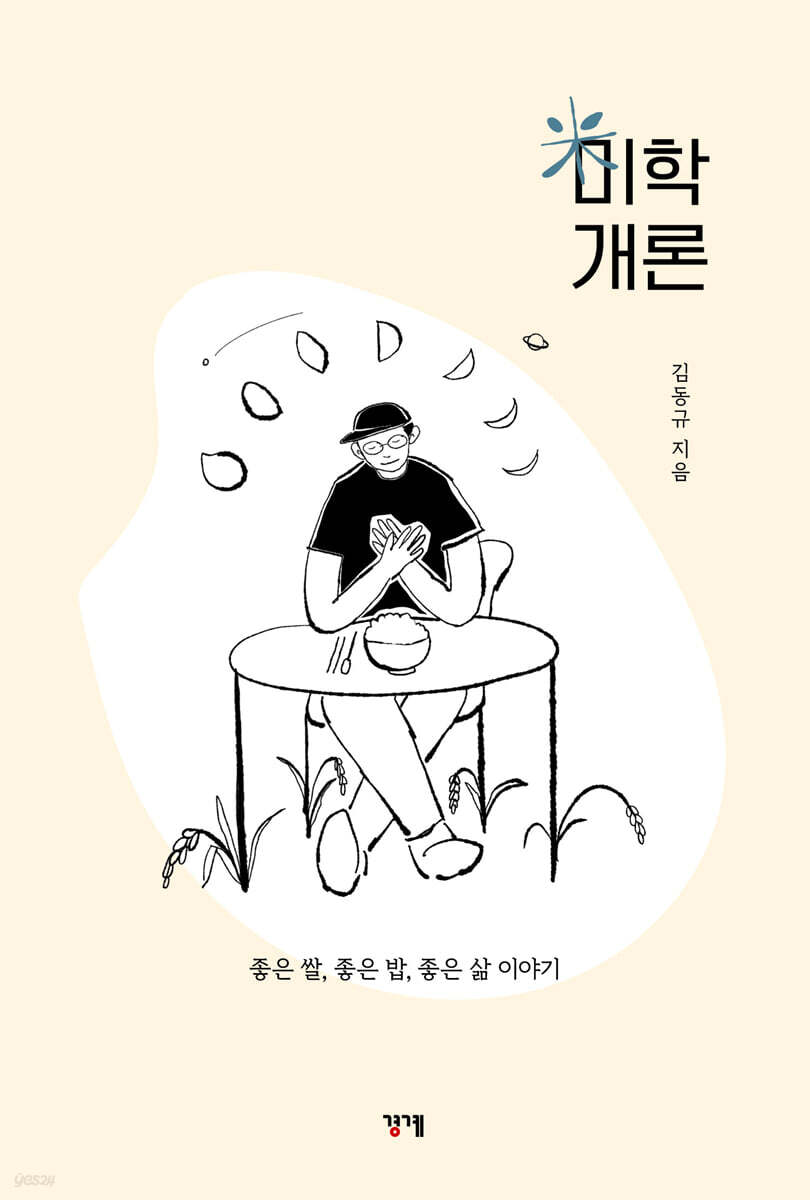
『Introduction to Aesthetics - Good Rice, Good Meal, Good Life Story』 is a warm record of rice, meals, and our daily lives, delivered by Kim Dong-gyu, Korea's first rice curator and the head of [Dongne Rice Mill].
The author has personally experienced the world of rice and the taste of rice while traveling across Asia, including Korea, Japan, Taiwan, Thailand, Laos, and Nepal.
We also deliver the message that 'good rice makes good rice, and good rice ultimately changes our lives' together with rural farmers, artisans at restaurants, and people who are creating a new rice culture.
The book is broadly divided into five parts.
Part 1 explores the names and varieties of rice and the secrets that determine its taste, while Part 2 traces the transformation of rice into alcohol, rice cakes, bread, and noodles.
Parts 3 and 4 explore the rice landscape and food culture of Korea and other parts of Asia, while Part 5 discusses the future of rice, covering issues such as soaring rice prices, the climate crisis, and food sovereignty.
This book explores the cultural, historical, and social significance of rice beyond its mere existence as a grain.
And it reminds us that the bowl of rice we eat every day is the most fundamental aesthetic that makes a good life possible.
『Introduction to Aesthetics - Good Rice, Good Meal, Good Life Story』 is a warm record of rice, meals, and our daily lives, delivered by Kim Dong-gyu, Korea's first rice curator and the head of [Dongne Rice Mill].
The author has personally experienced the world of rice and the taste of rice while traveling across Asia, including Korea, Japan, Taiwan, Thailand, Laos, and Nepal.
We also deliver the message that 'good rice makes good rice, and good rice ultimately changes our lives' together with rural farmers, artisans at restaurants, and people who are creating a new rice culture.
The book is broadly divided into five parts.
Part 1 explores the names and varieties of rice and the secrets that determine its taste, while Part 2 traces the transformation of rice into alcohol, rice cakes, bread, and noodles.
Parts 3 and 4 explore the rice landscape and food culture of Korea and other parts of Asia, while Part 5 discusses the future of rice, covering issues such as soaring rice prices, the climate crisis, and food sovereignty.
This book explores the cultural, historical, and social significance of rice beyond its mere existence as a grain.
And it reminds us that the bowl of rice we eat every day is the most fundamental aesthetic that makes a good life possible.
- You can preview some of the book's contents.
Preview
index
Recommended article_ Park Sang-hyun (food columnist) · 5
Prologue: Rice, My First Aesthetic · 10
Part 1: Asking about the world called rice
Japan has rice sommeliers · 24
Native Rice: Calling for a Lost Name · 31
Rice, What's Your Name? · 39
The Little Secret That Changes the Taste of Rice · 48
A Bowl of Rice, a Day's Face · 56
Is it possible to diet with rice?! · 63
I am a small farmer · 70
Part 2: Rice, the Aesthetics of Transformation
Good rice makes good wine · 78
Rice Cakes that Bring Back Memories of Rice · 85
Rice Bread, Baking Time · 92
A New Path for Rice, Leading to Noodles · 100
Part 3: Rice Landscapes, Walking Through Korea
A Spoonful of Evaluation, Running Across the Nation · 110
Walking Along the Rice · 121
Choosing Rice: Rice Shops with Taste · 132
A Landscape with Rice Fields, a Place with Rice · 141
When Rice Becomes Art · 154
Part 4: Rice Landscapes, Walking Through Asia
The quality of rice changes lives.
: Akomeya and Suzunobu Rice Shop (Japan) · 164
A restaurant run by a rice cooker company and a restaurant that has been in business for eight generations
: Hachidaime Kihei and Zojirushi Kitchen (Japan) · 173
Niigata, the city where rice falls
: Memories of a Snowy Country and a Feast of Sake (Japan) · 180
Visiting Tsuxiang, Taiwan's Rice Village
: Three Layers of History and the Road Connected by Rice (Taiwan) · 189
The perfect day of my life
Little Forest in Chiang Mai, Grandma's Home Cooking School (Thailand) · 200
I planted rice in Luang Prabang
: A Row of Rice Fields, a Memories of a Stalk of Rice at Living Farm (Laos) · 209
Rice and Dal Bhat, found on a Himalayan trek
: A Bowl of Rice and a Mountain (Nepal) · 217
Rice becomes a festival
: Tradition, Myth, and the Stage of Community · 226
Part 5: The Future of Rice: The Tomorrow We Will Build
Japan's Soaring Rice Prices and the Future of Rice · 238
Rice and People · 245
Rice and Lifestyle: The Path to Change · 252
Epilogue: The Future of Rice · 262
Prologue: Rice, My First Aesthetic · 10
Part 1: Asking about the world called rice
Japan has rice sommeliers · 24
Native Rice: Calling for a Lost Name · 31
Rice, What's Your Name? · 39
The Little Secret That Changes the Taste of Rice · 48
A Bowl of Rice, a Day's Face · 56
Is it possible to diet with rice?! · 63
I am a small farmer · 70
Part 2: Rice, the Aesthetics of Transformation
Good rice makes good wine · 78
Rice Cakes that Bring Back Memories of Rice · 85
Rice Bread, Baking Time · 92
A New Path for Rice, Leading to Noodles · 100
Part 3: Rice Landscapes, Walking Through Korea
A Spoonful of Evaluation, Running Across the Nation · 110
Walking Along the Rice · 121
Choosing Rice: Rice Shops with Taste · 132
A Landscape with Rice Fields, a Place with Rice · 141
When Rice Becomes Art · 154
Part 4: Rice Landscapes, Walking Through Asia
The quality of rice changes lives.
: Akomeya and Suzunobu Rice Shop (Japan) · 164
A restaurant run by a rice cooker company and a restaurant that has been in business for eight generations
: Hachidaime Kihei and Zojirushi Kitchen (Japan) · 173
Niigata, the city where rice falls
: Memories of a Snowy Country and a Feast of Sake (Japan) · 180
Visiting Tsuxiang, Taiwan's Rice Village
: Three Layers of History and the Road Connected by Rice (Taiwan) · 189
The perfect day of my life
Little Forest in Chiang Mai, Grandma's Home Cooking School (Thailand) · 200
I planted rice in Luang Prabang
: A Row of Rice Fields, a Memories of a Stalk of Rice at Living Farm (Laos) · 209
Rice and Dal Bhat, found on a Himalayan trek
: A Bowl of Rice and a Mountain (Nepal) · 217
Rice becomes a festival
: Tradition, Myth, and the Stage of Community · 226
Part 5: The Future of Rice: The Tomorrow We Will Build
Japan's Soaring Rice Prices and the Future of Rice · 238
Rice and People · 245
Rice and Lifestyle: The Path to Change · 252
Epilogue: The Future of Rice · 262
Into the book
To me, rice is not just a grain.
Rice is fragrance, color, story, and philosophy.
It is a crystal created by the sweat of farmers, wind, soil, water, seasonal time, and human hands.
--- p.10 From the "Prologue"
I believe that good rice makes good rice, good alcohol, good rice cakes, and good bread.
Furthermore, I believe that rice can become more than just a food ingredient; it can also become a work of art.
Rice is agriculture and culture, a meal and the aesthetics of life.
This book is about that very rice.
It is called ‘Introduction to Rice Studies’.
It is literally an aesthetic exploration of delicious rice, delicious meals, and good alcohol.
--- p.21 From the "Prologue"
I study rice today too.
Every morning, I cook rice, chew it, and try to remember the taste of the rice.
Because what I'm looking for is, in the end, a bowl of rice that moves people's hearts.
--- p.30 From “Part 1”
Native rice and rice are not just a legacy of the past.
It is a milestone on the path we must walk forward.
It is a seed that contains diversity, ecology, sustainability, and our own unique taste and culture.
So, the fields where native rice grows are not golden fields, but rainbow fields.
--- p.38 From “Part 1”
A bowl of rice made from thousands of grains is no longer just a means to fill the stomach.
It is about savoring the time, technology, warmth of the fingertips, and everyday sensations contained within it.
Rice, carefully washed, soaked, and cooked, is silent in itself, but speaks volumes.
If the bowl of rice we encounter every day is such a deep and delicate world, we can take a moment to slowly and gratefully lift our spoons before it.
A delicious meal is the face of a well-cooked day.
--- p.62 From "Part 1"
In the past, rice cakes were a precious food that could only be eaten on special days.
Birthdays, first birthday parties, holidays, weddings, ancestral rites… rice cakes have been with us at every turning point in our lives.
Even in the fairy tale line, “If you give me a rice cake, I won’t eat it,” rice cake was a delicacy, a reward, and a temptation.
I shared it because it was precious, and it was more meaningful because I shared it.
But now we live in an age where we can eat rice cakes every day if we want.
--- p.89 From “Part 2”
Rice remains with us in these various ways.
From rice to rice cake, from rice cake to bread.
And there are always people and land in it.
Perhaps we are not eating rice, but rather swallowing the time that has passed with the rice.
When a piece of bread made from rice slowly spreads in your mouth, it tastes like the present, but also like a story from long ago.
Today's bread baked from ancient rice seeds.
The moment we eat that bread, we are chewing time.
--- p.99 From “Part 2”
There is a saying, “Meat soup with rice.”
If well-cooked rice was served with meat soup, it meant that the household was well-off.
In those days, when food was an indicator of the quality of life, the taste of food was the quality of the household, and the dining table was a philosophy.
Even today, there are restaurants that silently continue that philosophy.
Although not fancy, these are spaces where people select rice and cook it in their own way.
--- p.121 From “Part 3”
Choosing rice may not be just about enjoying the taste of good rice.
When we choose rice, we choose someone's farm, a local variety, and our own life.
When you want to be a little more sensitive to the rhythm of the day and the sense of the seasons, one good rice shop can surprisingly change a lot.
--- p.140 From “Part 3”
At the time, I was in my mid-40s and had decided to set a milestone in my life as 'rice', and I was making preparations to open a [neighborhood rice mill].
But when I actually tried to do it, I felt so lost.
Because no matter where I looked around, there were no examples for me to follow.
As I was wrapping my head around that alone, someone casually remarked.
“Then, try going to Akomeya.”
--- p.164 From “Part 4”
Good rice makes good rice, and good alcohol.
Niigata does not view rice as just a staple food.
Here, rice became a way of life and a language of community.
This city made me rethink the essence of rice-loving travel.
And it became a global place that I wanted to return to.
--- p.187 From “Part 4”
Taiwan's Tsuxiang Village and Green in Hand demonstrate how rice can become a medium for life, encompassing art, agriculture, design, community, and human senses and memories.
In Taiwan, rice is a silent bridge that connects society.
It is a link connecting people to people, land to memory, tradition to present.
--- p.199 From “Part 4”
A Christmas tree made of straw, a small figurine of a watermill turning… These seemingly insignificant details strangely linger in the memory for a long time.
This is what they mean by 'the power of small things'.
That day in Chiang Mai was a gift to me.
People laughed often, time passed slowly, and the smell of food lingered for a long time.
--- p.204 From “Part 4”
Anyone who has walked the Himalayas will know.
The food there is more than just one meal.
It is the force that sustains the community, the ritual that helps us endure the hard days, and the slender bridge that connects the great mountains and the small humans.
Dalbat encapsulates it all.
I too was able to complete the course thanks to that strength, and I still live each day with that memory.
--- p.224 From “Part 4”
Earlier in this book, I talked about rice varieties, flavors, cooking methods, and how to consume rice according to each person's taste and lifestyle.
But what I want to emphasize here again is that rice is not just an object of taste.
Rice is an ecological issue, a social issue, and ultimately a political issue.
The future of rice is ultimately linked to the future of the Republic of Korea.
--- p.242 From “Part 5”
We must ask and ponder why the price of a meal is the same at all restaurants: 1,000 won.
There should be a 1,500 won meal and a 3,000 won meal.
We need to provide consumers with a variety of options so they can eat white rice, brown rice, and mixed grain rice.
The stainless steel rice cookers and hot-plates that were created during the Park Chung-hee regime and have kept us away from freshly cooked rice must also disappear.
This way, the chances of eating 'delicious food' at a restaurant will increase.
--- p.257 From “Part 5”
We take rice for granted, like air.
A being hidden in familiarity.
But rice is ultimately about people and people's lives.
Living rice, constantly changing rice.
When we add imagination to rice, life becomes more colorful and rich.
I imagine art from a bowl of rice, and reimagine society from a single grain of rice.
Rice is fragrance, color, story, and philosophy.
It is a crystal created by the sweat of farmers, wind, soil, water, seasonal time, and human hands.
--- p.10 From the "Prologue"
I believe that good rice makes good rice, good alcohol, good rice cakes, and good bread.
Furthermore, I believe that rice can become more than just a food ingredient; it can also become a work of art.
Rice is agriculture and culture, a meal and the aesthetics of life.
This book is about that very rice.
It is called ‘Introduction to Rice Studies’.
It is literally an aesthetic exploration of delicious rice, delicious meals, and good alcohol.
--- p.21 From the "Prologue"
I study rice today too.
Every morning, I cook rice, chew it, and try to remember the taste of the rice.
Because what I'm looking for is, in the end, a bowl of rice that moves people's hearts.
--- p.30 From “Part 1”
Native rice and rice are not just a legacy of the past.
It is a milestone on the path we must walk forward.
It is a seed that contains diversity, ecology, sustainability, and our own unique taste and culture.
So, the fields where native rice grows are not golden fields, but rainbow fields.
--- p.38 From “Part 1”
A bowl of rice made from thousands of grains is no longer just a means to fill the stomach.
It is about savoring the time, technology, warmth of the fingertips, and everyday sensations contained within it.
Rice, carefully washed, soaked, and cooked, is silent in itself, but speaks volumes.
If the bowl of rice we encounter every day is such a deep and delicate world, we can take a moment to slowly and gratefully lift our spoons before it.
A delicious meal is the face of a well-cooked day.
--- p.62 From "Part 1"
In the past, rice cakes were a precious food that could only be eaten on special days.
Birthdays, first birthday parties, holidays, weddings, ancestral rites… rice cakes have been with us at every turning point in our lives.
Even in the fairy tale line, “If you give me a rice cake, I won’t eat it,” rice cake was a delicacy, a reward, and a temptation.
I shared it because it was precious, and it was more meaningful because I shared it.
But now we live in an age where we can eat rice cakes every day if we want.
--- p.89 From “Part 2”
Rice remains with us in these various ways.
From rice to rice cake, from rice cake to bread.
And there are always people and land in it.
Perhaps we are not eating rice, but rather swallowing the time that has passed with the rice.
When a piece of bread made from rice slowly spreads in your mouth, it tastes like the present, but also like a story from long ago.
Today's bread baked from ancient rice seeds.
The moment we eat that bread, we are chewing time.
--- p.99 From “Part 2”
There is a saying, “Meat soup with rice.”
If well-cooked rice was served with meat soup, it meant that the household was well-off.
In those days, when food was an indicator of the quality of life, the taste of food was the quality of the household, and the dining table was a philosophy.
Even today, there are restaurants that silently continue that philosophy.
Although not fancy, these are spaces where people select rice and cook it in their own way.
--- p.121 From “Part 3”
Choosing rice may not be just about enjoying the taste of good rice.
When we choose rice, we choose someone's farm, a local variety, and our own life.
When you want to be a little more sensitive to the rhythm of the day and the sense of the seasons, one good rice shop can surprisingly change a lot.
--- p.140 From “Part 3”
At the time, I was in my mid-40s and had decided to set a milestone in my life as 'rice', and I was making preparations to open a [neighborhood rice mill].
But when I actually tried to do it, I felt so lost.
Because no matter where I looked around, there were no examples for me to follow.
As I was wrapping my head around that alone, someone casually remarked.
“Then, try going to Akomeya.”
--- p.164 From “Part 4”
Good rice makes good rice, and good alcohol.
Niigata does not view rice as just a staple food.
Here, rice became a way of life and a language of community.
This city made me rethink the essence of rice-loving travel.
And it became a global place that I wanted to return to.
--- p.187 From “Part 4”
Taiwan's Tsuxiang Village and Green in Hand demonstrate how rice can become a medium for life, encompassing art, agriculture, design, community, and human senses and memories.
In Taiwan, rice is a silent bridge that connects society.
It is a link connecting people to people, land to memory, tradition to present.
--- p.199 From “Part 4”
A Christmas tree made of straw, a small figurine of a watermill turning… These seemingly insignificant details strangely linger in the memory for a long time.
This is what they mean by 'the power of small things'.
That day in Chiang Mai was a gift to me.
People laughed often, time passed slowly, and the smell of food lingered for a long time.
--- p.204 From “Part 4”
Anyone who has walked the Himalayas will know.
The food there is more than just one meal.
It is the force that sustains the community, the ritual that helps us endure the hard days, and the slender bridge that connects the great mountains and the small humans.
Dalbat encapsulates it all.
I too was able to complete the course thanks to that strength, and I still live each day with that memory.
--- p.224 From “Part 4”
Earlier in this book, I talked about rice varieties, flavors, cooking methods, and how to consume rice according to each person's taste and lifestyle.
But what I want to emphasize here again is that rice is not just an object of taste.
Rice is an ecological issue, a social issue, and ultimately a political issue.
The future of rice is ultimately linked to the future of the Republic of Korea.
--- p.242 From “Part 5”
We must ask and ponder why the price of a meal is the same at all restaurants: 1,000 won.
There should be a 1,500 won meal and a 3,000 won meal.
We need to provide consumers with a variety of options so they can eat white rice, brown rice, and mixed grain rice.
The stainless steel rice cookers and hot-plates that were created during the Park Chung-hee regime and have kept us away from freshly cooked rice must also disappear.
This way, the chances of eating 'delicious food' at a restaurant will increase.
--- p.257 From “Part 5”
We take rice for granted, like air.
A being hidden in familiarity.
But rice is ultimately about people and people's lives.
Living rice, constantly changing rice.
When we add imagination to rice, life becomes more colorful and rich.
I imagine art from a bowl of rice, and reimagine society from a single grain of rice.
--- p.264 From "Epilogue"
Publisher's Review
Rediscovering the aesthetics of life in a bowl of rice
“To me, rice is not just a grain.
“Rice is fragrance, color, story, and philosophy.” (p.10)
This sentence is the key that opens the door to the world that 『Introduction to Aesthetics - Good Rice, Good Meal, Good Life Story』 unfolds.
The author views rice not as a simple food ingredient, but as a condensed entity of humanity, nature, technology, art, community, and time.
A bowl of rice contains the labor of the farmer, the breath of the season, the touch of the chefs at the restaurant, and the warmth of the people sitting around the table.
This book looks at these everyday scenes with affectionate eyes and asks about the 'philosophy of eating' that we have not yet considered.
Asking the Name of Rice, Creating the Taste of Life
Part 1, 'Asking About the World of Rice' explores the secrets of rice flavor through the names and varieties of rice and the stories of native rice varieties.
The world of Korean native rice varieties such as Noindadagi, Hwado, Wild Boar Chal, and Black Sesame Rice is a record of their vitality, adapting to climate and local conditions, and supports the author's belief that "the more you know about rice, the deeper your life becomes."
In Part 2, ‘Rice, the Aesthetics of Transformation,’ we encounter the new face of rice, expanded into alcohol, rice cakes, bread, and noodles.
The process of making good rice into good alcohol, rice cakes, and bread ultimately shows the moment when a single grain becomes an art that gives birth to culture.
A Journey Through Asia's Rice Landscape
In Part 3, “Rice Landscape, Walking through Korea,” and Part 4, “Rice Landscape, Walking through Asia,” the world of rice we looked at earlier expands into stories from the field.
Here, the author visits restaurants, rice shops, and fields across the country to record the regional flavors of rice and the stories of its people, and follows the landscapes of Asia created by rice, from Japan's Akomeya and Niigata, Taiwan's Tsuxiang, Thailand's Chiang Mai, Laos' Luang Prabang, and Nepal's Dal Bhat table.
In his journey, he shows that rice is more than just a grain; it is a medium that connects people and supports local life and culture.
From the moment a grain of rice begins at the farmer's fingertips, through the sound of the rice mill, and ends up on the table, every process is imbued with stories of relationships, time, and community.
For them, rice is not just a means of survival, but also a memory and aesthetic that connects generations.
In the sparkle of the discussion, the swaying of the rice stalks, the scent of freshly milled rice, and the sensation of a warm spoonful of rice, the author discovers that 'good rice' ultimately comes from 'good relationships.'
The Philosophy of Relationships and Community Through Rice
Part 5, “The Future of Rice, the Tomorrow We Will Build,” reminds us that even amidst the climate crisis, food insecurity, and the collapse of local agriculture, rice remains central to our daily lives and communities.
The author presents rice not simply as an object of taste, but as an ecological and social issue, saying, “The future of rice is the future of local communities.”
From solar farming, where sunlight and rice meet, to the possibility of a sustainable local economy – rice is the starting point for exploring new ways of life and ethics.
For the author, rice is not a product of technology, but a work of the heart, and that heart lives in the smell of cooking rice and the warmth of eating together.
He contemplates human senses, labor, and relationships through rice, and shows that the values of the times and the ethics of the community are embedded in our attitude toward a bowl of rice.
The philosophy of rice that creates a good life
『Introduction to Aesthetics』 explores the relationship between humans, nature, and community through the grain called rice.
This is the aesthetics of a cycle that leads to “good rice, good meal, good life.”
Cooking is the act of creating life, and the dining table is a place where people come to understand each other again.
This book, which explores human senses, labor, and relationships through rice, ultimately allows us to relive the warmth of life that we had forgotten.
“To me, rice is not just a grain.
“Rice is fragrance, color, story, and philosophy.” (p.10)
This sentence is the key that opens the door to the world that 『Introduction to Aesthetics - Good Rice, Good Meal, Good Life Story』 unfolds.
The author views rice not as a simple food ingredient, but as a condensed entity of humanity, nature, technology, art, community, and time.
A bowl of rice contains the labor of the farmer, the breath of the season, the touch of the chefs at the restaurant, and the warmth of the people sitting around the table.
This book looks at these everyday scenes with affectionate eyes and asks about the 'philosophy of eating' that we have not yet considered.
Asking the Name of Rice, Creating the Taste of Life
Part 1, 'Asking About the World of Rice' explores the secrets of rice flavor through the names and varieties of rice and the stories of native rice varieties.
The world of Korean native rice varieties such as Noindadagi, Hwado, Wild Boar Chal, and Black Sesame Rice is a record of their vitality, adapting to climate and local conditions, and supports the author's belief that "the more you know about rice, the deeper your life becomes."
In Part 2, ‘Rice, the Aesthetics of Transformation,’ we encounter the new face of rice, expanded into alcohol, rice cakes, bread, and noodles.
The process of making good rice into good alcohol, rice cakes, and bread ultimately shows the moment when a single grain becomes an art that gives birth to culture.
A Journey Through Asia's Rice Landscape
In Part 3, “Rice Landscape, Walking through Korea,” and Part 4, “Rice Landscape, Walking through Asia,” the world of rice we looked at earlier expands into stories from the field.
Here, the author visits restaurants, rice shops, and fields across the country to record the regional flavors of rice and the stories of its people, and follows the landscapes of Asia created by rice, from Japan's Akomeya and Niigata, Taiwan's Tsuxiang, Thailand's Chiang Mai, Laos' Luang Prabang, and Nepal's Dal Bhat table.
In his journey, he shows that rice is more than just a grain; it is a medium that connects people and supports local life and culture.
From the moment a grain of rice begins at the farmer's fingertips, through the sound of the rice mill, and ends up on the table, every process is imbued with stories of relationships, time, and community.
For them, rice is not just a means of survival, but also a memory and aesthetic that connects generations.
In the sparkle of the discussion, the swaying of the rice stalks, the scent of freshly milled rice, and the sensation of a warm spoonful of rice, the author discovers that 'good rice' ultimately comes from 'good relationships.'
The Philosophy of Relationships and Community Through Rice
Part 5, “The Future of Rice, the Tomorrow We Will Build,” reminds us that even amidst the climate crisis, food insecurity, and the collapse of local agriculture, rice remains central to our daily lives and communities.
The author presents rice not simply as an object of taste, but as an ecological and social issue, saying, “The future of rice is the future of local communities.”
From solar farming, where sunlight and rice meet, to the possibility of a sustainable local economy – rice is the starting point for exploring new ways of life and ethics.
For the author, rice is not a product of technology, but a work of the heart, and that heart lives in the smell of cooking rice and the warmth of eating together.
He contemplates human senses, labor, and relationships through rice, and shows that the values of the times and the ethics of the community are embedded in our attitude toward a bowl of rice.
The philosophy of rice that creates a good life
『Introduction to Aesthetics』 explores the relationship between humans, nature, and community through the grain called rice.
This is the aesthetics of a cycle that leads to “good rice, good meal, good life.”
Cooking is the act of creating life, and the dining table is a place where people come to understand each other again.
This book, which explores human senses, labor, and relationships through rice, ultimately allows us to relive the warmth of life that we had forgotten.
GOODS SPECIFICS
- Date of issue: October 15, 2025
- Page count, weight, size: 272 pages | 127*188*20mm
- ISBN13: 9791197200250
- ISBN10: 1197200258
You may also like
카테고리
korean


korean

![GQ KOREA Mark (Monthly): December [2025]](http://librairie.coreenne.fr/cdn/shop/files/8ef265dbbfbf186523ed75ba7319009d.jpg?v=1765340328&width=3840)


