

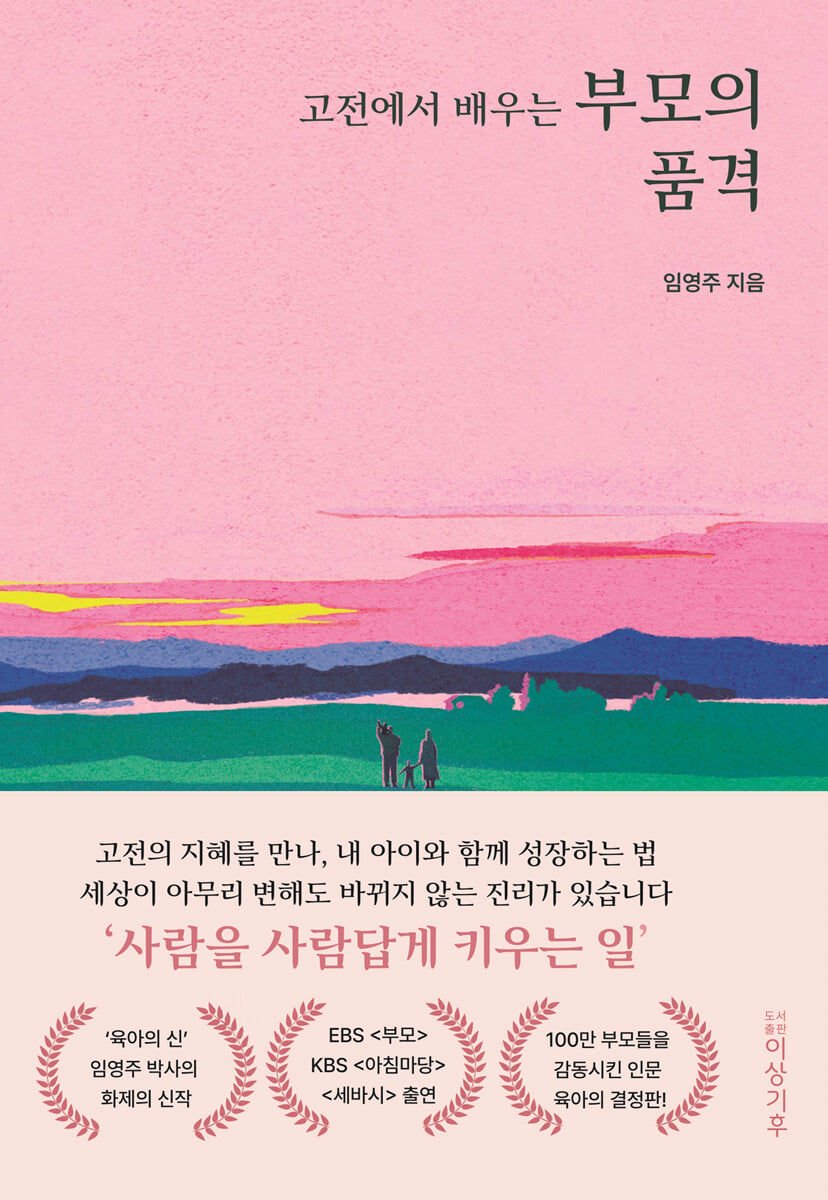
Parental qualities learned from the classics
 |
Description
Book Introduction
Discover the wisdom of the classics and learn how to grow with your child!
No matter how much the world changes, there is one truth that remains constant: "Raising people to be human."
"Learning Parenting Dignity from Classics" is a special practical book written by Professor Lim Young-joo, who has been active in the field of parenting education for nearly 30 years, reinterpreting the wisdom of Eastern classics to fit modern parenting.
The author has personally experienced through numerous consultations and lectures that "parents' words and attitudes determine their children's lives," and has unraveled the essence of this by combining it with the "humanistic insights of the classics."
The book contains insights on ‘human relationships’ as conveyed by the saint.
For example, 'Icheongdeuksim (以聽得心)' emphasizes that "listening attentively" is the way to win the other person's heart, and 'Yeokjisaji (易地思之)' teaches that if you look at the situation from the child's perspective, you will nag less and the conversation will continue smoothly.
In addition, idioms such as 'the future is more difficult to live in' and 'difficult to obtain' are easily explained to fit the child-rearing situation, so readers can read and apply them fluently as if a child-rearing coach were giving advice right next to them.
Above all, this book is not simply a list of classic phrases, but is presented with colorful examples from real-life households.
It's full of vivid examples of the awkward moments parents often face when their child throws a tantrum or gets angry, or situations where they believe they were punishing their child for what they believe was "teaching" but in fact ended up deeply hurting them.
Readers will nod their heads and say, "I made that mistake too," and even find actionable guidelines they can immediately implement.
Additionally, each chapter features a corner where parents can write and take notes, highlighting the structure that naturally connects reading and practice.
If you ponder over a classic passage a day and write down your own parenting resolutions in a notebook, you will gradually notice changes in your speech, attitude, and emotional control.
"Parental Dignity: Learning from the Classics," which backs up the proposition that "when parents change, children change" with classics, psychology, and field experience, will serve as a warm and practical guide for parents weary of parenting today.
Rather than blaming yourself for getting angry even when you try not to, I recommend that you practice the wisdom gleaned from the classics a little every day and grow together with your child.
Ultimately, those small but meaningful changes will become wonderful seeds that will transform not only the child's heart but also the atmosphere of the home.
No matter how much the world changes, there is one truth that remains constant: "Raising people to be human."
"Learning Parenting Dignity from Classics" is a special practical book written by Professor Lim Young-joo, who has been active in the field of parenting education for nearly 30 years, reinterpreting the wisdom of Eastern classics to fit modern parenting.
The author has personally experienced through numerous consultations and lectures that "parents' words and attitudes determine their children's lives," and has unraveled the essence of this by combining it with the "humanistic insights of the classics."
The book contains insights on ‘human relationships’ as conveyed by the saint.
For example, 'Icheongdeuksim (以聽得心)' emphasizes that "listening attentively" is the way to win the other person's heart, and 'Yeokjisaji (易地思之)' teaches that if you look at the situation from the child's perspective, you will nag less and the conversation will continue smoothly.
In addition, idioms such as 'the future is more difficult to live in' and 'difficult to obtain' are easily explained to fit the child-rearing situation, so readers can read and apply them fluently as if a child-rearing coach were giving advice right next to them.
Above all, this book is not simply a list of classic phrases, but is presented with colorful examples from real-life households.
It's full of vivid examples of the awkward moments parents often face when their child throws a tantrum or gets angry, or situations where they believe they were punishing their child for what they believe was "teaching" but in fact ended up deeply hurting them.
Readers will nod their heads and say, "I made that mistake too," and even find actionable guidelines they can immediately implement.
Additionally, each chapter features a corner where parents can write and take notes, highlighting the structure that naturally connects reading and practice.
If you ponder over a classic passage a day and write down your own parenting resolutions in a notebook, you will gradually notice changes in your speech, attitude, and emotional control.
"Parental Dignity: Learning from the Classics," which backs up the proposition that "when parents change, children change" with classics, psychology, and field experience, will serve as a warm and practical guide for parents weary of parenting today.
Rather than blaming yourself for getting angry even when you try not to, I recommend that you practice the wisdom gleaned from the classics a little every day and grow together with your child.
Ultimately, those small but meaningful changes will become wonderful seeds that will transform not only the child's heart but also the atmosphere of the home.
index
Growing into a dignified parent through classics
How to use this book
Part 1.
The Wisdom of Open-Minded Communication
Chapter 1 | Listening Carefully Wins Hearts
Chapter 2 | Thinking from a Child's Perspective
Chapter 3 | The Art of Conversation
Chapter 4 | Sometimes, Indifference Is Wise
Chapter 5 | We Need Pause and Lightness
Chapter 6 | The Communication Attitude Parents Should Instill
Chapter 7 | A Transformation of the Heart that Embraces a Child
Chapter 8 | Look at the Moon, Not the Finger
Part 2.
Discipline with dignity, wise emotional control
Chapter 9 | Fence Training
Chapter 10 | Empathetic Discipline: Understanding Child Development
Chapter 11 | Don't Treat Others Rudely
Chapter 12 | Be Careful with Your Words
Chapter 13 | If You Lose Your Reason, You Lose Everything
Chapter 14 | The easier it is to discipline, the more likely it is to lose a child's heart.
Chapter 15 | Parenting that revitalizes energy vs. parenting that kills energy
Chapter 16 | Parental Emotions Are Dangerous
Part 3.
Parental Awareness and Practice: I Change First
Chapter 17 | Never Let Go of Education
Chapter 18 | If Parents Do Everything, There's No Space for Children to Grow
Chapter 19 | Adversity and Deprivation Become Competitive Advantage
Chapter 20 | The Power of "Looking Back at Myself"
Chapter 21 | When Looking at a Child, Look at the "Facts," Not the "Prejudices"
Chapter 22 | Pretend Not to See, Pretend Not to Hear, Pretend Not to Know
Chapter 23 | My Child, My Way?
Chapter 24 | Parents Make Mistakes Too
Part 4.
Parents and children growing together
Chapter 25 | Parenting Attitudes: Respectful and Relaxed Parenting
Chapter 26 | How to Enjoy Parenting
Chapter 27 | Small Habits Become Life
Chapter 28 | Are you enjoying the present with your child?
Chapter 29 | The Impact of Parental Relationships on Children
Chapter 30 | A Child's Future Shaped by Parental Character
“Growing together”
How to use this book
Part 1.
The Wisdom of Open-Minded Communication
Chapter 1 | Listening Carefully Wins Hearts
Chapter 2 | Thinking from a Child's Perspective
Chapter 3 | The Art of Conversation
Chapter 4 | Sometimes, Indifference Is Wise
Chapter 5 | We Need Pause and Lightness
Chapter 6 | The Communication Attitude Parents Should Instill
Chapter 7 | A Transformation of the Heart that Embraces a Child
Chapter 8 | Look at the Moon, Not the Finger
Part 2.
Discipline with dignity, wise emotional control
Chapter 9 | Fence Training
Chapter 10 | Empathetic Discipline: Understanding Child Development
Chapter 11 | Don't Treat Others Rudely
Chapter 12 | Be Careful with Your Words
Chapter 13 | If You Lose Your Reason, You Lose Everything
Chapter 14 | The easier it is to discipline, the more likely it is to lose a child's heart.
Chapter 15 | Parenting that revitalizes energy vs. parenting that kills energy
Chapter 16 | Parental Emotions Are Dangerous
Part 3.
Parental Awareness and Practice: I Change First
Chapter 17 | Never Let Go of Education
Chapter 18 | If Parents Do Everything, There's No Space for Children to Grow
Chapter 19 | Adversity and Deprivation Become Competitive Advantage
Chapter 20 | The Power of "Looking Back at Myself"
Chapter 21 | When Looking at a Child, Look at the "Facts," Not the "Prejudices"
Chapter 22 | Pretend Not to See, Pretend Not to Hear, Pretend Not to Know
Chapter 23 | My Child, My Way?
Chapter 24 | Parents Make Mistakes Too
Part 4.
Parents and children growing together
Chapter 25 | Parenting Attitudes: Respectful and Relaxed Parenting
Chapter 26 | How to Enjoy Parenting
Chapter 27 | Small Habits Become Life
Chapter 28 | Are you enjoying the present with your child?
Chapter 29 | The Impact of Parental Relationships on Children
Chapter 30 | A Child's Future Shaped by Parental Character
“Growing together”
Detailed image

GOODS SPECIFICS
- Date of issue: May 27, 2025
- Format: Hardcover book binding method guide
- Page count, weight, size: 240 pages | 424g | 135*190*20mm
- ISBN13: 9791199166806
- ISBN10: 1199166804
You may also like
카테고리
korean


korean

![GQ KOREA Mark (Monthly): December [2025]](http://librairie.coreenne.fr/cdn/shop/files/8ef265dbbfbf186523ed75ba7319009d.jpg?v=1765340328&width=3840)


