

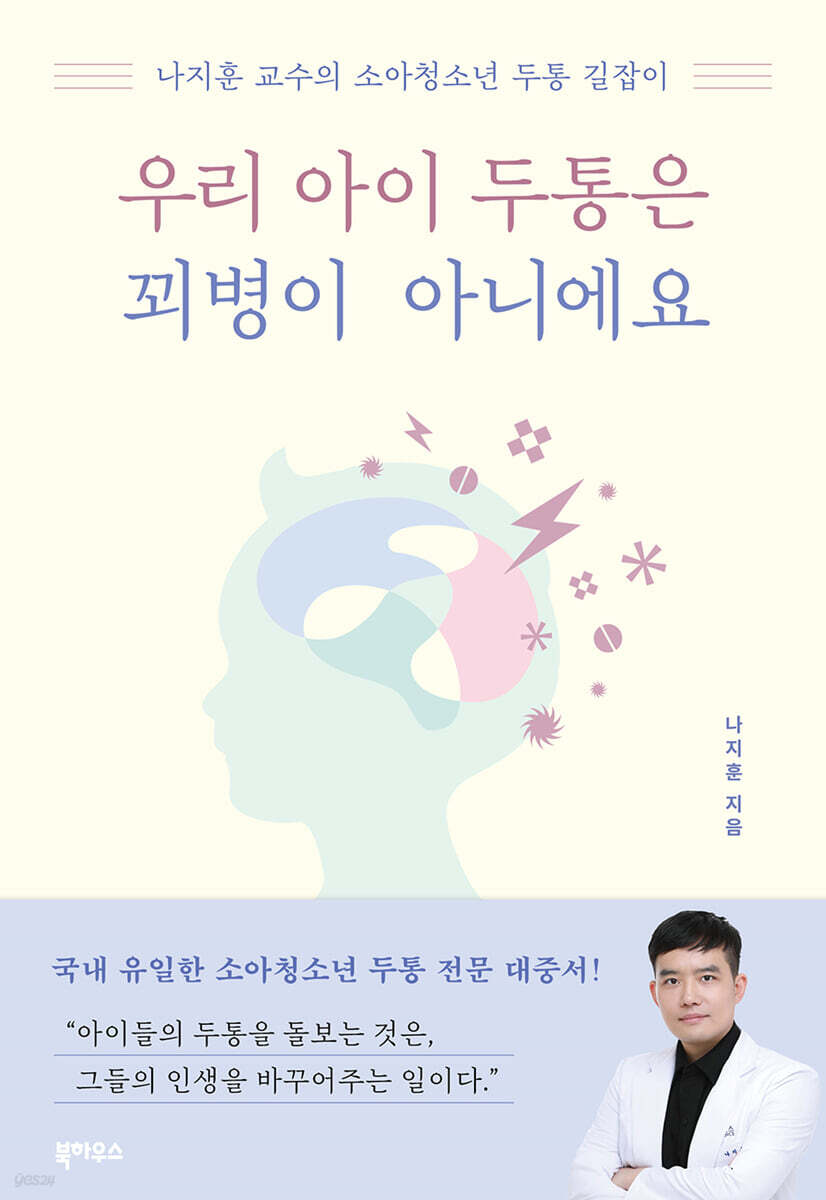
My child's headache is not a malingering illness.
 |
Description
Book Introduction
The Pediatric and Adolescent Headache Bible Explained by Pediatrician Dr. Na Ji-hoon
Headache is a lonely disease with no noticeable symptoms and no way to objectively evaluate the pain.
Headaches, especially in children and adolescents, are often dismissed as malingering to avoid studying.
However, headaches in children and adolescents are a serious condition that hinders the stable development of children, interferes with their studies, and even has a negative impact on their future lives.
This book is written by Dr. Na Ji-hoon, a pediatrician and pediatric neurologist, and explains everything about pediatric and adolescent headaches in an easy-to-read format.
Dr. Na Ji-hoon systematically organizes the causes, types, symptoms, and treatments of headaches in children and adolescents to help overcome the fear of headaches and help children with headaches and their families live healthier and happier lives.
In addition to providing accurate medical information, it also provides crucial information and comfort to children suffering from headaches and their families through a warm perspective that is at the same level as the patient and their family.
Headache is a lonely disease with no noticeable symptoms and no way to objectively evaluate the pain.
Headaches, especially in children and adolescents, are often dismissed as malingering to avoid studying.
However, headaches in children and adolescents are a serious condition that hinders the stable development of children, interferes with their studies, and even has a negative impact on their future lives.
This book is written by Dr. Na Ji-hoon, a pediatrician and pediatric neurologist, and explains everything about pediatric and adolescent headaches in an easy-to-read format.
Dr. Na Ji-hoon systematically organizes the causes, types, symptoms, and treatments of headaches in children and adolescents to help overcome the fear of headaches and help children with headaches and their families live healthier and happier lives.
In addition to providing accurate medical information, it also provides crucial information and comfort to children suffering from headaches and their families through a warm perspective that is at the same level as the patient and their family.
- You can preview some of the book's contents.
Preview
index
Recommendation 1: A Systematic and Practical Guide to Pediatric Headache
Lee Jun-su (Professor, Department of Pediatrics, Yonsei University College of Medicine)
Recommendation 2: A book that will change the lives of patients and their families who suffer from headaches.
Lee Young-mok (Professor, Department of Pediatrics, Yonsei University College of Medicine)
Prologue: “Taking care of children’s headaches can change their lives.”
Part 1 Headaches: Everyone Experiences Them, But Everyone's Affected Differently
01 How can my child's headache be ignored?
02 What are children's headaches?
03 History and Classification of Headaches
04 Treatment of these headaches and their association with other diseases
05 The Role of Parents of Children Complaining of Headaches
Part 2 Primary headaches of unknown etiology
01 Migraine in children and adolescents
02 Tension-type headache in children and adolescents
03 Cluster headache and other primary headaches
04 Management of psychological problems caused by primary headaches
05 Causes and Cases of Primary Headache in Children and Adolescents
Part 3: Secondary headaches with a clear cause
01 What is a secondary headache?
02 Headache due to iron deficiency anemia
03 Headache due to meningitis
04 Headache due to vascular disease
05 Headaches due to high blood pressure or cardiovascular problems
06 Headache due to epilepsy
07 Headaches caused by tumors, structural brain problems, or vascular diseases
08 Headache due to rhinitis or sinusitis
09 Headaches due to sleep apnea
10 Headaches caused by cigarettes and drugs
11 Headaches due to psychiatric disorders
Part 4: The Future of Headache Treatment in Children and Adolescents
01 Summary of Diagnosis and Treatment Approaches to Headache in Children and Adolescents
02 The Future and Development of Headache Treatment in Children and Adolescents
20 Frequently Asked Questions in the 5th Clinic
01 Are headaches in children hereditary?
02 How can I tell the difference between a headache and a malingering?
03 Should I go to the emergency room if I have a headache accompanied by vomiting?
04 When should my child's headache be severe enough to warrant a hospital checkup?
05 What is the difference between brain CT and brain MRI?
06 What can we learn from neurocognitive function tests and neurodevelopmental tests?
07 Are growth hormone therapy and precocious puberty treatment related to headaches?
08 Could chronic abdominal pain in a child with migraine be related to migraine?
09 If the cause of my headache is iron deficiency, how much iron supplementation should I take?
10 What are some dietary habits or supplements that can help treat headaches?
11 Are there any exercises that are particularly good for headaches?
12 Painkillers don't work. What should I do?
13 Is it really necessary to take preventive treatment for migraines?
14 Why are anticonvulsants, antidepressants, and heart medications used to prevent migraines?
15 What should be the goals of migraine prevention treatment?
16 If I get an anti-CGRP monoclonal antibody, can I stop taking my existing headache medication?
17 Can tension headaches become chronic like migraines?
18 What are the migraines that occur after COVID-19 infection?
19 Can chronic migraines be cured?
20 What should I do as a parent of a child with headaches?
Epilogue
References
A tribute to this book
Lee Jun-su (Professor, Department of Pediatrics, Yonsei University College of Medicine)
Recommendation 2: A book that will change the lives of patients and their families who suffer from headaches.
Lee Young-mok (Professor, Department of Pediatrics, Yonsei University College of Medicine)
Prologue: “Taking care of children’s headaches can change their lives.”
Part 1 Headaches: Everyone Experiences Them, But Everyone's Affected Differently
01 How can my child's headache be ignored?
02 What are children's headaches?
03 History and Classification of Headaches
04 Treatment of these headaches and their association with other diseases
05 The Role of Parents of Children Complaining of Headaches
Part 2 Primary headaches of unknown etiology
01 Migraine in children and adolescents
02 Tension-type headache in children and adolescents
03 Cluster headache and other primary headaches
04 Management of psychological problems caused by primary headaches
05 Causes and Cases of Primary Headache in Children and Adolescents
Part 3: Secondary headaches with a clear cause
01 What is a secondary headache?
02 Headache due to iron deficiency anemia
03 Headache due to meningitis
04 Headache due to vascular disease
05 Headaches due to high blood pressure or cardiovascular problems
06 Headache due to epilepsy
07 Headaches caused by tumors, structural brain problems, or vascular diseases
08 Headache due to rhinitis or sinusitis
09 Headaches due to sleep apnea
10 Headaches caused by cigarettes and drugs
11 Headaches due to psychiatric disorders
Part 4: The Future of Headache Treatment in Children and Adolescents
01 Summary of Diagnosis and Treatment Approaches to Headache in Children and Adolescents
02 The Future and Development of Headache Treatment in Children and Adolescents
20 Frequently Asked Questions in the 5th Clinic
01 Are headaches in children hereditary?
02 How can I tell the difference between a headache and a malingering?
03 Should I go to the emergency room if I have a headache accompanied by vomiting?
04 When should my child's headache be severe enough to warrant a hospital checkup?
05 What is the difference between brain CT and brain MRI?
06 What can we learn from neurocognitive function tests and neurodevelopmental tests?
07 Are growth hormone therapy and precocious puberty treatment related to headaches?
08 Could chronic abdominal pain in a child with migraine be related to migraine?
09 If the cause of my headache is iron deficiency, how much iron supplementation should I take?
10 What are some dietary habits or supplements that can help treat headaches?
11 Are there any exercises that are particularly good for headaches?
12 Painkillers don't work. What should I do?
13 Is it really necessary to take preventive treatment for migraines?
14 Why are anticonvulsants, antidepressants, and heart medications used to prevent migraines?
15 What should be the goals of migraine prevention treatment?
16 If I get an anti-CGRP monoclonal antibody, can I stop taking my existing headache medication?
17 Can tension headaches become chronic like migraines?
18 What are the migraines that occur after COVID-19 infection?
19 Can chronic migraines be cured?
20 What should I do as a parent of a child with headaches?
Epilogue
References
A tribute to this book
Detailed image
.jpg)
Into the book
It is common for adolescent children to begin studying in earnest for college entrance exams and attend several academies.
When children complain of headaches at this time, adults often say that it is because the children ‘don’t want to study’, ‘don’t want to go to school or academy’, or ‘are lazy and mentally immature’.
The fact that headaches don't have objective symptoms like fever also seems to contribute to this stereotype.
But as with almost all illnesses, serious headaches often start out as minor headaches.
And, migraines, which greatly trouble children, tend to increase in prevalence rapidly starting from adolescence. If parents ignore their child's headache symptoms and ignore them, the primary barrier to diagnosing the cause of the headache will be broken.
---From Part 1, 'Headache, Everyone Experiences It, But It's a Different Disease for Everyone'
Migraines begin to develop in childhood and adolescence, and their incidence increases significantly after puberty.
Even during childhood and adolescence, the incidence rate in girls begins to significantly exceed that in boys, leading to a higher incidence of migraine in adult women.
For adolescent boys, the prevalence of migraines is just over 5 percent, while for adolescent girls, the frequency is so high that adding a percentage to their age is an approximation of the prevalence of migraines.
Hormonal influences are known to be closely related to the higher prevalence of migraines in women.
As such, the incidence and prevalence of migraines increase rapidly, mainly starting during puberty.
It is clear that if migraines are not properly managed during this crucial period, the first half of a child's life will be significantly affected.
---From "Part 2 'Primary Headaches of Unclear Cause'"
Summary of treatment strategies for migraine in children and adolescents
· Migraine in children and adolescents increases rapidly starting in puberty, especially in girls, and leads to a high prevalence of migraine in adults.
· Diagnosis of migraine in children and adolescents is made based on clear diagnostic criteria while excluding secondary headaches.
· The prevalence of chronic migraine among children and adolescents with migraine is 1-2% of the total, which is equivalent to the proportion of all epilepsy patients in each country, but diagnosis is not easy.
· Chronic migraines in children and adolescents require active treatment because they can cause significant disruption to daily life and sometimes even cause children to give up their dreams.
· Treatment strategies for migraine in children and adolescents vary.
Long-term treatment strategies include lifestyle modification therapy, mid-term treatment strategies include preventive drug therapy, and short-term treatment strategies include acute pain management.
· Above all, lifestyle modification therapy should be the center of treatment for migraine in children and adolescents.
· Recently, 'anti-CGRP targeted therapy' has been developed as a preventive drug treatment, which is of great help to patients with chronic migraine.
· Various nutraceuticals and cognitive behavioral therapy can be of great help in treating migraines in children and adolescents.
---From "Part 2 'Primary Headaches of Unclear Cause'"
When treating children with headaches in an outpatient clinic, I often encounter patients with secondary headaches caused by rhinitis or sinusitis.
I also remember suffering from chronic rhinitis and chronic sinusitis when I was young.
In particular, I had such a bad headache that I remember rolling around on the floor and crying because my head hurt so much.
Now my sinusitis is completely cured, but I still have allergic rhinitis, which sometimes gives me headaches.
Headaches due to rhinitis or sinusitis are common and can vary in severity.
In particular, sinusitis can sometimes progress to serious infections in the surrounding areas, so sufficient antibiotic treatment is essential.
---From "Part 3 'Secondary Headaches with Clear Causes'"
Tension-type headaches can also become chronic, although this is rare.
Chronic tension-type headaches also need to be managed well, as they can significantly impact a child's academic performance and daily mood.
Treatment of chronic tension-type headaches may include preventive medication as part of migraine treatment.
However, tension-type headaches can be greatly improved through lifestyle modification treatment because they are greatly affected by the environment and stress.
It is very important to have appropriate exercise to manage stress, lifestyle habits to curb binge eating, and establish regular sleep patterns.
It will also be helpful to eliminate negative thinking patterns and practice positive thinking.
From Part 5, “20 Frequently Asked Questions in the Clinic”
Instead of focusing on pain, resentment, and dissatisfaction, focus on your own dreams.
And to achieve that dream, let's start shaping our own bodies and brains by correcting our lifestyle habits.
Avoid comparing yourself to others, abusing yourself mentally and physically, and avoid chronic self-pity.
By repeatedly practicing positive, proactive thinking and good lifestyle habits, we can rewire our neural networks and make ourselves more resilient to pain.
We can become more beautiful by changing the way our brain neurons connect.
We can change the network of brain nerves ourselves and control the pain pathways in our brain.
When children complain of headaches at this time, adults often say that it is because the children ‘don’t want to study’, ‘don’t want to go to school or academy’, or ‘are lazy and mentally immature’.
The fact that headaches don't have objective symptoms like fever also seems to contribute to this stereotype.
But as with almost all illnesses, serious headaches often start out as minor headaches.
And, migraines, which greatly trouble children, tend to increase in prevalence rapidly starting from adolescence. If parents ignore their child's headache symptoms and ignore them, the primary barrier to diagnosing the cause of the headache will be broken.
---From Part 1, 'Headache, Everyone Experiences It, But It's a Different Disease for Everyone'
Migraines begin to develop in childhood and adolescence, and their incidence increases significantly after puberty.
Even during childhood and adolescence, the incidence rate in girls begins to significantly exceed that in boys, leading to a higher incidence of migraine in adult women.
For adolescent boys, the prevalence of migraines is just over 5 percent, while for adolescent girls, the frequency is so high that adding a percentage to their age is an approximation of the prevalence of migraines.
Hormonal influences are known to be closely related to the higher prevalence of migraines in women.
As such, the incidence and prevalence of migraines increase rapidly, mainly starting during puberty.
It is clear that if migraines are not properly managed during this crucial period, the first half of a child's life will be significantly affected.
---From "Part 2 'Primary Headaches of Unclear Cause'"
Summary of treatment strategies for migraine in children and adolescents
· Migraine in children and adolescents increases rapidly starting in puberty, especially in girls, and leads to a high prevalence of migraine in adults.
· Diagnosis of migraine in children and adolescents is made based on clear diagnostic criteria while excluding secondary headaches.
· The prevalence of chronic migraine among children and adolescents with migraine is 1-2% of the total, which is equivalent to the proportion of all epilepsy patients in each country, but diagnosis is not easy.
· Chronic migraines in children and adolescents require active treatment because they can cause significant disruption to daily life and sometimes even cause children to give up their dreams.
· Treatment strategies for migraine in children and adolescents vary.
Long-term treatment strategies include lifestyle modification therapy, mid-term treatment strategies include preventive drug therapy, and short-term treatment strategies include acute pain management.
· Above all, lifestyle modification therapy should be the center of treatment for migraine in children and adolescents.
· Recently, 'anti-CGRP targeted therapy' has been developed as a preventive drug treatment, which is of great help to patients with chronic migraine.
· Various nutraceuticals and cognitive behavioral therapy can be of great help in treating migraines in children and adolescents.
---From "Part 2 'Primary Headaches of Unclear Cause'"
When treating children with headaches in an outpatient clinic, I often encounter patients with secondary headaches caused by rhinitis or sinusitis.
I also remember suffering from chronic rhinitis and chronic sinusitis when I was young.
In particular, I had such a bad headache that I remember rolling around on the floor and crying because my head hurt so much.
Now my sinusitis is completely cured, but I still have allergic rhinitis, which sometimes gives me headaches.
Headaches due to rhinitis or sinusitis are common and can vary in severity.
In particular, sinusitis can sometimes progress to serious infections in the surrounding areas, so sufficient antibiotic treatment is essential.
---From "Part 3 'Secondary Headaches with Clear Causes'"
Tension-type headaches can also become chronic, although this is rare.
Chronic tension-type headaches also need to be managed well, as they can significantly impact a child's academic performance and daily mood.
Treatment of chronic tension-type headaches may include preventive medication as part of migraine treatment.
However, tension-type headaches can be greatly improved through lifestyle modification treatment because they are greatly affected by the environment and stress.
It is very important to have appropriate exercise to manage stress, lifestyle habits to curb binge eating, and establish regular sleep patterns.
It will also be helpful to eliminate negative thinking patterns and practice positive thinking.
From Part 5, “20 Frequently Asked Questions in the Clinic”
Instead of focusing on pain, resentment, and dissatisfaction, focus on your own dreams.
And to achieve that dream, let's start shaping our own bodies and brains by correcting our lifestyle habits.
Avoid comparing yourself to others, abusing yourself mentally and physically, and avoid chronic self-pity.
By repeatedly practicing positive, proactive thinking and good lifestyle habits, we can rewire our neural networks and make ourselves more resilient to pain.
We can become more beautiful by changing the way our brain neurons connect.
We can change the network of brain nerves ourselves and control the pain pathways in our brain.
---From the "Epilogue"
Publisher's Review
Headaches in children and adolescents: A common, yet difficult-to-ignore condition
“What’s wrong with kids having headaches?” “Are they just faking it because they don’t want to study?” The way many children and adolescents complain of headaches is often viewed as a temporary symptom caused by academic stress or as just a faking it to get attention.
This stereotype is further reinforced by the nature of headaches, which often lack objective symptoms such as fever.
Moreover, the prejudice is exacerbated in children and adolescents because they are unable to express their pain accurately and specifically.
This book introduces the causes of headaches in children and adolescents and the latest treatments for them to children and families suffering from headaches that are not easily resolved.
Accurately identifying the cause of headaches and treating them appropriately is very important for maintaining health and quality of life.
This book will provide medical knowledge and understanding of headaches in children and adolescents, thereby dispelling the vagueness and fear surrounding headaches and serving as a valuable resource to help children with headaches and their families live healthier and happier lives.
A child's headache that harms the child's future and the family's health
Children who suffer from headaches don't just have a sore head.
It is common for people to be unable to properly lead their daily lives when no one understands their pain.
They have difficulty concentrating on their studies and forming positive relationships with family and friends.
Sometimes, we give up on our dreams for the future due to the despair that things will never get better.
If headaches negatively affect the first half of a child's life, such as learning disabilities, behavioral and personality changes, and growth delays, it can also have a significant impact on their adult lives.
Just as children suffer from headaches, their families are also subjected to significant direct and indirect stress.
In addition to the feeling of helplessness that comes from seeing a child struggling and not being able to find a solution, there are also cases where frequent hospital visits interfere with work life, leading to quitting a job or giving up on self-actualization.
As stress accumulates like this, parents of children with headaches also begin to complain of anxiety and depression, and the entire family becomes depressed.
The Pediatric and Adolescent Headache Bible from Pediatrician Dr. Na Ji-hoon
Dr. Na Ji-hoon, the author of this book, is an expert in pediatric neurology and a young doctor recognized for his excellence in both clinical practice and research.
In this book, the author not only provides accurate information about headaches based on his medical expertise, but also explains the causes of headaches, treatment and prevention methods, and precautions in a kind and detailed manner, as if he were explaining them to a patient and their parents in a clinic.
It also provides useful advice and case studies based on real-world clinical experience.
Like other ailments, headaches start as small, minor inconveniences.
However, it soon leads to headaches accompanied by severe pain, which significantly reduces the quality of life.
The prevalence of migraine in children and adolescents tends to increase rapidly starting during adolescence.
If parents ignore their child's headache symptoms and ignore them, the first barrier to diagnosing the cause of the headache will be broken.
This book provides both information and comfort to children and their parents by raising awareness about the diagnosis and treatment of headaches in children and adolescents, which are often overlooked, and by introducing medical approaches to the invisible headache.
Primary headache, secondary headache? Headache, I want to know!
Headaches can affect anyone, regardless of age.
Of course, the causes vary slightly depending on age, but there is no standard that perfectly distinguishes between headaches in children and adolescents and headaches in adults.
Headaches are broadly divided into three types.
‘Primary headache’, ‘Secondary headache’, ‘Painful cranial neuropathies and other facial pain’.
This book mainly deals with primary and secondary headaches.
Primary headache is 'a headache that has certain consistent characteristics, but for which no cause can be found despite various tests.'
It includes migraine, tension-type headache, and cluster headache.
Secondary headaches are headaches caused by causes that have a very close and strong temporal connection to the headache.
In other words, it refers to a headache caused by various reasons such as head trauma, infectious diseases such as encephalitis or meningitis, vascular diseases, tumors, substance poisoning, iron deficiency anemia, and epilepsy.
In the case of secondary headaches, if the underlying symptom or disease is treated, the headache will naturally be cured as well.
Therefore, when diagnosing a child or adolescent with headaches, pediatric neurologists first perform several tests to determine if there are other causes.
This is to avoid missing secondary headaches.
When there is no evidence of headache despite various tests, it can be diagnosed as a primary headache.
The fundamental solution to headaches: lifestyle modification therapy
A newborn's brain volume is about 25 percent of an adult's, but by age 10 it reaches the same size as an adult.
As we reach adolescence, hormonal changes occur, and this changes the connectivity of our brain's nerves.
It is clear that if headaches are left untreated during childhood and adolescence, when the brain nerves grow rapidly, it will have a negative impact on later development.
Treatment for headaches varies depending on the cause.
In the case of secondary headaches, the cause of the headache must be found and appropriate medication or surgical treatment must be administered.
If it is a primary headache such as a migraine or tension headache, it must be treated consistently using both drug and non-drug treatments.
Drug treatment can be broadly divided into acute pain treatment and preventive drug treatment.
While acute pain treatment is to relieve immediate pain, preventive drug treatment is to prevent pain by taking medication over a long period of time.
The important thing in treating headaches is not to reduce the pain with medication, but to make the brain and body more resistant to pain.
The ultimate treatment for primary headaches is to eliminate headaches without using medication.
What is important at this time is lifestyle correction treatment.
Dr. Na Ji-hoon emphasizes that lifestyle modification therapy can be a fundamental solution to headaches.
This is because it involves correcting lifestyle habits to reorganize and create your own brain and body.
Lifestyle modification treatment includes various non-pharmacological treatments, including dietary therapy, dietary habit correction, water intake education, exercise therapy, and sleep pattern establishment.
The goal of these methods is to deactivate the brain's pain networks and rewire the brains of growing children.
Answering your questions about headaches with a variety of real-life examples.
The author of this book, Dr. Na Ji-hoon, keeps a personal diary about his patients' treatment in addition to the hospital's official patient records.
It is a non-formal writing that contains the patient's story and episodes from the treatment process that cannot be included in hospital records.
The author named this record 'Purple Beauties'.
This is because purple is often used as a color symbolizing brain disease.
This book contains case studies of several children with headaches taken from the records of these 'Purple Beauties'.
Hyeongjin (9-year-old male) suffering from migraine without aura complaining of intermittent headaches; Minseo (11-year-old female) suffering from throbbing headaches with visual auras; Woohyeon (12-year-old male) suffering from anxiety and depression due to headaches; Hojin (16-year-old male) suffering from extreme pain, saying he wished he were dead; Yeonju (14-year-old female) suffering from headaches caused by meningitis; Junwoo (14-year-old male) suffering from headaches caused by obesity and high blood pressure; Jisoo (7-year-old male) whose brain tumor was discovered during a headache treatment; and Mijeong (8-year-old female) whose headaches started due to cat hair allergy rhinitis. Through the cases of various children suffering from headaches, you can indirectly experience what symptoms children actually complain of, what the characteristics of each headache are, and what the treatment process is like.
Rather than rigid medical explanations, you can experience the vivid scene of headache diagnosis and treatment through real-life cases.
Part 5 of this book, "20 Frequently Asked Questions in the Clinic," contains the author's friendly answers to the questions parents of children with headaches actually have when visiting the clinic.
It is true that many parents still have considerable questions after the consultation due to limited consultation time and unfamiliar medical terminology.
Many parents are most curious about the hereditary nature of headaches, dietary habits that help treat headaches, and the efforts parents should make. Questions they couldn't ask during the consultation, questions they hesitated to ask because they thought it was okay, and questions they ignored because they seemed unrelated to treatment. This will answer a variety of questions.
“What’s wrong with kids having headaches?” “Are they just faking it because they don’t want to study?” The way many children and adolescents complain of headaches is often viewed as a temporary symptom caused by academic stress or as just a faking it to get attention.
This stereotype is further reinforced by the nature of headaches, which often lack objective symptoms such as fever.
Moreover, the prejudice is exacerbated in children and adolescents because they are unable to express their pain accurately and specifically.
This book introduces the causes of headaches in children and adolescents and the latest treatments for them to children and families suffering from headaches that are not easily resolved.
Accurately identifying the cause of headaches and treating them appropriately is very important for maintaining health and quality of life.
This book will provide medical knowledge and understanding of headaches in children and adolescents, thereby dispelling the vagueness and fear surrounding headaches and serving as a valuable resource to help children with headaches and their families live healthier and happier lives.
A child's headache that harms the child's future and the family's health
Children who suffer from headaches don't just have a sore head.
It is common for people to be unable to properly lead their daily lives when no one understands their pain.
They have difficulty concentrating on their studies and forming positive relationships with family and friends.
Sometimes, we give up on our dreams for the future due to the despair that things will never get better.
If headaches negatively affect the first half of a child's life, such as learning disabilities, behavioral and personality changes, and growth delays, it can also have a significant impact on their adult lives.
Just as children suffer from headaches, their families are also subjected to significant direct and indirect stress.
In addition to the feeling of helplessness that comes from seeing a child struggling and not being able to find a solution, there are also cases where frequent hospital visits interfere with work life, leading to quitting a job or giving up on self-actualization.
As stress accumulates like this, parents of children with headaches also begin to complain of anxiety and depression, and the entire family becomes depressed.
The Pediatric and Adolescent Headache Bible from Pediatrician Dr. Na Ji-hoon
Dr. Na Ji-hoon, the author of this book, is an expert in pediatric neurology and a young doctor recognized for his excellence in both clinical practice and research.
In this book, the author not only provides accurate information about headaches based on his medical expertise, but also explains the causes of headaches, treatment and prevention methods, and precautions in a kind and detailed manner, as if he were explaining them to a patient and their parents in a clinic.
It also provides useful advice and case studies based on real-world clinical experience.
Like other ailments, headaches start as small, minor inconveniences.
However, it soon leads to headaches accompanied by severe pain, which significantly reduces the quality of life.
The prevalence of migraine in children and adolescents tends to increase rapidly starting during adolescence.
If parents ignore their child's headache symptoms and ignore them, the first barrier to diagnosing the cause of the headache will be broken.
This book provides both information and comfort to children and their parents by raising awareness about the diagnosis and treatment of headaches in children and adolescents, which are often overlooked, and by introducing medical approaches to the invisible headache.
Primary headache, secondary headache? Headache, I want to know!
Headaches can affect anyone, regardless of age.
Of course, the causes vary slightly depending on age, but there is no standard that perfectly distinguishes between headaches in children and adolescents and headaches in adults.
Headaches are broadly divided into three types.
‘Primary headache’, ‘Secondary headache’, ‘Painful cranial neuropathies and other facial pain’.
This book mainly deals with primary and secondary headaches.
Primary headache is 'a headache that has certain consistent characteristics, but for which no cause can be found despite various tests.'
It includes migraine, tension-type headache, and cluster headache.
Secondary headaches are headaches caused by causes that have a very close and strong temporal connection to the headache.
In other words, it refers to a headache caused by various reasons such as head trauma, infectious diseases such as encephalitis or meningitis, vascular diseases, tumors, substance poisoning, iron deficiency anemia, and epilepsy.
In the case of secondary headaches, if the underlying symptom or disease is treated, the headache will naturally be cured as well.
Therefore, when diagnosing a child or adolescent with headaches, pediatric neurologists first perform several tests to determine if there are other causes.
This is to avoid missing secondary headaches.
When there is no evidence of headache despite various tests, it can be diagnosed as a primary headache.
The fundamental solution to headaches: lifestyle modification therapy
A newborn's brain volume is about 25 percent of an adult's, but by age 10 it reaches the same size as an adult.
As we reach adolescence, hormonal changes occur, and this changes the connectivity of our brain's nerves.
It is clear that if headaches are left untreated during childhood and adolescence, when the brain nerves grow rapidly, it will have a negative impact on later development.
Treatment for headaches varies depending on the cause.
In the case of secondary headaches, the cause of the headache must be found and appropriate medication or surgical treatment must be administered.
If it is a primary headache such as a migraine or tension headache, it must be treated consistently using both drug and non-drug treatments.
Drug treatment can be broadly divided into acute pain treatment and preventive drug treatment.
While acute pain treatment is to relieve immediate pain, preventive drug treatment is to prevent pain by taking medication over a long period of time.
The important thing in treating headaches is not to reduce the pain with medication, but to make the brain and body more resistant to pain.
The ultimate treatment for primary headaches is to eliminate headaches without using medication.
What is important at this time is lifestyle correction treatment.
Dr. Na Ji-hoon emphasizes that lifestyle modification therapy can be a fundamental solution to headaches.
This is because it involves correcting lifestyle habits to reorganize and create your own brain and body.
Lifestyle modification treatment includes various non-pharmacological treatments, including dietary therapy, dietary habit correction, water intake education, exercise therapy, and sleep pattern establishment.
The goal of these methods is to deactivate the brain's pain networks and rewire the brains of growing children.
Answering your questions about headaches with a variety of real-life examples.
The author of this book, Dr. Na Ji-hoon, keeps a personal diary about his patients' treatment in addition to the hospital's official patient records.
It is a non-formal writing that contains the patient's story and episodes from the treatment process that cannot be included in hospital records.
The author named this record 'Purple Beauties'.
This is because purple is often used as a color symbolizing brain disease.
This book contains case studies of several children with headaches taken from the records of these 'Purple Beauties'.
Hyeongjin (9-year-old male) suffering from migraine without aura complaining of intermittent headaches; Minseo (11-year-old female) suffering from throbbing headaches with visual auras; Woohyeon (12-year-old male) suffering from anxiety and depression due to headaches; Hojin (16-year-old male) suffering from extreme pain, saying he wished he were dead; Yeonju (14-year-old female) suffering from headaches caused by meningitis; Junwoo (14-year-old male) suffering from headaches caused by obesity and high blood pressure; Jisoo (7-year-old male) whose brain tumor was discovered during a headache treatment; and Mijeong (8-year-old female) whose headaches started due to cat hair allergy rhinitis. Through the cases of various children suffering from headaches, you can indirectly experience what symptoms children actually complain of, what the characteristics of each headache are, and what the treatment process is like.
Rather than rigid medical explanations, you can experience the vivid scene of headache diagnosis and treatment through real-life cases.
Part 5 of this book, "20 Frequently Asked Questions in the Clinic," contains the author's friendly answers to the questions parents of children with headaches actually have when visiting the clinic.
It is true that many parents still have considerable questions after the consultation due to limited consultation time and unfamiliar medical terminology.
Many parents are most curious about the hereditary nature of headaches, dietary habits that help treat headaches, and the efforts parents should make. Questions they couldn't ask during the consultation, questions they hesitated to ask because they thought it was okay, and questions they ignored because they seemed unrelated to treatment. This will answer a variety of questions.
GOODS SPECIFICS
- Date of issue: July 25, 2024
- Page count, weight, size: 384 pages | 536g | 140*210*18mm
- ISBN13: 9791164052646
You may also like
카테고리
korean


korean

![GQ KOREA Mark (Monthly): December [2025]](http://librairie.coreenne.fr/cdn/shop/files/8ef265dbbfbf186523ed75ba7319009d.jpg?v=1765340328&width=3840)


