

Cocktail techniques
 |
Description
Book Introduction
Cocktail philosophy and recipes from a master bartender
Kazuo Ueda, who took shaking beyond simply mixing ingredients to a more sophisticated level, began his career as a bartender in 1966 and is a living legend and master of the Japanese bartending world, having won numerous competitions.
As interest in Japanese bartending and bar style grew among Western bartenders, he held a master class in New York in 2010, and his Tender Bar, which opened in Ginza, Tokyo in 1997, still attracts enthusiasts from all over the world to taste his cocktails.
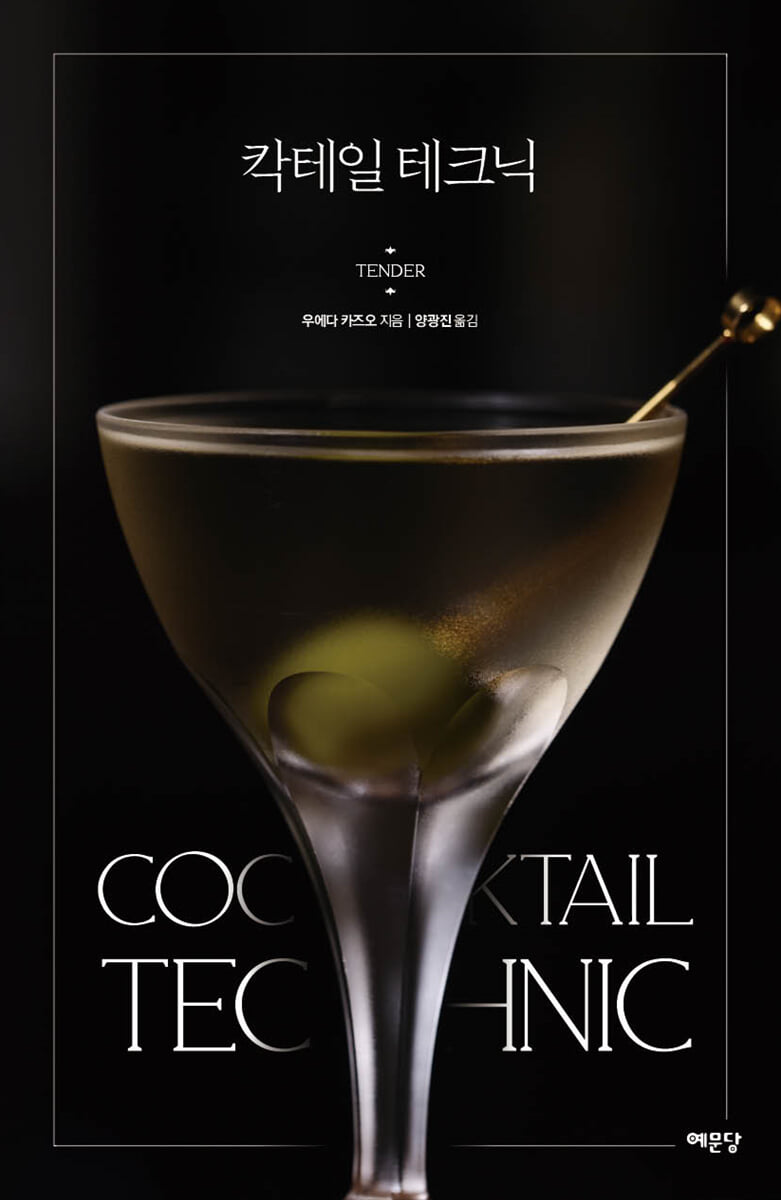
"Cocktail Techniques" is a book that compiles Kazuo Ueda's cocktail philosophy and techniques.
His bartending philosophy is that the more you think about providing your guests with delicious cocktails, the greater the impression and enjoyment they will receive.
For readers curious about Japanese cocktails and "hard shakes," this book provides basic history and simple cocktail recipes. For readers who dream of becoming a bartender or are currently working as one, this book enlightens them on everything a bartender needs to know about cocktails, from the attitude they need to treat customers.
You can also learn about his unique cocktail recipes and hidden stories that have been developed over several decades.
Kazuo Ueda, who took shaking beyond simply mixing ingredients to a more sophisticated level, began his career as a bartender in 1966 and is a living legend and master of the Japanese bartending world, having won numerous competitions.
As interest in Japanese bartending and bar style grew among Western bartenders, he held a master class in New York in 2010, and his Tender Bar, which opened in Ginza, Tokyo in 1997, still attracts enthusiasts from all over the world to taste his cocktails.
"Cocktail Techniques" is a book that compiles Kazuo Ueda's cocktail philosophy and techniques.
His bartending philosophy is that the more you think about providing your guests with delicious cocktails, the greater the impression and enjoyment they will receive.
For readers curious about Japanese cocktails and "hard shakes," this book provides basic history and simple cocktail recipes. For readers who dream of becoming a bartender or are currently working as one, this book enlightens them on everything a bartender needs to know about cocktails, from the attitude they need to treat customers.
You can also learn about his unique cocktail recipes and hidden stories that have been developed over several decades.
- You can preview some of the book's contents.
Preview
index
Before we begin
Translator's Note
CHAPTER 1.
The Basics of Cocktail Making
Welcome to the Cocktail World
How to Make Delicious Cocktails
Cocktails have a language of the heart.
Develop concentration
Tongue reading
There is a 'Tao' in cocktails too
Sheikh's skills
Features and Images of Hard Shake
Meeting with Hard Shake
Confirming the essence of hard shake
The ingredients that make hard shakes come alive
Small ice cubes floating in a cocktail
Practical section
Sheikh's order
1 How to hold a shaker
2 How to Shake a Shaker
3 How to follow
Stu's skills
Features of the stud
About Stir City Ice
Stu's image
Temperature change table by season
Practical section
The order of the studs
1 serving of ice
How to hold a 2 bar spoon
How to use 3 bar spoons
4 How to hold a mixing glass
Build's skills
3 types of builds
To enjoy it until the end
Practical section
Type using carbonation - Gin and Tonic
Non-carbonated type - Rusty Nail
Puscafe style
Basic cocktail movements
The bartender's movements that support the taste of the cocktail
Professional work
Practical section
How to hold a bottle
How to open a stopper
How to measure alcohol
How to split ice
Lemon peel order
How to hold a glass
How to clean glass
Gradient
Snow style
Coral style
fruit cutting
White Spirit
The charm of a light white spirit
White Spirit for Hard Shakes
Brown Spirit
The essence of cocktails: Brown Spirit
The unique taste of Scotch whiskey
The allure of bourbon
Grape brandy and apple brandy
How to drink dark rum
Types of whiskey and their compatibility with cocktails
liqueur
The charm of liqueur
Definition and production method of liqueur
Characteristics of liqueur
Selection of liqueurs
Cocktail making tools
Which came first, the shaker or the mixing glass?
Types and roles of shakers
How to choose a shaker
Choosing a Mixing Glass
cocktail glass
A great supporting actor in a delicious cocktail
CHAPTRE 2.
Standard Cocktail
Gin Base
Martini
Gibson
gimlet
Alaska
Gin & Bitters
gin and tonic
White Lady
Gimlet Highball
Brandy base
sidecar
Stinger
Alexander
Jack Rose
Brandy Sour
whiskey base
Manhattan
New York
Old Fashioned
Vodka base
Russian
Salty Dog
Moscow Mule
Sea Breeze
rum base
Daiquiri
Bacardi
Frozen Daiquiri
tequila base
Margarita
Liqueur base
Grasshopper
Valencia
Charlie Chaplin
wine base
Bellini
Bamboo
Kir Royal
Sheikh's classification
CHAPTER 3.
Original cocktails
The charm of color that heightens charm
color combinations
Concours works
Pure Love
Fantastic Lehmann
Tokyo
City Coral
Kings Valley
Jealousy
Left Alone
Japan's four seasons
Shungyo
Sumidagawa Boshoku
Hideriboshi
Sekishu
Yukitsubaki
Coral style
Cosmic Coral
Casterly Coral
Crystal Coral
Coral 21
Other
M-30 Lane
Blue Trip
Hong Kong Connection
Fisherman and Son
Carlos Quma
Miracle
Maria Elena
Lahaina 45
Moon River
Southern Whisper
M-45 Subaru
Phrase Riches
Broom Doher
Tender Series
Translator's Note
CHAPTER 1.
The Basics of Cocktail Making
Welcome to the Cocktail World
How to Make Delicious Cocktails
Cocktails have a language of the heart.
Develop concentration
Tongue reading
There is a 'Tao' in cocktails too
Sheikh's skills
Features and Images of Hard Shake
Meeting with Hard Shake
Confirming the essence of hard shake
The ingredients that make hard shakes come alive
Small ice cubes floating in a cocktail
Practical section
Sheikh's order
1 How to hold a shaker
2 How to Shake a Shaker
3 How to follow
Stu's skills
Features of the stud
About Stir City Ice
Stu's image
Temperature change table by season
Practical section
The order of the studs
1 serving of ice
How to hold a 2 bar spoon
How to use 3 bar spoons
4 How to hold a mixing glass
Build's skills
3 types of builds
To enjoy it until the end
Practical section
Type using carbonation - Gin and Tonic
Non-carbonated type - Rusty Nail
Puscafe style
Basic cocktail movements
The bartender's movements that support the taste of the cocktail
Professional work
Practical section
How to hold a bottle
How to open a stopper
How to measure alcohol
How to split ice
Lemon peel order
How to hold a glass
How to clean glass
Gradient
Snow style
Coral style
fruit cutting
White Spirit
The charm of a light white spirit
White Spirit for Hard Shakes
Brown Spirit
The essence of cocktails: Brown Spirit
The unique taste of Scotch whiskey
The allure of bourbon
Grape brandy and apple brandy
How to drink dark rum
Types of whiskey and their compatibility with cocktails
liqueur
The charm of liqueur
Definition and production method of liqueur
Characteristics of liqueur
Selection of liqueurs
Cocktail making tools
Which came first, the shaker or the mixing glass?
Types and roles of shakers
How to choose a shaker
Choosing a Mixing Glass
cocktail glass
A great supporting actor in a delicious cocktail
CHAPTRE 2.
Standard Cocktail
Gin Base
Martini
Gibson
gimlet
Alaska
Gin & Bitters
gin and tonic
White Lady
Gimlet Highball
Brandy base
sidecar
Stinger
Alexander
Jack Rose
Brandy Sour
whiskey base
Manhattan
New York
Old Fashioned
Vodka base
Russian
Salty Dog
Moscow Mule
Sea Breeze
rum base
Daiquiri
Bacardi
Frozen Daiquiri
tequila base
Margarita
Liqueur base
Grasshopper
Valencia
Charlie Chaplin
wine base
Bellini
Bamboo
Kir Royal
Sheikh's classification
CHAPTER 3.
Original cocktails
The charm of color that heightens charm
color combinations
Concours works
Pure Love
Fantastic Lehmann
Tokyo
City Coral
Kings Valley
Jealousy
Left Alone
Japan's four seasons
Shungyo
Sumidagawa Boshoku
Hideriboshi
Sekishu
Yukitsubaki
Coral style
Cosmic Coral
Casterly Coral
Crystal Coral
Coral 21
Other
M-30 Lane
Blue Trip
Hong Kong Connection
Fisherman and Son
Carlos Quma
Miracle
Maria Elena
Lahaina 45
Moon River
Southern Whisper
M-45 Subaru
Phrase Riches
Broom Doher
Tender Series
Detailed image
.jpg)
Into the book
Whenever I stand at the counter making a cocktail, I always check who is drinking it.
There's nothing more daunting than making a cocktail that you don't even know who's drinking.
If you think you're making it for someone, it naturally becomes something you put a lot of effort into.
I believe that creating with a sense of purpose and feeling leads to a higher level of cocktail making.
If you make 50 cups a day, the first step is to make an effort to make even one or two of them with that mindset.
Even if you make tens of thousands of cups throughout your life, without that kind of heart, nothing will be achieved.
This is a basic coping strategy for developing concentration.
--- p.22~23
Like the Shake, Stud also relies heavily on ice.
As a result, there is a high risk that the water will taste bad.
To prevent this to a minimum, you need to wash the ice with water and consider the balance of size, but above all, the most important thing in the stunting motion is to rotate the ice without damaging it.
This is because when the ice cubes collide with each other during rotation, the ice cubes break and melt, causing the water to taste bad.
The ice should be mixed sufficiently to encapsulate the moisture without melting it as much as possible.
To do that, the mixing method is the key, but the number of stirs and speed also vary depending on the ingredients used, the condition of the ice, and the bartender making it.
Some people can't mix it even after stirring it dozens of times, while others can mix it perfectly after just a few times.
For this, we have no choice but to rely on the bartender's experience.
--- p.40~41
When it comes to serving cocktails, glasses are one of the most important elements.
Even with the same cocktail, the atmosphere can change completely just by changing the glass.
There are also cocktails whose recipes specify a glass.
In short, the glass is an important element that helps to clearly imprint the image and characteristics of the cocktail contents.
It goes without saying that the contents are the main character of the cocktail, but the glass also plays a supporting role that makes the cocktail stand out, and not just a supporting role, but a brilliant supporting role.
The choice reflects the bartender's personality and mindset.
--- p.84
This cocktail was created by rum maker Bacardi in 1933 to promote sales following the repeal of Prohibition.
As the name suggests, "Bacardi" is required to be made with Bacardi's white rum, and there is a famous episode where the New York Superior Court ruled against a New York bar that "Bacardi must be made with Bacardi's rum" for making and selling Bacardi with a rum other than Bacardi white rum.
Bacardi's original form is "Daiquiri".
This cocktail is arranged in pink by adding grenadine syrup to the daiquiri, and the point is to create this subtle color.
Grenadine syrup is used to add color and sweetness, but if you try to add the necessary sweetness with just grenadine, the unique flavor will be too strong and the color will be dark.
Therefore, the amount of grenadine syrup is only for color, and the sweetness is supplemented with sugar syrup.
This adjustment is important.
--- p.138
The cocktail "Moon River" was created spontaneously after receiving a request from a male guest who wanted a cocktail related to the movie "Breakfast at Tiffany's."
The name is taken from the title of the movie's theme song.
①〈Breakfast at Tiffany's〉→②Moon River, ①Tiffany → ②New York → ③Bourbon. The rough outline of the cocktail was created with two momentary associations.
Even when shaken, bourbon whiskey does not have the characteristic bitterness of Scotch whiskey, making it suitable for whiskey-based cocktails.
Since this is a cocktail for a male guest, I chose Old Grand Dad, which has a unique flavor and is strong enough to withstand shaking.
And Cointreau was used for sweetness and grapefruit juice for a soft acidity.
The appearance of moonlight reflecting on the swaying water surface is called Moon River.
The soft lighting sparkled on the ice crystals floating on the surface of the glass, creating a cocktail that looked as if Moon River had been poured directly into the glass.
There's nothing more daunting than making a cocktail that you don't even know who's drinking.
If you think you're making it for someone, it naturally becomes something you put a lot of effort into.
I believe that creating with a sense of purpose and feeling leads to a higher level of cocktail making.
If you make 50 cups a day, the first step is to make an effort to make even one or two of them with that mindset.
Even if you make tens of thousands of cups throughout your life, without that kind of heart, nothing will be achieved.
This is a basic coping strategy for developing concentration.
--- p.22~23
Like the Shake, Stud also relies heavily on ice.
As a result, there is a high risk that the water will taste bad.
To prevent this to a minimum, you need to wash the ice with water and consider the balance of size, but above all, the most important thing in the stunting motion is to rotate the ice without damaging it.
This is because when the ice cubes collide with each other during rotation, the ice cubes break and melt, causing the water to taste bad.
The ice should be mixed sufficiently to encapsulate the moisture without melting it as much as possible.
To do that, the mixing method is the key, but the number of stirs and speed also vary depending on the ingredients used, the condition of the ice, and the bartender making it.
Some people can't mix it even after stirring it dozens of times, while others can mix it perfectly after just a few times.
For this, we have no choice but to rely on the bartender's experience.
--- p.40~41
When it comes to serving cocktails, glasses are one of the most important elements.
Even with the same cocktail, the atmosphere can change completely just by changing the glass.
There are also cocktails whose recipes specify a glass.
In short, the glass is an important element that helps to clearly imprint the image and characteristics of the cocktail contents.
It goes without saying that the contents are the main character of the cocktail, but the glass also plays a supporting role that makes the cocktail stand out, and not just a supporting role, but a brilliant supporting role.
The choice reflects the bartender's personality and mindset.
--- p.84
This cocktail was created by rum maker Bacardi in 1933 to promote sales following the repeal of Prohibition.
As the name suggests, "Bacardi" is required to be made with Bacardi's white rum, and there is a famous episode where the New York Superior Court ruled against a New York bar that "Bacardi must be made with Bacardi's rum" for making and selling Bacardi with a rum other than Bacardi white rum.
Bacardi's original form is "Daiquiri".
This cocktail is arranged in pink by adding grenadine syrup to the daiquiri, and the point is to create this subtle color.
Grenadine syrup is used to add color and sweetness, but if you try to add the necessary sweetness with just grenadine, the unique flavor will be too strong and the color will be dark.
Therefore, the amount of grenadine syrup is only for color, and the sweetness is supplemented with sugar syrup.
This adjustment is important.
--- p.138
The cocktail "Moon River" was created spontaneously after receiving a request from a male guest who wanted a cocktail related to the movie "Breakfast at Tiffany's."
The name is taken from the title of the movie's theme song.
①〈Breakfast at Tiffany's〉→②Moon River, ①Tiffany → ②New York → ③Bourbon. The rough outline of the cocktail was created with two momentary associations.
Even when shaken, bourbon whiskey does not have the characteristic bitterness of Scotch whiskey, making it suitable for whiskey-based cocktails.
Since this is a cocktail for a male guest, I chose Old Grand Dad, which has a unique flavor and is strong enough to withstand shaking.
And Cointreau was used for sweetness and grapefruit juice for a soft acidity.
The appearance of moonlight reflecting on the swaying water surface is called Moon River.
The soft lighting sparkled on the ice crystals floating on the surface of the glass, creating a cocktail that looked as if Moon River had been poured directly into the glass.
--- p.218
Publisher's Review
“Technology is a manifestation of the mind.”
- Kazuo Ueda -
Kazuo Ueda, a living legend in the Japanese bartending world
Joined ANBA in 1979.
Won the ANBA Cocktail Competition Nationally in 1980 with 'Pure Love'.
Won the Silver Award at the IBA Cocktail Festival in Switzerland in 1981 for 'Fantastic Lehmann'.
Won the Grand Prix at the 1982 Suntory Tropical Cocktail Contest for 'Wiki Wiki'.
In 1984, he won the ANBA Cocktail Competition National Award with 'City Coral' and participated in the IBA Competition.
Winner of the 1986 Scotch Whisky Cocktail Competition with 'King's Valley'.
Published his first book, Cocktail Notes, in 1989.
Appointed Chief Bartender at Shiseido Parlor in 1995.
After the temporary closure of Shiseido in 1997, he became independent and opened 'Hard Shake Bar Ginza Tender'.
Guest bartending in New York City in 2001.
Introduced Japanese bartending and the 'hard shake' to the US through a seminar in New York in 2010.
In 1974, Kazuo Ueda joined the waiting bar of Shiseido's French restaurant and learned how to make hand-drip coffee through in-house training.
At this time, everyone began to question why the taste of coffee was so different even though they brewed it with the same coffee beans and water at the same temperature.
I asked the instructor how to do it, but the vague answer I got was, “Just put your heart into it.” The instructor added, “You should always ask yourself if you put your heart into what you do, and if there is a better way.”
It was something he could have just let go of, but he took it seriously and said, 'The same goes for cocktails.
Let's put our hearts into it and find a better way!'
From this time on, a big change came about in his cocktail making.
He began to rebuild everything he had learned by adding “why” to everything, such as why he should use a shaker, why he should use this drink, etc.
As I poured my heart and soul into making my cocktails, they started to receive positive reviews. In the process of analyzing what made them different from others, I started to pay attention to the bubbles that mixed in the drink when shaking it.
And the result of the effort to create more bubbles was called a 'hard shake'.
As he said, the mind is expressed through technology.
Afterwards, he continued to refine his skills and eventually reached the pinnacle of Japanese bartenders. He wrote this book, “Cocktail Techniques,” to make his skills widely known.
Discover the past, present, and future of Japanese cocktails.
A cocktail is usually a drink made by combining two or more ingredients.
In a broad sense, mixed juices are also included in cocktails, but it mainly refers to drinks that contain alcohol.
Cocktails have existed since the time of beer and wine, but at that time they were just alcohol mixed with water.
Cocktails have taken on their modern form in less than 120 years.
The cocktail and bar culture that originated in the United States began to decline in the 1970s and 1980s, in contrast to the country's rapid economic growth.
Bartenders, whose wages depend on tips, prefer cocktails that can be made quickly and easily in large quantities (the so-called disco drinks made with only two or three ingredients) rather than painstakingly making each drink for a higher salary.
They focused on drinks like the Screwdriver (orange juice with vodka, the Godfather (whiskey with amaretto, etc.) and the bar culture they had previously built seemed to fade into history.
Tokyo Kaikan, which served as a social gathering place for UN officers who were in charge of Japan after World War II, naturally adopted American bartending culture before its decline. As bartenders from here spread throughout Japan, American bar culture also took root in Japan.
Unlike the United States, Japan, which did not have a tipping culture, developed a technique-centered bartending style.
As time passed, around the year 2000, a movement called the "craft cocktail movement" began to take hold in the United States. This movement sought to uncover old records, apply them to the present, and put a lot of effort and dedication into cocktails. One of the things they focused on at the time was Japanese bartending.
Ingredients and tools that had disappeared from the United States, such as clear ice, freshly squeezed citrus juice, and cobbler shakers, were still used in Japan.
Meanwhile, Kazuo Ueda, who visited New York in 2000 and was disappointed with American bartending, translated his book "Cocktail Technique" and posted it on a website in the hope that Americans would once again put their heart into cocktails.
His cocktail philosophy eventually reached the United States through Europe thanks to a European bartender who came to the Ginza Tender Bar to meet Ueda after seeing this site, and 『Cocktail Technique』 was officially published in the United States, coinciding with the "craft cocktail movement."
This is the only Japanese cocktail book published in the United States.
At the book launch seminar, he demonstrated his 'hard shake' technique to bartenders from all over the United States.
An encounter with the 'hard shake' that caught the world's attention
Interestingly, even if a cocktail is made according to the recipe, the taste and even the color can change depending on the bartender.
Kazuo Ueda, who realized this fact, shook the shaker vigorously to make a slightly more delicious cocktail for his guests, and he noticed that the more vigorously he shook the cocktail, the more tiny bubbles appeared in it.
After receiving feedback from customers that the bubbles softened the strength of the alcohol and made it easier to drink, he researched and worked hard to create even denser and softer bubbles in various ways, eventually creating the technique called the 'hard shake'.
What is a "hard shake"? As the word "hard" suggests, it means "shaking vigorously and intricately."
The purpose of a shake is not only to cool and mix, but also to tone down the delicateness of the ingredients and the strength of the alcohol, creating an easy-to-drink cocktail.
Kazuo Ueda, who relentlessly pursued this goal, eventually reached the goal of 'hard shake'.
Creating bubbles is the ultimate and ultimate goal of a hard shake.
Since then, the hard shake has continued to evolve, becoming more complex and delicate while maintaining a somewhat simpler motion.
It also had an impact on me that the more I shook it, the less complex it became.
Shakes are easy to chill because they use ice, but they are incredibly difficult to mix.
So, thoroughly mixing the ingredients is a prerequisite for a hard shake.
If you shake it too hard and for too long without proper mixing skills, the ice inside the shaker will melt and the cocktail will become bland.
A true 'hard shake' is one where the ingredients are well mixed so that the liquid from the melted ice is incorporated into the drink, without leaving it cloudy or watery.
There's a 'Tao' to making cocktails.
They say that the skill of making cocktails is a good reflection of the bartender's heart.
To cultivate that spirit, bartenders always discuss cocktail recipes.
For example, when making a cocktail called Sidecar, you think deeply and make it with the mindset of, "How can I make it taste good? How can I make Sidecar happy?"
If a bartender's cocktail is great, it's because they delved into cocktails with the desire to make them more delicious than others, and as a result, they established their own world of cocktails.
A bartender who simply follows a recipe will not develop his own unique flavor.
If you think about how to make it more delicious and have a firm idea, you will eventually be able to make a cocktail that your customers will like, even if it doesn't appear right away.
Guests can sense the creator's intentions through the cocktails.
This is because the taste of a cocktail is greatly connected not only to the taste of the finished product itself, but also to the heart that went into making it.
Cocktails are said to be an art of the moment, enjoyed by using all six senses.
Therefore, we must bring out all the flavors that we feel with our eyes, nose, and ears.
Ultimately, you can only achieve perfect taste by focusing on the process of making it.
For those who love cocktails and want to make a career out of them, Kazuo Ueda says this:
“There is no such thing as perfect.
“I’ve always just been asking if there’s a better way.” Cocktails are like life.
In life, everything will eventually be like these words of Kazuo Ueda.
To truly say I've done my job well, I need to express not only the taste of the finished cocktail, but also the sincerity of my efforts in making it.
However, you should not absolutely think that your thoughts are always right.
Not being overconfident, that is the biggest point of 'Cocktail Do'.
A bartender's biggest job is simply to think about how to make delicious cocktails that will please the guests.
Keeping this fact firmly in mind is the ultimate determination to master the art of cocktail making.
- Kazuo Ueda -
Kazuo Ueda, a living legend in the Japanese bartending world
Joined ANBA in 1979.
Won the ANBA Cocktail Competition Nationally in 1980 with 'Pure Love'.
Won the Silver Award at the IBA Cocktail Festival in Switzerland in 1981 for 'Fantastic Lehmann'.
Won the Grand Prix at the 1982 Suntory Tropical Cocktail Contest for 'Wiki Wiki'.
In 1984, he won the ANBA Cocktail Competition National Award with 'City Coral' and participated in the IBA Competition.
Winner of the 1986 Scotch Whisky Cocktail Competition with 'King's Valley'.
Published his first book, Cocktail Notes, in 1989.
Appointed Chief Bartender at Shiseido Parlor in 1995.
After the temporary closure of Shiseido in 1997, he became independent and opened 'Hard Shake Bar Ginza Tender'.
Guest bartending in New York City in 2001.
Introduced Japanese bartending and the 'hard shake' to the US through a seminar in New York in 2010.
In 1974, Kazuo Ueda joined the waiting bar of Shiseido's French restaurant and learned how to make hand-drip coffee through in-house training.
At this time, everyone began to question why the taste of coffee was so different even though they brewed it with the same coffee beans and water at the same temperature.
I asked the instructor how to do it, but the vague answer I got was, “Just put your heart into it.” The instructor added, “You should always ask yourself if you put your heart into what you do, and if there is a better way.”
It was something he could have just let go of, but he took it seriously and said, 'The same goes for cocktails.
Let's put our hearts into it and find a better way!'
From this time on, a big change came about in his cocktail making.
He began to rebuild everything he had learned by adding “why” to everything, such as why he should use a shaker, why he should use this drink, etc.
As I poured my heart and soul into making my cocktails, they started to receive positive reviews. In the process of analyzing what made them different from others, I started to pay attention to the bubbles that mixed in the drink when shaking it.
And the result of the effort to create more bubbles was called a 'hard shake'.
As he said, the mind is expressed through technology.
Afterwards, he continued to refine his skills and eventually reached the pinnacle of Japanese bartenders. He wrote this book, “Cocktail Techniques,” to make his skills widely known.
Discover the past, present, and future of Japanese cocktails.
A cocktail is usually a drink made by combining two or more ingredients.
In a broad sense, mixed juices are also included in cocktails, but it mainly refers to drinks that contain alcohol.
Cocktails have existed since the time of beer and wine, but at that time they were just alcohol mixed with water.
Cocktails have taken on their modern form in less than 120 years.
The cocktail and bar culture that originated in the United States began to decline in the 1970s and 1980s, in contrast to the country's rapid economic growth.
Bartenders, whose wages depend on tips, prefer cocktails that can be made quickly and easily in large quantities (the so-called disco drinks made with only two or three ingredients) rather than painstakingly making each drink for a higher salary.
They focused on drinks like the Screwdriver (orange juice with vodka, the Godfather (whiskey with amaretto, etc.) and the bar culture they had previously built seemed to fade into history.
Tokyo Kaikan, which served as a social gathering place for UN officers who were in charge of Japan after World War II, naturally adopted American bartending culture before its decline. As bartenders from here spread throughout Japan, American bar culture also took root in Japan.
Unlike the United States, Japan, which did not have a tipping culture, developed a technique-centered bartending style.
As time passed, around the year 2000, a movement called the "craft cocktail movement" began to take hold in the United States. This movement sought to uncover old records, apply them to the present, and put a lot of effort and dedication into cocktails. One of the things they focused on at the time was Japanese bartending.
Ingredients and tools that had disappeared from the United States, such as clear ice, freshly squeezed citrus juice, and cobbler shakers, were still used in Japan.
Meanwhile, Kazuo Ueda, who visited New York in 2000 and was disappointed with American bartending, translated his book "Cocktail Technique" and posted it on a website in the hope that Americans would once again put their heart into cocktails.
His cocktail philosophy eventually reached the United States through Europe thanks to a European bartender who came to the Ginza Tender Bar to meet Ueda after seeing this site, and 『Cocktail Technique』 was officially published in the United States, coinciding with the "craft cocktail movement."
This is the only Japanese cocktail book published in the United States.
At the book launch seminar, he demonstrated his 'hard shake' technique to bartenders from all over the United States.
An encounter with the 'hard shake' that caught the world's attention
Interestingly, even if a cocktail is made according to the recipe, the taste and even the color can change depending on the bartender.
Kazuo Ueda, who realized this fact, shook the shaker vigorously to make a slightly more delicious cocktail for his guests, and he noticed that the more vigorously he shook the cocktail, the more tiny bubbles appeared in it.
After receiving feedback from customers that the bubbles softened the strength of the alcohol and made it easier to drink, he researched and worked hard to create even denser and softer bubbles in various ways, eventually creating the technique called the 'hard shake'.
What is a "hard shake"? As the word "hard" suggests, it means "shaking vigorously and intricately."
The purpose of a shake is not only to cool and mix, but also to tone down the delicateness of the ingredients and the strength of the alcohol, creating an easy-to-drink cocktail.
Kazuo Ueda, who relentlessly pursued this goal, eventually reached the goal of 'hard shake'.
Creating bubbles is the ultimate and ultimate goal of a hard shake.
Since then, the hard shake has continued to evolve, becoming more complex and delicate while maintaining a somewhat simpler motion.
It also had an impact on me that the more I shook it, the less complex it became.
Shakes are easy to chill because they use ice, but they are incredibly difficult to mix.
So, thoroughly mixing the ingredients is a prerequisite for a hard shake.
If you shake it too hard and for too long without proper mixing skills, the ice inside the shaker will melt and the cocktail will become bland.
A true 'hard shake' is one where the ingredients are well mixed so that the liquid from the melted ice is incorporated into the drink, without leaving it cloudy or watery.
There's a 'Tao' to making cocktails.
They say that the skill of making cocktails is a good reflection of the bartender's heart.
To cultivate that spirit, bartenders always discuss cocktail recipes.
For example, when making a cocktail called Sidecar, you think deeply and make it with the mindset of, "How can I make it taste good? How can I make Sidecar happy?"
If a bartender's cocktail is great, it's because they delved into cocktails with the desire to make them more delicious than others, and as a result, they established their own world of cocktails.
A bartender who simply follows a recipe will not develop his own unique flavor.
If you think about how to make it more delicious and have a firm idea, you will eventually be able to make a cocktail that your customers will like, even if it doesn't appear right away.
Guests can sense the creator's intentions through the cocktails.
This is because the taste of a cocktail is greatly connected not only to the taste of the finished product itself, but also to the heart that went into making it.
Cocktails are said to be an art of the moment, enjoyed by using all six senses.
Therefore, we must bring out all the flavors that we feel with our eyes, nose, and ears.
Ultimately, you can only achieve perfect taste by focusing on the process of making it.
For those who love cocktails and want to make a career out of them, Kazuo Ueda says this:
“There is no such thing as perfect.
“I’ve always just been asking if there’s a better way.” Cocktails are like life.
In life, everything will eventually be like these words of Kazuo Ueda.
To truly say I've done my job well, I need to express not only the taste of the finished cocktail, but also the sincerity of my efforts in making it.
However, you should not absolutely think that your thoughts are always right.
Not being overconfident, that is the biggest point of 'Cocktail Do'.
A bartender's biggest job is simply to think about how to make delicious cocktails that will please the guests.
Keeping this fact firmly in mind is the ultimate determination to master the art of cocktail making.
GOODS SPECIFICS
- Date of issue: January 25, 2024
- Page count, weight, size: 236 pages | 140*215*20mm
- ISBN13: 9788970016382
- ISBN10: 8970016384
You may also like
카테고리
korean


korean

![ELLE 엘르 스페셜 에디션 A형 : 12월 [2025]](http://librairie.coreenne.fr/cdn/shop/files/b8e27a3de6c9538896439686c6b0e8fb.jpg?v=1766436872&width=3840)


