

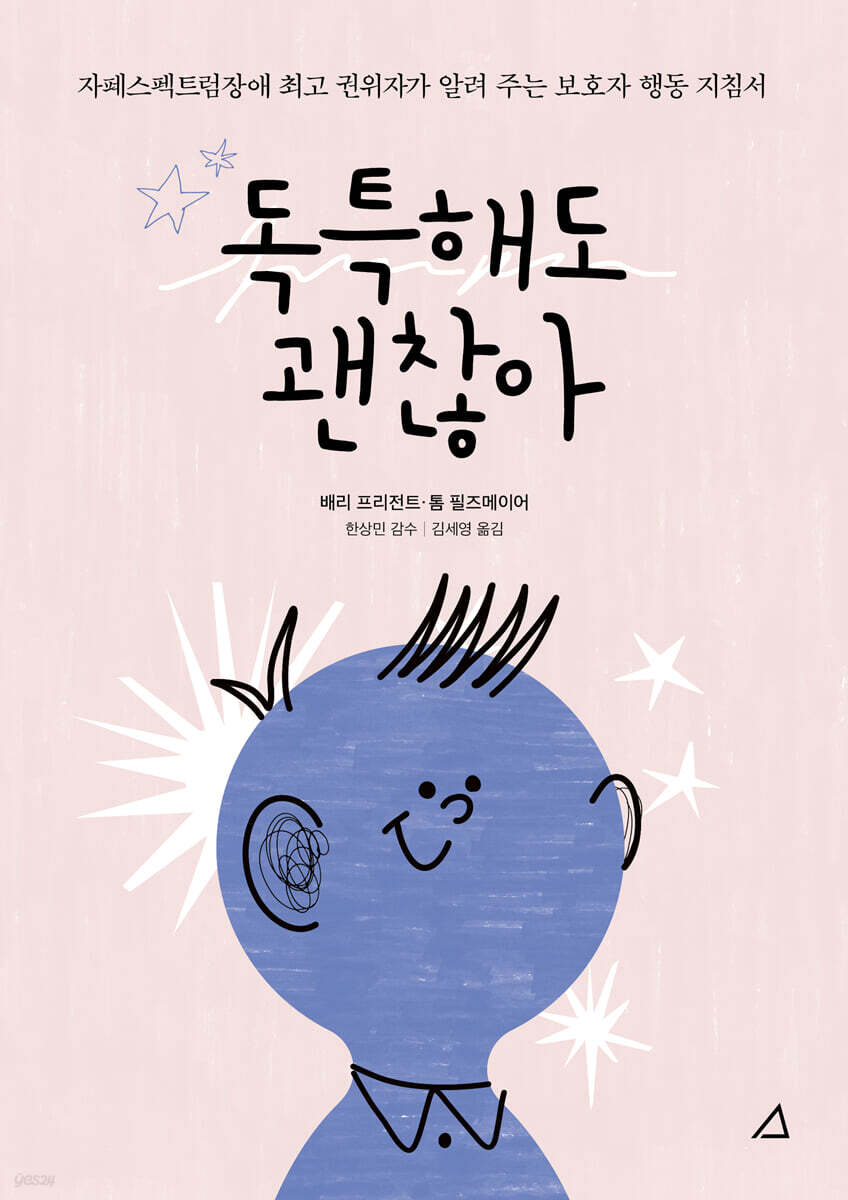
It's okay to be unique
 |
Description
Book Introduction
Autism is not something to be overcome, but a unique aspect of human nature.
A solution for autism spectrum disorder that doesn't cause anxiety or wandering.
When a child is first diagnosed with autism spectrum disorder, most parents feel overwhelmed and confused.
You may feel lost in the sea of information, unsure which agency or therapist to seek out, or how to respond to a child's behavior that you've never seen before.
Dr. Barry Pruitt, a world authority on autism spectrum disorders and developmental disabilities, says that everything people with autism do has meaning and is something that all humans do.
This book is a comprehensive collection of counseling cases and clinical results that the author has experienced in the field.
Having observed children with autism grow into adults at home, at school, and in the community for a long time, the author introduces essential information for guardians of children with autism, communication methods tailored to their style, basic social education methods, and motivation methods through abundant examples so that even those without specialized knowledge or relevant degrees can easily understand them.
A solution for autism spectrum disorder that doesn't cause anxiety or wandering.
When a child is first diagnosed with autism spectrum disorder, most parents feel overwhelmed and confused.
You may feel lost in the sea of information, unsure which agency or therapist to seek out, or how to respond to a child's behavior that you've never seen before.
Dr. Barry Pruitt, a world authority on autism spectrum disorders and developmental disabilities, says that everything people with autism do has meaning and is something that all humans do.
This book is a comprehensive collection of counseling cases and clinical results that the author has experienced in the field.
Having observed children with autism grow into adults at home, at school, and in the community for a long time, the author introduces essential information for guardians of children with autism, communication methods tailored to their style, basic social education methods, and motivation methods through abundant examples so that even those without specialized knowledge or relevant degrees can easily understand them.
- You can preview some of the book's contents.
Preview
index
Before Reading This Book | Terms to Know Before Reading | Find Case Studies
Reviewer's Note: To the Revised Edition
Introduction
Author's Note: A Path to Truly Understanding the Uniqueness of Human Beings
Part 1.
Understanding Autism
Chapter 1: Think 'Why' First
What Parents and Therapists Need to Know First to Understand a Child's Behavior
Why Children Develop 'Adjustment Disorder' | Everyone has their own way of self-regulation | Elements of stability are always around children | There is no such thing as 'problem behavior' without a reason | The wrong behaviors of adults that fuel adjustment disorders | Approaching children by listening, asking, and observing
Chapter 2: Understanding the Language of Children with Autism
Understanding echolalia, a child's communication tool, and helping with language development
Experts Misunderstand Echoes | There's No Such Thing as Nonsense | Echoes You Can Understand with Just a Little Listening | Who Understands Echoes Best? | Teaching Creative Language | Even Lines in Movies Are Sometimes Echoes
Chapter 3: Turning Their Abilities into Strengths
Teaching basic social skills such as study and conversation skills
Education that Guides Obsessions in a Positive Direction | Why We Spark Interest and Passion | Parents Who Acknowledge and Develop Their Children's Interests | When a Child's Interests Become Problematic | How to Teach Communication Skills | Case Studies That Transformed a Child's Passion into Success
Chapter 4: Overcoming the Fear of Not Belief in Anything
How to help your child manage their fears and gain their trust
What Kids Don't Trust: Their Bodies, the World, and People | What They Fear and What They Don't | How Kids Stay Secure | 5 Ways to Build Trust with Someone with Autism
Chapter 5: Overcoming Emotional Memories
How to Help Your Child Overcome Negative Memories
How Emotional Memories Affect Your Life | The Mysterious Triggers That Trigger Memories | How to Overcome Post-Traumatic Stress Disorder | How to Help Overcome Negative Memories
Chapter 6: Understanding Their Unique Communication Style
Teaching Social Language Through Children's Communication Styles
Why Children Act Unconsciously | The Limits of Teaching Social Rules | Children Who Don't Understand "Emotions" | The Fallacy of Making Them Appear "Normal" | Causes of Frustration and How to Express It
Part 2.
Working with Autism
Chapter 7: Becoming the Essential Person for Your Child: What People Who Communicate Well with Children Have in Common, Regardless of Expertise
There are many different types of childcare providers | Commonalities of those who communicate well with children | Various examples of people who help children | Characteristics of those who struggle to communicate well with children | Accompanying the long journey without judging
Chapter 8: Learning Wisdom from Positive Experiences
Helpful and encouraging wisdom from parents who have walked this path.
Who Knows Your Child Best | Finding a Positive and Understanding Group | How Parents Stay Positive | People Who Choose Laughter Over Tears
Chapter 9: Learning from Real Autism Experts
Autism Stories from Successful People Despite Having Autism
Ross Blackburn, who accurately identified his own needs and limitations | Michael John Carley, who became a diplomat with insight and intelligence |
Stephen Shore, who consults and educates parents and professionals
Chapter 10: Learning to Grow Within Autism
The story of four families who overcame difficult times.
Family Cases ① Randall and his son Andrew | ② Correia and his son Matthew | ③ Domingue and his son Nick | ④ Cana and his son Justin
Part 3.
The Future of Autism
Chapter 11: Understanding Autism as an Identity
Another perspective on autism
Unveiling Two Dimensions of Autism | Seeing Autism as a Single Identity | How Does Autism Intersect with Other Identities? | Autism and Gender Diversity | The Voice of the Unspoken
Chapter 12: Back and Forward
Stories of people who actively help the world understand their autism.
Cases ① Karlie Ott, who rose to a banking executive position | ② Becca Laurie Hector, a blogger and speaker | ③ Chloe Rothschild, a writer who helps with communication | ④ Anita Lesko, a nurse and photographer | ⑤ Connor Cummings, whose trademark is Mickey Mouse | ⑥ Ron Sandison, a multi-tasker with autism | ⑦ Jordyn Zimmerman, a communication expert | ⑧ Scott Steindorf, a successful Hollywood TV producer
Chapter 13: Breathing Life into a Child's Heart
How people around you can help your child be happy
What "Recovery" Means in Autism | Hope Is Moving Forward Through Changing Perspectives | A Happy Self-Awareness or Academic Success? | The Best Way to Help You Live a Happy Life
Chapter 14: Clearing Up Myths About Autism
The most common questions and misunderstandings parents, teachers, and therapists have
Q&A: Frequently Asked Questions About Autism
Outgoing post
Acknowledgements
Reviewer's Note: To the Revised Edition
Introduction
Author's Note: A Path to Truly Understanding the Uniqueness of Human Beings
Part 1.
Understanding Autism
Chapter 1: Think 'Why' First
What Parents and Therapists Need to Know First to Understand a Child's Behavior
Why Children Develop 'Adjustment Disorder' | Everyone has their own way of self-regulation | Elements of stability are always around children | There is no such thing as 'problem behavior' without a reason | The wrong behaviors of adults that fuel adjustment disorders | Approaching children by listening, asking, and observing
Chapter 2: Understanding the Language of Children with Autism
Understanding echolalia, a child's communication tool, and helping with language development
Experts Misunderstand Echoes | There's No Such Thing as Nonsense | Echoes You Can Understand with Just a Little Listening | Who Understands Echoes Best? | Teaching Creative Language | Even Lines in Movies Are Sometimes Echoes
Chapter 3: Turning Their Abilities into Strengths
Teaching basic social skills such as study and conversation skills
Education that Guides Obsessions in a Positive Direction | Why We Spark Interest and Passion | Parents Who Acknowledge and Develop Their Children's Interests | When a Child's Interests Become Problematic | How to Teach Communication Skills | Case Studies That Transformed a Child's Passion into Success
Chapter 4: Overcoming the Fear of Not Belief in Anything
How to help your child manage their fears and gain their trust
What Kids Don't Trust: Their Bodies, the World, and People | What They Fear and What They Don't | How Kids Stay Secure | 5 Ways to Build Trust with Someone with Autism
Chapter 5: Overcoming Emotional Memories
How to Help Your Child Overcome Negative Memories
How Emotional Memories Affect Your Life | The Mysterious Triggers That Trigger Memories | How to Overcome Post-Traumatic Stress Disorder | How to Help Overcome Negative Memories
Chapter 6: Understanding Their Unique Communication Style
Teaching Social Language Through Children's Communication Styles
Why Children Act Unconsciously | The Limits of Teaching Social Rules | Children Who Don't Understand "Emotions" | The Fallacy of Making Them Appear "Normal" | Causes of Frustration and How to Express It
Part 2.
Working with Autism
Chapter 7: Becoming the Essential Person for Your Child: What People Who Communicate Well with Children Have in Common, Regardless of Expertise
There are many different types of childcare providers | Commonalities of those who communicate well with children | Various examples of people who help children | Characteristics of those who struggle to communicate well with children | Accompanying the long journey without judging
Chapter 8: Learning Wisdom from Positive Experiences
Helpful and encouraging wisdom from parents who have walked this path.
Who Knows Your Child Best | Finding a Positive and Understanding Group | How Parents Stay Positive | People Who Choose Laughter Over Tears
Chapter 9: Learning from Real Autism Experts
Autism Stories from Successful People Despite Having Autism
Ross Blackburn, who accurately identified his own needs and limitations | Michael John Carley, who became a diplomat with insight and intelligence |
Stephen Shore, who consults and educates parents and professionals
Chapter 10: Learning to Grow Within Autism
The story of four families who overcame difficult times.
Family Cases ① Randall and his son Andrew | ② Correia and his son Matthew | ③ Domingue and his son Nick | ④ Cana and his son Justin
Part 3.
The Future of Autism
Chapter 11: Understanding Autism as an Identity
Another perspective on autism
Unveiling Two Dimensions of Autism | Seeing Autism as a Single Identity | How Does Autism Intersect with Other Identities? | Autism and Gender Diversity | The Voice of the Unspoken
Chapter 12: Back and Forward
Stories of people who actively help the world understand their autism.
Cases ① Karlie Ott, who rose to a banking executive position | ② Becca Laurie Hector, a blogger and speaker | ③ Chloe Rothschild, a writer who helps with communication | ④ Anita Lesko, a nurse and photographer | ⑤ Connor Cummings, whose trademark is Mickey Mouse | ⑥ Ron Sandison, a multi-tasker with autism | ⑦ Jordyn Zimmerman, a communication expert | ⑧ Scott Steindorf, a successful Hollywood TV producer
Chapter 13: Breathing Life into a Child's Heart
How people around you can help your child be happy
What "Recovery" Means in Autism | Hope Is Moving Forward Through Changing Perspectives | A Happy Self-Awareness or Academic Success? | The Best Way to Help You Live a Happy Life
Chapter 14: Clearing Up Myths About Autism
The most common questions and misunderstandings parents, teachers, and therapists have
Q&A: Frequently Asked Questions About Autism
Outgoing post
Acknowledgements
Detailed image

Into the book
I hope that you too will read this book and have your eyes opened.
I hope your ears and heart are open too.
I also want to share the unique mental worlds of many people with autism I know, from children to adults.
I wish they could recognize their passion, curiosity, honesty, sense of justice, loyalty, and purity for what they are.
We will also faithfully address the many difficulties these individuals and their families have had to overcome.
This doesn't mean you have to experience the lives of people with autism firsthand.
I just hope that you will learn from what I've learned over nearly half a century working with countless people with autism.
---p.42
After observing for a long time, I have come to realize that a family-centered approach is the most effective and meaningful way to help families with autistic members.
The people who know their children best are usually their parents.
Even adult siblings or grandparents who have experienced many things together can deeply understand people with autism.
Every family creates its own culture, meaning they communicate, understand and help each other.
---p.93
Being good at understanding social context is just one thing.
Some people are good at everything else, but have trouble reading facial expressions or detecting the signals others are sending.
To increase social understanding, we need interpersonal intelligence, as Howard Gardner, famous for his theory of multiple intelligences, puts it.
People who are strong in this area are good at reading other people's emotions, intentions, and desires in any situation.
Of course, people with poor interpersonal intelligence can still excel at things like music, math, or solving complex puzzles.
---p.198
“Could you tell me how you write or what you pay special attention to?” He shrugged, taken aback by my question, and gave a curt answer.
“I’m just interested.” Just interested.
It was simple, but it contained a lot.
His good care was not due to having completed a special training course, following a behavioral plan, or incorporating appropriate 'reinforcements'.
By carefully watching the child, listening to him, and being attentive to his needs, I was able to provide him with exactly what he needed and gain his trust.
---p.223
Seeing Mickey welcome me so freely made me realize that there has been a huge shift in how people with autism see themselves and how autism impacts their lives.
Autism is now accepted as an important part of a person's personality, rather than something to be hidden or not talked about openly.
This groundbreaking shift in perspective was possible because people with autism were able to speak up, challenge outdated perceptions, and change the way they saw themselves.
---p.330
Striving to live a happy life with hope that the problems associated with autism can be minimized should not be considered "recovery" (some people simply say they have greatly improved, that they have overcome their problems).
If you prioritize recovery above all else, it's easy to miss the loving things your children show you as they grow up.
It's like a driver being so focused on their destination that they miss the beautiful scenery along the way.
On the other hand, I have seen many parents who find great joy in the small achievements and small progress their children make.
The reason they can do that is because they focus on long journeys.
---pp.394~395
When people think of people with autism, they often think they live in a world of their own, lack social awareness or sociability, lack empathy, and don't want to connect with others. This is simply not true.
The more I listen to their stories, the more I realize that they, like everyone else, want to connect with those around them, to be validated, loved, and accepted.
The more difficult it is for them to connect because of the social structure, the more desperately they want it.
I hope your ears and heart are open too.
I also want to share the unique mental worlds of many people with autism I know, from children to adults.
I wish they could recognize their passion, curiosity, honesty, sense of justice, loyalty, and purity for what they are.
We will also faithfully address the many difficulties these individuals and their families have had to overcome.
This doesn't mean you have to experience the lives of people with autism firsthand.
I just hope that you will learn from what I've learned over nearly half a century working with countless people with autism.
---p.42
After observing for a long time, I have come to realize that a family-centered approach is the most effective and meaningful way to help families with autistic members.
The people who know their children best are usually their parents.
Even adult siblings or grandparents who have experienced many things together can deeply understand people with autism.
Every family creates its own culture, meaning they communicate, understand and help each other.
---p.93
Being good at understanding social context is just one thing.
Some people are good at everything else, but have trouble reading facial expressions or detecting the signals others are sending.
To increase social understanding, we need interpersonal intelligence, as Howard Gardner, famous for his theory of multiple intelligences, puts it.
People who are strong in this area are good at reading other people's emotions, intentions, and desires in any situation.
Of course, people with poor interpersonal intelligence can still excel at things like music, math, or solving complex puzzles.
---p.198
“Could you tell me how you write or what you pay special attention to?” He shrugged, taken aback by my question, and gave a curt answer.
“I’m just interested.” Just interested.
It was simple, but it contained a lot.
His good care was not due to having completed a special training course, following a behavioral plan, or incorporating appropriate 'reinforcements'.
By carefully watching the child, listening to him, and being attentive to his needs, I was able to provide him with exactly what he needed and gain his trust.
---p.223
Seeing Mickey welcome me so freely made me realize that there has been a huge shift in how people with autism see themselves and how autism impacts their lives.
Autism is now accepted as an important part of a person's personality, rather than something to be hidden or not talked about openly.
This groundbreaking shift in perspective was possible because people with autism were able to speak up, challenge outdated perceptions, and change the way they saw themselves.
---p.330
Striving to live a happy life with hope that the problems associated with autism can be minimized should not be considered "recovery" (some people simply say they have greatly improved, that they have overcome their problems).
If you prioritize recovery above all else, it's easy to miss the loving things your children show you as they grow up.
It's like a driver being so focused on their destination that they miss the beautiful scenery along the way.
On the other hand, I have seen many parents who find great joy in the small achievements and small progress their children make.
The reason they can do that is because they focus on long journeys.
---pp.394~395
When people think of people with autism, they often think they live in a world of their own, lack social awareness or sociability, lack empathy, and don't want to connect with others. This is simply not true.
The more I listen to their stories, the more I realize that they, like everyone else, want to connect with those around them, to be validated, loved, and accepted.
The more difficult it is for them to connect because of the social structure, the more desperately they want it.
---p.435
Publisher's Review
“The goal we should set is not to fix the child and make him ‘normal’,
“It is about developing the ability to make decisions for yourself so that you can live your own life.”
Through this book, Dr. Fregent helps us to discard our prejudices about autism and look at it from a different perspective.
Autism is not a disability or disease to be overcome, but rather a unique way of living and a way for people with autism to cope with the situations they face.
And it emphasizes the need for appropriate help and careful consideration from those around them or support groups to help them develop their unique abilities and live better lives, and provides specific guidance on when and how to provide such help.
In particular, it provides strength and encouragement to not give up through the stories of successful parents who have raised children with autism and interviews with eight people with autism who are doing their jobs well.
A fundamental approach to human diversity,
They are no different from us, they are just unique.
This book is also a story about human diversity and serves as a good guide to understanding people with autism.
The message that Dr. Fregent repeatedly emphasizes is that 'autism is not something to be overcome, but a unique aspect of human beings.'
With decades of experience and insight, he says people with autism are no different from neurotypical people.
It reminds us that they are 'just a unique system' because their nervous system has a different connection structure, and at the same time, it teaches us how to communicate with them.
He also says that the noticeable behaviors of people with autism clearly have meaning to them, so rather than trying to stop them, we should quickly figure out what they want through questions and observation.
Put aside your negative views and don't hit the brakes yet.
Never underestimate the abilities of people with autism.
Look at the person, not their outward autistic behavior.
Only then can people with autism live fulfilling lives as members of society.
If our attitude and thoughts toward them change, not only the parties involved but also the world can change.
When people with autism, their caregivers, and those around them understand their uniqueness, the time will surely become a colorful and enjoyable experience, and people with autism will be able to live happier and better lives as individuals.
To understand a child's behavior
What Parents and Therapists Need to Know First
In this book, the author divides it into three parts and 14 chapters to explain how to understand autism and how to live happily with people with neurodiversity.
Part 1, 'Understanding Autism', helps you understand autism by explaining the behaviors that people with autism often exhibit and the reasons for them.
Part 2, "Working with Autism," details what families, caregivers, and others working with people with autism need to know and provides practical ways to help.
This revised and expanded edition speaks of greater hope for the future through Part 3, "The Future of Autism," which contains stories of people with autism who are successfully living their lives with autism.
It tells a new story, including how to disclose autism to the person with it and others, how to acknowledge autism as an identity, how to lead people with autism to a happy life, and how to reconcile autism with other tendencies.
In addition, we have increased the accessibility of the content by providing a 'Case Study by Situation' section so that you can immediately find the part you are curious about.
Additionally, we paid close attention to adapting it to the domestic situation through the review of Sangmin Han, the director of the Seoul ABA Research Institute, who is an expert in applied behavior analysis and an international behavior analysis expert.
“It is about developing the ability to make decisions for yourself so that you can live your own life.”
Through this book, Dr. Fregent helps us to discard our prejudices about autism and look at it from a different perspective.
Autism is not a disability or disease to be overcome, but rather a unique way of living and a way for people with autism to cope with the situations they face.
And it emphasizes the need for appropriate help and careful consideration from those around them or support groups to help them develop their unique abilities and live better lives, and provides specific guidance on when and how to provide such help.
In particular, it provides strength and encouragement to not give up through the stories of successful parents who have raised children with autism and interviews with eight people with autism who are doing their jobs well.
A fundamental approach to human diversity,
They are no different from us, they are just unique.
This book is also a story about human diversity and serves as a good guide to understanding people with autism.
The message that Dr. Fregent repeatedly emphasizes is that 'autism is not something to be overcome, but a unique aspect of human beings.'
With decades of experience and insight, he says people with autism are no different from neurotypical people.
It reminds us that they are 'just a unique system' because their nervous system has a different connection structure, and at the same time, it teaches us how to communicate with them.
He also says that the noticeable behaviors of people with autism clearly have meaning to them, so rather than trying to stop them, we should quickly figure out what they want through questions and observation.
Put aside your negative views and don't hit the brakes yet.
Never underestimate the abilities of people with autism.
Look at the person, not their outward autistic behavior.
Only then can people with autism live fulfilling lives as members of society.
If our attitude and thoughts toward them change, not only the parties involved but also the world can change.
When people with autism, their caregivers, and those around them understand their uniqueness, the time will surely become a colorful and enjoyable experience, and people with autism will be able to live happier and better lives as individuals.
To understand a child's behavior
What Parents and Therapists Need to Know First
In this book, the author divides it into three parts and 14 chapters to explain how to understand autism and how to live happily with people with neurodiversity.
Part 1, 'Understanding Autism', helps you understand autism by explaining the behaviors that people with autism often exhibit and the reasons for them.
Part 2, "Working with Autism," details what families, caregivers, and others working with people with autism need to know and provides practical ways to help.
This revised and expanded edition speaks of greater hope for the future through Part 3, "The Future of Autism," which contains stories of people with autism who are successfully living their lives with autism.
It tells a new story, including how to disclose autism to the person with it and others, how to acknowledge autism as an identity, how to lead people with autism to a happy life, and how to reconcile autism with other tendencies.
In addition, we have increased the accessibility of the content by providing a 'Case Study by Situation' section so that you can immediately find the part you are curious about.
Additionally, we paid close attention to adapting it to the domestic situation through the review of Sangmin Han, the director of the Seoul ABA Research Institute, who is an expert in applied behavior analysis and an international behavior analysis expert.
GOODS SPECIFICS
- Date of issue: November 30, 2023
- Page count, weight, size: 440 pages | 628g | 152*215*26mm
- ISBN13: 9791163862406
- ISBN10: 1163862401
You may also like
카테고리
korean


korean

![ELLE 엘르 스페셜 에디션 A형 : 12월 [2025]](http://librairie.coreenne.fr/cdn/shop/files/b8e27a3de6c9538896439686c6b0e8fb.jpg?v=1766436872&width=3840)


