

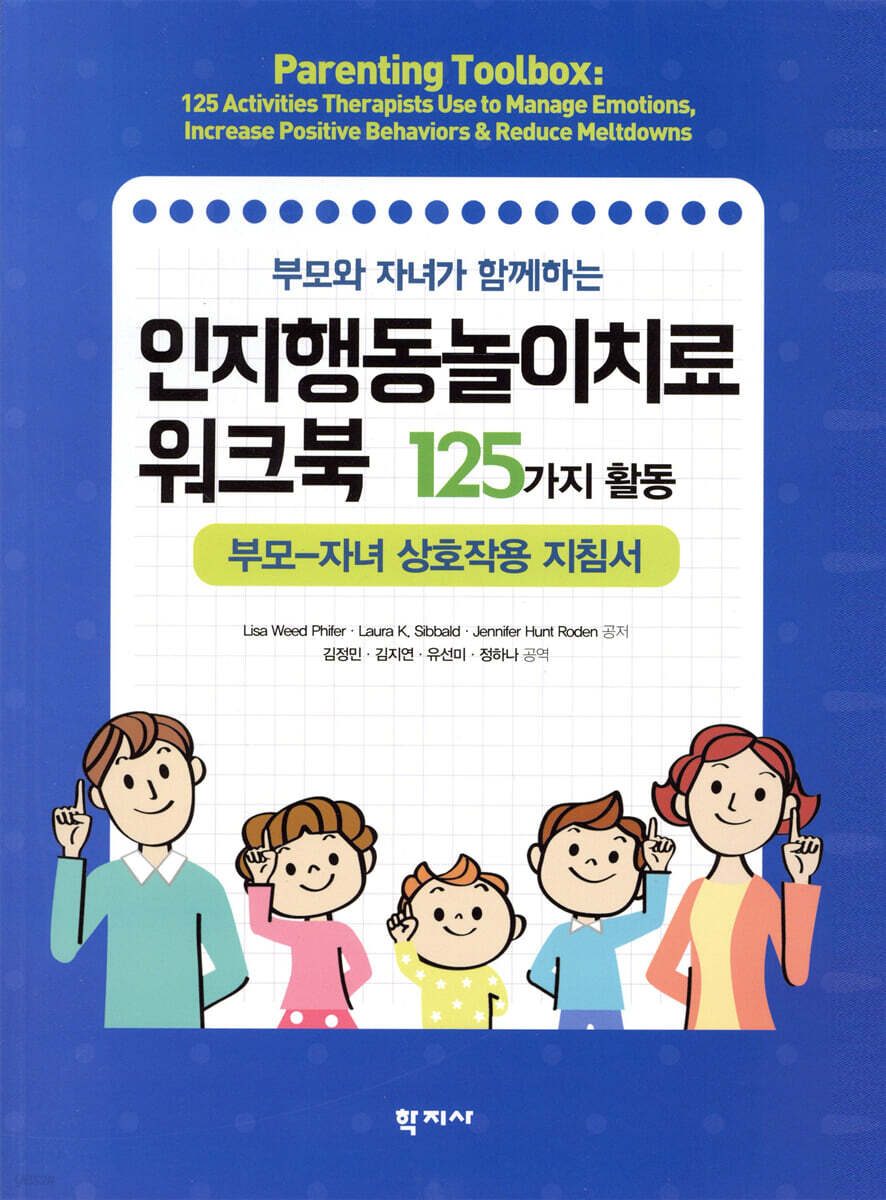
Cognitive Behavioral Play Therapy Workbook for Parents and Children: 125 Activities -
 |
Description
Book Introduction
This book presents a family-based approach that actively engages parents in solving problems they experience in their daily lives, unlike traditional approaches that focus solely on children to improve their problem behaviors.
The 125 diverse activities in this book will help you implement Cognitive Behavior Play Therapy (CBPT), a cognitive behavioral therapy that uses play as a medium for infants and children.
This book is designed to be used by therapists in their therapy with children, or for parents and children to work together under the guidance of a therapist.
It is also very useful as a self-help workbook to guide parents through activities they can do with their children.
This book aims to improve children's adaptive cognitive function, help them regulate their emotions, and learn appropriate social skills and coping strategies through healthy parent-child interactions.
Through the 125 engaging cognitive behavioral play therapy activities presented in the book, children can naturally understand the connection between thoughts, feelings, and actions and apply them easily and enjoyably.
We hope that this book will serve as a guide for both therapists and parents on healthy interactions with children.
The 125 diverse activities in this book will help you implement Cognitive Behavior Play Therapy (CBPT), a cognitive behavioral therapy that uses play as a medium for infants and children.
This book is designed to be used by therapists in their therapy with children, or for parents and children to work together under the guidance of a therapist.
It is also very useful as a self-help workbook to guide parents through activities they can do with their children.
This book aims to improve children's adaptive cognitive function, help them regulate their emotions, and learn appropriate social skills and coping strategies through healthy parent-child interactions.
Through the 125 engaging cognitive behavioral play therapy activities presented in the book, children can naturally understand the connection between thoughts, feelings, and actions and apply them easily and enjoyably.
We hope that this book will serve as a guide for both therapists and parents on healthy interactions with children.
index
Translator's Preface
Entering
Workbook Usage Table
Chapter 1: Understanding Your Child
Get to know your child
Defining your needs
My Chronicle
My dream
Symptoms and Impact
Most important information, introduction
The most important information
Support Network
Strengths and Weaknesses
Finding strengths, introduction
Finding Your Strengths: Parents
Finding Your Strengths: Children
Finding Your Strengths: Working Together
Influence Table
Setting positive goals
Goal Setting: Parents and Children, Introduction
Changing 'bad' behavior
Setting Goals: Parents
Setting Goals: Children
Plan your action
Review
Chapter 2 Emotions and Feelings
Emotion recognition
Collecting emotional words
Synonyms and Antonyms
Get to know yourself
A rainbow of emotions
Emotion Dice, Introduction
Emotion Dice Drawing
expression of emotions
My feelings
Feel my emotions
Emotional Thermometer
Parenting Emotion Thermometer
Frustration Thermometer
emotional regulation
Recognizing the limits of emotions
Creating a link
Connecting emotions, thoughts, and physical responses
How to convey 'I'
Emotional Outburst Coping Skills
Emotion tracking and data collection
Introducing Emotion Tracking Tools
Thoughts and Feelings Journal
Weekly Emotion Record Sheet
Action Log
Careless Behavior-Consequence Record
My Positive Thoughts Diary
Chapter 3: Supporting Social Skills
Self-exploration
What are my child's social communication skills?
What are my social communication skills?
Reading my facial expressions and body language
Who are my communication partners?
Accept or reject friend?
Building relationships
Learning Something New: Adult Interviews
Get the gist of the conversation
“How are you today?” vs.
"what's the matter?"
Building confidence and trust
That's rude!
Interaction with peers
Learning Something New: Peer Interviews
Preparation stage
Action!
Say it out loud vs.
Keep it in your heart
Make a plan
Explore different perspectives
Seeing all perspectives
My thoughts, your thoughts
A Look at the Movies: Heroes and Villains
Create your own comics
The power of persuasion
Chapter 4 Cognitive Abilities
Developing flexibility
Family flexibility
When an unexpected problem arises
Flexibility: Backup Plans
Coping and Change
Alternate drawing
Thought patterns
Action and Consequences
Reframe your thoughts
The size of my problem
Problem vs.
reaction
Ask for help
Planning and arranging in order
Opportunities for growth
Sorting and Prioritizing: After-School Routine
List of work order
What's for dinner tonight?
small victories
Time management
Prioritization practice
Prioritize
How long will it take?
Create a schedule
What to do now and what to do later
Chapter 5: Developing Coping Skills
Defining Coping Skills
Triggers and Behaviors
When stress builds up
Coping Interview
trust bubble
Stop and think!
Conflict and Control
Give up control
But, whose turn is it?
Conflict and Consequences
Be careful what you say
Troubleshooting traffic lights
Keep your composure
Control card
List of 10 Behaviors
Let go of your worries
Recipe for Success
Find ways to calm your anger
mindfulness
Mindfulness Maze
Focus on your body
Relaxation dice
What does peace look like?
Chain of Peace
Chapter 6 Family Dynamics
family relationships
Family Word Cloud
The role of the family
Family Resume
Decorating our family symbol
What is our family's superpower?
Rules, Rewards, and Consequences
Core Values
Values, Rules, and Responsibilities
Defining rewards and outcomes
Things to do vs.
What not to do: Understand expectations
Family expectations
My Responsibility Chart
Daily Goal Sheet
Got it!
Understanding my responsibilities
Determine my tasks and rewards
lucky draw
Work and Card
Homework helper
Free Time Schedule
Creating a Housework Schedule
Digital Parenting
The Pros and Cons of My Family's Use of Digital Technology
Cell Phone Rules and Contracts
Digital Device Usage Rules and Agreement
Social Media Rules and Agreements
Tips for Digital Parenting
Parental Checkup Plan
Raising Responsible Digital Use in Children
Post handling
Controlling digital responses
Finding balance
Entering
Workbook Usage Table
Chapter 1: Understanding Your Child
Get to know your child
Defining your needs
My Chronicle
My dream
Symptoms and Impact
Most important information, introduction
The most important information
Support Network
Strengths and Weaknesses
Finding strengths, introduction
Finding Your Strengths: Parents
Finding Your Strengths: Children
Finding Your Strengths: Working Together
Influence Table
Setting positive goals
Goal Setting: Parents and Children, Introduction
Changing 'bad' behavior
Setting Goals: Parents
Setting Goals: Children
Plan your action
Review
Chapter 2 Emotions and Feelings
Emotion recognition
Collecting emotional words
Synonyms and Antonyms
Get to know yourself
A rainbow of emotions
Emotion Dice, Introduction
Emotion Dice Drawing
expression of emotions
My feelings
Feel my emotions
Emotional Thermometer
Parenting Emotion Thermometer
Frustration Thermometer
emotional regulation
Recognizing the limits of emotions
Creating a link
Connecting emotions, thoughts, and physical responses
How to convey 'I'
Emotional Outburst Coping Skills
Emotion tracking and data collection
Introducing Emotion Tracking Tools
Thoughts and Feelings Journal
Weekly Emotion Record Sheet
Action Log
Careless Behavior-Consequence Record
My Positive Thoughts Diary
Chapter 3: Supporting Social Skills
Self-exploration
What are my child's social communication skills?
What are my social communication skills?
Reading my facial expressions and body language
Who are my communication partners?
Accept or reject friend?
Building relationships
Learning Something New: Adult Interviews
Get the gist of the conversation
“How are you today?” vs.
"what's the matter?"
Building confidence and trust
That's rude!
Interaction with peers
Learning Something New: Peer Interviews
Preparation stage
Action!
Say it out loud vs.
Keep it in your heart
Make a plan
Explore different perspectives
Seeing all perspectives
My thoughts, your thoughts
A Look at the Movies: Heroes and Villains
Create your own comics
The power of persuasion
Chapter 4 Cognitive Abilities
Developing flexibility
Family flexibility
When an unexpected problem arises
Flexibility: Backup Plans
Coping and Change
Alternate drawing
Thought patterns
Action and Consequences
Reframe your thoughts
The size of my problem
Problem vs.
reaction
Ask for help
Planning and arranging in order
Opportunities for growth
Sorting and Prioritizing: After-School Routine
List of work order
What's for dinner tonight?
small victories
Time management
Prioritization practice
Prioritize
How long will it take?
Create a schedule
What to do now and what to do later
Chapter 5: Developing Coping Skills
Defining Coping Skills
Triggers and Behaviors
When stress builds up
Coping Interview
trust bubble
Stop and think!
Conflict and Control
Give up control
But, whose turn is it?
Conflict and Consequences
Be careful what you say
Troubleshooting traffic lights
Keep your composure
Control card
List of 10 Behaviors
Let go of your worries
Recipe for Success
Find ways to calm your anger
mindfulness
Mindfulness Maze
Focus on your body
Relaxation dice
What does peace look like?
Chain of Peace
Chapter 6 Family Dynamics
family relationships
Family Word Cloud
The role of the family
Family Resume
Decorating our family symbol
What is our family's superpower?
Rules, Rewards, and Consequences
Core Values
Values, Rules, and Responsibilities
Defining rewards and outcomes
Things to do vs.
What not to do: Understand expectations
Family expectations
My Responsibility Chart
Daily Goal Sheet
Got it!
Understanding my responsibilities
Determine my tasks and rewards
lucky draw
Work and Card
Homework helper
Free Time Schedule
Creating a Housework Schedule
Digital Parenting
The Pros and Cons of My Family's Use of Digital Technology
Cell Phone Rules and Contracts
Digital Device Usage Rules and Agreement
Social Media Rules and Agreements
Tips for Digital Parenting
Parental Checkup Plan
Raising Responsible Digital Use in Children
Post handling
Controlling digital responses
Finding balance
GOODS SPECIFICS
- Publication date: November 15, 2022
- Page count, weight, size: 163 pages | 470g | 188*257*20mm
- ISBN13: 9788999727856
- ISBN10: 8999727858
You may also like
카테고리
korean


korean

![GQ KOREA Mark (Monthly): December [2025]](http://librairie.coreenne.fr/cdn/shop/files/8ef265dbbfbf186523ed75ba7319009d.jpg?v=1765340328&width=3840)


