

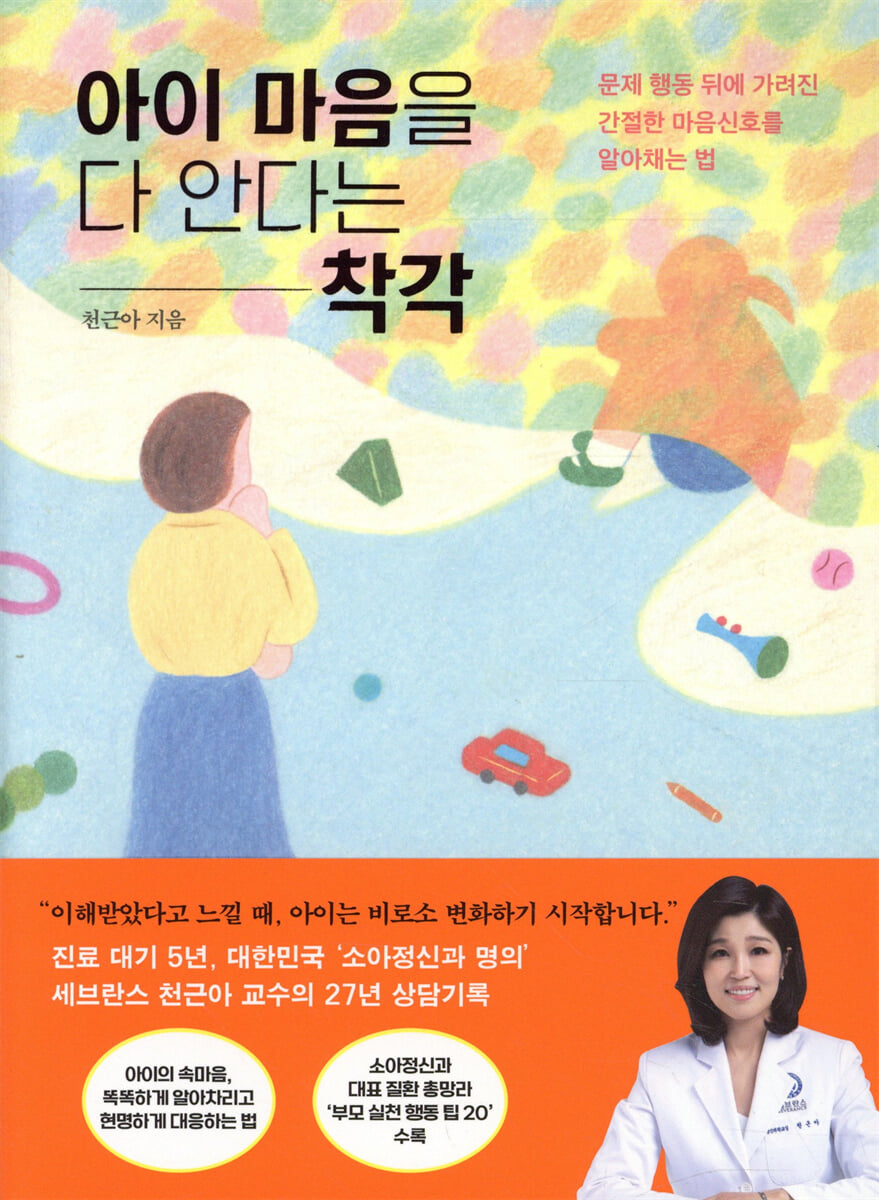
The illusion of knowing a child's mind
 |
Description
Book Introduction
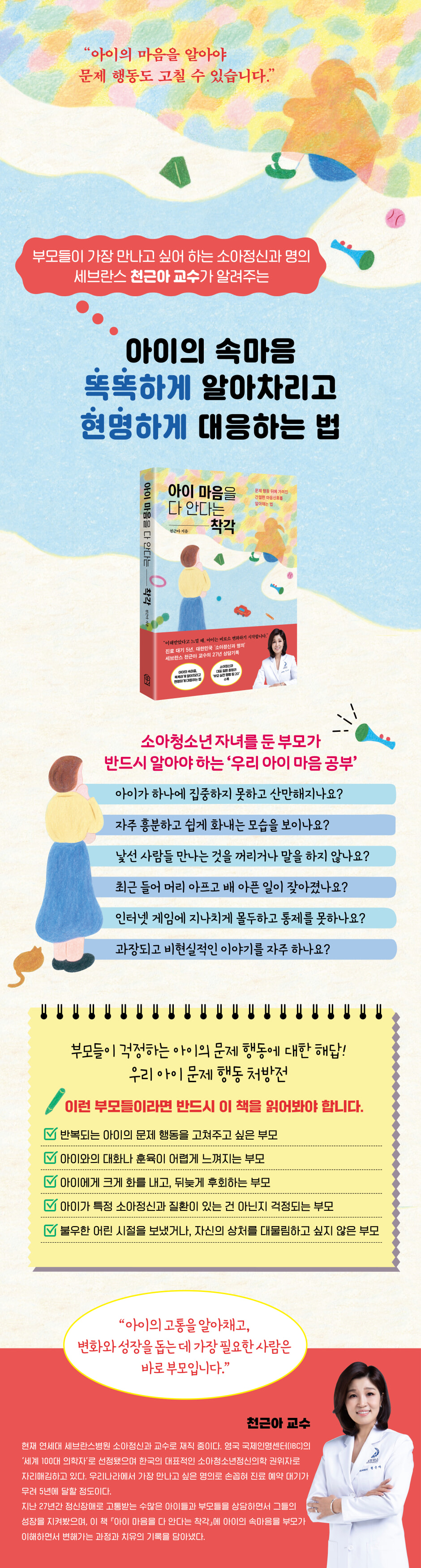
5 Years of Waiting Time for Treatment: The Child Psychiatrist Parents Want to See Most Professor Cheon Geun-ah's prescription for problem behavior in children and adolescents aged 4 and older! The one parenting guide that will strengthen the relationship between parents and children. A new book by Professor Chun Geun-ah, a specialist at Yonsei Severance Hospital, a leading pediatric psychiatrist and a frequent topic of discussion in the parenting community, who is considered one of the doctors most sought-after by parents. Many parents worry and have anxiety about their children's development and mental health, but very few actually monitor their children closely and quickly recognize problems. "The Illusion of Knowing Your Child's Mind" is a comprehensive book that covers the major psychiatric disorders and recurring behavioral problems that parents worry about in their children. It will be of great help to parents who have difficulty communicating with their children or who experience conflict because they cannot properly recognize the emotional signals their children are sending. This book not only helps children understand their current mental health, but also allows them to reflect on their relationship with their parents and their own childhood, helping to strengthen the bond between parents and children. |
- You can preview some of the book's contents.
Preview
index
prolog.
To the parents who missed their child's signals today too
PART 1.
Signs Your Child Should Never Miss
“Children always send signals to their parents.”
01.
A child's heart is revealed through words and actions.
There is no 'sudden one day' in a child's behavior / Hidden desperate signals in words and actions / Why angry children are healthier than those who don't / Helping children express their feelings accurately in words / In fact, it is a signal that they want to be loved
02.
What children desperately want from their parents
Children are bright enough just the way they are / Children's concerns should be fully acknowledged / Children are hurt even by their parents' nonverbal messages / Children cannot be changed with just the right words / Children grow up according to their parents' beliefs
03.
When a sensitive and consistent response from parents is absolutely necessary
Three basic principles for responding to a child's signals / What parents must know about their child's signals / When a child signals by not doing something they should do / When a child signals by doing something they shouldn't do / When a child signals in other ways / The basic principles for responding that parents must follow
04.
A child refuels in the world of his parents.
Parents are a child's greatest world and a safe base / People who will support a child until the end / How to refuel a child / Children who grow up seeing their parents' happiness / There is no such thing as a perfect parent
PART 2.
So that our children's hearts don't hurt, and our parents' hearts don't get sadder.
“Various Danger Signals Your Child Sends”
(1) Not doing what needs to be done
01.
A child who won't talk to anyone except family
: Selective mutism
A child who uses silence as a weapon / Anxiety makes it impossible to speak even when you want to / Why you have no choice but to run away into silence / Parents who do not speak for their children
02.
If your child is distracted and can't finish anything,
: Attention Deficit Hyperactivity Disorder 1 (ADHD)
Neurodevelopmental disorders that cause inattention, hyperactivity, and impulsivity / ADHD children's concentration / Leonardo da Vinci's ADHD / A child's strengths overshadowed by distractible and impulsive behavior
03.
If ADHD is suspected even in adults
Attention Deficit Hyperactivity Disorder 2
When Adults Realize They Have ADHD / ADHD in High-Academic Children Is Hidden / Why Adult ADHD Must Be Treated / Starting with Improving Negative Self-Image
04.
A child who becomes stiff in front of others
: stage fright
The fear of standing alone in front of others / A fear worse than death / The pressure to be perfect without making mistakes / Break the cycle of irrational thoughts
05.
About sleep problems that occur during the night
: Sleepwalking and night terrors
A child who starts to move around while sleeping / The functions of REM and non-REM sleep / If a child doesn't get enough sleep / Creating an environment conducive to good sleep is important
06.
If your child refuses to eat due to stress about his or her appearance
: Anorexia nervosa
Dinnertime Warfare with Your Child / Your Child's Distorted Perception of His/Her Appearance / Small but Important Warning Signs Your Child Sends / Don't Fight with Your Child Over Food
(2) Doing something you shouldn't do
07.
A child who is aggressive towards his parents in everything
: Oppositional defiant disorder
A child who hits his mother / Why a child's anger begins / A child's difficult temperament and oppositional defiant disorder / Wrong rewards reinforce a child's aggressive rebellion / How to make sure that your parents love you
08.
How to Discipline Effectively Without Violence
: Child abuse issues
Inherited Child Abuse / Where Child Abuse Mostly Occurs: at Home / Child Abuse Cannot Be Justified / How to Effectively Discipline Without Violence
09.
If you do not hesitate to commit cruel acts
: Conduct disorder
A child who deliberately dropped a cat / Antisocial personality disorder and psychopathy / Prevention and treatment are more important than any other disease.
10.
A child who is overly obsessed with games
: Internet gaming disorder
Why Children Play Online Games / Game Addiction is a Disease / How to Free Yourself from Game Addiction
11.
For a traumatized child to recover
: Post-traumatic stress disorder (PTSD)
A child knocking over a mother doll with a father doll / Children know everything about domestic violence / What happens to a child who witnesses violence / The most important thing in overcoming psychological trauma
12.
A child who is obsessed with wrong ideas and engages in repetitive behaviors
: Obsessive-compulsive disorder
Repetitive behaviors to reduce anxiety / A child who struggles to eat with a metal spoon / Name your child's obsession with a villain
13.
Strange behavior in children whenever they get angry
: Hair pulling disorder
A child who keeps pulling out his hair / A means of relieving anger / Children need to be able to express their emotions through words / How to effectively change the habit of pulling out hair
14.
If a child injures himself
: Non-suicidal self-harm
Children also send signals that they want to live / Self-harm and suicidal intent / Self-harm marks hidden by a blouse / The real reason children injure themselves / Let them signal when they feel the urge to self-harm / Suggest healthy ways to cope
(3) Child's signals sent in other ways
15.
A child who frequently suffers from headaches and stomachaches
: somatic symptom disorder
A child complaining of medically unexplained headaches / If a child cannot express stress / If the pain benefits the child / It is safe to be honest about how difficult it is
16.
Symptoms of repeated blinking and sniffling
: Tic disorder
A child's tic symptoms suddenly appear / This is not a behavior that the child can endure with their own will / Switch to another behavior instead of the tic behavior
17.
A boy who only draws cars
: Autism Spectrum Disorder 1
A child who stubbornly does only what he wants to do / Asperger syndrome and autism spectrum disorder / Autism spectrum disorder is not due to the mother / A child with autism spectrum disorder who became a car designer
18.
If you have normal intelligence but fail the 'false belief task'
: Autism Spectrum Disorder 2
What the 'False Belief Challenge' Teach Us / A Child Who Reads Numbers, the Alphabet, and Korean at Age Two / A Brother's Autism Spectrum Disorder / The Ability to Think from Others' Perspectives
19.
If you are having difficulties in your relationships with friends
: Autism Spectrum Disorder 3
A child who is disliked by all his classmates / A 'classroom police officer' who is easily bullied / A child who can do well in things he likes
20.
If you don't sleep and keep trying to do something
: Childhood mania
The Child Who Says He'll Rule the Universe / Grandiose Thinking and Sleep Disorders Are the Main Symptoms / Puberty Shouldn't Be the Cause / Four-Step Family-Centered Treatment for Childhood Mania
Epilogue.
Despite this, the child can grow well.
To the parents who missed their child's signals today too
PART 1.
Signs Your Child Should Never Miss
“Children always send signals to their parents.”
01.
A child's heart is revealed through words and actions.
There is no 'sudden one day' in a child's behavior / Hidden desperate signals in words and actions / Why angry children are healthier than those who don't / Helping children express their feelings accurately in words / In fact, it is a signal that they want to be loved
02.
What children desperately want from their parents
Children are bright enough just the way they are / Children's concerns should be fully acknowledged / Children are hurt even by their parents' nonverbal messages / Children cannot be changed with just the right words / Children grow up according to their parents' beliefs
03.
When a sensitive and consistent response from parents is absolutely necessary
Three basic principles for responding to a child's signals / What parents must know about their child's signals / When a child signals by not doing something they should do / When a child signals by doing something they shouldn't do / When a child signals in other ways / The basic principles for responding that parents must follow
04.
A child refuels in the world of his parents.
Parents are a child's greatest world and a safe base / People who will support a child until the end / How to refuel a child / Children who grow up seeing their parents' happiness / There is no such thing as a perfect parent
PART 2.
So that our children's hearts don't hurt, and our parents' hearts don't get sadder.
“Various Danger Signals Your Child Sends”
(1) Not doing what needs to be done
01.
A child who won't talk to anyone except family
: Selective mutism
A child who uses silence as a weapon / Anxiety makes it impossible to speak even when you want to / Why you have no choice but to run away into silence / Parents who do not speak for their children
02.
If your child is distracted and can't finish anything,
: Attention Deficit Hyperactivity Disorder 1 (ADHD)
Neurodevelopmental disorders that cause inattention, hyperactivity, and impulsivity / ADHD children's concentration / Leonardo da Vinci's ADHD / A child's strengths overshadowed by distractible and impulsive behavior
03.
If ADHD is suspected even in adults
Attention Deficit Hyperactivity Disorder 2
When Adults Realize They Have ADHD / ADHD in High-Academic Children Is Hidden / Why Adult ADHD Must Be Treated / Starting with Improving Negative Self-Image
04.
A child who becomes stiff in front of others
: stage fright
The fear of standing alone in front of others / A fear worse than death / The pressure to be perfect without making mistakes / Break the cycle of irrational thoughts
05.
About sleep problems that occur during the night
: Sleepwalking and night terrors
A child who starts to move around while sleeping / The functions of REM and non-REM sleep / If a child doesn't get enough sleep / Creating an environment conducive to good sleep is important
06.
If your child refuses to eat due to stress about his or her appearance
: Anorexia nervosa
Dinnertime Warfare with Your Child / Your Child's Distorted Perception of His/Her Appearance / Small but Important Warning Signs Your Child Sends / Don't Fight with Your Child Over Food
(2) Doing something you shouldn't do
07.
A child who is aggressive towards his parents in everything
: Oppositional defiant disorder
A child who hits his mother / Why a child's anger begins / A child's difficult temperament and oppositional defiant disorder / Wrong rewards reinforce a child's aggressive rebellion / How to make sure that your parents love you
08.
How to Discipline Effectively Without Violence
: Child abuse issues
Inherited Child Abuse / Where Child Abuse Mostly Occurs: at Home / Child Abuse Cannot Be Justified / How to Effectively Discipline Without Violence
09.
If you do not hesitate to commit cruel acts
: Conduct disorder
A child who deliberately dropped a cat / Antisocial personality disorder and psychopathy / Prevention and treatment are more important than any other disease.
10.
A child who is overly obsessed with games
: Internet gaming disorder
Why Children Play Online Games / Game Addiction is a Disease / How to Free Yourself from Game Addiction
11.
For a traumatized child to recover
: Post-traumatic stress disorder (PTSD)
A child knocking over a mother doll with a father doll / Children know everything about domestic violence / What happens to a child who witnesses violence / The most important thing in overcoming psychological trauma
12.
A child who is obsessed with wrong ideas and engages in repetitive behaviors
: Obsessive-compulsive disorder
Repetitive behaviors to reduce anxiety / A child who struggles to eat with a metal spoon / Name your child's obsession with a villain
13.
Strange behavior in children whenever they get angry
: Hair pulling disorder
A child who keeps pulling out his hair / A means of relieving anger / Children need to be able to express their emotions through words / How to effectively change the habit of pulling out hair
14.
If a child injures himself
: Non-suicidal self-harm
Children also send signals that they want to live / Self-harm and suicidal intent / Self-harm marks hidden by a blouse / The real reason children injure themselves / Let them signal when they feel the urge to self-harm / Suggest healthy ways to cope
(3) Child's signals sent in other ways
15.
A child who frequently suffers from headaches and stomachaches
: somatic symptom disorder
A child complaining of medically unexplained headaches / If a child cannot express stress / If the pain benefits the child / It is safe to be honest about how difficult it is
16.
Symptoms of repeated blinking and sniffling
: Tic disorder
A child's tic symptoms suddenly appear / This is not a behavior that the child can endure with their own will / Switch to another behavior instead of the tic behavior
17.
A boy who only draws cars
: Autism Spectrum Disorder 1
A child who stubbornly does only what he wants to do / Asperger syndrome and autism spectrum disorder / Autism spectrum disorder is not due to the mother / A child with autism spectrum disorder who became a car designer
18.
If you have normal intelligence but fail the 'false belief task'
: Autism Spectrum Disorder 2
What the 'False Belief Challenge' Teach Us / A Child Who Reads Numbers, the Alphabet, and Korean at Age Two / A Brother's Autism Spectrum Disorder / The Ability to Think from Others' Perspectives
19.
If you are having difficulties in your relationships with friends
: Autism Spectrum Disorder 3
A child who is disliked by all his classmates / A 'classroom police officer' who is easily bullied / A child who can do well in things he likes
20.
If you don't sleep and keep trying to do something
: Childhood mania
The Child Who Says He'll Rule the Universe / Grandiose Thinking and Sleep Disorders Are the Main Symptoms / Puberty Shouldn't Be the Cause / Four-Step Family-Centered Treatment for Childhood Mania
Epilogue.
Despite this, the child can grow well.
Detailed image
Into the book
“Please trust the child.”
This is what I say most to parents in my clinic.
When parents are asked to understand and trust their child's perspective, they express deep skepticism, saying, "Are you saying we should just let our child do whatever he or she wants, even though it's so obvious that he or she is going wrong? How can we possibly give him or her everything he or she asks?"
This confuses empathy and tolerance with unconditional acceptance.
A parent's attitude of being too permissive can actually ruin the child.
While understanding the child's feelings is crucial, there should be clear rules in the home, responsibility for the child's actions should be held, and parents should have the power to make decisions.
--- p.
35 From “What Children Desperately Wish for Their Parents”
Children always want their parents' love, trust, and acceptance.
So, parents, who are the child's refueling station, are always busy.
But sometimes that standard doesn't fit.
This is when the child's needs and the parents' methods are at odds.
In such cases, parents may want to refuel their children, but their current charging devices do not work well.
In that case, the parents must refuel the child even if it means modifying the charging device.
Because the only place a child can replenish his or her fuel is through his or her parents.
In other words, it means that parents need to understand and empathize with what the child wants, not the love, trust, and recognition they want to give, and respond flexibly.
--- p.
61 From “Children Fill Up the Fuel in the World of Parents”
Children with ADHD often take a long time to start homework or journaling, and if they get stuck in the middle of a task, they are easily distracted by other things, so it is best to avoid creating situations like this in advance.
Additionally, praise your child generously for good behavior, but make sure to implement penalty items that you have decided on with your child in advance for behavior that causes harm to others.
At this time, parents' attitudes and principles must be consistent, and their responses must be immediate.
It is best if the disadvantage is something the child can implement and is symbolic.
For example, if a behavioral contract agreed upon with the child in advance includes a promise to receive a disadvantage for 'hitting a younger sibling', then even 'taking off one or two praise stickers' that were received could be considered a disadvantage.
The key here is that the disadvantage should not cause physical pain or anger to the child.
It is important to simply make them aware that engaging in problematic behavior will result in harm to themselves.
--- p.
84~85 From “If your child is distracted and can’t finish anything”
Oppositional defiant disorder is characterized by symptoms such as frequent irritability and anger, argumentativeness and refusal to follow rules, blaming others for one's own mistakes, and malicious and vindictive behavior.
Although there are differences depending on age and gender, the incidence is known to be around 3 to 4 out of 100 children.
While tantrums in two- or three-year-olds and adolescent rebellion are normal, oppositional defiant disorder is a behavioral disorder that is more severe and persistent than in children of the same age and causes impairment in daily life functions, so it must be carefully distinguished.
--- p.
136 From “Children who are aggressive towards their parents in everything”
Post-traumatic stress disorder symptoms are represented by re-experiencing of the traumatic event, avoidance, and hyperarousal.
That is, symptoms such as repeatedly re-experiencing the traumatic event and dreaming about it after being exposed to it, feeling startled or having a pounding heart when encountering a situation similar to the traumatic event, and avoiding places that remind one of the traumatic event and activities related to it.
If a child's state of arousal increases and they become overly alert and hypersensitive to everything, it can cause sleep disorders such as insomnia or night terrors (symptoms in which they suddenly wake up during sleep and scream or cry).
--- p.
178 From “How a Traumatized Child Can Recover”
Many parents mistakenly believe that their child is acting out on purpose when they can tolerate tics of their own accord.
So, we often find ourselves scolding our children by saying, “Can you please stop?”
When parents scold a child, the child tries not to engage in tic behavior, but this effort actually increases the 'premonitory impulse', which is the impulse immediately before the tic behavior.
A premonitory sensory impulse is literally a premonitory symptom that appears before the symptoms appear, and is a physical sensation that comes up just before the tic behavior.
When you feel a premonitory sensory impulse, you have to tic to relieve it, and the more impulses you have, the more tics you will do.
This is why experts advise parents to remain indifferent to their child's tic behavior rather than scolding them.
This is what I say most to parents in my clinic.
When parents are asked to understand and trust their child's perspective, they express deep skepticism, saying, "Are you saying we should just let our child do whatever he or she wants, even though it's so obvious that he or she is going wrong? How can we possibly give him or her everything he or she asks?"
This confuses empathy and tolerance with unconditional acceptance.
A parent's attitude of being too permissive can actually ruin the child.
While understanding the child's feelings is crucial, there should be clear rules in the home, responsibility for the child's actions should be held, and parents should have the power to make decisions.
--- p.
35 From “What Children Desperately Wish for Their Parents”
Children always want their parents' love, trust, and acceptance.
So, parents, who are the child's refueling station, are always busy.
But sometimes that standard doesn't fit.
This is when the child's needs and the parents' methods are at odds.
In such cases, parents may want to refuel their children, but their current charging devices do not work well.
In that case, the parents must refuel the child even if it means modifying the charging device.
Because the only place a child can replenish his or her fuel is through his or her parents.
In other words, it means that parents need to understand and empathize with what the child wants, not the love, trust, and recognition they want to give, and respond flexibly.
--- p.
61 From “Children Fill Up the Fuel in the World of Parents”
Children with ADHD often take a long time to start homework or journaling, and if they get stuck in the middle of a task, they are easily distracted by other things, so it is best to avoid creating situations like this in advance.
Additionally, praise your child generously for good behavior, but make sure to implement penalty items that you have decided on with your child in advance for behavior that causes harm to others.
At this time, parents' attitudes and principles must be consistent, and their responses must be immediate.
It is best if the disadvantage is something the child can implement and is symbolic.
For example, if a behavioral contract agreed upon with the child in advance includes a promise to receive a disadvantage for 'hitting a younger sibling', then even 'taking off one or two praise stickers' that were received could be considered a disadvantage.
The key here is that the disadvantage should not cause physical pain or anger to the child.
It is important to simply make them aware that engaging in problematic behavior will result in harm to themselves.
--- p.
84~85 From “If your child is distracted and can’t finish anything”
Oppositional defiant disorder is characterized by symptoms such as frequent irritability and anger, argumentativeness and refusal to follow rules, blaming others for one's own mistakes, and malicious and vindictive behavior.
Although there are differences depending on age and gender, the incidence is known to be around 3 to 4 out of 100 children.
While tantrums in two- or three-year-olds and adolescent rebellion are normal, oppositional defiant disorder is a behavioral disorder that is more severe and persistent than in children of the same age and causes impairment in daily life functions, so it must be carefully distinguished.
--- p.
136 From “Children who are aggressive towards their parents in everything”
Post-traumatic stress disorder symptoms are represented by re-experiencing of the traumatic event, avoidance, and hyperarousal.
That is, symptoms such as repeatedly re-experiencing the traumatic event and dreaming about it after being exposed to it, feeling startled or having a pounding heart when encountering a situation similar to the traumatic event, and avoiding places that remind one of the traumatic event and activities related to it.
If a child's state of arousal increases and they become overly alert and hypersensitive to everything, it can cause sleep disorders such as insomnia or night terrors (symptoms in which they suddenly wake up during sleep and scream or cry).
--- p.
178 From “How a Traumatized Child Can Recover”
Many parents mistakenly believe that their child is acting out on purpose when they can tolerate tics of their own accord.
So, we often find ourselves scolding our children by saying, “Can you please stop?”
When parents scold a child, the child tries not to engage in tic behavior, but this effort actually increases the 'premonitory impulse', which is the impulse immediately before the tic behavior.
A premonitory sensory impulse is literally a premonitory symptom that appears before the symptoms appear, and is a physical sensation that comes up just before the tic behavior.
When you feel a premonitory sensory impulse, you have to tic to relieve it, and the more impulses you have, the more tics you will do.
This is why experts advise parents to remain indifferent to their child's tic behavior rather than scolding them.
--- p.
229~230 From “Repeated blinking and sniffling symptoms”
229~230 From “Repeated blinking and sniffling symptoms”
Publisher's Review
“Teacher, will my child be okay?”
Professor Cheon Geun-ah, a pediatric psychiatrist at Severance Hospital,
Answering the questions of parents concerned about their children's behavioral problems.
Professor Chun Geun-ah, a pediatric psychiatrist at Yonsei Severance Hospital, is renowned for her 5-year waiting list for treatment, and is often mentioned in parenting communities as the doctor most desired by parents. Her new book, "The Illusion of Knowing Your Child's Mind," has been published by Wisdom House.
The author, a leading expert in tics, ADHD, and autism spectrum disorders, says that while many parents worry and have anxiety about their children's development and mental health, very few actually observe and assess their children properly.
This book contains stories of countless children and parents the author encountered in his clinic over 27 years.
In particular, it contains detailed information on problem behaviors and representative child psychiatric diseases that can be experienced by any child or adolescent over the age of 4.
The process of the child gradually changing and growing through counseling and treatment in the clinic and changes in the parents' behavior from the time the child's problem behavior occurs is vividly recorded.
Struggling with children's behavioral problems isn't something that only happens in certain families.
If we look closely at the case, we can see that it closely matches many of the 'problem behaviors' we commonly encounter in children in everyday life.
This is something that can easily happen in an ordinary, normal household.
“A child’s behavior doesn’t suddenly change one day.”
The mind of a child who is mistaken by his parents
Warning Signs in Children That Parents Miss
Since parents have been caring for their children since they were born, they usually think that they know their children's hearts better than anyone else, and that children trust and rely on their parents the most.
But because of that thinking, we can easily overlook the urgent warning signals our children are sending us.
Because parents cannot see their child's inner feelings as clearly as they think, it is essential for parents to constantly make an effort to recognize the emotional signals their child is sending.
Children sometimes signal their emotions through overly distracting and aggressive behavior, or through passive and silent behavior, often through pain such as a stomachache or headache.
Parents are perplexed by the sudden onset of their child's problem behavior, but there is no such thing as 'sudden change' in a child's words and actions.
Clearly, the child was sending signals asking for help long before the parents noticed.
In times like these, it is more important to acknowledge the extent of the child's pain rather than focusing on the child's problematic behavior.
Because it is my child's desperate signal for help, because he is angry, anxious, and lonely.
A book that makes parents look back on their own childhood and present.
It will make the relationship between parents and children strong and unshakable.
The only parenting guidebook!
Rather than trying to control and pressure problem behavior, children change when parents try to understand their children's feelings and when the children feel understood by their parents.
If parents respond quickly and wisely to their child's warning signs, the child will trust them more and feel more secure.
And the problem behavior will decrease over time.
This book, "The Illusion of Knowing Your Child's Mind," covers a wide range of pediatric psychiatric disorders, including ADHD, tics, obsessive-compulsive disorder, and game addiction.
Additionally, it suggests ways for parents to accept their children's problems without being influenced by their own emotions and to respond wisely.
This book will be of great help not only to parents of children facing behavioral problems or suffering from mental disorders, but also to parents who are highly concerned about their children's emotional development and mental health.
This book will help parents learn parenting tips they can put into practice right now, and provide time for reflection on their own childhood and present, thereby strengthening and solidifying the relationship between parents and children.
Professor Cheon Geun-ah, a pediatric psychiatrist at Severance Hospital,
Answering the questions of parents concerned about their children's behavioral problems.
Professor Chun Geun-ah, a pediatric psychiatrist at Yonsei Severance Hospital, is renowned for her 5-year waiting list for treatment, and is often mentioned in parenting communities as the doctor most desired by parents. Her new book, "The Illusion of Knowing Your Child's Mind," has been published by Wisdom House.
The author, a leading expert in tics, ADHD, and autism spectrum disorders, says that while many parents worry and have anxiety about their children's development and mental health, very few actually observe and assess their children properly.
This book contains stories of countless children and parents the author encountered in his clinic over 27 years.
In particular, it contains detailed information on problem behaviors and representative child psychiatric diseases that can be experienced by any child or adolescent over the age of 4.
The process of the child gradually changing and growing through counseling and treatment in the clinic and changes in the parents' behavior from the time the child's problem behavior occurs is vividly recorded.
Struggling with children's behavioral problems isn't something that only happens in certain families.
If we look closely at the case, we can see that it closely matches many of the 'problem behaviors' we commonly encounter in children in everyday life.
This is something that can easily happen in an ordinary, normal household.
“A child’s behavior doesn’t suddenly change one day.”
The mind of a child who is mistaken by his parents
Warning Signs in Children That Parents Miss
Since parents have been caring for their children since they were born, they usually think that they know their children's hearts better than anyone else, and that children trust and rely on their parents the most.
But because of that thinking, we can easily overlook the urgent warning signals our children are sending us.
Because parents cannot see their child's inner feelings as clearly as they think, it is essential for parents to constantly make an effort to recognize the emotional signals their child is sending.
Children sometimes signal their emotions through overly distracting and aggressive behavior, or through passive and silent behavior, often through pain such as a stomachache or headache.
Parents are perplexed by the sudden onset of their child's problem behavior, but there is no such thing as 'sudden change' in a child's words and actions.
Clearly, the child was sending signals asking for help long before the parents noticed.
In times like these, it is more important to acknowledge the extent of the child's pain rather than focusing on the child's problematic behavior.
Because it is my child's desperate signal for help, because he is angry, anxious, and lonely.
A book that makes parents look back on their own childhood and present.
It will make the relationship between parents and children strong and unshakable.
The only parenting guidebook!
Rather than trying to control and pressure problem behavior, children change when parents try to understand their children's feelings and when the children feel understood by their parents.
If parents respond quickly and wisely to their child's warning signs, the child will trust them more and feel more secure.
And the problem behavior will decrease over time.
This book, "The Illusion of Knowing Your Child's Mind," covers a wide range of pediatric psychiatric disorders, including ADHD, tics, obsessive-compulsive disorder, and game addiction.
Additionally, it suggests ways for parents to accept their children's problems without being influenced by their own emotions and to respond wisely.
This book will be of great help not only to parents of children facing behavioral problems or suffering from mental disorders, but also to parents who are highly concerned about their children's emotional development and mental health.
This book will help parents learn parenting tips they can put into practice right now, and provide time for reflection on their own childhood and present, thereby strengthening and solidifying the relationship between parents and children.
GOODS SPECIFICS
- Publication date: November 2, 2022
- Page count, weight, size: 280 pages | 436g | 145*200*17mm
- ISBN13: 9791168124585
- ISBN10: 1168124581
You may also like
카테고리
korean


korean

![GQ KOREA Mark (Monthly): December [2025]](http://librairie.coreenne.fr/cdn/shop/files/8ef265dbbfbf186523ed75ba7319009d.jpg?v=1765340328&width=3840)


