

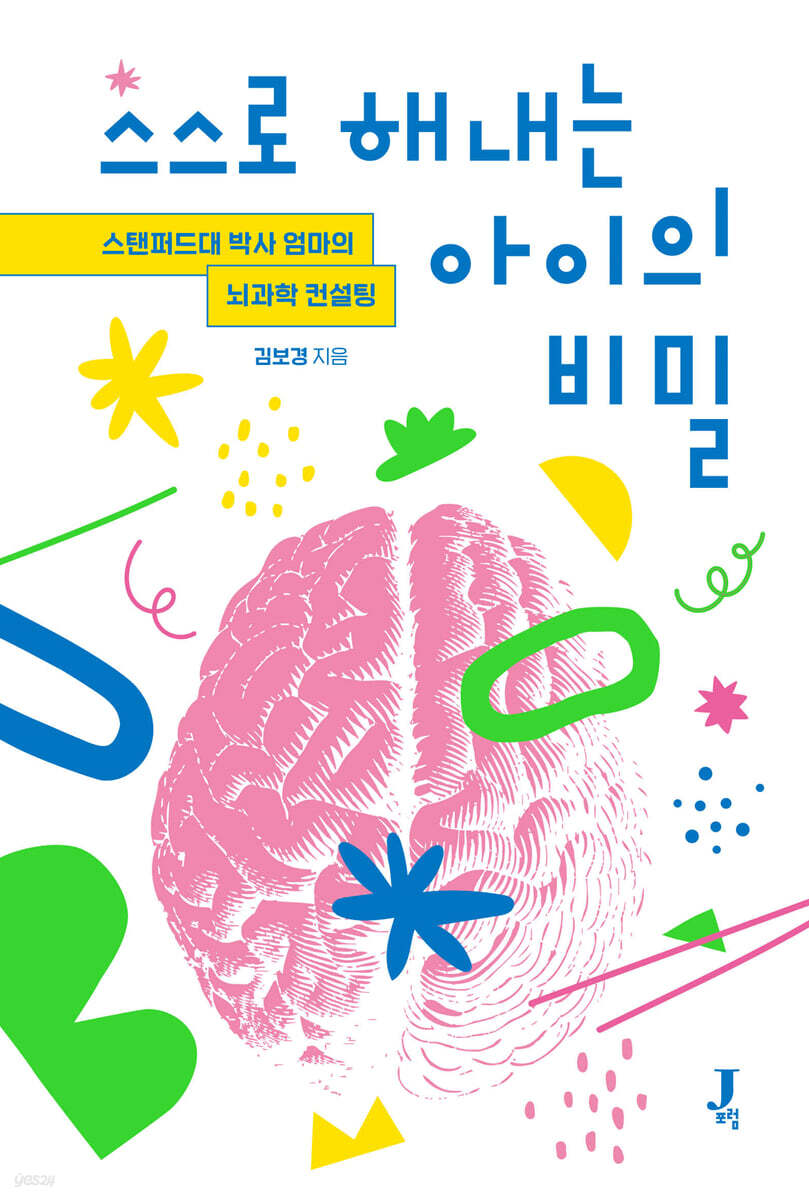
The Secret of a Child Who Can Do It on Their Own
 |
Description
Book Introduction
Every parent wants to help their child develop good habits.
The problem is that it's hard to know how to develop good habits, and it's even harder to put them into practice.
Author Bo-Kyung Kim, a Stanford University neuropsychologist and mother of two, presents specific and practical methods for this in her book, “The Secret of Children Who Can Do It on Their Own.”
It delves into how children's brains form habits and how those habits affect learning, emotional regulation, and social interactions.
The problem is that it's hard to know how to develop good habits, and it's even harder to put them into practice.
Author Bo-Kyung Kim, a Stanford University neuropsychologist and mother of two, presents specific and practical methods for this in her book, “The Secret of Children Who Can Do It on Their Own.”
It delves into how children's brains form habits and how those habits affect learning, emotional regulation, and social interactions.
- You can preview some of the book's contents.
Preview
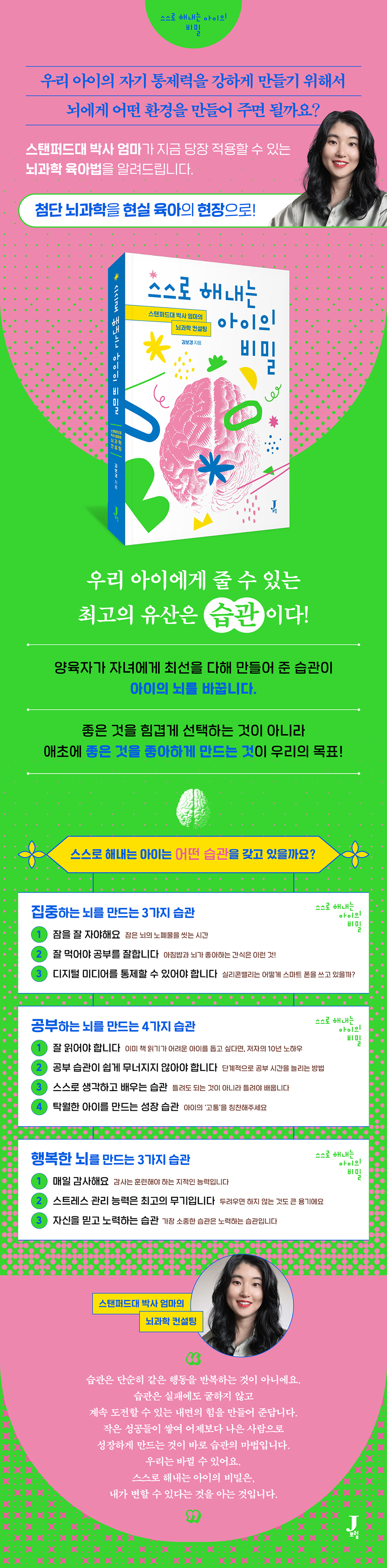
index
prolog
The magic that changes our children's innate brains
Part 1: When your habits change, your brain changes.
Chapter 1.
I hope my child doesn't live with a three-day resolution.
01.
How does the kid next door know how to do things so well?
There are no bad children.
I just have bad habits
Good habits create a smart brain.
02.
Three Reasons Why Your Child Won't Change No Matter How Many Times You Tell Them
1.
Not repeated enough
2.
I trust my child's will too much
3.
I want it to be perfect from the start
03.
The power of habit is more powerful than any secret.
Why did Kim Yuna say, "I just do it"?
Habits make the same thing easier.
The illusion that eating chocolate makes you happier than eating vegetables
Habits change the standard of happiness.
Was Mozart's brain innate?
Habits change the brain
04.
Ages 4-11: The Age of Building the Brain for Achievement
The greatest gift a parent can give is habit.
When laying the foundation for learning ability
Eat well, sleep well, and play well for your brain to develop.
The social brain blossoms
Prepare for independence during adolescence
Chapter 2: Teach Your Brain Habits
01. How does the brain learn habits?
A child's brain learns through experience.
When an experience is repeated, it becomes a habit.
Dopamine, the Secret Weapon of Habit Formation
02.
5 Magical Steps to Building Habits
Step 1: Set Your Goals - Clearly Define Your Destination
Step 2: Selecting Actions - Choosing the right target actions will lead to easier success.
Step 3: The Power of Reward - No Reward, No Repetition
Step 4: Signaling - Pulling the Trigger
Step 5: Repeat, repeat - until the action happens.
Chapter 3.
Five Secrets to Easily Forming Habits
01. Before you start, change your thinking.
See the forest of oak trees in an acorn
Removing negative labels from your child
Why YouTubers Give Their Subscribers Names
Achieving goals as a team
02. One well-developed habit yields ten.
The domino effect of small habits
Planting the Seeds of Small Habits
Rooting out disruptive behavior
03. Two Secrets to Easier Execution
Secret 1: Reduce friction
Secret 2: Even bitter medicine tastes sweet when coated with sugar.
04. The Art of Compensation: Celebrate and Praise
To be intrinsic or extrinsic, that is the question.
Why Our House's Praise Stickers Failed
The best secret to giving rewards
The Art of Celebrating: "Congratulations on a Job Done"
The Art of Praise: On Praising the Process Rather than the Outcome
When Praise Becomes Poison
05. Create a comfortable routine for both parents and children.
Routine calms the brain
The Secret to Creating a Routine That Works
Just change the order of the routine and it will be maintained automatically.
Naming routines that stick in your child's ears
Step-by-step guide to designing a habit you can try yourself
Part 2: The Child's Habit of Doing It on Their Own
Chapter 1.
Three Habits for a Focused Brain
01. The optimal study brain is created at night.
Sleep is the time to wash away the brain's waste products.
If you use your smartphone before going to bed
To wake up early in the morning
Sleep Routine: If You Still Can't Fall Asleep
02. Eating habits that provide good fuel for the brain
You need to eat breakfast to study well.
A child who eats snacks smartly
What is invisible can be governed
03. Digital media habits that help you stay focused
On unbearable boredom
A child alone can't fight and win against all of Silicon Valley.
Smartphone Usage Rules to Reduce War with Your Child
Four smartphone management habits for study time
Chapter 2 Four Habits That Create a Studying Brain
01.
Reading habits that increase your study speed
Common characteristics of children who hate reading
The easiest way to make someone love books
A more reliable test of your skills than a reading comprehension workbook
Teaching a Child Who Reads Too Fast to Read at an Appropriate Pace
Reading that integrates the book's content with my thoughts
How to take your reading skills to the next level
10 Years of Know-How, Read Out Loud
02. Study habits that don't break easily
Three Essential Elements for Developing Study Habits
The minimum study hours per grade are this much
How to gradually increase your study time
Studying is not work
Items to improve your time management skills: alarms, timers, and planners
Time management is brain management
03. Habit of thinking and learning for yourself
A child who only solves problems without thinking
Why Children Living in the US Have Lower English Scores in Korea
It's okay to be wrong, you have to be wrong to learn.
Fixed Mindset and Growth Mindset
The habit of asking questions
The moment curiosity is satisfied, the brain develops.
Value your child's questions.
04. Growth habits that create outstanding children
The pain I choose makes me grow
Parents' Mistakes That Alleviate Their Child's Suffering
The habit of enduring pain
Praise your child's suffering
Chapter 3: Three Habits for a Happy Brain
01. Gratitude Habits to Cultivate Positive Thinking
Gratitude is an intellectual ability
Gratitude is a skill that must be trained.
Five Ways to Raise a Grateful Brain
02. Stress management habits to help your child grow into a strong-minded person.
Stress is also a habit
Trick your brain into changing your mood
The Importance of Speaking Out About Fear
The courage to say no
03. The habit of believing in yourself and making an effort
It takes habits to believe in yourself.
You are a self-sufficient child.
Epilogue
The Beauty of Imperfect Habits
The magic that changes our children's innate brains
Part 1: When your habits change, your brain changes.
Chapter 1.
I hope my child doesn't live with a three-day resolution.
01.
How does the kid next door know how to do things so well?
There are no bad children.
I just have bad habits
Good habits create a smart brain.
02.
Three Reasons Why Your Child Won't Change No Matter How Many Times You Tell Them
1.
Not repeated enough
2.
I trust my child's will too much
3.
I want it to be perfect from the start
03.
The power of habit is more powerful than any secret.
Why did Kim Yuna say, "I just do it"?
Habits make the same thing easier.
The illusion that eating chocolate makes you happier than eating vegetables
Habits change the standard of happiness.
Was Mozart's brain innate?
Habits change the brain
04.
Ages 4-11: The Age of Building the Brain for Achievement
The greatest gift a parent can give is habit.
When laying the foundation for learning ability
Eat well, sleep well, and play well for your brain to develop.
The social brain blossoms
Prepare for independence during adolescence
Chapter 2: Teach Your Brain Habits
01. How does the brain learn habits?
A child's brain learns through experience.
When an experience is repeated, it becomes a habit.
Dopamine, the Secret Weapon of Habit Formation
02.
5 Magical Steps to Building Habits
Step 1: Set Your Goals - Clearly Define Your Destination
Step 2: Selecting Actions - Choosing the right target actions will lead to easier success.
Step 3: The Power of Reward - No Reward, No Repetition
Step 4: Signaling - Pulling the Trigger
Step 5: Repeat, repeat - until the action happens.
Chapter 3.
Five Secrets to Easily Forming Habits
01. Before you start, change your thinking.
See the forest of oak trees in an acorn
Removing negative labels from your child
Why YouTubers Give Their Subscribers Names
Achieving goals as a team
02. One well-developed habit yields ten.
The domino effect of small habits
Planting the Seeds of Small Habits
Rooting out disruptive behavior
03. Two Secrets to Easier Execution
Secret 1: Reduce friction
Secret 2: Even bitter medicine tastes sweet when coated with sugar.
04. The Art of Compensation: Celebrate and Praise
To be intrinsic or extrinsic, that is the question.
Why Our House's Praise Stickers Failed
The best secret to giving rewards
The Art of Celebrating: "Congratulations on a Job Done"
The Art of Praise: On Praising the Process Rather than the Outcome
When Praise Becomes Poison
05. Create a comfortable routine for both parents and children.
Routine calms the brain
The Secret to Creating a Routine That Works
Just change the order of the routine and it will be maintained automatically.
Naming routines that stick in your child's ears
Step-by-step guide to designing a habit you can try yourself
Part 2: The Child's Habit of Doing It on Their Own
Chapter 1.
Three Habits for a Focused Brain
01. The optimal study brain is created at night.
Sleep is the time to wash away the brain's waste products.
If you use your smartphone before going to bed
To wake up early in the morning
Sleep Routine: If You Still Can't Fall Asleep
02. Eating habits that provide good fuel for the brain
You need to eat breakfast to study well.
A child who eats snacks smartly
What is invisible can be governed
03. Digital media habits that help you stay focused
On unbearable boredom
A child alone can't fight and win against all of Silicon Valley.
Smartphone Usage Rules to Reduce War with Your Child
Four smartphone management habits for study time
Chapter 2 Four Habits That Create a Studying Brain
01.
Reading habits that increase your study speed
Common characteristics of children who hate reading
The easiest way to make someone love books
A more reliable test of your skills than a reading comprehension workbook
Teaching a Child Who Reads Too Fast to Read at an Appropriate Pace
Reading that integrates the book's content with my thoughts
How to take your reading skills to the next level
10 Years of Know-How, Read Out Loud
02. Study habits that don't break easily
Three Essential Elements for Developing Study Habits
The minimum study hours per grade are this much
How to gradually increase your study time
Studying is not work
Items to improve your time management skills: alarms, timers, and planners
Time management is brain management
03. Habit of thinking and learning for yourself
A child who only solves problems without thinking
Why Children Living in the US Have Lower English Scores in Korea
It's okay to be wrong, you have to be wrong to learn.
Fixed Mindset and Growth Mindset
The habit of asking questions
The moment curiosity is satisfied, the brain develops.
Value your child's questions.
04. Growth habits that create outstanding children
The pain I choose makes me grow
Parents' Mistakes That Alleviate Their Child's Suffering
The habit of enduring pain
Praise your child's suffering
Chapter 3: Three Habits for a Happy Brain
01. Gratitude Habits to Cultivate Positive Thinking
Gratitude is an intellectual ability
Gratitude is a skill that must be trained.
Five Ways to Raise a Grateful Brain
02. Stress management habits to help your child grow into a strong-minded person.
Stress is also a habit
Trick your brain into changing your mood
The Importance of Speaking Out About Fear
The courage to say no
03. The habit of believing in yourself and making an effort
It takes habits to believe in yourself.
You are a self-sufficient child.
Epilogue
The Beauty of Imperfect Habits
Detailed image
Into the book
Good habits need help to form.
Regular sleep habits and the habits that protect a child's mind do not develop automatically.
There has to be someone to teach it, someone to help it continue.
--- p.14
Habits create countless actions that a child does automatically, unconsciously, without thinking about it, and as these actions increase in number, they will determine half of the time the child spends.
Good habits will help your child's life, and bad habits will hinder his life.
When parents understand habits and make an effort to develop good habits in their children, they can more easily navigate the many challenges and challenges of life.
--- p.29
If you keep forcing your child to do something he or she cannot do of his or her own free will, he or she will eventually become a 'disobedient child.'
Will must be used carefully and on important matters.
To do that, you need to save a little bit and not let them take the test recklessly.
--- p.43)
Habits allow you to do more, more often, and for longer because they reduce the amount of willpower required to do the same thing.
So, rather than envying the high will and special secrets of children who study well, focus on creating habits.
--- p.52
Good habits change the way we view life.
Through habits, let's help our children see good choices not as suffering, but as happiness.
--- p.57
If actions can create identity, then identity can foster actions.
It's about acting in accordance with the kind of person you want to be.
It's about choosing small actions with a positive self-image.
And gradually, I am changing into the person I believe in.
--- p.94
Instilling a positive self-image in your child means helping them discover a positive future from what they have now.
--- p.97
Self-studying doesn't mean studying alone without any help, but rather actively utilizing the help you need.
Getting help is one of the ways to study well.
Regular sleep habits and the habits that protect a child's mind do not develop automatically.
There has to be someone to teach it, someone to help it continue.
--- p.14
Habits create countless actions that a child does automatically, unconsciously, without thinking about it, and as these actions increase in number, they will determine half of the time the child spends.
Good habits will help your child's life, and bad habits will hinder his life.
When parents understand habits and make an effort to develop good habits in their children, they can more easily navigate the many challenges and challenges of life.
--- p.29
If you keep forcing your child to do something he or she cannot do of his or her own free will, he or she will eventually become a 'disobedient child.'
Will must be used carefully and on important matters.
To do that, you need to save a little bit and not let them take the test recklessly.
--- p.43)
Habits allow you to do more, more often, and for longer because they reduce the amount of willpower required to do the same thing.
So, rather than envying the high will and special secrets of children who study well, focus on creating habits.
--- p.52
Good habits change the way we view life.
Through habits, let's help our children see good choices not as suffering, but as happiness.
--- p.57
If actions can create identity, then identity can foster actions.
It's about acting in accordance with the kind of person you want to be.
It's about choosing small actions with a positive self-image.
And gradually, I am changing into the person I believe in.
--- p.94
Instilling a positive self-image in your child means helping them discover a positive future from what they have now.
--- p.97
Self-studying doesn't mean studying alone without any help, but rather actively utilizing the help you need.
Getting help is one of the ways to study well.
--- p.249
Publisher's Review
Jaehoon and Hyeon-o, neighborhood friends who grew up in similar environments.
Jaehoon, who is on the verge of entering a prestigious university, is a child who sets goals and perseveres to achieve them without getting tired.
On the other hand, Hyun-oh was easily frustrated and found it difficult to even try.
What made these two so different? In fact, the difference began with something very small.
It's a 'habit'.
To be precise, the question is, 'Do you have a habit of doing your homework?'
When he was in elementary school, Hyun-oh would play after school and then do his homework.
When I was playing, I was worried about my homework, but I still liked playing anyway.
But when I actually tried to do my homework after playing, I was so tired that I often skipped even washing up.
There were many days when I couldn't do my homework.
On the other hand, Jaehoon had a habit of doing his homework as soon as he got home, to the point where he couldn't even imagine playing before doing his homework.
Since I finished my homework, I had fun playing without worrying about homework.
Hyun-oh couldn't play or do his homework to his heart's content and thought everything he did was difficult and annoying, but Jae-hoon did his homework and play to his heart's content.
I used to do it all the way without getting tired.
What do you do first? This one small habit made all the difference between my two children.
Every parent wants to help their child develop good habits.
The problem is that it's hard to know how to develop good habits, and it's even harder to put them into practice.
Author Bo-Kyung Kim, a Stanford University neuropsychologist and mother of two, presents specific and practical methods for this in “The Secret of Children Who Can Do It on Their Own.”
It delves into how children's brains form habits and how those habits impact learning, emotional regulation, and social interactions.
When asked what Kim Yuna thinks about while practicing hard, she said, “What do I think about?
Have you ever seen an interview where Kim Yuna said, "I just do it"? Why did she respond that way? It's because she has a habit of just doing it, even when she's pondering why it's so hard today or whether she should practice or not.
Maybe Yuna Kim had it easier than it looked.
Because even difficult things will feel easier if you make it a habit to keep doing them.
Follow the specific methods suggested in this book.
Many parents report feeling a surprising and immediate change, saying, “Was it really that easy to change?”
Stop nagging or struggling to change your child's behavior.
Understanding your child's brain can help them develop good habits naturally.
Experience the power of brain science with your child starting today.
This book will be a wonderful starting point for parents and children to grow and develop together.
Do you want to change your child's future?
Discover "The Secret of a Child Who Can Do It on Their Own" right now!
I hope my child lives well.
I hope you study well, earn a lot of money, and become successful in society.
Above all, I hope you are healthy and happy.
But I don't know what to do or how to do it.
I don't know if he's smart or not, and I don't really have anything to pass on.
But I want my child to have a wonderful life.
To these desperate yet frustrated parents, the author, a neuroscientist at Stanford University, offers a clear solution.
It's a 'habit'.
The habits the author is talking about are 'frequently performed actions'.
Your brain becomes set up based on the actions you perform frequently.
A child who calms down by eating cocoa and cookies whenever he or she is stressed will have a brain that is set up to eat cocoa and cookies to relieve stress, and a child who calms down by going for a walk and drinking water when stressed will have a brain that is set up to want to go for a walk when he or she is stressed, making his or her body want to go for a walk.
The difference between the two children will be their physique and stamina when they become adults.
Actions create habits, and habits create the brain.
The brain generates new behaviors.
Often, the brain is shaped by what actions we perform, and the brain becomes better and easier at performing certain actions.
So, what habits are formed during childhood, the most important period for brain development, largely determines a child's learning ability, emotional regulation, personality, and even the direction and achievements of that person's life.
The author, a neuroscientist and mother of two, shows how often overlooked moments in a child's daily life can make a big difference.
Based on the research results of brain science, it is comprised of practical advice that can be easily applied in daily life, such as habits that create a brain that focuses, habits that create a brain that studies, and habits that create a happy brain.
If parents are aware of this knowledge and can help their children develop their own brains, parenting, which was once considered difficult, will become easier.
Have you been fighting with your child to increase study time and make them study harder because you want them to excel? Why not help them develop a strong brain that loves studying, rather than struggling with it, and that can overcome difficult times? "The Secret of a Self-Successful Child" will reveal how to do just that.
The greatest gift a parent can give their child! Why not share it with them through this book?
Reader Reviews
As I was reading the book, I thought that I needed it more than my child, so I thought it would be nice if there was an adult version of the book.
I've seen many books on habits based on brain science, but this book is so detailed and contains practical methods that I highly recommend it.
(mother of a 7 year old he*****)
My favorite class is Studio B.
This is brain science parent education.
Every time I listen to a lecture, I always think it would be nice to have a well-organized book, and this book is perfect.
If you forget, you can watch it again and again.
The last chapter, which organizes parenting tips for building an excellent brain, is so full of useful information that I want to take a picture of it and keep it on my phone.
I want to give it as a gift to a house that is raising children.
(bio***09)
This book has brought about a huge change in my parenting style.
For now, I feel at ease knowing that I can trust and follow.
It was a book based on brain science, and thanks to the doctor's appropriate advice, I was able to reduce fights with my child and create a more positive environment.
Just buy it.
I want to spread the word that if you are a parent, you must read this book.
(mo******, mother of 9 years old)
My biggest concern when buying my child a cell phone was digital media habits. But after reading this book, I learned about smartphone usage rules and how to manage them for study time. It was surprisingly easy to have fun with the family without a phone, and I agreed that we can still have fun together without one. This has helped our family bond grow stronger! Depending on the situation, I think it would be a good idea to apply the methods in this book to develop the habits you want.
I'm planning to read this book with my child's friends' mothers and do missions together.
(me******52 elementary school mom)
Jaehoon, who is on the verge of entering a prestigious university, is a child who sets goals and perseveres to achieve them without getting tired.
On the other hand, Hyun-oh was easily frustrated and found it difficult to even try.
What made these two so different? In fact, the difference began with something very small.
It's a 'habit'.
To be precise, the question is, 'Do you have a habit of doing your homework?'
When he was in elementary school, Hyun-oh would play after school and then do his homework.
When I was playing, I was worried about my homework, but I still liked playing anyway.
But when I actually tried to do my homework after playing, I was so tired that I often skipped even washing up.
There were many days when I couldn't do my homework.
On the other hand, Jaehoon had a habit of doing his homework as soon as he got home, to the point where he couldn't even imagine playing before doing his homework.
Since I finished my homework, I had fun playing without worrying about homework.
Hyun-oh couldn't play or do his homework to his heart's content and thought everything he did was difficult and annoying, but Jae-hoon did his homework and play to his heart's content.
I used to do it all the way without getting tired.
What do you do first? This one small habit made all the difference between my two children.
Every parent wants to help their child develop good habits.
The problem is that it's hard to know how to develop good habits, and it's even harder to put them into practice.
Author Bo-Kyung Kim, a Stanford University neuropsychologist and mother of two, presents specific and practical methods for this in “The Secret of Children Who Can Do It on Their Own.”
It delves into how children's brains form habits and how those habits impact learning, emotional regulation, and social interactions.
When asked what Kim Yuna thinks about while practicing hard, she said, “What do I think about?
Have you ever seen an interview where Kim Yuna said, "I just do it"? Why did she respond that way? It's because she has a habit of just doing it, even when she's pondering why it's so hard today or whether she should practice or not.
Maybe Yuna Kim had it easier than it looked.
Because even difficult things will feel easier if you make it a habit to keep doing them.
Follow the specific methods suggested in this book.
Many parents report feeling a surprising and immediate change, saying, “Was it really that easy to change?”
Stop nagging or struggling to change your child's behavior.
Understanding your child's brain can help them develop good habits naturally.
Experience the power of brain science with your child starting today.
This book will be a wonderful starting point for parents and children to grow and develop together.
Do you want to change your child's future?
Discover "The Secret of a Child Who Can Do It on Their Own" right now!
I hope my child lives well.
I hope you study well, earn a lot of money, and become successful in society.
Above all, I hope you are healthy and happy.
But I don't know what to do or how to do it.
I don't know if he's smart or not, and I don't really have anything to pass on.
But I want my child to have a wonderful life.
To these desperate yet frustrated parents, the author, a neuroscientist at Stanford University, offers a clear solution.
It's a 'habit'.
The habits the author is talking about are 'frequently performed actions'.
Your brain becomes set up based on the actions you perform frequently.
A child who calms down by eating cocoa and cookies whenever he or she is stressed will have a brain that is set up to eat cocoa and cookies to relieve stress, and a child who calms down by going for a walk and drinking water when stressed will have a brain that is set up to want to go for a walk when he or she is stressed, making his or her body want to go for a walk.
The difference between the two children will be their physique and stamina when they become adults.
Actions create habits, and habits create the brain.
The brain generates new behaviors.
Often, the brain is shaped by what actions we perform, and the brain becomes better and easier at performing certain actions.
So, what habits are formed during childhood, the most important period for brain development, largely determines a child's learning ability, emotional regulation, personality, and even the direction and achievements of that person's life.
The author, a neuroscientist and mother of two, shows how often overlooked moments in a child's daily life can make a big difference.
Based on the research results of brain science, it is comprised of practical advice that can be easily applied in daily life, such as habits that create a brain that focuses, habits that create a brain that studies, and habits that create a happy brain.
If parents are aware of this knowledge and can help their children develop their own brains, parenting, which was once considered difficult, will become easier.
Have you been fighting with your child to increase study time and make them study harder because you want them to excel? Why not help them develop a strong brain that loves studying, rather than struggling with it, and that can overcome difficult times? "The Secret of a Self-Successful Child" will reveal how to do just that.
The greatest gift a parent can give their child! Why not share it with them through this book?
Reader Reviews
As I was reading the book, I thought that I needed it more than my child, so I thought it would be nice if there was an adult version of the book.
I've seen many books on habits based on brain science, but this book is so detailed and contains practical methods that I highly recommend it.
(mother of a 7 year old he*****)
My favorite class is Studio B.
This is brain science parent education.
Every time I listen to a lecture, I always think it would be nice to have a well-organized book, and this book is perfect.
If you forget, you can watch it again and again.
The last chapter, which organizes parenting tips for building an excellent brain, is so full of useful information that I want to take a picture of it and keep it on my phone.
I want to give it as a gift to a house that is raising children.
(bio***09)
This book has brought about a huge change in my parenting style.
For now, I feel at ease knowing that I can trust and follow.
It was a book based on brain science, and thanks to the doctor's appropriate advice, I was able to reduce fights with my child and create a more positive environment.
Just buy it.
I want to spread the word that if you are a parent, you must read this book.
(mo******, mother of 9 years old)
My biggest concern when buying my child a cell phone was digital media habits. But after reading this book, I learned about smartphone usage rules and how to manage them for study time. It was surprisingly easy to have fun with the family without a phone, and I agreed that we can still have fun together without one. This has helped our family bond grow stronger! Depending on the situation, I think it would be a good idea to apply the methods in this book to develop the habits you want.
I'm planning to read this book with my child's friends' mothers and do missions together.
(me******52 elementary school mom)
GOODS SPECIFICS
- Date of issue: June 20, 2024
- Page count, weight, size: 320 pages | 444g | 135*200*19mm
- ISBN13: 9791198710444
You may also like
카테고리
korean


korean

![ELLE 엘르 스페셜 에디션 A형 : 12월 [2025]](http://librairie.coreenne.fr/cdn/shop/files/b8e27a3de6c9538896439686c6b0e8fb.jpg?v=1766436872&width=3840)


