

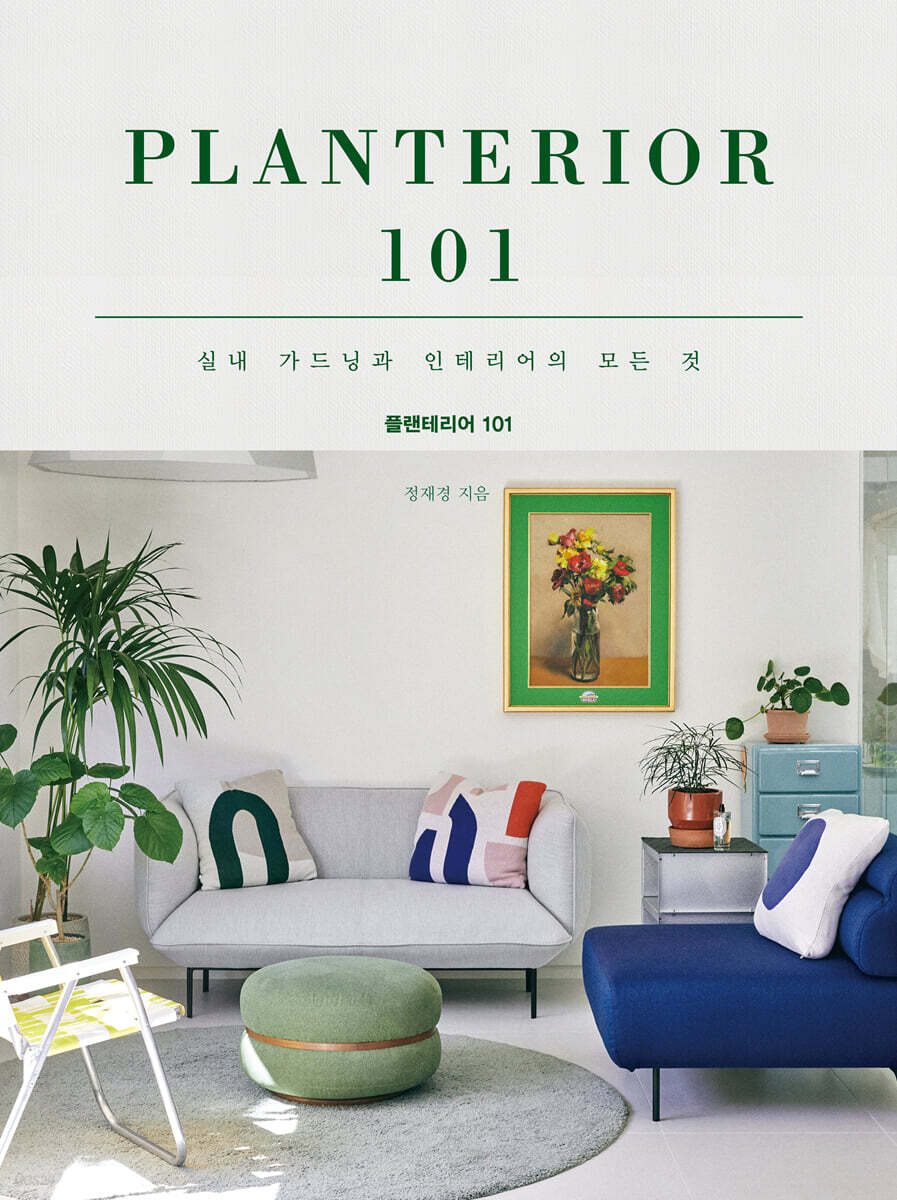
Planterium 101
 |
Description
Book Introduction
Plants + Interior = Planterior
The expertise of a Planterior expert who has given over 250 on-site lectures and met thousands of people.
“It is the instinct of living things to like plants.”
Lifestyle creator Jae-kyung Jeong, author of Korea's first planterior book.
The author has been spreading the word about the benefits of living with plants to the public through the media and lectures.
『Planterior 101』 is the result of the accumulated know-how of the author, who is both a plant expert and an interior design expert.
He discovered that the questions and answers from thousands of students had some commonalities.
Most people like plants, but they have killed them many times and are hesitant to grow plants because of that fear.
The author encourages growing plants, saying that fear can be healed through another challenge.
Teaching them the skills of caring for plants so that their fears can be transformed into success.
Beyond this stage, you'll start thinking about how to present your plants beautifully, which requires understanding your own tastes and the space you live in.
We need to find that balance where both the plants and I are happy.
This book, "Planterior 101," covers everything from plants that grow well indoors, how to grow and display plants beautifully, the basics of planteriors, and even why you should live with plants.
The expertise of a Planterior expert who has given over 250 on-site lectures and met thousands of people.
“It is the instinct of living things to like plants.”
Lifestyle creator Jae-kyung Jeong, author of Korea's first planterior book.
The author has been spreading the word about the benefits of living with plants to the public through the media and lectures.
『Planterior 101』 is the result of the accumulated know-how of the author, who is both a plant expert and an interior design expert.
He discovered that the questions and answers from thousands of students had some commonalities.
Most people like plants, but they have killed them many times and are hesitant to grow plants because of that fear.
The author encourages growing plants, saying that fear can be healed through another challenge.
Teaching them the skills of caring for plants so that their fears can be transformed into success.
Beyond this stage, you'll start thinking about how to present your plants beautifully, which requires understanding your own tastes and the space you live in.
We need to find that balance where both the plants and I are happy.
This book, "Planterior 101," covers everything from plants that grow well indoors, how to grow and display plants beautifully, the basics of planteriors, and even why you should live with plants.
- You can preview some of the book's contents.
Preview
index
Recommendation
PROLOGUE How to live healthily and beautifully with plants at home
1 HOME & TASTE What kind of house do I want to live in?
Analyze your lifestyle
Taste Test
Only I know what I like
A super easy way to find your tastes: the scrapbook method
Using scrap materials
2 PLANTS Plants for the Planterium
About plant preferences
Understanding Indoor Spaces and Choosing Plants
11 Air-Purifying Indoor Plants That Grow Well for Beginner Gardeners
Indoor plants that enjoy color
Plants that express texture
Indoor plants that enjoy fragrance
Eye-catching, unique plants
3 INDOOR GARDENING Everything about indoor gardening
Three basic indoor plant care tips
Gout, which cannot be emphasized enough
Watering indoor plants
Eco-friendly management method
Nutritional supply
Splitting
Pest Management
Growing healthy and beautiful plants
4 Basic Principles and Laws of Planterium
What is Planterior?
Principles and elements of planterior
Basic Plant Arrangement
5 PLANTERIOR STYLING
Furniture that is beneficial for planteriors
How to utilize narrow spaces
Wall planter
Desk Planterium
Planterier for Cats
How to create a planterior for each space
6 INTERIOR STYLING Interior styling that changes the atmosphere without construction
How to change the atmosphere without interior construction
Point of view
Check the route
Floor plan layout
7 REMODELING Interior renovation with plants
How to create an interior that is in harmony with plants?
Things to know when doing interior construction for a planterior
Choosing wall finishes
Choosing a floor finish
Light design
Planter Interior Details Completed with 8 COLORS Colors
Principles and Elements of Color
Cool tones and warm tones.
That mysterious difference
The proportion of colors that fit the space
Types of color chips
Making our own color chip cards
9 LIVING WITH PLANTS The Benefits of Plants
My condition is improving
Healing and recovery occur
Restore the environment
Biophilia, the instinct to love life
EPILOGUE: Living a Happy Life, Loving with a Fragile and Vigorous Plant
Good books to read together
PROLOGUE How to live healthily and beautifully with plants at home
1 HOME & TASTE What kind of house do I want to live in?
Analyze your lifestyle
Taste Test
Only I know what I like
A super easy way to find your tastes: the scrapbook method
Using scrap materials
2 PLANTS Plants for the Planterium
About plant preferences
Understanding Indoor Spaces and Choosing Plants
11 Air-Purifying Indoor Plants That Grow Well for Beginner Gardeners
Indoor plants that enjoy color
Plants that express texture
Indoor plants that enjoy fragrance
Eye-catching, unique plants
3 INDOOR GARDENING Everything about indoor gardening
Three basic indoor plant care tips
Gout, which cannot be emphasized enough
Watering indoor plants
Eco-friendly management method
Nutritional supply
Splitting
Pest Management
Growing healthy and beautiful plants
4 Basic Principles and Laws of Planterium
What is Planterior?
Principles and elements of planterior
Basic Plant Arrangement
5 PLANTERIOR STYLING
Furniture that is beneficial for planteriors
How to utilize narrow spaces
Wall planter
Desk Planterium
Planterier for Cats
How to create a planterior for each space
6 INTERIOR STYLING Interior styling that changes the atmosphere without construction
How to change the atmosphere without interior construction
Point of view
Check the route
Floor plan layout
7 REMODELING Interior renovation with plants
How to create an interior that is in harmony with plants?
Things to know when doing interior construction for a planterior
Choosing wall finishes
Choosing a floor finish
Light design
Planter Interior Details Completed with 8 COLORS Colors
Principles and Elements of Color
Cool tones and warm tones.
That mysterious difference
The proportion of colors that fit the space
Types of color chips
Making our own color chip cards
9 LIVING WITH PLANTS The Benefits of Plants
My condition is improving
Healing and recovery occur
Restore the environment
Biophilia, the instinct to love life
EPILOGUE: Living a Happy Life, Loving with a Fragile and Vigorous Plant
Good books to read together
Detailed image

Into the book
People loved plants.
Plants are the source of life.
So, liking plants may be an instinct of living things.
Plants create oxygen and sugars through photosynthesis, which allows living things to breathe and obtain energy.
However, many people considered plants, which all living things instinctively like, to be distant and difficult to find.
(...) There are so many good things about living with plants that it's a shame to give them up.
There are certainly ways to live with plants at home, make them easy to maintain, and make them look pretty.
This book is a compilation of questions asked by thousands of students and readers about plants and their homes.
It is detailed so that it can be applied more easily to life.
---From the "Prologue"
As we live our busy modern lives, people often don't know what our lifestyle is, what we like, and what we find inconvenient.
They follow trends without much thought and find comfort in keeping up with the times.
What we eat, what we wear, what we apply, and what we ride all largely follow external standards.
I need to stop once in a while and check my lifestyle.
A space that suits me and my family's lifestyle saves me time, saves me energy, lifts my spirits, and helps me get things done.
My home and my own space, surrounded by things I love, enhance the sensitivity of my daily life.
Life satisfaction increases.
So what should we place, how should we place it, and how should we grow it?
---From "Analyzing Lifestyle"
There is no rain or wind indoors.
Because the ceiling and walls block the harsh rain and wind.
So, plants that live indoors are always under the shade of trees.
Perhaps because of this thinking, people usually assume that it would be difficult for plants to live healthily indoors.
The question, “My house doesn’t get much sunlight. Will the plants grow well?” arises for that reason.
---From "Understanding Indoor Space and Choosing Plants"
The new leaves of the patterned syngonium grew green without white patterns.
It was great to see Syngonium regain its original form.
Even though he suffered enough hardship to have his genes altered, he did not care and began to go his own way.
Even though the pattern has disappeared and it has become an ordinary syngonium, I am happy that it is growing well.
I feel a great sense of accomplishment, as if I have accomplished something.
Syngonium is a good choice for this type of plant.
The fact that the life I touch grows well soon expands into self-efficacy and confidence.
You can see the healing power of plants.
---From "11 Indoor Air Purifying Plants That Grow Well for Beginner Gardeners"
Monstera leaves are as large as a washbasin.
The leaves were large, so they were often torn apart by the wind.
The large leaves block the sunlight, so the small leaves growing below do not get enough light.
So, the Monstera plant made holes in its leaves to allow air to pass through and let sunlight reach the leaves growing below.
The holes in the leaves of the Monstera are a result of evolution for survival.
---From "11 Indoor Air Purifying Plants That Grow Well for Beginner Gardeners"
Too much is as bad as not enough.
If you give your plants more water than they need, the soil will become wet and the roots will not be able to breathe, which will cause poor growth.
If the soil remains wet for a long time, root rot will occur and the roots will rot.
In indoor spaces where ventilation is not as good as outdoors, it is better to dry the water.
No matter how hard you try, plants can die.
In my experience, about 20 out of 100 plants will naturally disappear.
Learning and practicing to reduce the 20% probability to close to 0%.
---From "Three Basic Indoor Plant Care Methods"
In our country in particular, there seems to be a tendency to think that everything must be bright.
If you look up at an apartment building in the evening, you will see that most of the houses are lit up with white direct lights in the living rooms and bedrooms.
However, white light contains a lot of blue light, and blue light has the effect of stimulating people.
Home is a place where we can come back after a day's work and relax our body and mind.
But it's like we're waking up even at home because of the blue light.
White lighting used to be the primary color used in workplaces where people needed to be alert, but these days, even companies are switching from pale white lighting to 4000K lighting, a neutral color.
---From "Light Design"
People tend to be afraid of using color.
When I'm consulting on interior design or planterior, I often hear, "I don't know how to use color, so I'm just going to go with all white."
Of course, all white is also a good option.
But it's better to mix colors.
Because each color has its own wavelength, it can fill the energy I lack.
Color helps our body and mind stay healthy.
Plants are the source of life.
So, liking plants may be an instinct of living things.
Plants create oxygen and sugars through photosynthesis, which allows living things to breathe and obtain energy.
However, many people considered plants, which all living things instinctively like, to be distant and difficult to find.
(...) There are so many good things about living with plants that it's a shame to give them up.
There are certainly ways to live with plants at home, make them easy to maintain, and make them look pretty.
This book is a compilation of questions asked by thousands of students and readers about plants and their homes.
It is detailed so that it can be applied more easily to life.
---From the "Prologue"
As we live our busy modern lives, people often don't know what our lifestyle is, what we like, and what we find inconvenient.
They follow trends without much thought and find comfort in keeping up with the times.
What we eat, what we wear, what we apply, and what we ride all largely follow external standards.
I need to stop once in a while and check my lifestyle.
A space that suits me and my family's lifestyle saves me time, saves me energy, lifts my spirits, and helps me get things done.
My home and my own space, surrounded by things I love, enhance the sensitivity of my daily life.
Life satisfaction increases.
So what should we place, how should we place it, and how should we grow it?
---From "Analyzing Lifestyle"
There is no rain or wind indoors.
Because the ceiling and walls block the harsh rain and wind.
So, plants that live indoors are always under the shade of trees.
Perhaps because of this thinking, people usually assume that it would be difficult for plants to live healthily indoors.
The question, “My house doesn’t get much sunlight. Will the plants grow well?” arises for that reason.
---From "Understanding Indoor Space and Choosing Plants"
The new leaves of the patterned syngonium grew green without white patterns.
It was great to see Syngonium regain its original form.
Even though he suffered enough hardship to have his genes altered, he did not care and began to go his own way.
Even though the pattern has disappeared and it has become an ordinary syngonium, I am happy that it is growing well.
I feel a great sense of accomplishment, as if I have accomplished something.
Syngonium is a good choice for this type of plant.
The fact that the life I touch grows well soon expands into self-efficacy and confidence.
You can see the healing power of plants.
---From "11 Indoor Air Purifying Plants That Grow Well for Beginner Gardeners"
Monstera leaves are as large as a washbasin.
The leaves were large, so they were often torn apart by the wind.
The large leaves block the sunlight, so the small leaves growing below do not get enough light.
So, the Monstera plant made holes in its leaves to allow air to pass through and let sunlight reach the leaves growing below.
The holes in the leaves of the Monstera are a result of evolution for survival.
---From "11 Indoor Air Purifying Plants That Grow Well for Beginner Gardeners"
Too much is as bad as not enough.
If you give your plants more water than they need, the soil will become wet and the roots will not be able to breathe, which will cause poor growth.
If the soil remains wet for a long time, root rot will occur and the roots will rot.
In indoor spaces where ventilation is not as good as outdoors, it is better to dry the water.
No matter how hard you try, plants can die.
In my experience, about 20 out of 100 plants will naturally disappear.
Learning and practicing to reduce the 20% probability to close to 0%.
---From "Three Basic Indoor Plant Care Methods"
In our country in particular, there seems to be a tendency to think that everything must be bright.
If you look up at an apartment building in the evening, you will see that most of the houses are lit up with white direct lights in the living rooms and bedrooms.
However, white light contains a lot of blue light, and blue light has the effect of stimulating people.
Home is a place where we can come back after a day's work and relax our body and mind.
But it's like we're waking up even at home because of the blue light.
White lighting used to be the primary color used in workplaces where people needed to be alert, but these days, even companies are switching from pale white lighting to 4000K lighting, a neutral color.
---From "Light Design"
People tend to be afraid of using color.
When I'm consulting on interior design or planterior, I often hear, "I don't know how to use color, so I'm just going to go with all white."
Of course, all white is also a good option.
But it's better to mix colors.
Because each color has its own wavelength, it can fill the energy I lack.
Color helps our body and mind stay healthy.
---From "The ratio of colors to fit the space"
Publisher's Review
Perhaps the heart for cultivating a home and the heart for growing plants are the same.
People who are interested in interior design and start decorating their spaces will at some point begin to fall in love with the charm of plants.
However, I worry that I might not be able to grow the plants properly after bringing them in, and I end up getting discouraged after bringing in a few plants and sending them away one by one.
It is a mindset that begins with viewing plants as living things, not as mere props.
If you know how to grow them healthily, there's nothing better than plants to create a richer, more conversation-filled space.
On the other hand, the biggest concern for those who started out as gardeners is how to arrange plants in a stylish way while maintaining their health.
When you connect these two fields of expertise – interior design and plant growing – you come across artist Jaekyung Jeong.
As a gardener and interior design expert who has grown over 200 potted plants indoors, he offers an appropriate solution at this intersection.
From how to harmoniously arrange plants without interior construction to how to choose interior materials appropriate for the environment in which you will grow your plants.
If you dream of living with plants, all the questions you might have are answered in 『Planterior 101』.
People who are interested in interior design and start decorating their spaces will at some point begin to fall in love with the charm of plants.
However, I worry that I might not be able to grow the plants properly after bringing them in, and I end up getting discouraged after bringing in a few plants and sending them away one by one.
It is a mindset that begins with viewing plants as living things, not as mere props.
If you know how to grow them healthily, there's nothing better than plants to create a richer, more conversation-filled space.
On the other hand, the biggest concern for those who started out as gardeners is how to arrange plants in a stylish way while maintaining their health.
When you connect these two fields of expertise – interior design and plant growing – you come across artist Jaekyung Jeong.
As a gardener and interior design expert who has grown over 200 potted plants indoors, he offers an appropriate solution at this intersection.
From how to harmoniously arrange plants without interior construction to how to choose interior materials appropriate for the environment in which you will grow your plants.
If you dream of living with plants, all the questions you might have are answered in 『Planterior 101』.
GOODS SPECIFICS
- Date of issue: April 30, 2024
- Format: Hardcover book binding method guide
- Page count, weight, size: 224 pages | 870g | 188*250*23mm
- ISBN13: 9791188102273
- ISBN10: 1188102273
You may also like
카테고리
korean


korean

![GQ KOREA Mark (Monthly): December [2025]](http://librairie.coreenne.fr/cdn/shop/files/8ef265dbbfbf186523ed75ba7319009d.jpg?v=1765340328&width=3840)


