

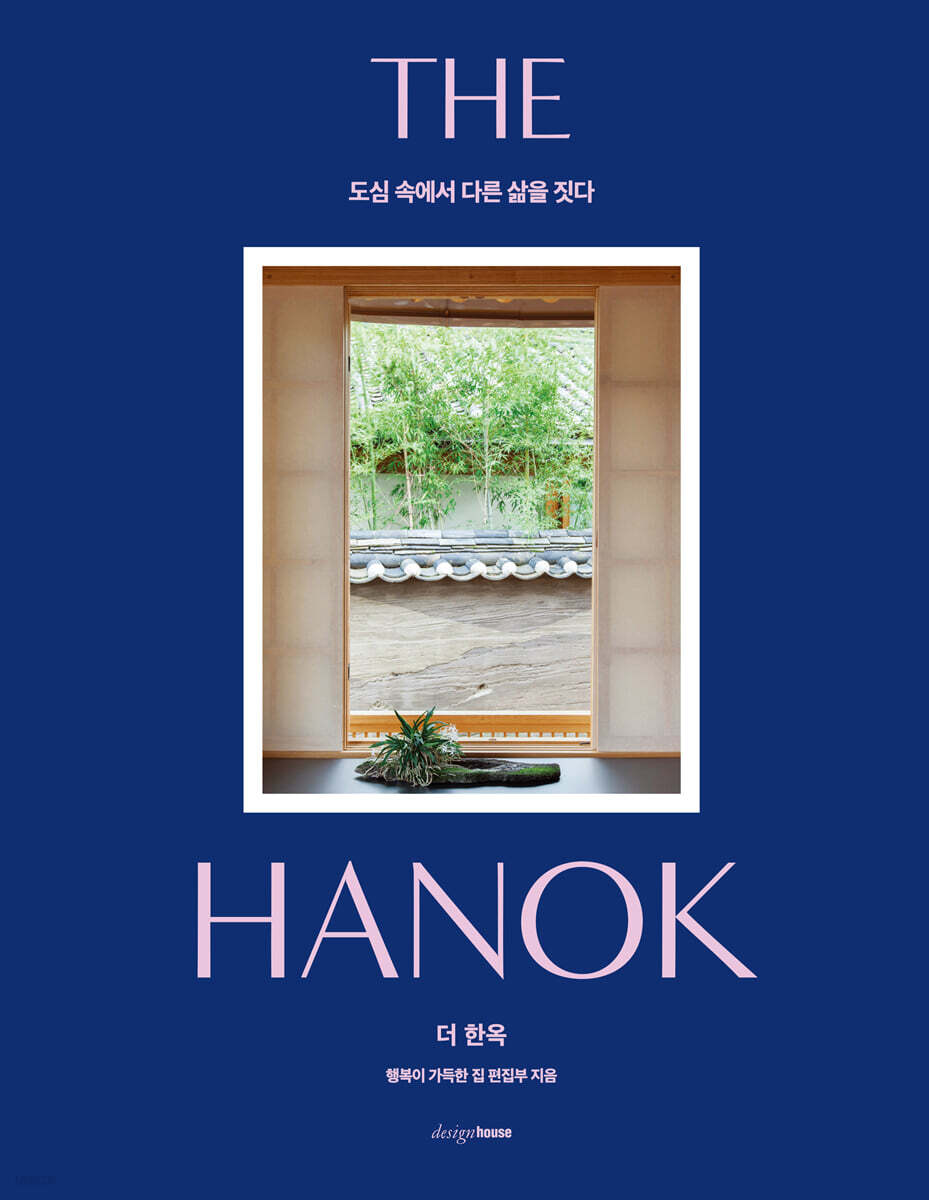
The Hanok
 |
Description
Book Introduction
Interior designer Yang Tae-oh's gorgeous yet practical Gye-dong Hanok,
A Bukchon Hanok where space art director Jeong Gyu-tae lives with his dog.
The Seochon Hanok, where art critic Yoo Kyung-hee's soul grows
A hanok in Gahoe-dong transformed into an art house by gallerist couple Hong Song-won and Park Dam-hoe…
“I met him after leaving the apartment
“My one and only home, my life”
People who live according to their tastes and lifestyles
A tour of twenty-four newly renovated and newly built hanok houses
Interest in Hanok, which originated from the Korean Wave, is growing to the point where various facilities made of Hanok, such as Hanok cafes, Hanok hotels, and Hanok art galleries, are now being created.
This means that Hanok is evolving from a mere interest in the past and a space for viewing, like palaces, old houses, and temples, into a living space.
Of course, we cannot leave out the house as the most representative place in living space.
Generally, it is difficult to choose a Hanok as a home just because of the beautiful exterior, comfort, and relaxation that come to mind when thinking of Hanok.
This is because before even pursuing one's dreams, one must first confront the realities of construction costs, various regulations, small floor space, insulation, and uncomfortable living conditions.
Yet, what is the charm of Hanok that makes more and more people choose it and praise the joy of living in it?
《The Hanok》 contains stories of people who chose Hanok as their home, including the reasons for living in Hanok, the process of renovation, repair, and new construction, and the pros and cons of living in Hanok.
A hanok in Gyedong that was decorated with a luxurious yet practical feel by interior designer Yang Tae-oh to the fullest extent of his specialty; a second house built by the owner of the nationally famous Lee Seong-dang bakery in Gunsan dreaming of the second act of his life; a hanok in Bukchon that was renovated by space art director Jeong Gyu-tae, who turns cafes and restaurants into hot places; a house in which art critic Yoo Kyung-hee embodies the idea that a home should be able to elevate the soul; a house in Gahoe-dong where gallerist couple Hong Song-won and Park Dam-hoe harmoniously connect a prefabricated building by Jean Prouvé and a hanok; a house in Hwaseong that was newly built as a hanok for three generations to live in; when you listen to the stories of various people, the charm of hanok is seen even more clearly and living in a hanok feels closer.
Additionally, by introducing Hanok, which is a commercial space rather than a private residence, we have made it easier for readers to access Hanok.
We also feature the Jeong Jong-mi Gallery in Seochon, the Rakgojae Culture Lounge where you can enjoy tea or take a cooking class, the Hyangsan Memorial Hall operated by Jeju Camellia Hill, and several hotels and stays where you can experience Hanok life firsthand.
Hanok, a space to live in rather than a romantic space to look at, should be suitable for modern life.
The reason why people who choose Hanok leave behind apartments that have long been adapted to modern life and adapt to the shortcomings of Hanok, and improve or eliminate them, and decorate Hanok to suit their own lifestyle is because it has gained a greater meaning than economic value and practicality.
Hanok is a vessel that faithfully embodies the meaning of ‘home.’
It satisfies the desire to see the sky and feel the ground, and connects the inside and outside through large windows and doors, allowing for flexible thinking, while the intimate rooms offer a quiet and tranquil atmosphere.
In a space where nature and home communicate, the lives of the people living there are also organically connected as one life form.
As a French philosopher once said, if you want to change your life, you should change your space, as changing your space will naturally change you. Living in a Hanok will be an opportunity to create a new world of your own.
A Bukchon Hanok where space art director Jeong Gyu-tae lives with his dog.
The Seochon Hanok, where art critic Yoo Kyung-hee's soul grows
A hanok in Gahoe-dong transformed into an art house by gallerist couple Hong Song-won and Park Dam-hoe…
“I met him after leaving the apartment
“My one and only home, my life”
People who live according to their tastes and lifestyles
A tour of twenty-four newly renovated and newly built hanok houses
Interest in Hanok, which originated from the Korean Wave, is growing to the point where various facilities made of Hanok, such as Hanok cafes, Hanok hotels, and Hanok art galleries, are now being created.
This means that Hanok is evolving from a mere interest in the past and a space for viewing, like palaces, old houses, and temples, into a living space.
Of course, we cannot leave out the house as the most representative place in living space.
Generally, it is difficult to choose a Hanok as a home just because of the beautiful exterior, comfort, and relaxation that come to mind when thinking of Hanok.
This is because before even pursuing one's dreams, one must first confront the realities of construction costs, various regulations, small floor space, insulation, and uncomfortable living conditions.
Yet, what is the charm of Hanok that makes more and more people choose it and praise the joy of living in it?
《The Hanok》 contains stories of people who chose Hanok as their home, including the reasons for living in Hanok, the process of renovation, repair, and new construction, and the pros and cons of living in Hanok.
A hanok in Gyedong that was decorated with a luxurious yet practical feel by interior designer Yang Tae-oh to the fullest extent of his specialty; a second house built by the owner of the nationally famous Lee Seong-dang bakery in Gunsan dreaming of the second act of his life; a hanok in Bukchon that was renovated by space art director Jeong Gyu-tae, who turns cafes and restaurants into hot places; a house in which art critic Yoo Kyung-hee embodies the idea that a home should be able to elevate the soul; a house in Gahoe-dong where gallerist couple Hong Song-won and Park Dam-hoe harmoniously connect a prefabricated building by Jean Prouvé and a hanok; a house in Hwaseong that was newly built as a hanok for three generations to live in; when you listen to the stories of various people, the charm of hanok is seen even more clearly and living in a hanok feels closer.
Additionally, by introducing Hanok, which is a commercial space rather than a private residence, we have made it easier for readers to access Hanok.
We also feature the Jeong Jong-mi Gallery in Seochon, the Rakgojae Culture Lounge where you can enjoy tea or take a cooking class, the Hyangsan Memorial Hall operated by Jeju Camellia Hill, and several hotels and stays where you can experience Hanok life firsthand.
Hanok, a space to live in rather than a romantic space to look at, should be suitable for modern life.
The reason why people who choose Hanok leave behind apartments that have long been adapted to modern life and adapt to the shortcomings of Hanok, and improve or eliminate them, and decorate Hanok to suit their own lifestyle is because it has gained a greater meaning than economic value and practicality.
Hanok is a vessel that faithfully embodies the meaning of ‘home.’
It satisfies the desire to see the sky and feel the ground, and connects the inside and outside through large windows and doors, allowing for flexible thinking, while the intimate rooms offer a quiet and tranquil atmosphere.
In a space where nature and home communicate, the lives of the people living there are also organically connected as one life form.
As a French philosopher once said, if you want to change your life, you should change your space, as changing your space will naturally change you. Living in a Hanok will be an opportunity to create a new world of your own.
- You can preview some of the book's contents.
Preview
index
Entering
Chapter 1: Renovating an old house to suit your taste
Designer Yang Tae-oh's Gyedong Hanok: Things I Only Discovered While Living in a Hanok
The Second Home of Lee Sung-dang CEO Kim Hyun-joo and her husband: Savoring Life in the Alleys of Gye-dong
Living Stylist Dandelion's House: An Encounter Between Old Houses and Personal Taste
Space Art Director Jeong Gyu-tae's Hanok Renovation Story: Rewriting Hanok in an Old City
Naksanseong Fortress Road's Urban Villa "Now": A Designer Asks About Today's Hanok
Advertising Art Director Kim Sang-joo and Copywriter Bae Eun-young's Hyoja Lounge: Maximizing the Enjoyment of a Small Home
Gallerists Hong Song-won and Park Dam-hoe's Gahoe-dong Hanok: Art that Becomes a Landscape
Hanbok Designer Oehee's Bukchon Home: Shining from Within
Kim Tae-ho and Choi Su-min's Pilun-dong Hanok: A House of Memories, a Room in Nature
Hwang Oh-seul and Kim Hye-rim's Hanok in Hyehwa-dong: A Hanok Stay Every Day
Artist Choi Hee-joo's Hanok Studio: Exploring the Textures and Colors of Tradition
Chapter 2: A Modern New House Built with Traditional Materials
Art critic Yoo Kyung-hee's Seochon Hanok: A truly good home must inspire the soul.
The Home of Yoon Jong-ha and Kim Eun-mi: For a Peaceful and Quiet Life
Baek Jeong-suk's family's Hwaseong home: Back home
Chapter 3 A House Where People Come and Go and Culture Flows
Ryu Hyo-hyang's Hamyangdang: Tea served in the yard of a traditional Korean house
Seochon Jeong Jong-mi Gallery: Where Nature, People, and Art Meet
Rakgojae Culture Lounge: A modern, yet elegant, love room
Hyangsan Memorial Hall at Jeju Camellia Hill: Camellia Life
Appendix: A relaxing break and a special stay, a Hanok stay
Jongno Hyehwa 1938: A place where traces of 80 years of life intertwine.
Bukchon Nostalgia: A Uniquely Colorful Hanok
Seochon Hebre: Not too much, not too little, like a Swedish country house
Yeongwol Dahanok Heritage House: A Special Experience That Will Make Your Eyes Stop by Everywhere
Haenam Yuseon Gwan: A stay in nature with elegance
Sancheong Yulsuwon: A House for Self-Cultivation
Coming out
Writer/Photographer
Chapter 1: Renovating an old house to suit your taste
Designer Yang Tae-oh's Gyedong Hanok: Things I Only Discovered While Living in a Hanok
The Second Home of Lee Sung-dang CEO Kim Hyun-joo and her husband: Savoring Life in the Alleys of Gye-dong
Living Stylist Dandelion's House: An Encounter Between Old Houses and Personal Taste
Space Art Director Jeong Gyu-tae's Hanok Renovation Story: Rewriting Hanok in an Old City
Naksanseong Fortress Road's Urban Villa "Now": A Designer Asks About Today's Hanok
Advertising Art Director Kim Sang-joo and Copywriter Bae Eun-young's Hyoja Lounge: Maximizing the Enjoyment of a Small Home
Gallerists Hong Song-won and Park Dam-hoe's Gahoe-dong Hanok: Art that Becomes a Landscape
Hanbok Designer Oehee's Bukchon Home: Shining from Within
Kim Tae-ho and Choi Su-min's Pilun-dong Hanok: A House of Memories, a Room in Nature
Hwang Oh-seul and Kim Hye-rim's Hanok in Hyehwa-dong: A Hanok Stay Every Day
Artist Choi Hee-joo's Hanok Studio: Exploring the Textures and Colors of Tradition
Chapter 2: A Modern New House Built with Traditional Materials
Art critic Yoo Kyung-hee's Seochon Hanok: A truly good home must inspire the soul.
The Home of Yoon Jong-ha and Kim Eun-mi: For a Peaceful and Quiet Life
Baek Jeong-suk's family's Hwaseong home: Back home
Chapter 3 A House Where People Come and Go and Culture Flows
Ryu Hyo-hyang's Hamyangdang: Tea served in the yard of a traditional Korean house
Seochon Jeong Jong-mi Gallery: Where Nature, People, and Art Meet
Rakgojae Culture Lounge: A modern, yet elegant, love room
Hyangsan Memorial Hall at Jeju Camellia Hill: Camellia Life
Appendix: A relaxing break and a special stay, a Hanok stay
Jongno Hyehwa 1938: A place where traces of 80 years of life intertwine.
Bukchon Nostalgia: A Uniquely Colorful Hanok
Seochon Hebre: Not too much, not too little, like a Swedish country house
Yeongwol Dahanok Heritage House: A Special Experience That Will Make Your Eyes Stop by Everywhere
Haenam Yuseon Gwan: A stay in nature with elegance
Sancheong Yulsuwon: A House for Self-Cultivation
Coming out
Writer/Photographer
Detailed image

Into the book
“There are languages of space that people can basically respond to easily.
It was narrow and became wide, dark and bright, high and low, low and high… .
I think that a Hanok is a house that really borrows the architectural language of everyday life well.
When you enter through the narrow door, a large courtyard unfolds before you, making you humble yourself first, and when you go out from the small room to the open hall, your shoulders naturally straighten.
“In the past, when I was designing, I wanted to do things a little differently and a little better, but these days, I think I’ve let go of those feelings a lot.”
A home where you can experience different energies depending on where things are placed, a home that always asks questions.
This is precisely why we need to pay attention to Hanok again.
A place that looks flashy on the outside, but allows you to humble yourself the moment you step inside, a place of balanced aesthetics where elegance and practicality are harmoniously blended.
This is the charm of Hanok and the true language of space that designer Yang Tae-oh wants to express.
---From "Designer Yang Tae-oh's Gye-dong Hanok: Things I Only Realized While Living in a Hanok"
Reflecting the couple's opinion that they did not want to insist on a sitting lifestyle just because it was a Hanok, all furniture was chosen to be standing.
The problem is the small rooms that are characteristic of Hanok.
Since the bed needs to be at least 2m wide, the bedroom was extended to a small passageway created by transforming the veranda, and a window was installed about 30cm outside the passageway.
The refrigerator and air conditioner next to the dining table were also pushed back against the wall to accommodate the depth of the appliances.
Usually, the most difficult part when remodeling a Hanok is choosing matching standing furniture, but this was solved by making the bed and sofa frame out of old wood.
Mr. Kim and his wife, who spent several weekends at the Hanok, said that they were most impressed by the quiet and serene atmosphere, as if they were cut off from the world.
This is also connected to functions such as invisible insulation.
“When I think of old Hanok houses, all I can think of is the cold in the winter.
I don’t even want to go out to the yard to wash up… .
Although it is a Hanok, it is convenient because the routes are connected like an apartment, and it is well insulated so it is warm, and there is no need to worry about outside noise.”
---From "The Second House of Lee Sung-dang CEO Kim Hyun-joo and her husband: Baking Life in the Alleys of Gye-dong"
Usually we decorate our homes to fit our lives, but his ideas are a little different.
“I think we create spaces that fit the user’s lifestyle, but I think the opposite.
Rather, if you first think about what kind of life you want to live and decorate your space accordingly, your life will change.” A few years ago, he practiced a minimalist life and, recalling that experience, he designed his hanok as a space for a minimalist life.
By minimizing storage space, you end up owning fewer items, and even if you do buy one, you end up choosing one that serves both a function and an object.
The more we detach ourselves from things, as if we were on a trip, the freer we become.
---From "Space Art Director Jeong Gyu-tae's Hanok Renovation Story: Rewriting Hanok in an Old City"
“One of the shortcomings of Hanok is its low ceiling, which is not suitable for today’s standing lifestyle.
Even a small space feels more open and less stuffy when the ceiling height is secured.
“The living room and kitchen floor heights were lowered as much as possible until the foundation stones were exposed.”
Because the sculptural nature of the Hanok itself, such as the rafters and beams, is strong, we chose to minimize the presence of other elements that make up the space.
We chose a dark gray color, similar to roof tiles, for the floor tiles and sashes, and installed the sashes deeper than floor level and higher than ceiling level so that the frame is not visible.
Another feature is the minimal use of furniture in the space.
“Hanok has a strong, unique form, so it is difficult to match furniture to it.
It is also difficult to mix with steel materials.
The saying, “the aesthetics of emptiness,” doesn’t come about for nothing.
I had a lot of worries until the end about whether I should add more storage space as the architect advised, but I decided to change my lifestyle while I was at it.
“It’s a time when we need to think about living a life of not having too much and enjoying the bare minimum.”
---From "Naksan Fortress West Road Urban Villa 'Now': Designers Ask About Today's Hanok"
In fact, the greatest charm of Hanok that Representative Jeong personally felt while staying there and maintaining it is ‘communication.’
A space where nature and humans can easily communicate and interact, a semi-open space where light and air always flow in and out.
So, his belief is that the meaning of a Hanok comes alive only when there is a yard.
Representative Jeong hopes that many people will not only appreciate the architecture and art here, but also feel the joy that the space provides.
“Because Hanok is an architecture that draws in nature, it is very seasonal.
The feeling is different every season.
It's not easy to feel the seasons when we live in an apartment.
As I lived, I realized that it wasn't ordinary happiness.
“I think that, more than anything, spending time in a Hanok is an opportunity to enjoy nature up close.”
It was narrow and became wide, dark and bright, high and low, low and high… .
I think that a Hanok is a house that really borrows the architectural language of everyday life well.
When you enter through the narrow door, a large courtyard unfolds before you, making you humble yourself first, and when you go out from the small room to the open hall, your shoulders naturally straighten.
“In the past, when I was designing, I wanted to do things a little differently and a little better, but these days, I think I’ve let go of those feelings a lot.”
A home where you can experience different energies depending on where things are placed, a home that always asks questions.
This is precisely why we need to pay attention to Hanok again.
A place that looks flashy on the outside, but allows you to humble yourself the moment you step inside, a place of balanced aesthetics where elegance and practicality are harmoniously blended.
This is the charm of Hanok and the true language of space that designer Yang Tae-oh wants to express.
---From "Designer Yang Tae-oh's Gye-dong Hanok: Things I Only Realized While Living in a Hanok"
Reflecting the couple's opinion that they did not want to insist on a sitting lifestyle just because it was a Hanok, all furniture was chosen to be standing.
The problem is the small rooms that are characteristic of Hanok.
Since the bed needs to be at least 2m wide, the bedroom was extended to a small passageway created by transforming the veranda, and a window was installed about 30cm outside the passageway.
The refrigerator and air conditioner next to the dining table were also pushed back against the wall to accommodate the depth of the appliances.
Usually, the most difficult part when remodeling a Hanok is choosing matching standing furniture, but this was solved by making the bed and sofa frame out of old wood.
Mr. Kim and his wife, who spent several weekends at the Hanok, said that they were most impressed by the quiet and serene atmosphere, as if they were cut off from the world.
This is also connected to functions such as invisible insulation.
“When I think of old Hanok houses, all I can think of is the cold in the winter.
I don’t even want to go out to the yard to wash up… .
Although it is a Hanok, it is convenient because the routes are connected like an apartment, and it is well insulated so it is warm, and there is no need to worry about outside noise.”
---From "The Second House of Lee Sung-dang CEO Kim Hyun-joo and her husband: Baking Life in the Alleys of Gye-dong"
Usually we decorate our homes to fit our lives, but his ideas are a little different.
“I think we create spaces that fit the user’s lifestyle, but I think the opposite.
Rather, if you first think about what kind of life you want to live and decorate your space accordingly, your life will change.” A few years ago, he practiced a minimalist life and, recalling that experience, he designed his hanok as a space for a minimalist life.
By minimizing storage space, you end up owning fewer items, and even if you do buy one, you end up choosing one that serves both a function and an object.
The more we detach ourselves from things, as if we were on a trip, the freer we become.
---From "Space Art Director Jeong Gyu-tae's Hanok Renovation Story: Rewriting Hanok in an Old City"
“One of the shortcomings of Hanok is its low ceiling, which is not suitable for today’s standing lifestyle.
Even a small space feels more open and less stuffy when the ceiling height is secured.
“The living room and kitchen floor heights were lowered as much as possible until the foundation stones were exposed.”
Because the sculptural nature of the Hanok itself, such as the rafters and beams, is strong, we chose to minimize the presence of other elements that make up the space.
We chose a dark gray color, similar to roof tiles, for the floor tiles and sashes, and installed the sashes deeper than floor level and higher than ceiling level so that the frame is not visible.
Another feature is the minimal use of furniture in the space.
“Hanok has a strong, unique form, so it is difficult to match furniture to it.
It is also difficult to mix with steel materials.
The saying, “the aesthetics of emptiness,” doesn’t come about for nothing.
I had a lot of worries until the end about whether I should add more storage space as the architect advised, but I decided to change my lifestyle while I was at it.
“It’s a time when we need to think about living a life of not having too much and enjoying the bare minimum.”
---From "Naksan Fortress West Road Urban Villa 'Now': Designers Ask About Today's Hanok"
In fact, the greatest charm of Hanok that Representative Jeong personally felt while staying there and maintaining it is ‘communication.’
A space where nature and humans can easily communicate and interact, a semi-open space where light and air always flow in and out.
So, his belief is that the meaning of a Hanok comes alive only when there is a yard.
Representative Jeong hopes that many people will not only appreciate the architecture and art here, but also feel the joy that the space provides.
“Because Hanok is an architecture that draws in nature, it is very seasonal.
The feeling is different every season.
It's not easy to feel the seasons when we live in an apartment.
As I lived, I realized that it wasn't ordinary happiness.
“I think that, more than anything, spending time in a Hanok is an opportunity to enjoy nature up close.”
---From "Seochon Jeong Jong-mi Gallery: Where Nature, People, and Art Meet"
Publisher's Review
Home, the beginning of life and everything
In the word Hanok, 'Han' means 'one', but it also means 'whole', as in 'full' or 'full'.
It also means 'peak', like 'middle' or 'midday'.
There is one heaven, one earth, and one universe.
The idea that everything begins from one and everything is one has been widely shared in Northeast Asia and Central Asia since ancient times.
The character '옥(屋)' is a character that depicts an arrow flying from the sky and getting stuck in a house.
Arrows are a medium that transmits the energy of heaven to the earth, and symbolically depict bringing ancestors or gods into the home.
Combining the meanings of the two Chinese characters, Hanok can be understood as 'a house that contains the spirit of life, which is both the beginning and everything.'
It may sound too grandiose, but the unknown 'universe' is also a word that means home.
For people, home is the universe, the beginning and everything.
A home is often described as a 'vessel that holds life,' but it is also a 'vessel that resembles my life.'
Even for the same food, the amount and temperature of the food served change depending on the shape and material of the bowl, and the color changes, so the taste of the food also changes.
Life in an apartment and life in a Hanok, although they are similar daily lives, have completely different flavors.
Compared to apartments, which have evolved to accommodate numerous demands, what makes Hanok different?
The secret of Hanok that breathes life into body and mind
First of all, when you imagine a 50-year-old apartment, you think it looks old, but when you imagine an 80-year-old Hanok, you think it looks cool.
The power of classics, or tradition, is that they gain value over time.
Materials that can accompany time can contain traces of life layer by layer.
If you approach the details of finishing materials in a way that allows each material to maintain its characteristics for a long time rather than prioritizing simple lines, you can create a home with a deeper flavor.
The materials used in Hanok, such as wood, earth, Korean paper, and tiles, and the craftsmanship of building the house, develop a deeper flavor over time.
I would like to call this 'the touch of time'.
The touch of time makes Hanok, a vessel that holds everyday life, special.
Secondly, living in a city means spending most of your time inside buildings, and the lack of time spent in outdoor spaces has a negative impact on your body and mind.
That's why I can breathe easier when I go out during my short lunch break.
However, private outdoor spaces such as a house yard are not only different in use from public outdoor spaces such as a park, but also different in psychological aspects.
In the yard of your home, you can relieve the stuffiness of being in a closed space and empty your complicated mind.
At the same time, you can also diversify your activities at home by taking care of a small garden or engaging in hobbies while enjoying the fresh air.
A very important feature of the spatial structure of Hanok is that the interior and exterior spaces are interlocked like gears.
Various yards, such as the inner courtyard, backyard, love courtyard, and servants' quarters courtyard, create a landscape where the inside and outside intersect.
A home where I can feel the seasons and weather, and the morning and night, makes me feel that my body and mind are connected to the sky and the earth.
The universal value of Hanok lies in the fact that this very obvious fact is considered special.
When talking about the size of a Hanok, the expression “how many rooms does a house have” is used.
A kan (間) is a basic unit representing the space between pillars, and a thatched house is a minimal house consisting of one room, one veranda, and one kitchen with a thatched roof.
Depending on the purpose, the room can be freely made into an interior space by installing walls or windows, or it can be made into a space where the inside and outside intersect by removing walls like daecheongmaru, or the floor height can be lowered to be used as a passageway like an arcade.
If you look at the drawing of Changdeokgung Palace called Donggwoldohyeong (北闕圖形), you can see that the various Chinese characters for each room are written, such as bang, cheong, nu, go, cheok, mun, and rang.
Although the rooms are structurally the same, the purpose and function of the space, as well as the interior and exterior, can be easily changed by changing the walls and floor.
The variability of Khan has common properties with the flexibility of space, a modern spatial concept.
This is an important foundation for maintaining the vitality of Hanok to this day.
The versatility of Khan will further enhance the value of Hanok in the future through various interpretations that suit individual lifestyles.
Hanok has many answers
These days, we are realizing the climate crisis.
Home is the true starting point for our response to the climate crisis.
What if the first question you ask yourself when building or renovating a home is, "How do I make it breathe?" This seemingly obvious question, unfortunately, is no longer so obvious.
Life architecture is architecture that listens to the voices of the surrounding places based on the premise of life.
A house built with consideration of the direction in which the sun rises, what the farthest view is, what direction the wind blows, and what kind of windows are appropriate to allow light to enter deep into the house is not cut off from the outside world.
Hanok already knows many answers to these questions.
Living things change.
The attempts at new Hanok, grounded in tradition, introduced in this book will serve as a mirror that illuminates our daily lives and become the foundation of an aesthetic sense that firmly supports the present by connecting the past and the future.
(From [Introduction], Architect Dae-gyun Kim)
In the word Hanok, 'Han' means 'one', but it also means 'whole', as in 'full' or 'full'.
It also means 'peak', like 'middle' or 'midday'.
There is one heaven, one earth, and one universe.
The idea that everything begins from one and everything is one has been widely shared in Northeast Asia and Central Asia since ancient times.
The character '옥(屋)' is a character that depicts an arrow flying from the sky and getting stuck in a house.
Arrows are a medium that transmits the energy of heaven to the earth, and symbolically depict bringing ancestors or gods into the home.
Combining the meanings of the two Chinese characters, Hanok can be understood as 'a house that contains the spirit of life, which is both the beginning and everything.'
It may sound too grandiose, but the unknown 'universe' is also a word that means home.
For people, home is the universe, the beginning and everything.
A home is often described as a 'vessel that holds life,' but it is also a 'vessel that resembles my life.'
Even for the same food, the amount and temperature of the food served change depending on the shape and material of the bowl, and the color changes, so the taste of the food also changes.
Life in an apartment and life in a Hanok, although they are similar daily lives, have completely different flavors.
Compared to apartments, which have evolved to accommodate numerous demands, what makes Hanok different?
The secret of Hanok that breathes life into body and mind
First of all, when you imagine a 50-year-old apartment, you think it looks old, but when you imagine an 80-year-old Hanok, you think it looks cool.
The power of classics, or tradition, is that they gain value over time.
Materials that can accompany time can contain traces of life layer by layer.
If you approach the details of finishing materials in a way that allows each material to maintain its characteristics for a long time rather than prioritizing simple lines, you can create a home with a deeper flavor.
The materials used in Hanok, such as wood, earth, Korean paper, and tiles, and the craftsmanship of building the house, develop a deeper flavor over time.
I would like to call this 'the touch of time'.
The touch of time makes Hanok, a vessel that holds everyday life, special.
Secondly, living in a city means spending most of your time inside buildings, and the lack of time spent in outdoor spaces has a negative impact on your body and mind.
That's why I can breathe easier when I go out during my short lunch break.
However, private outdoor spaces such as a house yard are not only different in use from public outdoor spaces such as a park, but also different in psychological aspects.
In the yard of your home, you can relieve the stuffiness of being in a closed space and empty your complicated mind.
At the same time, you can also diversify your activities at home by taking care of a small garden or engaging in hobbies while enjoying the fresh air.
A very important feature of the spatial structure of Hanok is that the interior and exterior spaces are interlocked like gears.
Various yards, such as the inner courtyard, backyard, love courtyard, and servants' quarters courtyard, create a landscape where the inside and outside intersect.
A home where I can feel the seasons and weather, and the morning and night, makes me feel that my body and mind are connected to the sky and the earth.
The universal value of Hanok lies in the fact that this very obvious fact is considered special.
When talking about the size of a Hanok, the expression “how many rooms does a house have” is used.
A kan (間) is a basic unit representing the space between pillars, and a thatched house is a minimal house consisting of one room, one veranda, and one kitchen with a thatched roof.
Depending on the purpose, the room can be freely made into an interior space by installing walls or windows, or it can be made into a space where the inside and outside intersect by removing walls like daecheongmaru, or the floor height can be lowered to be used as a passageway like an arcade.
If you look at the drawing of Changdeokgung Palace called Donggwoldohyeong (北闕圖形), you can see that the various Chinese characters for each room are written, such as bang, cheong, nu, go, cheok, mun, and rang.
Although the rooms are structurally the same, the purpose and function of the space, as well as the interior and exterior, can be easily changed by changing the walls and floor.
The variability of Khan has common properties with the flexibility of space, a modern spatial concept.
This is an important foundation for maintaining the vitality of Hanok to this day.
The versatility of Khan will further enhance the value of Hanok in the future through various interpretations that suit individual lifestyles.
Hanok has many answers
These days, we are realizing the climate crisis.
Home is the true starting point for our response to the climate crisis.
What if the first question you ask yourself when building or renovating a home is, "How do I make it breathe?" This seemingly obvious question, unfortunately, is no longer so obvious.
Life architecture is architecture that listens to the voices of the surrounding places based on the premise of life.
A house built with consideration of the direction in which the sun rises, what the farthest view is, what direction the wind blows, and what kind of windows are appropriate to allow light to enter deep into the house is not cut off from the outside world.
Hanok already knows many answers to these questions.
Living things change.
The attempts at new Hanok, grounded in tradition, introduced in this book will serve as a mirror that illuminates our daily lives and become the foundation of an aesthetic sense that firmly supports the present by connecting the past and the future.
(From [Introduction], Architect Dae-gyun Kim)
GOODS SPECIFICS
- Date of issue: October 30, 2023
- Format: Hardcover book binding method guide
- Page count, weight, size: 224 pages | 190*248*20mm
- ISBN13: 9788970417820
- ISBN10: 8970417826
You may also like
카테고리
korean


korean

![GQ KOREA Mark (Monthly): December [2025]](http://librairie.coreenne.fr/cdn/shop/files/8ef265dbbfbf186523ed75ba7319009d.jpg?v=1765340328&width=3840)


